
Gustav Meyrink (1868–1932)
Author of The Golem
About the Author
Image credit: Projekt Gutenberg-DE
Series
Works by Gustav Meyrink
Tschitrakarna, das vornehme Kamel : 33 Stücke aus "Des deutschen Spießers Wunderhorn" (1978) 10 copies
Fledermäuse 1. Die vier Mondbrüder 5 copies
The Short Stories of Gustav Meyrink Volume 1: The Opal and Other Stories (Dedalus European Classics) (2023) 5 copies
The Short Stories of Gustav Meyrink Volume 2: The Master & Other Stories (Dedalus European Classics) (2023) 5 copies
Gesammelte Werke 4 copies
The Man in the Bottle [short story] 4 copies
Orchideen 3 copies
An der Grenze des Jenseits - Die Verwandlung des Blutes: Zwei Essays zu den Themen Okkultismus und Yoga (2006) 3 copies
Das Wildschwein Veronika. Die 20 frechsten Geschichten aus "Des deutschen Spießers Wunderhorn". (1977) 2 copies
Kurzgeschichten 2 copies
Die vier Mondbrüder (German Edition) 2 copies
El Golem (Spanish Edition) 2 copies
Der violette Tod. Die 20 schrecklichsten Geschichten aus Des deutschen Spießers Wunderhorn. (1984) 2 copies
Hexen & Teufel: Drei satanische Romane. Merritt, Abraham: Flieh, Hexe, flieh /Sarban: Der Puppenmacher / Meyrink, Gustav: Walpurgisnacht (2004) 2 copies
scrittore e iniziato 1 copy
標本 グスタフ・マイリンク疑似科学小説集 1 copy
4 книги 1 copy
il libro dell'aldilà 1 copy
la metamorfosi del sangue 1 copy
giocando con i grilli 1 copy
Geschichten des Grauens 1 copy
Il viso verde 1 copy
Coresi 1 copy
Blamol 1 copy
Racconti di cera 1 copy
Gustav Meyrink-sorozat 1 copy
Das Automobil 1 copy
Die Romane: 5 Bände. 1 copy
La esfera negra 1 copy
Bocksäure 1 copy
Das Fieber 1 copy
Die Urne von St. Gingolph 1 copy
Späte Erzählungen 1 copy
Das lustige Gespensterbuch — Foreword — 1 copy
G.M. 1 copy
Associated Works
Masterpieces of Terror and the Unknown: A Treasury of Bizarre Tales Old and New (1993) — Contributor — 213 copies, 2 reviews
The Dedalus/Ariadne Book of Austrian Fantasy: The Meyrink Years 1890-1930 (1992) — Contributor — 28 copies
Library of the World's Best Mystery and Detective Stories: German, Russian, Scandinavian (1907) — Contributor — 9 copies
Gesammelte Werke. Die Pickwickier, Nikals Nickleby, Martin Chuzzlewit, Oliver Twist, Weihnachtsgeschichten, Bleakhaus, David Copperfield (2003) — Translator — 7 copies
Czarny pająk : opowieści niesamowite z literatury niemieckojęzycznej (1988) — Contributor — 3 copies
Maska Śmierci 2 — Contributor — 2 copies
Lübbes Auswahlband. Die besten Schauergeschichten der deutschsprachigen Literatur. (1983) — Contributor — 2 copies
Tagged
Common Knowledge
- Canonical name
- Meyrink, Gustav
- Legal name
- Meyer, Gustav
- Other names
- Meyrinck, Gustav
- Birthdate
- 1868-01-19
- Date of death
- 1932-12-04
- Gender
- male
- Education
- Wilhelmsgymnasium, München
Handelsakademie, Prag - Occupations
- banker
satirist
dramatist
translator
novelist - Organizations
- Theosophische Societät Germania (Esoteric Section)
Lodge "Zum Blauen Stern", Prague (1891)
Order of the Illuminati („Bruder Dagobert“)
Kerning-Orden
Bruderschaft der alten Riten vom heiligen Gral im großen Orient von Patmos
Chess Club Starnberg 1920 e.V. - Nationality
- Austria
- Birthplace
- Vienna, Austria-Hungary
- Places of residence
- Vienna, Austria-Hungary
Munich, Bavaria, Germany
Hamburg, Germany
Prague, Czechoslovakia
Starnberg, Bavaria, Germany - Place of death
- Starnberg, Bavaria, Germany
- Burial location
- Starnberg Cemetery, Starnberg, Bavaria, Germany
- Associated Place (for map)
- Starnberg, Bavaria, Germany
Members
Discussions
Folio Archives 383: The Golem by Gustav Meyrink. 2010 in Folio Society Devotees (July 2024)
Reviews
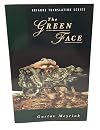
Readers of The Golem who felt they were had by the shaggy-dog-story ending may expect the same sort of literary trickery with The Green Face. However, this novel, which is very much in the genre of mystical fantasy (if such a category exists) which The Golem pretends to be right up to its final page — is a deeply philosophical, even mystical novel right through to its final words: No clever punch lines to mar the effect.
Novels like this are probably unfashionable today, yet it is quite show more compelling if the reader is in the right frame of mind. What we have here is a novel of redemption almost in the guise of an initiation. Written during WWI but set in an imagined Amsterdam at the end of the war, with intimations of apocalypse at the end of the novel, Meyrink again applies his considerable understanding of gnostic and theosophical lore to lure the reader into a deeply mystical adventure.
The Green Face — not unlike The Golem — is an archetypal entity which plays the role of elusive spiritual guide, pursuit of which leads the protagonist down paths that take him to a Jungian kind of wholeness. Read as an allegory of such a psychological journey, the book provides an interesting milieu, unusual characters and a satisfying sense of completion.
The only jarring note concerns a description of mystical ecstasy which climaxes in an Abraham-and-Isaac kind of horrific child murder. A similar ecstatic murder mars the mysticism of The Golem and leads one to wonder which side Meyrink was on. He certainly knows and understands the gnostic brand of mysticism, but is he a practitioner or is he engaged in a subtle attack? That is the question raised by both The Golem and The Green Face. show less
Novels like this are probably unfashionable today, yet it is quite show more compelling if the reader is in the right frame of mind. What we have here is a novel of redemption almost in the guise of an initiation. Written during WWI but set in an imagined Amsterdam at the end of the war, with intimations of apocalypse at the end of the novel, Meyrink again applies his considerable understanding of gnostic and theosophical lore to lure the reader into a deeply mystical adventure.
The Green Face — not unlike The Golem — is an archetypal entity which plays the role of elusive spiritual guide, pursuit of which leads the protagonist down paths that take him to a Jungian kind of wholeness. Read as an allegory of such a psychological journey, the book provides an interesting milieu, unusual characters and a satisfying sense of completion.
The only jarring note concerns a description of mystical ecstasy which climaxes in an Abraham-and-Isaac kind of horrific child murder. A similar ecstatic murder mars the mysticism of The Golem and leads one to wonder which side Meyrink was on. He certainly knows and understands the gnostic brand of mysticism, but is he a practitioner or is he engaged in a subtle attack? That is the question raised by both The Golem and The Green Face. show less

Vérbeli misztikus kalandregény mindennel, ami a műfaj kötelező eleme: akad itt szerelem, gyilkosság, ármány, kabbalista titkok, rohangálás sötét sikátorokban, ártatlanok szenvedése és gonoszok démoni kacaja. Ugyanakkor van valami, ami az egészet igazán ínyenceknek való csemegévé teszi: az elbeszélő, Pernath figurája, aki mintha ébren álmodná végig a rohanó cselekményt. A megbízhatatlan krónikás iskolapéldája, nem csak rettentő egzaltáltsága okán, show more hanem azért is, mert nem emlékszik a saját múltjára (ami mondjuk lehet, engem is egzaltálttá tenne), annyit mindenesetre sejt, hogy nemrégiben egy bolondokháza vendégszeretetét élvezte – ezért is bánnak ismerősei vele úgy, akár a hímes tojással. Ő bolyong keresztül-kasul a hátborzongató, gótikusan szürreális prágai gettón, miközben a zsidó mitológia ősszörnye a sötétből fen rá fogat. Persze ez az egész voltaképpen egy metafora: a prágai gettó az elme labirintusának tükörképe, Pernath abban vetődik ide-oda, a Gólem pedig, aki egy ajtók nélküli szobában gubbaszt arra várva, hogy kitörhessen, alighanem Pernath őrülete maga. Meyrink példásan adagolja a miszticizmust, a pszichologizálást és az atmoszférát, aminek csodásan áll az expresszionista máz, jó ez a könyv, jó benne lenni, jó járni az azóta porrá omlott prágai gettó szűk utcáit, és közben fülelni: mi ez? Csak nem lépteket hallunk? Csak nem...
És jön a Gólem.
Jön a Gólem.
A Gólem.
(Mit találtam, miközben képeket kerestem az értékelésekhez? Hát ezt.
Hm, hát már gólem is. Különös, hogy a kormányzati propaganda ezt még így nem kapta fel.) show less

Baron Muller, a Viennese dealer in antiquities, discovers he's a descendant of John Dee, who was Queen Elizabeth's astronomer and adviser and, most famously, a seeker of occult truths. The significance of this link becomes both more evident and changes, as Muller reads through Dee's diaries. The world becomes double, with the hitherto occult one gradually emerging from beyond the shallow appearance of reality. The story (or history) becomes double too, as contemporary events mirror events in show more the past, and the figures from John Dee's time reappear in Muller's life as modern counterparts. Some of these people are Dee's (and Muller's) mortal enemies; some are friends, but he struggles to recognise their identities and aims. There is an overarching occult theme to the plot too, the alchemical rite which was foiled in Dee's time, a mystical wedding, to which Muller now blindly grapples in a very literal sense--but has he identified his "bride" correctly? Does he understand what the rite is supposed to mean, and which elements need to unite to bring it through?
Meyrink's a master at making the stitches between dreams and reality shimmer uncannily, at projection of mysteries that point to the deepest being. show less
Meyrink's a master at making the stitches between dreams and reality shimmer uncannily, at projection of mysteries that point to the deepest being. show less

A disappointing excursion into the eerie, even allowing for my perhaps unreasonably high hopes for the book. Gustav Meyrink's 1915 novel The Golem is occasionally touted as a more obscure, 'hidden gem' counterpart to Gothic horror classics like Frankenstein and Jekyll and Hyde, but I found it to be a story that didn't settle.
There's a decent sense of atmosphere and gloom – the Jewish ghetto in turn-of-the-century Prague – but no storytelling spine to help it stand upright. I like to show more think of myself as a reasonably attentive reader, but I never really knew what was happening or the motivation of the characters; even before the cop-out "it was all a dream"-style ending, I had lost faith in the intentions of the novel. It also has a melodramatic style – typical of Gothic novels, of course – but in lesser fare such as The Golem the histrionics were grating and I longed for something more suitably brooding and stone-like.
Although it was not enough to redeem it in my eyes, one merit of the book was the totality of its protagonist's fear and madness and loss of identity. So complete was this unpinning of the character's mores that I found it to be a detriment: the protagonist was lost and I, seeking to follow the plot, was lost also. When Meyrink writes of his paranoid protagonist that "all my senses [were] permanently ready to pounce, but with nothing to clutch at" (pg. 147), I recognised it not only as a decent line but a fitting description of my own experience of The Golem. The book's concept promises more than it delivers, and in reading it I became exhausted, my reading instincts restlessly searching for something more than I could find. show less
There's a decent sense of atmosphere and gloom – the Jewish ghetto in turn-of-the-century Prague – but no storytelling spine to help it stand upright. I like to show more think of myself as a reasonably attentive reader, but I never really knew what was happening or the motivation of the characters; even before the cop-out "it was all a dream"-style ending, I had lost faith in the intentions of the novel. It also has a melodramatic style – typical of Gothic novels, of course – but in lesser fare such as The Golem the histrionics were grating and I longed for something more suitably brooding and stone-like.
Although it was not enough to redeem it in my eyes, one merit of the book was the totality of its protagonist's fear and madness and loss of identity. So complete was this unpinning of the character's mores that I found it to be a detriment: the protagonist was lost and I, seeking to follow the plot, was lost also. When Meyrink writes of his paranoid protagonist that "all my senses [were] permanently ready to pounce, but with nothing to clutch at" (pg. 147), I recognised it not only as a decent line but a fitting description of my own experience of The Golem. The book's concept promises more than it delivers, and in reading it I became exhausted, my reading instincts restlessly searching for something more than I could find. show less
Lists
Awards


You May Also Like


Associated Authors
Statistics
- Works
- 124
- Also by
- 29
- Members
- 3,674
- Popularity
- #6,889
- Rating
- 3.8
- Reviews
- 90
- ISBNs
- 426
- Languages
- 25
- Favorited
- 28