
Alfred Kubin (1877–1959)
Author of The Other Side
About the Author
Image credit: (1877-1959) Image © ÖNB/Wien
Series
Works by Alfred Kubin
Alfred Kubin: 1877-1959 : 100 opere dall'Albertina di Vienna (Proposte Mazzotta mostre) (Italian Edition) (1988) 8 copies
Alfred Kubin : an exhibition of drawings and watercolors, December 1970 through January 1971 (1970) 5 copies
Alfred Kubin - TraumGesichte: Zeichnungen und Druckgrafik aus der Sammlung Otto Mauer im Dom- und Diözesanmuseum Wien (2001) — Artist — 3 copies
Alfred Kubin, book illustrator 2 copies
The Other Side (excerpt) 2 copies
Alfred Kubin 1877-1959 Werke aus den Beständen des KubinKabinetts, öffentlichen und privaten Sammlungen (2002) 2 copies
Alfred Kubin: Weltgeflecht : ein Kubin-Kompendium : Schriften u. Bilder zu Leben u. Werk (German Edition) (1978) 2 copies
Erotik und Dämonie im Werk Alfred Kubins — Artist and author — 2 copies
Abendrot - 45 unveröffentliche Zeichnungen mit einer kleinen Plauderei über sich selbst (1952) 2 copies
Aus meiner Werkstatt. Gesammelte Prosa mit 71 Abbildungen herausgegeben von Ulrich Riemerschmidt. (1976) 2 copies
Alfred Kubin 1877 - 1977 1 copy
Der Illustrator Alfred Kubin: Gesamtkatalog seiner Ill. u. buchkunstler. Arbeiten (German Edition) (1977) 1 copy
Hommage à Kubin : Neue Galerie der Stadt Linz, Wolfgang Gurlitt-Museum, 31. März bis 30. April 1977 — Artist — 1 copy
Das Dämonische bei Alfred Kubin : aus der Sammlung Otto Maurer, Wien. — Artist — 1 copy
Alfred Kubin, Weltgeflecht : e. Kubin-Kompendium : Schriften u. Bilder zu Leben u. Werk (1978) 1 copy
Fünfzehn Facsimiledrucke 1 copy
Vingt Dessins 1 copy
Associated Works
Complete Stories and Poems of Edgar Allan Poe (1938) — Illustrator, some editions — 13,617 copies, 83 reviews
The Narrative of Arthur Gordon Pym of Nantucket (1833) — Illustrator, some editions — 2,577 copies, 58 reviews
The Golem / The Man Who Was Born Again: Two German Supernatural Novels (1976) — Illustrator, some editions — 50 copies, 1 review
The Dedalus/Ariadne Book of Austrian Fantasy: The Meyrink Years 1890-1930 (1992) — Contributor — 28 copies
Erzählungen. Phantastische Fahrten, Geschichten des Grauens und Detektivgeschichten (1985) — Illustrator — 18 copies
Der Zauberspiegel. Phantastische Erzählungen der Weltliteratur — Contributor — 2 copies
Ernst August Freiherr von Mandelsloh, 1886-1962 : ein vergessener österr. Maler : mit Illustrationen zum Werk Ernst Jüngers — Letter writer — 1 copy
Märchen — Illustrator, some editions — 1 copy
Tagged
Common Knowledge
- Canonical name
- Kubin, Alfred
- Legal name
- Kubin, Alfred Leopold Isidor
- Birthdate
- 1877-04-10
- Date of death
- 1959-08-20
- Gender
- male
- Nationality
- Austria-Hungary
- Birthplace
- Leitmeritz, Kingdom of Bohemia, Austria-Hungary
Litoměřice, Ústí nad Labem, Czech Republic - Place of death
- Zwickledt, Wernstein am Inn, Schärding, Austria
- Map Location
- Austria
Members
Reviews
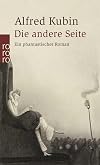
This novel is the linguistical equivalent of the eerie and haunting drawings for which the author is better known. There is a difference however. Where the illustrations are usually stark and monochrome, the images of the book bathe in a Grand Guignol atmosphere, with large doses of Hieronymus Bosch. The narrative starts conventional enough, but dissolves gradually (just like the world that is described) in a series of fantastical vistas of death and destruction, linked more by emotion and show more association than any strict logic. If you like the early works of Lovecraft, this is the book for you. show less
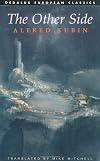
"I'll let you be in my dream if I can be in yours." Bob Dylan said that. But, I wonder, would Bob Dylan have wanted to be in Alfred Kubin's dreams? Kubin, an obscure German artist from the early 20th century, is remembered chiefly for his phantasmagoric Goyaesque drawings. Odd, dark visions of a quirky world. But Kubin, also, wrote one novel, The Other Side, - a feverish work - while he was taking a break, or a breakdown, from his art career. And what an odd, dark book it is. The subject show more matter was a utopia in transition to a dystopia - a fantasy kingdom located somewhere in the East, on the far side of Samarkland. The tale begins when the unnamed artist/hero of the story is invited, with his wife, to emigrate to the capitol city of Perle by a childhood friend, Claus Patera. Patera, by a series of happenstances, has acquired an immense fortune, and has set about realizing a utopian vision. He has populated the kingdom by invitation only, with seemingly oddball, obsessive characters from around the globe. Even the housing has apparently been chosen at whim, and, at great expense, has been deconstructed, imported, and re-erected.
Alas, slowly at first, but with gathering speed, The Dream Kingdom spins awry. Its citizens are all a bit off, like the resurrected animals in Stephen King's Pet Sematary. The weird imbalances mount. Our hero's wife dies. And Patera grows more distant and unreachable. And eventually "The American" arrives and engages in a power struggle with Patera.
Any number of metaphorical interpretations are possible. Does the novel foretell the fall of Soviet Russia? Does it foresee the chaos of contemporary failed states? Is it an extrapolation of Kubin's experience of the social disruption in Germany during the hyper-inflationary period after WWI? The writing is a bit too hallucinatory to draw any conclusions. Think if Hieronymous Bosch had tried his hand at writing along the lines of Rabelais.
Of course, to read The Other Side, you first need to find it. I was pleasantly amazed that my local library, the Ohio County branch in Wheeling WV, was able to obtain a copy, through the interlibrary loan program, in only two weeks. I suggest you give your local library a try. The price of the novel on Amazon is prohibitive. show less
Alas, slowly at first, but with gathering speed, The Dream Kingdom spins awry. Its citizens are all a bit off, like the resurrected animals in Stephen King's Pet Sematary. The weird imbalances mount. Our hero's wife dies. And Patera grows more distant and unreachable. And eventually "The American" arrives and engages in a power struggle with Patera.
Any number of metaphorical interpretations are possible. Does the novel foretell the fall of Soviet Russia? Does it foresee the chaos of contemporary failed states? Is it an extrapolation of Kubin's experience of the social disruption in Germany during the hyper-inflationary period after WWI? The writing is a bit too hallucinatory to draw any conclusions. Think if Hieronymous Bosch had tried his hand at writing along the lines of Rabelais.
Of course, to read The Other Side, you first need to find it. I was pleasantly amazed that my local library, the Ohio County branch in Wheeling WV, was able to obtain a copy, through the interlibrary loan program, in only two weeks. I suggest you give your local library a try. The price of the novel on Amazon is prohibitive. show less
Boy did that go downhill..... slowly.
An artist and his wife are invited to live in the secret Dreamland put together by a, lets call him an eccentric millionaire.
Whatever your idea of a Dreamland i can guarantee this won't be it :) . Its some pretty good weird fiction until the book starts announcing that the end is nigh... which was at the half-way point.
It just kept going and going. It also got more surreal and i prefer weird to surreal, its a fine line between the two.
The second half show more is more harrowing and graphic but i actually laughed at some of it as it just didn't have enough depth to be compelling or properly disturbing.
Some interesting imagery and ideas but far too long.
I believe the source of Patera's power is based on the idea ofresidual energy. The theory that objects or buildings which have been near extreme emotional events (such as murder) retain some of that emotional energy.
So Patera uses the energy in the buildings and objects to power himself and allow him to manipulate his victims into extreme emotional states. Some of the energy of these emotions goes into the buildings and objects. Patera uses this energy to manipulate his victims into extreme emotional states and round and round we go :) . show less
An artist and his wife are invited to live in the secret Dreamland put together by a, lets call him an eccentric millionaire.
Whatever your idea of a Dreamland i can guarantee this won't be it :) . Its some pretty good weird fiction until the book starts announcing that the end is nigh... which was at the half-way point.
It just kept going and going. It also got more surreal and i prefer weird to surreal, its a fine line between the two.
The second half show more is more harrowing and graphic but i actually laughed at some of it as it just didn't have enough depth to be compelling or properly disturbing.
Some interesting imagery and ideas but far too long.
I believe the source of Patera's power is based on the idea of
So Patera uses the energy in the buildings and objects to power himself and allow him to manipulate his victims into extreme emotional states. Some of the energy of these emotions goes into the buildings and objects. Patera uses this energy to manipulate his victims into extreme emotional states and round and round we go :) .
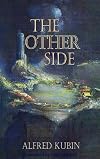
One of my all time favourite novels! I'm overjoyed to finally have a copy; okay am a book nerd so would rather have a hardback, but hey what can you do?
Kubin's only literary effort is the essence of the sublime meeting the surreal in the early avant garde years of the 20th century. And while the blurb on the back cover draws analogies with Kafka and Huxley - whose works came after The Other Side; I find parallels with another contemporary of Kubin; William Hope Hodgeson. Certainly the later show more stages of the novel are very remenicient of "House on the Borderlands" and "The Night Land."
A work that informs much of my own and a wonderful object to have on my shelf. Thank you Alfred. show less
Kubin's only literary effort is the essence of the sublime meeting the surreal in the early avant garde years of the 20th century. And while the blurb on the back cover draws analogies with Kafka and Huxley - whose works came after The Other Side; I find parallels with another contemporary of Kubin; William Hope Hodgeson. Certainly the later show more stages of the novel are very remenicient of "House on the Borderlands" and "The Night Land."
A work that informs much of my own and a wonderful object to have on my shelf. Thank you Alfred. show less
Lists
Awards

You May Also Like


Associated Authors
Statistics
- Works
- 67
- Also by
- 13
- Members
- 784
- Popularity
- #32,461
- Rating
- 4.2
- Reviews
- 11
- ISBNs
- 77
- Languages
- 12
- Favorited
- 5