
Unica Zürn (1916–1970)
Author of Dark Spring
About the Author
Works by Unica Zürn
Unica Zürn : [édité à l'occasion de l'exposition présentée à la Halle Saint-Pierre du 25 septembre 2006 au 4 mars 2007 (2006) 4 copies
Katrin: The Tale of a Young Writer 3 copies
Vacances à Maison Blanche derniers écrits et autres inédits: DERNIERS ECRITS ET AUTRES INEDITS (LITT ETRANGERE J.LOSFELD) (2000) 2 copies
El trapecio del destinoy otros cuentos/ The fate of the trapeze and other stories (Libros Del Tiempo) (Spanish Edition) (2004) 2 copies
L' Homme-Jasmin 1 copy
Due Diari 1 copy
Associated Works
Tales of the German Imagination from the Brothers Grimm to Ingeborg Bachmann (Penguin Classics) (2012) — Contributor — 78 copies, 2 reviews
Tagged
Common Knowledge
- Canonical name
- Zürn, Unica
- Legal name
- Zürn, Nora Berta Unica Ruth
- Birthdate
- 1916-07-06
- Date of death
- 1970-10-19
- Gender
- female
- Occupations
- artist
writer - Organizations
- Universum Film AG
- Relationships
- Bellmer, Hans (companion)
- Cause of death
- suicide
- Nationality
- Germany
- Birthplace
- Berlin-Grunewald, Berlin, Germany
- Places of residence
- Paris, France
Berlin, Germany - Place of death
- Paris, France
- Burial location
- Cimetière du Père-Lachaise, Paris, France
- Associated Place (for map)
- Berlin-Grunewald, Berlin, Germany
Members
Reviews

Unica Zürn was an artist and writer of surrealist lineage, and Hans Bellmer's longtime companion, too often overlooked for his sake. She suffered from schizophrenia and committed suicide during one of her hospitalisations. Sombre printemps (Dark Spring) is a novella with autobiographical flavour, at least its depiction of a young girl's developing sexuality and first love rings shatteringly true. The child is first passionately in love with the first man in her life, her dashing and too show more distant, philandering father, contemptuous of her mother, hating her abusive brother, crushing on a boy her own age, who doesn't respond to her amorphous fiery need as she'd like him to (the poor kid is a kid!), and at ten falls in love with a beautiful man she sees at the public swimming pool--a deep, hopeless, physical passion such as adults rarely dare conceive of in children. The girl knows her love is impossible and satisfies herself with watching him at the pool, keeping to the sidelines (he has other, more mature admirers too, who take every opportunity to swarm around him), until he stops appearing and she, panic overwhelming her shyness, learns he is ill. The compulsion to see him is so great that she sets off on an adventure tremendous for a child, a real quest--she finds out his address, buys a bag of peaches, and walks through the city to him. The landlady and the sick man are astonished by the visit, he is stunned when he understands what brought her. In his confusion, he lets her feed him a peach; she collects the pit, as a keepsake, and becomes so bold as to ask, first for a hair, then for a photograph. He gives her both, but then tells her she must leave, go directly home, without stopping anywhere. She is elated and feels strong enough not to see him again. Her love is impossible. She has climbed to the top of her love, and there's only one direction from there, exactly the same the author will take some years later. show less
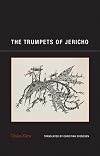
probably the most I have ever felt recognized by a book, have felt that the author thinks and writes like I do. To apprehend this as a book about pregnancy that drifts into abstraction is wrong, in the same way as saying Taubes' To America and Back in a Coffin is about divorce. Pregnancy is the trumpet of Jericho, the walls fall and everything comes pouring out and it's no longer about that exactly. Now it's about, ultimately, whether it's worth trying to live in a world that despises you show more for your strangeness, or if it's worth dying.
The wind reconfigures and merges with you. Let it. show less
The wind reconfigures and merges with you. Let it. show less

This particular point made by the translator, Caroline Rupprecht, in her introductory essay, strikes me as the most useful:
"Clearly, Zurn was not oblivious to the power of images. From 1933-1942, she worked as a dramaturge in the advertising department of the Nazi film industry. Her knowledge of the medium is apparent in both The Man of Jasmine and Dark Spring, where the little girl's masochistic fantasies tend to be fueled by images of popular culture."
The intersections of fascism and show more bourgeois patriarchy in German society is what needs to be foregrounded in this extremely short but affecting story about a young girl's sexual development; the key elements in this story are the distant father (Zurn's own father was in the military), distant mother (Zurn's mother was apparently the same), the older brother who rapes her when she is ten, and the spectre of German nationalism. show less
"Clearly, Zurn was not oblivious to the power of images. From 1933-1942, she worked as a dramaturge in the advertising department of the Nazi film industry. Her knowledge of the medium is apparent in both The Man of Jasmine and Dark Spring, where the little girl's masochistic fantasies tend to be fueled by images of popular culture."
The intersections of fascism and show more bourgeois patriarchy in German society is what needs to be foregrounded in this extremely short but affecting story about a young girl's sexual development; the key elements in this story are the distant father (Zurn's own father was in the military), distant mother (Zurn's mother was apparently the same), the older brother who rapes her when she is ten, and the spectre of German nationalism. show less
Dark Spring is an autobiographical coming-of-age novel that reads more like an exorcism than a memoir. In it author Unica Zurn traces the roots to her obsessions: the exotic father she idealized, the impure mother she detested, the masochistic fantasies and onanistic rituals which she said described the erotic life of a little girl based on her own childhood.
Lists
el (1)
You May Also Like


Associated Authors
Statistics
- Works
- 28
- Also by
- 3
- Members
- 655
- Popularity
- #38,516
- Rating
- 3.9
- Reviews
- 12
- ISBNs
- 53
- Languages
- 11
- Favorited
- 5