
Julia Kristeva
Author of Powers of Horror: An Essay on Abjection
About the Author
Julia Kristeva is a practicing psychoanalyst and professor of linguistics at the University of Paris
Image credit: Julia Kristeva en 2021
Series
Works by Julia Kristeva
The Sense and Non-Sense of Revolt The Powers and Limits of Psychoanalysis (1996) 56 copies, 1 review
Le Texte du roman : approche sémiologique d'une structure discursive transformationnelle (1974) 16 copies
Folle vérité: Vérité et vraisemblance du texte psychotique : séminaire (Tel quel) (French Edition) (1979) 9 copies
Le génie féminin : La vie, la folie, les mots (Hannah Arendt, Melanie Klein, Colette) (1999) 7 copies
Dostoyevsky in the Face of Death: or Language Haunted by Sex (European Perspectives: A Series in Social Thought and Cultural Criticism) (2023) 4 copies
L'infini, numéro 5 : Julia Kristeva, événement et révélation - Les looks sont entrés dans Paris. (1983) 3 copies
Understanding Through Fiction : A Selection from Teresa, My Love: An Imagined Life of the Saint of Avila (2014) 2 copies
記号の解体学一セメイオチケ. 1 1 copy
La linguistica 1 copy
℗Le ℗langage, cet inconnu 1 copy
LA LANGAGE, CET INCONNU 1 copy
"On Marguerite Duras" 1 copy
Eretica dell'amore 1 copy
Histórias de amor 1 copy
Il rischio del pensare 1 copy
Semiótica do romance 1 copy
The Kristeva Reader 1 copy
Nove duševne bolesti 1 copy
Žene i filozofija 1 copy
Associated Works
ACTS 4, VOL. 1 NO 4, 1985 — Contributor — 2 copies
Tagged
Common Knowledge
- Canonical name
- Kristeva, Julia
- Legal name
- Kristeva, Ioulia
- Other names
- Joyaux, Julia
- Birthdate
- 1941-06-24
- Gender
- female
- Education
- University of Sofia
- Occupations
- psychoanalyst
critic
novelist
professor
sociologist
philosopher (show all 7)
semiotician - Organizations
- Tel Quel
University of Paris VII-Diderot
Comité des intellectuels pour l'Europe des libertés (1978) - Awards and honors
- American Academy of Arts & Sciences (1998)
British Academy (Fellow, 2002)
Ordre national du Mérite (Commandeur, 2011)
Ordre national du Mérite (Officier, 2008)
Ordre national du Mérite (Chevalier, 1991)
Légion d'Honneur (Grand officier, 2020) (show all 16)
Légion d'Honneur (Commandeur, 2015)
Légion d'Honneur (Officier, 2008)
Légion d'Honneur (Chevalier, 1997)
Vaclav Havel Prize (2008)
Hannah Arendt Prize (2006)
Holberg International Memorial Prize (2004)
Grande Médaille de Vermeil de la Mairie de Paris (2005)
Ordre des Arts et des Lettres (Chevalier, 1987)
l'Académie universelle des cultures (2002)
Prix Harry Hertz (1989) - Relationships
- Sollers, Philippe (husband)
- Short biography
- Julia Kristeva was born in Sliven, Bulgaria and attended a French-speaking convent school. After graduating from the University of Sofia, she moved to Paris and has lived there ever since. In 1965, she joined the "Tel Quel" literary group, where she met her future husband, Philippe Sollers (born Joyaux). She is a professor of linguistics at the University of Paris VII-Diderot, and has been a visiting professor at Columbia University in New York. She has published collections of essays, works on psychoanalysis, philosophy, linguistics, and literature. She's also written a number of novels, including Le Vieil homme et les loups (The Old Man and the Wolves, 1991), Meurtre à Byzance (Murder in Byzantium, 2004), and Possessions (1996), which are often allegorical and have elements of detective fiction. Some of her books have been published under the name Julia Joyaux. She is also the founder and head of the Prix Simone de Beauvoir, an international human rights prize for women's freedom.
- Nationality
- Bulgaria (birth)
France - Birthplace
- Sliven, Bulgaria
- Places of residence
- Paris, France
- Associated Place (for map)
- Sliven, Bulgaria
Members
Reviews
Dostoyevsky, or The Flood of Language (European Perspectives: A Series in Social Thought and Cultural Criticism) by Julia Kristeva
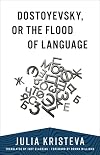
Julia Kristeva embarks on a wide-ranging and stimulating inquiry into Dostoyevsky's work and the profound ways it has influenced her own thinking. Reading across his major novels and shorter works, Kristeva offers incandescent insights into the poten
The Severed Head: Capital Visions (European Perspectives: A Series in Social Thought and Cultural Criticism) by Julia Kristeva
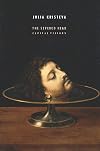
A remarkable examination of culture's fascination with severed heads. Kristeva begins with pre-Homo sapiens skull cults, and makes a very convincing argument that Freud failed to see the feminine in the totemic meal. If, for Freud, the eating of the father's brains signified the sons' desire to assimilate his power, for Kristeva it signifies both this as well as the primal infant's orality in coming to terms with the disappearance of the mother, prior to language and acculturation. So the show more head is both masculine and feminine, and Kristeva sweeps this much needed feminist and aesthetic intervention along with an examination of the decapitation of Medusa; art works ranging from Caravaggio to Artemisia Gentilischi���all the while considering how the head, the corporal seat of reason and power, comes to approximate our infantile fears of abandonment, our anxieties about ourselves, and our masochistic drive to destroy all reminders of our weaknesses and vulnerabilities. show less
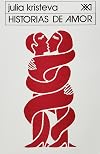
Ser psicoanalista es saber que todas las historias acaban hablando de amor. La queja que me confían los que balbucean a mi lado siempre tiene su origen en una falta de amor presente o pasada, real o imaginaria. Y sólo puedo entenderla si yo misma me sitúo en ese punto de infinito, dolor o arrebato. Con mi desfallecimiento, el otro compone el sentido de su aventura. Nuestra sociedad no tiene ya código amoroso. En cada relato privado, íntimo, inconfesable, buscamos descifrar los meandros show more de ese mal que tiene una relación tan extraña con las palabras. Idealización, estremecimiento, exaltación, pasión; deseo de fusión, de catástrofe mortal tendida hacia la inmortalidad, el amor es la figura de las contradicciones insolubles, el laboratorio de nuestro destino.¿Filosofía, religión, poesía, novela? Historias de amor, de Platón a santo Tomás, de Romeo y Julieta a Don Juan, de los trovadores a Stendhal, de la madona de Baudelaire a Bataille. Las grandes elaboraciones simbólicas no dicen nada que no se escuche en la sombra, cada día. Estar psíquicamente en vida significa estar enamorado, en análisis o presa de la literatura. Como si toda la historia humana no fuera más que una inmensa y permanente transferencia. show less
The Sense and Non-Sense of Revolt: The Powers and Limits of Psychoanalysis: 1 (European Perspectives: A Series in Social Thought and Cultural Criticism) by Julia Kristeva
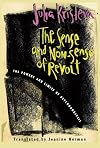
I've always thought that Julia Kristeva's books only hang together in the most tenuous way. [b:Tales of Love|81001|Tales of Love|Julia Kristeva|https://images.gr-assets.com/books/1400854082s/81001.jpg|504418], for instance, has no genuine coherence, only a common theme. [b:Powers of Horror: An Essay on Abjection|783310|Powers of Horror An Essay on Abjection|Julia Kristeva|https://images.gr-assets.com/books/1387667694s/783310.jpg|1381198], her best and most famous book, only coheres in parts show more - the first three chapters outlining her theory of abjection, for instance, veer off without much justification into a consideration of religious purity, and then, following a tenuous link, turns into an analysis of the fiction of Louis-Ferdinand Céline.
This method of throwing together ideas and authors that seem like they are vaguely in the same ballpark continues in The Sense and Non-Sense of Revolt, but because "revolt" is such a nebulous topic, there is never any sense of a tangible thread that develops between her different examples and concepts.
Kristeva begins by outlining how the words "revolt" and "revolution" have changed etymologically over time, only taking on their political meanings in more modern times. She then complains about how modern culture has nonetheless made revolt impossible, that we are locked into a world of compliant entertainment. Kristeva asserts that we "need" a new attitude of revolt, but as to what why we would require such a thing, or what its effectiveness might be, she never reveals. Like so many critics before her, she seems to accept uncritically that revolution in itself is an inherently good thing.
The middle chapters of the book are a long meditation on Oedipus as a "rebel" figure, albeit a failed one, and how this fits into the larger picture of psychoanalysis. Kristeva breaks no new ground here, simply restating the same tired parameters of a discourse she has been repeating for decades.
The last three chapters of the book look at three historical "rebels": Aragon, Sartre, and Barthes. The full breadth of Kristeva's erudition is on display on these chapters - she has certainly read and studied a lot, and knows her material well - but none of these examples adequately prove her point. Indeed, Aragon started out as the most rebellious of them all, a key members of the Surrealists, and later became a Stalinist! It's hardly a good case in support of rebellion. As usual, Kristeva simply plonks each chapter on these authors next to each other without any writerly sense as to how they might be connected - that is supposed to be obvious, even though it's not.
I haven't read much of Kristeva's recent work, but this book gives me the sense that she is stuck in a repetitive rut, going over the same tired ideas, stuck in a psychoanalytic orthodoxy, that sadly betrays the potential of her earlier works. show less
This method of throwing together ideas and authors that seem like they are vaguely in the same ballpark continues in The Sense and Non-Sense of Revolt, but because "revolt" is such a nebulous topic, there is never any sense of a tangible thread that develops between her different examples and concepts.
Kristeva begins by outlining how the words "revolt" and "revolution" have changed etymologically over time, only taking on their political meanings in more modern times. She then complains about how modern culture has nonetheless made revolt impossible, that we are locked into a world of compliant entertainment. Kristeva asserts that we "need" a new attitude of revolt, but as to what why we would require such a thing, or what its effectiveness might be, she never reveals. Like so many critics before her, she seems to accept uncritically that revolution in itself is an inherently good thing.
The middle chapters of the book are a long meditation on Oedipus as a "rebel" figure, albeit a failed one, and how this fits into the larger picture of psychoanalysis. Kristeva breaks no new ground here, simply restating the same tired parameters of a discourse she has been repeating for decades.
The last three chapters of the book look at three historical "rebels": Aragon, Sartre, and Barthes. The full breadth of Kristeva's erudition is on display on these chapters - she has certainly read and studied a lot, and knows her material well - but none of these examples adequately prove her point. Indeed, Aragon started out as the most rebellious of them all, a key members of the Surrealists, and later became a Stalinist! It's hardly a good case in support of rebellion. As usual, Kristeva simply plonks each chapter on these authors next to each other without any writerly sense as to how they might be connected - that is supposed to be obvious, even though it's not.
I haven't read much of Kristeva's recent work, but this book gives me the sense that she is stuck in a repetitive rut, going over the same tired ideas, stuck in a psychoanalytic orthodoxy, that sadly betrays the potential of her earlier works. show less
Lists
Awards


You May Also Like


Associated Authors
Statistics
- Works
- 116
- Also by
- 6
- Members
- 4,757
- Popularity
- #5,273
- Rating
- 3.6
- Reviews
- 39
- ISBNs
- 366
- Languages
- 17
- Favorited
- 8


