
Slavoj Žižek
Author of The Sublime Object of Ideology
About the Author
Slavoj Zizek is a Hegelian philosopher, Lacanian psychoanalyst, and political activist. He is international director of the Birkbeck Institute for the Humanities, and Global Distinguished Professor of German at New York University. He is the author of numerous books on dialectical materialism, as show more well as critique of ideology and art, including Event, and Trouble in Paradise, both published by Melville House. show less
Image credit: Slavoj Zizek
Series
Works by Slavoj Žižek
Welcome to the Desert of the Real: Five Essays on September 11 and Related Dates (2002) 689 copies, 8 reviews
The Fragile Absolute: Or, Why is the Christian Legacy Worth Fighting For? (2000) 522 copies, 7 reviews
Against the Double Blackmail: Refugees, Terror and Other Troubles with the Neighbours (2013) 199 copies
Everything You Always Wanted to Know about Lacan: But Were Afraid to Ask Hitchcock (1992) 196 copies
Like a Thief in Broad Daylight: Power in the Era of Post-Human Capitalism (2018) 183 copies, 2 reviews
The Art of the Ridiculous Sublime: On David Lynch's Lost Highway (Occasional Papers) (2000) 85 copies, 1 review
Lacrimae Rerum: Ensayos sobre cine moderno y ciberespacio / Essays about modern cinema and cyberspace (Spanish Edition) (2005) 52 copies
The Fright of Real Tears: Krzystof Kieslowski between Theory and Post-theory (2001) 48 copies, 1 review
Contra la tentación populista: & La melancolía y el acto (Colección Slavoj Žižek) (Spanish Edition) (2019) 11 copies, 1 review
Demasiado tarde para despertar: ¿Qué nos espera cuando no hay futuro? (Spanish Edition) (2024) 7 copies, 1 review
Violencia en Acto: Conferencias en Buenos Aires (Espacios del Saber) (Spanish Edition) (2004) 7 copies, 1 review
Liberal Fascisms (Žižek's Essays) 6 copies
Liebe Deinen Nächsten? Nein, Danke!Die Sackgasse Des Sozialen In Der Postmoderne (1999) — Author — 4 copies
La idea de comunismo. The Seoul Conference (2013) (Pensamiento Crítico) (Spanish Edition) (2018) 4 copies
Forsinket aktualitet : innledning til Det kommunistiske manifest / Slavoj Žižek ; oversatt og med etterord av Leif Høghaug. (2023) 2 copies
AS METÁSTASES DO GOZO 2 copies
Početi iz početka 2 copies
Contro il progresso 2 copies
Mao. Sobre la práctica y la contradicción. Slavoj Zizek presenta a Mao (Revoluciones) (Spanish Edition) (2010) 2 copies
Islam y modernidad 1 copy
Lacan — Author — 1 copy
Dünyadaki İsyanların Anlamı 1 copy
začeti od začetka 1 copy
Stvar iz unutarnjeg prostora 1 copy
Sexo e o Absoluto fracassado 1 copy
Eppur si muove 1 copy
Guida perversa alla politica globale tutti i paradossi del presente dalla crisi ecologica alla guerra in Ucraina (2022) 1 copy
کژ نگریستن 1 copy
Nebesa v smjatenii 1 copy
¡Žižek responde! 1 copy
En liten bok om kärlek 1 copy
Disparen contra Marx 1 copy
Cómo leer a Lacan 1 copy
A SUBJECTIVIDADE POR VIR 1 copy
Perverts Guide to Ideology 1 copy
Ideologikritik 1 copy
Territorios Inexplorados. Lenin después de Octubre (Cuestiones de antagonismo nº 106) (Spanish Edition) (2018) 1 copy
Bliźni 1 copy
O Céu em Desordem 1 copy
Pandemie! 2 1 copy
Pandemie! 1 1 copy
Unordnung im Himmel 1 copy
Slavoj Zizek 1 copy
VIRTUE AND TERROR 1 copy
Associated Works
The Matrix and Philosophy: Welcome to the Desert of the Real (2002) — Contributor — 900 copies, 7 reviews
In Defence of the Terror: Liberty or Death in the French Revolution (2003) — Foreword, some editions — 118 copies, 3 reviews
The Sleeping Giant Has Awoken: The New Politics of Religion in the United States (2008) — Afterword — 6 copies
The Possibility of Hope [2007 film] — Philosopher and Cultural Critic — 3 copies
Das schlaue Füchslein. Musik und Libretto von Leoš Janáček [Opernprogramm] — Contributor — 1 copy
Tagged
Common Knowledge
- Canonical name
- Žižek, Slavoj
- Birthdate
- 1949-03-21
- Gender
- male
- Education
- University of Ljubljana (Ph.D|1981)
University of Paris VIII (Ph.D|1986)
Bežigrad High School - Occupations
- philosopher
university professor - Organizations
- Communist Party of Slovenia
Slovenian Committee for the Defence of Human Rights
Slovenian Academy of Sciences and Arts
Ljubljana Society for Theoretical Psychoanalysis
University of Ljubljana
European Graduate School (show all 7)
University of London - Relationships
- Salecl, Renata (former spouse)
Krečič, Jela (wife) - Nationality
- Slovenia
- Birthplace
- Ljubljana, Slovenia, Yugoslavia
- Places of residence
- Ljubljana, Slovenia
Portorož, Slovenia
Paris, Île-de-France, France - Associated Place (for map)
- Slovenia
Members
Discussions
Zizek's best and worst in Philosophy and Theory (December 2011)
Reviews
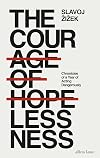
The future used to look brighter. This newfangled retrotopia is the core of numerous new books. The Courage of Hopelessness is Slavoj Zizek’s jaundiced look at the mess we’ve put ourselves in politically, economically, socially and environmentally. We seem to have made no progress. Zizek thinks we’ve come full circle to the hairtrigger era of pre WWI. It’s an intense, highly thought through analysis from a left perspective. One expects no less from Zizek.
He has collected a bouquet of show more contradictions and paradoxes:
-In China, where the Communist Party is the guardian of capitalism, it is not only illegal to claim workers have the right to self organize, it is illegal to claim it is illegal for workers to self organize.
-In Israel, 60% say they don’t believe in God, but everyone agrees God gave them the land.
-One good thing about religious fundamentalists: they cannot tolerate each other.
-Ayatollah Khomeini was clear: “Islam is politics or it is nothing.”
- All over the western world the Right talks about “taking back” the country (from international trade agreements, the EU, the UN) in order to simply submit it to the tyranny of world markets.
There are chapters on globalization, religion, politics, and inevitably, Donald Trump. The net effect of it all is to put us in a state of near hopelessness. We create paradoxes, ramp up hypocrisy, escalate corruption and double down on grave errors. And it’s not going to change.
Zizek employs the artifice of turning things back on their perpetrators, so that Nazis become Israel’s biggest fans, Muslims and Jews operate the same beliefs, Democrats are the biggest defenders of free trade while Republicans favor protectionism by the government, and the European Left is actually the strongest defender of Muslim rights. It’s easy enough to do, but after a while it becomes just another exercise anyone can perform.
There’s a lot to argue with, too. Zizek thinks communism, which has never been tried successfully anywhere precisely because of the foibles he sees everywhere, is the best of all worlds. And he thinks Americans should have voted blank in 2016, which is not how things work. Low turnout and blank ballots give you results like Brexit, Maduro and Kenyatta Jr.
The world is not getting easier to live in. Every economic system is a threat to somebody. The struggles expand.
David Wineberg show less
He has collected a bouquet of show more contradictions and paradoxes:
-In China, where the Communist Party is the guardian of capitalism, it is not only illegal to claim workers have the right to self organize, it is illegal to claim it is illegal for workers to self organize.
-In Israel, 60% say they don’t believe in God, but everyone agrees God gave them the land.
-One good thing about religious fundamentalists: they cannot tolerate each other.
-Ayatollah Khomeini was clear: “Islam is politics or it is nothing.”
- All over the western world the Right talks about “taking back” the country (from international trade agreements, the EU, the UN) in order to simply submit it to the tyranny of world markets.
There are chapters on globalization, religion, politics, and inevitably, Donald Trump. The net effect of it all is to put us in a state of near hopelessness. We create paradoxes, ramp up hypocrisy, escalate corruption and double down on grave errors. And it’s not going to change.
Zizek employs the artifice of turning things back on their perpetrators, so that Nazis become Israel’s biggest fans, Muslims and Jews operate the same beliefs, Democrats are the biggest defenders of free trade while Republicans favor protectionism by the government, and the European Left is actually the strongest defender of Muslim rights. It’s easy enough to do, but after a while it becomes just another exercise anyone can perform.
There’s a lot to argue with, too. Zizek thinks communism, which has never been tried successfully anywhere precisely because of the foibles he sees everywhere, is the best of all worlds. And he thinks Americans should have voted blank in 2016, which is not how things work. Low turnout and blank ballots give you results like Brexit, Maduro and Kenyatta Jr.
The world is not getting easier to live in. Every economic system is a threat to somebody. The struggles expand.
David Wineberg show less
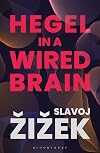
Hegel in a Wired Brain from Slavoj Zizek is another journey into the seemingly already wired brain of Zizek, though with a different meaning.
After seeing several videos and one talk in person where he presented many of these ideas over the past year or two, it is great to finally have the book to read. And it does not disappoint. His brain seems to work faster than he can sometimes articulate so his talks can often require multiple repetitions to catch all he is saying. Once you have show more connected all the dots he connects, he usually makes more sense than not. I don't always agree but I always appreciate the challenges he presents to my ways of thinking.
I'm not going to go on for paragraphs paraphrasing the book for you, that really serves little purpose since it is in the arguments he makes and not strictly the quotable phrases where the book has its value. His use of Hegel is enlightening even in places where I don't quite read Hegel the same way, but at no point do I think he crossed that line from a different understanding to an intentional misunderstanding to serve his argument.
Because Zizek touches on so many ideas and disciplines there are a multitude of ways into the text, and likely just as many takeaways. Certainly his references to singularity throughout and the concluding argument are the larger areas that everyone will takeaway. One area I was especially interested in was his discussion of internal and external communication. Whether having some type of direct connection between brains, between people, would actually bypass the limits of language. I tend to fall on the side that believes it won't make communication as clear as those who believe it will. Zizek highlights the strengths and drawbacks of positions while always making his own views readily apparent.
I highly recommend this for readers interested in where we are going with AI and direct connections whether through implants or some as yet unknown method. This will also be of interest to those with an interest in Hegel and philosophical thought in general. Both for the ideas presented and as an example of how to use a previous thinker's ideas to build upon. Zizek's writing is accessible and his explanations of how he is using Hegel, and others, does help to open the readership up to more readers. That said, some familiarity with Hegel at a minimum will enhance your understanding of the arguments. But for Zizek's big picture it isn't necessary to have a thorough understanding of Hegel. Much like those science books that have a lot of advanced math and theory but are presented in as jargon-free a manner as possible. Scientists get a lot from them but non-scientists can also make sense of the bigger arguments without fully grasping the nuances.
As a brief aside, there are several videos on YouTube where Zizek discusses these ideas and a search for Zizek Hegel in a Wired Brain should bring them up. They won't replace the book but they may help to make some ideas clearer, especially for those who like aural learning.
Reviewed from a copy made available by the publisher via NetGalley. show less
After seeing several videos and one talk in person where he presented many of these ideas over the past year or two, it is great to finally have the book to read. And it does not disappoint. His brain seems to work faster than he can sometimes articulate so his talks can often require multiple repetitions to catch all he is saying. Once you have show more connected all the dots he connects, he usually makes more sense than not. I don't always agree but I always appreciate the challenges he presents to my ways of thinking.
I'm not going to go on for paragraphs paraphrasing the book for you, that really serves little purpose since it is in the arguments he makes and not strictly the quotable phrases where the book has its value. His use of Hegel is enlightening even in places where I don't quite read Hegel the same way, but at no point do I think he crossed that line from a different understanding to an intentional misunderstanding to serve his argument.
Because Zizek touches on so many ideas and disciplines there are a multitude of ways into the text, and likely just as many takeaways. Certainly his references to singularity throughout and the concluding argument are the larger areas that everyone will takeaway. One area I was especially interested in was his discussion of internal and external communication. Whether having some type of direct connection between brains, between people, would actually bypass the limits of language. I tend to fall on the side that believes it won't make communication as clear as those who believe it will. Zizek highlights the strengths and drawbacks of positions while always making his own views readily apparent.
I highly recommend this for readers interested in where we are going with AI and direct connections whether through implants or some as yet unknown method. This will also be of interest to those with an interest in Hegel and philosophical thought in general. Both for the ideas presented and as an example of how to use a previous thinker's ideas to build upon. Zizek's writing is accessible and his explanations of how he is using Hegel, and others, does help to open the readership up to more readers. That said, some familiarity with Hegel at a minimum will enhance your understanding of the arguments. But for Zizek's big picture it isn't necessary to have a thorough understanding of Hegel. Much like those science books that have a lot of advanced math and theory but are presented in as jargon-free a manner as possible. Scientists get a lot from them but non-scientists can also make sense of the bigger arguments without fully grasping the nuances.
As a brief aside, there are several videos on YouTube where Zizek discusses these ideas and a search for Zizek Hegel in a Wired Brain should bring them up. They won't replace the book but they may help to make some ideas clearer, especially for those who like aural learning.
Reviewed from a copy made available by the publisher via NetGalley. show less

I keep returning to Brecht
who made you do the whole play with a door strapped to your back
a door can have diverse meanings
I stand outside your door
the odd thing is, you stand outside your door too
— Anne Carson, Antigonick (2012)
On the Uninhabitable
In her translation of The Oresteia (2009) Anne Carson remarks, "it is a truism of ancient stagecraft that the one who controls the doorway controls the tragedy." (We remind ourselves of Clytemnestra rolling out the red carpet for Agamemnon.) show more One wonders, then, about Antigone's relation to Control in the Brechtian staging of the play with that door strapped to her back. (It seems to be an error that Carson omits this connection in Antigonick.) The possession of a door in the closest possible proximity (and yet inaccessible) seems to be a metaphor for how Žižek reads Antigone in his introduction to this text (via Judith Butler), "Antigone undermines the existing symbolic order [. . .] she publicly assumes an uninhabitable position, a position for which there is no place in the public space – not a priori, but only with regard to the way this space is structured now, in the historically contingent and specific conditions” (23).
At this point, Žižek also references that other "uninhabitable position" i.e. Kierkegaard's Abraham who cannot communicate the meaning of the divine subpoena because, though he might say it all plainly, the decision comes from a place which can't be understood. "[Antigone's] deadlock is that she is prevented from sharing this accursed knowledge (like Abraham, who also could not communicate to others the divine injunction to sacrifice his son)" (14). Žižek is playing an interesting shell-game here: Kierkegaard's redemption "by virtue of the absurd" (which is "Real" in the sense that biblical story is "True") is likened to Antigone's "uninhabitable position" of non-relation to the "big Other" ("but only with regard to historically contingent and specific conditions"), the solution for which is the "[Agambenian] violent [reassertion of] the ‘revolutionary’ Messianic dimension of politics" (24). In short, what this means (without so many parentheticals) is that the Kierkegaardian "paradox of faith" is proposed as a kind of way to do politics. By an interesting transitive property, Žižek shows that Antigone's position isn't "uninhabitable" so long as we can inhabit the position which brings about its condition of possibility. (Notably, the way Žižek uses Fear and Trembling (1843) as a political workhorse re-doubles the "uninhabitable" position of what Kierkegaard calls, "Religiousness B.")
Messianism as a political ethos seems to be the necessary response to anxiety about "Closure;" i.e. that feeling that comes from reading too much Agamben. Though one wonders whether this is a proper Socialist impulse. In The Pervert's Guide to Ideology (2012) Žižek notes how liberals, after viewing Triumph of the Will (1935), often remark how they finally understand the appeal of 1930's German fascism. The response, of course, is that all the "volkish" appeal of that propaganda piece was appropriated from the left-wing Workers Movement. By the same token we might remark that "Messianism" is not the characteristic ethos of left-wing movements (contra what Walter Benjamin might say), but that Messianism has been appropriated from its origin in the diverse paleo-political movements whose common characteristic is that they're "always-already a failure." We recall here the consequence for the actor who plays Antigone in the Brechtian staging always on the threshold: "Let’s return to Brecht, maybe he got you best / to carry one’s own door will make a person / clumsy, tired and strange” (Carson, Antigonick).
It isn't clear how close Žižek comes to accomplishing his object in his construction of this text: "My retelling is consciously anachronistic – It doesn’t pretend to be a work of art but an ethico-political exercise" (25). To the extent that we are reading an "ethico-political exercise," the project seems to be haunted by a special anxiety: how does Žižek understands his task as translator/playwright. (It is a remarkable elision for a text with such a long introduction to leave this unaddressed. For the sake of comparison, Anne Carson says: "I take it as the task of the translator to forbid that you should ever lose your screams” (Carson, Antigonick).) Perhaps Kierkegaard would be able to name Žižek's anxiety here. The characteristic pivot to political "Messianism" as an escape from hypostatized "closure" suggests "the despair of willing to be other-than-oneself," (from The Concept of Anxiety, (1844)). What's remarkable in this is that while Žižek uses Kierkegaard as a case study, the process also appears to be working in reverse. The forces of revolution, as Žižek imagines them, seem to be drawn, ineluctably, toward Kierkegaard's subsequent category of "Demonic dread," that is, "willing, in despair, to be oneself." This quality of Presumption appears to be what our violent revolutionary forces, internet forum partisans, and translators-who-yet-do-not-intend-to-write-good-verse have in common. At the limit of the-end-of-civilization, male "virtue" approximates, once again, that uninhabitable position which was, for the Greeks, female iniquity: total presumption.
show less
EPITAPH FOR ARCHEDIKE, DAUGHTHER OF HIPPIAS
(Last tyrant of Athens)
"Of a man who himself was best in Greece of the men of his day:
Hippias’ daughter Archedike this dust hides,
She of a father, of a husband, of brothers, of children all tyrants
being.
Nor did she push her mind up into presumption”
— Simonides (trans. Anne Carson)

If you have heard Žižek speak, you'll know what you're getting in terms of content. He is fascinated by linguistic and phenomenological paradoxes, contradictions, abstractions, and subversions underlying what society and the conscious mind take for granted. The self-limiting nature of text restrains him to where he's much more relaxing to read than to hear (even though he's an entertaining speaker, with his speed and tangents, he's a lot to keep up with). A lot of his positions are show more intangible and insights impractical, but nevertheless almost always interesting and witty. It's viscerally hard to criticize him since he is charismatic and takes himself so unseriously, but I will say in the last few years I've found his unqualified orthodox neoliberal stances to be detestable, especially in light of the dust settling about everything. show less
Lists
Awards


You May Also Like


Associated Authors
Statistics
- Works
- 325
- Also by
- 19
- Members
- 18,008
- Popularity
- #1,221
- Rating
- 3.7
- Reviews
- 172
- ISBNs
- 928
- Languages
- 29
- Favorited
- 52


