
John Updike (1932–2009)
Author of Rabbit, Run
About the Author
American novelist, poet, and critic John Updike was born in Reading, Pennsylvania on March 18, 1932. He received an A.B. degree from Harvard University, which he attended on a scholarship, in 1954. After graduation, he accepted a one-year fellowship to study painting at the Ruskin School of Drawing show more and Fine Art in Oxford, England. After returning from England in 1955, he worked for two years on the staff of The New Yorker. This marked the beginning of a long relationship with the magazine, during which he has contributed numerous short stories, poems, and book reviews. Although Updike's first published book was a collection of verse, The Carpentered Hen and Other Tame Creatures (1958), his renown as a writer is based on his fiction, beginning with The Poorhouse Fair (1959). During his lifetime, he wrote more than 50 books and primarily focused on middle-class America and their major concerns---marriage, divorce, religion, materialism, and sex. Among his best-known works are the Rabbit tetrology---Rabbit, Run (1960), Rabbit Redux (1971), Rabbit Is Rich (1981), and Rabbit at Rest (1988). Rabbit, Run introduces Harry "Rabbit" Angstrom as a 26-year-old salesman of dime-store gadgets trapped in an unhappy marriage in a dismal Pennsylvania town, looking back wistfully on his days as a high school basketball star. Rabbit Redux takes up the story 10 years later, and Rabbit's relationship with representative figures of the 1960s enables Updike to provide social commentary in a story marked by mellow wisdom and compassion in spite of some shocking jolts. In Rabbit Is Rich, Harry is comfortably middle-aged and complacent, and much of the book seems to satirize the country-club set and the swinging sexual/social life of Rabbit and his friends. Finally, in Rabbit at Rest, Harry arrives at the age where he must confront his mortality. Updike won the Pulitzer Prize for both Rabbit Is Rich and Rabbit at Rest. Updike's other novels range widely in subject and locale, from The Poorhouse Fair, about a home for the aged that seems to be a microcosm for society as a whole, through The Court (1978), about a revolution in Africa, to The Witches of Eastwick (1984), in which Updike tries to write from inside the sensibilities of three witches in contemporary New England. The Centaur (1963) is a subtle, complicated allegorical novel that won Updike the National Book Award in 1964. In addition to his novels, Updike also has written short stories, poems, critical essays, and reviews. Self-Consciousness (1989) is a memoir of his early life, his thoughts on issues such as the Vietnam War, and his attitude toward religion. He was elected to the American Academy of Arts and Letters in 1977. He died of lung cancer on January 27, 2009 at the age of 76. (Bowker Author Biography) John Updike was born in 1932, in Shillington, Pennsylvania. Since 1957 he has lived in Massachusetts. His novels have won the Pulitzer Prize, the National Book Award, the National Book Critics Circle Award, & the Howells Medal. (Publisher Provided) John Updike was born in 1932 and attended Harvard College and the Ruskin School of Drawing and Fine Art in Oxford, England. Form 1955 to 1957 he was a staff member of The New Yorker, which he contributed numerous writings. Updike's art criticism has appeared in publications including Arts and Antiques, The New Republic, The New York Times Book Review, and Realites, among many others. He is the author of such best-selling novels as Rabbit Run and Rabbit is Rich. His many works of fiction, poetry and criticism have been awarded the Pulitzer Prize, the National Book Award, the American Book Award, and the National Book Critics Circle Award. For the past 40 years he has lived in Massachusetts. (Publisher Provided) John Updike is the author of some 50 books, including collections of short stories, poems, & criticism. His novels have won the Pulitzer Prize, the National Book Award, the National Book Critics Circle Award, & the Howells Medal. Born in Shillington, Pennsylvania, in 1932, he has lived in Massachusetts since 1957. (Publisher Provided) show less
Image credit: John Updike, 2006.
Series
Works by John Updike
The Complete Henry Bech: Twenty Stories: Bech: A Book; Bech Is Back; Bech at Bay; His Oeuvre (2001) 237 copies, 3 reviews
John Updike: Collected Early Stories (LOA #242) (Library of America John Updike Edition) (2013) 124 copies
John Updike: Novels 1959-1965 (LOA #311): The Poorhouse Fair / Rabbit, Run / The Centaur / Of the Farm (Library of America John Updike Edition) (2018) 85 copies
John Updike: Novels 1968-1975 (LOA #326): Couples / Rabbit Redux / A Month of Sundays (Library of America John Updike Edition) (2020) 59 copies
John Updike: Novels 1978-1984 (LOA #339): The Coup / Rabbit Is Rich / The Witches of Eastwick (Library of America) (2021) 52 copies
John Updike: Novels 1986–1990 (LOA #354): Roger's Version / Rabbit at Rest (The Library of America, 354) (2022) 43 copies
John Updike: Novels 1996–2000 (LOA #365): In the Beauty of the Lilies / Gertrude and Claudius / Rabbit Remembered (Library of America, 365) (2023) 37 copies
Seek My Face: A novel 28 copies
American Masters: The Short Stories of Raymond Carver, John Cheever, and John Updike (1998) 10 copies
The Chaste Planet [short fiction] 7 copies
Ilyen boldog se voltam elbeszélések 7 copies
Centennial portfolio : fifty original prints by members of the American Academy of Arts and Letters in celebration of its centennial (1998) 5 copies
S by John Updike (1988-02-12) 4 copies
John Updike's Rabbit Series, 3 Books: Rabbit Redux / Rabbit at Rest / Rabbit Is Rich (1990) 3 copies
Parit 3 copies
Playing with Dynamite 3 copies
Six Poems 3 copies
Warm Wine 3 copies
Ego and Art in Walt Whitman 2 copies
O Golpe 2 copies
Flying to Florida -- Broadside 2 copies
The Woman Who Got Away 2 copies
I morgen og i morgen og så videre 2 copies
A Good Place 2 copies
New York Girl 2 copies
Haren Återställd 2 copies
Rabbit, Run (Rabbit Angstrom, #1) 2 copies
Domácí biograf : výbor z veršů 2 copies
Un mese di domeniche 2 copies
The Beauty of The Lilies 2 copies
Three Texts from Early Ipswich 2 copies
Natural Color 2 copies
The Cats 1 copy
Oliver's Evolution 1 copy
How It Was, Really? 1 copy
Metamorphosis 1 copy
Lunch Hour 1 copy
Rabit at rest 1 copy
The Bech trilogy signed 1 copy
Getting the Words Out 1 copy
On literary biography 1 copy
O farmě 1 copy
Ez eastwicki boszorkányok 1 copy
Kralik Se Vraci 1 copy
Az eastwicki boszorkányok 1 copy
Demasiado lejos 1 copy
Casais Trocados 1 copy
Uma outra vida 1 copy
The True New Yorker... 1 copy
S.: A Novel by John Updike 1 copy
Stalno traganje 1 copy
Kentaurs : [romāns] 1 copy
Select Stories 1 copy
How Was It, Really? 1 copy
White on White 1 copy
Wife-wooing 1 copy
Small City People 1 copy
Dream & Reality 1 copy
In the Valley of the Lillies 1 copy
"Cruise" 1 copy
Deaths of Distant Friends 1 copy
Kafka's Greatest Stories 1 copy
Emersonianism 1 copy
Confessions of a wild bore 1 copy
Two Sonnets 1 copy
Here Come the Maples 1 copy
Bath after sailing 1 copy
2004 1 copy
1999 1 copy
Endpoint 1 copy
Bessere Verhältnisse : Roman 1 copy
Pygmalion 1 copy
Thanatopses 1 copy
O Centauro Livro 1 1 copy
The Early Stories 1953-1975 1 copy
Should Wizard Hit Mommy? 1 copy
Duvfjädrar 1 copy
Farrell's Caddie 1 copy
A sense of shelter 1 copy
Jesus and Elvis 1 copy
Religious Consolation 1 copy
Från gården 1 copy
Still Life (Still Life) 1 copy
TORNA, CONIGLIO. CDE 1 copy
Associated Works
This I Believe: The Personal Philosophies of Remarkable Men and Women (2006) — Contributor — 1,148 copies, 36 reviews
My Mother She Killed Me, My Father He Ate Me: Forty New Fairy Tales (2010) — Contributor — 1,110 copies, 27 reviews
Literature: An Introduction to Fiction, Poetry, and Drama (1995) — Contributor, some editions — 1,025 copies, 7 reviews
Fierce Pajamas: An Anthology of Humor Writing from The New Yorker (2001) — Contributor — 791 copies, 5 reviews
Sanatorium Under the Sign of the Hourglass (1937) — Introduction, some editions — 697 copies, 12 reviews
Is Sex Necessary?: Or Why You Feel the Way You Do (1929) — Foreword, some editions — 642 copies, 13 reviews
All I Did Was Ask: Conversations with Writers, Actors, Musicians, and Artists (2004) — Contributor — 602 copies, 13 reviews
The World of the Short Story: A 20th Century Collection (1986) — Contributor — 513 copies, 4 reviews
Writers on Writing: Collected Essays from the New York Times (2001) — Contributor — 481 copies, 5 reviews
For the Love of Books: 115 Celebrated Writers on the Books They Love Most (1999) — Contributor — 480 copies, 4 reviews
Points of View: An Anthology of Short Stories, Revised & Updated Edition (1995) — Contributor — 443 copies, 7 reviews
You've Got to Read This: Contemporary American Writers Introduce Stories that Held Them in Awe (1994) — Contributor — 415 copies, 3 reviews
The Art of the Tale: An International Anthology of Short Stories (1986) — Contributor — 381 copies, 3 reviews
The American Short Story: A Collection of the Best Known and Most Memorable Stories by the Great American Authors (1994) — Contributor — 371 copies
The Writer's Digest Handbook of Short Story Writing - Volume 2 - (1988) — Introduction, some editions — 240 copies, 1 review
Burn This Book: PEN Writers Speak Out on the Power of the Word (2009) — Contributor — 218 copies, 3 reviews
Christmas at The New Yorker: Stories, Poems, Humor, and Art (2003) — Foreword — 215 copies, 1 review
First Fiction: An Anthology of the First Published Stories by Famous Writers (1994) — Contributor — 197 copies, 1 review
This Is My Best: Great Writers Share Their Favorite Work (2004) — Contributor — 175 copies, 3 reviews
An American Album: One Hundred and Fifty Years of Harper's Magazine (2000) — Contributor — 146 copies, 1 review
The Ecco Anthology of Contemporary American Short Fiction (2008) — Contributor — 141 copies, 2 reviews
Novel History: Historians and Novelists Confront America's Past and Each Other (2001) — Contributor — 139 copies, 1 review
The Norton Anthology of American Literature, Volume 2: 1865 to Present (1979) — Contributor, some editions — 137 copies
Unknown Masterpieces: Writers Rediscover Literature's Hidden Classics (New York Review Books Classics) (2003) — Contributor — 114 copies, 2 reviews
The Sophisticated Cat: A Gathering of Stories, Poems, and Miscellaneous Writings About Cats (1992) — Contributor — 112 copies, 1 review
The Art of Mickey Mouse: Artists Interpret The World's Favorite Mouse (Disney Miniature Series) (1991) — Introduction, some editions — 97 copies, 3 reviews
Good Morning To You, Valentine: Poems For Valentine's Day (1976) — Contributor — 91 copies, 5 reviews
The Sonnets: A Dual-Language Edition with Parallel Text (Penguin Classics) (2010) — Translator, some editions — 86 copies, 2 reviews
Who's Writing This? Notations on the Authorial I, with Self-Portraits {not Antæus} (1995) — Contributor — 76 copies
The Heath Anthology of American Literature, Concise Edition (2003) — Contributor — 73 copies, 1 review
The Smiles of Rome: A Literary Companion for Readers and Travelers (2005) — Contributor — 67 copies, 2 reviews
Fifty Years: Being a Retrospective Collection of Novels, Novellas, Tales, Drama, Poetry, and Reportage and Essays: All Drawn from Volumes Issued during the Last Half-Century by… (1965) — Contributor — 56 copies
The Literary Lover: Great Stories of Passion and Romance (1993) — Contributor — 55 copies, 2 reviews
Literary Traveller: An Anthology of Contemporary Short Fiction (1994) — Contributor — 55 copies, 1 review
The lucifer society;: Macabre tales by great modern writers (1972) — Contributor — 52 copies, 1 review
The Writer's Brush: Paintings, Drawings, and Sculpture by Writers (2007) — Contributor, some editions — 46 copies
Best of The Oxford American: Ten Years from the Southern Magazine of Good Writing {anthology} (2002) — Contributor — 45 copies
The Second Gates of Paradise: The Anthology of Erotic Short Fiction (1997) — Contributor — 38 copies
High Infidelity: 24 Great Short Stories About Adultery by Some of Our Best Contemporary Authors (1997) — Contributor — 33 copies
Rediscoveries II: Important Writers Select Their Favorite Works of Neglected Fiction (1988) — Contributor — 31 copies, 1 review
The Company They Kept, Volume Two: Writers on Unforgettable Friendships (2011) — Contributor — 25 copies
Fifty Years of the American Short Story from the O. Henry Awards 1919-1970 (1970) — Contributor — 17 copies, 1 review
Antaeus No. 73/74, Spring 1994 - Who’s Writing This: Notations on the Authorial I {magazine} (1994) — Contributor — 6 copies
Fifty Years of the American Short Story from the O. Henry Awards 1919-1970, Volume 2 (1970) — Contributor — 5 copies
Als Papa Tennis lernte, Der Inbegriff des Erfolgs, Kreuzfahrt (3 TB) — Contributor — 4 copies
Moderne Amerikaanse verhalen — Contributor — 3 copies
Vader is de beste — Author — 3 copies
Time-Life Book Digest: A Woman of Our Times | The Cat and The Curmudgeon | Rabbit At Rest | Under Seige (1990) 3 copies
Science and the Arts — Contributor — 2 copies
Meesters der vertelkunst : zevenendertig verhalen uit de moderne wereldliteratuur (1975) — Contributor — 2 copies
Cricket Magazine, Vol. 8, No. 4, December 1980 — Contributor — 2 copies
32 Współczesne Opowiadania Amerykańskie - Tom II — Contributor — 1 copy
Eleven American Stories — Contributor — 1 copy
Tagged
Common Knowledge
- Canonical name
- Updike, John
- Legal name
- Updike, John Hoyer
- Other names
- Апдайк, Джон
- Birthdate
- 1932-03-18
- Date of death
- 2009-01-27
- Gender
- male
- Education
- Harvard College (AB, summa cum laude|1954)
Ruskin School of Drawing and Fine Art, Oxford - Occupations
- author
- Organizations
- Harvard Lampoon
The New Yorker - Awards and honors
- National Book Award, Medal of Distinguished Contribution to American Letters (1998)
PEN/Malamud Award (1988)
National Medal of Arts (1989)
National Humanities Medal (2003)
Bad Sex in Fiction (2008)
Gold Medal, American Academy of Arts and Letters (2007) (show all 39)
National Institute of Arts and Letters (1964)
American Academy of Arts and Letters (1964)
American Academy of Arts and Sciences (1976)
Cover of "Time" magazine (1968 ∙ 1981)
Signet Society Medal for Achievement in the Arts (1971)
Library of Congress, Honorary Consultant in American Letters ( 1972)
Recorded by "The Spoken Arts Treasury of 100 American Poets" (1972)
Lecturer, Centro Venezolano Americano (1972)
Lincoln Lectureship from the Fulbright Board of Foreign Scholarships (1973)
Lafayette College, honorary Doctor of Literature (1974)
Lotus Club Award of Merit (1975)
Distinguished Pennsylvania Artist Award (1983)
Lincoln Literary Award, Union League Club (1983)
National Arts Club Medal of Honor (1984)
Kutztown University Foundation's Director Award (1985)
Exhibit of work at M.D. Anderson Library of the University of Houston (1985)
Peggy Varnadow Helmerich Award (1987)
Elmer Holmes Bobst Award for Fiction (1987)
Brandeis University Life Achievement Award (1988)
First annual PEN/Malamud Memorial Reading (1988)
Conch Republic Prize for Literature (1993)
Howells Medal (1995)
Commandeur de l'Ordre des Arts et des Lettres, France (1995)
Society for the Arts, Religion and Contemporary Culture (1996)
Campion Award (1997)
Harvard Arts First Medal (1998)
Thomas Cooper Library Medal (1998)
Man Booker International Prize Finalist (2005)
F. Scott Fitzgerald Award for Outstanding Achievement in American Fiction (2002)
Jefferson Lecture (2008)
multiple honorary doctorates
Bowdoin Prize (1954)
Carl Sandburg Literary Award (2005) - Agent
- William Loverd
- Relationships
- Hoyer, Linda Grace (parent)
Updike, David (child)
Updike, Mary (aunt)
Jones, Judith (editor) - Cause of death
- cancer (lung)
- Nationality
- USA
- Birthplace
- Reading, Pennsylvania, USA
- Places of residence
- West Reading, Pennsylvania, USA
Shillington, Pennsylvania, USA
Plowville, Pennsylvania, USA
Cambridge, Massachusetts, USA
New York, New York, USA
Rockport, Massachusetts, USA (show all 9)
Ipswich, Massachusetts, USA
Georgetown, Massachusetts, USA
Beverly Farms, Massachusetts, USA - Place of death
- Danvers, Massachusetts, USA
- Burial location
- Danvers, Massachusetts, USA
- Map Location
- USA
Members
Discussions
John Updike in Library of America Subscribers (November 2022)
What's your vote for the worst movie made of a good book? in Jo's Book Group (September 2022)
John Updike: American Author Challenge in 75 Books Challenge for 2014 (December 2014)
Reviews

Did I want to read Updike? I had a group who read him this month, and I had never read Updike before. So, I got myself excited to join. He can do prose, and he can drive a story.
John Updike turned 28 the year he published Rabbit, Run, his second novel, and first of his famous Rabbit quartet, each book from another decade. Updike had a short story collection and a well-regarded poetry collection already published. But Rabbit, oh Rabbit. Oh, fragile manhood. Rabbit is the star high school show more basketball player who doesn't know how to move on. He wants to keep playing. But he's married with a son and baby on the way. But Rabbit is impulsive, and only impulsive. He runs, or drives, and comes back again, and then what.
Why does anyone care about Rabbit? Well, first the prose is quite elegant, with alliterative sentences quietly and unobtrusively scattered in descriptions of suburbia, highways, bars and gardens. And second because he's exciting, and Updike ramps up the pace and intensity. Also, he's endearing, because he loves everyone and means it, at least in the moment. And it's either beautiful or entertaining. But mostly because we watch this wrecking ball swing in a state of horror-fascination. Can I call it gleeful horror? Sure, we must wonder why Rabbit runs. What's driving him? His manhood, his impulsiveness, his stodgy surroundings? Is Rabbit another rebel without a cause, or perhaps with one? (Updike has said he's partially modeled on Jack Kerouac). But also, 1950's comforts are no match for Rabbit's deeper impulse.
---
Addendum: As Rabbit drove the Pennsylvania highways, abandoning his wife without saying anything, the parallel with a novel that came out this year, The Rest of Our Lives by Ben Markovits, was wonderfully apparent. Markovits, who played professional basketball, wrote a homage, or perhaps an updated take on our confused concepts of masculinity. show less
John Updike turned 28 the year he published Rabbit, Run, his second novel, and first of his famous Rabbit quartet, each book from another decade. Updike had a short story collection and a well-regarded poetry collection already published. But Rabbit, oh Rabbit. Oh, fragile manhood. Rabbit is the star high school show more basketball player who doesn't know how to move on. He wants to keep playing. But he's married with a son and baby on the way. But Rabbit is impulsive, and only impulsive. He runs, or drives, and comes back again, and then what.
Why does anyone care about Rabbit? Well, first the prose is quite elegant, with alliterative sentences quietly and unobtrusively scattered in descriptions of suburbia, highways, bars and gardens. And second because he's exciting, and Updike ramps up the pace and intensity. Also, he's endearing, because he loves everyone and means it, at least in the moment. And it's either beautiful or entertaining. But mostly because we watch this wrecking ball swing in a state of horror-fascination. Can I call it gleeful horror? Sure, we must wonder why Rabbit runs. What's driving him? His manhood, his impulsiveness, his stodgy surroundings? Is Rabbit another rebel without a cause, or perhaps with one? (Updike has said he's partially modeled on Jack Kerouac). But also, 1950's comforts are no match for Rabbit's deeper impulse.
---
Addendum: As Rabbit drove the Pennsylvania highways, abandoning his wife without saying anything, the parallel with a novel that came out this year, The Rest of Our Lives by Ben Markovits, was wonderfully apparent. Markovits, who played professional basketball, wrote a homage, or perhaps an updated take on our confused concepts of masculinity. show less

There is a brief passage near the end of Rabbit Is Rich that does a wonderful job of underscoring one of the novel’s main themes: ”Life. Too much of it, and not enough. The fear that it will end some day, and the fear that tomorrow will be the same as yesterday.” Harry “Rabbit” Angstrom, author John Updike’s irrepressible mid-20th century Everyman, has reached middle age, relatively unscathed by the travails of his earlier years. He and his wife Janice have settled into a routine show more that their relative affluence affords them in their Pennsylvania suburb in the late 1970s. But Rabbit finds himself still running—searching is probably a better word—for whatever it is he doesn’t have: improved business prospects, resolution about the status of a long-lost daughter, a better relationship with his son, more sex (especially with his friend’s much younger wife), and a more reliable golf swing. In short, he has reached the point in life where he has acquired much of what he wants, but remains unsatisfied with all that he has.
The third of four novels focusing on Angstrom, Rabbit is Rich is ultimately an unblinking character study of a man who has reached his 40s, with all the successes, failures, frustrated hopes, and dreams still to be realized that this age implies. When he is not fretting over selling Toyota automobiles—Harry’s day job, courtesy of his overbearing mother-in-law—he spends most of his time drinking and playing golf with his buddies, thinking about sex, worrying about current economic conditions, reminiscing about the past and contemplating death, or feuding with his son, who has his own secrets to protect. I found Updike’s prose to be precise, insightful, and often very funny. The author was a keen observer of what it meant to be both middle class and middle age during that era and the story he tells here is one that is both richly detailed and compelling. It is also a tale that is occasionally vulgar and profane, but never beyond the bounds of what befits the character. After reading this novel, you may not like Rabbit, in all his self-absorbed and clueless glory, but you will definitely have a better understanding of what makes him tick. show less
The third of four novels focusing on Angstrom, Rabbit is Rich is ultimately an unblinking character study of a man who has reached his 40s, with all the successes, failures, frustrated hopes, and dreams still to be realized that this age implies. When he is not fretting over selling Toyota automobiles—Harry’s day job, courtesy of his overbearing mother-in-law—he spends most of his time drinking and playing golf with his buddies, thinking about sex, worrying about current economic conditions, reminiscing about the past and contemplating death, or feuding with his son, who has his own secrets to protect. I found Updike’s prose to be precise, insightful, and often very funny. The author was a keen observer of what it meant to be both middle class and middle age during that era and the story he tells here is one that is both richly detailed and compelling. It is also a tale that is occasionally vulgar and profane, but never beyond the bounds of what befits the character. After reading this novel, you may not like Rabbit, in all his self-absorbed and clueless glory, but you will definitely have a better understanding of what makes him tick. show less
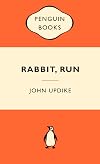
One of my favourite virtual friends at Goodreads has a very low opinion of John Updike, bracketing him in what she calls The Macho Era along with Roth, Bellow, Kerouac, and Salinger. She recognises that they were writers of their time but she's lost patience with their misogyny . I knew this before I started reading Rabbit, Run, which is listed in 1001 Books You Must Read Before You Die and it made me think about why I haven't (yet) entirely lost patience with American writers whose books show more feature characters I would despise in real life.
I think the answer is that it's a window onto a world that my generation has largely escaped. This fiction shows vividly why we have books like Betty Friedan's The Feminine Mystique (1963), The Second Sex (1949) by Simone de Beauvoir and The Female Eunuch (1970) by Germaine Greer. It's because Updike gives us an insight into how men thought about us in an era when there was no expectation that they might be better than that. The Australian variant is The Glass Canoe (1976) by David Ireland, equally evocative of an ugly version of masculinity, see my review.
To read the rest of my review please visit https://anzlitlovers.com/2026/07/05/rabbit-run-1960-by-john-updike/ show less
I think the answer is that it's a window onto a world that my generation has largely escaped. This fiction shows vividly why we have books like Betty Friedan's The Feminine Mystique (1963), The Second Sex (1949) by Simone de Beauvoir and The Female Eunuch (1970) by Germaine Greer. It's because Updike gives us an insight into how men thought about us in an era when there was no expectation that they might be better than that. The Australian variant is The Glass Canoe (1976) by David Ireland, equally evocative of an ugly version of masculinity, see my review.
To read the rest of my review please visit https://anzlitlovers.com/2026/07/05/rabbit-run-1960-by-john-updike/ show less
Verse : The carpentered hen, and other tame creatures [and] Telephone poles, and other poems by John Updike

Updike's verse offers a breezy read, but like Lewis Carroll or maybe Pynchon, there seems something thoughtful behind the lunacy and manic wordplay. The characteristic personality of these verses is play, but with a sincerity that belies any sense of frivolity or throw-away farce. I've been revisiting Monty Python's Flying Circus of late, and I recognise a similar stance of commentary on the human condition there as in Updike's poems --though Python are much more absurdist.
I'd love to have a show more few couplets memorised (like his description of an umbrella), but that never works for me. Instead, I should just pick this up from time to time: poems are short and immediately rewarding. show less
I'd love to have a show more few couplets memorised (like his description of an umbrella), but that never works for me. Instead, I should just pick this up from time to time: poems are short and immediately rewarding. show less
Lists
Lucy's Long List (13)
1970s (1)
. (1)
Devilish Books (1)
Elegant Prose (1)
bound (1)
Art of Reading (1)
The "A" List (1)
METAfiction (1)
A Novel Cure (1)
100 New Classics (1)
Magic Realism (2)
Five star books (2)
Favourite Books (2)
1980s (2)
To Read (3)
ScaredyKIT 2022 (1)
Witchy Fiction (1)
1990s (1)
to get (1)
Unread books (1)
Allie's Wishlist (1)
Awards


You May Also Like


Associated Authors
Statistics
- Works
- 342
- Also by
- 205
- Members
- 53,774
- Popularity
- #281
- Rating
- 3.8
- Reviews
- 774
- ISBNs
- 1,304
- Languages
- 36
- Favorited
- 149


