
Bernard Malamud (1914–1986)
Author of The Fixer
About the Author
Bernard Malamud was born in 1914 in New York City and later received his B. A. from City College of New York and his M. A. from Columbia University. All of Malamud's works are highly respected, including "Armistice" (his first), "The Magic Barrel," which won the National Book Award, "The Fixer," show more which received a Pulitzer Prize. "The Assistant," "The Natural," "The Fixer," and "The Angel Levine," which were all adapted as films. Bernard Malamud died in 1986. (Bowker Author Biography) show less
Image credit: By Unknown - Fotografía extraída de la revista Primera Plana. Año VIII numero 401, 6 de octubre de 1970 ,Buenos Aires, Argentina., Public Domain, https://commons.wikimedia.org/w/index.php?curid=4833919
Works by Bernard Malamud
Novels and Stories of the 1940s & 50s: The Natural / The Assistant / Stories (2014) 115 copies, 2 reviews
Novels and Stories of the 1960s: A New Life / The Fixer / Pictures of Fidelman: An Exhibition / Stories (2014) 100 copies
Two Novels by Bernard Malamud: The Natural & The Assistant (The Modern Library, No.317) (2000) 37 copies, 2 reviews
Los Premios Pulitzer de Novela (Vol. VIII): Margaret Ayer Barnes, A. B. Guthrie Jr., Katherine Ann Porter, Bernard Malamud (1982) — Contributor — 5 copies
A Summer's Reading 3 copies
The First Seven Years 2 copies
Per me non esiste altro. La letteratura come dono, lezioni di scrittura (Italian Edition) (2015) 2 copies
Two fables 2 copies
The Magic Barrel [short story] 2 copies
La modella (in Racconti) 1 copy
Il Commesso 1 copy
Per me non esiste altro 1 copy
Stories 1 copy
Bernard Malamud. L'Homme de Kiev : Ethe Fixere, roman traduit de l'américain par S. Solange et G. Georges de Lalène (1967) 1 copy
Βίπερ 481: Ενοικιοστάσιο 1 copy
HIl Imigliore 1 copy
Ein neues Leben. Roman 1 copy
Malamud Bernard 1 copy
Four Short Stories 1 copy
העם וסיפורים אחרים 1 copy
כובעו של רמברנדט 1 copy
No title 1 copy
Angel Levine 1 copy
The Prison {story} 1 copy
Abbi pietà (in Racconti) 1 copy
La parrucca (in Racconti) 1 copy
A riposo (in Racconti) 1 copy
L'ira di Dio (in Racconti) 1 copy
Twenty Stories 1 copy
Armistizio (in Racconti) 1 copy
Black Is My Favorite Color 1 copy
Angelo Levine (in Racconti) 1 copy
Il prestito (in Racconti) 1 copy
La prigione (in Racconti) 1 copy
O bode expiatório 1 copy
O nu despido e outros contos 1 copy
The Tenants {video} 1 copy
יום הדין 1 copy
Associated Works
The World of the Short Story: A 20th Century Collection (1986) — Contributor — 512 copies, 4 reviews
The Art of the Tale: An International Anthology of Short Stories (1986) — Contributor — 383 copies, 3 reviews
Wandering Stars: An Anthology of Jewish Fantasy and Science Fiction (1974) — Contributor — 339 copies, 6 reviews
New York Stories [Everyman's Library Pocket Classics] (2011) — Contributor, some editions — 199 copies, 5 reviews
First Fiction: An Anthology of the First Published Stories by Famous Writers (1994) — Contributor — 197 copies, 1 review
The Jewish caravan : great stories of twenty-five centuries (1965) — Contributor, some editions — 141 copies
A World of Difference: An Anthology of Short Stories from Five Continents (2008) — Contributor — 112 copies, 1 review
Writing New York: A Literary Anthology (Expanded 10th-Anniversary Edition) (2008) — Contributor — 101 copies, 1 review
The Heath Anthology of American Literature, Concise Edition (2003) — Contributor — 73 copies, 1 review
Fifty Years of the American Short Story from the O. Henry Awards 1919-1970 (1970) — Contributor — 17 copies, 1 review
Fifty Years of the American Short Story from the O. Henry Awards 1919-1970, Volume 1 (1970) — Contributor — 3 copies
Moderne Amerikaanse verhalen — Contributor — 3 copies
Modern Choice 2 — Contributor — 1 copy
Tagged
Common Knowledge
- Canonical name
- Malamud, Bernard
- Birthdate
- 1914-04-26
- Date of death
- 1986-03-18
- Gender
- male
- Education
- City College of New York (BA ∙ 1936)
Columbia University (MA ∙ 1942) - Occupations
- novelist
professor - Organizations
- Bennington College (Professor, 1961-1986)
Oregon State University (Professor, 1949-1961) - Awards and honors
- Pulitzer Prize for Fiction (1967)
American Academy of Arts and Letters (Literature ∙ 1964)
American Academy of Arts and Sciences (1967)
National Jewish Book Award (1958)
PEN/Malamud Award (named in his honor) - Relationships
- Smith, Janna Malamud (daughter)
- Nationality
- USA
- Birthplace
- Brooklyn, New York, USA
- Places of residence
- Corvallis, Oregon, USA
Bennington, Vermont, USA
New York, New York, USA - Place of death
- New York, New York, USA
- Burial location
- Mount Auburn Cemetery, Cambridge, Massachusetts, USA
- Associated Place (for map)
- USA
Members
Discussions
AMERICAN AUTHORS CHALLENGE 2022--MARCH--BERNARD MALAMUD in 75 Books Challenge for 2022 (April 2022)
Reviews
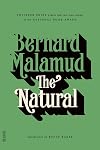
Gatsby at the Bat
Young baseball phenom Roy Hobbs travels from the Northwest to Chicago to follow his dreams of being a baseball superstar in the major leagues, but almost immediately upon his arrival, he is shot by a mysterious seductress who murders up-and-comer athletes. Years later, he has recovered enough to try out for the New York Knights, where he proves to be a "natural," and soon becomes the biggest name in the sport. But his blind ambition, insatiable appetites and lust for show more dangerous women, along with a stingy team owner and an unscrupulous gambler, threaten to end his career when it has only just begun.
"Somewhere in the world there is a defeat for everyone," John Steinbeck writes in The Acts of King Arthur and His Noble Knights (1976). "Some are destroyed by defeat, and some made small and mean by victory. Greatness lives in one who triumphs equally over defeat and victory." Although Steinbeck's final and unfinished novel was published posthumously 24 years after this, Bernard Malamud's debut novel, The Natural almost seems to have intended these lines as its epigraph, if only ironically. Although Roy Hobbs is a reimagined King Arthur, by Steinbeck's definition, greatness most definitely does not live in him. Time and again, he is most decidedly destroyed by defeat and also made small and mean by victory, which like steak dinners and sexually available women, he consumes rapaciously, as though too much can never be enough.
Malamud has set his updated Arthurian legend not in castles and on the wild woods and misty fields of some distant, early-to-mid-Medieval Great Britain, but on the sunny, artificially maintained diamonds and opulent glamor of luxury hotels of mid-20th-century American urban landscapes. His view of America is as dim as his view of its messiah he has invented, albeit as a composite from such real-life ballplayers as Eddie Waitkus, "Shoeless Joe" Jackson and Ted Williams, blended with a heaping dollop of Jay Gatsby.
Indeed, Roy owes at least as much to F. Scott Fitzgerald's modernist rags-to-riches-to-ruin protagonist as to the feudal Briton peasant-to-monarch-to-tragic-hero. For the corruption at the heart of the American myths of The Pillar Of Community and his twin, The Captain Of Industry, Malamud shuffles Fitzgerald's deck of the eyes without a face optometrist, Dr. T.J. Eckleburg, and the underworld gambler Meyer Wolfsheim, to create Judge Goodwill Banner, the corrupt, skinflint owner of the Knights (based none-too-subtly on the notorious Chicago White Sox owner Charles Comiskey), and the one-eyed, unabashedly criminal gambler Gus Sands (based, as Wolfsheim is, on notorious gambler Arnold Rothstein). Yet while Fitzgerald depicts his American Everyman as fundamental innocents, not much different than Myrtle Wilson's Airedale terrier, subject to the inconstant whims and machinations of the gods who walk among them, Malamud's baseball fans are every bit as fickle and manipulative as the women in Roy's life, every bit as brutish and superstitious as his teammates, every bit as resentful and rotten as Knights manager and co-owner Pop Fisher, every bit as mean-spirited and vindictive as Roy's nemesis Bump Bailey, every bit as voyeuristic and sleazy as the reporter Max Mercy, and every bit as voracious and consumerist as Roy himself. He populates the stands with a Boschian carnival freakshow, complete with an angry dwarf named Otto Zipp.
The word "mythic" has often been used to describe The Natural, including by Malamud himself, when discussing his different approach to his follow-up novel, The Assistant (1957), and it certainly is mythic. Less used, however, but equally apt is the word "dreamlike." As in Fitzgerald's gauzy masterpiece, events of both the recent and distant past are frequently nebulous and uncertain, and events of the present are frequently surreal. When Roy's hit literally knocks the skin off the ball, as happens in baseball tall tales, the naked ball is never recovered, and within days, there is some question as to whether or not it happened at all. Later, Roy humiliates Gus and Max with his hitherto unmentioned skills at sleight-of-hand magic, and his explanation to the object of his unrequited infatuation, Memo Paris, is vague and borderline ludicrous. Shortly after, Roy is sure Memo has hit and killed a kid and his dog while she is driving super-fast in his shiny new car - more shades of Gatsby - but he is never able to find the bodies, and there are no corroborating reports, indicating it may have been a hallucination.
In fact, the bulk of the novel could be a dream, or something very close to it. In the first 35 pages, one character (former and aspiring future scout Sam Simpson) dies, and another (Roy) is at the very least mortally wounded, suggesting all of what happens after may well be their version of their lives flashing before their eyes. Only in the play-by-play descriptions of games does Malamud switch to the hyper-realistic but poetic metaphors of the sports writers of the era, creating a jarring effect. But then again, which parts of the vision would be most vivid for men whose whole life is, in the end, baseball? show less
Young baseball phenom Roy Hobbs travels from the Northwest to Chicago to follow his dreams of being a baseball superstar in the major leagues, but almost immediately upon his arrival, he is shot by a mysterious seductress who murders up-and-comer athletes. Years later, he has recovered enough to try out for the New York Knights, where he proves to be a "natural," and soon becomes the biggest name in the sport. But his blind ambition, insatiable appetites and lust for show more dangerous women, along with a stingy team owner and an unscrupulous gambler, threaten to end his career when it has only just begun.
"Somewhere in the world there is a defeat for everyone," John Steinbeck writes in The Acts of King Arthur and His Noble Knights (1976). "Some are destroyed by defeat, and some made small and mean by victory. Greatness lives in one who triumphs equally over defeat and victory." Although Steinbeck's final and unfinished novel was published posthumously 24 years after this, Bernard Malamud's debut novel, The Natural almost seems to have intended these lines as its epigraph, if only ironically. Although Roy Hobbs is a reimagined King Arthur, by Steinbeck's definition, greatness most definitely does not live in him. Time and again, he is most decidedly destroyed by defeat and also made small and mean by victory, which like steak dinners and sexually available women, he consumes rapaciously, as though too much can never be enough.
Malamud has set his updated Arthurian legend not in castles and on the wild woods and misty fields of some distant, early-to-mid-Medieval Great Britain, but on the sunny, artificially maintained diamonds and opulent glamor of luxury hotels of mid-20th-century American urban landscapes. His view of America is as dim as his view of its messiah he has invented, albeit as a composite from such real-life ballplayers as Eddie Waitkus, "Shoeless Joe" Jackson and Ted Williams, blended with a heaping dollop of Jay Gatsby.
Indeed, Roy owes at least as much to F. Scott Fitzgerald's modernist rags-to-riches-to-ruin protagonist as to the feudal Briton peasant-to-monarch-to-tragic-hero. For the corruption at the heart of the American myths of The Pillar Of Community and his twin, The Captain Of Industry, Malamud shuffles Fitzgerald's deck of the eyes without a face optometrist, Dr. T.J. Eckleburg, and the underworld gambler Meyer Wolfsheim, to create Judge Goodwill Banner, the corrupt, skinflint owner of the Knights (based none-too-subtly on the notorious Chicago White Sox owner Charles Comiskey), and the one-eyed, unabashedly criminal gambler Gus Sands (based, as Wolfsheim is, on notorious gambler Arnold Rothstein). Yet while Fitzgerald depicts his American Everyman as fundamental innocents, not much different than Myrtle Wilson's Airedale terrier, subject to the inconstant whims and machinations of the gods who walk among them, Malamud's baseball fans are every bit as fickle and manipulative as the women in Roy's life, every bit as brutish and superstitious as his teammates, every bit as resentful and rotten as Knights manager and co-owner Pop Fisher, every bit as mean-spirited and vindictive as Roy's nemesis Bump Bailey, every bit as voyeuristic and sleazy as the reporter Max Mercy, and every bit as voracious and consumerist as Roy himself. He populates the stands with a Boschian carnival freakshow, complete with an angry dwarf named Otto Zipp.
The word "mythic" has often been used to describe The Natural, including by Malamud himself, when discussing his different approach to his follow-up novel, The Assistant (1957), and it certainly is mythic. Less used, however, but equally apt is the word "dreamlike." As in Fitzgerald's gauzy masterpiece, events of both the recent and distant past are frequently nebulous and uncertain, and events of the present are frequently surreal. When Roy's hit literally knocks the skin off the ball, as happens in baseball tall tales, the naked ball is never recovered, and within days, there is some question as to whether or not it happened at all. Later, Roy humiliates Gus and Max with his hitherto unmentioned skills at sleight-of-hand magic, and his explanation to the object of his unrequited infatuation, Memo Paris, is vague and borderline ludicrous. Shortly after, Roy is sure Memo has hit and killed a kid and his dog while she is driving super-fast in his shiny new car - more shades of Gatsby - but he is never able to find the bodies, and there are no corroborating reports, indicating it may have been a hallucination.
In fact, the bulk of the novel could be a dream, or something very close to it. In the first 35 pages, one character (former and aspiring future scout Sam Simpson) dies, and another (Roy) is at the very least mortally wounded, suggesting all of what happens after may well be their version of their lives flashing before their eyes. Only in the play-by-play descriptions of games does Malamud switch to the hyper-realistic but poetic metaphors of the sports writers of the era, creating a jarring effect. But then again, which parts of the vision would be most vivid for men whose whole life is, in the end, baseball? show less

During Yakov’s first days in the courthouse jail the accusation had seemed to him almost an irrelevancy, nothing much to do with his life or deeds. But after the visit to the cave he had stopped thinking of relevancy, truth, or even proof. There was no “reason,” there was only their plot against a Jew, any Jew; he was the accidental choice for the sacrifice. He would be tried because the accusation had been made, there didn’t have to be another reason. Being born a Jew meant being show more vulnerable to history, including its worst errors. Accident and history had involved Yakov Bok as he had never dreamed he could be involved. The involvement was, in a way of speaking, impersonal, but the effect, his misery and suffering, were not. The suffering was personal, painful, and possibly endless.
In early 20th century Tsarist Russia, a restless young Jewish man, a fixer by trade, leaves the shtetl for Kiev. Yakov Bok hopes to improve his mind, earn some money, and maybe emigrate to somewhere better like America. Yakov is not a religious man, but he is basically a moral man. A couple of good deeds involve Yakov in a chain of events much larger than himself. Accused of a crime he did not commit, Yakov spends months, years in jail resisting state pressure to confess for the welfare of all the Jews in Russia.
This novel’s religious themes and the suffering that Yakov endures as the state pressures him to make a statement against his will echo similar themes in Shusaku Endo’s Silence. Both novels wrestle with the silence or absence of God in the face of unrelenting suffering. Interestingly, both novels were first published in 1966. Maybe there’s a thesis there for some aspiring scholar of literature. show less
In early 20th century Tsarist Russia, a restless young Jewish man, a fixer by trade, leaves the shtetl for Kiev. Yakov Bok hopes to improve his mind, earn some money, and maybe emigrate to somewhere better like America. Yakov is not a religious man, but he is basically a moral man. A couple of good deeds involve Yakov in a chain of events much larger than himself. Accused of a crime he did not commit, Yakov spends months, years in jail resisting state pressure to confess for the welfare of all the Jews in Russia.
This novel’s religious themes and the suffering that Yakov endures as the state pressures him to make a statement against his will echo similar themes in Shusaku Endo’s Silence. Both novels wrestle with the silence or absence of God in the face of unrelenting suffering. Interestingly, both novels were first published in 1966. Maybe there’s a thesis there for some aspiring scholar of literature. show less
Courtesy of The Literary Snob
There are few reasons why I'd pick up a book about baseball. As I compile a mental list, I find that nearly every possibility is due to either necessity or wit. Yet I did pick one up and even read it in its entirety for one very good reason: Bernard Malamud.
I read The Assistant a couple years ago and since I have been a great fan of Malamud. He infuses the subtlest hints of poetry and magic into his otherwise simple stories; the result—a fast, effortless read show more which peels away to reveal an elegant tale rich with gorgeous imagery.
I had some uncertainty about whether The Natural would be easily admitted into Malamud's canon having two possible strikes against it from the onset: its subject of baseball, and it was the author's debut novel. While these factors may have been a slight hindrance in this book's full potential, The Natural is still a home run—the best in its league.
Within pages, Malamud comes out swinging with a back story that is mysterious and engaging. Quickly, my worries of a tedious read melted away—this was Bernard Malamud.
The Natural follows Roy Hobbs, a man whose dreams of being baseball's greatest name is detoured and, with the passage of many years, find his chances slipping away. Naturally, as one would expect from any American story about baseball, Hobbs is given his opportunity. What one may not expect from Malamud's treatment of the subject is the brutal literary depth applied. Make no mistake, The Natural is literature.
Despite its beauty and tightness, The Natural does sometimes miss the mark. At times Roy Hobbs reminded me of Jay Gatsby, and I wondered if Fitzgerald's novel was not in mind as Malamud penned his first work. Some may welcome such a comparison, but as I find The Great Gatsby to be the most overrated work of literature I have personally read, I did not.
The average baseball fan would probably hate this book, especially in its conclusion. While at times it may feel like Field of Dreams, ultimately it is not. For a literary snob like myself, however, I believe this is the best that baseball has to offer. show less
There are few reasons why I'd pick up a book about baseball. As I compile a mental list, I find that nearly every possibility is due to either necessity or wit. Yet I did pick one up and even read it in its entirety for one very good reason: Bernard Malamud.
I read The Assistant a couple years ago and since I have been a great fan of Malamud. He infuses the subtlest hints of poetry and magic into his otherwise simple stories; the result—a fast, effortless read show more which peels away to reveal an elegant tale rich with gorgeous imagery.
I had some uncertainty about whether The Natural would be easily admitted into Malamud's canon having two possible strikes against it from the onset: its subject of baseball, and it was the author's debut novel. While these factors may have been a slight hindrance in this book's full potential, The Natural is still a home run—the best in its league.
Within pages, Malamud comes out swinging with a back story that is mysterious and engaging. Quickly, my worries of a tedious read melted away—this was Bernard Malamud.
The Natural follows Roy Hobbs, a man whose dreams of being baseball's greatest name is detoured and, with the passage of many years, find his chances slipping away. Naturally, as one would expect from any American story about baseball, Hobbs is given his opportunity. What one may not expect from Malamud's treatment of the subject is the brutal literary depth applied. Make no mistake, The Natural is literature.
Despite its beauty and tightness, The Natural does sometimes miss the mark. At times Roy Hobbs reminded me of Jay Gatsby, and I wondered if Fitzgerald's novel was not in mind as Malamud penned his first work. Some may welcome such a comparison, but as I find The Great Gatsby to be the most overrated work of literature I have personally read, I did not.
The average baseball fan would probably hate this book, especially in its conclusion. While at times it may feel like Field of Dreams, ultimately it is not. For a literary snob like myself, however, I believe this is the best that baseball has to offer. show less

The Assistant is a book you brood over after finishing, because the questions its characters ask—what does it mean to be a Jew?—and the questionable actions they take—working for a man you have robbed at gunpoint, having sex with a woman you have just rescued from being raped —are the powerful relics of purpose-driven writing, of a time when books were serious examinations of some aspect of society, rather than formulaic accumulations of ideology.
Bernard Malamud intertwines the lives show more of two down-on-their-luck characters, Morris Bober, the Jewish owner of a failing grocery store in Brooklyn, and Frank Alpine, a drifter whose tenuous connection to the grocery store, its owner and his family devolves over time as the truth behind his motivation for helping out at the store is slowly revealed. Bober, as the archetypal Jew, struggles to overcome the harms inflicted on him by an unfair world; Alpine, haunted by images of Saint Francis of Assisi, struggles to overcome the self-inflicted harms resulting from his own poor choices.
The Assistant plays the boredom of working in a store where hours pass without a single customer and the slow process of wooing a reluctant woman against sudden, seemingly Deus ex machina acts of criminality and violence as the push and pull on Frank as he works out who he is. The use of an omniscient third-person narrator is particularly effective, subtly providing the reader multiple perspectives to highlight the contrasts between not just Bober and Alpine but also what each character of the novel portrays.
The Assistant is ultimately a redemption story which focuses on the worthiness of faith, regardless of whether one is rewarded,while leaving unresolved what Frank gains in converting to Judaism, relinquishing the metaphorical vows of poverty, chastity, and obedience he has taken in choosing to run Bober's store for a life of suffering implied through Bober's example . show less
Bernard Malamud intertwines the lives show more of two down-on-their-luck characters, Morris Bober, the Jewish owner of a failing grocery store in Brooklyn, and Frank Alpine, a drifter whose tenuous connection to the grocery store, its owner and his family devolves over time as the truth behind his motivation for helping out at the store is slowly revealed. Bober, as the archetypal Jew, struggles to overcome the harms inflicted on him by an unfair world; Alpine, haunted by images of Saint Francis of Assisi, struggles to overcome the self-inflicted harms resulting from his own poor choices.
The Assistant plays the boredom of working in a store where hours pass without a single customer and the slow process of wooing a reluctant woman against sudden, seemingly Deus ex machina acts of criminality and violence as the push and pull on Frank as he works out who he is. The use of an omniscient third-person narrator is particularly effective, subtly providing the reader multiple perspectives to highlight the contrasts between not just Bober and Alpine but also what each character of the novel portrays.
The Assistant is ultimately a redemption story which focuses on the worthiness of faith, regardless of whether one is rewarded,
Lists
Favourite Books (1)
Nifty Fifties (1)
Recreation (1)
Awards


You May Also Like


Associated Authors
Statistics
- Works
- 98
- Also by
- 74
- Members
- 11,763
- Popularity
- #1,998
- Rating
- 3.8
- Reviews
- 172
- ISBNs
- 391
- Languages
- 19
- Favorited
- 30
