
John Cheever (1912–1982)
Author of The Stories of John Cheever
About the Author
John Cheever, best known for his short stories dealing with upper-middle-class suburban life, was born in Quincy, Massachusetts, in 1912. Cheever published his first short story at the age of 17, and in 1979, he won the Pulitzer Prize for his collected edition of short stories, titled Stories of show more John Cheever. Cheever also wrote screenplays, and five novels, including The Wapshot Chronicle, which won the National Book Award in 1957. Cheever died in 1982, at the age of 70. (Bowker Author Biography) show less
Image credit: Photo by Nancy Crampton, courtesy of Ossining Public Library
Series
Works by John Cheever
Glad Tidings: A Friendship in Letters : The Correspondence of John Cheever and John D. Weaver, 1945-1982 (1993) 18 copies
The Country Husband 8 copies
Essential Cheever CD: The Enormous Radio and The Swimmer (Caedmon Essentials) (2006) 7 copies, 1 review
The day the pig fell into the well 7 copies
The Sutton Place Story 5 copies
Torch Song 4 copies
The Common Day 3 copies
Selected short stories 3 copies
Miłosna ballada 3 copies
The Superintendent 3 copies
Clementina 2 copies
The Worm In The Apple 2 copies
The Bus To St. James's 2 copies
Just One More Time 2 copies
The Children 2 copies
The Cure 2 copies
The Wrysons 2 copies
Clancy in the Tower of Babel 2 copies
The Pot of Gold 2 copies
The Summer Farmer 2 copies
The Hartleys 2 copies
Hyvästi, veljeni : kertomuksia 2 copies
A Woman Without A Country 2 copies
The Bella Lingua 2 copies
John Cheever Stories 1 copy
Book 9788899767754 1 copy
Muž iz predgrađa 1 copy
Plivač 1 copy
The City of Lost Dreams 1 copy
Wizja świata 1 copy
Izabrane priče 1 copy
Ovo stvarno liči na raj 1 copy
Contos completos II 1 copy
The National Pastime 1 copy
Brimmer 1 copy
The Chimera 1 copy
Boy In Rome 1 copy
The Music Teacher 1 copy
The Lowboy 1 copy
The Golden Age 1 copy
Just Tell Me Who It Was 1 copy
An Educated American Woman 1 copy
The Duchess 1 copy
Selected Prose 1 copy
The art of fiction LXII 1 copy
Signs of hope 1 copy
Of love: a testimony 1 copy
The Seaside Houses 1 copy
Metamorphoses 1 copy
Three Stories 1 copy
Frère Jacques 1 copy
Cheever John 1 copy
Mene, Mene, Tekel, Upharsin 1 copy
The Fourth Alarm 1 copy
Percy 1 copy
Another Story 1 copy
Marito in Città 1 copy
The Ocean 1 copy
Montraldo 1 copy
Orasul visurilor spulberate 1 copy
Associated Works
Literature: An Introduction to Fiction, Poetry, and Drama (1995) — Contributor, some editions — 1,012 copies, 7 reviews
Perrine's Literature: Structure, Sound, and Sense (1970) — Contributor, some editions — 893 copies, 4 reviews
Secret Ingredients: The New Yorker Book of Food and Drink (2007) — Contributor — 593 copies, 10 reviews
In the Stacks: Short Stories about Libraries and Librarians (2002) — Contributor — 546 copies, 13 reviews
The World of the Short Story: A 20th Century Collection (1986) — Contributor — 511 copies, 4 reviews
Points of View: An Anthology of Short Stories, Revised & Updated Edition (1995) — Contributor — 443 copies, 7 reviews
You've Got to Read This: Contemporary American Writers Introduce Stories that Held Them in Awe (1994) — Contributor — 413 copies, 3 reviews
The Art of the Tale: An International Anthology of Short Stories (1986) — Contributor — 381 copies, 3 reviews
American Fantastic Tales : Terror and the Uncanny from the 1940's to Now (2009) — Contributor — 298 copies, 5 reviews
New York Stories [Everyman's Library Pocket Classics] (2011) — Contributor, some editions — 198 copies, 5 reviews
First Fiction: An Anthology of the First Published Stories by Famous Writers (1994) — Contributor — 196 copies, 1 review
In Another Part of the Forest: An Anthology of Gay Short Fiction (1994) — Contributor — 191 copies, 2 reviews
An American Album: One Hundred and Fifty Years of Harper's Magazine (2000) — Contributor — 145 copies, 1 review
Adaptations: From Short Story to Big Screen: 35 Great Stories That Have Inspired Great Films (2005) — Contributor — 136 copies, 1 review
McSweeney's 45: Hitchcock and Bradbury Fistfight in Heaven (2013) — Contributor — 118 copies, 6 reviews
Writing New York: A Literary Anthology (Expanded 10th-Anniversary Edition) (2008) — Contributor — 101 copies, 1 review
Cape Cod Stories: Tales from Cape Cod, Nantucket, and Martha's Vineyard (1996) — Contributor — 59 copies, 5 reviews
The Second Gates of Paradise: The Anthology of Erotic Short Fiction (1997) — Contributor — 38 copies
The Haves and Have Nots: 30 Stories About Money and Class in America (1999) — Contributor — 36 copies
Selected Shorts: American Classics (Selected Shorts: A Celebration of the Short Story) (2010) — Contributor — 28 copies, 6 reviews
Fifty Years of the American Short Story from the O. Henry Awards 1919-1970 (1970) — Contributor — 17 copies, 1 review
The Best Short Stories of 1939 and the Yearbook of the American Short Story (1939) — Contributor — 8 copies
Vader is de beste — Author — 3 copies
Moderne Amerikaanse verhalen — Contributor — 3 copies
Fifty Years of the American Short Story from the O. Henry Awards 1919-1970, Volume 1 (1970) — Contributor — 3 copies
The Human Commitment - An Anthology of Contemporary Short Fiction — Contributor — 1 copy
32 Współczesne Opowiadania Amerykańskie - Tom I — Contributor — 1 copy
Tagged
Common Knowledge
- Canonical name
- Cheever, John
- Legal name
- Cheever, John William
- Birthdate
- 1912-05-27
- Date of death
- 1982-06-18
- Gender
- male
- Education
- Quincy High School
Thayer Academy - Occupations
- short story writer
novelist - Organizations
- National Institute of Arts and Letters (Literature, 1957)
American Academy of Arts and Letters (Literature, 1973) - Awards and honors
- American Academy of Arts and Letters Academy Award (Literature, 1956)
National Medal for Literature (1982)
Pulitzer Prize for Fiction (1979)
Edward MacDowell Medal (1979)
National Book Award (1958, 1981) - Agent
- William Loverd
- Relationships
- Cheever, Susan (daughter)
Cheever, Benjamin (son)
Bellow, Saul (friend)
Young, Florence Liley (aunt)
Cheever, Federico (son) - Cause of death
- cancer
- Nationality
- USA
- Birthplace
- Quincy, Massachusetts, USA
- Places of residence
- Wollaston, Massachusetts, USA
New York, New York, USA
Boston, Massachusetts, USA - Place of death
- Ossining, New York, USA
- Burial location
- First Parish Cemetery, Norwell, Massachusetts, USA
- Associated Place (for map)
- Massachusetts, USA
Members
Reviews

John Cheever’s [The Wapshot Chronicle] recounts the lives of one family in the small Massachusetts town of St. Botolphs. Leander Wapshot’s sons are forced to go out into the world and make their fortune, hoping to prove themselves worthy of their prudish and eccentric aunt, Cousin Honora, the center of the family’s wealth. Coverly travels to Washington, DC, and Moses to New York by train, where they find careers and establish families of their own.
Though the tale might seem pastoral show more or mundane, Cheever peppers it with colorful characters, like Uncle Peepee Marshmallow, the family nudist, and with outlandish turns in the narrative, like Moses’ naked trek across a castle roof to find his fiancé’s bedroom. There are few dull moments in the story, and when you’ve completed the novel, you feel like an honorary citizen of St. Botolphs and an honorary member of the Wapshot clan.
The book bears a strong resemblance to a favorite book of mine, [Winesburg, Ohio] by Sherwood Anderson. Both are rooted in a keen understanding of the subtleties of small town life and the unusual human foibles in such a place. Anderson’s book offers a more sweeping look at the fabric of the community under study, as Cheever tends to focus more on the Wapshots than St. Botolphs.
Cheever’s prose is first-rate, if not as compelling as Anderson’s. Though, Cheever does stand out in one peculiar way. I’ve never read a book quite so descriptive in the areas sound and smell. After reading certain passages, I could smell the mildew and salt in the air and could hear the bronze bell sounding through the town square. It reminded me of Hemingway’s unique and special ability to translate taste into a narrative.
This book was a bit of a surprise to me, and I’d recommend it to anyone.
Four bones!!!! show less
Though the tale might seem pastoral show more or mundane, Cheever peppers it with colorful characters, like Uncle Peepee Marshmallow, the family nudist, and with outlandish turns in the narrative, like Moses’ naked trek across a castle roof to find his fiancé’s bedroom. There are few dull moments in the story, and when you’ve completed the novel, you feel like an honorary citizen of St. Botolphs and an honorary member of the Wapshot clan.
The book bears a strong resemblance to a favorite book of mine, [Winesburg, Ohio] by Sherwood Anderson. Both are rooted in a keen understanding of the subtleties of small town life and the unusual human foibles in such a place. Anderson’s book offers a more sweeping look at the fabric of the community under study, as Cheever tends to focus more on the Wapshots than St. Botolphs.
Cheever’s prose is first-rate, if not as compelling as Anderson’s. Though, Cheever does stand out in one peculiar way. I’ve never read a book quite so descriptive in the areas sound and smell. After reading certain passages, I could smell the mildew and salt in the air and could hear the bronze bell sounding through the town square. It reminded me of Hemingway’s unique and special ability to translate taste into a narrative.
This book was a bit of a surprise to me, and I’d recommend it to anyone.
Four bones!!!! show less
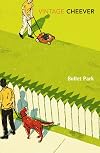
Wow. Just wow. I was beginning to feel a touch jaded about my reading - I've read some good books in the last few months, but nothing that felt like the equivalent of an espresso after a night without sleep. Bullet Park is that shot of espresso. It concerns the lives of Hammer and Nailles - I won't say much more, for fear of spoiling the story - but one lives an exceedingly normal life and the other could easily have come from Bret Easton Ellis.
One reason I love this book is that it is show more relatively short and yet feels like it encapsulates a whole world of people and stories. Side characters appear in a paragraph, something notable happens, and we never hear of them again; main characters experience a traumatic shock to their system, usually about sex and the erotic, but the repercussions are not necessarily felt, or if they are, not all at once. This is life, real life - this is how the world works, and the fact that not everything in this book has its resolution is such a wonderful, wonderful feature. I'll be reading this one again, as well as everything else by Cheever that I can get my hands on. show less
One reason I love this book is that it is show more relatively short and yet feels like it encapsulates a whole world of people and stories. Side characters appear in a paragraph, something notable happens, and we never hear of them again; main characters experience a traumatic shock to their system, usually about sex and the erotic, but the repercussions are not necessarily felt, or if they are, not all at once. This is life, real life - this is how the world works, and the fact that not everything in this book has its resolution is such a wonderful, wonderful feature. I'll be reading this one again, as well as everything else by Cheever that I can get my hands on. show less
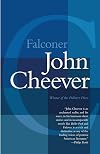
I’m not sure that the plot blurbs describing the novel as being about “redemption” (Ballentine 1977) or the “struggle to remain a man” (see the summary on Goodreads) set the right expectations. I didn’t find the book to be about either of those things. Farragut, our main character, doesn’t really redeem himself in the way the word is typically used. He is not saved from his crimes and sins either by his own efforts or by the efforts of others. And I’m not sure what the show more “struggle to remain a man” means exactly; although, it seems like a bygone reference to a cliched masculine ideal that feels out of place here. And despite all the focus of penises and sex in the book, I don’t think it fits.
What I see is a person gradually losing qualities by which his value or merit was defined: bad and good. In prison, Farragut sheds many qualities, his marital status, his profession, his standing, and even his addiction. Prison is a project of debasement by design, but we see in Farragut’s recollections of his life of qualities, prior to incarceration, that debasement is not a force bounded by prison walls. Daily life, our professions, our entertainments, our consumer habits, all have the possibility to alienate us from each other and ourselves, similarly debasing, but replacing the qualities that are removed with ersatz self-defining qualities like wealth, possessions, titles, etc.
The result of complete debasement for Farragut is “death,” which I will leave ambiguous so as not to spoil the novel. And in the end, the man on the bus, homeless and without ties, but with “plenty of money” and possessions, is the mirror image of our protagonist. Is he reformed and absolved of his transgressions? I don’t know. Probably not in the sense of the redemptive narrative of prison that is typically told.
I doubt I would ever go back to this novel, but the writing is quite good. And the work has clearly given me something to reflect upon. show less
What I see is a person gradually losing qualities by which his value or merit was defined: bad and good. In prison, Farragut sheds many qualities, his marital status, his profession, his standing, and even his addiction. Prison is a project of debasement by design, but we see in Farragut’s recollections of his life of qualities, prior to incarceration, that debasement is not a force bounded by prison walls. Daily life, our professions, our entertainments, our consumer habits, all have the possibility to alienate us from each other and ourselves, similarly debasing, but replacing the qualities that are removed with ersatz self-defining qualities like wealth, possessions, titles, etc.
The result of complete debasement for Farragut is “death,” which I will leave ambiguous so as not to spoil the novel. And in the end, the man on the bus, homeless and without ties, but with “plenty of money” and possessions, is the mirror image of our protagonist. Is he reformed and absolved of his transgressions? I don’t know. Probably not in the sense of the redemptive narrative of prison that is typically told.
I doubt I would ever go back to this novel, but the writing is quite good. And the work has clearly given me something to reflect upon. show less
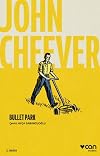
Kaderleri adlarının esrarengiz bağıyla kesişen iki komşu, Eliot Nailles ile Paul Hammer: çiviler ile çekiç. Nailles, banliyö treniyle şehirdeki işine gidip gelen,ailesine sonsuzca bağlı bir adamdır. Hammer ise evlilik dışı doğmuş, kendi deyimiyle “efkâr”dan mustarip bir yarı delidir. Dünyayı gezdikten sonra, içindeki huzursuzluğu dindirebilmenin tek çaresinin banliyöde birini öldürmek olduğuna karar verir ve bunun için Bullet Park’a yerleşir.
20. show more yüzyılın en önemli yazarlarından John Cheever, bu çarpıcı romanında, öykülerinin de ana mekânı olan Amerikan banliyösünü teşrih masasına yatırıyor; birbirinin kopyası beyaz evlerde yaşayanların şaibeli “normallik”lerini hicivli bir dille irdeliyor. Bullet Park, Amerikan rüyasının trajikomikliğini ifşa eden bir kara mizah romanı.
“Sadece Cheever külliyatı değil, bildiğim tüm romanlar içinde başlı başına bir sınıf oluşturan bir eser.”
– Joseph Heller
“John Cheever büyülü bir gerçekçi ve ışıltılı öykülerinde, Bullet Park’la Falconer gibi eşsiz romanlarında karşılaştığımız üslubu, savaş sonrası Amerikan edebiyatının diğer bütün öncü yazarlarının üslubu gibi renkli ve özgün.”
– Philip Roth show less
20. show more yüzyılın en önemli yazarlarından John Cheever, bu çarpıcı romanında, öykülerinin de ana mekânı olan Amerikan banliyösünü teşrih masasına yatırıyor; birbirinin kopyası beyaz evlerde yaşayanların şaibeli “normallik”lerini hicivli bir dille irdeliyor. Bullet Park, Amerikan rüyasının trajikomikliğini ifşa eden bir kara mizah romanı.
“Sadece Cheever külliyatı değil, bildiğim tüm romanlar içinde başlı başına bir sınıf oluşturan bir eser.”
– Joseph Heller
“John Cheever büyülü bir gerçekçi ve ışıltılı öykülerinde, Bullet Park’la Falconer gibi eşsiz romanlarında karşılaştığımız üslubu, savaş sonrası Amerikan edebiyatının diğer bütün öncü yazarlarının üslubu gibi renkli ve özgün.”
– Philip Roth show less
Lists
Awards


You May Also Like


Associated Authors
Statistics
- Works
- 163
- Also by
- 94
- Members
- 11,495
- Popularity
- #2,042
- Rating
- 3.8
- Reviews
- 155
- ISBNs
- 393
- Languages
- 20
- Favorited
- 40