
Cynthia Ozick
Author of The Shawl: A Story and Novella
About the Author
Writer Cynthia Ozick was born on April 17, 1928. She grew up in the Bronx and attended New York University, where she earned a B. A., and The Ohio State University, where she completed her master's degree in English literature with a specific focus on Henry James's works. Ozick wrote the novel show more Trust, and the short stories "The Sense of Europe", which was published in Prairie Schooner, and "The Shawl", which was included in The World of the Short Story. Her work has also appeared in The New Yorker, Harper's, Partisan Review, and Esquire. Ozick has received a Guggenheim Fellowship and a Harold Straus Living Award from the American Academy and National Institute of Arts and Letters. Three of her stories won first prize in the O. Henry competition. In 1986, she was selected as the first winner of the Rea Award for the Short Story. In 2000, she won the National Book Critics Circle Award for Quarrel & Quandary. Her novel Heir to the Glimmering World (2004) won high literary praise. Ozick was on the shortlist for the 2005 Man Booker International Prize, and in 2008 she was awarded the PEN/Nabokov Award and the PEN/Malamud Award, which was established by Bernard Malamud¿s family to honor excellence in the art of the short story. Her novel Foreign Bodies was shortlisted for the Orange Prize (2012). (Bowker Author Biography) show less
Works by Cynthia Ozick
The Pagan Rabbi, and Other Stories (Library of Modern Jewish Literature) (1971) 247 copies, 3 reviews
In a Yellow Wood: Selected Stories and Essays (Everyman's Library Contemporary Classics Series) (2025) 12 copies
The Pagan Rabbi {novelette} 6 copies
Seize the Day 4 copies
“The Coast of New Zealand” 1 copy
Yabanci Bedenler 1 copy
Ozick, Cynthia Archive 1 copy
What Henry James Knew 1 copy
The Bear Boy 1 copy
The Cossacks 1 copy
Associated Works
The Scribner Anthology of Contemporary Short Fiction: Fifty North American American Stories Since 1970 (1999) — Contributor — 587 copies, 4 reviews
The World of the Short Story: A 20th Century Collection (1986) — Contributor — 514 copies, 4 reviews
For the Love of Books: 115 Celebrated Writers on the Books They Love Most (1999) — Contributor — 479 copies, 4 reviews
The Art of the Tale: An International Anthology of Short Stories (1986) — Contributor — 381 copies, 3 reviews
The Glorious American Essay: One Hundred Essays from Colonial Times to the Present (2020) — Contributor — 119 copies
More Wandering Stars: Outstanding Stories of Jewish Fantasy and Science Fiction (1981) — Contributor — 105 copies
Who's Writing This? Notations on the Authorial I, with Self-Portraits {not Antæus} (1995) — Contributor — 76 copies
Here I Am: Contemporary Jewish Stories from Around the World (1998) — Contributor — 57 copies, 1 review
Antaeus No. 73/74, Spring 1994 - Who’s Writing This: Notations on the Authorial I {magazine} (1994) — Contributor — 6 copies
Tagged
Common Knowledge
- Canonical name
- Ozick, Cynthia
- Legal name
- Ozick, Cynthia Shoshana
- Other names
- Озик, Синтия
- Birthdate
- 1928-04-17
- Gender
- female
- Education
- New York University (BA | 1949)
Ohio State University (MA | 1950) - Occupations
- short story writer
novelist
essayist - Awards and honors
- National Humanities Medal (2007)
Lannan Literary Award (Fiction ∙ 2000)
American Academy of Arts and Letters (Literature, 1988)
American Academy of Arts and Letters Academy Award (Literature ∙ 1973)
PEN/Nabokov Award (2008)
Edward Lewis Wallant Award (1971) (show all 12)
National Jewish Book Award (1971, 1977)
Diamonstein-Spielvogel Award for the Art of the Essay (1997)
Rea Award for the Short Story (1986)
National Book Critics Circle Award (2000)
PEN/Malamud Award (2008)
Man Booker International Prize Finalist (2005) - Relationships
- Trilling, Lionel (teacher)
Hallote, Rachel (daughter)
Regelson, Abraham (uncle)
Hallotte, Bernard (spouse) - Nationality
- USA
- Birthplace
- New York, New York, USA
- Places of residence
- New York, New York, USA
New Rochelle, New York, USA - Associated Place (for map)
- New York, USA
Members
Reviews
Lloyd Wilkinson Petrie is one sick puppy. Now a retired lawyer, he is preparing a memoir of his years as a student at Temple Academy in the late 19th Century.
Simultaneously arrogant, judgmental and needy. Critical of everyone and anyone including his colleagues, Temple staff, his son, (who understandably wants little to do with him), and Jews. Ironically, he is drawn to Jews and befriends an older socially withdrawn classmate, Ben-Zion Elefantin which gets him taunted by his classmates. show more Petrie is hurt by Elefantin's dismissal of Petrie's father's collection of Middle Eastern artifacts. Seems Elefantin's parents have virtually abandoned him at Temple Academy to go antiquing in the Middle East. Ben-Zion believes they are the only ones to recognize true and valuable antiques, and will not even look at Petrie’s father’s collection! But so many years later Lloyd wonders what became of Ben-Zion after he left Temple Academy.
Petrie interacted with another Jewish student, Ned Greenhill. Years later Petrie continued to meet with Greenhill for dinner periodically. But, in his memoir he writes, that he never considered inviting a Jew to his home to meet his family! Just when I hoped Lloyd would show some small movement to normalcy and humanity, he disappoints falling back on what is familiar, his deeply entrenched cultural Anti-Semitism.
His memoirs indicate his obvious jealousy of both Ned who had become a judge, and of Ned’s son succeeding in the real estate field. Petrie is very disappointed in the career direction his son has taken, now floundering to get attention for one of his many creative concepts.
I see Petrie as pitifully stuck in a putrid stagnant time and culture swamp. He may have taken a few tiny steps toward change when he was a young student but despite getting a good education, he didn’t use his brain, or his heart. He just followed along the restrictive, racist, uncharitable path his family and community had taken for generations, and he was a miserable human being for doing so.
Ozick’s books are disturbingly visceral. She brilliantly and forcibly pulls the reader in and makes one feel and think.
Excellent writing. show less
Simultaneously arrogant, judgmental and needy. Critical of everyone and anyone including his colleagues, Temple staff, his son, (who understandably wants little to do with him), and Jews. Ironically, he is drawn to Jews and befriends an older socially withdrawn classmate, Ben-Zion Elefantin which gets him taunted by his classmates. show more Petrie is hurt by Elefantin's dismissal of Petrie's father's collection of Middle Eastern artifacts. Seems Elefantin's parents have virtually abandoned him at Temple Academy to go antiquing in the Middle East. Ben-Zion believes they are the only ones to recognize true and valuable antiques, and will not even look at Petrie’s father’s collection! But so many years later Lloyd wonders what became of Ben-Zion after he left Temple Academy.
Petrie interacted with another Jewish student, Ned Greenhill. Years later Petrie continued to meet with Greenhill for dinner periodically. But, in his memoir he writes, that he never considered inviting a Jew to his home to meet his family! Just when I hoped Lloyd would show some small movement to normalcy and humanity, he disappoints falling back on what is familiar, his deeply entrenched cultural Anti-Semitism.
His memoirs indicate his obvious jealousy of both Ned who had become a judge, and of Ned’s son succeeding in the real estate field. Petrie is very disappointed in the career direction his son has taken, now floundering to get attention for one of his many creative concepts.
I see Petrie as pitifully stuck in a putrid stagnant time and culture swamp. He may have taken a few tiny steps toward change when he was a young student but despite getting a good education, he didn’t use his brain, or his heart. He just followed along the restrictive, racist, uncharitable path his family and community had taken for generations, and he was a miserable human being for doing so.
Ozick’s books are disturbingly visceral. She brilliantly and forcibly pulls the reader in and makes one feel and think.
Excellent writing. show less

Rating: 4.5* of five
The Publisher Says: Two award-winning works of fiction by one of America's finest writers, together in one collection.
In "The Shawl," a woman named Rosa Lublin watches a concentration camp guard murder her daughter. In "Rosa," that same woman appears 30 years later, "a mad woman and a scavenger" in a Miami hotel. She has no life in the present because her past will never end. In both stories, there is a shawl—a shawl that can sustain a starving child, inadvertently show more destroy her, or magically conjure her back to life.
Both stories were originally published in The New Yorker in the 1980s; each was included in the annual Best American Short Stories and awarded First Prize in the annual O. Henry Prize Stories collection. Each succeeds in imagining the unimaginable: the horror of the Holocaust and the unfillable emptiness of its aftermath. Fiercely immediate, complex, and unforgettable, each is a masterwork by a writer the New York Times hailed as "the most accomplished and graceful literary stylist of our time."
My Review: The story "The Shawl" is very short indeed, about six pages, but they are six of the most painful pages in my memory. They chart the descent of a mother from horror, a concentration camp where she exists with her daughter and her niece, to that most hideous and unending of hells: Loss of a child.
To call it harrowing is to deceive you as to the power and poetry of the story.
"Rosa" is the novella that follows the childless mother into her cronehood, a forcibly and fortunately retired fifty-nine-year-old Floridian transplant via New York. Remembering that, in 1980, fifty-nine was older than it is now, and remembering that camp survivors very very often aged (physically, psychically) more rapidly than their peers, and remembering that a parent who has lost a child has very often come unmoored from even the strongest bonds to life, Rosa is unusually situated. She is supported by her niece, whom she saved in the camp, she is free from jail, despite a psychotic break, and she lives in Florida, Death's Waiting Room, an open-air casket:
In the shabby hotel where Stella, her niece, grudgingly supports the woman who saved her, Rosa goes about the quotidian tasks of living with as little care and cheer as an unwanted soul managing to stay alive but not sure why does. Her talisman, the shawl she carried her dead daughter in to the camp inside, is with Stella in Queens. Stella feels this will force Rosa to come to terms with the empty core of her life. When Rosa meets an older not-quite-widower and he determinedly strikes up an acquaintance, Rosa puts into words the reality she lives:
Someone stole her life, and left her body alive. It's what a childless parent lives every day, every minute of every day, and surviving a camp was a doddle for Rosa because what difference does anything make? Her child, her future, her gold and treasure, was stolen from her by a brutal, indifferent guard.
And to make it worse, now she's in Florida! And Doctor Tree, an academic with no smallest grain of comprehension or compassion for Rosa the childless mother, writes to her to request (in terms most peremptory and condescending) that she subject herself to inclusion in A Serious Study while he's in Florida for a convention! The NERVE!
Rosa, rattled by Persky and shat on by Tree, takes solace in writing her fantasy of her grown-up daughter yet another letter. It is heart-wrenching, naturally enough, and reveals the horrors Rosa can't fully repress. It isn't any surprise that this damaged old woman is unbinding her few tenuous ties to life there in Hell's Boiler Room.
But there is, after all, Persky the man whose life is emptied by madness and laziness and America; Persky, who sets his sights on damaged Rosa and simply walks into her world to make it over:
Persky the Pragmatic Pollyanna.
In the end, Rosa isn't a set of symptoms or a desperate survivor of the twentieth century's most horrifying genocide of its many. Rosa is a grieving childless mother who, unable to forgive herself or her only family for surviving, never sees or never cares who inhabits the planet with her. One foot in front of the other, no reason, just do it again; and then she receives the shawl from Stella, the Angel of Death, the cruel and grasping; and she looks at the ikon of her lost motherhood; and she feels...nothing? Can nothing be felt? What does it mean to lose your loss?
For a moment, Rosa loses her loss...for a moment.... show less
The Publisher Says: Two award-winning works of fiction by one of America's finest writers, together in one collection.
In "The Shawl," a woman named Rosa Lublin watches a concentration camp guard murder her daughter. In "Rosa," that same woman appears 30 years later, "a mad woman and a scavenger" in a Miami hotel. She has no life in the present because her past will never end. In both stories, there is a shawl—a shawl that can sustain a starving child, inadvertently show more destroy her, or magically conjure her back to life.
Both stories were originally published in The New Yorker in the 1980s; each was included in the annual Best American Short Stories and awarded First Prize in the annual O. Henry Prize Stories collection. Each succeeds in imagining the unimaginable: the horror of the Holocaust and the unfillable emptiness of its aftermath. Fiercely immediate, complex, and unforgettable, each is a masterwork by a writer the New York Times hailed as "the most accomplished and graceful literary stylist of our time."
My Review: The story "The Shawl" is very short indeed, about six pages, but they are six of the most painful pages in my memory. They chart the descent of a mother from horror, a concentration camp where she exists with her daughter and her niece, to that most hideous and unending of hells: Loss of a child.
To call it harrowing is to deceive you as to the power and poetry of the story.
"Rosa" is the novella that follows the childless mother into her cronehood, a forcibly and fortunately retired fifty-nine-year-old Floridian transplant via New York. Remembering that, in 1980, fifty-nine was older than it is now, and remembering that camp survivors very very often aged (physically, psychically) more rapidly than their peers, and remembering that a parent who has lost a child has very often come unmoored from even the strongest bonds to life, Rosa is unusually situated. She is supported by her niece, whom she saved in the camp, she is free from jail, despite a psychotic break, and she lives in Florida, Death's Waiting Room, an open-air casket:
It seemed to Rosa Lublin that the whole peninsula of Florida was weighted down with regret. Everyone had left behind a real life. Here they had nothing. They were all scarecrows, blown about under the murdering sunball with empty ribcages.
In the shabby hotel where Stella, her niece, grudgingly supports the woman who saved her, Rosa goes about the quotidian tasks of living with as little care and cheer as an unwanted soul managing to stay alive but not sure why does. Her talisman, the shawl she carried her dead daughter in to the camp inside, is with Stella in Queens. Stella feels this will force Rosa to come to terms with the empty core of her life. When Rosa meets an older not-quite-widower and he determinedly strikes up an acquaintance, Rosa puts into words the reality she lives:
"If you're alone too much," Persky said, "you think too much."
"Without a life," Rosa answered, "a person lives where they can. If all they got is thoughts, that's where they live."
"You ain't got a life?"
"Thieves took it."
Someone stole her life, and left her body alive. It's what a childless parent lives every day, every minute of every day, and surviving a camp was a doddle for Rosa because what difference does anything make? Her child, her future, her gold and treasure, was stolen from her by a brutal, indifferent guard.
And to make it worse, now she's in Florida! And Doctor Tree, an academic with no smallest grain of comprehension or compassion for Rosa the childless mother, writes to her to request (in terms most peremptory and condescending) that she subject herself to inclusion in A Serious Study while he's in Florida for a convention! The NERVE!
Consider also the special word they used: survivor. Something new. As long as they didn't have to say human being. It used to be refugee, but by now there was no such creature, no more refugees, only survivors. A name like a number -- counted apart from the ordinary swarm. Blue digits on the arm, what difference? They don't call you a woman anyhow. Survivor. Even when your bones get melted into the grains of the earth, still they'll forget human being. Survivor and survivor and survivor; always and always. Who made up these words, parasites on the throat of suffering!
Rosa, rattled by Persky and shat on by Tree, takes solace in writing her fantasy of her grown-up daughter yet another letter. It is heart-wrenching, naturally enough, and reveals the horrors Rosa can't fully repress. It isn't any surprise that this damaged old woman is unbinding her few tenuous ties to life there in Hell's Boiler Room.
But there is, after all, Persky the man whose life is emptied by madness and laziness and America; Persky, who sets his sights on damaged Rosa and simply walks into her world to make it over:
"...this is very nice, cozy. You got a nice cozy place, Lublin."
"Cramped," Rosa said.
"I work from a different theory. For everything, there's a bad way of describing, also a good way. You pick the good way, you go along better."
"I don't like to give myself lies," Rosa said.
"Life is short, we all got to lie."
Persky the Pragmatic Pollyanna.
In the end, Rosa isn't a set of symptoms or a desperate survivor of the twentieth century's most horrifying genocide of its many. Rosa is a grieving childless mother who, unable to forgive herself or her only family for surviving, never sees or never cares who inhabits the planet with her. One foot in front of the other, no reason, just do it again; and then she receives the shawl from Stella, the Angel of Death, the cruel and grasping; and she looks at the ikon of her lost motherhood; and she feels...nothing? Can nothing be felt? What does it mean to lose your loss?
For a moment, Rosa loses her loss...for a moment.... show less
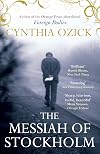
I had a shaky start with this book, and ended really enjoying it. Based on a real-life lost manuscript of Polish writer, Bruno Schulz, murdered by the nazis, it explores lost identity, lost family and lost culture, and how those vacuums are filled. The holocaust is woven through the narrative, at times explicitly, at times in the drift of smoke from something roasting or on fire.
There's a progression from febrile unreality towards bland materiality, that in gaining, the main character, Lars show more Andemening, loses something.
Although by the book's end Andemening's trajectory has been from night into day, from private to consensus reality, there remains a thrill of the uncertain, the possibility that the fantastic, veiled and withdrawn, is still imminent, its potential to break through and disrupt still alive and ready to reclaim.
I'm glad that I persevered beyond the first 19 pages, and I'm inspired to seek out the surviving works of Schulz, which is one of the blessings of reading books inspired on the works of other writers. show less
There's a progression from febrile unreality towards bland materiality, that in gaining, the main character, Lars show more Andemening, loses something.
I'm glad that I persevered beyond the first 19 pages, and I'm inspired to seek out the surviving works of Schulz, which is one of the blessings of reading books inspired on the works of other writers. show less
4 stars for what the author sets out to accomplish, but 3 stars for my ability to enjoy it. Could be timing on my part (over-tired, car-reading) but Ozick definitely creates a curmudgeonly character who is clinging to a world that is past and is afraid to face what is to come. Lloyd Wilkinson Petrie is a trustee for the boys' boarding school he attended, which is now closed. The entire book takes place in his head/memoir as he struggles to write a short historical reflection on his time show more there - and to extricate his own past from that of the school's. He had a conflicted, though privileged childhood - in the distinguished Petrie family, but his father did a runner when he was very young - to find a distant British archeologist relative and spend some time on his Egypt expedition. Though he returns to his wife and son, the impact of that time on the family, especially on Lloyd who has inherited his 'souvenirs' and his notebook records and is pondering them later in life. Lloyd has clearly been a misfit all his life - 'befriending' another misfit Ben Zion-Elephantine during their time at the Temple Academy for Boys, though the nature of the relationship is ambiguous, because Ben is such a mystery - he is Jewish in this Anglophile world. As Lloyd writes this memoir, it is 1959 and he is well into old-age. The world is clearly changing around him in ways he cannot comprehend or wants to. He is adrift, but tries to anchor with his stodgy traditional ways, making him abrasive and alienated from all but the tough German housekeeper. (ironically a shift in the social order he clings to). Ozick did a masterful job of portraying this prickly, injured character, - almost too good - it is so wordy and 'formal' that I found it hard to engage and wade through the prose to the events and the meaning. And he is a hard one to trust, because he clearly has issues. Regarding his memoir he writes: "Logic insists on it. Reason demands it. Logic and reason are themselves cowardly. What is it I am afraid to consent to? That I am beguiled by the enigma of memory? And can memory like dream, fabricate what ordinary consciousness cannot?" (167) That's what I mean. show less
Lists
Jewish Books (8)
Holocaust (1)
Awards


You May Also Like


Associated Authors
Statistics
- Works
- 51
- Also by
- 60
- Members
- 6,092
- Popularity
- #4,043
- Rating
- 3.8
- Reviews
- 137
- ISBNs
- 216
- Languages
- 16
- Favorited
- 26