
Elizabeth Hardwick (1916–2007)
Author of Sleepless Nights
About the Author
Elizabeth Hardwick was born on July 27, 1916, in Lexington, Kentucky. Hardwick earned her undergraduate and graduate degrees from the University of Kentucky, then she enrolled at Columbia University for additional study. Formerly an adjunct associate professor of English at Barnard College in New show more York, Hardwick has spent most of her adult life writing novels and essays. Hardwick's first novel, The Ghostly Lover, a story about a Kentucky family, was published in 1945. Since then, Hardwick has also written the novels The Simple Truth and Sleepless Nights. Her books of essays include A View of My Own, Sight-Readings: American Fiction, and Seduction and Betrayal: Women and Literature. Once nominated for the National Book Award, Seduction and Betrayal focuses on American writers, especially women writers, including Edith Wharton, Gertrude Stein, Katherine Anne Porter, among others. The founder and advisory editor of the New York Review of Books, Hardwick's works have appeared in periodicals such as The New Yorker, The London Times Literary Supplement, and Harper's. She died at the age of 91 on December 2, 2007. (Bowker Author Biography) show less
Works by Elizabeth Hardwick
The Collected Essays of Elizabeth Hardwick (New York Review Books Classics) (2017) 252 copies, 2 reviews
The Uncollected Essays of Elizabeth Hardwick (New York Review Books Classics) (2022) 102 copies, 1 review
The Dolphin Letters, 1970-1979: Elizabeth Hardwick, Robert Lowell, and Their Circle (2019) 77 copies
Books by and about Women 1 copy
Associated Works
Slouching Towards Bethlehem: Essays (1968) — Introduction, some editions — 5,069 copies, 101 reviews
Pale Horse, Pale Rider: Three Short Novels (1939) — Introduction, some editions — 1,002 copies, 18 reviews
Redburn: His First Voyage, Being the Sailor-Boy, Confessions and Reminiscences of the Son-of-a-Gentleman, In the Merchant Service (1849) — Introduction, some editions — 658 copies, 6 reviews
The Glorious American Essay: One Hundred Essays from Colonial Times to the Present (2020) — Contributor — 116 copies
Writing New York: A Literary Anthology (Expanded 10th-Anniversary Edition) (2008) — Contributor — 101 copies, 1 review
The Company They Kept, Volume Two: Writers on Unforgettable Friendships (2011) — Contributor — 25 copies
Tagged
Common Knowledge
- Canonical name
- Hardwick, Elizabeth
- Other names
- Prynne, Xavier
- Birthdate
- 1916-07-27
- Date of death
- 2007-12-02
- Gender
- female
- Education
- University of Kentucky
Columbia University - Occupations
- novelist
short story writer
essayist
literary critic
editor
biographer (show all 7)
writing teacher - Organizations
- American Academy of Arts and Letters (Literature, 1977)
New York Review of Books - Awards and honors
- American Academy of Arts and Letters Academy Award (Literature ∙ 1974)
Guggenheim Fellowship (1947) - Relationships
- Lowell, Robert (former husband)
- Short biography
- Elizabeth Hardwick was born to a large, strict Protestant family in Lexington, Kentucky. She earned a bachelor's and a master's degree from the University of Kentucky, graduating in 1939, and moved to New York City. There she studied for a Ph.D. at Columbia University, but dropped out in 1941 to focus on her writing. Her experience as a young Southern woman in Manhattan provided the background for her debut novel, The Ghostly Lover, published in 1945. She published two more novels, including Sleepless Nights (1979), a partly autobiographical work. Hardwick developed an elegant, analytical voice that became her trademark as an essayist and critic for intellectual and literary journals such as Partisan Review. She edited The Selected Letters of William James (1961), published the essay collection A View of My Own (1962), and helped to found The New York Review of Books in 1963. NYRB became the principal outlet for her literary criticism, which later appeared in four volumes including Seduction and Betrayal: Women and Literature (1974) and Sight-Readings (1998). She also wrote a biography of Herman Melville that appeared in 2000. In the 1970s and early 1980s, Hardwick taught writing seminars at Barnard College and Columbia University, becoming a mentor to students. She was married to poet Robert Lowell, with whom she had a daughter, from 1949 until 1972, a relationship The New York Times characterized as "restless and emotionally harrowing."
- Nationality
- USA
- Birthplace
- Lexington, Kentucky, USA
- Places of residence
- Lexington, Kentucky, USA
New York, New York, USA - Place of death
- New York, New York, USA
- Associated Place (for map)
- New York, USA
Members
Reviews
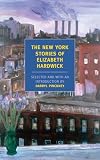
A dozen stories by Elizabeth Hardwick (1916 — 2007), whose sharp eye and biting wit is evident throughout each, are gathered in this New York Review Books edition, with an introduction by Darryl Pinckney, author of High Cotton, satiric novel about black (African-American) identity, and Sold and Gone: African-American Literature and U.S. Society.
‘Evenings at Home’ (published 1948) is set in Lexington, Kentucky, Hardwick’s home town, which she left behind for New York, after show more graduation from the University of Kentucky in 1938, to work toward a Ph.D. in English literature at Columbia University. This autobiographical fiction captures the irony of a sophisticated New York intellectual discovering that her old Kentucky home is truly where the heart is, that she can indeed go home again after a long absence and still feel comfortable with family and friends. Her comfort shifts, however, to unsettled anxiety when she learns that the boy who had been her childhood love still lives in the neighborhood. She recalls her love as “not really love . . . but simply one of those incomprehensible youthful errors” but she still holds her now long-deceased brother, responsible for interfering with her infatuation. After a surprisingly long three weeks at home, it is time to return to New York, but not before visiting the cemetery, more to see its beautiful dogwoods and lilacs than to mourn, with her mother reminding her that “there’s a space for you next to your Brother” and knowing that it is comforting to have these roots.”
‘The Friendly Witness’ (1950) presents the reader with an all too familiar story of small-town political shenanigans involving the mayor and a night club owner who also runs gaming tables. The mayor and club owner, “antipathetic to the bone”, nevertheless share an interest in the education of the mayor’s daughter, such that the club owner matches $500 given by the mayor for his daughter’s education. Thus the perception arrived at by reading the local newspaper that business again is in cahoots with government. (What else is new?) The mayor’s wife and even his personal secretary are embarrassed by the accusations. The mayor, surrounded by negative speculation and feeling the best he could do now would be to make a public statement and resign from his position, is surprised to learn that the witness to the monetary gift, a scion of the community, called news reporters to her home to set the record straight by saying she had indeed witnessed the exchange of money from club owner to mayor, but that the mayor had said clearly that although he could not prevent the club owner from “showing a kindness to his daughter” he still intended to close any gambling establishment regardless. O. Henry would be proud.
Each of this set of Hardwick stories exhibits characters that test the limits of irony, rendering poignant moments into comic relief, passions into reluctant repose, and yearnings into faded, blurred memories. A lover (perhaps) replies to his lover’s question, “Do you really love me?” with “well, yes and no, honey.” A pompous university professor revels amidst colleagues who are know-it-all and above it all, yet his wife unnerves him with her admiration of academics who “give forth on matters never experienced . . . ideas flowing like wine—everything out of books and other people’s lectures, nothing from actual life!” A painter intends to buy a painting of a colleague while making an alibi that is part of his plan to seduce his colleague’s wife. American travelers in Amsterdam (not all of Hardwick’s stories are set exclusively in New York) relish the paradox of cozy domesticity and violent emotional upheavals. “Amsterdam, a city of readers. All night long, you seemed to hear the turning of pages: pages of French, Italian, English, and the despised German. Those fair heads remembered Ovid, Yeats, Baudelaire – and remembered suffering, hiding, freezing. The weight of books and wars.” And, a book seller, owner of The Pleaide (pronounced wittily as ‘Play Aid’), mulls over his books, not quite read, as well as his customers, who browse, shoplift, and sometimes even buy books. When not among his books and customers, he is in the rear of his shop typing as rapidly as a court stenographer from hand-written index cards, page after page of his latest novel. Shelved behind him are binders filled with perfectly-typed pages comprising thirteen (unpublished) novels. The Pleaide’s stars, for its owner, are Kafka, Beckett, Walter Benjamin, Joyce, Akhmatova, and “old men from Japan with their whores in the snow mountains.” The persistent themes of intimacy and alienation thread these stories together in a warp and weft culminating in Elizabeth Hardwick’s articulate and intelligent cityscape of New York. show less
‘Evenings at Home’ (published 1948) is set in Lexington, Kentucky, Hardwick’s home town, which she left behind for New York, after show more graduation from the University of Kentucky in 1938, to work toward a Ph.D. in English literature at Columbia University. This autobiographical fiction captures the irony of a sophisticated New York intellectual discovering that her old Kentucky home is truly where the heart is, that she can indeed go home again after a long absence and still feel comfortable with family and friends. Her comfort shifts, however, to unsettled anxiety when she learns that the boy who had been her childhood love still lives in the neighborhood. She recalls her love as “not really love . . . but simply one of those incomprehensible youthful errors” but she still holds her now long-deceased brother, responsible for interfering with her infatuation. After a surprisingly long three weeks at home, it is time to return to New York, but not before visiting the cemetery, more to see its beautiful dogwoods and lilacs than to mourn, with her mother reminding her that “there’s a space for you next to your Brother” and knowing that it is comforting to have these roots.”
‘The Friendly Witness’ (1950) presents the reader with an all too familiar story of small-town political shenanigans involving the mayor and a night club owner who also runs gaming tables. The mayor and club owner, “antipathetic to the bone”, nevertheless share an interest in the education of the mayor’s daughter, such that the club owner matches $500 given by the mayor for his daughter’s education. Thus the perception arrived at by reading the local newspaper that business again is in cahoots with government. (What else is new?) The mayor’s wife and even his personal secretary are embarrassed by the accusations. The mayor, surrounded by negative speculation and feeling the best he could do now would be to make a public statement and resign from his position, is surprised to learn that the witness to the monetary gift, a scion of the community, called news reporters to her home to set the record straight by saying she had indeed witnessed the exchange of money from club owner to mayor, but that the mayor had said clearly that although he could not prevent the club owner from “showing a kindness to his daughter” he still intended to close any gambling establishment regardless. O. Henry would be proud.
Each of this set of Hardwick stories exhibits characters that test the limits of irony, rendering poignant moments into comic relief, passions into reluctant repose, and yearnings into faded, blurred memories. A lover (perhaps) replies to his lover’s question, “Do you really love me?” with “well, yes and no, honey.” A pompous university professor revels amidst colleagues who are know-it-all and above it all, yet his wife unnerves him with her admiration of academics who “give forth on matters never experienced . . . ideas flowing like wine—everything out of books and other people’s lectures, nothing from actual life!” A painter intends to buy a painting of a colleague while making an alibi that is part of his plan to seduce his colleague’s wife. American travelers in Amsterdam (not all of Hardwick’s stories are set exclusively in New York) relish the paradox of cozy domesticity and violent emotional upheavals. “Amsterdam, a city of readers. All night long, you seemed to hear the turning of pages: pages of French, Italian, English, and the despised German. Those fair heads remembered Ovid, Yeats, Baudelaire – and remembered suffering, hiding, freezing. The weight of books and wars.” And, a book seller, owner of The Pleaide (pronounced wittily as ‘Play Aid’), mulls over his books, not quite read, as well as his customers, who browse, shoplift, and sometimes even buy books. When not among his books and customers, he is in the rear of his shop typing as rapidly as a court stenographer from hand-written index cards, page after page of his latest novel. Shelved behind him are binders filled with perfectly-typed pages comprising thirteen (unpublished) novels. The Pleaide’s stars, for its owner, are Kafka, Beckett, Walter Benjamin, Joyce, Akhmatova, and “old men from Japan with their whores in the snow mountains.” The persistent themes of intimacy and alienation thread these stories together in a warp and weft culminating in Elizabeth Hardwick’s articulate and intelligent cityscape of New York. show less
 This review was written for LibraryThing Early Reviewers.
Maybe I’m just old school, but when I think of what a novel should be there is a standard list of things I look for: a narrative based on fictional events, a well-defined plot with action and resolution, fully conceived characters, identifiable central themes, etc. However, when I also think about some of the best and most imaginative books I’ve read over the years—like Italo Calvino’s If On a Winter’s Night a Traveler or David Mitchell’s Cloud Atlas—I realize that many were show more missing at least some of those elements. And so it is with Sleepless Nights, Elizabeth Hardwick’s ostensibly autobiographical tale that seems to be a cross between a post-modern fictional account, a personal history and memoir, and a pastiche of prose poetry.
An elderly woman named Elizabeth (not coincidentally the author’s name) living in a nursing home looks back at the events and relationships that shaped her life (many of which are, not coincidentally, similar to events in the author’s life) in a decidedly haphazard and non-linear way. She was once married, although memories of her husband are surprisingly few in number among the detailed, if fragmentary, sketches she offers of the people from her past. Instead, we learn of her interactions with a diverse group that includes her parents, platonic friends, occasional lovers, housemaids, spinster neighbors, and even the singer Billie Holiday.
The reader quickly realizes that, regardless of how it is labeled, Sleepless Nights is not a book defined by its plot. Rather, it is all about the tapestry of beautiful words and images that Hardwick uses while constructing a compelling portrait of a thoughtful person who has engaged fully with life. By the end of this slim but densely packed volume, we have gained considerable insight into the main character—who the author claimed in a separate interview to be less about herself than we might think—while also realizing that there is so much of her past that she has not shared. This book helped me to rethink the limits of what good fiction can be and I am certainly glad for that experience. show less
An elderly woman named Elizabeth (not coincidentally the author’s name) living in a nursing home looks back at the events and relationships that shaped her life (many of which are, not coincidentally, similar to events in the author’s life) in a decidedly haphazard and non-linear way. She was once married, although memories of her husband are surprisingly few in number among the detailed, if fragmentary, sketches she offers of the people from her past. Instead, we learn of her interactions with a diverse group that includes her parents, platonic friends, occasional lovers, housemaids, spinster neighbors, and even the singer Billie Holiday.
The reader quickly realizes that, regardless of how it is labeled, Sleepless Nights is not a book defined by its plot. Rather, it is all about the tapestry of beautiful words and images that Hardwick uses while constructing a compelling portrait of a thoughtful person who has engaged fully with life. By the end of this slim but densely packed volume, we have gained considerable insight into the main character—who the author claimed in a separate interview to be less about herself than we might think—while also realizing that there is so much of her past that she has not shared. This book helped me to rethink the limits of what good fiction can be and I am certainly glad for that experience. show less

Novella, memoir, a series of only vaguely related sketches of people and places the author has dreamed of or known? Categorizing this slim volume is nearly impossible but that hardly matters when the prose in question is as beautiful and evocative as Hardwick's. There's very little "narrative" here and nothing that can be called a plot; readers looking for a "story" are bound to be confused or disappointed, but accepted on its own terms this little book is full of more honesty, poetry, joy, show more pain and hard-won wisdom than many larger, more structured works. One of the loveliest books I've read in a long, long time. show less

First things first, let’s get it out of the way – this title is terrible. No doubt the title wouldn’t have been quite so cringey when it was first published in 1945 – however these days a title like that makes us think of Mills and Boon. Elizabeth Hardwick however is a serious writer – and The Ghostly Lover; her first novel is pretty serious, don’t let that title fool you.
I had read this novel before – probably almost thirty years ago – I remembered the title and the cover show more and nothing else really except that I found it quite hard going. Now I know why, The Ghostly Lover is an intelligent, introspective coming of age novel – which I can’t imagine having engaged with in my late teens, but which I enjoyed very much indeed this time around. Four years ago, I read Hardwick’s 1979 novel Sleepless Nights – which is an altogether different kettle of fish, it’s an elegant novel of little plot, beautiful imagery and quiet wisdom. The work of an older more accomplished writer. The Ghostly Lover, however is an astonishingly good first novel – and I remain a fan of Elizabeth Hardwick’s.
“Life seemed to be an enormous subterranean existence in which nobody spoke and in which people died for want of a few words they needed.”
Marian Coleman is sixteen in the long hot summer of depression era Kentucky. Marian and her brother Albert have been living with their grandmother, while their unreliable parents are absent, moving from job to job, chasing the seemingly unobtainable American dream. Sitting on the porch of her home as the novel opens, Marian becomes aware of a man watching her. Bruce, is a neighbour, ten years older, he is already divorced, and rather attractive, he wanders over to talk to her. As Marian sits talking to Bruce that day, she is awaiting the return of her parents, who have been absent on this occasion for two years. Their return is anticipated with a mixture of nerves and excitement.
Lucy and Ted; Marian and Albert’s parents arrive, late at night hours after they were expected, and immediately begin to upset the quiet balance of the household. They are disorganised and incapable of good parenting, but Marian has yet to realise this, sorry that soon they will be off again, her father chasing yet another job that will make their fortune. When Lucy’s childhood friend Mary calls, and suggests to Lucy that perhaps her daughter might have need of her, Lucy is unrepentant, determined to see Marian as grown up enough to do without her.
“‘I know everyone thinks it’s terrible that I go away and leave the children. I know they think it’s disgraceful that we can’t stick to anything.’ Lucy paused, and she saw that Mary’s face was heavy with emotion. She was like a child, gratefully partaking of some choice confidence. Lucy thought sadly that there must always be women like Mary in the world, women with faces that showed deep concern over ever triviality, women who wore the drawn brow of sympathy like an emblem, who specialized in the quick, hushed, understanding reply. Now she had nothing to say. Whatever she hoped to tell had vanished. ‘I simply cannot live here,’ she said and turned away.”
Hattie is the young black cleaner who works for the family, a sharp tongued, cynical young woman, with whom Marian attempts to have some kind of superficial friendship. Through Marian’s critical examination of her attitude to Hattie, Hardwick touches on race relations in the South at this time (there is some use of language we wouldn’t use now, although it is in keeping with the times the novel was written in, and is not overly offensive.)
“There had never been a real stranger in this house: only the native. Dark ones, swarthy-skinned, strange-tongued, foreigners with thick, alien eyebrows never entered the unknown homes, the America lying cunning and anonymous in the rich earth. In every corner, in every face, there was a quiet, lawful, unchallenged exclusiveness, unplanned, unrecorded and violent. But the members of the family made strangers of themselves to elude and trick the pale faces the soft voices, the calm acceptance. Mother, daughter, father, and friend; each behind the mask saying, in steady rhythm to the heartbeat, in answer to the actuality within him, the relentless refrain: They would die if they knew”
The Ghostly Lover of the title is Bruce – largely absent in the novel – he is the provider of Marian’s first significant male attention. During their short sojourn at home, Marian waits for her parents to show their disapproval – Bruce is after all ten years older, and Marian little more than a child – naturally they don’t and even then, Marian seems to know that this is all wrong.
Marian decides to go to college in New York, a year for which, strangely perhaps, Bruce pays. Here Marian lives in a hostel with other young women who are studying alongside her – develops new relationships, sometimes remembers Bruce, writing letters to her mother and grandmother – still in denial at her mother’s hopelessness. It is during her letter writing home that Marian makes a discovery about her grandmother, altering her view of her a little. There are some wonderful peripheral characters, one of the most fascinating (and elusive) is Gertrude – a woman living in the hostel, she is an older woman, foreign and rather awkward – she attaches herself to Marian, and then suddenly disappears.
In time, Marian is forced to recognise her parents for who they are when she pays them a visit, shocked by their selfishness and greed – she is finally ready to make her own way in the world. show less
I had read this novel before – probably almost thirty years ago – I remembered the title and the cover show more and nothing else really except that I found it quite hard going. Now I know why, The Ghostly Lover is an intelligent, introspective coming of age novel – which I can’t imagine having engaged with in my late teens, but which I enjoyed very much indeed this time around. Four years ago, I read Hardwick’s 1979 novel Sleepless Nights – which is an altogether different kettle of fish, it’s an elegant novel of little plot, beautiful imagery and quiet wisdom. The work of an older more accomplished writer. The Ghostly Lover, however is an astonishingly good first novel – and I remain a fan of Elizabeth Hardwick’s.
“Life seemed to be an enormous subterranean existence in which nobody spoke and in which people died for want of a few words they needed.”
Marian Coleman is sixteen in the long hot summer of depression era Kentucky. Marian and her brother Albert have been living with their grandmother, while their unreliable parents are absent, moving from job to job, chasing the seemingly unobtainable American dream. Sitting on the porch of her home as the novel opens, Marian becomes aware of a man watching her. Bruce, is a neighbour, ten years older, he is already divorced, and rather attractive, he wanders over to talk to her. As Marian sits talking to Bruce that day, she is awaiting the return of her parents, who have been absent on this occasion for two years. Their return is anticipated with a mixture of nerves and excitement.
Lucy and Ted; Marian and Albert’s parents arrive, late at night hours after they were expected, and immediately begin to upset the quiet balance of the household. They are disorganised and incapable of good parenting, but Marian has yet to realise this, sorry that soon they will be off again, her father chasing yet another job that will make their fortune. When Lucy’s childhood friend Mary calls, and suggests to Lucy that perhaps her daughter might have need of her, Lucy is unrepentant, determined to see Marian as grown up enough to do without her.
“‘I know everyone thinks it’s terrible that I go away and leave the children. I know they think it’s disgraceful that we can’t stick to anything.’ Lucy paused, and she saw that Mary’s face was heavy with emotion. She was like a child, gratefully partaking of some choice confidence. Lucy thought sadly that there must always be women like Mary in the world, women with faces that showed deep concern over ever triviality, women who wore the drawn brow of sympathy like an emblem, who specialized in the quick, hushed, understanding reply. Now she had nothing to say. Whatever she hoped to tell had vanished. ‘I simply cannot live here,’ she said and turned away.”
Hattie is the young black cleaner who works for the family, a sharp tongued, cynical young woman, with whom Marian attempts to have some kind of superficial friendship. Through Marian’s critical examination of her attitude to Hattie, Hardwick touches on race relations in the South at this time (there is some use of language we wouldn’t use now, although it is in keeping with the times the novel was written in, and is not overly offensive.)
“There had never been a real stranger in this house: only the native. Dark ones, swarthy-skinned, strange-tongued, foreigners with thick, alien eyebrows never entered the unknown homes, the America lying cunning and anonymous in the rich earth. In every corner, in every face, there was a quiet, lawful, unchallenged exclusiveness, unplanned, unrecorded and violent. But the members of the family made strangers of themselves to elude and trick the pale faces the soft voices, the calm acceptance. Mother, daughter, father, and friend; each behind the mask saying, in steady rhythm to the heartbeat, in answer to the actuality within him, the relentless refrain: They would die if they knew”
The Ghostly Lover of the title is Bruce – largely absent in the novel – he is the provider of Marian’s first significant male attention. During their short sojourn at home, Marian waits for her parents to show their disapproval – Bruce is after all ten years older, and Marian little more than a child – naturally they don’t and even then, Marian seems to know that this is all wrong.
Marian decides to go to college in New York, a year for which, strangely perhaps, Bruce pays. Here Marian lives in a hostel with other young women who are studying alongside her – develops new relationships, sometimes remembers Bruce, writing letters to her mother and grandmother – still in denial at her mother’s hopelessness. It is during her letter writing home that Marian makes a discovery about her grandmother, altering her view of her a little. There are some wonderful peripheral characters, one of the most fascinating (and elusive) is Gertrude – a woman living in the hostel, she is an older woman, foreign and rather awkward – she attaches herself to Marian, and then suddenly disappears.
In time, Marian is forced to recognise her parents for who they are when she pays them a visit, shocked by their selfishness and greed – she is finally ready to make her own way in the world. show less
Lists
Awards


You May Also Like


Associated Authors
Statistics
- Works
- 24
- Also by
- 34
- Members
- 2,812
- Popularity
- #9,129
- Rating
- 3.8
- Reviews
- 61
- ISBNs
- 75
- Languages
- 7
- Favorited
- 8
