Number seven in this series centers on women reacting to being seen as victims and sometimes doing something about it. Some of Harvey's characters are too stereotyped, but the gritty police environment is realistic. Not a home run, but adequate.
This is the 9th entry in the Bruno Chief of Police series set in modern times in the fictional town of St. Denis in the Dordogne in southwest France. In this episode, several people are on the hunt for a famous and valuable car lost in World War II, which might be hidden in the area. Others are trying to trace a money laundering ring that may get entangled with the vintage car festival in the town. There are family rifts that Bruno tries to manage, a new love interest (of course), and an incredible array of food, as always.

Edna Ferber isn't much read these days, or at least talked about, but her stories are at the heart of the new and expanding country. In this one, a gambler's daughter find herself married to a farmer, and then a widow who finds her purpose as she puts her ideas into effect to build the farm to support her and her son. What she becomes, what he becomes, and what the country, especially Chicago, becomes in the first part of the 20th century is full of characters striving for at least what they think they want. Commerce or art? Beauty or money? Must they be either/or, or can they be side by side? Terrific book.
A Swim in a Pond in the Rain: In Which Four Russians Give a Master Class on Writing, Reading, and Life by George Saunders
This is a lovely, thoughtful set of examples of how to read, and maybe write, short stories. Each section takes one short story by a classic Russian writer and points out what we might need to pay attention aside from the usual 'what happens'. Delightful and discerning. I'll probably read it again.
this is a wonderfully narrated autobiography by a neurosurgeon, Henry Marsh, who isn't afraid to let his temper and faults show. While he's doing that, he teaches a lot about neurosurgery, patients, training, terror, and all the other things that make up a surgeon's day. He explores, and explains, and mourns his failures, and talks with relief about his successes,At near the end of a long surgical and teaching career. Highly recommended unless you blanch at the thought of surgery.

As I remember it from long ago, a wonderful, eerie and evocative love story.
This is my first McCarthy. I liked the writing very much, but the dystopia is as bleak as anything I've read, the loneliness and the dangers more than bleak. No mention of what the catastrophe was, but fires have charred much of the territory and animals are gone. Let's hope we don't go that way, or any way.
In this entry, we are back at La Fenice, where the series started, where an aging but still revered soprano is singing Tosca. Brunetti once helped her out before, and he learns that she is being stalked by someone unidentified, and tries to help. This effort becomes more important after two incidents where other people connected to the soprano are hurt bu an unrecognized assailant. I found it a very interesting story and an interesting gloss on the opera as well.
Listening to this one about fighting the evil nemesis on a contaminated planet was a little too confusing. Maybe I should have read it instead. But it is just as snarky as its predecessors, and great fun.
Didias Falco is still stuck in Britain, and before he can travel home with his family and Petro, he is presented by a murder a little too close to the local British king. So of course, he must trudge all over Londinium to find the killer. The story takes several eyebrow-raising turns, of course, and I guessed one of the villains immediately - no one could be that charming.
Simon Prebble narrates. I do love to listen to these books.
Simon Prebble narrates. I do love to listen to these books.
Inspector Wexford at his most typical, although I found the story rather far-fetched, involving bigamy in rather close proximity. Among other things, it is another portrait of a type of friendship.
An easy read, partly because the story is so conventional in spite of some rather tame fantasy inserted into all-to-familiar problems of relationships of one kind or another. Not really recommended.
The 80s were a peculiar time: AIDS and underage models and lots of cocaine. Allison is a beauty who discovers she can be a fashion model and leaves home to explore the heady life in Europe, to find her naivete tested and her money embezzled. Returning to the U.S., she takes typing work and meets Veronica, a quirky, older woman in the same establishment, and they become friends. The relationship between them, and Allison's coming to terms with her disillusionment, form the story.
Not everyone in my book group liked this book. In fact, I was in the minority, but I found it plausible and well-written, in some ways a good portrait of an unlikely friendship.
Not everyone in my book group liked this book. In fact, I was in the minority, but I found it plausible and well-written, in some ways a good portrait of an unlikely friendship.
From Golden Frogs to brown bats, to Neanderthals, Kolbert examines the evidence for human impact on wildlife, one species and story at a time. Ho histrionics, just the facts and theories. It's a very level gaze at what has happened over not just the last 100 years of industrial activity, but of what came before that, as man the predator, farmer, lumberjack and collector has changed the balance of nature. Great stuff. The audiobook is extremely well-spoken.
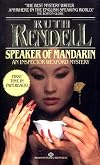
Another comfort read while I wait for the right time to start my next book group books. Wexford takes an unusual opportunity to join a delegation to China and sort of attach himself to a British tour, and some things happen, of course. Once back home, more things happen. The part in China was a bit slow and long, but once back in England the pace quickens, and the red herrings proliferate. A reasonable resolution.
Warning: the rendering of Chinese English is definitely cringe-inducing. Somehow Rendell seems to think even by 1983 that the Chinese cannot master the 'r' sound. It sounds much too comic in the nastiest sense.
Warning: the rendering of Chinese English is definitely cringe-inducing. Somehow Rendell seems to think even by 1983 that the Chinese cannot master the 'r' sound. It sounds much too comic in the nastiest sense.

This first of a police procedural series did feel like a 'first'. A Puertoriqueno raised in the Bronx has become a homicide detective in a fictional town north of the city, and his first homicide case involves an undocumented woman found in a reservoir. OK, pretty standard start. But the author really leans on the prejudice against both Latinos and undocumented immigrants, and sets up a clearly to-be-continued romance between a fierce advocate for immigrants and our detective. We get to hear about his backstory, his high school crush, his divorce, his teenage daughter, his problems with his supervisor and his ad-hoc partner, all the tropes. I felt a little hit over the head with THEMES. So I may not continue with this series - or maybe it settles down.
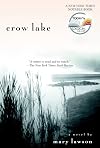
What a lovely story. Our narrator, Kate Morrison, a professor in Toronto, relates her childhood, her siblings, and her upbringing in a remote town (barely a town) in northern Ontario. She is the one who 'escapes' to a life at a university, researching and teaching. But it has estranged her from her family in many ways. Now she has been invited to return for a celebration, and it raises all sorts of memories and concerns.
Her family's tragedy is one part of the story. The other is the tragedy of a wrecked and wretched family on a nearby farm, devoured by a rage they cannot understand handed down from father to son. The two stories are not quite parallel, and so they meet with unexpected consequences.
Lawson gives the feel of a small town, with its churchgoers, its one teacher schoolhouse, its landscape, the way the community struggles against hardship. Kate must figure out her part in the estrangement, and maybe how to heal it.
Her family's tragedy is one part of the story. The other is the tragedy of a wrecked and wretched family on a nearby farm, devoured by a rage they cannot understand handed down from father to son. The two stories are not quite parallel, and so they meet with unexpected consequences.
Lawson gives the feel of a small town, with its churchgoers, its one teacher schoolhouse, its landscape, the way the community struggles against hardship. Kate must figure out her part in the estrangement, and maybe how to heal it.

Bruno gets involved with the family of a WWII fighter ace who fought with Russians on the eastern front, as he is invited to the ace's 90th birdtday party at the latter's fabulous chateau. Complications ensue when one of the guests gets suddenly drunk and is found dead the next day. Accident? Well, it is a mystery story.
If I had read it in print, I might have skipped all the food descriptions, but listening to it was very pleasant, and might even convince me to boil some eggs.
If I had read it in print, I might have skipped all the food descriptions, but listening to it was very pleasant, and might even convince me to boil some eggs.

A short novella in the Slow Horses series, clearly a setup for a much more turbulent novel, in which we are given an insight into a double agent - or is it triple? Call places!
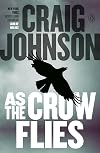
Next in the Walt Longmire series. Delicious as usual, with some surprises and all the usual characters. Walt witnesses an accident - or was it - and has to investigate, even though a family wedding is only a week or so away.
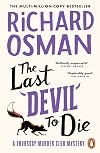
What a treat! I was thrilled to listen to Fiona Shaw read this fourth entry in the Thursday Murder Club series. Osman had me laughing out loud at so many of his characters and their quirks, and crying a little too. The Club attempts to find out who killed one of their friends and why, even though they are more or less exiled from their usual police collaboration. I thought the misdirection was brilliant, and the bad boys were just as interesting and amusing as the good ones. Highly recommended.

This is the fourth episode of the series with Chief Inspector Andreas Kaldis of Athens and various Greek isles. Maybe my tastes have changed, but I found it less than charming, a little too involved in vast conspiracy, and a little too full of jocular male camaraderie for my taste.
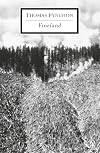
A long Pynchon-esque blast from the Nixon years. I had a lot of trouble reading the text and resorted to audio, which was somehow less trouble for me. Pynchon never uses three words when thirty would do, especially as piled-on examples. The first few chapters had me chafing and threatening to throw the virtual book out the window, but listening was ok.
Pynchon weaves in and out of the paranoia, youth culture and California of the 70s to tell the story of mainly marginal people working and not working, avoiding narcotics police, falling for strange cults, spooky Asian martial arts and various exes mainly in Northern California. If you can hold on through the endless (but entertaining) story digressions, it can be amusing, but maybe, after living through the years if not the paranoia, I'm too old to be patient with it.
Pynchon weaves in and out of the paranoia, youth culture and California of the 70s to tell the story of mainly marginal people working and not working, avoiding narcotics police, falling for strange cults, spooky Asian martial arts and various exes mainly in Northern California. If you can hold on through the endless (but entertaining) story digressions, it can be amusing, but maybe, after living through the years if not the paranoia, I'm too old to be patient with it.
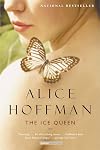
The aggravation of reading a 1980s paranoid picaresque led me to scan my shelves for something more accessible, and I stumbled upon this novel, on the shelf for who knows how long. I read it in a day - just could not put it down. People caught in traps of their own making and also random nature, struggling to be free to be themselves - a beautiful story.
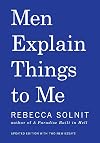
I've been working my way through this book of essays, and finally finished it today. Some of it has aged very well, but the last essay just about broke my heart. Solnit writes from the perspective of 2014, about the progress the Women's Movement has made over the years, and the then current state of recognition and empowerment. But it takes a long time to change the culture, and many backlashes along the way, and we are in the midst of one now. The demise of Roe V. Wade, Trump's Barbie Doll legion of women who should know better, the dismantling of support for the poor, the sick, the working class, the menace of a political climate of power versus morality - it all makes 2014 sound pretty good.
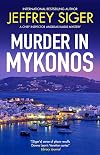
very good first in a series
I'm having some trouble with police procedurals that morph into politically nefarious plots. It happened with the Louise Penny books, and it happens again with this one. It feels too fraught and perhaps grandiose which it happens, histrionic (not that many parts of history aren't). So not really recommended, but I will continue with the series, hoping to get back to the kind of stories I prefer.

The story unfolds in the parallel lives of a Japanese schoolgirl named Nao who has returned to Japan after being raised in California, and a Japanese-American writer (named Ruth!) living with her husband on an island off Vancouver, Canada who is experiencing a sort of writer's block after losing her mother, and a feeling of displacement from the urban life she was accustomed to. Ruth finds a curious lunchbox amid the seaweed on the shore, which contains Nao's writing, a sort of diary of her misery as an outsider, her father's depression, and her relationship with her great-grandmother, a Zen nun. Will Nao's father kill himself? Will she kill herself? What is the value of an unhappy life? Ruth is fascinated and distracted from her own struggles as she reads about Nao (pronounced 'now') and becomes deeply invested in this family she has never met. Will she find her way back to her writing?
This is a book about time, living, shame, strength, and the struggle between then and now. Highly recommended.
This is a book about time, living, shame, strength, and the struggle between then and now. Highly recommended.

Bill and Steve decide to walk the Appalachian Trail from Georgia to Maine. The narration is breezy and informative, funny and sometimes grim, but always enlightening. The reader will learn a lot about the trail, the woods, the changes wrought by human activity, the nature of people who decide to do such a foolish thing as to walk over 2000 miles through forests and over mountains and remain helpful and optimistic. This is a lovely companion book one's own efforts to walk, exercise, and be mindful of the woods. An excellent adventure!
I was not raised a Christian, but of course I know the conventional story of the New Testament. This shows a completely different perspective, of a mother robbed of her son, a woman almost broken with horror and despair. Her view of the disciples: misfits who cannot meet a woman's eyes. Her view of the rabble: sheep, following instructions.
Toibin's language is straightforward - you can hear the woman talking to you, scorning her keepers (I assume his disciples), refusing to give them the stories and details she cannot give them because they want what is not true. She is tough, practical, bitter, scoffing at the worth of the sacrifice she has witnessed.
Mary was once a devout Jew, loving the Sabbath, loving the prayers. Now living in Ephesus, if she follows any god, it is Artemis, goddess of childbirth (among other things). She waits, alone, silent, for her own death.
Toibin's language is straightforward - you can hear the woman talking to you, scorning her keepers (I assume his disciples), refusing to give them the stories and details she cannot give them because they want what is not true. She is tough, practical, bitter, scoffing at the worth of the sacrifice she has witnessed.
Mary was once a devout Jew, loving the Sabbath, loving the prayers. Now living in Ephesus, if she follows any god, it is Artemis, goddess of childbirth (among other things). She waits, alone, silent, for her own death.