
Sylvia Plath (1932–1963)
Author of The Bell Jar
About the Author
Sylvia Plath's best poetry was produced, tragically, as she pondered self-destruction---in her poems as well as her life---and she eventually committed suicide. She had an extraordinary impact on British as well as American poetry in the few years before her death, and affected many poets, show more particularly women, in the generation after. She is a confessional poet, influenced by the approach of Robert Lowell. Born in Boston, a graduate of Smith College, Plath attended Newnham College, Cambridge University, on a Fulbright Fellowship and married the British poet Ted Hughes. Of her first collection,The Colossus and Other Poems (1962), the Times Literary Supplement remarked, "Plath writes from phrase to phrase as well as with an eye on the larger architecture of the poem; each line, each sentence is put together with a good deal of care for the springy rhythm, the arresting image and---most of all, perhaps---the unusual word." Plath's second book of poetry, Ariel, written in 1962 in a last fever of passionate creative activity, was published posthumously in 1965 and explores dimensions of women's anger and sexuality in groundbreaking new ways. Plath's struggles with women's issues, in the days before the second wave of American feminism, became legendary in the 1970s, when a new generation of women readers and writers turned to her life as well as her work to understand the contradictory pressures of ambitious and talented women in the 1950s. The Bell Jar---first published under a pseudonym in 1963 and later issued under Plath's own name in England in 1966---is an autobiographical novel describing an ambitious young woman's efforts to become a "real New York writer" only to sink into mental illness and despair at her inability to operate within the narrow confines of traditional feminine expectations. Plath was posthumously awarded the Pulitzer Prize for poetry in 1982. In recent years, there have been a number of biographies and critical evaluations of Plath's work. (Bowker Author Biography) show less
Disambiguation Notice:
Also published under the name Sylvia Plath Hughes and Victoria Lucas. Please do not combine this author page with the author page for Plath, as there are other authors with that surname. thank you.
Series
Works by Sylvia Plath
Johnny Panic and the Bible of Dreams: Short Stories, Prose, and Diary Excerpts (1977) 1,645 copies, 12 reviews
Stings: Original Drafts of the Dreams of the Poem Facsimile Reproduced from the Sylvia Plath Collection at Smith College (1983) 8 copies
The Poems of Sylvia Plath 8 copies
American Poetry Now: A Selection of the Best Poems by Modern American Writers (Critical Quarterly Poetry Supplement, Num (1961) 7 copies
Mad Girl's Love Song 4 copies
Le muse inquietanti e altre poesie 3 copies
The Poetry of Sylvia Plath 3 copies
Rare WINTER TREES poems by Sylvia Plath - 1st/1st HC 1972 - poetry - Bell jar [Hardcover] unknown (1972) 2 copies
Above the oxbow 2 copies
رسائل سيلفيا بلاث 1940 - 1963 2 copies
The Bell Jar and Other Works by Sylvia Plath: The Colossus, Ariel, Collected Poems and Juvenilia 2 copies
ZÉ SUSTO E A BÍBLIA DOS SONHOS 2 copies
Fiesta melons: Poems and drawings 2 copies
Morning Song {poem} 2 copies
Poesía portátil en femenino (Plath | Sexton | Dickinson | Safo | Ajmátova | Bishop | Vilariño) (2022) 1 copy
The Bell Jar 1 copy
KAMBANA E QELTQË 1 copy
LULEKUQE TETORI 1 copy
Quả chuông ác mộng 1 copy
Plath letters - Heptonstall 1 copy
سيلفيا بلاث اليوميات 1 copy
Rare WINTER TREES poems by Sylvia Plath - 1st/1st HC 1972 - poetry - Bell jar [Hardcover] unknown 1 copy
Above The Oxbow prospectus 1 copy
Crystal Gazer 1 copy
Complete Works 1 copy
Child: [poem] 1 copy
The Prose of Sylvia Plath 1 copy
Black Rook in Rainy Weather (included in The Norton Introduction to Literature - 5th Edition) 1 copy
POEMS OF SYLVIA PLATH 1 copy
Plath Sylvia 1 copy
Letters of Sylvia Plath 1 copy
Sylvia Plath reads her works 1 copy
Uncollected poems 1 copy
Plath, Sylvia Archive 1 copy
The green rock 1 copy
The World of Sylvia Plath 1 copy
Associated Works
The Making of a Poem: A Norton Anthology of Poetic Forms (2000) — Contributor — 1,472 copies, 9 reviews
Literature: An Introduction to Fiction, Poetry, and Drama (1995) — Contributor, some editions — 1,017 copies, 7 reviews
Watch for the Light: Readings for Advent and Christmas (2004) — Contributor — 903 copies, 10 reviews
The Assassin's Cloak: An Anthology of the World's Greatest Diarists (2000) — Contributor, some editions — 622 copies, 9 reviews
World Poetry: An Anthology of Verse from Antiquity to Our Time (1998) — Contributor — 499 copies, 2 reviews
No More Masks: An Anthology of Twentieth-Century American Women Poets (1993) — Contributor, some editions — 226 copies, 3 reviews
From Totems to Hip-Hop: A Multicultural Anthology of Poetry Across the Americas 1900-2002 (2002) — Contributor — 181 copies
The Universe in Verse: 15 Portals to Wonder through Science and Poetry (2024) — Contributor — 163 copies, 8 reviews
The Graphic Canon, Vol. 3: From Heart of Darkness to Hemingway to Infinite Jest (2013) — Contributor — 162 copies, 1 review
Poetry Speaks Expanded: Hear Poets Read Their Own Work from Tennyson to Plath (2007) — Contributor — 158 copies, 2 reviews
An American Album: One Hundred and Fifty Years of Harper's Magazine (2000) — Contributor — 146 copies, 1 review
The Norton Anthology of American Literature, Volume 2: 1865 to Present (1979) — Contributor, some editions — 136 copies
The Heath Anthology of American Literature, Concise Edition (2003) — Contributor — 73 copies, 1 review
Cape Cod Stories: Tales from Cape Cod, Nantucket, and Martha's Vineyard (1996) — Contributor — 59 copies, 5 reviews
Spores of Doom: Dank Tales of the Fungal Weird: 59 (British Library Tales of the Weird) (2025) — Contributor — 38 copies, 2 reviews
About Women: An Anthology of Contemporary Fiction, Poetry, and Essays (1973) — Contributor — 25 copies
Possibilities of Poetry: An Anthology of American Contemporaries (1970) — Contributor — 17 copies, 1 review
Works in Progress Number 4: Selections from the Best in Books to be Published in Coming Months (1971) — Contributor — 7 copies
Sylvia Plath's Tomato Soup Cake: A Compendium of Classic Authors' Favourite Recipes (2024) — Contributor — 6 copies
Edexcel Poetry Anthology for Advanced subsidiary and advanced GCE examinations in English Literature (2000) — Contributor, some editions — 6 copies
Die englische Literatur 10 in Text und Darstellung. 20. Jahrhundert 2. (2001) — Contributor — 6 copies
Ein Haus mit vielen Zimmern: Autorinnen erzählen vom Schreiben (edition fünf 27) (German Edition) (2015) — Contributor — 2 copies
The London Magazine : April 1963, New series Volume 3, No. 1 — Contributor — 1 copy
In'hui, No.9 — Contributor — 1 copy
Tagged
Common Knowledge
- Legal name
- Hughes, Sylvia Plath (married name)
- Other names
- Lucas, Victoria
Hughes, Sylvia Plath - Birthdate
- 1932-10-27
- Date of death
- 1963-02-11
- Gender
- female
- Education
- Smith College (AB|English|1955)
Newnham College, Cambridge (MA) - Occupations
- poet
teacher
novelist
short story writer - Awards and honors
- Glascock Poetry Prize (1955)
Fulbright Fellowship (Cambridge, 1955)
Pulitzer Prize (1982) - Relationships
- Hughes, Ted (husband)
Hughes, Frieda (daughter)
Lowell, Robert (teacher)
Alvarez, Al (friend)
Sexton, Anne (friend) - Short biography
- Sylvia Plath (October 27, 1932 – February 11, 1963) was an American poet, novelist, and short-story writer. She is credited with advancing the genre of confessional poetry and is best known for two of her published collections, The Colossus and Other Poems and Ariel, as well as The Bell Jar, a semi-autobiographical novel published shortly before her death. In 1981 The Collected Poems were published, including many previously unpublished works. For this collection Plath was awarded a posthumous Pulitzer Prize in Poetry in 1982, making her the first to receive this honour posthumously.
Born in Boston, Massachusetts, Plath studied at Smith College in Massachusetts and at Newnham College in Cambridge, England. She married fellow poet Ted Hughes in 1956, and they lived together in the United States and then in England. They had two children before separating in 1962.
Plath was clinically depressed for most of her adult life, and was treated multiple times with electroconvulsive therapy. She died by suicide in 1963. - Cause of death
- suicide
- Nationality
- USA
- Birthplace
- Boston, Massachusetts, USA
- Places of residence
- Jamaica Plain, Massachusetts, USA
Winthrop, Massachusetts, USA
Wellesley, Massachusetts, USA
Boston, Massachusetts, USA
London, Middlesex, England, UK
Devon, England, UK (show all 8)
Cambridge, Cambridgeshire, England, UK
Northampton, Massachusetts, USA - Place of death
- London, Middlesex, England, UK
- Burial location
- Heptonstall Parish Churchyard, West Yorkshire, England, UK,
- Map Location
- USA
- Disambiguation notice
- Also published under the name Sylvia Plath Hughes and Victoria Lucas.
Please do not combine this author page with the author page for Plath, as there are other authors with that surname. thank you.
Members
Discussions
26Shorts2026: ShortsRead --- Anisha's 2026 log in 26 Short Stories for 2026 (June 17)
the bell jar in Club Read 2023 (July 2023)
Interested to swap replacement titles in Canada in Folio Society Devotees (October 2022)
Fine press Plath in Fine Press Forum (March 2022)
Reviews
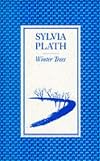
This collection of poems appeared six years after Plath achieved posthumous fame with Ariel. It contains some poems included in the U. S. edition of that volume. It’s understandable that when a powerful poet of Plath’s caliber dies young, there is a demand to read everything she left behind. Unsurprisingly, the book is uneven in quality. Some of the poems feel unfinished. Even some of those that seem finished are opaque.
One of the final poems, “The Swarm,” was at first one of those show more that seemed inaccessible. Then, after putting it aside, I remembered that Napoleon had chosen the bee, in place of the Bourbon fleur-de-lys, as his symbol. I reread the poem and found that it made sense and provided a key to help me understand some of the other poems. But it involves treading lightly. Some say a poem must be read on its own terms, without recourse to biography. Yet I can’t help it; I recall that Plath, the daughter of an entomologist, was an amateur bee-keeper. So are these swarms hers, too, as well as Napoleon’s? Another biographical reach: apparently, things were not going well in her marriage at the time (a situation that seems to underly poems such as “For a Fatherless Son” and “Lesbos”). Is that suspicion helpful here, too? Is the tyrant Napoleon transparent for the absent husband?
Once one sees these possible avenues of interpretation, it seems that other poems here also mix the historical with the personal. Not a big surprise. In Plath’s famous poem, “Daddy,” she conflates her long-dead father with Nazi torturers. The rage expressed in that poem is also present in several of these. Even in some of the less-accessible poems, the anger is palpable.
I can’t help but feel, as well, that the virtuosic connections Plath makes between the personal and the historical is not only a sign of her poetic genius but is also, perhaps, a symptom. Conversations with the mentally ill, schizophrenics, for instance, leave me amazed at their ability to tie events together and to manipulate language in a way that places them in the center of a web in which it is all about them.
I know I’m veering here into a controversial area, and I’m certainly not an expert. I’m also chary of making assertions about someone I never knew. Still, others more knowledgeable than I have speculated on the relation of genius and madness. I’d like to believe there is no necessary connection between the two, even though their boundary is porous.
Above all, I don’t mean to suggest we should reduce Plath’s poems to a collection of rough drafts for an eventual suicide note. Poetry they are. One thing that struck me reading this collection so soon after reading The Colossus, the only volume of poems to appear in her lifetime, is that in many of these, Plath is writing more for the ear, for reading aloud. One of the most successful pieces here is a radio play, Three Women, evoking the radically different experiences of three expectant mothers in a maternity ward. show less
One of the final poems, “The Swarm,” was at first one of those show more that seemed inaccessible. Then, after putting it aside, I remembered that Napoleon had chosen the bee, in place of the Bourbon fleur-de-lys, as his symbol. I reread the poem and found that it made sense and provided a key to help me understand some of the other poems. But it involves treading lightly. Some say a poem must be read on its own terms, without recourse to biography. Yet I can’t help it; I recall that Plath, the daughter of an entomologist, was an amateur bee-keeper. So are these swarms hers, too, as well as Napoleon’s? Another biographical reach: apparently, things were not going well in her marriage at the time (a situation that seems to underly poems such as “For a Fatherless Son” and “Lesbos”). Is that suspicion helpful here, too? Is the tyrant Napoleon transparent for the absent husband?
Once one sees these possible avenues of interpretation, it seems that other poems here also mix the historical with the personal. Not a big surprise. In Plath’s famous poem, “Daddy,” she conflates her long-dead father with Nazi torturers. The rage expressed in that poem is also present in several of these. Even in some of the less-accessible poems, the anger is palpable.
I can’t help but feel, as well, that the virtuosic connections Plath makes between the personal and the historical is not only a sign of her poetic genius but is also, perhaps, a symptom. Conversations with the mentally ill, schizophrenics, for instance, leave me amazed at their ability to tie events together and to manipulate language in a way that places them in the center of a web in which it is all about them.
I know I’m veering here into a controversial area, and I’m certainly not an expert. I’m also chary of making assertions about someone I never knew. Still, others more knowledgeable than I have speculated on the relation of genius and madness. I’d like to believe there is no necessary connection between the two, even though their boundary is porous.
Above all, I don’t mean to suggest we should reduce Plath’s poems to a collection of rough drafts for an eventual suicide note. Poetry they are. One thing that struck me reading this collection so soon after reading The Colossus, the only volume of poems to appear in her lifetime, is that in many of these, Plath is writing more for the ear, for reading aloud. One of the most successful pieces here is a radio play, Three Women, evoking the radically different experiences of three expectant mothers in a maternity ward. show less

The first time I read this was in high school. The only thing I remembered about it was the bloody sex scene--which terrified me. Now, many -- many years later I've reread it. I kept waiting for that scene, and as I got to the end of the book, I began to think I had mixed this book up with some other book, because shouldn't it have happened early on? Well, it is in this book, and while unpleasant for the narrator, it is on some level, humorous. Actually, a lot of the book is rather funny, I show more had forgotten that. The various ways she contemplates killing herself is, despite the horror of what she is doing, quite hilarious. Sylvia Plath's novel is an amazing balancing act between comedy and tragedy and well worth reading. It is worth emphasizing that what may seem trivial or laughable to most people, looks very different from inside the "bell jar" where everything is distorted and confining. Plath manages to convey this very well. show less
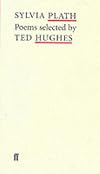
Is this collection of poems problematic because it’s selected by Plath’s husband, with whom she had a complicated relationship and who likely played a role in her untimely death? Most certainly. And yet, Ted Hughes’ taste in poetry and his skills as an editor of collections is ultimately intriguing, so I couldn’t resist seeing his take on his late wife’s work. Thankfully, he does not provide an introduction to the collection nor any commentary throughout, so we are left instead to show more drift and wander through Plath’s work relatively unhindered by anything more than the tone set by his taste. Having read at least a few of Plath’s collections on their own, it is clear that while she possesses a distinct literary style and voice, her poetry does vary widely in terms of tone, content, overall feel. The collection presented herein contains a far more unified tone informed by Hughes’ editorial hand, and veers towards a viscerality and darkness that I would not otherwise have immediately associated with her style. I may have even assumed if not otherwise informed that the poems in this collection were all written during her time with Hughes - and being obviously influenced by his own poetic leanings. That being said, I am far more drawn to Hughes’ poetry than Plath’s as a baseline (as well as appreciating his editorial selections elsewhere), so it was gratifying to see her work through his lens, bringing many of the poems that I might have missed in other readings to light. Plath is definitely not a poet to be passed over, and I am learning that reading collections which highlight specific themes and styles (brought together by judicious editors) is one of the best ways for me to explore the genre with more ease. show less
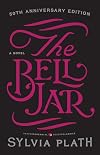
Sylvia's semi-autobiographical novel comes across to me like a time capsule for another era. In that time it seemed women were corraled into a superficial appearance of independence and intelligence. As Plath's main character seems to get lost in the struggle between that artificial world and her own spirited if unformed individual direction I find it difficult to connect with her, but also sympathetic for her accident of placement in time while also enjoying a story artfully told.
Lists
Jim's Bookshelf (1)
Elegant Prose (1)
. (1)
Daria (1)
Five star books (1)
Unread books (1)
Literary Witches (1)
. (1)
To Read (1)
1960s (1)
Check Library (1)
Overdue Podcast (1)
First Novels (1)
100 Hemskaste (1)
E's Reader (1)
sad girl books (2)
Favourite Books (2)
sad girl books (3)
Poetry Corner (2)
el (2)
Female Author (1)
Carole's List (1)
Summer Books (1)
A Novel Cure (1)
Best First Lines (1)
Women's Stories (1)
To read 2025 (1)
Awards


You May Also Like


Associated Authors
Statistics
- Works
- 131
- Also by
- 77
- Members
- 55,767
- Popularity
- #265
- Rating
- 4.0
- Reviews
- 779
- ISBNs
- 622
- Languages
- 32
- Favorited
- 358


