
V. S. Pritchett (1900–1997)
Author of The Oxford Book of Short Stories
About the Author
Born in Ipswich and educated at Alleyn's School, Dulwich, and Dulwich College, novelist and critic V. S. Pritchett worked in the leather trade and later as a commercial traveler and shop assistant. After World War II, he was literary editor of the New Statesman and Nation and has frequently show more contributed to American periodicals and the N.Y. Times Book Review. He is a distinguished short story writer who has often appeared in the New Yorker. Pritchett has also collaborated with the photographer Evelyn Hofer on three charming and excellent portraits of London, New York, and Dublin. Pritchett, who has been lauded for his fine literary criticism, has also written about many other writers. He received numerous awards including the 1969 Heinemann Award, the 1974 PEN Award, the 1990 W. H. Smith Literary Award, and the 1993 Golden Pen Award. He died from a stroke on March 20, 1997. (Bowker Author Biography) show less
Works by V. S. Pritchett
Why do I write? : An exchange of views between Elizabeth Bowen, Graham Greene & V. S. Pritchett ; with a pref. by V. S. (1975) 6 copies
This England 5 copies
A New World 1 copy
Many Are Disappointed 1 copy
A Story of Don Juan 1 copy
The Necklace 1 copy
[No title] 1 copy
The Spree 1 copy
This England [1937] 1 copy
Clare Drummer 1 copy
You Make Your own Life 1 copy
The Voice [short story] 1 copy
The Humming Poet 1 copy
Just a Little More [short story] — Author — 1 copy
Handsome Is As Handsome Does 1 copy
Associated Works
The Story and Its Writer: An Introduction to Short Fiction (1976) — Contributor — 1,213 copies, 3 reviews
Secret Ingredients: The New Yorker Book of Food and Drink (2007) — Contributor — 592 copies, 10 reviews
The World of the Short Story: A 20th Century Collection (1986) — Contributor — 510 copies, 4 reviews
The Art of the Tale: An International Anthology of Short Stories (1986) — Contributor — 380 copies, 3 reviews
Great Tours and Detours: The Sophisticated Traveler Series (1985) — Contributor — 35 copies, 1 review
Selected Shorts: Food Fictions (Selected Shorts: A Celebration of the Short Story) (2007) — Contributor — 11 copies, 3 reviews
Modern books and writers: The catalogue of an exhibition held at 7 Albemarle Street, April to September 1951 (1951) — Contributor — 2 copies
Tagged
Common Knowledge
- Canonical name
- Pritchett, V. S.
- Legal name
- Pritchett, Sir Victor Sawdon
- Other names
- VSP
- Birthdate
- 1900-12-16
- Date of death
- 1997-03-20
- Gender
- male
- Education
- St John's School, Ipswich, Suffolk, England, UK
Alleyn’s School
Dulwich College, London, England, UK - Occupations
- novelist
short story writer
critic - Organizations
- PEN International
The New Statesman
UK Ministry of Information (WWII)
BBC - Awards and honors
- Royal Society of Literature (Companion of Literature, 1987)
Order of the British Empire (Commander, 1968)
Knight Bachelor (1975)
Companion of Honour (1993)
Royal Society of Literature (Fellow, 1958)
American Academy of Arts and Letters (Foreign Honorary member, 1971) (show all 9)
PEN Award (1974)
Heinemann Award for Literature (1969)
Golden PEN Award (1994) - Relationships
- Pritchett, Oliver (son)
Pritchett, Matt (grandson)
Pritchett, Georgia (granddaughter) - Cause of death
- stroke
- Nationality
- UK
- Birthplace
- Ipswich, Suffolk, England, UK
- Places of residence
- Ipswich, Suffolk, England, UK
USA
London, Middlesex, England, UK
Woodford, Essex, England, UK
Derby, Derbyshire, England, UK
Sedbergh, Cumbria, England, UK - Place of death
- London, Middlesex, England, UK
- Associated Place (for map)
- England, UK
Members
Reviews
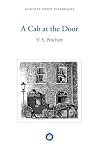
Victor Sawdon Pritchett was born in 1900 and died in 1997. That period covers two world wars, landing on the moon, the birth control pill--in other words, a remarkable condensation of technological achievement encompassing the fledgling days of the industrial revolution, space and cyberspace. This autobiography focuses on his extraordinary childhood. Eventually he would become a highly respected English writer with “Sir” before his name but he didn’t shun his humble beginnings. In show more fact, he used them as fodder for his writing.
His father, Walter, was a strutting popinjay of a Yorkshireman who indulged his taste for fine clothes to the point of dandyism, pursuing his dreams relentlessly no matter how many times they flopped, and demanding to be above criticism by his family no matter how many times he let them down. The cab of the title had to be called to the door umpteen times to move this unfortunate (and ever growing) family because of his unpaid bills and mismanaged finances. But “father never gives up” so this little tyrant clung to both his dreams and his iron control over his family. His foray into Christian Science was very interesting, if faintly chilling.
V.S.'s mother, Beatrice, was a Cockney born and bred, full of imagination, humour, laughter, music and fun, yet given to tremendous anxiety and moments of despair. How could she not, tethered to Walter and ground down by him and their circumstances. She would be reduced to helpless laughter by the word “bloomers” but the planes attacking London had her spinning in mindless terror, clutching her children to her. She would tear down curtains and sew slapdash pants for her sons. She never could cook but she gamely tried. Yet her focus was on Walter, so that V.S. could never entirely count on her support for himself. He loved her but he could call her “shifty”.
Reading of his childhood, youth and adolescence was like finding a lost novel by Dickens. Despite trips up to Yorkshire at various times, the real heart of the story was in London with its curry coloured fogs, horses and cars comingling in the streets to provide noise and danger, schoolyards full of fighting, brawling boys and shrieking, slapping girls. His stint in the Bermondsey leather trade was remarkable with its insight into the factory trade but even more interesting for the characters who worked there.
At times it felt as though the story wasn’t being told by a writer who was polishing his verbs and setting his adjectives a’twinkle but by a man exhilarated himself by the memories rushing out of him, eager to get them out swiftly because there was another wave of them waiting to dash on to memory’s beach, his pen barely able to keep up.
A lovely little book in a gem of a publication by Slightly Foxed (I do love built-in ribbon bookmarks). Recommended. show less
His father, Walter, was a strutting popinjay of a Yorkshireman who indulged his taste for fine clothes to the point of dandyism, pursuing his dreams relentlessly no matter how many times they flopped, and demanding to be above criticism by his family no matter how many times he let them down. The cab of the title had to be called to the door umpteen times to move this unfortunate (and ever growing) family because of his unpaid bills and mismanaged finances. But “father never gives up” so this little tyrant clung to both his dreams and his iron control over his family. His foray into Christian Science was very interesting, if faintly chilling.
V.S.'s mother, Beatrice, was a Cockney born and bred, full of imagination, humour, laughter, music and fun, yet given to tremendous anxiety and moments of despair. How could she not, tethered to Walter and ground down by him and their circumstances. She would be reduced to helpless laughter by the word “bloomers” but the planes attacking London had her spinning in mindless terror, clutching her children to her. She would tear down curtains and sew slapdash pants for her sons. She never could cook but she gamely tried. Yet her focus was on Walter, so that V.S. could never entirely count on her support for himself. He loved her but he could call her “shifty”.
Reading of his childhood, youth and adolescence was like finding a lost novel by Dickens. Despite trips up to Yorkshire at various times, the real heart of the story was in London with its curry coloured fogs, horses and cars comingling in the streets to provide noise and danger, schoolyards full of fighting, brawling boys and shrieking, slapping girls. His stint in the Bermondsey leather trade was remarkable with its insight into the factory trade but even more interesting for the characters who worked there.
At times it felt as though the story wasn’t being told by a writer who was polishing his verbs and setting his adjectives a’twinkle but by a man exhilarated himself by the memories rushing out of him, eager to get them out swiftly because there was another wave of them waiting to dash on to memory’s beach, his pen barely able to keep up.
A lovely little book in a gem of a publication by Slightly Foxed (I do love built-in ribbon bookmarks). Recommended. show less
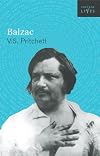
Balzac is now forever immortalized in my mind as a misguided fashion icon traipsing (and tripping) around Paris with his bedazzled canes. He is an author well worth reading about, and due to his frequent financial disasters and bizarre romances there is never a dull moment in here. This biography delivers on both information and entertainment value.
I enjoyed the title story for many reasons, but perhaps its most notable feature, given its plot, theme, and humour, is that it is not unkind.
VS Pritchett was a Christian Scientist, so I assume this story of a 17-year-old raised in a small sect with “scientific” beliefs (though not conventional science) has autobiographical aspects. In the space of a couple of days, he questions the origin of evil, doubts his faith, meets a hero, and loses his faith.
“Our religion taught us not to show more believe what we saw.”
It was somewhat relatable for me. I was raised in a mainstream Christian denomination and at 17, I was alternating between commitment and disbelief, via questioning. I also learned to punt in my teens (you stand at the stern (rear) of a flat-bottomed boat and push forward, using a long pole), and I have anecdotes about it!
Image: Punting on the River Cam in Cambridge (Source)
The fact this sect of Purifiers arose in Toronto was an intriguing coincidence, as I remember the excitement in mid 1990s evangelical quarters about the “Toronto Blessing”.
Anyway, this story managed to tackle all those issues in a way that combined insight with gentle humour.
Accidental baptism and transfiguration by buttercup pollen are one thing, but the ape? There's a whole thesis in that... You can read this story HERE.
It also struck me that Timberlake's downfall came from wood and water!
Quotes
• “A hand as soft as the best quality chamois leather took mine.”
• “The hoop-like branches of the trees bend down until their tips touch the water like fingers making musical sounds.”
• “If God made water it would be ridiculous to suggest He made it capable of harming his other creatures.” show less
VS Pritchett was a Christian Scientist, so I assume this story of a 17-year-old raised in a small sect with “scientific” beliefs (though not conventional science) has autobiographical aspects. In the space of a couple of days, he questions the origin of evil, doubts his faith, meets a hero, and loses his faith.
“Our religion taught us not to show more believe what we saw.”
It was somewhat relatable for me. I was raised in a mainstream Christian denomination and at 17, I was alternating between commitment and disbelief, via questioning. I also learned to punt in my teens (you stand at the stern (rear) of a flat-bottomed boat and push forward, using a long pole), and I have anecdotes about it!
Image: Punting on the River Cam in Cambridge (Source)
The fact this sect of Purifiers arose in Toronto was an intriguing coincidence, as I remember the excitement in mid 1990s evangelical quarters about the “Toronto Blessing”.
Anyway, this story managed to tackle all those issues in a way that combined insight with gentle humour.
Accidental baptism and transfiguration by buttercup pollen are one thing, but the ape? There's a whole thesis in that... You can read this story HERE.
It also struck me that Timberlake's downfall came from wood and water!
Quotes
• “A hand as soft as the best quality chamois leather took mine.”
• “The hoop-like branches of the trees bend down until their tips touch the water like fingers making musical sounds.”
• “If God made water it would be ridiculous to suggest He made it capable of harming his other creatures.” show less
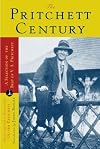
Sir Victor Pritchett disproved almost every cliché of literary life. After making a striking debut as a journalist and fiction writer during the 1920s, he not only failed to burn out in a fashionably bohemian style but got a second wind that carried him clear through the 1990s. In an age of specialization, he left his mark on a half-dozen genres--the novel, short fiction, memoir, casual essay, travel writing, and criticism. Throughout a career of such jaw- dropping duration, he resisted show more literary fads like the plagues that they are. Finally, he had that rarest of authorial virtues--common sense--which enlivens almost every word of The Pritchett Century. No doubt Pritchett fans will argue over what their hero did best. But his short stories, which leaven a near-Chekhovian delicacy with the driest of wit, equal anything written in our age. And his criticism is as entertaining as it is accurate, particularly when he wrote about books he loved. (Here's Pritchett on Huckleberry Finn, for example, mixing his panegyric with a soupçon of poison: "Huck is a only a crude boy, but luckily he was drawn by a man whose own mind was arrested, with disastrous results in his other books, at the schoolboy stage; here it is perfect.") In any case, The Pritchett Century contains ample helpings of every genre, which adds up to an highly distinguished anthology.
This collection of Pritchett's prose includes autobiographical extracts, travel writing, and criticism of both classic and contemporary writers, from Kipling and Eliot, to Bellow and Rushdie. The volume also contains extracts from his novels, and the best of his short stories. show less
This collection of Pritchett's prose includes autobiographical extracts, travel writing, and criticism of both classic and contemporary writers, from Kipling and Eliot, to Bellow and Rushdie. The volume also contains extracts from his novels, and the best of his short stories. show less
Lists
Awards


You May Also Like


Associated Authors
Statistics
- Works
- 81
- Also by
- 60
- Members
- 3,083
- Popularity
- #8,282
- Rating
- 4.3
- Reviews
- 30
- ISBNs
- 193
- Languages
- 7
- Favorited
- 7