
Morley Callaghan (1903–1990)
Author of Such Is My Beloved
About the Author
Morley Callaghan 1903-1990 Morley Callaghan was born on February 22, 1903 in Toronto, Canada. A master of the short story and author of several excellent novels, Callaghan has long been a writer of international reputation. He educated at St. Michael's College, University of Toronto, and Osgoode show more Hall Law school. Working as a reporter for the Toronto Daily Star, he met Ernest Hemingway who was also working with the newspaper. In 1929, the same year as his first volume of short stories, Native Argosy, was published, Callaghan traveled to Paris, where he became reacquainted with Hemingway and met James Joyce and F. Scott Fitzgerald. That Summer in Paris (1963) contains Callaghan's memoirs of his experiences with these famous expatriates. Morley Callaghan is renowned for the clarity and economy of his prose. While Callaghan's work appears forthright and uncomplicated, each of the novels focuses on a character who faces a crisis. How this turning point is handled determines the direction the character's life will take. Callaghan, who was a devout Catholic, saw himself as a moralist as well as one who gave "shape and form to human experience." Callaghan was awarded the Royal Society of Canada's Lorne Pierce Medal in 1960. In 1982 he was made a Companion of the Order of Canada. Callaghan's works include The Loved and the Lost (which won the Governor General's Award in 1951), The Many Colored robe, A Time for Judas, Our Lady of the Snows, and A Wild Old man Down the Road. He died at the age of 87 and was interred at Mount Hope Catholic Cemetery in Ontario. (Bowker Author Biography) show less
Works by Morley Callaghan
That Summer In Paris: Memories of Tangled Friendships with Hemingway, Fitzgerald, and Some Others (1963) 206 copies, 12 reviews
All the Years of Her Life 3 copies
EI VOR MOSTENI PAMANTUL 2 copies
Getting on in the World 2 copies
Loppy Phelan's Double Shoot 1 copy
Callaghan Morley 1 copy
Hello, America! 1 copy
Rendezvous 1 copy
The Runaway 1 copy
A Cap for Steve 1 copy
On The Edge Of A World 1 copy
Un vieux renard en cavale: Roman (Collection Littérature d'Amérique) (French Edition) (1991) 1 copy
The Many Coloured Coat 1 copy
Close to the Sun Again 1 copy
The Snob [short story] 1 copy
That Summer In Paris. Memories of Tangled Friendships with Hemingway, Fitzgerald, and Some Others. 1 copy, 1 review
Clair Obscur 1 copy
The Novice 1 copy
The Consuming Fire 1 copy
The Chiseller 1 copy
A Boy Grows Older 1 copy
An Enemy Of The People 1 copy
The Sentimentalists 1 copy
Lady In A Green Dress 1 copy
The New Kid 1 copy
Poolroom 1 copy
Just Like Her Mother 1 copy
A Couple Of Million Dollars 1 copy
The Way It Ended 1 copy
The Lucky Lady 1 copy
A Pair Of Long Pants 1 copy
With An Air Of Dignity 1 copy
All Right, Flatfoot 1 copy
A Little Beaded Bag 1 copy
Big Jules 1 copy
This Man, My Father 1 copy
The Fugitive 1 copy
Associated Works
The World of the Short Story: A 20th Century Collection (1986) — Contributor — 510 copies, 4 reviews
Cavalcade of the North: An Entertaining Collection of Distinguished Writing by Canadian Authors (1958) — Contributor — 70 copies, 1 review
The Best Short Stories of 1932 and the Yearbook of the American Short Story (1932) — Contributor — 15 copies
The Best Short Stories of 1941 and the Yearbook of the American Short Story (1941) — Contributor — 11 copies
The Best Short Stories of 1940 and the Yearbook of the American Short Story (1940) — Contributor — 8 copies
The Best Short Stories of 1937 and the Yearbook of the American Short Story (1937) — Contributor — 8 copies
The Best Short Stories of 1939 and the Yearbook of the American Short Story (1939) — Contributor — 8 copies
The Best Short Stories of 1931 and the Yearbook of the American Short Story (1931) — Contributor — 7 copies, 1 review
The Best Short Stories of 1936 and the Yearbook of the American Short Story (1936) — Contributor — 5 copies
The Best Short Stories of 1928 and the Yearbook of the American Short Story (1928) — Contributor — 3 copies
The Best Short Stories of 1929 and the Yearbook of the American Short Story (1929) — Contributor — 3 copies
First Love: Stories by Sixteen of Today's Great Authors of Romantic Fiction (1948) — Contributor — 3 copies
The Best Short Stories of 1935 and the Yearbook of the American Short Story (1935) — Contributor — 2 copies
The Best Short Stories of 1933 and the Yearbook of the American Short Story (1933) — Contributor — 2 copies
Tagged
Common Knowledge
- Canonical name
- Callaghan, Morley
- Legal name
- Callaghan, Edward Morley
- Birthdate
- 1903-02-22
- Date of death
- 1990-08-25
- Gender
- male
- Education
- Riverdale Collegiate Institute
University of Toronto
Osgoode Hall Law School - Occupations
- Reporter, Toronto Daily Star
novelist
short story writer - Awards and honors
- Lorne Pierce Medal (1960)
Order of Canada (Companion, 1982)
Molson Prize (1969)
Royal Society of Canada (Fellow)
Order of Ontario - Relationships
- Callaghan, Barry (son)
- Short biography
- Edward Morley Callaghan, CC, O.Ont, FRSC (February 22, 1903 – August 25, 1990) was a Canadian novelist, short story writer, playwright, TV and radio personality.
Callaghan was born and raised in Toronto, Ontario. He was educated at Riverdale Collegiate Institute, the University of Toronto and Osgoode Hall Law School. He never practiced law, however. During the 1920s he worked at the Toronto Daily Star where he became friends with fellow reporter, Ernest Hemingway formerly of The Kansas City Star. Callaghan began writing stories that were well received and soon was recognized as one of the best short story writers of the day. He then spent some months in Paris, France, where he was part of the great gathering of writers in Montparnasse such as Ernest Hemingway, F. Scott Fitzgerald, James Joyce and others. Callaghan married Loretto Dee, with whom he had two sons: Michael (born November 1931) and Barry (born 1937), poet and author. Barry Callaghan's memoir Barrelhouse Kings (1998), examines his career and that of his father. After outliving most of his contemporaries Callaghan died after a brief illness in Toronto. He was 87 and is interred in Mount Hope Catholic Cemetery in Ontario - Nationality
- Canada
- Places of residence
- Toronto, Ontario, Canada
- Burial location
- Mount Hope Catholic Cemetery
- Associated Place (for map)
- Ontario, Canada
Members
Reviews
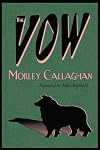
Considering Morley Callaghan's children's novel, THE VOW (1948), was written over 65 years ago, it holds up well and the lessons it teaches are, I think, still valid.
So why am I reading this obscure children's book from Canada? Well, a few years back I read and very much enjoyed Callaghan's memoir, THAT SUMMER IN PARIS (1963), about his expatriate year in the 1920s and his friendships with Hemingway, Fitzgerald, Stein and others, and, since I was a boyhood fan of dog books by Terhune, show more O'Brien, Curwood and Kjelgaard, I though I would try a Canadian dog book.
And I am glad I did, although THE VOW is probably much more of the realist school than the romantic adventures those other dog book writers wrote. Briefly, eleven year-old orphan, Luke Baldwin, is forced to grow up a little faster when he comes to live with his burly and very practical-minded Uncle Henry, a successful small town sawyer, who is nothing at all like Luke's late father, who was a physician. Henry is determined to cure Luke of his 'dreaminess' and make a man out of him. Luke takes comfort in the companionship of their dog, Dan, an aging one-eyed collie who is nearing the end of his usefulness around the house and sawmill. A city boy, Luke also must learn to fit in and assert himself among a new crowd of rough country boys.
Yes, it is a fairly straightforward and simple story. The crux of it, however, is very different from the soft-filtered Victorian tones of Terhune's Sunnybank collie books. Because Uncle Henry determines that it's time to 'get rid' of old Dan, despite the bond between the dog and boy. How Luke responds to this situation is indeed moving and, at the same time, pretty realistic. And, lest you get the wrong idea, Uncle Henry is NOT painted as a villain. He is simply a businessman who evaluates things carefully, and when he decides something - a dog, for example - has outlived its usefulness, well, then it has to go. And I could relate. Perhaps because I was a child of the forties and fifties, back when dogs were pretty disposable and easily replaced, and I can remember my father once had to shoot our dog - a collie, in fact - who had killed some of our neighbor's chickens. And, while my three older brothers and I were certainly upset and saddened by this turn of events, we did not hate our dad. It was simply the way of the world, and we learned. None of this sounds very politically correct now, I know, in an era when chickens might be found in an animal shelter - CHICKENS! - but that's just the way it was. Pets and animals were possessions, to be used or disposed of as owners saw fit.
So I can see how THE VOW served a purpose and taught a lesson in its time. It's also a pretty damn good story, about family, about boys, and most importantly, about a boy and his dog. I will highly recommend it for middle school children, but I would recommend parents read it too, so they can talk about it with the young readers, can explain how things once were with people and pets - and sometimes still are.
P.S. Both this book and the memoir I mentioned, are now available in handsome reprints from Exile Editions, a press founded and run by Morley Callaghan's son.
- Tim Bazzett, author of the memoir, BOOKLOVER show less
So why am I reading this obscure children's book from Canada? Well, a few years back I read and very much enjoyed Callaghan's memoir, THAT SUMMER IN PARIS (1963), about his expatriate year in the 1920s and his friendships with Hemingway, Fitzgerald, Stein and others, and, since I was a boyhood fan of dog books by Terhune, show more O'Brien, Curwood and Kjelgaard, I though I would try a Canadian dog book.
And I am glad I did, although THE VOW is probably much more of the realist school than the romantic adventures those other dog book writers wrote. Briefly, eleven year-old orphan, Luke Baldwin, is forced to grow up a little faster when he comes to live with his burly and very practical-minded Uncle Henry, a successful small town sawyer, who is nothing at all like Luke's late father, who was a physician. Henry is determined to cure Luke of his 'dreaminess' and make a man out of him. Luke takes comfort in the companionship of their dog, Dan, an aging one-eyed collie who is nearing the end of his usefulness around the house and sawmill. A city boy, Luke also must learn to fit in and assert himself among a new crowd of rough country boys.
Yes, it is a fairly straightforward and simple story. The crux of it, however, is very different from the soft-filtered Victorian tones of Terhune's Sunnybank collie books. Because Uncle Henry determines that it's time to 'get rid' of old Dan, despite the bond between the dog and boy. How Luke responds to this situation is indeed moving and, at the same time, pretty realistic. And, lest you get the wrong idea, Uncle Henry is NOT painted as a villain. He is simply a businessman who evaluates things carefully, and when he decides something - a dog, for example - has outlived its usefulness, well, then it has to go. And I could relate. Perhaps because I was a child of the forties and fifties, back when dogs were pretty disposable and easily replaced, and I can remember my father once had to shoot our dog - a collie, in fact - who had killed some of our neighbor's chickens. And, while my three older brothers and I were certainly upset and saddened by this turn of events, we did not hate our dad. It was simply the way of the world, and we learned. None of this sounds very politically correct now, I know, in an era when chickens might be found in an animal shelter - CHICKENS! - but that's just the way it was. Pets and animals were possessions, to be used or disposed of as owners saw fit.
So I can see how THE VOW served a purpose and taught a lesson in its time. It's also a pretty damn good story, about family, about boys, and most importantly, about a boy and his dog. I will highly recommend it for middle school children, but I would recommend parents read it too, so they can talk about it with the young readers, can explain how things once were with people and pets - and sometimes still are.
P.S. Both this book and the memoir I mentioned, are now available in handsome reprints from Exile Editions, a press founded and run by Morley Callaghan's son.
- Tim Bazzett, author of the memoir, BOOKLOVER show less

This short novel is a visceral punch to the gut. Kip Caley is pardoned from his crime and welcomed back into his community. While the optimism that fills him and his surroundings might seem quaint by today's standards, it is still an uplifting tale that we can easily transpose to modern times. This, of course, doesn't last: the community moves on; Kip does not and struggles to fit in. His own moral compass is far above the rest and he becomes increasingly disillusioned until the two people show more he trusts the most seemingly lose faith in him.
The language definitely gives this book an old-fashioned patina. A similar book written today would, I think, carry a lot more cynicism. The struggle between good and bad, law and order, redemption and revenge remain, however, and this short novel reminds us how tenuous understanding, compassion and trust really are. show less
The language definitely gives this book an old-fashioned patina. A similar book written today would, I think, carry a lot more cynicism. The struggle between good and bad, law and order, redemption and revenge remain, however, and this short novel reminds us how tenuous understanding, compassion and trust really are. show less
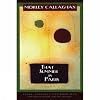
Morley Callaghan's excellent memoir of the expatriate scene on Paris's left bank in 1929, THAT SUMMER IN PARIS, was first published in 1963. Callaghan wrote the book because he found he was deeply affected by the tragic suicide of his one-time friend, Ernest Hemingway, and memories of Paris from that long-ago summer began to float to the surface of his mind until he decided to write of it.
I 'discovered' Callaghan's memoir when I read of it in the recent scholarly and excellent book, STEIN show more AND HEMINGWAY, by Professor Lyle Larsen. THAT SUMMER IN PARIS was recently faithfully and stylishly reprinted by Exile Editions, which is the version I now own.
Callaghan, who was apparently well-known in Canada (he died in 1990), was a new writer to me, but now I may have to seek out some of his other work. I enjoyed this book that much. His style of writing is deceptively simple and straightforward and he doesn't appear to take himself overly seriously. He tells his readers right up front that writing should be about the thing itself, and not hidden in metaphors or symbolism, or something to that effect. This approach is certainly followed in THAT SUMMER, which offers a clear-eyed and moving portrait of his separate friendships with Hemingway and Fitzgerald. "Separate" because Callaghan makes clear that there was something between the two men which precluded a real and close friendship, something Callaghan himself is unclear on. As a young aspiring writer with just one book to his credit, Callaghan makes no secret of his enormous admiration for both men, but as he gets to know both of them better, he comes to feel sorry for Fitzgerald, a tortured soul, alcoholic and saddled with a wife who is mentally ill. There are also vague intimations that Fitzgerald may have been a repressed homosexual, which may have been the 'something' between him and Hemingway which precluded any lasting or close friendship. Moreover early in the narrative Callaghan muses that he was "half convinced that writers couldn't go on being friends. Something would always happen that would make them shy away from each other."
Perhaps there is indeed some jealousy or mean spiritedness in this difficulty between writers, as evidenced in an observation once by Oscar Wilde: "It isn't enough that I succeed. My friend has got to fail a little." (I feel compelled to confess that I got this Wilde quote from another writer acquaintance, Ward Just.) In any case, although Fitzgerald appeared to be hungry for Hemingway's friendship to an almost embarrasing extent, Ernest generally kept himself apart from Scott.
As a practical and extremely perceptive young man, Callaghan recognized these difficulties between the two men, and yet managed to remain friends with both of them. With Hemingway he donned boxing gloves and became a regular sparring partner, a macho kind of friendship initiated by Hemingway. His friendship with Fitzgerald was more cerebral and literary in nature, and he also acted, if unwillingly, as a liaison between the two men.
Callaghan was a man with strong opinions on writing and other writers and had no compunction about giving them. He admired Fitzgerald's work without reserve, but seemed to feel that Hemingway's A FAREWELL TO ARMS was his best work (an opinion I share), while he dismissed the fine Nick Adams takls as "his little Michigan stories" - an opinion I do not share. (But then I am from Michigan.) He is equally dismissive of the French writers of the time, Mallarme and Gide, for example. And of Henry James he writes -
"That style of his in those later books! I began to hate it. Not layers of extra subtleness - just evasion from the task of knowing exactly what to say. Always the fancied fastidiousness of sensibility. Bright and sharp as he had been in the earlier books, the fact was that James had got vulgar - like a woman who was always calling attention to her fastidiousness."
Of Gertrude Stein, Callaghan was equally scornful -
"I no longer had any curiosity about the grand lady ... Abstract prose was nonsense. The shrewd lady had found a trick, just as the naughty Dadaists had once found a trick. The plain truth was, as I saw it, Gertrude Stein now had nothing whatever to say."
Bravo, Morley! What you just said? Me too. However, the one thing that Callaghan and Stein might have agreed upon (from what I read in the Larsen book) was Hemingway's true nature. Both thought he was, in reality, a gentle and sensitive man very unlike the overly macho public persona he had created of himself, always bolstered enthusiastically by the press and rumor-mongers. Callaghan talks repeatedly about a "sweetness" in the man. Stein went even further, suspecting that Hemingway may have been a suppressed homosexual. This was, and continues to be, a cause for speculation, but could indeed explain the tension between Hemingway and Fitzgerald.
The truth is, Callaghan's very intimate and literary account of that memorable summer just before the stock market crash which would decimate the fortunes which allowed such lives of expatriate ease and decadence is an immensely sympathetic and readable portrait of his own development as a writer, as well as the excesses and tormented relationships between other prominent artists and writers of the time. More simply, Morley Callaghan was an extremely likeable guy and a wonderful writer. I cannot recommend this book highly enough. show less
I 'discovered' Callaghan's memoir when I read of it in the recent scholarly and excellent book, STEIN show more AND HEMINGWAY, by Professor Lyle Larsen. THAT SUMMER IN PARIS was recently faithfully and stylishly reprinted by Exile Editions, which is the version I now own.
Callaghan, who was apparently well-known in Canada (he died in 1990), was a new writer to me, but now I may have to seek out some of his other work. I enjoyed this book that much. His style of writing is deceptively simple and straightforward and he doesn't appear to take himself overly seriously. He tells his readers right up front that writing should be about the thing itself, and not hidden in metaphors or symbolism, or something to that effect. This approach is certainly followed in THAT SUMMER, which offers a clear-eyed and moving portrait of his separate friendships with Hemingway and Fitzgerald. "Separate" because Callaghan makes clear that there was something between the two men which precluded a real and close friendship, something Callaghan himself is unclear on. As a young aspiring writer with just one book to his credit, Callaghan makes no secret of his enormous admiration for both men, but as he gets to know both of them better, he comes to feel sorry for Fitzgerald, a tortured soul, alcoholic and saddled with a wife who is mentally ill. There are also vague intimations that Fitzgerald may have been a repressed homosexual, which may have been the 'something' between him and Hemingway which precluded any lasting or close friendship. Moreover early in the narrative Callaghan muses that he was "half convinced that writers couldn't go on being friends. Something would always happen that would make them shy away from each other."
Perhaps there is indeed some jealousy or mean spiritedness in this difficulty between writers, as evidenced in an observation once by Oscar Wilde: "It isn't enough that I succeed. My friend has got to fail a little." (I feel compelled to confess that I got this Wilde quote from another writer acquaintance, Ward Just.) In any case, although Fitzgerald appeared to be hungry for Hemingway's friendship to an almost embarrasing extent, Ernest generally kept himself apart from Scott.
As a practical and extremely perceptive young man, Callaghan recognized these difficulties between the two men, and yet managed to remain friends with both of them. With Hemingway he donned boxing gloves and became a regular sparring partner, a macho kind of friendship initiated by Hemingway. His friendship with Fitzgerald was more cerebral and literary in nature, and he also acted, if unwillingly, as a liaison between the two men.
Callaghan was a man with strong opinions on writing and other writers and had no compunction about giving them. He admired Fitzgerald's work without reserve, but seemed to feel that Hemingway's A FAREWELL TO ARMS was his best work (an opinion I share), while he dismissed the fine Nick Adams takls as "his little Michigan stories" - an opinion I do not share. (But then I am from Michigan.) He is equally dismissive of the French writers of the time, Mallarme and Gide, for example. And of Henry James he writes -
"That style of his in those later books! I began to hate it. Not layers of extra subtleness - just evasion from the task of knowing exactly what to say. Always the fancied fastidiousness of sensibility. Bright and sharp as he had been in the earlier books, the fact was that James had got vulgar - like a woman who was always calling attention to her fastidiousness."
Of Gertrude Stein, Callaghan was equally scornful -
"I no longer had any curiosity about the grand lady ... Abstract prose was nonsense. The shrewd lady had found a trick, just as the naughty Dadaists had once found a trick. The plain truth was, as I saw it, Gertrude Stein now had nothing whatever to say."
Bravo, Morley! What you just said? Me too. However, the one thing that Callaghan and Stein might have agreed upon (from what I read in the Larsen book) was Hemingway's true nature. Both thought he was, in reality, a gentle and sensitive man very unlike the overly macho public persona he had created of himself, always bolstered enthusiastically by the press and rumor-mongers. Callaghan talks repeatedly about a "sweetness" in the man. Stein went even further, suspecting that Hemingway may have been a suppressed homosexual. This was, and continues to be, a cause for speculation, but could indeed explain the tension between Hemingway and Fitzgerald.
The truth is, Callaghan's very intimate and literary account of that memorable summer just before the stock market crash which would decimate the fortunes which allowed such lives of expatriate ease and decadence is an immensely sympathetic and readable portrait of his own development as a writer, as well as the excesses and tormented relationships between other prominent artists and writers of the time. More simply, Morley Callaghan was an extremely likeable guy and a wonderful writer. I cannot recommend this book highly enough. show less
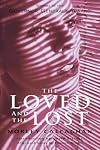
Was Canada a cultural desert for 20th century writers before Leonard Cohen burst on the scene with an album of songs (The Songs of Leonard Cohen) or was it more to the point that if writers chose to stay in Canada they would never get a foot on the world stage. Morley Callaghan was part of the group of writers centred around Paris in 1929 which included Ernest Hemingway, Ezra Pound, Gertrude Stein, F Scott Fitzgerald and James Joyce, unfortunately for him (as far as international fame is show more concerned) he chose to return to Canada. Fitzgerald, Hemingway, Stein, Joyce, Pound and er.... um Morley Callaghan? His novels were published by Scribners and he regularly had stories published in the New Yorker, but none of his novels were published in the United Kingdom. When I read the wikipedia article it would seem he was more famous for an alleged boxing match with Ernest Hemingway than any book he wrote. So then what of The Loved and the Lost his novel published in 1951 and now available on kindle.
Jim McAlpine is a college professor who leaves his post to seek his fortune and widen his horizons in a new city. He has the chance to get a regular column in a prestigious newspaper and also to romance the wealthy owners daughter. He is a man with liberal some might say progressive views but he must overcome the suspicions of the editor in chief to get employment. He charms both the owner Mr Carver and his daughter Catherine and is made to believe his appointment is only a matter of a delay of a week or two. Meanwhile he is introduced to Peggy Sanderson a sort of femme fatale, with whom he quickly falls in love. Peggy is trying to make ends meet in the city, but is not helped by her associations with some black musicians who play jazz in a dive in the black district across the tracks. Jim starts to follow her around and into the cafe where the musicians play. He must balance his chance of employment with his growing obsession for Peggy whose reputation is becoming increasingly disreputable with the English and French white communities.
The city is obviously Montreal although it is not named and it is winter time and a bitterly cold period. The snow fall seems to mirror Jim's struggle as he moves through the city with some difficulty. He shivers in pursuit of Peggy who leads him around her regular haunts, while he seeks shelter in bars and eating houses. At times he becomes lost not able to find places in which he feels secure and although he is a confident man, he is cast into a world where he starts to feel out of his depth. Morley Callaghan paints a vivid portrait of the city and keys into the events and lives of the people surrounding Jim. It is a psychological approach and although detached; in as much as there is no moral tone the author lays bare the thoughts and feelings of Jim, however hazy they might be. Peggy of course remains an enigma, but a back story of her childhood (which she tells to Jim) of her joyous relationship with a large black family when she was a child uncovers her motives to become accepted by the black community. It is a snapshot of the lives of the communities in the city told through the experiences of a select group of people. The author refuses to make any moral judgements and although a major theme of the book is black and white relationships and those between the rich and not so rich, Morley Callaghan refrains from making or leading to any judgements. It is up to the reader to find his own way. The book has an overtone of tragedy almost from the start, but this is not overplayed and the excellent pacing moves through the gears to its unsurprising conclusion. It is a dose of sharply observed reality with suspense and anticipation building through its wintry urban landscapes.
Morley Callaghan was a journalist and his sharp observations reflect this background, but there is no clipped journalistic style in his beautifully turned prose. His psychological interest do not at any stage hint at a crusade. He tells the story of the relationships between the communities with sympathy for the economic deprivation of the black people, but any stance on racism is not evident from this novel, however It was written in 1951 and so black people are referred to as negroes or mulattos and by more colloquial terms by some of the white characters. Morley Callaghan from the evidence of this novel is a major discovery for me and I look forward to reading more by him. Evidently he was an excellent writer of short stories. 4.5 stars. show less
Jim McAlpine is a college professor who leaves his post to seek his fortune and widen his horizons in a new city. He has the chance to get a regular column in a prestigious newspaper and also to romance the wealthy owners daughter. He is a man with liberal some might say progressive views but he must overcome the suspicions of the editor in chief to get employment. He charms both the owner Mr Carver and his daughter Catherine and is made to believe his appointment is only a matter of a delay of a week or two. Meanwhile he is introduced to Peggy Sanderson a sort of femme fatale, with whom he quickly falls in love. Peggy is trying to make ends meet in the city, but is not helped by her associations with some black musicians who play jazz in a dive in the black district across the tracks. Jim starts to follow her around and into the cafe where the musicians play. He must balance his chance of employment with his growing obsession for Peggy whose reputation is becoming increasingly disreputable with the English and French white communities.
The city is obviously Montreal although it is not named and it is winter time and a bitterly cold period. The snow fall seems to mirror Jim's struggle as he moves through the city with some difficulty. He shivers in pursuit of Peggy who leads him around her regular haunts, while he seeks shelter in bars and eating houses. At times he becomes lost not able to find places in which he feels secure and although he is a confident man, he is cast into a world where he starts to feel out of his depth. Morley Callaghan paints a vivid portrait of the city and keys into the events and lives of the people surrounding Jim. It is a psychological approach and although detached; in as much as there is no moral tone the author lays bare the thoughts and feelings of Jim, however hazy they might be. Peggy of course remains an enigma, but a back story of her childhood (which she tells to Jim) of her joyous relationship with a large black family when she was a child uncovers her motives to become accepted by the black community. It is a snapshot of the lives of the communities in the city told through the experiences of a select group of people. The author refuses to make any moral judgements and although a major theme of the book is black and white relationships and those between the rich and not so rich, Morley Callaghan refrains from making or leading to any judgements. It is up to the reader to find his own way. The book has an overtone of tragedy almost from the start, but this is not overplayed and the excellent pacing moves through the gears to its unsurprising conclusion. It is a dose of sharply observed reality with suspense and anticipation building through its wintry urban landscapes.
Morley Callaghan was a journalist and his sharp observations reflect this background, but there is no clipped journalistic style in his beautifully turned prose. His psychological interest do not at any stage hint at a crusade. He tells the story of the relationships between the communities with sympathy for the economic deprivation of the black people, but any stance on racism is not evident from this novel, however It was written in 1951 and so black people are referred to as negroes or mulattos and by more colloquial terms by some of the white characters. Morley Callaghan from the evidence of this novel is a major discovery for me and I look forward to reading more by him. Evidently he was an excellent writer of short stories. 4.5 stars. show less
Lists
Awards


You May Also Like


Associated Authors
Statistics
- Works
- 77
- Also by
- 44
- Members
- 1,244
- Popularity
- #20,622
- Rating
- 3.6
- Reviews
- 38
- ISBNs
- 124
- Languages
- 2
- Favorited
- 4