
Nathaniel Hawthorne (1804–1864)
Author of The Scarlet Letter
About the Author
Nathaniel Hawthorne was born on July 4, 1804 in Salem, Massachusetts. When he was four years old, his father died. Years later, with financial help from his maternal relatives who recognized his literary talent, Hawthorne was able to enroll in Bowdoin College. Among his classmates were the show more important literary and political figures Horatio Bridge, Henry Wadsworth Longfellow, and Franklin Pierce. These friends supplied Hawthorne with employment during the early years after graduation while Hawthorne was still establishing himself as a legitimate author. Hawthorne's first novel, Fanshawe, which he self-published in 1828, wasn't quite the success that he had hoped it would be. Not willing to give up, he began writing stories for Twice-Told Tales. These stories established Hawthorne as a leading writer. In 1842, Hawthorne moved to Concord, Massachusetts, where he wrote a number of tales, including "Rappaccini's Daughter" and "Young Goodman Brown," that were later published as Mosses from an Old Manse. The overall theme of Hawthorne's novels was a deep concern with ethical problems of sin, punishment, and atonement. No one novel demonstrated that more vividly than The Scarlet Letter. This tale about the adulterous Puritan Hester Prynne is regarded as Hawthorne's best work and is a classic of American literature. Other famous novels written by Hawthorne include The House of Seven Gables and The Blithedale Romance. In 1852, Hawthorne wrote a campaign biography of his college friend Franklin Pierce. After Pierce was elected as President of the United States, he rewarded Hawthorne with the Consulship at Liverpool, England. Hawthorne died in his sleep on May 19, 1864, while on a trip with Franklin Pierce. (Bowker Author Biography) show less
Disambiguation Notice:
Hawthorne added the 'w' to his last name out of guilt and shame due to the fact that his ancestor was Judge Hathorne at the famous Salem Witch Trials.
Image credit: Peabody Essex Museum by John Adams Whipple, Boston.
Series
Works by Nathaniel Hawthorne
Collected Novels: Fanshawe/The Scarlet Letter/The House of the Seven Gables/The Blithedale Romance/The Marble Faun (1828) 681 copies, 4 reviews
The House of the Seven Gables 359 copies
The Scarlet Letter and Selected Tales (Penguin English Library) (1850) — Author — 322 copies, 2 reviews
Classical Mythology: Myths and Legends of the Ancient World (Arcturus Slipcased Classics) (2018) 87 copies, 1 review
The Custom-House; The Scarlet Letter; The House of the Seven Gables; The Blithedale Romance; The Marble Faun (1985) 60 copies
Mitos Gregos. Histórias Extraordinárias de Heróis, Deuses e Monstros Para Jovens Leitores (2016) 59 copies, 1 review
The World Mythology Collection: Deluxe 6-volume box set edition (Arcturus Collector's Classics, 14) (2022) 48 copies
The Whole History of Grandfather's Chair; or, True Stories from New England History, 1620-1803 (1999) 45 copies
The Works of Nathaniel Hawthorne: The House of the Seven Gables/the Scarlet Letter/Twice-Told Tales (1994) 28 copies
The Scarlet Letter / The House of Seven Gables / The Blithedale Romance / Twenty Short Stories (1993) 28 copies
Grolier Classics: Scarlet Letter, History of Herodotus, Utilitarianism and On Liberty, Sonnets (1956) 21 copies
Legends of the Province-House (Howe's Masquerade / Edward Randolph's Portrait / Lady Eleanore's Mantle / Old Esther Dudley) (1990) 17 copies
Reading & Training : Nathaniel Hawthorne : The scarlet letter [book + sound recording] (1998) — Writer — 15 copies
Nathaniel Hawthorne: The Complete Novels (The Greatest Writers of All Time Book 45) (2019) 14 copies
The Dolliver Romance, Fanshawe, and Septimus Felton with an Appendix Containing the Ancestral footstep (1976) 14 copies
The Centenary Edition of the Works of Nathaniel Hawthorne, Vol. 14: The French and Italian Notebooks (Volume 14) (1980) 14 copies
Tales and Sketches (A Book of Autographs, Browne's Folly, Doctor Bullivant, The Journal of the Solit (The Library of America) (2004) 8 copies
CENTENARY ED WORKS NATHANIEL HAWTHORNE: VOL. XIX, THE CONSULAR LETTERS, 18531855 (Centenary Edition of the Works of Nathaniel Hawthorne) (1988) 8 copies
A Rose for Emily American Short Stories / Eine Rose Fur Emily Amerikanische Kurzgeschichten (DTV Zweisprachig) (1999) 7 copies
Twelve tales by Nathaniel Hawthorne 7 copies
Mitos gregos 7 copies
Scarlet Letter II by Nathaniel Hawthorne - Del Prado Miniature (The Miniature Classics Library) (2003) 6 copies
The House of Seven Gables Edited With a Life of Hawthorne, Notes, and Other Aids to the Study of the Book (1922) 6 copies
Reading & Training : Nathaniel Hawthorne : Stories of suspense [book + sound recording] (2004) — Writer — 6 copies, 1 review
Edward Randolph's Portrait 4 copies
CENTENARY ED WORKS NATHANIEL HAWTHORNE: VOL. XVI, THE LETTERS, 18431853 (Volume 16) (Centenary Edition of the Works of Nathaniel Hawthorne) (1985) 4 copies
Study Guide for The Scarlet Letter with Related Readings (Glencoe Literature Library) (2000) 4 copies
Hawthorne Novels Collection: Fanshawe, The Scarlet Letter, The House of the Seven Gables, The Blithedale Romance, The Marble Faun (2020) 4 copies
The heart of Hawthorne's journals 4 copies
The Scarlet Letter: Student Edition with Chapter Summaries, Annotations, and Definitions (2008) 3 copies
Allegories of the heart 3 copies
The Complete Writings of Nathaniel Hawthorne Vol. XIV - The Dolliver Romance and Kindred Tales (1900) 3 copies
I capolavori di Nathaniel Hawthorne 3 copies
Centenary Edition Works of Nathaniel Hawthorne: Volume 11, The Snow Image and Uncollected (1974) 3 copies
Nathaniel Hawthorne Collection: Twice-Told Tales, The Scarlet Letter, The House of the Seven Gables (2020) 3 copies
The White Old Maid [short story] 2 copies
The Yarn of a Yankee privateer 2 copies
Snow-Flakes [short story] 2 copies
Nathaniel Hawthorne THE SCARLET LETTER First Modern Library Edition 1927 [Hardcover] unknown (1927) 2 copies
The house of the seven gables : an authoritative text, backgrounds and sources, essays in criticism (1967) 2 copies
Two Christmas Stories 2 copies
Romanzi 2 copies
Works Of Nathaniel Hawthorne Volume VII Tanglewood Tales A Wonder Book Sketches and Poems (1923) 2 copies
Works of Nathaniel Hawthorne: American Note Books / English Note Books - with illustrations 2 copies
Wakefield / Rappaccini's Daughter 2 copies
HAWTHORNE'S GREAT BOOK OF RECITATIONS AND DIALOGUES Containing the very best of each kind: tragic, sentimental and comic, three volumes in one. (1881) — Author — 2 copies
The Annotated Tanglewood Tales 2 copies
The House of the Seven Gables Grandfather's Chair (American Authors in Prose and Poetry, II) (1940) 2 copies
Footprints on the Seashore 2 copies
I miti greci: Re Mida, Lo scrigno di Pandora, Proserpina e Plutone, il ratto di Europa (1982) 2 copies
Nathaniel Hawthorne: Representative Selections, with Introduction, Bibliography, and Notes (1934) 2 copies
The Gray Champion and Other Tales 2 copies
Les Contes prodigieux 2 copies
Mosses from an Old Manse 2 copies
Hawthorne's Works XII, Sketches 2 copies
Librivox Ghost Story Collection 005 2 copies
Tales from A Wonder Book For Girls And Boys: The Greek Myths of King Midas and Pandora's Box (PlainTales Classics) (2009) 2 copies
Chippings with a Chisel 2 copies
ගින්දර පළදනාව 1 copy
De merveilleuses histoires 1 copy
Dr. Grimshawe's Secret 1 copy
Taccuini americani 1 copy
The Scarlet Letter 2004 Edition by Hawthorne, Nathaniel published by Simon & Schuster (2004) (1972) 1 copy
A Collection of Nathaniel Hawthorne's Short Stories: Young Goodman Brown and 87 Others (2014) 1 copy
Our Old Home, etc 1 copy
Grandfather's Chair - True Stories From New England History 1620 - 1803 (Riverside Literature Series, No. 7, 8, and 9) (1883) 1 copy
Amerikiečių novelės 1 copy
Hawthorne: Best Known Works 1 copy
Novela norteamericana 1 copy
The Custom-House - Concluded 1 copy
Howe's Masquerade 1 copy
Famous old people 1 copy
HLa Ilettera scarlata 1 copy
American fiction 1 copy
La Gran cara de pedra 1 copy
Antická mytologie 1 copy
A Wonder Book (Part Two) - Tanglewood Tales - American Authors in Prose and Poetry in Twelve Volumes 1 copy
Doctor Grimshawe's Secret 1 copy
The Scralet Letter 1 copy
Hathorne's Twice-Told Tales 1 copy
Il giovane signor Brown 1 copy
Cuentos del Bosque Frondoso 1 copy
The Scarlet Letter 1 copy
Young Goodman Browne 1 copy
MISTERIOSOS 1 copy
Tales of the Dark Romantics and Beyond: Tales of the Dark Romantics — Contributor — 1 copy
Notes of Travel III 1 copy
The Scarlet Letter *1948 1 copy
Złote Runo 1 copy
Notes of Travel, Vol. 4 1 copy
A Wonder Book For Boys and Girls (Classics Series CL118) [Illustrated - Complete and Unabridged] 1 copy
Notes of Travel II 1 copy
Grandfather's Chair Etc 1 copy
Mosses from an Old Manse II 1 copy
Marble Faun ,II 1 copy
Notes of Travel I 1 copy
Notes of Travel,IV 1 copy
The Complete Short Stories 1 copy
Diabeł w Rękopisie 1 copy
The works of Nathaniel Hawthorne, edited by Julian Hawthorne. Volume v.3 1900 [Leather Bound] 1 copy
The works of Nathaniel Hawthorne, edited by Julian Hawthorne. Volume V.2 1900 [Leather Bound] 1 copy
The Complete Works of Nathaniel Hawthorne (Illustrated Edition): Novels, Short Stories, Poems, Essays, Letters and Memoirs (2017) 1 copy
True Stories from New England History, 1620-1803: Grandfather's Chair Complete in Three Parts, with Questions (2010) 1 copy
The scarlet letters 1 copy
Jason and the golden fleece 1 copy
Méduse et autres légendes de monstres: adaptées par N. Hawthorne (Le Livre des merveilles) (2018) 1 copy
Young Goodman Brown: Simplified for Modern Readers (Accelerated Reader AR Quiz No. 7950) (2013) 1 copy
The Scarlet Letter Adapted 1 copy
The Nathaniel Hawthorne Collection (7 novels and 7 short story collections all with an active table of contents) (2011) 1 copy
Hawthorne's New Hampshire 1 copy
Fire-worship (Short Story) 1 copy
Los mejores cuentos 1 copy
The Scarlet Letter; Moby Dick; The Red Badge of Courage; The Bridge of San Luis Rey (Four American Novels) (1959) 1 copy
Some twice-told tales 1 copy
Other Tales and Sketches (From: " The Doliver Romance and Other Pieces: Tales and Sketches ") (2012) 1 copy
Night Sketches [short story] 1 copy
Works of Nathaniel Hawthorne (Twice-Told Tales The House of the Seven Gables & The Snow Image) (1879) 1 copy
The Outsider 1 copy
Il segno (in Racconti) 1 copy
A Perennial classic 1 copy
Miti greci 1¦ ( I) — Author — 1 copy
The Scarlet Letter, The House of Seven Gables, The Blithedale Romance, and Twenty Short Stories 1 copy
Miti greci 2¦ ( I) — Author — 1 copy
Lendas do mundo antigo 1 copy
The Whole history of Grandfather's chair or True stories from New England History, 1620-1808 (2001) 1 copy
El Sillon Del Abuelo 1 copy
La lettera scalatta 1 copy
The House of the Seven Gables and Other Tales (Cambridge Scholars Publishing Classics Texts) (2009) 1 copy
5 Books Moses From An Old Manse; Twice-Told Tales; House of Seven Gables; Scarlet Letter; Grandfather's Chair (1900) 1 copy
Contos 1 copy
Contes extranys 1 copy
The Masters of Romance: 25 of the Greatest Romances Ever Written [Illustrated] (2011) 1 copy, 1 review
Die himmlische Eisenbahn. Erzählungen, Skizzen, Vorworte, Rezensionen (Winkler Weltliteratur) (1977) 1 copy
Τρεις γοτθικές αλληγορίες 1 copy
The Sketch Book 1 copy
Contos da Grécia Antiga 1 copy
Novelly 1 copy
La Semblance du Vivant: Contes d'Images et d'Effigies (Versions françaises) (French Edition) (2010) 1 copy
Hawthorne Romanzi 1 copy
Las Esposas de los muertos 1 copy
My Vegetable Progeny 1 copy
A Dama Velada 1 copy
La ambición del forastero 1 copy
Associated Works
Literature: An Introduction to Fiction, Poetry, and Drama (1995) — Contributor, some editions — 1,024 copies, 7 reviews
Perrine's Literature: Structure, Sound, and Sense (1970) — Contributor, some editions — 895 copies, 4 reviews
Great American Short Stories: From Hawthorne to Hemingway (2004) — Contributor — 675 copies, 2 reviews
Spells of Enchantment: The Wondrous Fairy Tales of Western Culture (1991) — Contributor — 607 copies, 5 reviews
Four Classic American Novels (The Scarlet Letter / The Adventures of Huckleberry Finn / The Red Badge of Courage / Billy Budd) (1969) — Contributor — 381 copies
75 Short Masterpieces: Stories from the World's Literature (1961) — Contributor — 319 copies, 2 reviews
American Fantastic Tales : Terror and the Uncanny from Poe to the Pulps (2009) — Contributor — 290 copies, 4 reviews
The Heath Anthology of American Literature, Volume 1 (1990) — Contributor, some editions — 252 copies, 1 review
The Arbor House Treasury of Horror and the Supernatural (1981) — Contributor — 219 copies, 3 reviews
The Graphic Canon, Vol. 2: From "Kubla Khan" to the Brontë Sisters to The Picture of Dorian Gray (2012) — Contributor — 213 copies, 2 reviews
The Moral Life: An Introductory Reader in Ethics and Literature (1999) — Contributor — 205 copies, 2 reviews
The Confidence-Man: His Masquerade [Norton Critical Edition, 2nd ed.] (2006) — Contributor — 196 copies, 2 reviews
The Civil War: The Second Year Told By Those Who Lived It (2012) — Contributor — 194 copies, 1 review
Classic American Short Stories [Barnes & Noble Leatherbound Classics] (2001) — Contributor — 175 copies, 1 review
The Lincoln Anthology: Great Writers on His Life and Legacy from 1860 to Now (2008) — Contributor — 172 copies, 1 review
Isaac Asimov Presents : The Best Science Fiction of the 19th Century (1981) — Contributor — 156 copies, 2 reviews
An American Album: One Hundred and Fifty Years of Harper's Magazine (2000) — Contributor — 146 copies, 1 review
Novel History: Historians and Novelists Confront America's Past and Each Other (2001) — Contributor — 139 copies, 1 review
The Glorious American Essay: One Hundred Essays from Colonial Times to the Present (2020) — Contributor — 119 copies
The Prentice Hall Anthology of Science Fiction and Fantasy (2000) — Contributor — 101 copies, 2 reviews
Great Tales of Terror from Europe and America: Gothic Stories of Horror and Romance 1765-1840 (1972) — Contributor — 76 copies
The Heath Anthology of American Literature, Concise Edition (2003) — Contributor — 73 copies, 1 review
The Smiles of Rome: A Literary Companion for Readers and Travelers (2005) — Contributor — 66 copies, 2 reviews
The End of the World: Classic Tales of Apocalyptic Science Fiction (2010) — Contributor — 61 copies, 2 reviews
What happened in Salem? Documents pertaining to the seventeenth-century witchcraft trials (1960) — Contributor — 58 copies
The Man Without a Country and Other Stories [Airmont Books] (1971) — Contributor — 49 copies, 2 reviews
The Signet Classic Book of Contemporary American Short Stories (1985) — Contributor — 47 copies, 1 review
Christmas Ghosts: Seventeen Great Ghost Stories in the Christmas Tradition (1987) — Contributor — 46 copies
Witches, Wraiths, and Warlocks: Supernatural Tales of the American Renaissance (1971) — Contributor — 42 copies
The Graphic Canon of Crime & Mystery, Vol. 1: From Sherlock Holmes to A Clockwork Orange to Jo Nesbø (2017) — Contributor — 39 copies, 2 reviews
Out of the Best Books: An Anthology of Literature, Vol. 5: Community Responsibility (1969) — Contributor — 30 copies
Tales of the Wandering Jew: A Collection of Contemporary and Classic Stories (1991) — Contributor — 29 copies
Out of the Best Books: An Anthology of Literature, Vol. 4: The World Around Us (1968) — Contributor — 28 copies
The Ghost of Fear and Others: H. P. Lovecraft's Favorite Stories Vol.1 (2014) — Contributor — 27 copies
American Literature: The Makers and the Making (In Two Volumes) (1973) — Contributor, some editions — 26 copies
The Origins of Science Fiction (Oxford World's Classics Hardback Collection) (2022) — Contributor — 24 copies, 1 review
The Greatest American Short Stories: Twenty Classics of Our Heritage (1953) — Contributor — 21 copies, 1 review
Scientific Romance: An International Anthology of Pioneering Science Fiction (2016) — Contributor — 20 copies, 2 reviews
A Quaint and Curious Volume: Tales and Poems of the Gothic (2019) — Contributor — 19 copies, 1 review
International Short Stories, Volume 1: American Stories (1910) — Contributor; Contributor — 15 copies
Selected English Short Stories: XIX and XX Centuries (Second Series) (1924) — Contributor — 14 copies
Great American Ghost Stories: Chilling Tales by Poe, Bierce, Hawthorne and Others (2008) — Contributor — 12 copies
Penny Dreadful Multipack Volume 7 – The Americans: The Legend of Sleepy Hollow, The Murders in the Rue Morgue, Mosses From An Old Manse, Owl Creek Bridge, The King In Yellow and… (2015) — Contributor — 7 copies
A Treasury of Great Short Stories — Contributor — 7 copies
Flora Curiosa: Cryptobotany, Mysterious Fungi, Sentient Trees, and Deadly Plants in Classic Science Fiction and Fantasy (2008) — Contributor — 7 copies
Gran Colección de la Literatura Universal: Norteamericana I (1982) — Contributor — 5 copies, 1 review
The Phoenix Pick Anthology of Classic Science Fiction Stories (Verne, Wells, Kipling, Hawthorne & More) (2008) — Author — 5 copies
Weird Tales Volume 31 Number 6, June 1938 — Contributor — 3 copies
Reading & Training : Stories of ghosts and mystery [book + sound recording] (2008) — Writer — 2 copies
Shirley Temple Storybook Collection: The Terrible Clockman / The House of the Seven Gables (2008) — Original story — 2 copies
Weird Tales Volume 31 Number 4, April 1938 — Contributor — 2 copies
Crime and Detection (Second Series) — Contributor — 2 copies
The House of the Seven Gables [1960 Shirley Temple Storybook TV episode] (1960) — Original book — 1 copy
Selected Stories by Dickens, Poe, London, Twain, Wilde, O. Henry, Stoker, Stevenson (2017) — Contributor — 1 copy
Best of Classic Christian Literature for 99 Cents - EXTRACTS FROM ADAM'S DIARY by Mark Twain ... EVE'S DIARY by Mark Twain ... PARADISE LOST by John Milton ... THE DIVINE COMEDY… — Contributor — 1 copy
Short Ghost and Horror Collection 074 — Contributor — 1 copy
Wim Wenders (The Scarlet Letter/Wrong Move/Lightning Over Water/Room 666/Tokyo-Ga/A Trick Of Light/The American Friend/Notebook On Cities And Clothes) — Author — 1 copy
Short Stories: Old and New — Contributor — 1 copy
Tagged
Common Knowledge
- Legal name
- Hathorne, Nathaniel
- Other names
- Boyce, Ashley A.
Oberon
Aubépine, M. - Birthdate
- 1804-07-04
- Date of death
- 1864-05-19
- Gender
- male
- Education
- Bowdoin College (BA|1825)
- Occupations
- weigher (Boston Common House)
surveyor (Salem Custom House)
writer
author
novelist - Organizations
- Phi Beta Kappa (1824)
- Awards and honors
- The Hall of Fame for Great Americans (1900)
- Relationships
- Hawthorne, Julian (son)
Lathrop, Rose Hawthorne (daughter)
Hawthorne, Hildegarde (granddaughter)
Hawthorne, Sophia Peabody (wife)
Peabody, Elizabeth Palmer (sister-in-law)
Melville, Herman (friend) (show all 12)
Pierce, Franklin (friend)
Holmes, Oliver Wendell, Sr. (friend)
Longfellow, Henry Wadsworth (friend)
Hillard, George Stillman (friend)
Bridge, Horatio (friend)
Alcott, Louisa May (student) - Short biography
- Nathaniel Hawthorne (July 4, 1804 – May 19, 1864) was an American novelist, dark romantic, and short story writer. His works often focus on history, morality, and religion.
He was born in 1804 in Salem, Massachusetts, to Nathaniel Hathorne and the former Elizabeth Clarke Manning. His ancestors include John Hathorne, the only judge involved in the Salem witch trials who never repented of his actions. He entered Bowdoin College in 1821, was elected to Phi Beta Kappa in 1824, and graduated in 1825. He published his first work in 1828, the novel Fanshawe; he later tried to suppress it, feeling that it was not equal to the standard of his later work. He published several short stories in periodicals, which he collected in 1837 as Twice-Told Tales. The next year, he became engaged to Sophia Peabody. He worked at the Boston Custom House and joined Brook Farm, a transcendentalist community, before marrying Peabody in 1842. The couple moved to The Old Manse in Concord, Massachusetts, later moving to Salem, the Berkshires, then to The Wayside in Concord. The Scarlet Letter was published in 1850, followed by a succession of other novels. A political appointment as consul took Hawthorne and family to Europe before their return to Concord in 1860. Hawthorne died on May 19, 1864, and was survived by his wife and their three children.
Much of Hawthorne's writing centers on New England, many works featuring moral metaphors with an anti-Puritan inspiration. His fiction works are considered part of the Romantic movement and, more specifically, dark romanticism. His themes often center on the inherent evil and sin of humanity, and his works often have moral messages and deep psychological complexity. His published works include novels, short stories, and a biography of his college friend Franklin Pierce, the 14th President of the United States. - Nationality
- USA
- Birthplace
- Salem, Massachusetts, USA
- Places of residence
- Salem, Massachusetts, USA (birth)
Concord, Massachusetts, USA
Plymouth, New Hampshire, USA (death)
West Roxbury, Massachusetts, USA
Rock Ferry, England, UK
Brook Farm, Boston, Massachusetts, USA - Place of death
- Plymouth, New Hampshire, USA
- Burial location
- Sleepy Hollow Cemetery, Concord, Massachusetts, USA
- Map Location
- Massachusetts, USA
- Disambiguation notice
- Hawthorne added the 'w' to his last name out of guilt and shame due to the fact that his ancestor was Judge Hathorne at the famous Salem Witch Trials.
Members
Discussions
THE DEEP ONES: "Ethan Brand" by Nathaniel Hawthorne in The Weird Tradition (April 2024)
THE DEEP ONES: "The Hollow of the Three Hills" by Nathaniel Hawthorne in The Weird Tradition (October 2023)
THE DEEP ONES: "The Devil in Manuscript" by Nathaniel Hawthorne in The Weird Tradition (July 2022)
THE DEEP ONES: "The Wedding-Knell" by Nathaniel Hawthorne in The Weird Tradition (July 2021)
Anybody else did not like "The Scarlet Letter" by Hawthorne? What makes the book great? in Book talk (April 2019)
(M47'12) The House of the Seven Gables, Nathaniel Hawthorne in World Reading Circle (October 2012)
What if LOA mirrors another edition? in Library of America Subscribers (April 2012)
The Scarlet Letter in Someone explain it to me... (January 2012)
Reviews

I see myself in a mirror several times a day. I am all too aware of my imperfections, but I don’t use FaceTune and Snapchat filters to hide them. Nor have I been tempted by fillers or cosmetic surgery. My body, my choice, but what if my husband wanted me to make a little enhancement - or I wanted him to? What risks, pain, and cost would I be prepared to endure? When do silent pressure and the possible loss of love bypass consent?
This Gothic story was written in 1843 and set “in the show more latter part of the last century”, but it’s horribly pertinent today, when beauty standards are ever more unnatural but are also potentially attainable. At a cost. A societal cost that can include eating disorders, depression, anxiety, social phobia, self-harm, extreme procedures, bankruptcy, deformity, and in extremis, death.
Image: A real girl and a highly edited version of her picture. Part of Dove’s self-esteem project (Source)
The seduction of science
“During his toilsome youth, he had made discoveries in the elemental powers of Nature, that had roused the admiration of all the learned societies in Europe.”
A few years later, Aylmer “persuaded a beautiful woman to become his wife”.
Something in that phrasing rings muted alarm bells.
Georgiana has a small birthmark on one cheek: a “Crimson Hand”, which she has always believed to be a sort of charm. It brightens and fades a little according to her emotions, and Aylmer is increasingly perturbed by this visible imperfection and (not that he states it) what it seems to symbolise. He has a bloody dream of cutting it away. If beauty is more than skin deep, perhaps imperfections are as well. In her distress at her husband’s increasing revulsion of it and her, eventually Georgiana says, perhaps echoing Lady Macbeth in a very different context:
“Either remove this dreadful Hand, or take my wretched life! You have deep science!”
Science is a potent drug to a scientist like Aylmer. But science has limits, even when ambition does not.
The corruption of science
The story moves from the domestic to the laboratory and adjoining room. There is an air of alchemy, wonder, and claustrophobia:
“There was a distilling apparatus in full operation. Around the room were retorts, tubes, cylinders, crucibles, and other apparatus of chemical research. An electrical machine stood ready for immediate use. The atmosphere felt oppressively close, and was tainted with gaseous odors, which had been tormented forth by the processes of science.”
I thought of Frankenstein, written 25 years earlier.
The contrasts between Aminadab, the assistant, and Aylmer demonstrate one interpretation of the story:
“A man of low stature, but bulky frame, with shaggy hair hanging about his visage, which was grimed with the vapors of the furnace… With his vast strength, his shaggy hair, his smoky aspect, and the indescribable earthiness that encrusted him, he seemed to represent man's physical nature; while Aylmer's slender figure, and pale, intellectual face, were no less apt a type of the spiritual element.”
Experiments go on for days; time is cloudy like the air. When Georgiana takes an interest in his work, Aylmer is “displeased”, which is evidently a euphemism for his wrath.
When Aylmer comes bearing a crystal goblet, he uses the draught he's made to resurrect a geranium. Science or miracle? Will Georgiana sip from the eucharistic chalice he proffers? The story warns against his hubris, with a homily akin to 21st century mindfulness:
“He failed to look beyond the shadowy scope of Time, and living once for all in Eternity, to find the perfect Future in the present.”
Image: Just be in the moment (Source)
See also
For a futuristic take on similar ideas, see Ted Chiang's short story, Liking What You See, which I reviewed HERE.
Short story club
I read this as one of the stories in The Art of the Short Story, by Dana Gioia, from which I'm aiming to read one story a week with The Short Story Club, starting 2 May 2022.
You can read this story here.
You can join the group here. show less
This Gothic story was written in 1843 and set “in the show more latter part of the last century”, but it’s horribly pertinent today, when beauty standards are ever more unnatural but are also potentially attainable. At a cost. A societal cost that can include eating disorders, depression, anxiety, social phobia, self-harm, extreme procedures, bankruptcy, deformity, and in extremis, death.
Image: A real girl and a highly edited version of her picture. Part of Dove’s self-esteem project (Source)
The seduction of science
“During his toilsome youth, he had made discoveries in the elemental powers of Nature, that had roused the admiration of all the learned societies in Europe.”
A few years later, Aylmer “persuaded a beautiful woman to become his wife”.
Something in that phrasing rings muted alarm bells.
Georgiana has a small birthmark on one cheek: a “Crimson Hand”, which she has always believed to be a sort of charm. It brightens and fades a little according to her emotions, and Aylmer is increasingly perturbed by this visible imperfection and (not that he states it) what it seems to symbolise. He has a bloody dream of cutting it away. If beauty is more than skin deep, perhaps imperfections are as well. In her distress at her husband’s increasing revulsion of it and her, eventually Georgiana says, perhaps echoing Lady Macbeth in a very different context:
“Either remove this dreadful Hand, or take my wretched life! You have deep science!”
Science is a potent drug to a scientist like Aylmer. But science has limits, even when ambition does not.
The corruption of science
The story moves from the domestic to the laboratory and adjoining room. There is an air of alchemy, wonder, and claustrophobia:
“There was a distilling apparatus in full operation. Around the room were retorts, tubes, cylinders, crucibles, and other apparatus of chemical research. An electrical machine stood ready for immediate use. The atmosphere felt oppressively close, and was tainted with gaseous odors, which had been tormented forth by the processes of science.”
I thought of Frankenstein, written 25 years earlier.
The contrasts between Aminadab, the assistant, and Aylmer demonstrate one interpretation of the story:
“A man of low stature, but bulky frame, with shaggy hair hanging about his visage, which was grimed with the vapors of the furnace… With his vast strength, his shaggy hair, his smoky aspect, and the indescribable earthiness that encrusted him, he seemed to represent man's physical nature; while Aylmer's slender figure, and pale, intellectual face, were no less apt a type of the spiritual element.”
Experiments go on for days; time is cloudy like the air. When Georgiana takes an interest in his work, Aylmer is “displeased”, which is evidently a euphemism for his wrath.
When Aylmer comes bearing a crystal goblet, he uses the draught he's made to resurrect a geranium. Science or miracle? Will Georgiana sip from the eucharistic chalice he proffers? The story warns against his hubris, with a homily akin to 21st century mindfulness:
“He failed to look beyond the shadowy scope of Time, and living once for all in Eternity, to find the perfect Future in the present.”
Image: Just be in the moment (Source)
See also
For a futuristic take on similar ideas, see Ted Chiang's short story, Liking What You See, which I reviewed HERE.
Short story club
I read this as one of the stories in The Art of the Short Story, by Dana Gioia, from which I'm aiming to read one story a week with The Short Story Club, starting 2 May 2022.
You can read this story here.
You can join the group here. show less
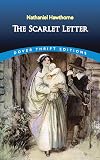
Maybe you know the story, even if you’ve never read the novel. Hester Prynne, a woman of seventeenth-century Boston, must be punished for having borne a child out of wedlock. In this most Puritan community, she’s lucky to escape with her life; instead, she spends several months in prison, after which she must forever wear a scarlet letter "A," announcing that she’s an adulteress.
The simplest of premises, you’d think, yet there’s nothing simple about this quintessential American show more moral tale, written in 1850. Hawthorne, descended from a judge at the Salem witch trials, an ancestry that shamed him and influenced his work and life, cuts surgically into the withered, envious soul of Puritanism and holds the stinking mess up to the light.
It’s not just that the reader is meant to understand and sympathize with Hester, who’s actually a bit of a stubborn drip, at times. It’s that Hawthorne wants you to see the society that condemns her, a group of caviling hypocrites who may or may not lust for her but certainly do for the wealth and power they possess. Nobody escapes, Hawthorne says; there’s evil in all of us, and desires aplenty.
H.L. Mencken, writing more than a half-century after Hawthorne, quipped that Puritanism was “the haunting fear that someone, somewhere may be happy.” The Scarlet Letter bears witness, as even children’s play involves games of persecuting Quakers or attending church. Some leading elders assume that Hester’s daughter, Pearl, unable to answer a single question from the catechism at age three, may therefore be Satan’s handmaid. She is ungovernable, it’s true, and has a mean streak that pains her long-suffering mother. But she’s also a happy child, and nobody knows what to make of this.
Crucial too is how Hester wears her "A," skillfully embroidered, perhaps pushing the bounds of everyday Puritan taste (though not of formal wear, curiously enough, especially among the rich and powerful). Consequently, the adulteress hides nothing, though she largely keeps to herself, because her every public appearance challenges her judges as to their righteousness and pretended sobriety of custom.
But, in Hawthorne’s world, sin must be spoken of, or else it eats away at everyone. The Scarlet Letter pays heed to the spiritual and emotional as though they were the same. To feel whole, the sinner must confess, so as to breathe freely; conversely, so as not to overstep the bounds of humility, the hearer must listen and withhold judgment. Desires are human, not particular to individuals. To Hawthorne’s seventeenth-century Boston, this idea was revolutionary — and in some ways, it still is, not in what American society says, but what it does.
Hawthorne’s style can take getting used to, even for readers accustomed to nineteenth-century literature. Not only does he tell, tell, tell, explaining damn near everything, he imbues the smallest moments with hard-working metaphorical swoop.
That style deserves consideration in its context, however. Hawthorne was countering the point of view that all wisdom and truth comes from God; he argues that humans can find truth anywhere if they look hard enough, particularly within themselves. The Scarlet Letter, published nine years before The Origin of Species, feels like kin to Darwin, though it has nothing to do with biology: both works deal with the power of observation and its overriding importance. Hawthorne wants you to see his abstractions, as though the spiritual world inhabits the physical. Often, he succeeds.
Strange, but I had avoided reading The Scarlet Letter, and I’m not the type to shun the classics. As a high school sophomore, I transferred out of an English class, no mean trick, led by a teacher with whom I knew I’d quarrel, and who’d just begun discussing this novel. The teacher whose class I transferred into turned out to be a mentor, so I got the better deal--and swapped Hawthorne for Dostoyevsky, Huxley, Orwell, and Zamiatin besides. But I still didn’t let Hawthorne off the hook—there’s a Puritan in me too—and more than fifty years passed before I found out what Hester’s story has to offer.
Don’t make the mistake I made. At least take a look at The Scarlet Letter. show less
The simplest of premises, you’d think, yet there’s nothing simple about this quintessential American show more moral tale, written in 1850. Hawthorne, descended from a judge at the Salem witch trials, an ancestry that shamed him and influenced his work and life, cuts surgically into the withered, envious soul of Puritanism and holds the stinking mess up to the light.
It’s not just that the reader is meant to understand and sympathize with Hester, who’s actually a bit of a stubborn drip, at times. It’s that Hawthorne wants you to see the society that condemns her, a group of caviling hypocrites who may or may not lust for her but certainly do for the wealth and power they possess. Nobody escapes, Hawthorne says; there’s evil in all of us, and desires aplenty.
H.L. Mencken, writing more than a half-century after Hawthorne, quipped that Puritanism was “the haunting fear that someone, somewhere may be happy.” The Scarlet Letter bears witness, as even children’s play involves games of persecuting Quakers or attending church. Some leading elders assume that Hester’s daughter, Pearl, unable to answer a single question from the catechism at age three, may therefore be Satan’s handmaid. She is ungovernable, it’s true, and has a mean streak that pains her long-suffering mother. But she’s also a happy child, and nobody knows what to make of this.
Crucial too is how Hester wears her "A," skillfully embroidered, perhaps pushing the bounds of everyday Puritan taste (though not of formal wear, curiously enough, especially among the rich and powerful). Consequently, the adulteress hides nothing, though she largely keeps to herself, because her every public appearance challenges her judges as to their righteousness and pretended sobriety of custom.
But, in Hawthorne’s world, sin must be spoken of, or else it eats away at everyone. The Scarlet Letter pays heed to the spiritual and emotional as though they were the same. To feel whole, the sinner must confess, so as to breathe freely; conversely, so as not to overstep the bounds of humility, the hearer must listen and withhold judgment. Desires are human, not particular to individuals. To Hawthorne’s seventeenth-century Boston, this idea was revolutionary — and in some ways, it still is, not in what American society says, but what it does.
Hawthorne’s style can take getting used to, even for readers accustomed to nineteenth-century literature. Not only does he tell, tell, tell, explaining damn near everything, he imbues the smallest moments with hard-working metaphorical swoop.
That style deserves consideration in its context, however. Hawthorne was countering the point of view that all wisdom and truth comes from God; he argues that humans can find truth anywhere if they look hard enough, particularly within themselves. The Scarlet Letter, published nine years before The Origin of Species, feels like kin to Darwin, though it has nothing to do with biology: both works deal with the power of observation and its overriding importance. Hawthorne wants you to see his abstractions, as though the spiritual world inhabits the physical. Often, he succeeds.
Strange, but I had avoided reading The Scarlet Letter, and I’m not the type to shun the classics. As a high school sophomore, I transferred out of an English class, no mean trick, led by a teacher with whom I knew I’d quarrel, and who’d just begun discussing this novel. The teacher whose class I transferred into turned out to be a mentor, so I got the better deal--and swapped Hawthorne for Dostoyevsky, Huxley, Orwell, and Zamiatin besides. But I still didn’t let Hawthorne off the hook—there’s a Puritan in me too—and more than fifty years passed before I found out what Hester’s story has to offer.
Don’t make the mistake I made. At least take a look at The Scarlet Letter. show less
(review is of another edition of this book)
If only this book hadn’t been so beautiful. A little tiny hardback (I have a thing for small books) with a silver floral design... I couldn’t not pick it up. And my father-in-law made it sound interesting, so I read it. Ugh.
The basic premise of this book is that the entire human race disappears, and then a new Adam and new Eve are placed into the middle of an American city, with no memories or knowledge of the world but fully adult and with show more language enough to communicate. What would they make of the world? Hawthorne wants to make some great point about the superiority of nature over what man has built, but really he just annoyed me with outdated sexism. I know, I know, it was written ages ago, but still, when I read a line like, "Passing through a dark entry they find a broom behind the door; and Eve, who comprises the whole nature of womanhood, has a dim idea that it is an instrument proper for her hand." my blood boils. Also annoying: they have no idea that there were ever humans that looked like them on the planet, they have to infer it from the evidence left behind. But somehow they have inborn knowledge of a God, who is a he, and who lives in the clouds. Adam says things like ”Poh! my dear Eve, why trouble thy little head about such nonsense?” (Evidently sexism is inborn as well. Girls are stupid, you know.)
Perhaps most strangely, there is a section at the end where Hawthorne takes great care to slander libraries and the writings of men. Ummmmm, Hawthorne, perhaps you are not aware of this, but are not you a contributor to the writings of men?
But I don’t want you to think that the only reason I waded through the muck of this book was that it
was short and I am behind on the 50 book challenge, oh no. There were actually good, entertaining, and even a few thought-provoking moments. I was highly amused by the fact that Adam and Eve were vaguely grossed out by the lamb and turtle soup and such they found, and only ate fresh fruits and vegetables. The brief meditation on the differences between the rich houses and the poor houses, and how the new Adam and Eve could not possibly conceive of a system that let so many live in squalor while a few had more than they could ever need... that was thought provoking. As was their wandering into a jail.
Of course, it appears you can’t just go out and acquire this book, as it isn't in print as a stand-alone. Perhaps it would be available in a collection of Hawthorne’s shorter writings. But really, I wouldn’t bother. If you’re interested in this thought experiment, perform it yourself. It will be more relevant and certainly less sexist that way. show less
If only this book hadn’t been so beautiful. A little tiny hardback (I have a thing for small books) with a silver floral design... I couldn’t not pick it up. And my father-in-law made it sound interesting, so I read it. Ugh.
The basic premise of this book is that the entire human race disappears, and then a new Adam and new Eve are placed into the middle of an American city, with no memories or knowledge of the world but fully adult and with show more language enough to communicate. What would they make of the world? Hawthorne wants to make some great point about the superiority of nature over what man has built, but really he just annoyed me with outdated sexism. I know, I know, it was written ages ago, but still, when I read a line like, "Passing through a dark entry they find a broom behind the door; and Eve, who comprises the whole nature of womanhood, has a dim idea that it is an instrument proper for her hand." my blood boils. Also annoying: they have no idea that there were ever humans that looked like them on the planet, they have to infer it from the evidence left behind. But somehow they have inborn knowledge of a God, who is a he, and who lives in the clouds. Adam says things like ”Poh! my dear Eve, why trouble thy little head about such nonsense?” (Evidently sexism is inborn as well. Girls are stupid, you know.)
Perhaps most strangely, there is a section at the end where Hawthorne takes great care to slander libraries and the writings of men. Ummmmm, Hawthorne, perhaps you are not aware of this, but are not you a contributor to the writings of men?
But I don’t want you to think that the only reason I waded through the muck of this book was that it
was short and I am behind on the 50 book challenge, oh no. There were actually good, entertaining, and even a few thought-provoking moments. I was highly amused by the fact that Adam and Eve were vaguely grossed out by the lamb and turtle soup and such they found, and only ate fresh fruits and vegetables. The brief meditation on the differences between the rich houses and the poor houses, and how the new Adam and Eve could not possibly conceive of a system that let so many live in squalor while a few had more than they could ever need... that was thought provoking. As was their wandering into a jail.
Of course, it appears you can’t just go out and acquire this book, as it isn't in print as a stand-alone. Perhaps it would be available in a collection of Hawthorne’s shorter writings. But really, I wouldn’t bother. If you’re interested in this thought experiment, perform it yourself. It will be more relevant and certainly less sexist that way. show less

"Evil is the nature of mankind. Evil must be your only happiness. Welcome, again, my children, to the communion of your race!"
If I had read this story before 2020, it would have meant very little to me except as a ripping good spooky old story!
It is an old spooky story, nearing 200 years old, in fact. The writing, the mood, the setting, the pacing, and Hawthorne's perfect mastery of his tale is a wonder to behold. I would have admired that in 2019. But a possible connection to its meaning, I show more would not have possessed.
As an American, 2020 introduced me to the evil of mankind that I did not know existed in mass, just like Goodman Brown discovered.
Covid 19 was a plague that brought out the selfish, the liars, the unscientific, the wanton revelers, the maniacs in stores going maskless in defiance of...of what? Being kind, being thoughtful, being humane? I discovered so many, some close to me, some I worked with, some I thought were friends who were all of that cabal. And all the while the devil himself with his gleaming white teeth was in charge.
I see now it was like stumbling on the same scene as Goodman in the deep forest.
Now the devil is resurrected! He's holding his slithering staff and he is angry, vengeful, setting everything on fire in wicked rejoice with his vast number of hell-bound souls collected around him.
In 2025, as a 65 year old woman, a Zen follower, espousing no religion, I couldn't be more different than young Puritan Goodman Brown, who after his experience became "a sad, a darkly meditative, a distrustful, if not a desperate man." He is oddly my 2020+ doppelganger. He's the doppelganger of many, of thousands, of millions who have kept the faith.
But it's not easy. If I don't outlive these next four long years of this long witch's sabbath, I predict for myself, like Goodman Brown, "a dying hour of gloom"...under a fascist regime.
Fascism is a far-right political ideology and movement characterized by dictatorial power, centralized autocracy, militarism, suppression of opposition, a belief in a natural social hierarchy, and the subordination of individual interests to the perceived interests of the nation or race. It's generally considered to be at the far right of the traditional left-right political spectrum. show less
If I had read this story before 2020, it would have meant very little to me except as a ripping good spooky old story!
It is an old spooky story, nearing 200 years old, in fact. The writing, the mood, the setting, the pacing, and Hawthorne's perfect mastery of his tale is a wonder to behold. I would have admired that in 2019. But a possible connection to its meaning, I show more would not have possessed.
As an American, 2020 introduced me to the evil of mankind that I did not know existed in mass, just like Goodman Brown discovered.
Covid 19 was a plague that brought out the selfish, the liars, the unscientific, the wanton revelers, the maniacs in stores going maskless in defiance of...of what? Being kind, being thoughtful, being humane? I discovered so many, some close to me, some I worked with, some I thought were friends who were all of that cabal. And all the while the devil himself with his gleaming white teeth was in charge.
I see now it was like stumbling on the same scene as Goodman in the deep forest.
Now the devil is resurrected! He's holding his slithering staff and he is angry, vengeful, setting everything on fire in wicked rejoice with his vast number of hell-bound souls collected around him.
In 2025, as a 65 year old woman, a Zen follower, espousing no religion, I couldn't be more different than young Puritan Goodman Brown, who after his experience became "a sad, a darkly meditative, a distrustful, if not a desperate man." He is oddly my 2020+ doppelganger. He's the doppelganger of many, of thousands, of millions who have kept the faith.
But it's not easy. If I don't outlive these next four long years of this long witch's sabbath, I predict for myself, like Goodman Brown, "a dying hour of gloom"...under a fascist regime.
Fascism is a far-right political ideology and movement characterized by dictatorial power, centralized autocracy, militarism, suppression of opposition, a belief in a natural social hierarchy, and the subordination of individual interests to the perceived interests of the nation or race. It's generally considered to be at the far right of the traditional left-right political spectrum. show less
Lists
Five star books (1)
Women's Stories (1)
Sonlight Books (1)
BitLife (1)
bound (1)
Romans (1)
BBC Top Books (1)
Set in the 1600s (1)
Folk Horror (1)
Didactic Fiction (1)
Christianity (1)
A Reading List (1)
Horror to Read (1)
Sense of place (1)
Check Library (1)
Which house? (1)
Read (1)
Elegant Prose (1)
Favourite Books (1)
Garden-fiction (1)
Hidden Classics (1)
. (1)
Short and Sweet (1)
Ambleside Books (1)
Find (2)
Unread books (2)
19th Century (4)
1850s (4)
Out of Copyright (3)
Folio Society (3)
AP Lit (3)
el (3)
Victorian Period (3)
Carole's List (1)
Read (1)
Overdue Podcast (1)
Ghosts (1)
Ambleside Y2 (2)
Classics (1)
. (1)
100 (1)
Awards


You May Also Like


Associated Authors
Statistics
- Works
- 874
- Also by
- 285
- Members
- 79,098
- Popularity
- #154
- Rating
- 3.5
- Reviews
- 843
- ISBNs
- 3,569
- Languages
- 31
- Favorited
- 160


