
Carson McCullers (1917–1967)
Author of The Heart Is a Lonely Hunter
About the Author
Carson McCullers was born in Columbus, Georgia, on February 19, 1917. She died at age fifty in Nyack, New York, on September 29, 1967. A promising pianist, she had hoped to enroll at the Juilliard School of Music when she was seventeen, but when she arrived in New York, she attended writing classes show more at Columbia University instead. In December 1936 her first story, "Wunderkind," was published in "Story" magazine. That winter she began work on "The Mute," which would become her enduring masterpiece, "The Heart Is a Lonely Hunter." (Publisher Provided) Carson McCullers was born Lula Carson Smith on February 19, 1917 in Columbus, Georgia. At the age of seventeen, desiring to become a famous concert pianist, she went to New York City to attend the Julliard School of Music. Her family sacrificed and raised money for her tuition to go to Julliard, but she lost all of her money when she left her pocketbook on the subway. Unable to tell her family what had happened, she took writing classes at Columbia University and New York University from 1935-1936. Her first novel, The Heart Is a Lonely Hunter, was published in 1940. Her other novels included Reflections in a Golden Eye, The Ballad of the Sad Café, The Member of the Wedding, and Clock Without Hands. With the help of Tennessee Williams, The Member of the Wedding was adapted into a play, which won the New York Drama Critics Circle Award in 1950. She died from a stroke and subsequent brain hemorrhage on September 29, 1967at the age of 50. (Bowker Author Biography) show less
Image credit: Carson McCullers on July 30, 1958
Works by Carson McCullers
Complete Novels: The Heart is a Lonely Hunter / Reflections in a Golden Eye / The Ballad of the Sad Cafe / The Member of the Wedding / The Clock Without Hands (2001) 633 copies, 5 reviews
Three Novels: The Ballad of the Sad Cafe and Others Stories, The Heart Is a Lonely Hunter, and The Member of The Wedding (1991) 112 copies, 1 review
Illumination and Night Glare: The Unfinished Autobiography of Carson McCullers (1999) 106 copies, 5 reviews
Reflections in a Golden Eye / The Ballad of the Sad Café / The Member of the Wedding (1974) 59 copies, 2 reviews
The Ballad of The Sad Café / The Heart is a Lonely Hunter / Reflections in a Golden Eye / The Member of the Wedding / New Short Stories (2018) — Author — 11 copies
Alle verhalen Carson McCullers ; vertaald door en met een nawoord van Molly van Gelder (2021) 10 copies
The Ballad of the Sad Cafe: Wunderkind; The Jockey; Madame Zilensky and the King of Finland; The Sojourner; A Domestic Dilemma; A Tree, A Rock, A Cloud (Penguin Modern Classics)… (2000) 3 copies, 1 review
The Haunted Boy [short story] 2 copies
McCullers Carson 2 copies
Complete Works of Carson McCullers 2 copies
Kello käy tyhjää : romaani 1 copy
Gespiegeld in een gouden oog 1 copy
Op jouw bruiloft 1 copy
Alle verhalen 1 copy
Yelkovansız Saat 1 copy
Romans & Nouvelles 1 copy
Altın Gözde Yansımalar 1 copy
Correspondence [short story] 1 copy
Die Ballade vom traurigen Café. Dramatisiert von Edward Albee (Insel-Bücherei Nr. 1004) [Pappe] (1975) 1 copy
Untitled Piece [short story] 1 copy
To bear the truth alone 1 copy
Books I remember 1 copy
Like That [short story] 1 copy
The pestle 1 copy
Stone is not stone : a poem 1 copy
The Aliens [short story] 1 copy
The Ballad of the Sad Cafe: Martin Beck Theatre (October 30, 1963-February 15, 1964) Playbill 1 copy
The Heart is a Lonely Hunter / The Member of the Wedding / Reflections in a Golden Eye (2010) — Author — 1 copy
Poldi [short story] 1 copy
The Orphanage [short story] 1 copy
Associated Works
Perrine's Literature: Structure, Sound, and Sense (1970) — Contributor, some editions — 895 copies, 4 reviews
The World of the Short Story: A 20th Century Collection (1986) — Contributor — 512 copies, 4 reviews
Chloe Plus Olivia: An Anthology of Lesbian Literature from the 17th Century to the Present (1994) — Contributor — 482 copies, 1 review
First Fiction: An Anthology of the First Published Stories by Famous Writers (1994) — Contributor — 196 copies, 1 review
Growing Up in the South: An Anthology of Modern Southern Literature (1991) — Contributor — 165 copies, 1 review
The Ballad of the Sad Cafe: Carson McCullers' Novella Adapted for the Stage (1963) — Original book — 107 copies, 2 reviews
Queer: A Collection of LGBTQ Writing from Ancient Times to Yesterday (2021) — Contributor, some editions — 65 copies
Jo's Girls: Tomboy Tales of High Adventure, True Grit, and Real Life (1997) — Contributor — 48 copies
Critics' Choice: New York Drama Critics' Circle Prize Plays, 1935-1955 (1980) — Contributor — 26 copies
Fifty Years of the American Short Story from the O. Henry Awards 1919-1970 (1970) — Contributor — 17 copies, 1 review
Georgia Stories: Major Georgia Short Fiction of the Nineteenth and Twentieth Centuries (1992) — Contributor — 12 copies, 1 review
Het neusje van de zalm een feestelijke bloemlezing uit Querido's 'vlaggetjesreeks' (1986) — Contributor — 7 copies
Fifty Years of the American Short Story from the O. Henry Awards 1919-1970, Volume 1 (1970) — Contributor — 3 copies
The Human Commitment - An Anthology of Contemporary Short Fiction — Contributor — 1 copy
The Ethnic Image in Modern American Literature, 1900-1950, Volumes 1-2 (1984) — Contributor — 1 copy
The Haunted Boy, Sphinx, Lead Her Like a Pigeon, Red Wind, The Eighty-Yard Run (Selections from Reader's Digst Condensed (1980) 1 copy
50 Best Plays of the American Theatre, Volume 3 — Contributor — 1 copy
Tagged
Common Knowledge
- Legal name
- Smith, Lula Carson (born)
- Birthdate
- 1917-02-19
- Date of death
- 1967-09-29
- Gender
- female
- Education
- Columbia University
Washington Square College - Occupations
- novelist
short story writer
playwright - Organizations
- American Academy of Arts and Letters (1952)
February House
Yaddo
Bread Loaf Writers' Conference - Awards and honors
- Georgia Women of Achievement (1994)
American Academy of Arts and Letters Academy Award (Literature ∙ 1943)
Georgia Writers Hall of Fame - Relationships
- McCullers, Reeves (husband)
Smith, Margarita G. (sister) - Short biography
- Carson McCullers reinvented herself after leaving home at age 17 to study at the Juilliard School of Music in Manhattan. Something happened to make her lose the money and she never attended the school. Instead, she worked and took night classes at university. Her published writing began to appear in 1936. She suffered throughout her life from serious illness, including rheumatic fever and several strokes. By the age of 31, her left side was completely paralyzed. Her work, usually set in the South of her birth, often focused on people seen as misfits and outcasts.
- Cause of death
- brain hemorrhage
- Nationality
- USA
- Birthplace
- Columbus, Georgia, USA
- Places of residence
- New York, New York, USA
- Place of death
- Nyack, New York, USA
- Burial location
- Oak Hill Cemetery, Nyack, Rockland County, New York, USA
- Associated Place (for map)
- New York, USA
Members
Discussions
GROUP READ: [The Heart is a Lonely Hunter] in 2013 Category Challenge (September 2013)
The Heart Is a Lonely Hunter in The Clocks Have All Stopped (April 2012)
Reviews

I was never smitten like many readers*, but it wasn't a full loss. I glimpsed its power and I’m thinking on it. This is a book on the American deep south about ten years into Great Depression. Race, poverty, cultural tensions live here, as does world chaos, Communism (or Communist idealism), and our personal isolation. Our author was 23 when it was published, and she maybe wrote from close awareness of these social tensions. But it's maybe a book that is more about our need for connection show more and understanding, and for acknowledgment.
It’s a simple story structure the follows five characters in a small southern town of about 30,000 people (based a lot on Columbus, GA). Each character represents an element of tension within the cities populace, except Singer, a deaf-mute orphan from Chicago who lives quietly. Singer’s muteness and ability to read lips and his kind patience acquires him a following of people who need someone to listen. He gives them a kind of symbolic spiritual totem, someone who understands in a malleable variety of ways individual to each speaker. But his muteness also means he doesn’t say much and no one really knows who he is or what his state of mind is. The other four main characters are each memorable. Biff Brannon owns The New York Cafe, and quietly and kindly observes his city, staying open all night because he personally likes that late-night clientele. Mick Kelly is a teenage girl in a big, impoverished family who takes in boarders, including John Singer. Jake Bount is an alcoholic mechanic preaching Communism, reading Marx over and over again. Doctor Benedict Mady Copeland is a negro doctor who hates the white supremacy, and the black lack of agency, who reads Spinoza by himself, and preaches Communism in the sense that blacks are the ultimate victims of American capitalism. And when Jake and Dr. Copeland speak, they argue bitterly.
The draping all of this on the simple story bones, through our five characters, leads to some extended simple narratives necessary to fill it the details of who and what these people are - individually and cumulatively. I found this made tough going. But other readers don't seem to mind. But this may be also what gives the book a very simple power that can run deep. I'll try to keep the idea of John Singer in my mind, and the idealism of Copeland and Jake Blount.
*rant:Among my problems with this book is the back cover that tells me Tennessee Williams called Carson "the greatest prose writer the South produced", which was a deranged thing to say. And Richard Wright admiring her ability to "embrace white and black humanity", which is iffy, kind but too worshipping. They broughy out my inner critic, gasping and ranting. And I couldn't quiet it down. I was annoyed at them and the book designer who put so much weight on this book. /rant
2026
https://www.librarything.com/topic/384249#9211941 show less
It’s a simple story structure the follows five characters in a small southern town of about 30,000 people (based a lot on Columbus, GA). Each character represents an element of tension within the cities populace, except Singer, a deaf-mute orphan from Chicago who lives quietly. Singer’s muteness and ability to read lips and his kind patience acquires him a following of people who need someone to listen. He gives them a kind of symbolic spiritual totem, someone who understands in a malleable variety of ways individual to each speaker. But his muteness also means he doesn’t say much and no one really knows who he is or what his state of mind is. The other four main characters are each memorable. Biff Brannon owns The New York Cafe, and quietly and kindly observes his city, staying open all night because he personally likes that late-night clientele. Mick Kelly is a teenage girl in a big, impoverished family who takes in boarders, including John Singer. Jake Bount is an alcoholic mechanic preaching Communism, reading Marx over and over again. Doctor Benedict Mady Copeland is a negro doctor who hates the white supremacy, and the black lack of agency, who reads Spinoza by himself, and preaches Communism in the sense that blacks are the ultimate victims of American capitalism. And when Jake and Dr. Copeland speak, they argue bitterly.
The draping all of this on the simple story bones, through our five characters, leads to some extended simple narratives necessary to fill it the details of who and what these people are - individually and cumulatively. I found this made tough going. But other readers don't seem to mind. But this may be also what gives the book a very simple power that can run deep. I'll try to keep the idea of John Singer in my mind, and the idealism of Copeland and Jake Blount.
*rant:
2026
https://www.librarything.com/topic/384249#9211941 show less

Carson McCullers wrote her first novel when she was just 23. The Heart is a Lonely Hunter is a series of character studies of five lonely people living in a mill town in Georgia in the closing years of the Great Depression. Singer is a deaf mute whose companion, another deaf mute, is institutionalized. Moving into a boarding house, he is befriended by a motley collection of loners, all who see him as understanding and sympathetic. Mick Kelly is entering her teenage years and is often show more responsible for the care of her two younger siblings. She is passionate about music and would love nothing more than to own a piano or even to have music lessons, but her family's financial situation, already precarious, becomes more and more desperate as time goes on. Dr. Copeland is the town's African American doctor and he fights everyday for the health and future of his people, even as he fears that no one is listening. His relationship with his children is tenuous and his own health is failing. Biff Brannon is the owner of a cafe, one that stays open at all hours. Brannon is a listener and a compassionate man, willing to let a debt slide or to help out someone who needs a place to stay. Jake Blount is perhaps the most interesting of the characters here. He sees and feels too strongly the suffering of the people around him and knows that if they would just rise up or even just understand what is going wrong, they could be saved. His passion has made him into a drunk, leaving him with nothing. These four lonely people look to Singer for solace and understanding, failing utterly to see Singer's own pain.
This is no heart-warming story of friendship and fried green tomatoes. There's no happy ending for anyone to be found. McCullers has written a brilliant book about suffering and loneliness. It's beautifully written and utterly heart-breaking. show less
This is no heart-warming story of friendship and fried green tomatoes. There's no happy ending for anyone to be found. McCullers has written a brilliant book about suffering and loneliness. It's beautifully written and utterly heart-breaking. show less
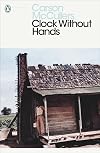
Utterly beautiful and heart-rending work, set in the Deep South, where segregation is still a way of life. The novel opens and closes with pharmacist JT Malone discovering he is terminally ill:
"He would examine a green-leaved elm tree with morbid attention as he picked a flake of sooty bark. The lamp post, the wall, the tree would exist when he was dead and the thought was loathsome to Malone...he was unable to acknowledge the reality of approaching death, and the conflict led to a sense of show more ubiquitous unreality."
His tale is punctuated by those of three other men: his friend, Judge Clane, an elderly conservative, struggling with the side-effects of a stroke and his son's suicide, and yearning to return to the days of slavery; Clane's teenage grandson, Jester, with very different ideas of equality. And Sherman, the blue-eyed Negro youth, whom Clane inexplicably takes into his house as a sort of secretary...
McCullers draws each of the characters so that they are completely believable - I loved the prickly relationship between the two youths; Sherman's efforts to look important and put down the privileged Jester:
"What other music do you like? Personally I adore music, passionately, I mean. Last winter I learned the 'Winter Wind' etude. "
"I bet you didn't", Sherman said, unwilling to share his musical laurels with another.
"Do you think I would sit here and tell you a lie about the 'Winter Wind' etude?" said Jester who never lied under any circumstances.
"How would I know?" answered Sherman, who was one of the world's worst liars.
Brilliant portrayal of teenagers talking, put me in mind of JD Salinger. But also of the bumptious, self-important Judge and of the meek pharmacist wondering if this life was all there was. Fantastic. show less
"He would examine a green-leaved elm tree with morbid attention as he picked a flake of sooty bark. The lamp post, the wall, the tree would exist when he was dead and the thought was loathsome to Malone...he was unable to acknowledge the reality of approaching death, and the conflict led to a sense of show more ubiquitous unreality."
His tale is punctuated by those of three other men: his friend, Judge Clane, an elderly conservative, struggling with the side-effects of a stroke and his son's suicide, and yearning to return to the days of slavery; Clane's teenage grandson, Jester, with very different ideas of equality. And Sherman, the blue-eyed Negro youth, whom Clane inexplicably takes into his house as a sort of secretary...
McCullers draws each of the characters so that they are completely believable - I loved the prickly relationship between the two youths; Sherman's efforts to look important and put down the privileged Jester:
"What other music do you like? Personally I adore music, passionately, I mean. Last winter I learned the 'Winter Wind' etude. "
"I bet you didn't", Sherman said, unwilling to share his musical laurels with another.
"Do you think I would sit here and tell you a lie about the 'Winter Wind' etude?" said Jester who never lied under any circumstances.
"How would I know?" answered Sherman, who was one of the world's worst liars.
Brilliant portrayal of teenagers talking, put me in mind of JD Salinger. But also of the bumptious, self-important Judge and of the meek pharmacist wondering if this life was all there was. Fantastic. show less
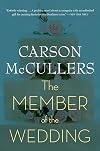
I think McCullers is an acquired taste, like olives and mushrooms. Fortunately for me, I've acquired a taste for all three.
Our heroine, Frankie, is 12, bored, out-of-sorts, and hot in her small Southern town. All she has to look forward to during this draggingly long summer is her brother's wedding. And look forward to it she does!
As Frankie is a complete innocent, she believes that she not only will be a part of the wedding, but will blithely accompany her brother and his new bride on their show more honeymoon (and presumably for the rest of their lives).
Okay, that seems an absurd premise and that Frankie is simply a figure of fun. Not so. McCullers shows Frankie's slow awakening to things only dimly understood as she wanders around town, completely without escort or guidance. The book is divided in two parts; the second part turns quite a bit darker as this girl ventures into places where she doesn't belong, makes mistakes, and shows a fairly alarming streak of anger in her character.
I thoroughly enjoyed this book, but it's not for everyone. It's weird and McCullers' view of life is distinctly off-kilter. Still, recommended for those who enjoy Southern Gothic or the off-beat. show less
Our heroine, Frankie, is 12, bored, out-of-sorts, and hot in her small Southern town. All she has to look forward to during this draggingly long summer is her brother's wedding. And look forward to it she does!
As Frankie is a complete innocent, she believes that she not only will be a part of the wedding, but will blithely accompany her brother and his new bride on their show more honeymoon (and presumably for the rest of their lives).
Okay, that seems an absurd premise and that Frankie is simply a figure of fun. Not so. McCullers shows Frankie's slow awakening to things only dimly understood as she wanders around town, completely without escort or guidance. The book is divided in two parts; the second part turns quite a bit darker as this girl ventures into places where she doesn't belong, makes mistakes, and shows a fairly alarming streak of anger in her character.
I thoroughly enjoyed this book, but it's not for everyone. It's weird and McCullers' view of life is distinctly off-kilter. Still, recommended for those who enjoy Southern Gothic or the off-beat. show less
Lists
Nifty Fifties (1)
First Novels (1)
. (1)
AP Lit (1)
Emo Books (1)
Cooper (1)
Carole's List (1)
. (1)
To Read (1)
Favourite Books (1)
1950s (1)
Five star books (2)
A Novel Cure (2)
Read These Too (2)
Best First Lines (1)
Schwob Nederland (2)
Romans (2)
Southern Fiction (3)
1940s (3)
Best Audiobooks (1)
Female Author (1)
1960s (1)
Want to Read (1)
Overdue Podcast (1)
Unread books (1)
Ryan's Books (1)
Gen X Library (1)
Awards


You May Also Like


Associated Authors
Statistics
- Works
- 97
- Also by
- 65
- Members
- 22,685
- Popularity
- #936
- Rating
- 3.9
- Reviews
- 510
- ISBNs
- 484
- Languages
- 23
- Favorited
- 127


