
Mary McCarthy (1912–1989)
Author of The Group
About the Author
Image credit: HistoryLink
Works by Mary McCarthy
Mary McCarthy: Novels 1963-1979 (LOA #291): The Group / Birds of America / Cannibals and Missionaries (Library of America Mary McCarthy Edition) (2017) 69 copies, 1 review
Mary McCarthy: The Complete Fiction: A Library of America Boxed Set (The Library of America) (2017) 14 copies
Mary McCarthy's Collected Memoirs: Memories of a Catholic Girlhood, How I Grew, and Intellectual Memoirs (2013) 11 copies
The Collected Essays Volume One: Occasional Prose, The Writing on the Wall, and Ideas and the Novel (2018) 4 copies
The Collected Essays Volume Two: Mary McCarthy's Theatre Chronicles, 1937–1962 and On the Contrary (2018) 2 copies
Cruel and Barbarous Treatment 2 copies
A Charmed Life [abridged] 1 copy
La Traviata 1 copy
Associated Works
Drinking, Smoking and Screwing: Great Writers on Good Times (1994) — Contributor — 353 copies, 5 reviews
Reporting Vietnam: American Journalism 1959-1969, Volume 1 (1998) — Contributor — 345 copies, 3 reviews
Without Marx or Jesus; the new American Revolution has begun (1970) — Afterword, some editions — 197 copies, 1 review
First Fiction: An Anthology of the First Published Stories by Famous Writers (1994) — Contributor — 194 copies, 1 review
The Norton Anthology of American Literature, Volume 2: 1865 to Present (1979) — Contributor, some editions — 135 copies
Writing Women's Lives: An Anthology of Autobiographical Narratives by Twentieth-Century American Women Writers (1994) — Contributor — 128 copies, 3 reviews
The Glorious American Essay: One Hundred Essays from Colonial Times to the Present (2020) — Contributor — 116 copies
Writing New York: A Literary Anthology (Expanded 10th-Anniversary Edition) (2008) — Contributor — 101 copies, 1 review
Women's Magazines, 1940-1960: Gender Roles and the Popular Press (1998) — Contributor — 95 copies, 1 review
Take My Advice: Letters to the Next Generation from People Who Know a Thing or Two (2002) — Contributor — 50 copies
Published and Perished: Memoria, Eulogies, and Remembrances of American Writers (2002) — Contributor — 41 copies, 1 review
The Company They Kept, Volume Two: Writers on Unforgettable Friendships (2011) — Contributor — 25 copies
Resistance: A Radical Social and Political History of the Lower East Side (2006) — Contributor — 17 copies
Fifty Years of the American Short Story from the O. Henry Awards 1919-1970 (1970) — Contributor — 17 copies, 1 review
Contemporary Short Stories: Representative Selections, Volume 3 — Contributor — 6 copies
Fifty Years of the American Short Story from the O. Henry Awards 1919-1970, Volume 1 (1970) — Contributor — 3 copies
Moderne Amerikaanse verhalen — Contributor — 3 copies
Modern Short Stories — Contributor — 2 copies
Meesters der vertelkunst : zevenendertig verhalen uit de moderne wereldliteratuur (1975) — Contributor — 2 copies
Im Zeichen der Venus. Frauen schreiben erotische Geschichten ( Anthologie). (2001) — Contributor — 1 copy
Austin McQuinn: Ape Opera House & Selected Work 2000-2005 — Introduction — 1 copy
Tagged
Common Knowledge
- Canonical name
- McCarthy, Mary
- Legal name
- McCarthy, Mary Therese
- Birthdate
- 1912-06-21
- Date of death
- 1989-10-25
- Gender
- female
- Education
- Vassar College (AB|1933)
Forest Ridge School of the Sacred Heart, Seattle - Occupations
- novelist
essayist
critic
autobiographer
political activist - Awards and honors
- National Medal for Literature (1984)
Edward MacDowell Medal (1984)
American Academy of Arts and Letters (1960)
American Academy of Arts and Letters Academy Award (1957)
Horizon Prize (1949) - Relationships
- Wilson, Edmund (ex husband)
Arendt, Hannah (friend)
West, James Raymond (spouse)
McCarthy, Kevin (brother) (3) - Cause of death
- lung cancer
- Nationality
- USA
- Birthplace
- Seattle, Washington, USA
- Places of residence
- Seattle, Washington, USA
New York, New York, USA
Castine, Maine, USA
Paris, Île-de-France, France
Tacoma, Washington, USA
Minneapolis, Minnesota, USA - Place of death
- New York, New York, USA
- Burial location
- Castine Cemetery, Castine, Maine, USA
- Associated Place (for map)
- USA
Members
Discussions
The Group by Mary McCarthy: Spoilers allowed in Girlybooks (May 2014)
Reviews
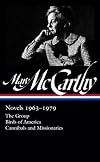
BIRDS OF AMERICA: (05-30-2021)
Mary McCarthy's work was new to me, and after doing the research for her in preparation for the American Authors Challenge, I thought reading her might be more challenging than enjoyable. I was, therefore, very pleasantly surprised to love the experience of reading her very 1960ish novel about an idealist young man grappling with the real world and his place in it. It isn't plot-driven, by any means, and it has a rather abrupt and ambiguous ending, which I think show more was almost inevitable given the novel's lack of direction; this is a character portrait, and an examination of many social issues still plaguing civilization today. There is not much of a story arc.
Peter Levi, discouraged from joining the Students for Civil Rights group headed to Mississippi on his college break in 1964, resolves to enjoy an unexpected summer idyll with his mother back in Rocky Port, a small New England town where they had spent a happy year "in the bosom of Nature" when he was 15. Predictably, he finds many things changed, and has that "you can't go home again" experience. The summer ends with a wickedly funny description of a house and garden tour, and a night spent in jail for civil disobedience, before Peter sails off to Europe for his junior year abroad, where opportunities for soul-searching and testing one’s ethical beliefs abound.
McCarthy's skill with the language, and her ability to put her finger on exactly the right questions carried the book for me. I do love "story" and navel-gazing ain't my thing, so once in a while the episodic nature of the narrative slowed me down, and Peter Levi's angsty moments got to be a bit much--I just wanted to give him a little shove toward reality, reminding him that he was not obliged to relieve all human suffering nor to find the ultimate answers to the big questions. Still, it was a very timely read in this 21st Century moment, as all the damned questions remain with us 60-odd years later: racism, anti-Semitism, homelessness, Nature v. Technology, the future of Democracy, pollution, poverty, privilege (which McCarthy called “advantages”), testy foreign relations, political shenanigans, military conflicts. These are all discussed or illustrated situationally in sharply drawn vignettes and encounters between Peter and an array of characters from ex-naval officers to Russian students with whom he interacts at home and in France or Italy. The only area in which McCarthy fails to exhibit a “modern” sensibility is in the matter of sexual orientation; there are a couple off-hand comments about “homosexual colonies” of tourists, and “foreign queers”, which set my teeth on edge. One came from the mouth of a character who clearly does not speak for the author, and by itself could have been taken as an indication of his prejudice; the other, sadly, came from Peter’s own head, and no excuse can be offered for him. Perhaps the most troubling thing about these tossed-off mentions of “deviant” individuals is that the author does not treat this as a subject worthy of any ethical discourse at all. Brief as they were, these references probably cost the novel a half star in my rating. show less
Mary McCarthy's work was new to me, and after doing the research for her in preparation for the American Authors Challenge, I thought reading her might be more challenging than enjoyable. I was, therefore, very pleasantly surprised to love the experience of reading her very 1960ish novel about an idealist young man grappling with the real world and his place in it. It isn't plot-driven, by any means, and it has a rather abrupt and ambiguous ending, which I think show more was almost inevitable given the novel's lack of direction; this is a character portrait, and an examination of many social issues still plaguing civilization today. There is not much of a story arc.
Peter Levi, discouraged from joining the Students for Civil Rights group headed to Mississippi on his college break in 1964, resolves to enjoy an unexpected summer idyll with his mother back in Rocky Port, a small New England town where they had spent a happy year "in the bosom of Nature" when he was 15. Predictably, he finds many things changed, and has that "you can't go home again" experience. The summer ends with a wickedly funny description of a house and garden tour, and a night spent in jail for civil disobedience, before Peter sails off to Europe for his junior year abroad, where opportunities for soul-searching and testing one’s ethical beliefs abound.
McCarthy's skill with the language, and her ability to put her finger on exactly the right questions carried the book for me. I do love "story" and navel-gazing ain't my thing, so once in a while the episodic nature of the narrative slowed me down, and Peter Levi's angsty moments got to be a bit much--I just wanted to give him a little shove toward reality, reminding him that he was not obliged to relieve all human suffering nor to find the ultimate answers to the big questions. Still, it was a very timely read in this 21st Century moment, as all the damned questions remain with us 60-odd years later: racism, anti-Semitism, homelessness, Nature v. Technology, the future of Democracy, pollution, poverty, privilege (which McCarthy called “advantages”), testy foreign relations, political shenanigans, military conflicts. These are all discussed or illustrated situationally in sharply drawn vignettes and encounters between Peter and an array of characters from ex-naval officers to Russian students with whom he interacts at home and in France or Italy. The only area in which McCarthy fails to exhibit a “modern” sensibility is in the matter of sexual orientation; there are a couple off-hand comments about “homosexual colonies” of tourists, and “foreign queers”, which set my teeth on edge. One came from the mouth of a character who clearly does not speak for the author, and by itself could have been taken as an indication of his prejudice; the other, sadly, came from Peter’s own head, and no excuse can be offered for him. Perhaps the most troubling thing about these tossed-off mentions of “deviant” individuals is that the author does not treat this as a subject worthy of any ethical discourse at all. Brief as they were, these references probably cost the novel a half star in my rating. show less
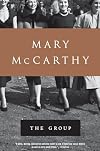
Mary McCarthy wrote each of these characters with such complexity and compassion that I couldn't help but identify intimately with every one. It was almost jarring to go to the next chapter and read a disparaging comment about what had just transpired with the character before--I wanted to rush to her defense, every time, until I was convinced to the perspective of this new woman. Ultimately, though, it was their fierce loyalty, even when they didn't understand each other, that won me over. show more I might have to purchase this one. show less

This book had a purpose in 1968; to call upon President Johnson and the American public to end the Vietnam War. McCarthy had visited South Vietnam in 1967. Next year, firmly against the continuation of the war, she arrived in Hanoi to report from the other side. Unlike Jane Fonda's visit in 1972, McCarthy seemed to largely escape public execration at home. She notes the care she took to avoid becoming a mouthpiece for Northern propaganda, and in most respects (bar one) she seems to have show more succeeded. She writes about how her understanding of the North was limited both by the circumstances of her visit and by her own western liberal sensibilities. But her story in the end is measured, and interesting. It is a series of portraits of people and places, of ordered calm compared to the chaos in the South. For the South, as McCarthy observes, was where the war was. McCarthy arrived at the tail end of the Rolling Thunder bombing campaign against the North. She observes that despite this life in the North was continuing - if not normally then at least effectively - a view shared by US analysts looking back on that campaign.
Then something interesting happens in this book. She averred that she had no intention of analyzing the policies or intentions of the North, but to simply report what she saw. Nevertheless, there seems to have been a process whereby she begins to 'get inside the head' of her subject. She begins to map the 'uncomfortable' questions, and bring her own views on the relation of Government and people into the discussion. She approves of the distribution of decision making and control; understanding that it was a by-product of the dispersal of the population and industry triggered by the US bombing. She notes the dim view the North Vietnamese leadership take towards this. She suggests that they do not trust the people not to adopt a free market economy the moment the war is concluded, given that making money and 'getting ahead' is strongly built into the Vietnamese character. A prescient observation indeed.
McCarthy's most telling failure of analysis, like the rest of her views, is put forward in this book without any attempt at dissimulation. She interviewed two POW's, airmen who had been shot down during the bombing campaign. She seems to have approached this with some fore-thought and wariness regarding her own prejudices. She had already been shown many bombed out sites, including a hospital. Regardless of whether she saw real or crafted sites, it is accepted by the US that the bombing caused approximately 70,000 civilian casualties. In the end her observation was only that the men she interviewed seemed to be a little uncouth, perhaps even dull, and she blames this as much on her own insular background as them – so it all seems fairly harmless and inconsequential. What she missed, and one of the POW's (James Risner) put it in a matter of fact sort of way when he was released, was his attempt to show her marks of torture on his body. If he and his colleague seemed dull and unresponsive to McCarthy; it makes sense now that their agenda was not to try and have a relaxed and interesting conversation, but to get across what they knew their guards would prefer remain hidden. In fact, having been kept in isolation and tortured, they were not likely capable of carrying on any sort of conversation. It's not clear whether McCarthy ever 'got this', she defended her opinion of the POW's several years later. Her failure at this juncture was grievious. It can only be said in her defence that her liberal background in a pre-9/11 world did not prepare her to come face to face with a torture victim and recognize what was going on. But the reader should be aware of this, in fairness to the airmen.
This book has wider significance, then, than simply as a message to President Johnson. It is an illuminating portrait of North Vietnam in 1968, and a lesson as to the risks of reporting behind 'enemy' lines during a conflict. Best read alongside Harrison Salisbury's 'Behind the Lines – Hanoi', an account of his 1966 visit to North Vietnam. show less
Then something interesting happens in this book. She averred that she had no intention of analyzing the policies or intentions of the North, but to simply report what she saw. Nevertheless, there seems to have been a process whereby she begins to 'get inside the head' of her subject. She begins to map the 'uncomfortable' questions, and bring her own views on the relation of Government and people into the discussion. She approves of the distribution of decision making and control; understanding that it was a by-product of the dispersal of the population and industry triggered by the US bombing. She notes the dim view the North Vietnamese leadership take towards this. She suggests that they do not trust the people not to adopt a free market economy the moment the war is concluded, given that making money and 'getting ahead' is strongly built into the Vietnamese character. A prescient observation indeed.
McCarthy's most telling failure of analysis, like the rest of her views, is put forward in this book without any attempt at dissimulation. She interviewed two POW's, airmen who had been shot down during the bombing campaign. She seems to have approached this with some fore-thought and wariness regarding her own prejudices. She had already been shown many bombed out sites, including a hospital. Regardless of whether she saw real or crafted sites, it is accepted by the US that the bombing caused approximately 70,000 civilian casualties. In the end her observation was only that the men she interviewed seemed to be a little uncouth, perhaps even dull, and she blames this as much on her own insular background as them – so it all seems fairly harmless and inconsequential. What she missed, and one of the POW's (James Risner) put it in a matter of fact sort of way when he was released, was his attempt to show her marks of torture on his body. If he and his colleague seemed dull and unresponsive to McCarthy; it makes sense now that their agenda was not to try and have a relaxed and interesting conversation, but to get across what they knew their guards would prefer remain hidden. In fact, having been kept in isolation and tortured, they were not likely capable of carrying on any sort of conversation. It's not clear whether McCarthy ever 'got this', she defended her opinion of the POW's several years later. Her failure at this juncture was grievious. It can only be said in her defence that her liberal background in a pre-9/11 world did not prepare her to come face to face with a torture victim and recognize what was going on. But the reader should be aware of this, in fairness to the airmen.
This book has wider significance, then, than simply as a message to President Johnson. It is an illuminating portrait of North Vietnam in 1968, and a lesson as to the risks of reporting behind 'enemy' lines during a conflict. Best read alongside Harrison Salisbury's 'Behind the Lines – Hanoi', an account of his 1966 visit to North Vietnam. show less
Read this for my Zoom book club. Rather, it was a reread—I think I first read it when I was in my early 20s, but so much of what makes it a really meaty novel just went right over my head. Which makes me marvel at how truly oblivious I must have been at that age, despite having been raised in a reasonably aware liberal household and living in NYC. I just wasn't a political animal, I guess, because the big themes she shifts around with her eight or so main characters—class and sexism, show more mainly, with a little anti-Semitism and racism thrown in—did not weigh in my mind at the time, as I remember.
This time around I found it all fascinating and horrifying, as well as an entertaining read, a slow burn of amusing, annoying, satirical, and then appalling—kind of a rear-view-mirror dystopia, published the year I was born and all the more unsettling for that intersection into my own time line. Especially given the recent Supreme Court rollback of Roe... it's not as far back in the rear-view mirror as I'd like it to be, these days.
Anyway, too much going on in the book (Vassar grads in the 1930s moving through young adulthood, trials both of the time and timeless, and some really awful men) to describe, but it's worth a read for sure. And it made for a very good book club discussion. show less
This time around I found it all fascinating and horrifying, as well as an entertaining read, a slow burn of amusing, annoying, satirical, and then appalling—kind of a rear-view-mirror dystopia, published the year I was born and all the more unsettling for that intersection into my own time line. Especially given the recent Supreme Court rollback of Roe... it's not as far back in the rear-view mirror as I'd like it to be, these days.
Anyway, too much going on in the book (Vassar grads in the 1930s moving through young adulthood, trials both of the time and timeless, and some really awful men) to describe, but it's worth a read for sure. And it made for a very good book club discussion. show less
Lists
Awards


You May Also Like


Associated Authors
Statistics
- Works
- 45
- Also by
- 50
- Members
- 7,677
- Popularity
- #3,174
- Rating
- 3.7
- Reviews
- 108
- ISBNs
- 314
- Languages
- 13
- Favorited
- 1