
This one has always been one of my favorite Christie mysteries. I enjoy the character of the nurse/narrator, and also the setting on an archaeological dig in the Mideast. Even though the characters are pretty cliche, I enjoy them too.
Poirot doesn’t appear very early so we get a full introduction to tensions involved with a lot of disparate people working and living in rather cramped conditions. There are lots of red herrings and a side plot or two to flesh things out.
There are two areas of failure here: first Mrs. Leidner, the victim, isn’t well developed. We don’t see much of her before her demise, and so must rely on the descriptions given by all the suspects.
And the plot resolution is simply unbelievable to me. I don’t mean mechanically—that part is fine and not at all far-fetched. But psychologically it’s just incredible.
Still, it’s a decent entry in the Poirot series, and well worth a read.
Poirot doesn’t appear very early so we get a full introduction to tensions involved with a lot of disparate people working and living in rather cramped conditions. There are lots of red herrings and a side plot or two to flesh things out.
There are two areas of failure here: first Mrs. Leidner, the victim, isn’t well developed. We don’t see much of her before her demise, and so must rely on the descriptions given by all the suspects.
And the plot resolution is simply unbelievable to me. I don’t mean mechanically—that part is fine and not at all far-fetched. But psychologically it’s just incredible.
Still, it’s a decent entry in the Poirot series, and well worth a read.
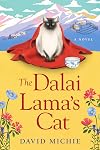
Not preachy. Funny and sweet story from the cat’s point if view. Just charming.
Completely out of Blake’s usual mystery style, this stand-alone takes place in 1939 western Ireland. An author seeks a quiet retreat where he can work on his next novel.
By a quite random chance he lands in a quiet, rundown village, where he soon becomes involved in a romantic intrigue and some political intrigue.
The plot is very straightforward for a Blake mystery, and the solution is very well-done. Literate and well-written, with good character development.
By a quite random chance he lands in a quiet, rundown village, where he soon becomes involved in a romantic intrigue and some political intrigue.
The plot is very straightforward for a Blake mystery, and the solution is very well-done. Literate and well-written, with good character development.
Another mildly amusing, rather short collection of vignettes about Doris, a very difficult and rather bossy woman. Much like Hyacinth from that immortal British tv show, Keeping Up Appearances, Doris is quite concerned with her status among her small village set. Thie linking theme is the Garden Tour, and Doris’s valiant attempts to get the best position for her garden to be seen.
The underlying joke is that the garden is entirely the work of Doris’s long-suffering husband.
Are you stressed? Sick of the state of the world? Want a rather comical escape for an hour or two, one that requires little to no brain power? Try this.
The underlying joke is that the garden is entirely the work of Doris’s long-suffering husband.
Are you stressed? Sick of the state of the world? Want a rather comical escape for an hour or two, one that requires little to no brain power? Try this.
This book is mildly amusing in that old, 1950’s Roman Catholic way. The three main characters are engaging, even though stereotypes: the naive young-ish priest; the crusty gruff older priest with a not-so-hidden soft heart; and the acerbic yet loving housekeeper.
Somehow I don’t see this book appealing to younger readers. It’s just very old-fasioned. Still, glints of humor hear and there make it sweet light reading for anyone who remembers what life was like a very long time ago.
Somehow I don’t see this book appealing to younger readers. It’s just very old-fasioned. Still, glints of humor hear and there make it sweet light reading for anyone who remembers what life was like a very long time ago.
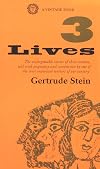
Auchincloss has written many long short stories, often combined in volumes of faux memoirs of the narrators.
This volume contains three such stories grouped around a philosophy theme. The first, entitled “The Epicurian,” is about a man who seemingly lives for pleasure and to enjoy his own good taste. The second is about a woman who considers herself a complete realist. And the last is about a man who truly is a Stoic.
An underlying theme in much of this author’s work is how people, although closely observing the lives and actions of others, somehow manage to misinterpret the underlying motives of those being observed. This is especially true of “The Epicurean” here. Also, these misjudgments frequently involve fathers or other mentors, where the younger character completely misunderstands what his going on..
This isn’t his best book of this type, but it works well and holds the readers attention. And of course it’s beautifully written.
This volume contains three such stories grouped around a philosophy theme. The first, entitled “The Epicurian,” is about a man who seemingly lives for pleasure and to enjoy his own good taste. The second is about a woman who considers herself a complete realist. And the last is about a man who truly is a Stoic.
An underlying theme in much of this author’s work is how people, although closely observing the lives and actions of others, somehow manage to misinterpret the underlying motives of those being observed. This is especially true of “The Epicurean” here. Also, these misjudgments frequently involve fathers or other mentors, where the younger character completely misunderstands what his going on..
This isn’t his best book of this type, but it works well and holds the readers attention. And of course it’s beautifully written.
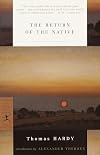
Hardy isn’t the most easily accessible of Victorian authors. However, once through the first chapter or so, most of his novels move along at a pretty good pace.That said, this isn’t a favorite. There are five major characters, plus the landscape, whose lives intertwine in various ways. Clym and Thomasin are rooted in the heath and comfortable with what lives they can have. Eustacia and Damon are unhappy and uncomfortable with the place, especially Eustacia. Naturally the wrong people pair off and a lot of trouble ensues.
And that would be fine, except that the misfortunes and missteps here are mostly a result of either miscommunication or delayed communication. So much so that it seems almost farcical: Clym cannot catch a break of any kind, and becomes more and more mired in misery.
I’m a fan of Hardy’s work, but this may be my least favorite novel of his. Too bad, too, because it is beautifully written (except for far too many literary references), and brings the heath to life.
And that would be fine, except that the misfortunes and missteps here are mostly a result of either miscommunication or delayed communication. So much so that it seems almost farcical: Clym cannot catch a break of any kind, and becomes more and more mired in misery.
I’m a fan of Hardy’s work, but this may be my least favorite novel of his. Too bad, too, because it is beautifully written (except for far too many literary references), and brings the heath to life.
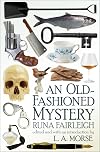
The introduction to this book spins an improbable little tale of a reclusive author and a long-lost manuscript. The novel proper, if it can be called that, is a pastiche of Christie’s stand-alone suspense/thriller/mystery, And Then There Were None, The idea was good, but it proves to be a bridge much too far for this author. At the end the book turns into meta fiction, and the ending just falls flat. All through the book, in every way imaginable, the author just tries too hard.
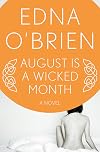
I loved O’Brien’s Country Girls Trilogy, and so was eagerly looking forward to this novel.
A young-ish woman is divorced from her husband, with whom she shares custody of their young son. She decides to go on a European jaunt while the boy is spending some time with his father. The characters are unlikable, the plot is sordid, and the settings are pretty seedy. I don’t need a Pollyanna, all-is-sunshine-and sweetness book (Hardy is a favorite author), but I don’t like to have my nose rubbed in the dirt either.
This was a sad disappointment for me. The three stars are for O’Brien’s writing, which is wasted here.
A young-ish woman is divorced from her husband, with whom she shares custody of their young son. She decides to go on a European jaunt while the boy is spending some time with his father. The characters are unlikable, the plot is sordid, and the settings are pretty seedy. I don’t need a Pollyanna, all-is-sunshine-and sweetness book (Hardy is a favorite author), but I don’t like to have my nose rubbed in the dirt either.
This was a sad disappointment for me. The three stars are for O’Brien’s writing, which is wasted here.
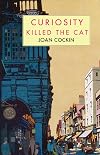
Well-plotted police procedural written shortly after WW II. In the best British tradition, a thoroughly odious man is killed in a small village, with a nicely circumscribed set of suspects. Blackmail, jealousy, and potential espionage shenanigans are all floated as motives. Plenty of postwar atmosphere is included. Cockin, who only wrote three mysteries, has some excellent character exploration and a good sense of humor.
The only drawback to the book is that the actual murder motive is quite far-fetched.
The only drawback to the book is that the actual murder motive is quite far-fetched.
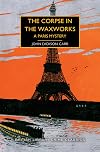
An entry in Carr’s Bencolin series, this is overwritten and has a sticky plot. Carr does develop that sense of brooding creepiness which makes even his poorer works kind of compelling. Cardboard characters, but a nicely done ending.
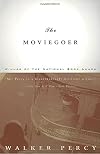
Very moody, meandering novel about a man lost inside his own head. Not much plot but superb writing. Conveys the sense of New Orleans beautifully. I thought the ending was facile, but this book is worth reading.
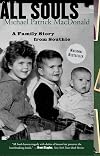
Moving, depressing, but with the tiniest glimmer of hope, this book isn’t for the faint of heart. Macdonald describes the dark underside, the fear, and the degrading poverty of growing up in one of the worst housing projects in South Boston.
The book is somewhat disjointed and the individual stories are often fragmented. But the throughline of abuse by officials, by criminals, and often by each other, carries the book forward. This reader was torn between sorrow and fury at the system that seemed designed for produce failing families and crumbling neighborhoods.
Near the end the author describes a good-sized group of kids, armed with sticks and rocks and bats, chasing a hapless raccoon who had mistakenly wandered into Old Colony. MacDonald muses about how great it is to see “the kids having a grand time.”
No. No it’s not. It’s just another case of mindless group violence aimed at some hapless, powerless creature. The raccoon escapes, but that doesn’t erase the extremely unpleasant picture of the truth of Lyndon Johnson’s old idea about giving people something to look down on so they’ll feel better about themselves.
A sad and ultimately depressing book—but good grief, what the people suffered, and why, is just unconscionable.
The book is somewhat disjointed and the individual stories are often fragmented. But the throughline of abuse by officials, by criminals, and often by each other, carries the book forward. This reader was torn between sorrow and fury at the system that seemed designed for produce failing families and crumbling neighborhoods.
Near the end the author describes a good-sized group of kids, armed with sticks and rocks and bats, chasing a hapless raccoon who had mistakenly wandered into Old Colony. MacDonald muses about how great it is to see “the kids having a grand time.”
No. No it’s not. It’s just another case of mindless group violence aimed at some hapless, powerless creature. The raccoon escapes, but that doesn’t erase the extremely unpleasant picture of the truth of Lyndon Johnson’s old idea about giving people something to look down on so they’ll feel better about themselves.
A sad and ultimately depressing book—but good grief, what the people suffered, and why, is just unconscionable.
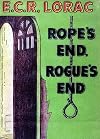
Maybe it’s me. I’m having some trouble concentrating, but this story of family inheritance and greed barely rated a three for me. A complicated plot line—but solvable—made even more complex by a labyrinthine setting—became so concerned with unused and unknown passages and rooms in an ancient house, that I simply lost interest. I rarely skip or skim in a mystery, but gee whiz.
Anyway. The story itself was okay, but it was peopled by a cast of rather despicable, and obstinate-to-the-point-of-stupidity characters. A sad disappointment from an author I usually enjoy.
Anyway. The story itself was okay, but it was peopled by a cast of rather despicable, and obstinate-to-the-point-of-stupidity characters. A sad disappointment from an author I usually enjoy.
Hollywood Stories: a Book about Celebrities, Movie Stars, Gossip, Directors, Famous People, History, and more! by Stephen Schochet
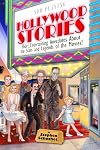
This is a compendium of entries in a “One Minute” radio series. Not much new here, very disjointed, minimum fact-checking. An excellent bibliography raised this from one and a half stars.
In all fairness to the author, I should have read the descriptions and reviews more carefully before buying this one.
In all fairness to the author, I should have read the descriptions and reviews more carefully before buying this one.
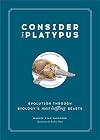
This isn’t a book devoted to the platypus. Instead the book consists of breezy and brief discussions of various aspects of evolution, how it works, what it is and is not.
A few pages are devoted to both familiar and obscure animals, each of which is used to illustrate some area of evolution. This book would make a great introduction to the topic for any curious layman who just wants to know what it’s all about before diving further into a complex but fascinating topic.
A few pages are devoted to both familiar and obscure animals, each of which is used to illustrate some area of evolution. This book would make a great introduction to the topic for any curious layman who just wants to know what it’s all about before diving further into a complex but fascinating topic.
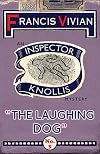
An interesting police procedural from the 1940’s. A local doctor, prominent in village affairs, is found strangled in his dispensary.
There are four main suspects and a lot of family skeletons in closets. Author Vivian expertly leads the reader up one garden path and down another until the final, quite surprsising ending.
Well done, with good characterization despite some mild misogyny.
There are four main suspects and a lot of family skeletons in closets. Author Vivian expertly leads the reader up one garden path and down another until the final, quite surprsising ending.
Well done, with good characterization despite some mild misogyny.
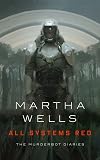
The first in a series of short (so far) books about a creature who is partly human and partly robot, called a construct. In this future interplanetary setting, constructs are created for certain purposes. This one, who has named itself Murderbot, has been made into a security bot.
The book is a light and quick read. The plot is a little wonky, but involves the exploration of a planet. When the plans go wrong in sudden and unexpected ways, Murderbot must get her group of clients back to safety.
Some consideration of freedom, individual identity, and inter-species interaction is given here, usually with slightly sarcastic humor. Overall the book is reminiscent of A Long Way to a Small Angry Planet. I thought it was well done.
The book is a light and quick read. The plot is a little wonky, but involves the exploration of a planet. When the plans go wrong in sudden and unexpected ways, Murderbot must get her group of clients back to safety.
Some consideration of freedom, individual identity, and inter-species interaction is given here, usually with slightly sarcastic humor. Overall the book is reminiscent of A Long Way to a Small Angry Planet. I thought it was well done.
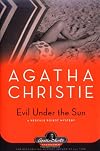
This novel is a reworking and extension of one of Christie’s short stories.
At a fashionable summer resort, a beautiful femme fatale is strangled. There are plenty of suspects and motives. A very clever resolution makes perfect sense and isn’t too far-fetched at all. A good outing for Poirot.
At a fashionable summer resort, a beautiful femme fatale is strangled. There are plenty of suspects and motives. A very clever resolution makes perfect sense and isn’t too far-fetched at all. A good outing for Poirot.
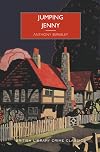
I generally like this author. However, the plot of this book, and it’s ultimate denouement was so far fetched that even as a lover of complicated locked-room puzzles, I just couldn’t accept it. Boucher uses the same sort of device he uses in “The Poisoned Chocolates Case”, but with much less panache, and much less success.
I would avoid this one unless you’re an inveterate fan of Boucher’s work.
I would avoid this one unless you’re an inveterate fan of Boucher’s work.
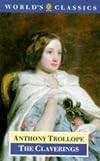
For a Victorian novel, this is a surprisingly easy and quick read. Main character Harry Clavering falls hard for impecunious Julia Brabazon. She, however, has her eye firmly on worldly goods, and marries the horrid but filthy rich Ongar. The usual complications occur.
In this novel Trollope’s usual humor is in abeyance for the most part. And nearly every male character is odious or rather fatuous. Not my favorite Trollope, but not a bad book.
In this novel Trollope’s usual humor is in abeyance for the most part. And nearly every male character is odious or rather fatuous. Not my favorite Trollope, but not a bad book.
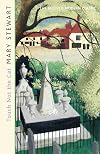
Typical Stewart: young woman investigating odd circumstances in family home. This one has the addition of telepathy and there’s a time slip as well. Certainly not Stewart’s best but a serviceable romantic suspense novel or suspenseful romance.
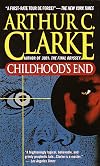
I loved this tale of the earth being taken over, albeit benignly, by a group of aliens called The Overlords. A nice twist about a third of the way through, lots of thoughtful speculation about what motivates men to create and explore. I didn’t find it preachy or too much a product of its time. Highly recommended, even if you’re not an SF fan.
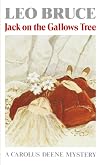
Carolus Deene, a teacher at an English public school, has had jaundice and is off to a waterside resort to rest and recuperate.
And then two older women are strangled on the same night. They are found in the same position, each with a small spray of white lilies on their chests. There doesn’t seem to be any connection, other than the murder circumstances, between the two. Is a maniac at work? Is there in fact a hidden connection? Carolus takes on the case, first reluctantly and then with an increasing sense of urgency. Is he clever enough to prevent a third murder?
Don’t look for complex character development here. The characters are interesting, but this is a straightforward old-fashioned mystery, very much in the style of the Golden Age classics. Smart dialogue and good plotting make this one a winner.
And then two older women are strangled on the same night. They are found in the same position, each with a small spray of white lilies on their chests. There doesn’t seem to be any connection, other than the murder circumstances, between the two. Is a maniac at work? Is there in fact a hidden connection? Carolus takes on the case, first reluctantly and then with an increasing sense of urgency. Is he clever enough to prevent a third murder?
Don’t look for complex character development here. The characters are interesting, but this is a straightforward old-fashioned mystery, very much in the style of the Golden Age classics. Smart dialogue and good plotting make this one a winner.
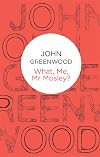
No murder, but a very good small English village character study. This is the last of Greenwood.s Mosley series, and it’s too bad; Mosley is an engaging and complex Detective Inspector. The mystery here involves stolen property. Recommended for anyone who loves British mysteries, but would like something out of the ordinary.
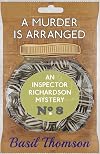
Another entry in the Inspector Richardson mystery series. It’s best described as a cozy police procedural. No gore, really no nastiness; the reader isn’t attached to the victim.
Even though I’ve read all but one in this short series, I still find them somewhat less than great. He plots are good; the procedures are just right (author Thomson spent many years as a high official at Scotland Yard); but…there’s really no emotional involvement. They’re just puzzles to be solved. Inspector Richardson is a man to admire, but even he is fairly muted.
Here, a beautiful young woman is murdered and the police must follow a obscure set of clues, and work with France’s Surete as well.
Sort of recommended.
Even though I’ve read all but one in this short series, I still find them somewhat less than great. He plots are good; the procedures are just right (author Thomson spent many years as a high official at Scotland Yard); but…there’s really no emotional involvement. They’re just puzzles to be solved. Inspector Richardson is a man to admire, but even he is fairly muted.
Here, a beautiful young woman is murdered and the police must follow a obscure set of clues, and work with France’s Surete as well.
Sort of recommended.
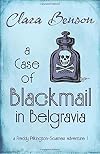
Freddy Pilkington-Smith starts out as a seemingly well-meaning, pleasant idiot, much like Bertie Wooster. This is because Freddy is drunk when we meet him. His mother takes advantage of his condition in order to avoid having a dead body found on her front steps.
Freddy soon sobers up, however, and turns into a fairly clever, but still very engaging, young man about town and fledgling reporter. He sifts through lots of evasions and downright lies to get at the truth and discover who murdered a member of his mother’s social set.
I enjoyed this, but be warned: it’s absolute fluff and simply an entertaining way to while away a summer afternoon.
Freddy soon sobers up, however, and turns into a fairly clever, but still very engaging, young man about town and fledgling reporter. He sifts through lots of evasions and downright lies to get at the truth and discover who murdered a member of his mother’s social set.
I enjoyed this, but be warned: it’s absolute fluff and simply an entertaining way to while away a summer afternoon.
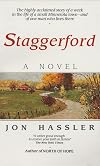
Not a lot happens in this book about a small town in the Midwest in the 1970’s. At least, not until the last quarter of the book. Then things start to rush along, each event becoming more serious as we go.
This is a character-driven story, and I found the characters to be fully developed and interesting. There’s a lot of humor here as well, most of it subtly subverting the mores of the 70’s. It’s certainly something different from most novels. Highly recommended to those who enjoy something out of the ordinary, and don’t mind a quiet read.
This is a character-driven story, and I found the characters to be fully developed and interesting. There’s a lot of humor here as well, most of it subtly subverting the mores of the 70’s. It’s certainly something different from most novels. Highly recommended to those who enjoy something out of the ordinary, and don’t mind a quiet read.
From the Department of Unpopular Opinions:
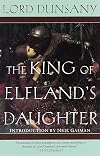
This is a beautifully-written tale of not being satisfied with what one has, but always longing for that other. It would have been a perfect short story of perhaps 50 pages. As even a very short novel, it’s just too long.
But the dreamy, emotional setting is the strongest part of the book, and will keep lovers of fantasy and/or nature writing interested. Not much characterization and not much plot, either, except for a few set pieces of exciting action. It’s written in a sort of biblical/ Norse saga style that is initially comforting but becomes a drag after a while.
But do try it. You may love it far more than I did.
This is a beautifully-written tale of not being satisfied with what one has, but always longing for that other. It would have been a perfect short story of perhaps 50 pages. As even a very short novel, it’s just too long.
But the dreamy, emotional setting is the strongest part of the book, and will keep lovers of fantasy and/or nature writing interested. Not much characterization and not much plot, either, except for a few set pieces of exciting action. It’s written in a sort of biblical/ Norse saga style that is initially comforting but becomes a drag after a while.
But do try it. You may love it far more than I did.
Bear in the Back Seat: Adventures of a Wildlife Ranger in the Great Smoky Mountains National Park (Volume 1) by Kim DeLozier
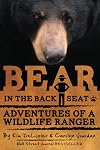
This memoir, co-written by a retired U.S. park ranger and a professional author, consists mostly of discrete incidents involving bears, skunks, and wild hogs. There’s some bio science and some appreciation of the glory of the Great Smoky Mountains.
But the book is tedious and repetitive, and written on a very basic level. My intense interest in bears and US wildlife in general kept me turning the pages.
Proceed at your own risk.
But the book is tedious and repetitive, and written on a very basic level. My intense interest in bears and US wildlife in general kept me turning the pages.
Proceed at your own risk.