
Walker Percy (1916–1990)
Author of The Moviegoer
About the Author
Walker Percy, May 28, 1916 - May 10, 1990 Walker Percy, born in Alabama, raised in Mississippi, and a former resident of Louisiana, was a member of a prominent Southern family who lost his parents at an early age and grew up as the foster son of his father's cousin. Percy graduated from the show more University of North Carolina and received his M.D. from Columbia, but was a nonpracticing physician who devoted much of his life to his writing. Percy's first novel, The Moviegoer (1961), won the 1962 National Book Award, but Charles Poore considers The Last Gentleman (1966) "an even better book." Love in the Ruins (1971) marks a sharp change in method and subject from the first two novels. A doomsday story set "at the end of the Auto Age," it exposes many foibles and abuses in contemporary life through sharp satire and extravagant fantasy. Whereas Love in the Ruins is funny, Percy's next novel, Lancelot (1977) is the rather bleak and pessimistic story of a deranged man who blows up his home when he finds proof of his wife's infidelities and then tells his story in an asylum for the mentally disturbed. Its apocalyptic vision is expressed in a more positive and affirmative way in The Second Coming (1980), which takes its title from the fact that it resurrects the character of Will Barret from The Last Gentleman and locates him, a quarter-century older, finding love and meaning in a cave. (Bowker Author Biography) show less
Series
Works by Walker Percy
The Message in the Bottle: How Queer Man Is, How Queer Language Is, and What One Has to Do with the Other (1975) 519 copies, 4 reviews
Walker Percy: The Moviegoer & Other Novels 1961-1971 (LOA #380): The Moviegoer / The Last Gentleman / Love in the Ruins (Library of America, 380) (2024) 52 copies
Bourbon 3 copies
Sinema müdavimi 1 copy
GOING BACK TO GEORGIA 1 copy
The Loss of the Creature 1 copy
Souvenirs de l'oncle Will 1 copy
Percy Walker 1 copy
The City of the Dead 1 copy
Associated Works
Lanterns on the Levee: Recollections of a Planter's Son (1941) — Introduction, some editions — 325 copies, 2 reviews
The Vintage Book of Amnesia: An Anthology of Writing on the Subject of Memory Loss (2000) — Contributor — 227 copies, 2 reviews
An American Album: One Hundred and Fifty Years of Harper's Magazine (2000) — Contributor — 146 copies, 1 review
Best of The Oxford American: Ten Years from the Southern Magazine of Good Writing {anthology} (2002) — Contributor — 45 copies
Rediscoveries: Informal Essays in Which Well-Known Novelists Rediscover Neglected Works of Fiction by One of Their Favorite Authors (1971) — Contributor — 27 copies
Tagged
Common Knowledge
- Canonical name
- Percy, Walker
- Birthdate
- 1916-05-28
- Date of death
- 1990-05-10
- Gender
- male
- Education
- University of North Carolina (BA|1937)
Columbia University (MD|1941) - Occupations
- novelist
essayist
physician
teacher - Organizations
- Order of Saint Benedict (oblate|1990)
Fellowship of Southern Writers (founding member|1987)
Loyola University of New Orleans
Sigma Alpha Epsilon - Awards and honors
- Jefferson Lecture (1989)
T. S. Eliot Award (1988)
Laetare Medal (1989)
St. Louis Literary Award (1986)
Campion Award (1986)
National Institute of Arts and Letters (1972) (show all 8)
American Academy of Arts and Letters (1972)
National Book Award (1962) - Relationships
- Percy, William Alexander (cousin)
Foote, Shelby (friend)
Gordon, Caroline (friend)
Spencer, Elizabeth (friend and colleague) - Cause of death
- prostate cancer
- Nationality
- USA
- Birthplace
- Birmingham, Alabama, USA
- Places of residence
- Birmingham, Alabama, USA
Athens, Georgia, USA
Greenville, Mississippi, USA
Covington, Louisiana, USA
Santa Fe, New Mexico, USA
New Orleans, Louisiana, USA (show all 7)
Saranac Lake, New York, USA - Place of death
- Covington, Louisiana, USA
- Burial location
- St. Joseph Benedictine Abbey, St. Benedict, Louisiana, USA
- Map Location
- Alabama, USA
Members
Discussions
Note from Walker Percy in Deep South (April 2013)
Novel about guy who loves the cinema in Name that Book (September 2011)
Reviews

"The Second Coming" is a fine read, which isn't at all surprising, as it was written by Walker Percy. But I'm not quite convinced that it's a wholly successful novel. It's less focused than either "The Moviegoer" and "Love in the Ruins" -- the other of Percy novels that I've read -- and while it has many strengths, I'm not sure that it states its thesis all that clearly or sets out to do what it intends to do.
It concerns Will Barrett -- a former lawyer, newly minted widower, extremely rich show more man, and unlikely spiritual seeker. Will finds himself suddenly haunted by half-forgotten memories, afflicted with mysterious fainting spells, and enamored of an eccentric young lady. While "The Second Coming" successfully extends the existentialist themes that are present in Percy's other novels, it's sure to frustrate those people who don't like to think of literature as something that comfortable people do when they find themselves unhappy. The book, though beautifully written, is a bit of a slog in places, and shares that disorienting quality that most books that have mentally ill protagonist at their center tend to have. As in all of the Percy I've read, religion plays a large role, but while the author's observations are sharp, Will's spiritual quest seems a bit more like the ravings of a madman than any sort of productive soul-searching.
But it's these observations, in the end, that make "The Second Coming" interesting. Percy seemed to have an almost preternatural ability to see societal change in America as it unfolded and to sense where Americans, as a society, were headed. Even though this was published in 1979, it's a sharp portrait of the New South, even as Will himself attempts to flee from the nostalgia, hatred, and pride that defined the literary Old South. It also senses the rise of a new, more self-centered kind of Christianity in America and the country's coming fascination with big money and success, which would more or less define the cultural climate of the next decade. Percy's perceptiveness also extends to his characters. He's never so obvious as to describe his characters straight on, but the details he does provide seem well-chosen and telling, and tell us more about his characters than any photograph or interview would. Percy might have been one of American literature's great observers. While "The Second Coming" seems confused and bogged-down in places, it's still a successful novel in many other respects. Recommended to Walker Percy's many fans. show less
It concerns Will Barrett -- a former lawyer, newly minted widower, extremely rich show more man, and unlikely spiritual seeker. Will finds himself suddenly haunted by half-forgotten memories, afflicted with mysterious fainting spells, and enamored of an eccentric young lady. While "The Second Coming" successfully extends the existentialist themes that are present in Percy's other novels, it's sure to frustrate those people who don't like to think of literature as something that comfortable people do when they find themselves unhappy. The book, though beautifully written, is a bit of a slog in places, and shares that disorienting quality that most books that have mentally ill protagonist at their center tend to have. As in all of the Percy I've read, religion plays a large role, but while the author's observations are sharp, Will's spiritual quest seems a bit more like the ravings of a madman than any sort of productive soul-searching.
But it's these observations, in the end, that make "The Second Coming" interesting. Percy seemed to have an almost preternatural ability to see societal change in America as it unfolded and to sense where Americans, as a society, were headed. Even though this was published in 1979, it's a sharp portrait of the New South, even as Will himself attempts to flee from the nostalgia, hatred, and pride that defined the literary Old South. It also senses the rise of a new, more self-centered kind of Christianity in America and the country's coming fascination with big money and success, which would more or less define the cultural climate of the next decade. Percy's perceptiveness also extends to his characters. He's never so obvious as to describe his characters straight on, but the details he does provide seem well-chosen and telling, and tell us more about his characters than any photograph or interview would. Percy might have been one of American literature's great observers. While "The Second Coming" seems confused and bogged-down in places, it's still a successful novel in many other respects. Recommended to Walker Percy's many fans. show less

at first i was really liking this, the way that we see binx being lost in his life but finding his way through cinema but then it turned into something else and i myself was the one lost. i disliked the depiction of just about everyone (women, people of color) that he encountered and don't know if this is just another of the older books written by white men that i don't find any connection with, or if there was really just nothing to connect to. this won the national book award in 1960 (and show more was percy's first book), and i'm disappointed not to like it more.
this description is so spot on though: "...I have only to hear the word God and a curtain comes down in my head." show less
this description is so spot on though: "...I have only to hear the word God and a curtain comes down in my head." show less
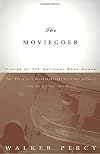
The Moviegoer is a book that I read when I was about fourteen years old, and for some reason, out of all of the books that I read in my early teenage years, it´s always stood out in my mind. I believe that this is because the story of Binx Bolling came to represent to me what it was going to be like to be an adult. He works in an unremarkable suburb of New Orleans selling stocks, content with going to the movies at night and having a series of affairs with his secretaries. He has devised a show more vague “search” for meaning in his day-to-day life, identifying noteworthy occurrences in his world that elevate existence above the mundanity of the everyday. He sees a movie star walking down the street and watches a young couple notice him, and thinks about the effect that the foreign and famous presence has on the otherwise unremarkable scene. He seeks repetitions in movies and life that elevate normal moments in nondescript theaters to a special status, and he drives a red MG convertible because it is a car that is immune to malaise, a car that one can drive in with a woman without being overwhelmed by how plain and meaningless their life is. He uses this invented search to find, if not pleasure, then at least low-level motivation to keep going in a job and a life that to most of his family seems uninspired and disappointing. Looking back, I think that at 14 I was aware that life would at some point become more repetitive, with less options sprawling out ahead of me and more routine and boredom from day to day. I related to his creation of a language with terms that defined situations by his own individual, aesthetic and arbitrary standards, but that nonetheless made the mundane less unbearable. At 26, I worried that this book would depress me, but it didn´t. As an adult I relate to Binx and his life, and I think that it is an accurate representation of adulthood.
Binx Bolling reminds me a lot of Camus´ Meursault in The Stranger, in the way that he is detached from a lot of the desires and motivations of the people in his world. He lives in Gentilly and doesn´t associate with the New Orleans society that he is a part of. His lack of faith contrasts with the religion of some members of his family, and his search for meaning circumvents the normal places that people look to for meaning (he doesn´t want God, and he doesn´t want to become a research scientist and make important discoveries). He appears content in a life that is hard for most of his family to understand, dating unremarkable secretaries and selling mutual funds to unremarkable people, without showing desire or ambition for more. I imagine that The Moviegoer is considered an existential novel, and a quick read of Walker Percy´s biography told me that he was a doctor, and that his own search for meaning drew him to Kierkegaard and Dostoyevsky and eventually to the Catholic religion due to a growing apprehension of science´s ability to explain the basic mysteries of human existence. I imagine that Binx is at least somewhat autobiographical and that his search at least partly parallels Percy´s own search for meaning in his life. With that in mind, I wonder if this search undertaken in his twenties would lead him, as in the author´s case, to religion later in life.
Besides providing me a possible blueprint for adulthood, The Moviegoer also gave me a mental image of New Orleans that I carried in my mind during the few times that I visited the city. It presents Southern aristocracy in a straightforward manner, it shows the racism still present in 1950´s Louisiana (black people are negroes in this book, they sit in the back of the bus, and so on), and it illustrates the customs and social conventions associated with Mardi Gras and the different parade krewes. My teenage conception of New Orleans, I realize, was pretty much half-Moviegoer, half-Confederacy of Dunces, and when I visited the city for the first time, I saw it through my recollection of these two novels, satisfied with the way that what I saw reflected what I remembered and expected to see based on these books. show less
Binx Bolling reminds me a lot of Camus´ Meursault in The Stranger, in the way that he is detached from a lot of the desires and motivations of the people in his world. He lives in Gentilly and doesn´t associate with the New Orleans society that he is a part of. His lack of faith contrasts with the religion of some members of his family, and his search for meaning circumvents the normal places that people look to for meaning (he doesn´t want God, and he doesn´t want to become a research scientist and make important discoveries). He appears content in a life that is hard for most of his family to understand, dating unremarkable secretaries and selling mutual funds to unremarkable people, without showing desire or ambition for more. I imagine that The Moviegoer is considered an existential novel, and a quick read of Walker Percy´s biography told me that he was a doctor, and that his own search for meaning drew him to Kierkegaard and Dostoyevsky and eventually to the Catholic religion due to a growing apprehension of science´s ability to explain the basic mysteries of human existence. I imagine that Binx is at least somewhat autobiographical and that his search at least partly parallels Percy´s own search for meaning in his life. With that in mind, I wonder if this search undertaken in his twenties would lead him, as in the author´s case, to religion later in life.
Besides providing me a possible blueprint for adulthood, The Moviegoer also gave me a mental image of New Orleans that I carried in my mind during the few times that I visited the city. It presents Southern aristocracy in a straightforward manner, it shows the racism still present in 1950´s Louisiana (black people are negroes in this book, they sit in the back of the bus, and so on), and it illustrates the customs and social conventions associated with Mardi Gras and the different parade krewes. My teenage conception of New Orleans, I realize, was pretty much half-Moviegoer, half-Confederacy of Dunces, and when I visited the city for the first time, I saw it through my recollection of these two novels, satisfied with the way that what I saw reflected what I remembered and expected to see based on these books. show less
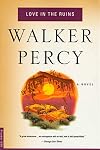
With an opening paragraph that explodes on the page with references to Christendom, Western civilization, and Dante, I immediately knew that this book was going to be good if not great. However I was thrown off a bit by the structure in which the first part was set on July Fourth and then went back to July 1st in the second part, but I got my bearings and began to enjoy the satire and the chaos of the world of the mid-80s in the United States where everything was falling apart around show more Paradise Estates, "an oasis of concord in a troubled land."
The protagonist is Dr. Thomas More (yes, namesake of the famous St. Thomas More) a heavy-drinking psychiatrist who has had his share of personal tragedy. He comments, "It is my misfortune---and blessing---that I suffer from both liberal and conservative complaints, e.g., both morning terror and large-bowel disorders, excessive abstraction and unseasonable rages, alternating impotence and satyriasis. So that at one and the same time I have great sympathy for my patients and lead a fairly miserable life."(p 20)
Tom hopes to turn his fortunes around with his invention, the lapsometer, with which he "can measure the index of life, life in death and death in life" --- This being a very scientific way to measure a sort of relative spirituality. The plot centers around his attempts to make progress with his invention while maintaining a semblance of normality, a vigorous love life, and interactions with a variety of interesting characters that include a Jewish atheist and a mephistopheles-like character who manages to persuade Tom to sign away his invention (i.e. his soul).
Through it all he maintains his own Catholic faith, while at the same time claiming, somewhat reasonably, to be a "bad" Catholic. At the same time he serves his fellow man in his role as a doctor while dealing with attacks from "Bantu" warriors and the impending collapse of society. The delight of the book comes from the savage satire and the potential for change in the life of Dr. Tom.
Seldom have I read a book that brings to mind my personal history; Love in the Ruins is one of those books. Written in the early 1970s, but set in a not too distant future of the mid 80s it is filled with references that in lesser books would merely seem out of date and discourage the reader. Yet Percy has captured the time and place with specific cultural entities like Howard Johnson's and others. I found this intriguing and fitting in a way that made the deterioration of society in the story more believable. He succeeds (certainly not intentionally) in mirroring the ongoing chaos in our own contemporary world. Ultimately, this is a novel, as the title suggests, about ruin, but also love, and perhaps therein a glimmer of hope---read it and find out. show less
The protagonist is Dr. Thomas More (yes, namesake of the famous St. Thomas More) a heavy-drinking psychiatrist who has had his share of personal tragedy. He comments, "It is my misfortune---and blessing---that I suffer from both liberal and conservative complaints, e.g., both morning terror and large-bowel disorders, excessive abstraction and unseasonable rages, alternating impotence and satyriasis. So that at one and the same time I have great sympathy for my patients and lead a fairly miserable life."(p 20)
Tom hopes to turn his fortunes around with his invention, the lapsometer, with which he "can measure the index of life, life in death and death in life" --- This being a very scientific way to measure a sort of relative spirituality. The plot centers around his attempts to make progress with his invention while maintaining a semblance of normality, a vigorous love life, and interactions with a variety of interesting characters that include a Jewish atheist and a mephistopheles-like character who manages to persuade Tom to sign away his invention (i.e. his soul).
Through it all he maintains his own Catholic faith, while at the same time claiming, somewhat reasonably, to be a "bad" Catholic. At the same time he serves his fellow man in his role as a doctor while dealing with attacks from "Bantu" warriors and the impending collapse of society. The delight of the book comes from the savage satire and the potential for change in the life of Dr. Tom.
Seldom have I read a book that brings to mind my personal history; Love in the Ruins is one of those books. Written in the early 1970s, but set in a not too distant future of the mid 80s it is filled with references that in lesser books would merely seem out of date and discourage the reader. Yet Percy has captured the time and place with specific cultural entities like Howard Johnson's and others. I found this intriguing and fitting in a way that made the deterioration of society in the story more believable. He succeeds (certainly not intentionally) in mirroring the ongoing chaos in our own contemporary world. Ultimately, this is a novel, as the title suggests, about ruin, but also love, and perhaps therein a glimmer of hope---read it and find out. show less
Lists
Awards


You May Also Like


Associated Authors
Statistics
- Works
- 36
- Also by
- 11
- Members
- 13,698
- Popularity
- #1,693
- Rating
- 3.9
- Reviews
- 175
- ISBNs
- 199
- Languages
- 12
- Favorited
- 70


