
Robert Penn Warren (1905–1989)
Author of All the King's Men
About the Author
Robert Penn Warren, the first Poet Laureate of the United States, was an unusually versatile writer who tried his hand at almost every kind of literature. In all of these forms, he achieved recognition and distinction, but it is as a poet, critic, and novelist that he was most widely known. Writing show more almost always about his native South, Warren produced 10 novels and a collection of short stories, The Circus in the Attic and Other Stories (1948). By far the most successful of his novels is All the King's Men (1946), the story of a southern politician and demagogue named Willie Stark, which Warren based on the rise and fall of Huey Long. Warren was considered one of the most influential of the New Critics, whose influence on the teaching of literature in American schools and universities during the late 1940s and 1950s could scarcely be overestimated. Because All the King's Men seemed to be the very epitome of what a good work of literature should be in New Critical terms---a complicated but highly readable narrative filled with irony and ambiguity---the novel came to be used widely in courses on modern fiction. It won both the Pulitzer Prize and the Southern Authors Award in 1947. Warren's other novels are disappointing by comparison. Following the success of All the King's Men, however, Warren seemed to turn to more loosely told stories about dramatic and romantic subjects, such as the interracial theme of Band of Angels (1955) or the natural catastrophes that serve as the crisis background for The Cave (1959) and Flood: A Romance of Our Time (1964). Wilderness: A Tale of the Civil War (1961) is an allegory of a man's spiritual quest for truth about himself and the world. Meet Me in the Green Glen (1971), the story of a tragic love affair, seemed to mark a return to the tighter structure and more complex artistry of Warren's earlier novels, but A Place to Come To (1977), his last novel, in which an elderly and renowned scholar who seems to owe much to Warren himself looks back on his family's past in an effort to find the meaning of his life, struck some reviewers as a confused and tired work. Sometime midway through his career as a novelist it is as if Warren stopped thinking of himself as a southern writer in the tradition of William Faulkner and turned instead to Thomas Wolfe for inspiration. Although in retrospect that switch must be regretted, no one can deny the immense influence of Robert Penn Warren on modern letters. Warren's poetry is intellectual, rich in powerful images, and has its roots in the pre-Civil War South. He continued to write impressive poetry almost until the time of his death. (Bowker Author Biography) show less
Image credit: Courtesy Wikipedia.
Series
Works by Robert Penn Warren
Six Centuries of Great Poetry: A Stunning Collection of Classic British Poems from Chaucer to Yeats (1992) — Editor — 344 copies, 1 review
Selected Letters of Robert Penn Warren: The Apprentice Years 1924--1934 (Southern Literary Studies) (v. 1) (2000) 17 copies
American Literature: The Makers and the Making Book d 1914 to the Present (American Literature (St Martins)) (1974) — Editor — 8 copies
Robert Penn Warren (3 Book Set) All the King's Men -- World Enough and Time -- Band of Angels. (1974) 6 copies
Selected poems, 1923-1943 4 copies
Warren Robert Penn 2 copies
Un lugar a donde llegar 2 copies
Rare 1955 Robert Penn Warren 1st Printing BAND OF ANGELS w/ DJ $3.95 Intact FUGITIVE (1955) 2 copies
UN ENDROIT OU ALLER 1 copy
“A Christian Education” 1 copy
Or Else 1 copy
Coro de angeles 1 copy
The Theory of Literature 1 copy
El caballero de la noche 1 copy
“Mortal Limit” 1 copy
“Audubon” 1 copy
“Bearded Oaks” 1 copy
Thirty-six poems 1 copy
Two Poems 1 copy
Det store bedrag 1 copy
Evening Hawk [poem] 1 copy
Six poems 1 copy
Christmas Gift 1 copy
La caverne 1 copy
Blackberry winter, a story 1 copy
THE FLOOD 1 copy
Вся королевская рать 1 copy
Select Poems 1923~1975 1 copy
Modern Rehetoric 1 copy
Associated Works
The Sound and the Fury, A Norton Critical Edition (1929) — Contributor, some editions — 2,061 copies, 22 reviews
The World of the Short Story: A 20th Century Collection (1986) — Contributor — 513 copies, 4 reviews
American Poetry: The Twentieth Century, Volume Two: E. E. Cummings to May Swenson (2000) — Contributor — 445 copies, 1 review
I'll Take My Stand: The South and the Agrarian Tradition (Library of Southern Civilization) (1930) — Contributor — 355 copies
The Mark Twain Anthology: Great Writers on His Life and Work (2010) — Contributor — 160 copies, 1 review
The Fugitive Poets: Modern Southern Poetry (Southern Classics Series) (1991) — Contributor — 124 copies
The Heath Anthology of American Literature, Concise Edition (2003) — Contributor — 74 copies, 1 review
The Sun Also Rises / A Farewell to Arms / The Old Man and the Sea (1962) — Introduction, some editions — 43 copies, 1 review
Published and Perished: Memoria, Eulogies, and Remembrances of American Writers (2002) — Contributor — 41 copies, 1 review
Rediscoveries: Informal Essays in Which Well-Known Novelists Rediscover Neglected Works of Fiction by One of Their Favorite Authors (1971) — Contributor — 27 copies
The Best Short Stories of 1939 and the Yearbook of the American Short Story (1939) — Contributor — 8 copies
Works in Progress Number 4: Selections from the Best in Books to be Published in Coming Months (1971) — Contributor — 7 copies
The Ethnic Image in Modern American Literature, 1900-1950, Volumes 1-2 (1984) — Contributor — 1 copy
32 Współczesne Opowiadania Amerykańskie - Tom I — Contributor — 1 copy
Tagged
Common Knowledge
- Birthdate
- 1905-04-24
- Date of death
- 1989-09-15
- Gender
- male
- Education
- Vanderbilt University (BA | 1925)
University of California, Berkeley ( [1926])
Yale University (1928)
University of Oxford ( [1930])
Citizens Military Training Corp, Fort Knox, Kentucky
Clarksville High School, Clarksville, Tennessee (show all 7)
Guthrie School - Occupations
- poet
novelist
short story writer
playwright
literary critic
editor (show all 8)
publisher
professor - Organizations
- The Fugitives
The Agrarians
Fellowship of Southern Writers (charter member)
American Academy of Poets ( [1950])
American Academy of Poets ( [1972])
American Academy of Arts and Letters (1959) (show all 12)
American Academy of Arts and Sciences (1975)
American Philosophical Society (1952)
National Institute of Arts and Letters (1950)
Century Association (1958)
Modern Language Association
The Southern Review (co-founder ∙ editor-in-chief) - Awards and honors
- Poet Laureate Consultant in Poetry to the Library of Congress (1944-1945)
Poet Laureate Consultant in Poetry to the Library of Congress (1986-1987)
Presidential Medal of Freedom (1980)
Bollingen Prize (1967)
Jefferson Lecture (1974)
Gold Medal for Poetry ( [1985]) (show all 27)
Emerson-Thoreau Medal (1975)
Distinguished Alumnus Award ( [1950])
National Arts Foundation Award (1968)
National Medal of Arts (1987)
National Medal of Literature (1970)
Founder's Medalist (1925)
Award for Distinction in Literature ( [1973])
Ten Best Teachers Award ( [1972])
Creative Arts Award ( [1984])
Shelley Memorial Award (1943)
MacArthur Prize (1981)
Wilma and Roswell Messing, Jr., Award ( [1977])
Phi Beta Kappa (1925)
Rhodes Scholar (1928-1930)
Guggenheim Fellowship
Warren-Brooks Award
Robert Penn Warren Award for Fiction
Robert Penn Warren Center for the Humanities (Vanderbilt University)
English Committee of the Board of Overseers of Harvard College (1967-68)
U.S. Naval Academy (declined due to injury)
Only poet to have served twice as U.S. Poet Laureate - Relationships
- Clark, Eleanor (wife)
Warren, Rosanna (daughter)
Brooks, Cleanth (friend)
Lytle, Andrew (friend)
Taylor, Peter Hillsman (friend)
Erskine, Albert (friend) (show all 10)
Davidson, Donald (teacher)
Jarrell, Randall (student)
Mims, Edwin (teacher)
Dew, Robb Forman (goddaughter) - Short biography
- Robert Penn Warren is the only person to have won Pulitzer Prizes for both fiction and poetry. He served twice as Poet Laureate of the United States.
- Nationality
- USA
- Birthplace
- Guthrie, Kentucky, USA
- Places of residence
- Guthrie, Kentucky, USA
Fairfield, Connecticut, USA
Stratton, Vermont, USA
Nashville, Tennessee, USA - Place of death
- Stratton, Vermont, USA
- Burial location
- Willis Cemetery, Stratton, Vermont, USA
- Associated Place (for map)
- USA
Members
Reviews

This is a collection of interviews Warren conducted with civil rights leaders and workers in 1964, interspersed with his own observations and conclusions. Originally published in 1965, my 2014 edition contains an excellent introduction by David W. Blight.
It is fascinating to read the varying positions of such well-known men as James Baldwin, Adam Clayton Powell, Malcolm X, Martin Luther King, Carl Rowan and Roy Wilkins on subjects from integration to non-violence in historical context, as show more well as the perspectives of the low-profile individuals dedicated to the difficult task of carrying out their leaders' agendas. It is also demoralizing to realize that despite all the work of all the people who devoted their lives---even sacrificed their lives, and all the changes that did come out of that troubled period, our country has not resolved the fundamental issues underlying racial conflict, and seems now to be moving in the wrong direction. Warren took on an incredibly ambitious project here, especially for an OWM from the Southland, and did a remarkable job with it. This book deserves to be read alongside all the 21st century works on the subject of race that are currently gracing our shelves. show less
It is fascinating to read the varying positions of such well-known men as James Baldwin, Adam Clayton Powell, Malcolm X, Martin Luther King, Carl Rowan and Roy Wilkins on subjects from integration to non-violence in historical context, as show more well as the perspectives of the low-profile individuals dedicated to the difficult task of carrying out their leaders' agendas. It is also demoralizing to realize that despite all the work of all the people who devoted their lives---even sacrificed their lives, and all the changes that did come out of that troubled period, our country has not resolved the fundamental issues underlying racial conflict, and seems now to be moving in the wrong direction. Warren took on an incredibly ambitious project here, especially for an OWM from the Southland, and did a remarkable job with it. This book deserves to be read alongside all the 21st century works on the subject of race that are currently gracing our shelves. show less
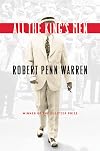
This is commonly billed as a "political novel", but much like its close spiritual successor, Billy Lee Brammer's The Gay Place, much of it doesn't really have anything to do with politics at all in the sense of policy. This is understandable, because the technical vocabulary of statutes, subclauses, and ad valorem taxes is essentially antithetical to most people, and also because the book is more about the effect of politics on people's lives and behavior, especially the seedier types of show more behavior, which are always the most interesting. Warren packed some great character studies of ambitions, infidelities, and aspirations inside a great big sprawling tome of a novel that contains some epic plot twists and soaring language, only very rarely ever feeling less than grandiose and all-encompassing in its examinations of the life of a politician who chased his dreams at all costs.
The novel is told through a frame story of journalist Jack Burden recounting his life with Governor Willie Stark. Despite Stark disappearing from the book for several long stretches, it's fair to call him the center of the story and the most important hook for readers, since it's his ambitions that drive the action. After all, an adulated orator is on the front cover of my edition and the back cover promises a tale of the rise and fall of a populist Depression-era governor who "resembles" infamous Louisiana Governor Huey Long. Though the book is very carefully set in an unnamed Southern state with no discernible Cajun identity at all - no Desautels or LeBlanc or Breaux characters show up, and all the towns have perfectly generic names like "Mason City" - many elements of Stark's background do resemble those of Long's even if this isn't quite a roman à clef. Even his nickname of "the Boss" echoes Long's own "Kingfish" sobriquet. One portion of Stark's backstory that vividly recall Long's also shows off the kind of sweeping Steinbeckian meditations/psychoanalysis that Warren engages in from time to time:
"He was a lawyer now. He could hang the overalls on a nail and let them stiffen with the last sweat he had sweated in them. He could rent himself a room over the dry-goods store in Mason City and call it his office, and wait for somebody to come up the stairs where it was so dark you had to feel your way and where it smelled like the inside of an old trunk that's been in the attic twenty years. He was a lawyer now and it had taking him a long time. It had taken him a long time because he had had to be a lawyer on his terms and in his own way. But that was over. But maybe it had taken him too long. If something takes too long, something happens to you. You become all and only the thing you want and nothing else, for you have paid too much for it, too much in wanting and too much in waiting and too much in getting."
So Stark starts off small and gradually rises in importance over time, using every weapon he can to get his ambitious program of public works and infrastructure investment accomplished. To do this he uses the services of Burden, a nihilistic, somewhat directionless journalist who he meets early in his career and whose personal life becomes ever more entwined with that of the Boss who rescued him from his previously aimless existence. Burden's role as a journalist/researcher/fixer for Governor Willie Stark requires him to recruit his childhood friend Adam Stanton, a gifted yet ethically over-rigid doctor, to run a new hospital the Governor is having built. He also does odd jobs for the Boss like digging up dirt on political opponents, including Judge Irwin, a close family friend of both Burden and the Stantons. The entire middle third of the book is centered on Burden and his turbulent love affair with Adam's sister Anne Stanton, for whom he has a complicated series of emotions that take up big chunks of time. I found Burden's rhapsodizing on his infatuation with her interesting for a bit, but dangerously dilatory until the plot picked back up again, although Warren does deploy some more good prose that keeps it from being too slow:
"So maybe she was up in the room trying to discover what her new self was, for when you get in love you are made all over again. The person who loves you has picked you out of the great mass of uncreated clay which is humanity to make something out of, and the poor lumpish clay which is you wants to find out what it has been made into. But at the same time, you, in the act of loving somebody, become real, cease to be a part of the continuum of the uncreated clay and get the breath of life in you and rise up. So you create yourself by creating another person, who, however, has also created you, picked up the you-chunk of clay out of the mass. So there are two you's, the one you yourself create by loving and the one the beloved creates by loving you. The farther those two you's are apart the more the world grinds and grudges on it axis. But if you loved and were loved perfectly then there wouldn't be any difference between the two you's or any distance between them. They would coincide perfectly, there would be a perfect focus, as when a stereoscope gets the twin images on the card into perfect adjustment."
The turning point of the novel arrives when a girl that the Governor's hot-shot football star son Tom has been fooling around with gets knocked up, and one of his political opponents tries to use it as leverage in an upcoming race for the Senate. The price for the scandal being kept quiet is that the contract to build that new hospital has to be awarded to an ally of his enemy. The Governor has Burden try to use evidence of a long-ago bribe to convince the Judge to help him out, however it's revealed that the Governor has also been cheating on his wife with, among others, Anne Stanton, and also that the Judge's relationship to Burden's family is much more complicated than he had known. The end of the book is basically one long string of corpses as Jack and Anne are about the only two people left standing and Stark's career follows roughly the same path that Huey Long's did in real life.
One interesting point in the book is that while Stark is portrayed by his enemies as being awash in graft, he's actually about as clean as could be expected in a fairly corrupt environment. In fact, the climactic scandal of the book doesn't involve much actual wrongdoing on his part at all, really. He's had to crush his opponents, but only so that they didn't stand in the way of his efforts to improve people's lives, such as with the hospital. It's a common pattern for popular politicians with populist/left-wing economic policies to set the terms of the debate so completely that using tawdry scandals is the only way for their opponents to fight back at all after being crushed at the ballot box. Meanwhile, the lesser people involved have to weigh their own senses of morality and loyalty - are they following their own consciences, the leader's goals, or simply the leader himself? One of the most riveting sections of the book that deals with loyalty and humanity has basically nothing to do with the main story at all. It's the story of a research project that Burden abandoned years ago, a history of Civil War-era plantation owner Cass Mastern, who gets involved in an affair that ends in the suicide of the wronged husband. Burden's early inability to finish the story says a lot about his own immaturity, which gets highlighted even more by his reaction to his discovery of Anne's sleeping with the Boss. Do Burden's efforts at the end to get rid of painful parts of his past show his growth?
While I, and evidently most readers, enjoyed Warren's treatment of those questions, I don't like that the book dodges the question of whether the Governor's actions were "worth it" overall, and that it treats Burden's personal fulfillment or lack thereof at the end as the main yardstick by which to judge everything preceding it. In The Passage of Power, the fourth volume of Robert Caro's biography of Lyndon Johnson, there's a section describing how, very early in his Presidency, Johnson has to decide whether to expend his precious political capital on pushing civil rights legislation. During one particularly contentious late-night debate, his advisers tell him it's a bad move, and LBJ replies with "Well, what the hell's the presidency for?" That's a brilliant response - the point of being elected is to improve people's lives. Stark is certainly portrayed as trying to do that, yet seemingly all anyone can talk about is irrelevant trivialities. This exactly same thing happens in real life too, so I can't blame Warren for writing the book that he did. I won't call it the "ultimate" political novel, since there's certainly room for more, but it's certainly worthy of all the acclaim it's been given. show less
The novel is told through a frame story of journalist Jack Burden recounting his life with Governor Willie Stark. Despite Stark disappearing from the book for several long stretches, it's fair to call him the center of the story and the most important hook for readers, since it's his ambitions that drive the action. After all, an adulated orator is on the front cover of my edition and the back cover promises a tale of the rise and fall of a populist Depression-era governor who "resembles" infamous Louisiana Governor Huey Long. Though the book is very carefully set in an unnamed Southern state with no discernible Cajun identity at all - no Desautels or LeBlanc or Breaux characters show up, and all the towns have perfectly generic names like "Mason City" - many elements of Stark's background do resemble those of Long's even if this isn't quite a roman à clef. Even his nickname of "the Boss" echoes Long's own "Kingfish" sobriquet. One portion of Stark's backstory that vividly recall Long's also shows off the kind of sweeping Steinbeckian meditations/psychoanalysis that Warren engages in from time to time:
"He was a lawyer now. He could hang the overalls on a nail and let them stiffen with the last sweat he had sweated in them. He could rent himself a room over the dry-goods store in Mason City and call it his office, and wait for somebody to come up the stairs where it was so dark you had to feel your way and where it smelled like the inside of an old trunk that's been in the attic twenty years. He was a lawyer now and it had taking him a long time. It had taken him a long time because he had had to be a lawyer on his terms and in his own way. But that was over. But maybe it had taken him too long. If something takes too long, something happens to you. You become all and only the thing you want and nothing else, for you have paid too much for it, too much in wanting and too much in waiting and too much in getting."
So Stark starts off small and gradually rises in importance over time, using every weapon he can to get his ambitious program of public works and infrastructure investment accomplished. To do this he uses the services of Burden, a nihilistic, somewhat directionless journalist who he meets early in his career and whose personal life becomes ever more entwined with that of the Boss who rescued him from his previously aimless existence. Burden's role as a journalist/researcher/fixer for Governor Willie Stark requires him to recruit his childhood friend Adam Stanton, a gifted yet ethically over-rigid doctor, to run a new hospital the Governor is having built. He also does odd jobs for the Boss like digging up dirt on political opponents, including Judge Irwin, a close family friend of both Burden and the Stantons. The entire middle third of the book is centered on Burden and his turbulent love affair with Adam's sister Anne Stanton, for whom he has a complicated series of emotions that take up big chunks of time. I found Burden's rhapsodizing on his infatuation with her interesting for a bit, but dangerously dilatory until the plot picked back up again, although Warren does deploy some more good prose that keeps it from being too slow:
"So maybe she was up in the room trying to discover what her new self was, for when you get in love you are made all over again. The person who loves you has picked you out of the great mass of uncreated clay which is humanity to make something out of, and the poor lumpish clay which is you wants to find out what it has been made into. But at the same time, you, in the act of loving somebody, become real, cease to be a part of the continuum of the uncreated clay and get the breath of life in you and rise up. So you create yourself by creating another person, who, however, has also created you, picked up the you-chunk of clay out of the mass. So there are two you's, the one you yourself create by loving and the one the beloved creates by loving you. The farther those two you's are apart the more the world grinds and grudges on it axis. But if you loved and were loved perfectly then there wouldn't be any difference between the two you's or any distance between them. They would coincide perfectly, there would be a perfect focus, as when a stereoscope gets the twin images on the card into perfect adjustment."
The turning point of the novel arrives when a girl that the Governor's hot-shot football star son Tom has been fooling around with gets knocked up, and one of his political opponents tries to use it as leverage in an upcoming race for the Senate. The price for the scandal being kept quiet is that the contract to build that new hospital has to be awarded to an ally of his enemy. The Governor has Burden try to use evidence of a long-ago bribe to convince the Judge to help him out, however it's revealed that the Governor has also been cheating on his wife with, among others, Anne Stanton, and also that the Judge's relationship to Burden's family is much more complicated than he had known. The end of the book is basically one long string of corpses as Jack and Anne are about the only two people left standing and Stark's career follows roughly the same path that Huey Long's did in real life.
One interesting point in the book is that while Stark is portrayed by his enemies as being awash in graft, he's actually about as clean as could be expected in a fairly corrupt environment. In fact, the climactic scandal of the book doesn't involve much actual wrongdoing on his part at all, really. He's had to crush his opponents, but only so that they didn't stand in the way of his efforts to improve people's lives, such as with the hospital. It's a common pattern for popular politicians with populist/left-wing economic policies to set the terms of the debate so completely that using tawdry scandals is the only way for their opponents to fight back at all after being crushed at the ballot box. Meanwhile, the lesser people involved have to weigh their own senses of morality and loyalty - are they following their own consciences, the leader's goals, or simply the leader himself? One of the most riveting sections of the book that deals with loyalty and humanity has basically nothing to do with the main story at all. It's the story of a research project that Burden abandoned years ago, a history of Civil War-era plantation owner Cass Mastern, who gets involved in an affair that ends in the suicide of the wronged husband. Burden's early inability to finish the story says a lot about his own immaturity, which gets highlighted even more by his reaction to his discovery of Anne's sleeping with the Boss. Do Burden's efforts at the end to get rid of painful parts of his past show his growth?
While I, and evidently most readers, enjoyed Warren's treatment of those questions, I don't like that the book dodges the question of whether the Governor's actions were "worth it" overall, and that it treats Burden's personal fulfillment or lack thereof at the end as the main yardstick by which to judge everything preceding it. In The Passage of Power, the fourth volume of Robert Caro's biography of Lyndon Johnson, there's a section describing how, very early in his Presidency, Johnson has to decide whether to expend his precious political capital on pushing civil rights legislation. During one particularly contentious late-night debate, his advisers tell him it's a bad move, and LBJ replies with "Well, what the hell's the presidency for?" That's a brilliant response - the point of being elected is to improve people's lives. Stark is certainly portrayed as trying to do that, yet seemingly all anyone can talk about is irrelevant trivialities. This exactly same thing happens in real life too, so I can't blame Warren for writing the book that he did. I won't call it the "ultimate" political novel, since there's certainly room for more, but it's certainly worthy of all the acclaim it's been given. show less

Murder, adultery, seduction, an illegitimate child, political double crossing: throw them all together and they make an engrossing tale. Base it on a true crime, and it’s even more compelling.
Robert Penn Warren took the case and did just that. The basic facts were that
on November 7, 1825, Solomon Sharp, a Kentucky legislator, was murdered. Jereboam Beauchamp was convicted of the murder and executed, becoming the first person to be legally executed in Kentucky.
Warren sticks closely to the show more original story. Beauchamp become Jeremiah Beaumont; Sharp is now Colonel Cassius Fort. The wronged woman was Anna Cooke, here known as Rachel Jordan. While in prison, Beauchamp had written his side of the story, and Warren uses this device in his novel, sifting through Jeremiah’s letters and prison diary to tell of a man and a world where violence was all pervasive, and murder was perhaps justified.
Kentucky at that time was a frontier. It was a violent and lonely land, and when the night came on, the loneliness was equal for the big brick house with the portico overlooking a meadow or the log house set at the head of a cove in the knobs. Eastward, cutting off the past, rose the wall of mountains, and westward the wilderness stretched away forever with its terror and its promise.
Land speculation was rampant; people would be on top one day and bankrupt the next. The political debate and legal wrangling over capital and credit, debt relief and imprisonment, is an important backdrop to the tale of young Jeremiah, who managed to survive his father’s financial downfall and become a lawyer. As he moved in increasingly more connected circles, he came to realise how honest hard working men came to be victims of these dealings.
He also learned that love can be bound up in speculation too. This was the start of his downfall. Writing his diaries in prison, he and his world come into sharper focus than stories from two hundred years ago normally do. The reader starts to root for Jeremiah, following him through to the end, the only place where Warren differs from what became known as The Kentucky Tragedy.
Written at a time when people routinely read long novels with many characters, it still holds up well, as does his All the King’s Men. At times it seemed like Cormac McCarthy, must be a fan; it’s every bit as immersive, but less brutal. show less
Robert Penn Warren took the case and did just that. The basic facts were that
on November 7, 1825, Solomon Sharp, a Kentucky legislator, was murdered. Jereboam Beauchamp was convicted of the murder and executed, becoming the first person to be legally executed in Kentucky.
Warren sticks closely to the show more original story. Beauchamp become Jeremiah Beaumont; Sharp is now Colonel Cassius Fort. The wronged woman was Anna Cooke, here known as Rachel Jordan. While in prison, Beauchamp had written his side of the story, and Warren uses this device in his novel, sifting through Jeremiah’s letters and prison diary to tell of a man and a world where violence was all pervasive, and murder was perhaps justified.
Kentucky at that time was a frontier. It was a violent and lonely land, and when the night came on, the loneliness was equal for the big brick house with the portico overlooking a meadow or the log house set at the head of a cove in the knobs. Eastward, cutting off the past, rose the wall of mountains, and westward the wilderness stretched away forever with its terror and its promise.
Land speculation was rampant; people would be on top one day and bankrupt the next. The political debate and legal wrangling over capital and credit, debt relief and imprisonment, is an important backdrop to the tale of young Jeremiah, who managed to survive his father’s financial downfall and become a lawyer. As he moved in increasingly more connected circles, he came to realise how honest hard working men came to be victims of these dealings.
He also learned that love can be bound up in speculation too. This was the start of his downfall. Writing his diaries in prison, he and his world come into sharper focus than stories from two hundred years ago normally do. The reader starts to root for Jeremiah, following him through to the end, the only place where Warren differs from what became known as The Kentucky Tragedy.
Written at a time when people routinely read long novels with many characters, it still holds up well, as does his All the King’s Men. At times it seemed like Cormac McCarthy, must be a fan; it’s every bit as immersive, but less brutal. show less

All the King's Men is topically very similar to Primary Colors. Both are narrated by a confidant to a powerful, charismatic, Southern populist politician. Each narrator discovers that the man he works for believes in ideals, but at the same time, is willing to use crooked means to accomplish just ends, and believes himself exempt from the strictures that govern other men.
However, unlike Primary Colors, All the King's Men is not really about politics, and the politician whose career narrator show more Jack Burden discusses is less important than the narrator himself. Perhaps a theme closer to its heart is the interaction between the past and the present and future through the counterpoised conduits of truth and falsehood. But Warren is a poet (I read his poetry before I knew he wrote prose), and what ultimately makes this an excellent novel is its poetic ability to connect with something deeper and more universally than such a theme. To put it more simply, I cared what Jack Burden had to say.
And then there's the poetry disguised as prose. Warren is sometimes purple, and often reiterates word-for-word a description which loses its power in repetition. But there are also passages like this one (page 9):
"... the clammy, sad foetus which is you way down in the dark which is you too lifts up its sad little face and its eyes are blind, and it shivers cold inside you for it doesn't want to know what is in that envelope. It wants to lie in the dark and not know, and be warm in its not-knowing. The end of man is knowledge, but there is one thing he can't know. He can't know whether knowledge will save him or kill him. He will be killed, all right, but he can't know whether he is killed because of the knowledge which he has got or because of the knowledge which he hasn't got and which if he had it, would save him. There's the cold in your stomach, but you open the envelope, you have to open the envelope, for the end of man is to know."
Or this (page 17):
"Not that I much blame Duffy. Duffy was face to face with the margin of mystery where all our calculations collapse, where the stream of time dwindles into the sands of eternity, where the formula fails in the test tube, where chaos and old night hold sway and we hear the laughter in the ether dream. But he didn't know he ways, and so he said, 'Yeah.'"
The pacing and poetry start to lag at the end. Nonetheless, the novel as a whole is well worth reading. show less
However, unlike Primary Colors, All the King's Men is not really about politics, and the politician whose career narrator show more Jack Burden discusses is less important than the narrator himself. Perhaps a theme closer to its heart is the interaction between the past and the present and future through the counterpoised conduits of truth and falsehood. But Warren is a poet (I read his poetry before I knew he wrote prose), and what ultimately makes this an excellent novel is its poetic ability to connect with something deeper and more universally than such a theme. To put it more simply, I cared what Jack Burden had to say.
And then there's the poetry disguised as prose. Warren is sometimes purple, and often reiterates word-for-word a description which loses its power in repetition. But there are also passages like this one (page 9):
"... the clammy, sad foetus which is you way down in the dark which is you too lifts up its sad little face and its eyes are blind, and it shivers cold inside you for it doesn't want to know what is in that envelope. It wants to lie in the dark and not know, and be warm in its not-knowing. The end of man is knowledge, but there is one thing he can't know. He can't know whether knowledge will save him or kill him. He will be killed, all right, but he can't know whether he is killed because of the knowledge which he has got or because of the knowledge which he hasn't got and which if he had it, would save him. There's the cold in your stomach, but you open the envelope, you have to open the envelope, for the end of man is to know."
Or this (page 17):
"Not that I much blame Duffy. Duffy was face to face with the margin of mystery where all our calculations collapse, where the stream of time dwindles into the sands of eternity, where the formula fails in the test tube, where chaos and old night hold sway and we hear the laughter in the ether dream. But he didn't know he ways, and so he said, 'Yeah.'"
The pacing and poetry start to lag at the end. Nonetheless, the novel as a whole is well worth reading. show less
Lists
AP Lit (1)
Unread books (1)
Page Turners (1)
1940s (1)
Southern Fiction (1)
Five star books (1)
A Novel Cure (1)
Favourite Books (1)
Books I Loved (1)
Fiction For Men (1)
On the pile (1)
Overdue Podcast (1)
. (1)
Awards


You May Also Like


Associated Authors
Statistics
- Works
- 139
- Also by
- 61
- Members
- 14,475
- Popularity
- #1,583
- Rating
- 3.9
- Reviews
- 177
- ISBNs
- 266
- Languages
- 13
- Favorited
- 36
