
Very much a "comfort read", but one which I enjoyed. The relationship arcs are satisfying, despite their predictability, and the descriptions of food often made me want to go eat something! It's nice to read a simple novel with clear good and bad characters as a break from modern complexity sometimes.
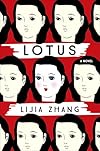
I absolutely loved this book. In a way reminiscent of Peter Hessler's books such as Oracle Bones, it brought to life Chinese society through the representative experiences of two of its members. The "prostitute meets nice guy" love story was told without clichés or improbable results, and the main characters felt vivid and true to life. I also loved the chapter titles, which are Chinese idioms, and felt the author's use of English as a non-native speaker was powerful, with just enough variation to make the story feel authentically foreign but not to distract.
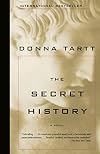
A fascinating and immersive novel, with particular resonance for me as I happen to have spent a year at Bennington College, the model for Hampen College. Tartt's description of rich kids' lives in Vermont is evocative and brought back a lot of memories, and her portrayal of the fascinating classics department professor Julian intrigued me (I also studied classics). The realism of their Greek studies and the environment was balanced by the fantasy of the way they talk and their secret activities, which I think were intentionally at a remove from our experience as moderns -- the question posed is, what if some kids really did decide to live like ancients in the modern world?
I was less satisfied was the "inverted detective story" plot, which seemed to arrive with too much urgency, infecting the narrator's and my own experience before we had barely got settled into our new life as classics students. But, still a fascinating read whose author I will continue to follow.
I was less satisfied was the "inverted detective story" plot, which seemed to arrive with too much urgency, infecting the narrator's and my own experience before we had barely got settled into our new life as classics students. But, still a fascinating read whose author I will continue to follow.
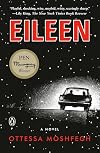
A real disappointment after reading Moshfegh's other work. The last sentence I read in this book was, “I might add that I didn’t wash my hands after using the toilet.” It pretty well encapsulates what seems to be the book's theme: purposeless disgust.
Disgust is a powerful emotion which, when used correctly and in moderation by an author, can make a novel memorable; for an excellent example, look no further than Moshfegh's own Lapvona. Here, though, rather than being can't-help-but-look entranced by scenes of medieval gore, we're treated to a main character whose main characteristic is unhygenicness. It's not exciting, just offputting. Multiple critics have used the word “gritty” to describe this book. I'd say grittiness works about as well here as in a dish of improperly washed oysters.
Disgust is a powerful emotion which, when used correctly and in moderation by an author, can make a novel memorable; for an excellent example, look no further than Moshfegh's own Lapvona. Here, though, rather than being can't-help-but-look entranced by scenes of medieval gore, we're treated to a main character whose main characteristic is unhygenicness. It's not exciting, just offputting. Multiple critics have used the word “gritty” to describe this book. I'd say grittiness works about as well here as in a dish of improperly washed oysters.
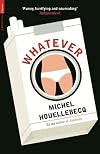
After reading his other novels, Houellebecq's first effort feels weak by comparison. Without the tension of brotherhood and family (as in The Elementary Particles) or religion (as in Submission) to balance out his nihilism, the main character's pointlessness just feels... pointless.
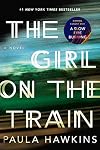
I feel this novel is ultimately betrayed by its narrator. At first she is an intriguing figure, riding the train, drinking, and spying on people out the window. Then she is referred to as “fat, sad Rachel” by others… and appears to be doing her best to continually reinforce this impression. It’s depressing to read, and made me not care about the resolution of the mystery due to my disgust for the protagonist.
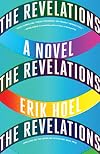
A fascinating novel about a scientist who becomes preoccupied with the limits of science to answer a simple question: what is consciousness? Reminiscent in some ways of Zen and the Art of Motorcycle Maintenance, the author’s expertise shows through in the discussion of this issue, which is explored thoroughly but never resolved. The core of the story is the irascible, frustrated genius of a narrator, whose conflicts with his fellow scientists make for fascinating reading. The author’s vocabulary is brobdingnagian, but sometimes the surreal aspects became overwhelming. On the whole, a fascinating read which I hope will not be this author’s last.
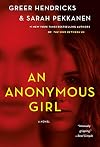
The premise is intriguing, maybe even brilliant, and makes the first third or half of the novel compulsively readable. However, as the mystery fades, so does the plausibility, and the book moves from psychological drama to thriller territory. Still not a bad read on the whole, but by the end I was just waiting for the inevitable resolution.
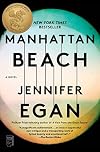
When historical fiction feels completely real, it’s a testament to the research the author must have put in. Egan does a wonderful job recreating New York in the Depression era, and as usual, introduces a marvelous set of characters with which to tell her story. My only quibble was with Dexter’s ending, which felt a bit clichéd and out of character. Apart from that, a masterpiece of historical storytelling.
The tech elements from the first book were rather clunky, so Egan has retconned the headsets from the first book into smartphones, but also made the universal consciousness tech hinted at in that book central to the story. This is unfortunate because it doesn’t really feel plausible at a basic science level — humans store complete audiovisual memories of everything that’s ever happened to them in their minds, only waiting for a machine to decode it? Give me a break. Because I didn’t buy into the sci-fi element, I had a harder time feeling immersed in the plot. However, Egan’s strength in all her books is her characters, and this is no exception. So apart from the failed suspension of disbelief, this was an enjoyable read, if not on the same level as Goon Squad.
One of those novels where you like all of the characters so much, because the author has made them feel so real, and you don’t want them to get hurt, but you know they will because pain is part of life. Also features one of the most daring chapters in modern fiction (the PowerPoint chapter) which somehow works amazingly well. And the safari chapter is one I will not soon forget.
Seems to be satirizing the culture of the modeling world, but I found the plot twists over-the-top, particularly the “recreation” for film of the accident,
I think Egan’s strength is in writing realistic fiction. The fantasy/horror elements in this one don’t work so well, and the framing story is interesting but a bit clichéd.
A main character who is a leper in our world is thrown into a fantasy realm where his physical disease disappears, but its psychological impact continues to plague him. It's an excellent setup, and provides narrative momentum for the exciting beginning of Covenant's introduction to the Land. However, the middle of the story becomes a more typical Tolkienesque fantasy quest, and Covenant's failure to learn anything from or even appreciate his miraculous becomes incresingly tedious. With no character growth, Covenant seems to be saving the realm without meaning to, which is not a very interesting story.
I really liked Saltheart Foamfollower though.
I really liked Saltheart Foamfollower though.
Though it felt in some of the middle books like the series was spinning out of control, in this last volume Card brought it to a satisfying finish.
The Tale of Genji: Introduction by Edward G. Seidensticker (Everyman's Library Classics Series) by Murasaki Shikibu
Genji is an interesting character, a literal "everyman" yet at the same time the handsomest man in the world. Lots of layers to this story. Previously ranked 2.5, with review "There's a lot of beauty in Genji's world, but his character is in the end too shallow to make his story worthwhile." As I age, I see that Genji's character contains dualities that redeem him. He is in a way a literal bodhisattva.
Some interesting theories, but ultimately Diamond is too eager to prove his own thesis and guilty of making the facts fit the hypothesis rather than vice versa.
Great translation which feels like you're reading the original Chinese, but in English.
The Way of the Superior Man: A Spiritual Guide to Mastering the Challenges of Women, Work, and Sexual Desire (20th Anniversary Edition) by David Deida
Somehow feels much ''less'' useful now that I'm married.
An acerbic look at American society through the eyes of three flawed, yet likable protagonist siblings.
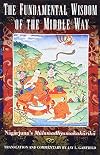
The text on its own is almost impossible to understand, which is why it's traditionally been accompanied by a commentary. Instead of translating this commentary, Garfield provides his own, which I'm not a fan of.
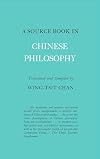
A very comprehensive look at Chinese philosophy, marred by distracting in-text comments which would have been much better as footnotes. Possibly the most intriguing chapter is the last one, which looks at Chinese philosophy under Commmunism.
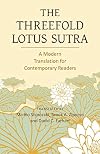
Not a fan of either the Sutra or the translation. The Sutra rips the experiential heart out of Buddhism and replaces it with claims to immortality. It's ilke Oprah for Buddhism: "You get a Buddhahood! You get a Buddhahood!" Meanwhile, the translation goes out of its way to eliminate anything offensive and un-PC, resulting in unnecessary modernization. The one saving grace is an excellent introductory essay by Brook Zipporyn.
The Vimalakirti Sutra: A Bilingual Volume with Cross References between English and Chinese - Translated from the Chinese of Master Kumarajiva by Vimalakirti
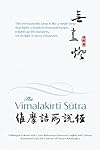
An interesting and provocative sutra. "Answering with silence" is a classic.
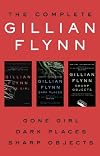
''Gone Girl'' was definitely my favorite of the three, followed by ''Sharp Objects'' and then ''Dark Places''. Flynn's "unlikeable" protagonists remind me of Nelson DeMille's, and the suspense factor is similar as they race to solve mysteries with their own lives at stake. The twists and red herrings are cleverly done and don't feel forced, except for the endings, all three of which were jarring, but not enough to ruin the books for me. And the Midwestern small-town settings are utilized really well, like in some of Stephen King's novels. All in all, three very dark but compulsively readable psychological drama-thrillers.
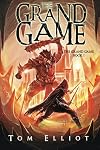
Really a ton of fun to read. Feels like playing a cRPG in book form!
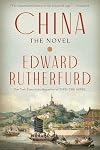
Contrary to what one might expect from the title, this is not a Michener-esque saga of the whole of China's history, but a more narrowly focused tale of the conflict of East and West during and after the Opium Wars. Still, it's an enjoyable tale, if not as enthralling as James Clavell's Tai-Pan.
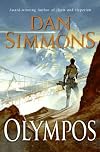
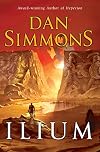
A fun mashup of The Iliad and science-fiction. Especially enjoyed the Shakespeare- and Proust-obsessed droids. Inspired me to dig out the old Fitzgerald Iliad and give it a reread!