
Nicholas Christopher
Author of A Trip To The Stars: A Novel
About the Author
Nicholas Christopher was born in New York City and educated at Harvard where he studied poetry with Elizabeth Bishop and Robert Lowell. He is the author of sixteen books, including the novels Veronica, The Soloist, and Tiger Rag. His selected poems, Crossing the Equator, was published in 2004, and show more his first novel for children, The True Adventures of Nicholas Zen, was published last year. He lives in Manhattan with his wife, Constance, and teaches at Columbia. show less
Image credit: Nicholas Christopher
Works by Nicholas Christopher
Les Poissons 1 copy
Associated Works
In Sunlight or In Shadow: Stories Inspired by the Paintings of Edward Hopper (2016) — Contributor — 286 copies, 16 reviews
Alive in Shape and Color: 16 Paintings by Great Artists and the Stories They Inspired (2019) — Contributor — 53 copies, 3 reviews
Orpheus and Company: Contemporary Poems on Greek Mythology (1999) — Contributor — 52 copies, 1 review
Tagged
Common Knowledge
- Birthdate
- 1951
- Gender
- male
- Education
- Harvard College (AB)
- Occupations
- novelist
poet
university professor - Organizations
- Columbia University
- Awards and honors
- Amy Lowell Travelling Fellowship in Poetry (1983-1984 |1985-1986)
Peter I. B. Lavan Younger Poets Award (1991) - Agent
- Anne Sibbald
- Nationality
- USA
- Birthplace
- New York, New York, USA
- Places of residence
- New York, New York, USA
Cambridge, Massachusetts, USA - Associated Place (for map)
- USA
Members
Reviews
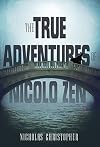
Like reading a biography of Mozart where magicians come out to play. Nicolo Zen is a recently orphaned venetian boy whose only possession is a magical clarinet that only he can play. After disguising himself as a girl in order to join an orchestra made of up of orphans, his adventures really begin. The kind of off-kilter, slightly sinister magic you might remember from The Night Circus, but also a compelling portrait of Venice and Vienna in the early 18th century.
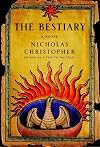
Sometimes a book just comes at you from nowhere. Unannounced, something about a particular work will summon something unexpected from its reader, something that feels important and shifts an atom or a molecule from left to right, from up to down.
“The Bestiary” did something like that for me. I began it with some small sense of its potential. I read Nicholas Christopher's novel “Veronica” earlier this decade, and was left with the feeling that I was about two-thirds of the way to a show more real experience, and left stranded by that last piece of unexplored territory between me and glory. What good writing, what good storytelling, what a letdown. I hoped for equally good writing and storytelling, plus a completeness I wasn't experiencing in “Veronica.”
Xeno Atlas begins the story of his life with the memorable observation, “The first beast I laid eyes on was my father.” Urgh, I though, another “my-father-failed-me” story. Still, there is so much in that sentence. There is menace and foreboding, and the foreshadowed sighting of more beasts. Continue, I told my cynical inner reader.
Lucky me, he did. Xeno tells us of his life as the left-behind son of a widowed Cretan sailor father, raised by his Sicilian maternal grandmother and Albanian nurse. The grandmother, we learn, is the granddaughter of a shape-shifting dryad; the old lady appears to become a red fox. The nurse is the closest thing to a normal person in the house, and her lovingkindness becomes a rock for Xeno's growing-up years. When, as is inevitable, the grandmother dies, Xeno is sent to boarding school in the wilds of Maine. It is here he will begin to come to terms with his father's indifference to him, and will discover the first traces of the Caravan Bestiary, the lost half of the universal bestiary that God used in creating the world. During the Flood, it appears that Noah got only one bestiary to guide his selection of animals, and the other animals were, it would seem, not pleasing to God and therefore to be abandoned. The Caravan Bestiary is the book recording their existence: Manticores, rukhs, griffins, gargoyles, sphinxes...all to be wiped out. Somehow that did not happen, and the Caravan Bestiary was proof of the survival of these terrifying other creatures.
Xeno begins a life-long quest for the Caravan Bestiary that takes him to every corner of the world. It is during his tour of duty in Vietnam that he re-connects with his boarding-school teacher who first mentioned the Bestiary to him. The vital clues that set Xeno traveling purposefully on the trail of this ancient book are discovered in a Hawaiian library, of all places. Xeno spends several more years chasing down clues and traveling across the Mediterranean several times, coping along the way with the loves and losses of any man in his twenties. His father dies; he learns the truth about his mother's family when he visits Sicily for the first time, and encounters for the last time his beloved red fox; he reignites and relishes his childhood love for Lena, a woman closer than a sister could ever be; finally, finally Xeno grows into the man we're rooting for him to become in his practical and urgent help for the real, living animals of Africa as he uses his inheritance to save endangered animals from certain death.
As if in reward, God (or whoever) brings Xeno to a church where he discovers so much more than he expected to find, and yet never actually beholds his longed-for prize of the Caravan Bestiary. What he finds is, without giving anything away, even better, even more surprising, and far more than he has any right to hope he will ever see.
I recommend this book to anyone who felt “The Da Vinci Code” was too facile and longs for a quest novel that will actually satisfy the real basis of the quest myth: “Know thyself.” I read this book, and at the end, I think I did know myself just a little bit better. I too am Xeno Atlas. show less
“The Bestiary” did something like that for me. I began it with some small sense of its potential. I read Nicholas Christopher's novel “Veronica” earlier this decade, and was left with the feeling that I was about two-thirds of the way to a show more real experience, and left stranded by that last piece of unexplored territory between me and glory. What good writing, what good storytelling, what a letdown. I hoped for equally good writing and storytelling, plus a completeness I wasn't experiencing in “Veronica.”
Xeno Atlas begins the story of his life with the memorable observation, “The first beast I laid eyes on was my father.” Urgh, I though, another “my-father-failed-me” story. Still, there is so much in that sentence. There is menace and foreboding, and the foreshadowed sighting of more beasts. Continue, I told my cynical inner reader.
Lucky me, he did. Xeno tells us of his life as the left-behind son of a widowed Cretan sailor father, raised by his Sicilian maternal grandmother and Albanian nurse. The grandmother, we learn, is the granddaughter of a shape-shifting dryad; the old lady appears to become a red fox. The nurse is the closest thing to a normal person in the house, and her lovingkindness becomes a rock for Xeno's growing-up years. When, as is inevitable, the grandmother dies, Xeno is sent to boarding school in the wilds of Maine. It is here he will begin to come to terms with his father's indifference to him, and will discover the first traces of the Caravan Bestiary, the lost half of the universal bestiary that God used in creating the world. During the Flood, it appears that Noah got only one bestiary to guide his selection of animals, and the other animals were, it would seem, not pleasing to God and therefore to be abandoned. The Caravan Bestiary is the book recording their existence: Manticores, rukhs, griffins, gargoyles, sphinxes...all to be wiped out. Somehow that did not happen, and the Caravan Bestiary was proof of the survival of these terrifying other creatures.
Xeno begins a life-long quest for the Caravan Bestiary that takes him to every corner of the world. It is during his tour of duty in Vietnam that he re-connects with his boarding-school teacher who first mentioned the Bestiary to him. The vital clues that set Xeno traveling purposefully on the trail of this ancient book are discovered in a Hawaiian library, of all places. Xeno spends several more years chasing down clues and traveling across the Mediterranean several times, coping along the way with the loves and losses of any man in his twenties. His father dies; he learns the truth about his mother's family when he visits Sicily for the first time, and encounters for the last time his beloved red fox; he reignites and relishes his childhood love for Lena, a woman closer than a sister could ever be; finally, finally Xeno grows into the man we're rooting for him to become in his practical and urgent help for the real, living animals of Africa as he uses his inheritance to save endangered animals from certain death.
As if in reward, God (or whoever) brings Xeno to a church where he discovers so much more than he expected to find, and yet never actually beholds his longed-for prize of the Caravan Bestiary. What he finds is, without giving anything away, even better, even more surprising, and far more than he has any right to hope he will ever see.
I recommend this book to anyone who felt “The Da Vinci Code” was too facile and longs for a quest novel that will actually satisfy the real basis of the quest myth: “Know thyself.” I read this book, and at the end, I think I did know myself just a little bit better. I too am Xeno Atlas. show less
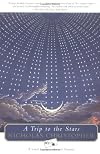
A Trip to the Stars is the real deal, and Nicholas Christopher is quite a dealer. Ten year-old Loren is kidnapped after he and his adoptive aunt attend a show at a planetarium. That kidnapping was the biggest pill for me to swallow, but once down, I gulped all the rest happily. All the rest turns out to be a magical mix of star and spider lore, hotels, abstruse allusions to lots of religions and philosophies, and more - all served up in highly readable prose.
The narration alternates between show more the aunt and Loren. Alma, who changes her name to Mala, tells her own story of her search for Loren and then for her lover whom she found on a hospital ship during the Vietnam War and lost almost immediately. Loren, who learns that his name is really Enzo, tells his coming of age story, which takes place in the Hotel Canopus in the desert outside Las Vegas, a hotel filled with lost people or people searching for what has been lost. Their stories sometimes parallel each other, intertwine strangely, yet are lived without any knowledge of whether the other is alive.
Lovers of magical realism, rejoice! This is a magical book that, whatever depths it may or may not reveal, tells a mesmerizing story. show less
The narration alternates between show more the aunt and Loren. Alma, who changes her name to Mala, tells her own story of her search for Loren and then for her lover whom she found on a hospital ship during the Vietnam War and lost almost immediately. Loren, who learns that his name is really Enzo, tells his coming of age story, which takes place in the Hotel Canopus in the desert outside Las Vegas, a hotel filled with lost people or people searching for what has been lost. Their stories sometimes parallel each other, intertwine strangely, yet are lived without any knowledge of whether the other is alive.
Lovers of magical realism, rejoice! This is a magical book that, whatever depths it may or may not reveal, tells a mesmerizing story. show less
Christopher's work is always hypnotic, but in this case, the work is nothing short of intoxicating. Woven of a labyrinthine hotel, exotic jungles, and ordinary passions, it moves forward with a sort of supernatural momentum that has the potential for leaving readers breathless and out of touch with their own realities, lost in the novel's passages and grace.
Beginning with the separation of two unique characters, A Trip to the Stars works as a web of personalities and subplots, all as show more frighteningly believable as they are fascinating. The novel's unique tandem of science and fantasy is entrancing, a masterful journey of passion and hope in every guise imaginable. While Christopher's writing is poetic and clever, the story here is, in itself, worth falling into over and over again.
This isn't a book so much as a journey, and it is wonderful. show less
Beginning with the separation of two unique characters, A Trip to the Stars works as a web of personalities and subplots, all as show more frighteningly believable as they are fascinating. The novel's unique tandem of science and fantasy is entrancing, a masterful journey of passion and hope in every guise imaginable. While Christopher's writing is poetic and clever, the story here is, in itself, worth falling into over and over again.
This isn't a book so much as a journey, and it is wonderful. show less
Lists
Awards


You May Also Like


Associated Authors
Statistics
- Works
- 20
- Also by
- 13
- Members
- 1,822
- Popularity
- #14,115
- Rating
- 3.8
- Reviews
- 47
- ISBNs
- 69
- Languages
- 4
- Favorited
- 6
