
John Crowley (1) (1942–)
Author of Little, Big
For other authors named John Crowley, see the disambiguation page.
About the Author
John Crowley was a recipient of the American Academy & Institute of Arts & Letters Award for Literature. He lives in the hills above the Connecticut River in northern Massachusetts with his wife & twin daughters. (Bowker Author Biography)
Image credit: Photo by Zoe Crowley
Series
Works by John Crowley
The Chemical Wedding: by Christian Rosencreutz: A Romance in Eight Days by Johann Valentin Andreae in a New Version (2016) 124 copies, 1 review
Gone {story} 4 copies
Missolonghi 1824 {story} 3 copies
Exogamy {short story} 2 copies
Associated Works
The Big Book of Science Fiction: The Ultimate Collection (2016) — Contributor — 521 copies, 8 reviews
The Best of the Best: 20 Years of the Year's Best Science Fiction (2005) — Contributor — 436 copies, 20 reviews
The Norton Book of Science Fiction: North American Science Fiction, 1960-1990 (1993) — Contributor — 344 copies, 6 reviews
The Year's Best Science Fiction: Seventh Annual Collection (1990) — Contributor — 311 copies, 2 reviews
American Fantastic Tales : Terror and the Uncanny from the 1940's to Now (2009) — Contributor — 298 copies, 5 reviews
The Locus Awards: Thirty Years of the Best in Science Fiction and Fantasy (2004) — Contributor — 290 copies, 11 reviews
The Year's Best Fantasy and Horror: Seventh Annual Collection (1994) — Contributor — 283 copies, 3 reviews
The Year's Best Fantasy and Horror: Fourteenth Annual Collection (2001) — Contributor — 257 copies, 2 reviews
The Year's Best Science Fiction: Third Annual Collection (1986) — Contributor — 251 copies, 1 review
The Best From Fantasy and Science Fiction: The Fiftieth Anniversary Anthology (1999) — Contributor — 128 copies, 3 reviews
The Best Science Fiction and Fantasy of the Year, Volume 13 (2019) — Contributor — 68 copies, 3 reviews
The Magazine of Fantasy and Science Fiction September 1996, Vol. 91, No. 3 (1996) — Contributor — 13 copies
J.K. Potter's Embrace the Mutation: Fiction Inspired by the Art of J. K. Potter (2002) — Contributor — 12 copies, 1 review
Conjunctions: 46, Selected Subversions: Essays on the World at Large (2006) — Contributor — 10 copies
Fantastic Imaginings: A Journey Through 3500 Years of Imaginative Writing, Comprising Fantasy, Horror, and Science Fiction (2012) — Contributor — 4 copies
Misunderstanding Cad First Contact SF Masterpiece Selection — Contributor — 1 copy
Tagged
Common Knowledge
- Legal name
- Crowley, John Michael
- Birthdate
- 1942-12-01
- Gender
- male
- Education
- Indiana University (1965)
- Occupations
- senior lecturer (creative writing)
filmmaker
fantasy writer - Organizations
- Yale University
- Awards and honors
- World Fantasy Award (Life Achievement, 2006)
American Academy of Arts and Letters Academy Award (Literature, 1992) - Agent
- Howard Morhaim (Lotts Agency)
- Nationality
- USA
- Birthplace
- Presque Isle, Maine, USA
- Places of residence
- Presque Isle, Maine, USA
Vermont, USA
Kentucky, USA
Indiana, USA
New York, New York, USA - Associated Place (for map)
- USA
Members
Discussions
Little, Big 25th Anniversary Edition in Fine Press Forum (April 21)
Hat tip to Thom in Good Show Sir! — bad science fiction and fantasy covers (November 2024)
Little, Big in Hogwarts Express (April 2013)
Fantasy Novel in Name that Book (October 2010)
Reviews

John Crowley's first novel The Deep is short but dense, difficult of access with frequently opaque characters who are significantly ignorant of their own historical and cosmological situation. In his introduction to the Gollancz SF Masterworks edition, Ken MacLeod calls it "a cold little diamond of hard SF," and there is in fact a rational, technological reading for all of the events and circumstances of the novel, but they are quite mysterious and "magical" (in the Clarkean sense).
The show more obvious comparanda are books by Gene Wolfe: his much later Book of the Long Sun series within the Solar Cycle in one clear respect, but also the early Fifth Head of Cerberus from just a few years prior to The Deep. These authors present readers with different worlds as understood by their inhabitants, so that those differences can never be made lucid at the outset, since the characters are "at home" there. They take for granted some things we would find exotic, so those are not remarked, and they don't have access to our explanatory frameworks.
The Deep is also, by Crowley's admission, a science-fictional riff on the English Wars of the Roses. So it has perplexing levels of intrigue and motive. (This historical referent also puts it in a class with George R. R. Martin's Song of Ice and Fire series, I guess, along with Robert Irwin's terrific Wonders Will Never Cease.)
Crowley is perhaps best known for his contemporary fantasy Little, Big and the Ægypt tetralogy, which certainly have the sophistication of The Deep, but have very different narrative styles which I would say are more accessible. There are a few thematic elements that persist, though. Cartomancy with an unusual deck and the use of emblematic images in cultural transmission are already an interest for Crowley from the outset.
I enjoyed The Deep and might read it again at some point. It was very slow going, and I often paused to re-read a page, trying to picture the scenes and to fathom the people inhabiting them. The book contains some powerful moments and ideas. Crowley is something of a "writer's writer," and the vertiginous qualities of this debut certainly showed him as such. show less
The show more obvious comparanda are books by Gene Wolfe: his much later Book of the Long Sun series within the Solar Cycle in one clear respect, but also the early Fifth Head of Cerberus from just a few years prior to The Deep. These authors present readers with different worlds as understood by their inhabitants, so that those differences can never be made lucid at the outset, since the characters are "at home" there. They take for granted some things we would find exotic, so those are not remarked, and they don't have access to our explanatory frameworks.
The Deep is also, by Crowley's admission, a science-fictional riff on the English Wars of the Roses. So it has perplexing levels of intrigue and motive. (This historical referent also puts it in a class with George R. R. Martin's Song of Ice and Fire series, I guess, along with Robert Irwin's terrific Wonders Will Never Cease.)
Crowley is perhaps best known for his contemporary fantasy Little, Big and the Ægypt tetralogy, which certainly have the sophistication of The Deep, but have very different narrative styles which I would say are more accessible. There are a few thematic elements that persist, though. Cartomancy with an unusual deck and the use of emblematic images in cultural transmission are already an interest for Crowley from the outset.
I enjoyed The Deep and might read it again at some point. It was very slow going, and I often paused to re-read a page, trying to picture the scenes and to fathom the people inhabiting them. The book contains some powerful moments and ideas. Crowley is something of a "writer's writer," and the vertiginous qualities of this debut certainly showed him as such. show less

When I started reading John Crowley's 1976 novel Beasts, I felt inadequately informed by the manimal vein of science fiction. I have not read Wells' Island of Dr. Moreau nor Stapledon's Sirius. It may be that those works and other science fiction were alluded to in Crowley's tale, but the overt references are to T. H. White's Book of Merlyn and the Christian gospels. Beasts is persuasively science-fictional, and possibly moreso now than when it was written, but it draws on medieval allegory show more and explores some of the philosophical territory since proposed in Haraway's Staying with the Trouble.
The setting is the Northern Autonomy in a balkanized America after the dissolution of the US into a number of such "independencies." It adjoins the Federal remnant that is ambitious to reunite the country. An inchoate popular need for a king serves as the political backdrop against which the tale dramatizes the persecution of the lion-human hybrids called "leos." Besides the leo Painter, key characters include the ethologist Loren, a destitute girl Caddie, the fox hybrid Reynard, and the videographer Meric.
The pace throughout is measured and the focus is interior, with Crowley's admirable prose giving the reader access to the characters' varied perspectives. The book is quite short by today's genre standards; a mere eight chapters averaging little more than twenty pages each. It was short enough that the whole story would fit into a feature film. (I was even reminded a little of the thematic interests shown by director Alex Garland.)
Crowley was already onto themes that he would explore at greater length in later work. He assigns the narrative voice to a bird at the start of the last chapter, foreshadowing Ka. The notions of neurodiversity and perspectivism so important to the Ægypt cycle are in high relief here. There is even an intimation of the Robbie plot from Love & Sleep.
In contrast to his prior book The Deep, I found this one easy to follow. It is an evocative blend of fable, speculation, and reflection, with a solid storytelling sensibility. It explores ideas of sovereignty, dependency, control, liberty, and humanity, in unique voices that sound their intimate substrata. show less
The setting is the Northern Autonomy in a balkanized America after the dissolution of the US into a number of such "independencies." It adjoins the Federal remnant that is ambitious to reunite the country. An inchoate popular need for a king serves as the political backdrop against which the tale dramatizes the persecution of the lion-human hybrids called "leos." Besides the leo Painter, key characters include the ethologist Loren, a destitute girl Caddie, the fox hybrid Reynard, and the videographer Meric.
The pace throughout is measured and the focus is interior, with Crowley's admirable prose giving the reader access to the characters' varied perspectives. The book is quite short by today's genre standards; a mere eight chapters averaging little more than twenty pages each. It was short enough that the whole story would fit into a feature film. (I was even reminded a little of the thematic interests shown by director Alex Garland.)
Crowley was already onto themes that he would explore at greater length in later work. He assigns the narrative voice to a bird at the start of the last chapter, foreshadowing Ka. The notions of neurodiversity and perspectivism so important to the Ægypt cycle are in high relief here. There is even an intimation of the Robbie plot from Love & Sleep.
In contrast to his prior book The Deep, I found this one easy to follow. It is an evocative blend of fable, speculation, and reflection, with a solid storytelling sensibility. It explores ideas of sovereignty, dependency, control, liberty, and humanity, in unique voices that sound their intimate substrata. show less
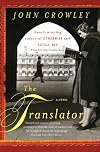
I. LOVED. THIS. BOOK. I sat riveted, reading the last hundred-plus pages last night. Had to pee for the final hour, but couldn't be bothered. Had to know what happened next. That's how damn GOOD this book is! And I don't really want to write a standard kinda book review. I just want to tell everybody about what a terrific read this is. But okay. I'll try. The protagonist of John Crowley's THE TRANSLATOR is Christa 'Kit' Malone, and we meet her as a young girl, then as a high school and show more college student, and also as an adult, thirty-some years later, traveling to St Petersburg for a poetry conference. As a girl, she brought to mind Carson McCullers' Frankie, from MEMBER OF THE WEDDING, because of her close bond with her older brother, Ben. Kit was devastated when Ben left her to join the Army, and felt even more betrayed when he re-enlisted for Special Forces. In retaliation she has sex with an older boy she barely knows and becomes pregnant. It's the early sixties, and the Malones are devout Catholics, so Kit is sent away to a home for unwed mothers administered by nuns. Then we meet her at college, enrolling a semester late. There she meets the expat Russian poet, Innokenti I. Falin, enrolls in his class and, infatuated, falls deeply in love with him, though he is easily twice her age. A mysterious figure, we learn Falin's story in bits and pieces, and even those fragments are questionable. He confides to Kit how he was a homeless street child - a la Dickens - in the Stalin years, served in the army in the war, and spent time in prison. But he was also a recognized poet, and was supposedly deported to the U.S. as an undesirable. Is he a Soviet agent, a double agent for the U.S.? Falin's status remains murky, as the two spend a summer session collaborating on translating his poems, but their love affair seems genuine, particularly in that Falin is very reluctant to consummate it. And then, in the fall, their story suddenly collides with the tense times of the Cuban Missile Crisis, and the narrative begins to accelerate towards an uncertain climax.
Oh yeah, and Kit was a poet too, something Falin encouraged, and she was also taking an intensive summer course in Russian at the university's Language Institute where her classmates were mostly young Air Force guys. This is where I figured out that the unnamed midwestern university must be Indiana, because in the 1970s I met a number of Air Force linguists who got their Russian training at Indiana in Bloomington.
But I digress, and I know this is all a poor excuse for a book review, but I guess I'm just trying to explain why I loved this book so much and how I could relate to so much if it. In fact I was just halfway through Army basic training when the Cuban Missile Crisis happened. So yeah, I was really caught up in this story. That and Kit. She was just such a heartbreakingly real character. (I was reminded of Natalie Wood as Deenie in SPLENDOR IN THE GRASS. That kind of vulnerability and innocence.)
Ah well. Enough. Loved this book Absolutely loved it. My hat is off to Mr Crowley. My very highest recommendation.
- Tim Bazzett, author of the Cold War memoir, SOLDIER BOY: AT PLAY IN THE ASA show less
Oh yeah, and Kit was a poet too, something Falin encouraged, and she was also taking an intensive summer course in Russian at the university's Language Institute where her classmates were mostly young Air Force guys. This is where I figured out that the unnamed midwestern university must be Indiana, because in the 1970s I met a number of Air Force linguists who got their Russian training at Indiana in Bloomington.
But I digress, and I know this is all a poor excuse for a book review, but I guess I'm just trying to explain why I loved this book so much and how I could relate to so much if it. In fact I was just halfway through Army basic training when the Cuban Missile Crisis happened. So yeah, I was really caught up in this story. That and Kit. She was just such a heartbreakingly real character. (I was reminded of Natalie Wood as Deenie in SPLENDOR IN THE GRASS. That kind of vulnerability and innocence.)
Ah well. Enough. Loved this book Absolutely loved it. My hat is off to Mr Crowley. My very highest recommendation.
- Tim Bazzett, author of the Cold War memoir, SOLDIER BOY: AT PLAY IN THE ASA show less
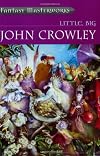
So many times trying to start this, so many times I've bounced off it because if I'm being perfectly frank I thought it was out of my league, which is ridiculous of course, what are you, my therapist? So I read and audiod at the same time, the way I did with Gormenghast, and for whatever reason that kept me going. It's a big, beautiful, magical book, but it's about the way magic is sort of half-understood, barely remembered but immensely important secrets you no longer have access to, but show more it's working all around you and you're in it and you are it and it's you. Truly an amazing book, filled with the idyll of the country the harshness of the city, the movement of history, and places that get bigger the farther in you go. show less
Lists
Five star books (1)
Faerie Mythology (1)
Same Title (1)
Awards


You May Also Like


Associated Authors
Statistics
- Works
- 46
- Also by
- 51
- Members
- 12,858
- Popularity
- #1,821
- Rating
- 3.9
- Reviews
- 305
- ISBNs
- 263
- Languages
- 11
- Favorited
- 114
