
Tim Powers
Author of The Anubis Gates
About the Author
Disambiguation Notice:
Tim Powers shares the pseudonym "William Ashbless" with writer James P. Blaylock.
Image credit: Tim Powers en 2012 au SFeraCon de Zagreb
Series
Works by Tim Powers
Always Going On 4 copies
The Collected Stories of Tim Powers 3 copies
Deliver Us From Evil 3 copies
Night Moves [short story] 3 copies
Pat Moore [short story] 3 copies
Ten Poems 3 copies
The Way Down the Hill 2 copies
Anachronist 2 copies
A Journey of Only Two Paces 1 copy
Parallel Lines 1 copy
The Suppressed Recipes 1 copy
The Better Boy 1 copy
Associated Works
American Fantastic Tales : Terror and the Uncanny from the 1940's to Now (2009) — Contributor — 298 copies, 5 reviews
What If Our World Is Their Heaven? The Final Conversations of Philip K. Dick (2001) — Foreword — 277 copies, 4 reviews
The Door to Saturn (The Collected Fantasies of Clark Ashton Smith, Vol. 2) (2007) — Introduction, some editions — 273 copies, 3 reviews
The Year's Best Science Fiction: Fourth Annual Collection (1987) — Contributor — 220 copies, 1 review
The Best Science Fiction and Fantasy of the Year, Volume 1 (2007) — Contributor — 217 copies, 6 reviews
Do Androids Dream of Electric Sheep Omnibus (2015) — Contributor, some editions — 83 copies, 1 review
L. Ron Hubbard Presents Writers of the Future, Volume 32 (2016) — Contributor — 36 copies, 2 reviews
L. Ron Hubbard Presents Writers of the Future, Volume 41 (2025) — Contributor — 34 copies, 11 reviews
The Magazine of Fantasy and Science Fiction December 1982, Vol. 63, No. 6 (1982) — Contributor — 10 copies
Tagged
Common Knowledge
- Legal name
- Powers, Timothy Thomas
- Other names
- Ashbless, William
- Birthdate
- 1952-02-29
- Gender
- male
- Education
- California State University, Fullerton
- Occupations
- teacher
science fiction writer
fantasy writer - Organizations
- Orange County High School of the Arts (part-time teacher)
- Awards and honors
- Forry Award (2014)
Guest of Honour, Eastercon, UK (2009) - Agent
- Russell Galen [US]
[UK & Commonwealth] John Berlyne (Zeno Agency ) - Relationships
- Blaylock, James P. (friend)
Dick, Philip K. (friend) - Nationality
- USA
- Birthplace
- Buffalo, New York, USA
- Places of residence
- Muscoy, California, USA
Buffalo, New York, USA - Disambiguation notice
- Tim Powers shares the pseudonym "William Ashbless" with writer James P. Blaylock.
- Associated Place (for map)
- USA
Members
Discussions
The Anubis Gates by Tim Powers - CENTIPEDE PRESS 2013 in Centipede Press (May 2021)
Group Read: On Stranger Tides - Spoilers in 75 Books Challenge for 2011 (June 2011)
Group Read: On Stranger Tides in 75 Books Challenge for 2011 (January 2011)
***Group Read: Steampunk (spoiler-free) in 75 Books Challenge for 2010 (September 2010)
***Group Read: Steampunk (SPOILERS) in 75 Books Challenge for 2010 (June 2010)
Reviews

The Anubis Gates offers a complicated time travel story with Weird infusions of body-switching and Victorian demimonde hustle. Powers combines intricate plotting with arcane cultural history, the resulting story amounting to a juggernaut conspiracy-cum-secret history of Western civilisation (at least, through 1983). The resulting read is a romp, with action and memorable characters galore: this in itself is enough to commend another Powers novel when the mood hits. (Declare especially looks show more promising). My overall experience, however, was more than just a fun diversion: detailed morsels from history were the reason, with Powers as wide-ranging in his selection as he is meticulous in his excavation.
The setting is primarily 1810 London with an influential strain of Egyptian magic at play, supplying the occult influence over Western civilisation. (An online check of British history suggests the London setting gives a strong Victorian vibe despite nominally being Georgian / Regency). It is interesting that two camps, each powerful in its own right, are essentially at odds with one another without direct confrontation. This arrangement allows Powers to avoid the cliche of Good versus Evil on the level of superheroes and villains, though perhaps in this case it would be Evil vs Evil, seemingly thwarted by an Everyman.
Ashbless as a fictional poet is as intriguing a creation as the story at large, as is his poem "Twelve Hours of the Night". There exists a chapbook from 1985, produced in connection with a panel presentation by Powers & J Blaylock. That said, Byron and Coleridge have brilliant cameos here, I suspect even more impressive the more familiar the reader is with their specific biographies. show less
The setting is primarily 1810 London with an influential strain of Egyptian magic at play, supplying the occult influence over Western civilisation. (An online check of British history suggests the London setting gives a strong Victorian vibe despite nominally being Georgian / Regency). It is interesting that two camps, each powerful in its own right, are essentially at odds with one another without direct confrontation. This arrangement allows Powers to avoid the cliche of Good versus Evil on the level of superheroes and villains, though perhaps in this case it would be Evil vs Evil, seemingly thwarted by an Everyman.
Ashbless as a fictional poet is as intriguing a creation as the story at large, as is his poem "Twelve Hours of the Night". There exists a chapbook from 1985, produced in connection with a panel presentation by Powers & J Blaylock. That said, Byron and Coleridge have brilliant cameos here, I suspect even more impressive the more familiar the reader is with their specific biographies. show less
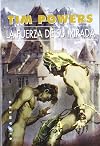
Los argumentos de Tim Powers siempre son sorprendentes. Alrededor de hechos históricos, empieza a tejar su particular tela de araña ficticia, arrastrando a su protagonista, generalmente perdiendo miembros por el camino, e incluso el cuerpo, a un viaje fantástico y terrible.
‘La fuerza de su mirada’ (The Stress of Her Regard, 1989), ambientada a principios del siglo XIX, tiene como protagonista al doctor Michael Crawford, que el día antes de su boda, durante una fiesta con sus amigos, show more comete un desliz con su anillo de bodas. Como resultado, será perseguido por una criatura ancestral. Si Crawford es el principal personaje ficticio de la novela, la parte histórica está protagonizada por Lord Byron, Percy Shelley y John Keats, que le acompañarán y ayudarán a deshacerse de estos seres mitológicos. Tim Powers introduce aquí un elemento interesante, el que las musas no eran más que vampiros que proporcionaban inspiración e intelecto a cambio de un lazo de sangre.
Quizás ‘La fuerza de su mirada’ sea la obra más ambiciosa de Tim Powers, pero sigo prefiriendo otras novelas suyas, como la genial ‘Las puertas de Anubis’ y ‘En costas extrañas’. En ellas, Powers no se ve tan encorsetado por los hechos históricos y el modo de cuadrarlo y adecuarlo todo a ellos, y puede desatar completamente su imaginación. show less
‘La fuerza de su mirada’ (The Stress of Her Regard, 1989), ambientada a principios del siglo XIX, tiene como protagonista al doctor Michael Crawford, que el día antes de su boda, durante una fiesta con sus amigos, show more comete un desliz con su anillo de bodas. Como resultado, será perseguido por una criatura ancestral. Si Crawford es el principal personaje ficticio de la novela, la parte histórica está protagonizada por Lord Byron, Percy Shelley y John Keats, que le acompañarán y ayudarán a deshacerse de estos seres mitológicos. Tim Powers introduce aquí un elemento interesante, el que las musas no eran más que vampiros que proporcionaban inspiración e intelecto a cambio de un lazo de sangre.
Quizás ‘La fuerza de su mirada’ sea la obra más ambiciosa de Tim Powers, pero sigo prefiriendo otras novelas suyas, como la genial ‘Las puertas de Anubis’ y ‘En costas extrañas’. En ellas, Powers no se ve tan encorsetado por los hechos históricos y el modo de cuadrarlo y adecuarlo todo a ellos, y puede desatar completamente su imaginación. show less
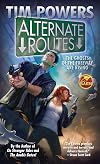
Alternate Routes is a combination of the myth of Daedalus and the horror with which long-time residents of Los Angeles regard their infamous freeway system. I’m not an Angeleno, but I don’t find a supernatural conjunction between the LA freeways and the Minotaur’s Labyrinth at all implausible.
To give you an idea of how differently writers of fantastical literature have approached similar subjects, consider Gregory Benford’s Artifact. Benford went with a de-mythologizing, hard sci-fi show more take on the Minotaur, making it a magnetic monopole trapped in a cube of stone. Powers has none of that. His Minotaur is a primordial force of nature, or anti-nature, and it wants out of its prison, insofar as such a thing can be said to want anything. Even when two authors choose to mine the same source material for a book, the end result is very different after being refracted through their own choices. Although I will give Benford high marks for his obvious love of Boston in that book.
Of course, Powers also brings in ghosts, because that is just how he rolls. Yet, Powers manages to make Alternate Routes feel different than his previous books featuring ghosts and Los Angeles. Rather unlike his ghosts, who just endlessly repeat the same things over and over because they lack a vital spark, Powers instead is riffing on a theme. The spectral remnants of Expiration Date were mostly idiots, echoes in time and space, primarily useful for the nefarious purposes of the living. The ghosts in Alternate Routes have both more pathos and more malevolence, a greater propensity to exact revenge or seek forgiveness.
Which is thematically appropriate, as Powers is here playing with chaos and order, free will and determinism, as contraries with the Golden Mean, humanity, somewhere in-between. The myth of Daedalus the Artificer, the root of Greek mechanical ingenuity, is contrasted with the fundamental disorder of the Minotaur, and yet neither is complete, nor independent of the other.
In much the same way, the chaos of the LA freeways is enabled by the very technological prowess that made it possible to build such things. As an Arizonan, I find the stop-and-go traffic of the LA freeways and their improvised and chaotic exchanges maddening compared to Phoenix, another desert city five hours east with a far better freeway system. My wife’s late grandfather Bill, who lived nearly his whole life in Los Angeles, delighted in using his detailed knowledge of the surface streets to route us around blockages on the LA freeways. I’ve met many others who feel much the same. I too feel that the LA freeways are a kind of infernal nexus, but it takes Tim Powers to wrap that frustration into a story of myth and legend which also happens to be quite an adventure.
As is typical for him, Powers also works in themes of intense personal loss, redeemed with Catholic hope. Daedalus’ son Icarus plunged into the sea after their escape from the Labyrinth. Sebastian Vickery will not get off any easier, for he must face the existential horror of meeting a potential child who never was; a possible source of joy strangled in the crib by his decision to sterilize himself years before his marriage. Few other writers can put into words the wound that surgical sterilization puts into a marriage, but Powers does.
Yet, for all that, Powers puts some whimsy in Alternate Routes, from the Pico Kosher Deli, a reference to Powers’ friend Phil Dick, and Castine’s joke about Route 666, a once extant spur of Route 66 in Arizona and New Mexico.
Poetry also plays a big role in Alternate Routes. The epic Metamorphoses by Ovid figures prominently, much as Lewis Carroll did in Expiration Date or T. S. Eliot in Last Call. Knowledge of poetry becomes a powerful defense for Castine and Vickery, but they struggle a bit, as memorizing poetry is no longer common.
That got me wondering, who was the last truly popular poet in English? Seuss? Kipling? Poetry is not dead, but is certainly moribund in English. Poetry used to be seen as the pinnacle of literature, pace Ovid, Dante, Homer, Milton, et al., but now it is mostly seen as ridiculous. Powers engaged in some gentle mockery of poetry in The Drawing of the Dark, with the buffoonish Kretchmer fancying himself a poet, to the derision of everyone else.
Alternate Routes also feels a bit more topical than I’m used to with Powers, with a nefarious alphabet agency engaged in dubiously legal post-death surveillance of “deleted persons” as an antagonist. Rogue intelligence agents aren’t a new theme with Powers, but whole rogue agencies are.
Overall, I found this book fun. Powers is dialing down the secret history, and amping up the myth and adventure. Alternate Routes is fast-paced and full of action, accelerating and decelerating as frequently as traffic on the I-10. His protagonist, Sebastian Vickery, is a relatable everyman, scraping by on the gig economy [with ghosts, of course] after narrowly escaping the rogue agency. I think Powers fans will find this book worthwhile, as well as anyone who likes fantastical adventure. show less
To give you an idea of how differently writers of fantastical literature have approached similar subjects, consider Gregory Benford’s Artifact. Benford went with a de-mythologizing, hard sci-fi show more take on the Minotaur, making it a magnetic monopole trapped in a cube of stone. Powers has none of that. His Minotaur is a primordial force of nature, or anti-nature, and it wants out of its prison, insofar as such a thing can be said to want anything. Even when two authors choose to mine the same source material for a book, the end result is very different after being refracted through their own choices. Although I will give Benford high marks for his obvious love of Boston in that book.
Of course, Powers also brings in ghosts, because that is just how he rolls. Yet, Powers manages to make Alternate Routes feel different than his previous books featuring ghosts and Los Angeles. Rather unlike his ghosts, who just endlessly repeat the same things over and over because they lack a vital spark, Powers instead is riffing on a theme. The spectral remnants of Expiration Date were mostly idiots, echoes in time and space, primarily useful for the nefarious purposes of the living. The ghosts in Alternate Routes have both more pathos and more malevolence, a greater propensity to exact revenge or seek forgiveness.
Which is thematically appropriate, as Powers is here playing with chaos and order, free will and determinism, as contraries with the Golden Mean, humanity, somewhere in-between. The myth of Daedalus the Artificer, the root of Greek mechanical ingenuity, is contrasted with the fundamental disorder of the Minotaur, and yet neither is complete, nor independent of the other.
In much the same way, the chaos of the LA freeways is enabled by the very technological prowess that made it possible to build such things. As an Arizonan, I find the stop-and-go traffic of the LA freeways and their improvised and chaotic exchanges maddening compared to Phoenix, another desert city five hours east with a far better freeway system. My wife’s late grandfather Bill, who lived nearly his whole life in Los Angeles, delighted in using his detailed knowledge of the surface streets to route us around blockages on the LA freeways. I’ve met many others who feel much the same. I too feel that the LA freeways are a kind of infernal nexus, but it takes Tim Powers to wrap that frustration into a story of myth and legend which also happens to be quite an adventure.
As is typical for him, Powers also works in themes of intense personal loss, redeemed with Catholic hope. Daedalus’ son Icarus plunged into the sea after their escape from the Labyrinth. Sebastian Vickery will not get off any easier, for he must face the existential horror of meeting a potential child who never was; a possible source of joy strangled in the crib by his decision to sterilize himself years before his marriage. Few other writers can put into words the wound that surgical sterilization puts into a marriage, but Powers does.
Yet, for all that, Powers puts some whimsy in Alternate Routes, from the Pico Kosher Deli, a reference to Powers’ friend Phil Dick, and Castine’s joke about Route 666, a once extant spur of Route 66 in Arizona and New Mexico.
Poetry also plays a big role in Alternate Routes. The epic Metamorphoses by Ovid figures prominently, much as Lewis Carroll did in Expiration Date or T. S. Eliot in Last Call. Knowledge of poetry becomes a powerful defense for Castine and Vickery, but they struggle a bit, as memorizing poetry is no longer common.
That got me wondering, who was the last truly popular poet in English? Seuss? Kipling? Poetry is not dead, but is certainly moribund in English. Poetry used to be seen as the pinnacle of literature, pace Ovid, Dante, Homer, Milton, et al., but now it is mostly seen as ridiculous. Powers engaged in some gentle mockery of poetry in The Drawing of the Dark, with the buffoonish Kretchmer fancying himself a poet, to the derision of everyone else.
Alternate Routes also feels a bit more topical than I’m used to with Powers, with a nefarious alphabet agency engaged in dubiously legal post-death surveillance of “deleted persons” as an antagonist. Rogue intelligence agents aren’t a new theme with Powers, but whole rogue agencies are.
Overall, I found this book fun. Powers is dialing down the secret history, and amping up the myth and adventure. Alternate Routes is fast-paced and full of action, accelerating and decelerating as frequently as traffic on the I-10. His protagonist, Sebastian Vickery, is a relatable everyman, scraping by on the gig economy [with ghosts, of course] after narrowly escaping the rogue agency. I think Powers fans will find this book worthwhile, as well as anyone who likes fantastical adventure. show less
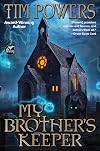
Oh yes, Tim Powers pulled it off
Does the premise sound ridiculous to you? Rewriting the lives of the Brontës to include dark magic? Tim Powers is the only writer I know of that I would trust to tackle this, and he does it brilliantly.
”Sometimes the wind that shook the parsonage windows seemed to carry the strains of a wild, remote music – repetitive and atonal, as if older than humanity’s ordered keys and scales…”
This book is written with so much love for the Brontës and their show more universe. It is dark, gothic, and alive. The characters and the setting are almost leaping off the pages. While reading, I believed in everything, I accepted everything, without the need to suspend disbelief. That’s quite an achievement, this alone deserves all the stars. The atmosphere of Brontës’ novels is wonderfully done, with an allusion here, another there.
One day Emily Brontë is walking on the moors with her dog, Keeper (such a good dog). She finds a wounded man, a stranger. He will accept no help. Thus a story of mystery, supernatural evil, and human weakness just as evil, begins. It will be scary. There will be little sunshine. If I were to describe the details, it will seem outrageous. To me, it was seamless. I couldn’t put the book down, I inhaled it.
I strongly suspect that the author is Team Emily Brontë all the way, and this book exists so that we can watch Emily being very much alive, brave, awesome, see her fly.
”I’m not frail.”
”I’ve got to be the judge of my capabilities, and they’re more than you suppose. He can’t get far in the time it will take me to load my pistol.”
I enjoyed this immensely. show less
Does the premise sound ridiculous to you? Rewriting the lives of the Brontës to include dark magic? Tim Powers is the only writer I know of that I would trust to tackle this, and he does it brilliantly.
”Sometimes the wind that shook the parsonage windows seemed to carry the strains of a wild, remote music – repetitive and atonal, as if older than humanity’s ordered keys and scales…”
This book is written with so much love for the Brontës and their show more universe. It is dark, gothic, and alive. The characters and the setting are almost leaping off the pages. While reading, I believed in everything, I accepted everything, without the need to suspend disbelief. That’s quite an achievement, this alone deserves all the stars. The atmosphere of Brontës’ novels is wonderfully done, with an allusion here, another there.
One day Emily Brontë is walking on the moors with her dog, Keeper (such a good dog). She finds a wounded man, a stranger. He will accept no help. Thus a story of mystery, supernatural evil, and human weakness just as evil, begins. It will be scary. There will be little sunshine. If I were to describe the details, it will seem outrageous. To me, it was seamless. I couldn’t put the book down, I inhaled it.
I strongly suspect that the author is Team Emily Brontë all the way, and this book exists so that we can watch Emily being very much alive, brave, awesome, see her fly.
”I’m not frail.”
”I’ve got to be the judge of my capabilities, and they’re more than you suppose. He can’t get far in the time it will take me to load my pistol.”
I enjoyed this immensely. show less
Lists
Best Spy Fiction (1)
To Read (1)
Magic Realism (4)
Read These Too (2)
Gaslamp Fantasy (2)
Unread books (1)
Favourite Books (1)
Awards


You May Also Like


Associated Authors
Statistics
- Works
- 76
- Also by
- 37
- Members
- 20,947
- Popularity
- #1,033
- Rating
- 3.8
- Reviews
- 592
- ISBNs
- 402
- Languages
- 14
- Favorited
- 132


