
James P. Blaylock
Author of The Last Coin
About the Author
Image credit: PowerofBabel
Series
Works by James P. Blaylock
Thirteen Phantasms [short fiction] 7 copies
His Own Back Yard 5 copies
Hula Ville [short story] 2 copies
Lord Kelvin’s Machine [short story] 2 copies
Mexican Food: An Afterword 2 copies
In For A Penny [short story] 2 copies
The Other Side 2 copies
Small Houses 2 copies
The War Of The Worlds 2 copies
Smithfield [short story] 1 copy
Hans Clinker 1 copy
Stone Eggs 1 copy
Unidentified Objects 1 copy
The Pink of Fading Neon 1 copy
Associated Works
The Year's Best Science Fiction: Fourteenth Annual Collection (1997) — Contributor — 447 copies, 2 reviews
Queen Victoria's Book of Spells: An Anthology of Gaslamp Fantasy (2013) — Contributor — 399 copies, 18 reviews
The Year's Best Fantasy and Horror: Fifteenth Annual Collection (2002) — Contributor — 275 copies, 4 reviews
The Year's Best Science Fiction: Third Annual Collection (1986) — Contributor — 250 copies, 1 review
The Year's Best Fantasy and Horror: Third Annual Collection (1988) — Contributor — 193 copies, 2 reviews
The Prentice Hall Anthology of Science Fiction and Fantasy (2000) — Contributor — 100 copies, 2 reviews
Night Moves and Other Stories (2001) — co-author of some stories; Introduction — 91 copies, 2 reviews
Steampunk: An Illustrated History of Fantastical Fiction, Fanciful Film and Other Victorian Visions (2012) — Foreword — 86 copies
Do Androids Dream of Electric Sheep Omnibus (2015) — Contributor, some editions — 81 copies, 1 review
Nebula Awards 21: Sfwa's Choices for the Best Science Fiction and Fantasy, 1985 (Nebula Awards Showcase) (1986) — Contributor — 44 copies, 2 reviews
Tagged
Common Knowledge
- Legal name
- Blaylock, James Paul
- Other names
- Black, Robert (pseudonym)
Blaylock, James
Hastings, William (pseudonym)
Ashbless, William (pseudonym)
Blaylock, Paul
Blaylock, Jim - Birthdate
- 1950-09-20
- Gender
- male
- Education
- California State University, Fullerton
- Occupations
- fantasy writer
- Organizations
- Chapman University
Orange County High School of the Arts - Agent
- John Berlyne (Zeno Agency)
- Relationships
- Powers, Tim (friend)
Dick, Philip K. (friend) - Nationality
- USA
- Birthplace
- Long Beach, California, USA
- Places of residence
- Orange, California, USA
- Associated Place (for map)
- California, USA
Members
Reviews

A cheese-maker sails down the river to trade his wares and inadvertently finds himself in the middle of an adventure involving a sinister dwarf and a magic watch.
The Elfin Ship deals with three men on a boat (to say nothing of the dog) going on a reluctant quest in which good food and creature comforts are elaborately described, all written in the folksy style of the 19th-century American West. Which is to say that the book reads like a mélange of Jerome K. Jerome, J. R. R. Tolkien (circa show more The Hobbit), and Mark Twain (with perhaps a dash of Jules Verne's steampunkisms thrown into the mix). The book begins with an epigram from The Wind in the Willows, but I would argue that Kenneth Grahame's influence is largely absent from this novel. While both books share a focus on homey comforts, boating trips, and unheroic decency, Grahame's book has a degree of pathos and human frailty that is absent from The Elfin Ship, which is merely sweet and comforting and forgettable. show less
The Elfin Ship deals with three men on a boat (to say nothing of the dog) going on a reluctant quest in which good food and creature comforts are elaborately described, all written in the folksy style of the 19th-century American West. Which is to say that the book reads like a mélange of Jerome K. Jerome, J. R. R. Tolkien (circa show more The Hobbit), and Mark Twain (with perhaps a dash of Jules Verne's steampunkisms thrown into the mix). The book begins with an epigram from The Wind in the Willows, but I would argue that Kenneth Grahame's influence is largely absent from this novel. While both books share a focus on homey comforts, boating trips, and unheroic decency, Grahame's book has a degree of pathos and human frailty that is absent from The Elfin Ship, which is merely sweet and comforting and forgettable. show less
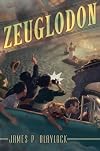
A lively, endearing novel, set in Blaylock's version of California from The Digging Leviathan and revolving around the many peculiar abilities and affinities of the quasi-mermaid Peach clan. Eleven year old Kathleen Perkins, or just Perkins, trainee cryptozoologist, lives with her uncle and her cousins on the remote Californian coast. Mysterious strangers with ill intent threaten their happy state: a woman intent on taking them back to their Aunt and a man intent on stealing papers and maps show more from their uncle's museum. Soon they are of on a hairy and scary and wild adventure that will take them to an ice island on the foggy Grand Banks and the mysterious mansion of the Peach family on the shores of Lake Windermere.
Written as for a mid-range or Young Adult audience, Blaylock's world proves ideal for excitable and imaginative young minds. Perkins is a perceptive, intelligent, honest-to-a-fault narrator, and her odd and infuriating cousins are a great par of companions. show less
Written as for a mid-range or Young Adult audience, Blaylock's world proves ideal for excitable and imaginative young minds. Perkins is a perceptive, intelligent, honest-to-a-fault narrator, and her odd and infuriating cousins are a great par of companions. show less

A love letter to a beloved time and place and milieu - a bunch of eccentrics tooling around Northern California in the 1960s dreaming of travelling to the centre of the Earth. Two rival projects - a bathysphere and a digging machine, but it soon becomes apparent that neither is going anywhere without young Gil Peach with his gills and his webbed fingers and his extraordinary gift for creating impossible inventions out of junk - anti-matter, anti-gravity, perpetual motion. Seduced away by the show more vainglorious scientist and the sinister psychologist, can his friends and family find him and win him back and win the race? There's a distinct possibility the world will explode if they don't.
This is a lot of fun. It's a smart, inventive, heartwarming, occasionally terrifying tale of the adventure that happens before the other adventure begins. show less
This is a lot of fun. It's a smart, inventive, heartwarming, occasionally terrifying tale of the adventure that happens before the other adventure begins. show less

My reactions to reading this novel in 2002. Spoilers follow.
I liked this sequel to Blaylock's Homunculus better than that novel. (The Lord Kelvin of the title is, in fact, the famous physicist Lord Kelvin who makes an appearance as a character.)
Villains Ignacio Narbondo and Willis Pule are back from the first novel. Pule is now insane and forms a grotesque pair with his mother. The novel has an interesting structure and gets better as it goes along.
The opening chapter sets up Langdon St. show more Ives' obsession with avenging himself on Narbondo for the death of St. Ives' wife and his quest to resurrect her via time travel. (The Holmesian flavor of this novel is even stronger than the one in Homunculus. Narbondo is sort of a Moriarty figure to St. Ives and Parsons, the rather stuffy, socially connected member of the Royal Academy of Sciences who always keeps St. Ives out of it, comes off rather like Holmes' Scotland Yard rival, LeStrande.) The opening third of the book involves St. Ives foiling a blackmail plot by Narbondo to pull a comet into the Earth via a powerful supermagnet. Blaylock provides an interesting story of how Narbondo is tracked down and how he ends up supposedly drowned in a frigid Nowegian lake. However, Blaylock never really explains why the opening chapter of Part I necessitates St. Ives being in Peru and how Narbondo's earthquake generating scheme worked. The story follows St. Ives and ever competent servant Hasbro.
However, the novel's story and humor really picks up with Part II which is narrated by a minor character from Homunculus, Jack Owlesby. Jack's a pretty normal guy who chides himself for his fondness for good food and drink and naps and his wife and knows he's not particulary courageous. However, he's compotent and courageous enough to foil a renegade icthylogist and his dangerous sidekick from Wyoming in their scheme to use the stolen supermagnet to down metal-bottomed ships and extort money from the Crown. He also has a run in with the weird Pules.
The third book is Blaylock's witty takes on time travel rather reminiscent, in the changed memory of time traveler St. Ives, of William Tenn's "The Brooklyn Project". As in Homunculus, St. Ives can't bring himself to cold-bloodedly kill Narbondo even though the later killed St. Ives' wife. So, he goes back in time to, first, kill the infant Narbondo and then try to change his personality by giving him antibiotics (obtained from a twentieth century Fleming) to prevent his hunchback deformity and deformed personality. The obsessed St. Ives wears himself pretty thin trying to bring his wife back. Eventually, he does, and he feels his memory of the old timetrack with his dead wife fade away. I liked how St. Ives, after wearing himself out physically and mentally to affect the past, steps aside after preventing the death of his beloved Alice and realizes she deserves the younger, more vital version of himself. At novel's end, the old timetracks have faded, and we see St. Ives enjoying domesticity with his wife and a child. I think the plot, finale, and humor of this novel worked better with the time travel plot more interesting than the reanimation plot of Homunculus. show less
I liked this sequel to Blaylock's Homunculus better than that novel. (The Lord Kelvin of the title is, in fact, the famous physicist Lord Kelvin who makes an appearance as a character.)
Villains Ignacio Narbondo and Willis Pule are back from the first novel. Pule is now insane and forms a grotesque pair with his mother. The novel has an interesting structure and gets better as it goes along.
The opening chapter sets up Langdon St. show more Ives' obsession with avenging himself on Narbondo for the death of St. Ives' wife and his quest to resurrect her via time travel. (The Holmesian flavor of this novel is even stronger than the one in Homunculus. Narbondo is sort of a Moriarty figure to St. Ives and Parsons, the rather stuffy, socially connected member of the Royal Academy of Sciences who always keeps St. Ives out of it, comes off rather like Holmes' Scotland Yard rival, LeStrande.) The opening third of the book involves St. Ives foiling a blackmail plot by Narbondo to pull a comet into the Earth via a powerful supermagnet. Blaylock provides an interesting story of how Narbondo is tracked down and how he ends up supposedly drowned in a frigid Nowegian lake. However, Blaylock never really explains why the opening chapter of Part I necessitates St. Ives being in Peru and how Narbondo's earthquake generating scheme worked. The story follows St. Ives and ever competent servant Hasbro.
However, the novel's story and humor really picks up with Part II which is narrated by a minor character from Homunculus, Jack Owlesby. Jack's a pretty normal guy who chides himself for his fondness for good food and drink and naps and his wife and knows he's not particulary courageous. However, he's compotent and courageous enough to foil a renegade icthylogist and his dangerous sidekick from Wyoming in their scheme to use the stolen supermagnet to down metal-bottomed ships and extort money from the Crown. He also has a run in with the weird Pules.
The third book is Blaylock's witty takes on time travel rather reminiscent, in the changed memory of time traveler St. Ives, of William Tenn's "The Brooklyn Project". As in Homunculus, St. Ives can't bring himself to cold-bloodedly kill Narbondo even though the later killed St. Ives' wife. So, he goes back in time to, first, kill the infant Narbondo and then try to change his personality by giving him antibiotics (obtained from a twentieth century Fleming) to prevent his hunchback deformity and deformed personality. The obsessed St. Ives wears himself pretty thin trying to bring his wife back. Eventually, he does, and he feels his memory of the old timetrack with his dead wife fade away. I liked how St. Ives, after wearing himself out physically and mentally to affect the past, steps aside after preventing the death of his beloved Alice and realizes she deserves the younger, more vital version of himself. At novel's end, the old timetracks have faded, and we see St. Ives enjoying domesticity with his wife and a child. I think the plot, finale, and humor of this novel worked better with the time travel plot more interesting than the reanimation plot of Homunculus. show less
Lists
Awards


You May Also Like


Associated Authors
Statistics
- Works
- 67
- Also by
- 34
- Members
- 6,031
- Popularity
- #4,079
- Rating
- 3.7
- Reviews
- 115
- ISBNs
- 173
- Languages
- 8
- Favorited
- 31