
Gene Wolfe (1931–2019)
Author of Shadow & Claw: The First Half of The Book of the New Sun
About the Author
Gene Wolfe was born in New York City on May 7, 1931. He dropped out of Texas A&M University during his junior year and was drafted into the Army to fight in the Korean War. After the war, he received a degree in mechanical engineering from the University of Houston. He worked as an industrial show more engineer for Procter and Gamble, where he developed the machine that cooks the dough used to make Pringles potato chips. He was an editor of the trade journal Plant Engineering from 1972 to 1984 before retiring to become a full-time writer. He wrote more than 30 books during his lifetime including The Fifth Head of Cerberus, Peace, The Book of the New Sun, and The Land Across. He received the Campbell Memorial Award, the Edward E. Smith Memorial Award, the Locus Award four times, and the Nebula Award and the World Fantasy Award two times each. In 1996, he was given the World Fantasy Award for Lifetime Achievement. He was inducted into the Science Fiction Hall of Fame in 2007 and was named a Grand Master by the Science Fiction and Fantasy Writers of America in 2012. He died after a long battle with heart disease on April 14, 2019 at the age of 87. (Bowker Author Biography) show less
Series
Works by Gene Wolfe
Litany of the Long Sun: Nightside the Long Sun and Lake of the Long Sun (1993) 997 copies, 10 reviews
Epiphany of the Long Sun: Caldé of the Long Sun and Exodus from the Long Sun (1994) 730 copies, 8 reviews
A Cabin on the Coast 12 copies
The Cat 7 copies
The Detective of Dreams 7 copies
The Map 6 copies
The Arimaspian Legacy 6 copies
The Horars Of War 5 copies
Lord of the Land [short fiction] 5 copies
Sob in the Silence 5 copies
Pulp Cover 5 copies
Straw [short story] 5 copies
Procreation 5 copies
Hunter Lake 5 copies
Castaway [short story] 5 copies
Petting Zoo {short story} 5 copies
The Magic Animal 4 copies
In the House of Gingerbread 4 copies
The Lost Pilgrim 4 copies
The Nebraskan and the Nereid 4 copies
shields of mars 4 copies
Golden City Far 4 copies
Queen 4 copies
Silhouette 4 copies
The Little Stranger 4 copies
Talk of Mandrakes 4 copies
Graylord Man's Last Words 4 copies
Viewpoint 4 copies
Has Anybody Seen Junie Moon? 4 copies
Mary Beatrice Smoot Friarly, SPV 3 copies
Mute 3 copies
Of Soil and Climate [short story] 3 copies
From the Cradle 3 copies
In Glory Like Their Star 3 copies
The Legend Of Xi Cygnus 3 copies
Copperhead 3 copies
The Vampire Kiss 3 copies
Kevin Malone 3 copies
Mathoms From The Time Closet 3 copies
Suzanne Delage 3 copies
To The Dark Tower Came 3 copies
The Headless Man 3 copies
Lukora 3 copies
Our Neighbour by David Copperfield 3 copies
The Other Dead Man 3 copies
At the Point of Capricorn 3 copies
The Tree Is My Hat 3 copies
A Fish Story 3 copies
Rattler 3 copies
Under Hill 3 copies
Bea and Her Bird Brother 3 copies
Donovan Sent Us 3 copies
Sonya, Crane Wessleman and Kittee 2 copies
The Death Of Hyle 2 copies
The Dark Of The June 2 copies
The Recording 2 copies
From The Notebook Of Dr. Stein 2 copies
Calamity Warps [short story] 2 copies
Slow Children at Play 2 copies
The Fat Magician [short story] 2 copies
Black Shoes [short story] 2 copies
The Dog of the Drops [short story] 2 copies
Try and Kill It [novelette] 2 copies
The Friendship Light 2 copies
A Criminal Proceeding {short story} 2 copies
Gene Wolfe's The Shadow of the Torturer (Volume One of the Book of the New Sun) Number 2 (1991) 2 copies
The Waif 2 copies
The Gunner's Mate 2 copies
The Walking Sticks 2 copies
Thag 2 copies
King Rat 2 copies
The Rubber Bend 2 copies
Morning-Glory {short story} 2 copies
Loco Parentis 2 copies
My Book 2 copies
Build-a-Bear 2 copies
Sweet Forest Maid 2 copies
The Old Woman In the Young Woman 2 copies
The Night Chough 2 copies
The Peace Spy 2 copies
Peritonitis 2 copies
The God And His Man 2 copies
When I Was Ming The Merciless 2 copies
House Of Ancestors 2 copies
Robot's Story 2 copies
The Last Thrilling Wonder Story 2 copies
A Espada do Lictor Livro 1 1 copy
House Fires 1 copy
Frostfree {short story} 1 copy
Śmierć doktora wyspy 1 copy
From Knight 1 copy
The Shadow Of The Torurer 1 copy
Siedem amerykańskich nocy 1 copy
Pieśń łowców 1 copy
Unrequited Love 1 copy
Date Due {short story} 1 copy
Houston, 1943 {short story} 1 copy
The Monday Man {short story} 1 copy
John K. Price 1 copy
Easter Sunday 1 copy
The Hour Of The Sheep 1 copy
Josh 1 copy
Why I Was Hanged 1 copy
Procreation I Creation 1 copy
Procreation II Re-creation 1 copy
Innocent 1 copy
Remembrance To Come 1 copy
How I Got Three Zip Codes 1 copy
The Card 1 copy
Constipating Science Fiction 1 copy
Wolfer {short story} 1 copy
The Wrapper {short story} 1 copy
Cherry Jubilee {short story} 1 copy
On the Train {short story} 1 copy
Last Day {short story} 1 copy
Checking Out {short story} 1 copy
Redbeard {short story} 1 copy
Alphabet {short story} 1 copy
The Flag {short story} 1 copy
Westwind {short story} 1 copy
Beech Hill {short story} 1 copy
Associated Works
Wizards: Magical Tales From the Masters of Modern Fantasy (2007) — Contributor — 850 copies, 25 reviews
Love in Vein: Twenty Original Tales of Vampiric Erotica (1994) — Contributor — 820 copies, 7 reviews
The Year's Best Science Fiction: Twenty-Third Annual Collection (2006) — Contributor — 569 copies, 5 reviews
The Big Book of Science Fiction: The Ultimate Collection (2016) — Contributor — 521 copies, 8 reviews
The Year's Best Science Fiction: Fourteenth Annual Collection (1997) — Contributor — 447 copies, 2 reviews
The Best of the Best: 20 Years of the Year's Best Science Fiction (2005) — Contributor — 438 copies, 20 reviews
The Norton Book of Science Fiction: North American Science Fiction, 1960-1990 (1993) — Contributor — 346 copies, 6 reviews
American Fantastic Tales : Terror and the Uncanny from the 1940's to Now (2009) — Contributor — 299 copies, 5 reviews
The Locus Awards: Thirty Years of the Best in Science Fiction and Fantasy (2004) — Contributor — 291 copies, 11 reviews
The Year's Best Fantasy and Horror: Fifteenth Annual Collection (2002) — Contributor — 275 copies, 4 reviews
The Year's Best Fantasy & Horror 2007: 20th Annual Collection (2007) — Contributor — 222 copies, 3 reviews
Ghosts by Gaslight: Stories of Steampunk and Supernatural Suspense (2011) — Contributor — 221 copies, 8 reviews
The Year's Best Fantasy and Horror: Sixth Annual Collection (1993) — Contributor — 219 copies, 1 review
The Best Science Fiction and Fantasy of the Year, Volume 1 (2007) — Contributor — 217 copies, 6 reviews
The Year's Best Fantasy and Horror: Second Annual Collection (1987) — Contributor — 207 copies, 1 review
The Year's Best Science Fiction: First Annual Collection (1984) — Contributor — 148 copies, 1 review
The Science Fiction Hall of Fame, Volume Four: Nebula Winners 1970-1974 (1986) — Contributor — 133 copies, 1 review
The Best From Fantasy and Science Fiction: The Fiftieth Anniversary Anthology (1999) — Contributor — 128 copies, 3 reviews
Dogs of War: Ten Classic Stories of Men and Machines in War (2002) — Contributor — 116 copies, 1 review
Gateways: A Feast of Great New Science Fiction Honoring Grand Master Frederik Pohl (2010) — Contributor — 113 copies, 2 reviews
The Very Best of Fantasy & Science Fiction, Volume 2 (2014) — Contributor, some editions — 113 copies, 7 reviews
Nebula Awards Showcase 2002: The Year's Best SF and Fantasy (2002) — Commentary — 95 copies, 1 review
Best Science Fiction Stories of the Year Eighth Annual Collection (1979) — Contributor — 66 copies, 2 reviews
Nebula Awards 24: SFWA's Choices for the Best Science Fiction and Fantasy 1988 (1990) — Contributor — 61 copies
Graven Images: Fifteen Tales of Dark Magic and Ancient Myth (2000) — Contributor — 57 copies, 1 review
Speculations : 17 Stories Written Especially for This Volume By Well-Known Science Fiction Authors, But Their Names are Concealed By a Code and It's Up to You to Figure Out Who… (1982) — Contributor — 53 copies, 1 review
Take My Advice: Letters to the Next Generation from People Who Know a Thing or Two (2002) — Contributor — 50 copies
Light Years and Dark: Science Fiction and Fantasy of and for Our Time (1984) — Contributor — 37 copies
The Wizard Knight Companion: A Lexicon for Gene Wolfe's The Knight and The Wizard (2009) — Foreword, some editions — 33 copies, 2 reviews
Last Drink Bird Head : A Flash Fiction Anthology for Charity (2009) — Contributor — 33 copies, 1 review
A Cross of Centuries: Twenty-five Imaginative Tales About the Christ (2007) — Contributor — 33 copies, 2 reviews
Nebula Awards 20: SFWA's Choices for the Best Science Fiction and Fantasy 1984 (1985) — Contributor — 28 copies
The Best from Fantasy and Science Fiction: A 45th Anniversary Anthology (1994) — Contributor — 21 copies
The Magazine of Fantasy and Science Fiction October 1981, Vol. 61, No. 4 (1981) — Contributor — 19 copies
The Magazine of Fantasy and Science Fiction October/November 1996, Vol. 91, No. 4 & 5 (1996) — Contributor — 18 copies, 1 review
The Magazine of Fantasy and Science Fiction April 2007, Vol. 112, No. 4 (2007) — Contributor — 17 copies
The Magazine of Fantasy and Science Fiction June 1985, Vol. 68, No. 6 (1985) — Contributor — 14 copies
Asimov's Science Fiction: Vol. 20, No. 10 & 11 [October/November 1996] (1996) — Contributor — 14 copies
Isaac Asimov's Science Fiction Magazine: Vol. 13, No. 12 [December 1989] (1989) — Author — 14 copies
Isaac Asimov's Science Fiction Magazine: Vol. 9, No. 12 [December 1985] (1985) — Contributor — 13 copies
The Magazine of Fantasy and Science Fiction October/November 2004, Vol. 107, Nos. 4 & 5 (2004) — Author — 13 copies
The Magazine of Fantasy and Science Fiction April 1983, Vol. 64, No. 4 (1983) — Contributor — 12 copies
The Magazine of Fantasy and Science Fiction June 1983, Vol. 64, No. 6 (1983) — Contributor — 11 copies
The Magazine of Fantasy and Science Fiction October 1989, Vol. 77, No. 4 (1989) — Author — 11 copies
Worlds of If Science Fiction 153, March/April 1971 (Vol. 20, No. 10) (1971) — Contributor — 9 copies
Magazine of Fantasy and Science Fiction 66. Im fünften Jahr der Reise. Eine Auswahl der besten Erzählungen. (1983) — Contributor, some editions — 9 copies
The far side of time, thirteen original stories;: A science fiction anthology (1974) — Contributor — 6 copies
Best of the Rest 4: The Best Unknown Science Fiction & Fantasy of 2005 — Contributor — 6 copies
The Profession of Science Fiction: SF Writers on Their Craft and Ideas (1992) — Contributor — 6 copies
Millemondi Primavera 2001: Nuove avventure nell'ignoto — Contributor — 2 copies
Tagged
Common Knowledge
- Canonical name
- Wolfe, Gene
- Legal name
- Wolfe, Gene Rodman
- Birthdate
- 1931-05-07
- Date of death
- 2019-04-14
- Gender
- male
- Education
- University of Houston (BS|1956)
Texas A&M University - Occupations
- mechanical engineer
editor
novelist
short story writer
soldier - Organizations
- Science Fiction and Fantasy Writers of America
Catholic Church
Plant Engineering, Editor
Proctor & Gamble, Engineer
United States Army - Awards and honors
- Edward E. Smith Memorial Award (1989)
World Fantasy Award (Life Achievement, 1996)
Science Fiction Hall Of Fame (2007)
Chicago Literary Hall of Fame (2019)
SFWA Damon Knight Memorial Grand Master Award (2012)
SFWA Grand Master (2013) (show all 8)
Rhysling Award (1978)
Chicago Literary Hall of Fame Fuller Award (2012) - Relationships
- Wolfe, Rosemary (spouse)
- Short biography
- Fought in Korean War. Formerly an industrial engineer, he was on the design team that developed the manufacturing process for the Pringle potato chip - his responsibility was the machine that cooks them. Also editor of the engineering trade journal Plant Engineering.
- Cause of death
- cardiovascular disease
- Nationality
- USA
- Birthplace
- New York, New York, USA
- Places of residence
- Barrington, Illinois, USA
Peoria, Illinois, USA - Place of death
- Peoria, Illinois, USA
- Map Location
- New York, USA
Members
Discussions
2nd edn Finalist discussion: Gene Wolfe's Fifth Head of Cerberus in Consensus Press (November 2025)
Gene Wolfe - The Book of The New Sun in Folio Society Devotees (September 2022)
Gene Wolfe - 1931-2019 in Science Fiction Fans (April 2019)
Looking for Centipede Press Shadow of the Torturer in Fine Press Forum (December 2018)
The plan of Pas in Science Fiction Fans (May 2014)
The Shadow of the Torturer in The Weird Tradition (December 2012)
The Book of the New Sun - Final Thoughts in Group Reads - Sci-Fi (October 2008)
The Book of the New Sun Vol 4- The Citadel of the Autarch in Group Reads - Sci-Fi (October 2008)
The Book of the New Sun Vol 3 - The Sword of the Lictor in Group Reads - Sci-Fi (September 2008)
The Book of the New Sun Vol 2 - The Claw of the Conciliator in Group Reads - Sci-Fi (September 2008)
The Book of the New Sun Vol 1 - The Shadow of the Torturer in Group Reads - Sci-Fi (September 2008)
Reviews
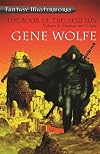
(Review for both volumes)
A masterpiece of an anachronistic future, Wolfe's seminal work combines so many elements of philosophical musings, epic storytelling styles, unfocused wanderings of prose, literary and mythological references and high concept science fiction, that I doubt I could do justice to it - nor could perhaps anyone.
I can't say 'Severian' was a character I enjoyed following at all times (his many love arcs along with other things that happen, are not for modern sensibilities) show more and his conflicting musings and conversations often gave a contradictory layer to the story which served (deliberately I am sure) only to obfuscate things it had already seemed to clear up. His development was interesting though, with a unique twist I wont spoil here and who he is at the end versus how he started is such steady and subtle development you rarely see in literature. His supporting cast - whether human, sword (damn I loved Terminus Est as a weapon) or "other" - are the ones that provide the true emotion and tragedy to the story and there are some I admit attachments to and sadness at their own story's terminus.
I loved the style of breaking it into informal Acts and set pieces and he keeps the same structure through all four books. I loved the references to other literary works (H G Wells' Morlocks in volume one for example). I loved the anachronisms of the antique fantasy settings and the archaic nomenclature against the backdrop of a farflung future - especially given the information we are provided with by the end, some of which is mind blowing. I especially enjoyed his stories within stories - of which there are many throughout both volumes. Whilst some have analogous links to the narrative, others feel like a cheeky wink to critics of his style - especially after what happens after a particular sequence of three.
Not everything is concluded or explained acceptably for my mind, but I feel the true takeaway from the book is going to be individual for the reader, especially given so much imagery is open to interpretation and the formation of my own theories I have attributed to certain things seem to differ with others (I have yet to order all my thoughts fully on it and probably wont at least until I read it again someday). There will be people who will break down and analyse every chapter and sentence or hang on the beautiful prose that occasions some sections of the story. Fine I guess, but I'm not really a big proponent of that, although I acknowledge the craftmanship in the writing is exemplary. There is also a lot made of Severian as unreliable and a liar. I acknowledge the former, but the latter should be regarded as less clear cut. He doesn't always give the full truth at each point, but he controls it until it's time to reveal details that were missing.
Is it the greatest literary epic since Lord of the Rings? Maybe, I'm not sure. But there are breathtaking bits that as are noteworthy for the surreal mundanity in which they are conveyed as much as their concept. It will reward the patient reader, but there's a lot to take in and points seemingly meaningless and forgotten early on are referred to later - so it is wise to read the entire 1200 odd pages without too much of a gap.
It deserves its masterpiece status, but it's not always a good book. Make of that what you will. show less
A masterpiece of an anachronistic future, Wolfe's seminal work combines so many elements of philosophical musings, epic storytelling styles, unfocused wanderings of prose, literary and mythological references and high concept science fiction, that I doubt I could do justice to it - nor could perhaps anyone.
I can't say 'Severian' was a character I enjoyed following at all times (his many love arcs along with other things that happen, are not for modern sensibilities) show more and his conflicting musings and conversations often gave a contradictory layer to the story which served (deliberately I am sure) only to obfuscate things it had already seemed to clear up. His development was interesting though, with a unique twist I wont spoil here and who he is at the end versus how he started is such steady and subtle development you rarely see in literature. His supporting cast - whether human, sword (damn I loved Terminus Est as a weapon) or "other" - are the ones that provide the true emotion and tragedy to the story and there are some I admit attachments to and sadness at their own story's terminus.
I loved the style of breaking it into informal Acts and set pieces and he keeps the same structure through all four books. I loved the references to other literary works (H G Wells' Morlocks in volume one for example). I loved the anachronisms of the antique fantasy settings and the archaic nomenclature against the backdrop of a farflung future - especially given the information we are provided with by the end, some of which is mind blowing. I especially enjoyed his stories within stories - of which there are many throughout both volumes. Whilst some have analogous links to the narrative, others feel like a cheeky wink to critics of his style - especially after what happens after a particular sequence of three.
Not everything is concluded or explained acceptably for my mind, but I feel the true takeaway from the book is going to be individual for the reader, especially given so much imagery is open to interpretation and the formation of my own theories I have attributed to certain things seem to differ with others (I have yet to order all my thoughts fully on it and probably wont at least until I read it again someday). There will be people who will break down and analyse every chapter and sentence or hang on the beautiful prose that occasions some sections of the story. Fine I guess, but I'm not really a big proponent of that, although I acknowledge the craftmanship in the writing is exemplary. There is also a lot made of Severian as unreliable and a liar. I acknowledge the former, but the latter should be regarded as less clear cut. He doesn't always give the full truth at each point, but he controls it until it's time to reveal details that were missing.
Is it the greatest literary epic since Lord of the Rings? Maybe, I'm not sure. But there are breathtaking bits that as are noteworthy for the surreal mundanity in which they are conveyed as much as their concept. It will reward the patient reader, but there's a lot to take in and points seemingly meaningless and forgotten early on are referred to later - so it is wise to read the entire 1200 odd pages without too much of a gap.
It deserves its masterpiece status, but it's not always a good book. Make of that what you will. show less

In what was touted as the closing volume of Wolfe's The Book of the New Sun, the by now former torturer Severian has survived the fight at the castle of Baldanders, met aliens, had his great executioner's sword Terminus Est shattered, and the mystical gem, the Claw of the Conciliator, likewise broken into a million pieces, leaving Severian with an actual claw, which may or may not retain healing properties.
Now he journeys north to the war between the Ascians and the forces of the Autarch. He show more falls in with various soldiers of both sides; and eventually with the Autarch himself, who reveals that Severian has had a destiny all along...
Read on one level, this is a coming-of-age novel; at one point, Severian returns to the Citadel of the Torturers in Nessus, and his Guild classmates are still there; and we realise that for all his life-changing adventures, Severian is still a young man, though he has acquired more maturity than his contemporaries. But the story is not only about Severian; we see more of the world of Urth and the deep future it represents for us. We also begin to understand the nature of the catastrophe that is overcoming the Sun, and we hear for the first time about the White Fountain that might bring about the New Sun that has been in the background of everyone's thoughts throughout all four books.
So many of Severian's strands are brought to an end here; Dorcas, Vodalus, Dr.Talos and Agia all make their final appearances. Other mysteries remain unresolved - for instance, were Severian's healing powers a consequence of his possession of the Claw, or something he possessed subconsciously all the time? Wolfe's wordplay provides us with clues.
This whole sequence of books provides rich pickings for those who like to concentrate on details; others will revel in the whole rich tapestry of time spread out for us to reflect upon. Our entire span of recorded history so far is just a blink of an eye compared to the ages that have passed between our time and Severian's; we should not expect every aspect of life on Urth to be immediately clear to us.
Although this book is the end of The Book of the New Sun, Wolfe then continued with a coda novel, The Urth of the New Sun, as well as two further series set in the same universe. There is still much to explore here. show less
Now he journeys north to the war between the Ascians and the forces of the Autarch. He show more falls in with various soldiers of both sides; and eventually with the Autarch himself, who reveals that Severian has had a destiny all along...
Read on one level, this is a coming-of-age novel; at one point, Severian returns to the Citadel of the Torturers in Nessus, and his Guild classmates are still there; and we realise that for all his life-changing adventures, Severian is still a young man, though he has acquired more maturity than his contemporaries. But the story is not only about Severian; we see more of the world of Urth and the deep future it represents for us. We also begin to understand the nature of the catastrophe that is overcoming the Sun, and we hear for the first time about the White Fountain that might bring about the New Sun that has been in the background of everyone's thoughts throughout all four books.
So many of Severian's strands are brought to an end here; Dorcas, Vodalus, Dr.Talos and Agia all make their final appearances. Other mysteries remain unresolved - for instance, were Severian's healing powers a consequence of his possession of the Claw, or something he possessed subconsciously all the time? Wolfe's wordplay provides us with clues.
This whole sequence of books provides rich pickings for those who like to concentrate on details; others will revel in the whole rich tapestry of time spread out for us to reflect upon. Our entire span of recorded history so far is just a blink of an eye compared to the ages that have passed between our time and Severian's; we should not expect every aspect of life on Urth to be immediately clear to us.
Although this book is the end of The Book of the New Sun, Wolfe then continued with a coda novel, The Urth of the New Sun, as well as two further series set in the same universe. There is still much to explore here. show less
Peace by Gene Wolfe
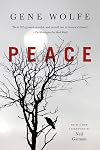
Peace is a difficult book for me to categorize. Wolfe is mostly famous for writing science-fiction and fantasy but this book is really neither of those things. Well... perhaps it's a modern fantasy, of sorts... 'Pastoral Horror' is about the nearest term I can think of.
In Wolfe's first full-length novel we are told a series of stories, most of them frustratingly incomplete, by an aging first-person narrator. There are ghost stories, tragedies, treasure hunts, forged books, romantic show more entanglements, strange surroundings, even stranger events, meta-physics, a sort of time-travel... All in all, there are a lot of weird happenings. But none of them are stridently visceral. It's all delivered in a languidly matter-of-fact tone that soon imparts to the reader that there is much, much more to these stories than the person doing the telling is letting on.
Now, I love me some first-person story-telling because I always expect the narrator to be unreliable. And this one certainly is. Alden Dennis Weer is a strange old guy and the way he reminisces about people, places and events from his past (and present?) soon makes it abundantly clear that there is more here than meets the eye at first glance. And Peace is definitely that rare type of book that will reveal more of itself with each re-read. I almost want to start over from the beginning right away to see what I missed in the early going that might help clarify where we ended up. Which was where again? Ah yes. The ending, (if one can call it that). Frustratingly incomplete and yet... Oh well, there are too many other books clamoring for their fair share at the moment - but I will be tempted to re-read this one sooner rather than later while it's still relatively fresh. Anyway, I pretty much loved this book - even though I am grinding my teeth a bit at the swooshing sound I keep hearing above my head...
A footnote: Gene Wolfe has never been an easy read for me. He places a heavy demand on his audience. When you pick up one of his books, do not expect to be spoon-fed a plot. That doesn't mean there isn't a plot, only that there will be deeper meanings in his stories than you might at first realize. There are always layers of meaning and hidden events in Wolfe's narratives. This book is perhaps his most confounding that I have read to date - although Castleview is comparably dense with meaning. show less
In Wolfe's first full-length novel we are told a series of stories, most of them frustratingly incomplete, by an aging first-person narrator. There are ghost stories, tragedies, treasure hunts, forged books, romantic show more entanglements, strange surroundings, even stranger events, meta-physics, a sort of time-travel... All in all, there are a lot of weird happenings. But none of them are stridently visceral. It's all delivered in a languidly matter-of-fact tone that soon imparts to the reader that there is much, much more to these stories than the person doing the telling is letting on.
Now, I love me some first-person story-telling because I always expect the narrator to be unreliable. And this one certainly is. Alden Dennis Weer is a strange old guy and the way he reminisces about people, places and events from his past (and present?) soon makes it abundantly clear that there is more here than meets the eye at first glance. And Peace is definitely that rare type of book that will reveal more of itself with each re-read. I almost want to start over from the beginning right away to see what I missed in the early going that might help clarify where we ended up. Which was where again? Ah yes. The ending, (if one can call it that). Frustratingly incomplete and yet... Oh well, there are too many other books clamoring for their fair share at the moment - but I will be tempted to re-read this one sooner rather than later while it's still relatively fresh. Anyway, I pretty much loved this book - even though I am grinding my teeth a bit at the swooshing sound I keep hearing above my head...
A footnote: Gene Wolfe has never been an easy read for me. He places a heavy demand on his audience. When you pick up one of his books, do not expect to be spoon-fed a plot. That doesn't mean there isn't a plot, only that there will be deeper meanings in his stories than you might at first realize. There are always layers of meaning and hidden events in Wolfe's narratives. This book is perhaps his most confounding that I have read to date - although Castleview is comparably dense with meaning. show less
Peace by Gene Wolfe
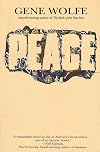
I never expected so much depth. While it is barely Science Fiction, it is most certainly literature of the highest caliber. Like Faulkner, Wolfe constantly cripples the reader's understanding with his obscure perspectives and elegant suggestion. Chronology and irony are never explicit, and characters are always hiding pieces of their personalities. In a way entirely unique to his oeuvre, Wolfe invents layers beneath the surface narratives - stories surrounding an enigmatic core, like show more onion-skin.
After finishing Fifth Head of Cerberus, I was already convinced that he had deliberately designed a multi-dimensional masterpiece. Possibly even more thoroughly with Peace, he manages to make good on his techniques, and to deepen the modus operandi. We are forced to dig to uncover the rippling insinuations of his world.
A second or third reading will likely reveal more puzzles and subtexts to the seemingly innocuous, and tenuously connected stories of fragmented memories, contradictory doctor visits, Midwestern town life, the nearly Victorian tale of a porcelain egg, an homage to the Arabian Nights and the undercurrent of human deception cutting through it all.
Structured like a memoir, Wolfe's style is never forced, and is always confidently stringing the reader along, no matter how thoroughly razzled your flailing body becomes. It is nonetheless a fascinating joyride, an imaginative dream, half-remembered but sprinkled with divine joy and profound sadness. Witness his use of playful fairy tale, and his staggering ability to engross and entertain you. His voices will haunt you, like the ghosts and banshees in his books, because of the uncanny magic of 'what they know.' Wolfe excels at dangling the forbidden fruit of knowledge before the reader. All you are allowed is a taste, but it is enough to realize the breadth of mystery inherent in any imperfect being's conception of the universe. show less
After finishing Fifth Head of Cerberus, I was already convinced that he had deliberately designed a multi-dimensional masterpiece. Possibly even more thoroughly with Peace, he manages to make good on his techniques, and to deepen the modus operandi. We are forced to dig to uncover the rippling insinuations of his world.
A second or third reading will likely reveal more puzzles and subtexts to the seemingly innocuous, and tenuously connected stories of fragmented memories, contradictory doctor visits, Midwestern town life, the nearly Victorian tale of a porcelain egg, an homage to the Arabian Nights and the undercurrent of human deception cutting through it all.
Structured like a memoir, Wolfe's style is never forced, and is always confidently stringing the reader along, no matter how thoroughly razzled your flailing body becomes. It is nonetheless a fascinating joyride, an imaginative dream, half-remembered but sprinkled with divine joy and profound sadness. Witness his use of playful fairy tale, and his staggering ability to engross and entertain you. His voices will haunt you, like the ghosts and banshees in his books, because of the uncanny magic of 'what they know.' Wolfe excels at dangling the forbidden fruit of knowledge before the reader. All you are allowed is a taste, but it is enough to realize the breadth of mystery inherent in any imperfect being's conception of the universe. show less
Lists
um actually (1)
Favourite Books (1)
Girl Detectives (1)
Greatest Books (1)
1980 great books (1)
Read These Too (1)
Literary SF/F (1)
Unread books (1)
Folio Society (1)
Generation Ship (2)
SF Masterworks (3)
Overdue Podcast (2)
Put a Bird On It (2)
Nebula Award (1)
Best Dystopias (1)
Awards


You May Also Like


Associated Authors
Statistics
- Works
- 314
- Also by
- 313
- Members
- 43,671
- Popularity
- #386
- Rating
- 3.9
- Reviews
- 802
- ISBNs
- 517
- Languages
- 18
- Favorited
- 252
