

M. John Harrison
Author of Light
About the Author
Series
Works by M. John Harrison
Viriconium: "The Pastel City", "A Storm of Wings", "In Viriconium", "Viriconium Nights" (1988) 1,280 copies, 26 reviews
Egnaro {story} 3 copies
[Viriconium : Pastel City', 'Storm of Wings', 'in Viriconium', 'Viriconium Nights (Fantasy Masterworks)] [By: Harrison, M.John] [July, 2000] (2000) 2 copies
You Should Come With Me Now 1 copy
The Luck in the Heart 1 copy
The Centauri Device 1 copy
Settling The World 1 copy
Visions of Monad {story} 1 copy
The Flesh Circle {story} 1 copy
The Nash Circuit {story} 1 copy
The Ash Circus {story} 1 copy
Entertaining Angels Unawares 1 copy
ヴィリコニウム パステル都市の物語 1 copy
Associated Works
Prime Evil: New Stories by the Masters of Modern Horror (1988) — Contributor — 679 copies, 8 reviews
The Year's Best Science Fiction: Twenty-Second Annual Collection (2005) — Contributor — 578 copies, 11 reviews
The Year's Best Science Fiction: Seventeenth Annual Collection (2000) — Contributor — 559 copies, 2 reviews
The Year's Best Fantasy and Horror: First Annual Collection (1986) — Contributor — 333 copies, 6 reviews
The Year's Best Fantasy and Horror: Eighth Annual Collection (1995) — Contributor — 329 copies, 6 reviews
The Year's Best Fantasy and Horror: Sixth Annual Collection (1993) — Contributor — 219 copies, 1 review
The Year's Best Fantasy and Horror: Second Annual Collection (1987) — Contributor — 207 copies, 1 review
The Best Science Fiction and Fantasy of the Year, Volume 8 (2014) — Contributor — 116 copies, 6 reviews
The Very Best of Fantasy & Science Fiction, Volume 2 (2014) — Contributor, some editions — 109 copies, 7 reviews
Light Years and Dark: Science Fiction and Fantasy of and for Our Time (1984) — Contributor — 38 copies
Celebration: Commemorating the 50th Anniversary of the British Science Fiction Association (2008) — Contributor — 37 copies, 1 review
The Magazine of Fantasy and Science Fiction January 1974, Vol. 46, No. 1 (1974) — Contributor — 16 copies
The Profession of Science Fiction: SF Writers on Their Craft and Ideas (1992) — Contributor — 6 copies
Tagged
Common Knowledge
- Canonical name
- Harrison, M. John
- Legal name
- Harrison, Michael John
- Other names
- Churchill, Joyce (as reviewer/literary editor for New Worlds magazine 1968-75)
- Birthdate
- 1945-07-26
- Gender
- male
- Occupations
- groom
teacher
clerk
editor
author
reviewer - Awards and honors
- Guest of Honour, Eastercon, UK (1989 ∙ 2006)
Boardman Tasker Prize (1989)
James Tiptree, Jr. Award (2002) (co-winner)
Tähtivaeltaja Award (2005)
Arthur C. Clarke Award (2007)
Phillip K. Dick Award (2007) - Nationality
- UK
- Birthplace
- Rugby, Warwickshire, England, UK
- Places of residence
- Rugby, Warwickshire, England, UK
London, England, UK - Map Location
- England, UK
Members
Discussions
THE DEEP ONES: "The New Rays" by M. John Harrison in The Weird Tradition (December 2021)
Reviews
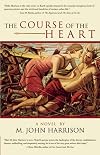
Like the titular heart, some kind of crossing point or median between earth and heaven, or the rose which is the book's principal motif and the obsession of its narrator, or the attar, the heart of the rose which haunts his dreams, this book seems to circle around itself, to be composed of oblique approaches to some unspeakable central truth or mystery. This is what the narrator, his two student friends, and the ridiculous Aleister Crowley-a-like magician Yaxley supposedly broke through to show more in the catastrophic occult ritual which they spend the rest of their lives barely able to retrospectively understand. Some kind of historical turning point, which I took to be an analogue of the fall of Constantinople, that casts ripples backwards and forwards in time fucking things up randomly as it goes. Pam's haunted by a pair of levitating copulators, Lucas by a grim dogged midget... these are weird enough, but it's Harrison's numinous prose, his intense feel for colour and texture and scent, the deeply experiential nature of his writing, that does most to convey a sense of just how alien and awful and indescribable real magic might be if it existed. Alright, I'll say it, it's Lovecraftian, this wary obsessional circling around the heart of a matter too weighty to portray except indirectly and too mind-obliterating to assay a description of. show less
I have never read another book like this and likely never will. That's not because I wouldn't like to. Rather, this is a deeply original novel, but the originality itself is incredibly subtle and difficult to replicate.
The pitch is this: miserable-core British literary fiction shot through with deep-running connections to gnosticism and the distinct possibility that magic is real. Harrison inverts the typical speculative fiction formula. Instead of dangling a tantalizing imaginary world in show more front of us like jingling keys for a baby, Harrison starts out from a four-square, thoroughly rational view of modernity. Instead of trying to work character and themes into a plot driven magical adventure, Harrison takes the radical interior focus and directionless structure of literary fiction as primary and only allows magic and adventure to creep in around the margins. If you like, the conventions of literary fiction are a kind of metafictional tool--an expression of the novel's kenoma (the gnostic version of hell) that reaches beyond the text to have a destabilizing effect on the reader.
Maybe that all sounds like gobbeldygook to you. It's a hard novel to talk about. What I'm trying to convey is that this novel reads like a lot of other more boring, less creative novels--on first glance. Reading through it this time, I was reminded of nothing so much as Rachel Cusk's Bradshaw Variations--a perfectly serviceable, rain-soaked, plodding piece of quintessentially British ennui. I even found myself mixing up plot points between the books in my head. The characters in both books are failed academics, living in drafty row homes, trapped in failing marriages, disgusted with their reliance on cheap, mass-produced consumer products.
But for Harrison, all this is in service of a greater aim. This is not a book about four miserable people. It is a book about how those we love are echoes of the divine; how history is not a straightforward arc towards justice and the good; how meaning can trap us and free us. And it is a book that uses the metaphysical schema of gnosticism to pluck these threads and lead us into a thicket of contemplation and ambiguity. It's a novel that requires careful reading and meditation, an off-kilter, sometimes brilliantly beautiful vision of reality.
Maybe none of that makes sense. But if any of it sounds intriguing, give the book a shot. It's worth it. show less
The pitch is this: miserable-core British literary fiction shot through with deep-running connections to gnosticism and the distinct possibility that magic is real. Harrison inverts the typical speculative fiction formula. Instead of dangling a tantalizing imaginary world in show more front of us like jingling keys for a baby, Harrison starts out from a four-square, thoroughly rational view of modernity. Instead of trying to work character and themes into a plot driven magical adventure, Harrison takes the radical interior focus and directionless structure of literary fiction as primary and only allows magic and adventure to creep in around the margins. If you like, the conventions of literary fiction are a kind of metafictional tool--an expression of the novel's kenoma (the gnostic version of hell) that reaches beyond the text to have a destabilizing effect on the reader.
Maybe that all sounds like gobbeldygook to you. It's a hard novel to talk about. What I'm trying to convey is that this novel reads like a lot of other more boring, less creative novels--on first glance. Reading through it this time, I was reminded of nothing so much as Rachel Cusk's Bradshaw Variations--a perfectly serviceable, rain-soaked, plodding piece of quintessentially British ennui. I even found myself mixing up plot points between the books in my head. The characters in both books are failed academics, living in drafty row homes, trapped in failing marriages, disgusted with their reliance on cheap, mass-produced consumer products.
But for Harrison, all this is in service of a greater aim. This is not a book about four miserable people. It is a book about how those we love are echoes of the divine; how history is not a straightforward arc towards justice and the good; how meaning can trap us and free us. And it is a book that uses the metaphysical schema of gnosticism to pluck these threads and lead us into a thicket of contemplation and ambiguity. It's a novel that requires careful reading and meditation, an off-kilter, sometimes brilliantly beautiful vision of reality.
Maybe none of that makes sense. But if any of it sounds intriguing, give the book a shot. It's worth it. show less

M. John Harrison's 2020 novel The Sunken Land Begins to Rise Again is firmly in the trajectory established by his earlier books The Course of the Heart and Signs of Life. Like them, it delivers an unsettling sense of a universal sacrament only partially accessible to human understanding.
The principal male character Shaw never has his given name established. His doddering mother calls him by various names that he rejects, and he once insists to her that he is Alex "to test her" (25). The show more principal female character Victoria has a surname that "was either Norman or Nyman, at that point Shaw wasn't sure which" (4), and it continues to oscillate throughout the book: Nyman in relationship to him and Norman when she is the subject of a more independent account. Shaw is in his fifties, Victoria in her forties, and both seem to be in the throes of aimless self-redefinition. For most of the book they are apart, and their interactions are more expressive of their individual dilemmas than any genuine perception of or care for one another.
Some exterior cultural objects assume outsized proportions in the story. Charles Kingsley's Victorian fairytale The Water Babies serves as something like The King in Yellow or The Necronomicon. There is also a significant painting: Bocklin's Sea Idyll (1887), which Harrison eventually describes in some detail, but which seemed significant enough to drive me to the 'net for a digital image more than a hundred pages earlier. Both of these are bound up in a larger theme of disturbing aquatic kinship, one that evokes Lovecraft's "Shadow Over Innsmouth" without the rustic insularity.
Also, unlike the imaginary "Arkham country," Harrison's story includes an itinerary of actual places that reflect a vivid psychogeographic sensibility. I considered at one point using the 'net for maps and street views to trace the various explicit place references scattered through the book (presumably more transparent to readers from England), but I didn't want to interrupt my reading pace for that purpose. I did afterwards give myself a virtual tour of Mortlake Cemetery.
My comparanda in this review have all been from the weird horror genre, but I'm not sure that I would classify this book as horror. Perhaps weird unease would be more to the point. Its concern with atavistic resurgence somewhat mirrored Lafferty's The Devil Is Dead, but with greater uncanniness and without the epic sensibility that Lafferty brought to the concept. Harrison's story is resolutely quotidian for all of its irruptive strangeness. That gives it an extra dimension of menace. show less
The principal male character Shaw never has his given name established. His doddering mother calls him by various names that he rejects, and he once insists to her that he is Alex "to test her" (25). The show more principal female character Victoria has a surname that "was either Norman or Nyman, at that point Shaw wasn't sure which" (4), and it continues to oscillate throughout the book: Nyman in relationship to him and Norman when she is the subject of a more independent account. Shaw is in his fifties, Victoria in her forties, and both seem to be in the throes of aimless self-redefinition. For most of the book they are apart, and their interactions are more expressive of their individual dilemmas than any genuine perception of or care for one another.
Some exterior cultural objects assume outsized proportions in the story. Charles Kingsley's Victorian fairytale The Water Babies serves as something like The King in Yellow or The Necronomicon. There is also a significant painting: Bocklin's Sea Idyll (1887), which Harrison eventually describes in some detail, but which seemed significant enough to drive me to the 'net for a digital image more than a hundred pages earlier. Both of these are bound up in a larger theme of disturbing aquatic kinship, one that evokes Lovecraft's "Shadow Over Innsmouth" without the rustic insularity.
Also, unlike the imaginary "Arkham country," Harrison's story includes an itinerary of actual places that reflect a vivid psychogeographic sensibility. I considered at one point using the 'net for maps and street views to trace the various explicit place references scattered through the book (presumably more transparent to readers from England), but I didn't want to interrupt my reading pace for that purpose. I did afterwards give myself a virtual tour of Mortlake Cemetery.
My comparanda in this review have all been from the weird horror genre, but I'm not sure that I would classify this book as horror. Perhaps weird unease would be more to the point. Its concern with atavistic resurgence somewhat mirrored Lafferty's The Devil Is Dead, but with greater uncanniness and without the epic sensibility that Lafferty brought to the concept. Harrison's story is resolutely quotidian for all of its irruptive strangeness. That gives it an extra dimension of menace. show less
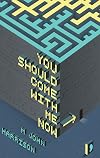
Swinging back to leave a review for this book, although I finished it a few months back. I think this is a must-have for fans of genre-bending literary short fiction.
The writing is stunning, in a technical sense. I don't think I've ever seen such consistently immaculate execution of craft.
The main reason this is four star rather than five: almost all the stories have no ending. I don't mean they go on endlessly or anything, because the don't, and indeed some are very short. What I mean is show more that they don't resolve; the stories just stop.
I start each short story, get immediately caught up in the truly excellent microtension and phenomenal eye for authentic detail that Harrison seems to have mastered (and made to look effortless) but after a certain point the story just... abruptly calls it quits, and the next one starts. What happened? What did they decide? Where did the characters go from here?
It's as if, having crafted an intensely riveting mystery, Harrison wasn't quite able to provide an explanation at that last gasp to wrap it all up. A few of the stories wrap up in "sequels" later on down the line, but most don't. It could be this is stylistic, of course. Some readers, I imagine, will take much delight in being left guessing. This reader, however, was left a smidgen frustrated, and so this incredible collection of shorts is relegated to 4 stars only, instead of the 5 that it probably deserves. show less
The writing is stunning, in a technical sense. I don't think I've ever seen such consistently immaculate execution of craft.
The main reason this is four star rather than five: almost all the stories have no ending. I don't mean they go on endlessly or anything, because the don't, and indeed some are very short. What I mean is show more that they don't resolve; the stories just stop.
I start each short story, get immediately caught up in the truly excellent microtension and phenomenal eye for authentic detail that Harrison seems to have mastered (and made to look effortless) but after a certain point the story just... abruptly calls it quits, and the next one starts. What happened? What did they decide? Where did the characters go from here?
It's as if, having crafted an intensely riveting mystery, Harrison wasn't quite able to provide an explanation at that last gasp to wrap it all up. A few of the stories wrap up in "sequels" later on down the line, but most don't. It could be this is stylistic, of course. Some readers, I imagine, will take much delight in being left guessing. This reader, however, was left a smidgen frustrated, and so this incredible collection of shorts is relegated to 4 stars only, instead of the 5 that it probably deserves. show less
Lists
Awards


You May Also Like


Associated Authors
Statistics
- Works
- 85
- Also by
- 73
- Members
- 9,771
- Popularity
- #2,444
- Rating
- 3.7
- Reviews
- 273
- ISBNs
- 185
- Languages
- 12
- Favorited
- 42
