
Christopher Priest (1) (1943–2024)
Author of The Prestige
For other authors named Christopher Priest, see the disambiguation page.
About the Author
Image credit: Clairwitch, 2005
Series
Works by Christopher Priest
The Book on the Edge of Forever: An Enquiry into the Non-Appearance of Harlan Ellison's the Last Dangerous Visions (1997) 53 copies, 3 reviews
I, Haruspex 7 copies
The Making of the Lesbian Horse 4 copies
The Head And The Hand {short story} 2 copies
A Dying Fall 2 copies
The Song of the Book 1 copy
The Discharge 1 copy
The Trace Of Him 1 copy
Pilgrimage to Sheckley 1 copy
Futur intérieur 1 copy
Fire Storm {short story} 1 copy
落ち逝く 1 copy
Associated Works
The Vintage Book of Amnesia: An Anthology of Writing on the Subject of Memory Loss (2000) — Contributor — 227 copies, 2 reviews
Best Science Fiction Stories of the Year Eighth Annual Collection (1979) — Contributor — 67 copies, 2 reviews
Light Years and Dark: Science Fiction and Fantasy of and for Our Time (1984) — Contributor — 38 copies
Celebration: Commemorating the 50th Anniversary of the British Science Fiction Association (2008) — Contributor — 37 copies, 1 review
Kong Unbound: The Cultural Impact, Pop Mythos, and Scientific Plausibility of a Cinematic Legend (2005) — Contributor — 21 copies
Stories of Hope and Wonder: In Support of the UK's Healthcare Workers (2020) — Contributor — 11 copies, 1 review
The Future of Horror: The Collected Solaris Horror Anthologies, featuring House of Fear, Magic and End of the Road (2015) — Contributor — 8 copies
Evolution @ Intersection — Contributor — 2 copies
Tagged
Common Knowledge
- Legal name
- Priest, Christopher McKenzie
- Other names
- Novak, John Luther (pseudonym)
Wedgelock, Colin (pseudonym) - Birthdate
- 1943-07-14
- Date of death
- 2024-02-02
- Gender
- male
- Education
- Warehouseman and Clerks' Orphan Schools
- Occupations
- science fiction writer
journalist
editor - Organizations
- H.G. Wells Society
Guardian - Awards and honors
- Granta's Best of Young British Novelists (1983)
Guest of Honor, Novacon (1979, 2000)
Guest of Honor, 63rd World Science Fiction Convention (2005)
Guest of Honour, Eastercon, UK (1984, 2004) - Agent
- Robert Kirby (United Agents) (UK book rights; film, dramatic & television rights)
Nicki Kennedy (ILA) (translations) - Relationships
- Tuttle, Lisa (ex-wife, 1981-1987)
Kennedy, Leigh (ex-wife, 1988-2011)
Priest, Elizabeth (offspring)
Allan, Nina (partner, 2011-) - Short biography
- Christopher Priest, b. 1943 author of "The Prestige"' and numerous other works of science fiction.
For the US writer of comics, see Christopher J. Priest - Cause of death
- small-cell carcinoma
- Nationality
- UK
- Birthplace
- Cheadle, Cheshire, England, UK
- Places of residence
- Cheadle, Cheshire, England, UK
Hastings, Sussex, England, UK
Devon, England, UK
Isle of Bute, Scotland, UK - Place of death
- Rothesby, Isle of Bute, Scotland, UK
- Map Location
- England, UK
Members
Discussions
SPOILERS - SEPTEMBER - The Prestige in The Green Dragon (October 2014)
SEPTEMBER - NO SPOILERS - The Prestige in The Green Dragon (September 2014)
Inverted World by Christopher Priest -- Spoiler Thread in Science Fiction Fans (September 2008)
Reviews

The Affirmation is a Klein bottle of a text that contains everything outside of it, breaking down frames of reference and generating epistemological vertigo. Other reviewers have offered competent plot summaries, and I won't attempt that here. (Wikipedia's current summary is, on the other hand, rather defective.) The book is a higher-order portal fantasy that puts the reader's world into doubt, like Paul Parks' A Princess of Roumania or P. K. Dick's Man in the High Castle. It is also a show more cautionary tale about magical power like Cazotte's The Devil in Love. And it is a deconstruction of the relationships between writing, speech, and experience like Derrida's Dissemination.
If all that weren't enough, the story develops reflexive themes regarding the mundane purposes and effects of imaginative writing: the author's absorption in ideals that won't age or die, the intimacy with one's own fictions that can't be truly communicated to others, and the irreducible ambiguity of the compositional act between invention and discovery.
The SF Masterworks edition I read has an introduction by Graham Sleight, who helpfully discourages the reader from reading it until after the novel. Sleight also references the Yeats epigram that was omitted from this edition. I had previously read The Prestige by Priest, and found it excellent. LibraryThing characterizes The Affirmation as the first (?) of five novels about the Dream Archipelago, and I am now very much interested in the others. show less
If all that weren't enough, the story develops reflexive themes regarding the mundane purposes and effects of imaginative writing: the author's absorption in ideals that won't age or die, the intimacy with one's own fictions that can't be truly communicated to others, and the irreducible ambiguity of the compositional act between invention and discovery.
The SF Masterworks edition I read has an introduction by Graham Sleight, who helpfully discourages the reader from reading it until after the novel. Sleight also references the Yeats epigram that was omitted from this edition. I had previously read The Prestige by Priest, and found it excellent. LibraryThing characterizes The Affirmation as the first (?) of five novels about the Dream Archipelago, and I am now very much interested in the others. show less
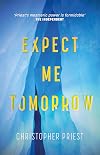
In this novel, Christopher Priest explores climate change though two pairs of twins, separated by nearly two hundred years. In the 1850s, a Norwegian glaciologist named Joseph Beck dies in an accident whilst exploring a glacier. His twin sons, Adler and Adolf, react differently; Adler takes up his father's work and devotes his life to the study of glaciers and the factors acting on them, whilst Adolf - taking the name Dolf - emigrates to the Americas, there to seek his fortune. Meanwhile, in show more the Britain of 2050, Charles Ramsey and his twin brother Greg, contest with the slow collapse of the country under the twin influences of political and societal decline and ever-increasing climate instability. Charles is a police profiler, whilst Greg is a journalist working in the linked fields of politics and climate.
These four people are linked by their search for truth - a nebulous concept at the best of times. The Adler twins' search has two strands; one is the developing science of climatology, whilst the other is that of science in the service of justice, exposed when Dolf Beck is accused of a series of frauds perpetrated in London. Meanwhile, Charles Ramsey is fitted with a new device grafted onto his skull that gives the wearer direct and intimate access to the Internet - and, it seems, person-to-person communication of a most intrusive kind. His brother then engages him to apply his profiling skills to a series of highly sensitive reports on the progress of climate change. But Ramsey is also, in his spare moments, interested in researching some family history, about a disreputable "Uncle Adolf" that he recollects hearing about when a child.
All these strands come together in a thought-provoking conclusion.
Like most Priest novels, this book does require some considerable engagement. But the reader should not take this too far; whilst Priest is returning to one of his favourite themes, that of twins, he is also not past throwing some red herrings in the reader's path. Adler Beck at one point goes to Key West, Florida, to further his research, though I suspect that was put in merely to allow Priest to use the word "archipelago" and throw readers off.
However, of more importance is the climatological theme. Adler Beck is convinced that the inter-glacial period that we are experiencing is coming to an end and a new Ice Age threatens. This was current scientific thinking as late as the 1970s, and is regularly cited by climate change sceptics as "evidence" that discussion of global warming is a fallacy and that scientists are either wrong or actively conspiring to conceal a truth for unstated aims. Some people have read this book as supporting such claims. But that is based on a misreading, just as similar claims about Priest's earlier novel, An American Story, suggest that he is supporting 9/11 conspiracy theories. I believe that the earlier novel is looking at the mutability of facts based on the power of consensus thinking; in Expect me Tomorrow, Priest is looking at scientific consensus, how that may change over time and with new evidence. There is a lot of discussion in this book about climate science, arriving at the conclusion that something as complex as the Earth's climate cannot be reduced to simplistic 'either/or' binaries.
Meanwhile, the nature of truth is further examined by the struggle Dolf Beck has to obtain justice. The account in this novel is based on the real-life case of Adolf Beck; for this character in the novel was a real person (although his twin brother seems to be an invention of Priest's). In 1895, Adolf Beck was arrested in London for a series of frauds, and sentenced to prison. He was released on parole in 1901, but in 1904 was re-arrested on similar charges. He was again found guilty; but whilst awaiting sentencing, a police officer who had had some involvement with the case encountered another instance of a similar fraud being carried out by someone answering Beck's description - but the crime was committed at a time when Beck was in custody. Both cases against Beck were quickly found to be a case of mistaken identity, based on another conviction obtained against a man of similar appearance to Beck in 1877. Beck's later convictions - gained through errors of identification, circumstantial evidence and the influence of a judge drawing inferences unsustained by evidence - were overturned. The case led to the establishment of the Court of Appeal.
There is much food for thought in this novel; the nature of truth and the exacting search for evidence are major underpinnings to both stories. The portrait of the Britain of 2050, a society disintegrating under the stress of climactic and political collapse, seems all too possible. Charles Ramsey loses his job in 2050 through political infighting within the police in a way that should not be possible if the organs of the state were abiding by their own laws; but political integrity down to the most basic levels is something else that is disintegrating in the future Britain of the novel. Priest draws on his own literary antecedents, describing the plight of climate refugees being turned back from the south coast of Britain in passages reminiscent of his early, and controversial, 1972 novel Fugue for a Darkening Island. This book stands towards the end of Priest's literary career, bookending his work with something that should make the reader think instead of just accepting a story told by others. show less
These four people are linked by their search for truth - a nebulous concept at the best of times. The Adler twins' search has two strands; one is the developing science of climatology, whilst the other is that of science in the service of justice, exposed when Dolf Beck is accused of a series of frauds perpetrated in London. Meanwhile, Charles Ramsey is fitted with a new device grafted onto his skull that gives the wearer direct and intimate access to the Internet - and, it seems, person-to-person communication of a most intrusive kind. His brother then engages him to apply his profiling skills to a series of highly sensitive reports on the progress of climate change. But Ramsey is also, in his spare moments, interested in researching some family history, about a disreputable "Uncle Adolf" that he recollects hearing about when a child.
All these strands come together in a thought-provoking conclusion.
Like most Priest novels, this book does require some considerable engagement. But the reader should not take this too far; whilst Priest is returning to one of his favourite themes, that of twins, he is also not past throwing some red herrings in the reader's path. Adler Beck at one point goes to Key West, Florida, to further his research, though I suspect that was put in merely to allow Priest to use the word "archipelago" and throw readers off.
However, of more importance is the climatological theme. Adler Beck is convinced that the inter-glacial period that we are experiencing is coming to an end and a new Ice Age threatens. This was current scientific thinking as late as the 1970s, and is regularly cited by climate change sceptics as "evidence" that discussion of global warming is a fallacy and that scientists are either wrong or actively conspiring to conceal a truth for unstated aims. Some people have read this book as supporting such claims. But that is based on a misreading, just as similar claims about Priest's earlier novel, An American Story, suggest that he is supporting 9/11 conspiracy theories. I believe that the earlier novel is looking at the mutability of facts based on the power of consensus thinking; in Expect me Tomorrow, Priest is looking at scientific consensus, how that may change over time and with new evidence. There is a lot of discussion in this book about climate science, arriving at the conclusion that something as complex as the Earth's climate cannot be reduced to simplistic 'either/or' binaries.
Meanwhile, the nature of truth is further examined by the struggle Dolf Beck has to obtain justice. The account in this novel is based on the real-life case of Adolf Beck; for this character in the novel was a real person (although his twin brother seems to be an invention of Priest's). In 1895, Adolf Beck was arrested in London for a series of frauds, and sentenced to prison. He was released on parole in 1901, but in 1904 was re-arrested on similar charges. He was again found guilty; but whilst awaiting sentencing, a police officer who had had some involvement with the case encountered another instance of a similar fraud being carried out by someone answering Beck's description - but the crime was committed at a time when Beck was in custody. Both cases against Beck were quickly found to be a case of mistaken identity, based on another conviction obtained against a man of similar appearance to Beck in 1877. Beck's later convictions - gained through errors of identification, circumstantial evidence and the influence of a judge drawing inferences unsustained by evidence - were overturned. The case led to the establishment of the Court of Appeal.
There is much food for thought in this novel; the nature of truth and the exacting search for evidence are major underpinnings to both stories. The portrait of the Britain of 2050, a society disintegrating under the stress of climactic and political collapse, seems all too possible. Charles Ramsey loses his job in 2050 through political infighting within the police in a way that should not be possible if the organs of the state were abiding by their own laws; but political integrity down to the most basic levels is something else that is disintegrating in the future Britain of the novel. Priest draws on his own literary antecedents, describing the plight of climate refugees being turned back from the south coast of Britain in passages reminiscent of his early, and controversial, 1972 novel Fugue for a Darkening Island. This book stands towards the end of Priest's literary career, bookending his work with something that should make the reader think instead of just accepting a story told by others. show less
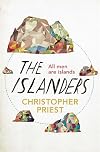
Immediately before reading Christopher Priest's The Islanders, I had read a biography of Patrick Leigh Fermor, the remarkable Englishman who trekked across Europe on foot in 1932 as a very young man, exploring the places, people and lives he met in those distant, pre-war years. He spent time after his walk living in the Balkans; during the war, he helped lead insurgent forces on Crete, mingling with the Cretan shepherds and (through speaking fluent Greek) mingling with them invisibly. After show more the war, he settled in Greece, living on the Peloponnese coast and writing about his travels on the mainland and around the islands of the Aegean. So when, through a fairly random choice, I opened The Islanders, I was ready for a novel made up of gazetteer entries for imaginary islands set in an imaginary sea, populated by artists, writers and scientists, leading lives that only seem ordinary on the surface.
The stories in this book are set in the "Dream Archipelago", a profuse scattering of islands in a great world-sea between two warring continents in north and south. The world they are on is not ours, and yet bears outward similarities to our own. But there is much about the Dream Archipelago that is illusory. Time and space are sometimes not fixed quantities; the world of the Dream Archipelago stands at an angle to our own, and the familiar may sometimes flip over into the fantastic. At first, this is only reflected in some of the gazetteer entries and some of their handy hints for travellers that bring the reader up short; but then. as we go further into the book, we encounter stories about individual inhabitants of this world, first as historical background material and then later as individual accounts, and we see the world, and specific events in it, through different eyes. Gradually, our own perception shifts and our interpretation of events is challenged.
Priest started writing stories set in the Dream Archipelago in the late 1970s, with the first three appearing in book form in his collection An Infinite Summer in 1979. In his introduction to that book, Priest says that the stories were inspired by a holiday in the Greek islands, but that there were a number of other locations that went into the mix, especially the Channel Islands (a small group of islands just off the northern French coast, but held as the semi-feudal property of the British Crown for many hundreds of years). Indeed, Priest gives the islands of he Archipelago a legal and administrative system that seems to come directly from Jersey or Guernsey. He also said in that introduction that the individual stories should not be considered as being linked in any way; other than being set in the Dream Archipelago, they had little or nothing in common. But he kept returning to the subject, and by the time all his Archipelago stories were collected together in The Dream Archipelago in 1999, some of the earlier stories had been revised to make them fit more directly into the loose series that these stories had become. His 1981 novel The Affirmation also had segments set in the Dream Archipelago, although that part of the novel portrays the protagonist's own psychotic retreat from his (and our) reality into a world that appears to be of his own making. But this is a game that Priest is playing with us, because in The Islanders, there are references to a novel written by a character in this book, called The Affirmation. Later Priest novels, such as The Adjacent (2013) and The Gradual (2016) are set, partly or wholly, in the Dream Archipelago. Yet it would be unsafe to think of these books as constituting a series of some sort, but rather a setting that Priest returned to as ideas occurred to him that would befit from the shared setting.
So in The Islanders we piece together some lives - and deaths - from different viewpoints, and over an extended reading, rather like the way we who read history piece together our own interpretation of events based on differing interpretations of the same events as seen from different viewpoints, or relating seemingly un-associated snippets of information that go together and make a whole story. This approach will always leave some narrative holes, whether we are reading about real events or fictional ones, but that just gives a book like The Islanders a special smack of authenticity, just like real life. It is a prime example of the sort of speculative literature that I think of as a "puzzle novel"; but in this case, there is no one answer that is right. Rather, the reader has to arrive at an answer that they personally find satisfying. For Truth is Beauty, and Beauty Truth. And if you find this novel to have beauty, you will find truth in it, no matter how fantastic the events or how fragmentary the beauty. show less
The stories in this book are set in the "Dream Archipelago", a profuse scattering of islands in a great world-sea between two warring continents in north and south. The world they are on is not ours, and yet bears outward similarities to our own. But there is much about the Dream Archipelago that is illusory. Time and space are sometimes not fixed quantities; the world of the Dream Archipelago stands at an angle to our own, and the familiar may sometimes flip over into the fantastic. At first, this is only reflected in some of the gazetteer entries and some of their handy hints for travellers that bring the reader up short; but then. as we go further into the book, we encounter stories about individual inhabitants of this world, first as historical background material and then later as individual accounts, and we see the world, and specific events in it, through different eyes. Gradually, our own perception shifts and our interpretation of events is challenged.
Priest started writing stories set in the Dream Archipelago in the late 1970s, with the first three appearing in book form in his collection An Infinite Summer in 1979. In his introduction to that book, Priest says that the stories were inspired by a holiday in the Greek islands, but that there were a number of other locations that went into the mix, especially the Channel Islands (a small group of islands just off the northern French coast, but held as the semi-feudal property of the British Crown for many hundreds of years). Indeed, Priest gives the islands of he Archipelago a legal and administrative system that seems to come directly from Jersey or Guernsey. He also said in that introduction that the individual stories should not be considered as being linked in any way; other than being set in the Dream Archipelago, they had little or nothing in common. But he kept returning to the subject, and by the time all his Archipelago stories were collected together in The Dream Archipelago in 1999, some of the earlier stories had been revised to make them fit more directly into the loose series that these stories had become. His 1981 novel The Affirmation also had segments set in the Dream Archipelago, although that part of the novel portrays the protagonist's own psychotic retreat from his (and our) reality into a world that appears to be of his own making. But this is a game that Priest is playing with us, because in The Islanders, there are references to a novel written by a character in this book, called The Affirmation. Later Priest novels, such as The Adjacent (2013) and The Gradual (2016) are set, partly or wholly, in the Dream Archipelago. Yet it would be unsafe to think of these books as constituting a series of some sort, but rather a setting that Priest returned to as ideas occurred to him that would befit from the shared setting.
So in The Islanders we piece together some lives - and deaths - from different viewpoints, and over an extended reading, rather like the way we who read history piece together our own interpretation of events based on differing interpretations of the same events as seen from different viewpoints, or relating seemingly un-associated snippets of information that go together and make a whole story. This approach will always leave some narrative holes, whether we are reading about real events or fictional ones, but that just gives a book like The Islanders a special smack of authenticity, just like real life. It is a prime example of the sort of speculative literature that I think of as a "puzzle novel"; but in this case, there is no one answer that is right. Rather, the reader has to arrive at an answer that they personally find satisfying. For Truth is Beauty, and Beauty Truth. And if you find this novel to have beauty, you will find truth in it, no matter how fantastic the events or how fragmentary the beauty. show less
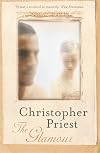
What do you get when you mix a solid psychological thriller with expertly placed leads, reveals, red-herrings and plot reversals, treat it gently, considerately, and then pair it with a righteous fantasy/SF treatment of the invisible man?
Do you get The Invisible Man? Hell no! Not when Christopher Priest writes it! Instead, you go down a rabbit hole of perception, negative hallucinations, a frustrated romance, a sinister triangle relationship, and PLOT TWISTS that kicked my butt.
And I show more thought Prestige was good? Well, welcome to an oh-so-gentle tie-in to all his other later-period novels, a very tight plot of discovery that takes the literary version of the old superhero problem of being invisible and makes it not only real but psychologically damaging. And my description doesn't do it justice. It's not like anything I've read unless I count those few handfuls of novels that manage to truly surprise me, of course. :)
I think the best part was how this novel demolished itself. I chortled with glee. :) show less
Do you get The Invisible Man? Hell no! Not when Christopher Priest writes it! Instead, you go down a rabbit hole of perception, negative hallucinations, a frustrated romance, a sinister triangle relationship, and PLOT TWISTS that kicked my butt.
And I show more thought Prestige was good? Well, welcome to an oh-so-gentle tie-in to all his other later-period novels, a very tight plot of discovery that takes the literary version of the old superhero problem of being invisible and makes it not only real but psychologically damaging. And my description doesn't do it justice. It's not like anything I've read unless I count those few handfuls of novels that manage to truly surprise me, of course. :)
I think the best part was how this novel demolished itself. I chortled with glee. :) show less
Lists
Gaslamp Fantasy (1)
Awards


You May Also Like


Associated Authors
Statistics
- Works
- 63
- Also by
- 52
- Members
- 11,915
- Popularity
- #1,968
- Rating
- 3.7
- Reviews
- 444
- ISBNs
- 429
- Languages
- 16
- Favorited
- 40
