
Ian McDonald (1) (1960–)
Author of River of Gods
For other authors named Ian McDonald, see the disambiguation page.
About the Author
Image credit: Ian McDonald (b. 1960)
Credit: Gerhard Heeke, 1997, Dortmund, Germany
Credit: Gerhard Heeke, 1997, Dortmund, Germany
Series
Works by Ian McDonald
The Days of Solomon Gursky 7 copies
Asimov's Science Fiction: Vol. 48, No. 1 & 2 [January/February 2024] — Contributor — 6 copies
After Kerry [short fiction] 4 copies
Blue Motel [short fiction] 3 copies
The Hidden Place 3 copies
Women’s Christmas 2 copies
Tonight We Fly 2 copies
Fat Tuesday 1 copy
Written In The Stars 1 copy
Luna Series & More 1 copy
The Catharine Wheel 1 copy
Kyk-Over-Al 45 December 1994 1 copy
A Little School 1 copy
Associated Works
The Year's Best Science Fiction: Twenty-Third Annual Collection (2006) — Contributor — 569 copies, 5 reviews
The Year's Best Science Fiction: Twentieth Annual Collection (2003) — Contributor — 525 copies, 1 review
The Year's Best Science Fiction: Sixteenth Annual Collection (1999) — Contributor — 517 copies, 1 review
The Year's Best Science Fiction: Twenty-Fifth Annual Collection (2008) — Contributor — 511 copies, 3 reviews
The Year's Best Science Fiction: Eighteenth Annual Collection (2001) — Contributor — 504 copies, 2 reviews
The Year's Best Science Fiction: Tenth Annual Collection (1993) — Contributor — 477 copies, 5 reviews
The Year's Best Science Fiction: Fifteenth Annual Collection (1998) — Contributor — 469 copies, 2 reviews
The Year's Best Science Fiction: Twenty-Fourth Annual Collection (2007) — Contributor — 458 copies, 6 reviews
The Year's Best Science Fiction: Ninth Annual Collection (1992) — Contributor — 457 copies, 4 reviews
The Year's Best Science Fiction: Fourteenth Annual Collection (1997) — Contributor — 447 copies, 2 reviews
The Best of the Best: 20 Years of the Year's Best Science Fiction (2005) — Contributor — 438 copies, 20 reviews
The Year's Best Science Fiction: Twenty-Sixth Annual Collection (2009) — Contributor — 424 copies, 2 reviews
The Year's Best Science Fiction: Eighth Annual Collection (1991) — Contributor — 416 copies, 6 reviews
The Mammoth Book of Extreme Science Fiction: New Generation Far-Future SF (2006) — Contributor — 352 copies, 7 reviews
The Year's Best Fantasy and Horror: Eighth Annual Collection (1995) — Contributor — 330 copies, 6 reviews
The Year's Best Science Fiction: Twenty-Seventh Annual Collection (2010) — Contributor — 321 copies, 6 reviews
The Year's Best Fantasy and Horror: Seventh Annual Collection (1994) — Contributor — 283 copies, 3 reviews
The Year's Best Science Fiction: Twenty-Ninth Annual Collection (2012) — Contributor — 276 copies, 5 reviews
The Best of the Best, Volume 2: 20 Years of the Best Short Science Fiction Novels (2007) — Contributor — 234 copies, 10 reviews
The Best Science Fiction and Fantasy of the Year, Volume 1 (2007) — Contributor — 217 copies, 6 reviews
The Year's Best Fantasy and Horror: Second Annual Collection (1987) — Contributor — 207 copies, 1 review
The Year's Best Science Fiction: Thirty-Second Annual Collection (2015) — Contributor — 206 copies, 8 reviews
The Year's Best Science Fiction: Thirty-First Annual Collection (2014) — Contributor — 203 copies, 3 reviews
The Year's Best Science Fiction: Thirty-Third Annual Collection (2016) — Contributor — 190 copies, 2 reviews
The Very Best of the Best: 35 Years of The Year's Best Science Fiction (2019) — Contributor — 182 copies, 1 review
The Best Science Fiction and Fantasy of the Year, Volume 6 (2012) — Contributor — 162 copies, 4 reviews
The Best Science Fiction and Fantasy of the Year, Volume 3 (2009) — Contributor — 151 copies, 2 reviews
The Year's Best Science Fiction: Thirty-Fourth Annual Collection (2017) — Contributor — 147 copies, 4 reviews
Solaris Rising: The New Solaris Book of Science Fiction (2011) — Contributor — 138 copies, 4 reviews
The Best Science Fiction and Fantasy of the Year, Volume 8 (2014) — Contributor — 116 copies, 6 reviews
The Best Science Fiction and Fantasy of the Year, Volume 9 (2015) — Contributor — 73 copies, 3 reviews
More Human Than Human: Stories of Androids, Robots, and Manufactured Humanity (2017) — Contributor — 62 copies, 2 reviews
The Best Science Fiction and Fantasy of the Year, Volume 10 (2016) — Contributor — 60 copies, 3 reviews
Flying Cups and Saucers: Gender Explorations in Science Fiction and Fantasy (1998) — Author — 57 copies, 3 reviews
Tales of the Wandering Jew: A Collection of Contemporary and Classic Stories (1991) — Contributor — 29 copies
Communications Breakdown: SF Stories about the Future of Connection (2023) — Contributor — 28 copies, 1 review
Isaac Asimov's Science Fiction Magazine: Vol. 8, No. 1 [January 1984] (1984) — Contributor — 19 copies
Postscripts Magazine, Issue 15: Worldcon 2008 Special (2008) — Contributor, some editions — 15 copies
Isaac Asimov's Science Fiction Magazine: Vol. 9, No. 12 [December 1985] (1985) — Contributor — 13 copies
Stories of Hope and Wonder: In Support of the UK's Healthcare Workers (2020) — Contributor — 11 copies, 1 review
Millemondi Inverno 1996 — Contributor — 2 copies
Tagged
Common Knowledge
- Canonical name
- McDonald, Ian
- Legal name
- McDonald, Ian Neil
- Birthdate
- 1960-03-31
- Gender
- male
- Occupations
- science fiction writer
- Organizations
- Science Fiction and Fantasy Writers of America
- Awards and honors
- Guest of Honour, Eastercon, UK (1998)
Grand Master of Science Fiction, European Science Fiction Society (2019) - Agent
- John Berlyne (Zeno Agency)
- Nationality
- UK
- Birthplace
- Manchester, Lancashire, England, UK
- Places of residence
- Manchester, England, UK
Belfast, Northern Ireland, UK - Map Location
- England, UK
Members
Reviews

The jacket copy promising "every conceivable abnormality" had me expecting a more comical romp than the wry and profound storytelling McDonald provides in his first novel. Although in many ways the most science-fictiony of science fiction--a story set on Mars during a period of human settlement--there are many other literary veins enriching Desolation Road. The little serendipitous town by the train tracks certainly has a 19th-century-US Western feel to it that gave the book a steampunk vibe show more (this well before the coinage of the genre label). Some readers have accused McDonald of "magical realism" in this Martian novel, which nevertheless intensely engages religious and political themes. The net effect for me was something like a hybrid between Little, Big and Dune.
There must be many influences and allusions that flew past me. Critics commonly point to homages to Jack Vance and Ray Bradbury. The 1985 Terry Gilliam movie Brazil is "sampled," if you will, in chapters 25 and 35. Cory Doctorow notes that the Catherine Wheel in the religion/planetary administration of McDonald's Mars alludes to the music of David Byrne. It's clear that McDonald has taken the old Clarke "indistinguishable from magic" saw to heart, and thus lays himself open to the charge of fantasy in SF drag, but if time travel is acceptable as science fiction, the rest of this kit should pass muster.
Sometime around page 150 I started to wonder, "What's with all the characters being sexually active at the age of nine?" It wasn't until I read about the grandfather of mature grandchildren thinking "the thoughts a man of forty-five thinks" that I realized these are Martian years! There are no C.E. dates in the book, but the story must start in the 28th century at the earliest, given some information about the timescale of "manforming" Mars. It takes place over roughly three human generations, each of which conveniently corresponds to a "decade" in Martian reckoning (i.e. 18.8 of our years).
McDonald very comprehensively adheres to the framing of Mars as "the world," with the word "earth" used only to reference soil and planetary surface, while planet Earth is called "the Motherworld." And still the Martian milieu is full of clever evocations of 20th-century mass culture.
The chapters are short and delicious, the vivid characters abundant, and the plot is so manifold that each of chapters 57 through 63 constitutes an independent climax, leaving room for a further half-dozen chapters of denouement and closure. It is a well-formed independent novel, and it does not in any way beg a sequel. The one McDonald eventually wrote (Ares Express) doubtless leverages the terrific world-building in Desolation Road, but I won't be surprised if it is at a significant remove from the characters and events in its predecessor.
This is one of those books that I devoured rapidly, and then toward the end I started to feel sad that it would soon be over. I recommend it without reservation. show less
There must be many influences and allusions that flew past me. Critics commonly point to homages to Jack Vance and Ray Bradbury. The 1985 Terry Gilliam movie Brazil is "sampled," if you will, in chapters 25 and 35. Cory Doctorow notes that the Catherine Wheel in the religion/planetary administration of McDonald's Mars alludes to the music of David Byrne. It's clear that McDonald has taken the old Clarke "indistinguishable from magic" saw to heart, and thus lays himself open to the charge of fantasy in SF drag, but if time travel is acceptable as science fiction, the rest of this kit should pass muster.
Sometime around page 150 I started to wonder, "What's with all the characters being sexually active at the age of nine?" It wasn't until I read about the grandfather of mature grandchildren thinking "the thoughts a man of forty-five thinks" that I realized these are Martian years! There are no C.E. dates in the book, but the story must start in the 28th century at the earliest, given some information about the timescale of "manforming" Mars. It takes place over roughly three human generations, each of which conveniently corresponds to a "decade" in Martian reckoning (i.e. 18.8 of our years).
McDonald very comprehensively adheres to the framing of Mars as "the world," with the word "earth" used only to reference soil and planetary surface, while planet Earth is called "the Motherworld." And still the Martian milieu is full of clever evocations of 20th-century mass culture.
The chapters are short and delicious, the vivid characters abundant, and the plot is so manifold that each of chapters 57 through 63 constitutes an independent climax, leaving room for a further half-dozen chapters of denouement and closure. It is a well-formed independent novel, and it does not in any way beg a sequel. The one McDonald eventually wrote (Ares Express) doubtless leverages the terrific world-building in Desolation Road, but I won't be surprised if it is at a significant remove from the characters and events in its predecessor.
This is one of those books that I devoured rapidly, and then toward the end I started to feel sad that it would soon be over. I recommend it without reservation. show less

While it's set in the same future India as McDonald's vivid River of Gods, a world of old and new gods, soap operas, water wars, mech wars, gender imbalance, and new genders, it is in no way necessary to read that novel first. I read three of these seven stories before I read the novel, and they were satisfactory on their own. However, I do think the one story original to this collection, the concluding novella "Vishnu at the Cat Circus", will have added pleasures if you've read the novel. show more
Each story concentrates on one or more aspects of McDonald's India, and they mostly take place at various times before the novel's events.
"Sanjeev and the Robotwallah" covers the War of Separation when India breaks up into several countries from the nation we know. It's about a brief time in a man's life when, as a Japanese anima obsessed youth, he teleoperated the robots of that war. It's a type of war that may be physically safer, but the boys find, like many a veteran of the past, that society may not have much more use for them after the peace.
"Kyle Meets the River", while a decent story, is the weakest of the book. I think that's because its plot owes too much to the recent Iraqi War and the story's initial appearance in the themed Forbidden Planets anthology. India is viewed from the perspective of an American boy, his parents living in the Cantonment, a diplomatic compound of Westerners helping to build the newly independent nation of Bharat. Young Kyle first spends a lot of time viewing the massive artificial ecosphere simulation that features in River of Gods before he sees the equally strange world of India beyond the compound's wall. However, with the frequent terrorism in the Cantonment, Iraqi's Green Zone is unnecessarily brought to mind in a way that adds nothing to the story.
"The Dust Assassin" has the air and plot of a fairy tale. The Jodhra and Azad clans have been at war - a literal shooting war at times - in Jaipur for a long time, sometimes over water. The Azads wipe out the Jodhra clan except for Padmini, our young heroine, who goes into hiding with her nute retainers - a third gender artificially created and complete with its own methods of sexual gratification. Assured by her father before his death that she is a literal weapon, she undertakes martial arts training. But vengeance may lie in other directions -- if she even wants it anymore.
"An Eligible Boy" is an interesting, humorous and rather melancholy story centered around one of the key aspects of McDonald's future India: the vast gender imbalance caused by sex selective abortions eliminating millions of Indian women. In this topsy turvy, caste corroding world, men are the ones who must desperately appeal to the few women around. Our hero, Jasbir, has cosmetic surgery done and, at the suggestion of his roommate Sujay, who codes software for the soap operas the Indians are mad about, gets romantic tips from one of the starring artificial intelligences. Romance is found, lost, and, perhaps, missed all together.
"The Little Goddess", one of the best stories in the book, takes a seemingly autistic girl and makes her the chosen incarnation of the goddess Kumari Devi in Nepal. But it is the world she must navigate after being expelled from her position that is most fascinating. Here McDonald concentrates on the Brahmins - genetically engineered humans, superior in intelligence, more physically robust, but aging only half as fast as normal humans - and the Krishna Cops who try to keep America happy by patrolling the cybersphere for illegally advanced artificial intelligences.
"The Djinn's Wife", another fine story, also concentrates on those artificial intelligences, so-called aeais. Here one develops a romantic fixation on a classic Indian dancer. This being India, she even marries him. But the defining characteristic of aeais, their consciousness distributed in space and their concentration equally multiplied, conflicts with a female need for exclusivity.
"Vishnu at the Cat Circus" straddles the events of River of Gods, has appearances by some of its characters, and goes further into the future for another dramatic reinvention of India. Its narrator, a Brahmin who is now an obsolete offshoot of human evolution, tells us of the world created by his always jealous older brother, a world where India's middle class again pushes aside the poor to achieve its ambitions. That ambition here is nothing less than immortality via uploaded consciousness. But every ecosystem has its limits. In real India, it's water. In the virtual world, it is a need for vast amounts of storage space.
A world worth visiting whether you've read McDonald before or not. show less
Each story concentrates on one or more aspects of McDonald's India, and they mostly take place at various times before the novel's events.
"Sanjeev and the Robotwallah" covers the War of Separation when India breaks up into several countries from the nation we know. It's about a brief time in a man's life when, as a Japanese anima obsessed youth, he teleoperated the robots of that war. It's a type of war that may be physically safer, but the boys find, like many a veteran of the past, that society may not have much more use for them after the peace.
"Kyle Meets the River", while a decent story, is the weakest of the book. I think that's because its plot owes too much to the recent Iraqi War and the story's initial appearance in the themed Forbidden Planets anthology. India is viewed from the perspective of an American boy, his parents living in the Cantonment, a diplomatic compound of Westerners helping to build the newly independent nation of Bharat. Young Kyle first spends a lot of time viewing the massive artificial ecosphere simulation that features in River of Gods before he sees the equally strange world of India beyond the compound's wall. However, with the frequent terrorism in the Cantonment, Iraqi's Green Zone is unnecessarily brought to mind in a way that adds nothing to the story.
"The Dust Assassin" has the air and plot of a fairy tale. The Jodhra and Azad clans have been at war - a literal shooting war at times - in Jaipur for a long time, sometimes over water. The Azads wipe out the Jodhra clan except for Padmini, our young heroine, who goes into hiding with her nute retainers - a third gender artificially created and complete with its own methods of sexual gratification. Assured by her father before his death that she is a literal weapon, she undertakes martial arts training. But vengeance may lie in other directions -- if she even wants it anymore.
"An Eligible Boy" is an interesting, humorous and rather melancholy story centered around one of the key aspects of McDonald's future India: the vast gender imbalance caused by sex selective abortions eliminating millions of Indian women. In this topsy turvy, caste corroding world, men are the ones who must desperately appeal to the few women around. Our hero, Jasbir, has cosmetic surgery done and, at the suggestion of his roommate Sujay, who codes software for the soap operas the Indians are mad about, gets romantic tips from one of the starring artificial intelligences. Romance is found, lost, and, perhaps, missed all together.
"The Little Goddess", one of the best stories in the book, takes a seemingly autistic girl and makes her the chosen incarnation of the goddess Kumari Devi in Nepal. But it is the world she must navigate after being expelled from her position that is most fascinating. Here McDonald concentrates on the Brahmins - genetically engineered humans, superior in intelligence, more physically robust, but aging only half as fast as normal humans - and the Krishna Cops who try to keep America happy by patrolling the cybersphere for illegally advanced artificial intelligences.
"The Djinn's Wife", another fine story, also concentrates on those artificial intelligences, so-called aeais. Here one develops a romantic fixation on a classic Indian dancer. This being India, she even marries him. But the defining characteristic of aeais, their consciousness distributed in space and their concentration equally multiplied, conflicts with a female need for exclusivity.
"Vishnu at the Cat Circus" straddles the events of River of Gods, has appearances by some of its characters, and goes further into the future for another dramatic reinvention of India. Its narrator, a Brahmin who is now an obsolete offshoot of human evolution, tells us of the world created by his always jealous older brother, a world where India's middle class again pushes aside the poor to achieve its ambitions. That ambition here is nothing less than immortality via uploaded consciousness. But every ecosystem has its limits. In real India, it's water. In the virtual world, it is a need for vast amounts of storage space.
A world worth visiting whether you've read McDonald before or not. show less
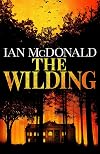
The Wilding follows a small group of teenagers on a school excursion with teachers and guides on a wild camping experience in an area of bogland and forest being rewilded. It is set in an area that was once used for commercial peat extraction and that is now being allowed to return to a wild state.
Ian McDonald always excels at describing the surroundings in his stories and this skill is used to great effect in describing the boglands and wooded areas in the story. His prose are excellent at show more capturing the unnerving experience of finding yourself in a wood, being totally disoriented, and starting to imagine all sorts of things happening around you. Every little sound triggers thoughts of beasts and spirits plotting your demise. I have been in that situation. I know what it's like. Ian captured it perfectly.
This was a book that I was creating opportunities to read. I did not want to put it down when I was reading and I wanted to get back to it when I was not reading. It was only events beyond my control that stopped my finishing it in one day. show less
Ian McDonald always excels at describing the surroundings in his stories and this skill is used to great effect in describing the boglands and wooded areas in the story. His prose are excellent at show more capturing the unnerving experience of finding yourself in a wood, being totally disoriented, and starting to imagine all sorts of things happening around you. Every little sound triggers thoughts of beasts and spirits plotting your demise. I have been in that situation. I know what it's like. Ian captured it perfectly.
This was a book that I was creating opportunities to read. I did not want to put it down when I was reading and I wanted to get back to it when I was not reading. It was only events beyond my control that stopped my finishing it in one day. show less

"A dark and perversely delicious fear gnaws Ayşe, the intellectual intoxication she experiences from opening a new manuscript or unwrapping an unseen miniature and knowing that she stands on the edge of the incomprehensible, that she holds in her hands a world and a way of thinking alien to her in every way. The past is another universe: a long dead sect drew its truths across whole cities for generations it could not imagine."
Ian McDonald's books have been touring the non-Western world for show more some time now. He seems to be on a mission to explore how various cultures might deal with near-future SF scenarios. This time, he fetches up in Turkey. McDonald doesn't just use the common trope of this nation's poised-between-Europe-and-Asia tension; he adds a tension between technology and faith, and another between progress and history. For much of the book the plot simmers away slowly, waiting until we've really gotten to know our cast of characters and how these tensions play out in each of them.
It's the characters that make this book: Ayşe Erkoç, power-dressing dealer in antiquities; Can Durukan, isolated boy with heart trouble and some very cool robots; Leyla Gültaşli, desperate to prove herself in the big city; Georgios Ferentinou, retired and broken professor of economics; Adnan Sarioğlu, master of the deal and lover of money; and Necdet Hasgüler, wastrel and psychopath. And dozens of others, each given care and time to breathe. Through them we also get a multi-faceted view of Istanbul. We learn about some of what this unique city has been through, and about how its people might respond to nanotechnology.
The SF is almost incidental, really. This is a novel about Istanbul, written by a man with an impressive ability to inhabit a huge variety of voices.
Take your time, listen to the voices, and enjoy. show less
Ian McDonald's books have been touring the non-Western world for show more some time now. He seems to be on a mission to explore how various cultures might deal with near-future SF scenarios. This time, he fetches up in Turkey. McDonald doesn't just use the common trope of this nation's poised-between-Europe-and-Asia tension; he adds a tension between technology and faith, and another between progress and history. For much of the book the plot simmers away slowly, waiting until we've really gotten to know our cast of characters and how these tensions play out in each of them.
It's the characters that make this book: Ayşe Erkoç, power-dressing dealer in antiquities; Can Durukan, isolated boy with heart trouble and some very cool robots; Leyla Gültaşli, desperate to prove herself in the big city; Georgios Ferentinou, retired and broken professor of economics; Adnan Sarioğlu, master of the deal and lover of money; and Necdet Hasgüler, wastrel and psychopath. And dozens of others, each given care and time to breathe. Through them we also get a multi-faceted view of Istanbul. We learn about some of what this unique city has been through, and about how its people might respond to nanotechnology.
The SF is almost incidental, really. This is a novel about Istanbul, written by a man with an impressive ability to inhabit a huge variety of voices.
Take your time, listen to the voices, and enjoy. show less
Lists
Morphy Pick! (1)
Best Cyberpunk (1)
Urban Fiction (1)
Which house? (1)
SF Masterworks (2)
Singularity (1)
io9 Book Club (1)
Awards


You May Also Like


Associated Authors
Statistics
- Works
- 97
- Also by
- 126
- Members
- 11,162
- Popularity
- #2,115
- Rating
- 3.7
- Reviews
- 426
- ISBNs
- 351
- Languages
- 12
- Favorited
- 36
