
Gwyneth A. Jones
Author of Dr. Franklin's Island
About the Author
Disambiguation Notice:
Not The Daring Librarian in Maryland, who is also a Gwyneth A. Jones.
Series
Works by Gwyneth A. Jones
Deconstructing the Starships: Essays and Review (Liverpool University Press - Liverpool Science Fiction Texts & Studies) (1999) 43 copies, 1 review
The Tomb Wife 8 copies
Balinese Dancer [short fiction] 5 copies
La Cenerentola 5 copies
The Snow Apples [short fiction] 3 copies
Cheats 3 copies
Stone Free (Gollancz) 3 copies
The Universe of Things [short story] 2 copies
In The Forest Of The Queen 2 copies
Grandmother's Footsteps 2 copies
The Eastern Succession 1 copy
Short Fiction Collected 1 copy
A North Light 1 copy
Bold As Love [short story] 1 copy
The Seventh Gamer 1 copy
The Lovers 1 copy
Identifying The Project 1 copy
End of Oil 1 copy
Total Internal Reflection 1 copy
Destroyer Of Worlds 1 copy
Associated Works
The Year's Best Science Fiction: Twenty-Third Annual Collection (2006) — Contributor — 563 copies, 5 reviews
The Big Book of Science Fiction: The Ultimate Collection (2016) — Contributor — 520 copies, 7 reviews
The Year's Best Science Fiction: Sixteenth Annual Collection (1999) — Contributor — 516 copies, 1 review
The Year's Best Science Fiction: Twenty-Fifth Annual Collection (2008) — Contributor — 511 copies, 3 reviews
The Year's Best Science Fiction: Fifteenth Annual Collection (1998) — Contributor — 466 copies, 2 reviews
The Year's Best Science Fiction: Fourteenth Annual Collection (1997) — Contributor — 442 copies, 2 reviews
The Year's Best Science Fiction: Twenty-Sixth Annual Collection (2009) — Contributor — 421 copies, 2 reviews
The Year's Best Fantasy and Horror: First Annual Collection (1986) — Contributor — 332 copies, 6 reviews
The Year's Best Science Fiction: Twenty-Ninth Annual Collection (2012) — Contributor — 275 copies, 5 reviews
The Year's Best Fantasy and Horror: Second Annual Collection (1987) — Contributor — 207 copies, 1 review
The Year's Best Fantasy and Horror: Third Annual Collection (1988) — Contributor — 194 copies, 2 reviews
The Year's Best Science Fiction: Thirty-Third Annual Collection (2016) — Contributor — 189 copies, 2 reviews
Daughters of Earth: Feminist Science Fiction in the Twentieth Century (2006) — Contributor — 188 copies, 6 reviews
The Very Best of the Best: 35 Years of The Year's Best Science Fiction (2019) — Contributor — 180 copies, 1 review
The Best Science Fiction and Fantasy of the Year Volume Seven (2013) — Contributor — 154 copies, 3 reviews
Despatches from the Frontiers of the Female Mind: An Anthology of Original Stories (1985) — Contributor — 131 copies, 2 reviews
The James Tiptree Award Anthology 2: Stories for Men, Women, and the Rest of Us (2006) — Contributor — 101 copies, 3 reviews
Nebula Awards Showcase 2002: The Year's Best SF and Fantasy (2002) — Commentary — 95 copies, 1 review
The Final Frontier: Stories of Exploring Space, Colonizing the Universe, and First Contact (2018) — Contributor — 72 copies, 4 reviews
Glorifying Terrorism, Manufacturing Contempt: An Anthology (2006) — Contributor — 69 copies, 3 reviews
The Best Science Fiction and Fantasy of the Year Volume Ten (2016) — Contributor — 59 copies, 3 reviews
Women of Other Worlds: Excursions Through Science Fiction and Feminism (1999) — Contributor — 42 copies
Uneven Futures: Strategies for Community Survival from Speculative Fiction (2022) — Contributor — 12 copies
Stories of Hope and Wonder: In Support of the UK's Healthcare Workers (2020) — Contributor — 11 copies, 1 review
The Profession of Science Fiction: SF Writers on Their Craft and Ideas (1992) — Contributor — 6 copies
The Year's Top Hard Science Fiction Stories 7 — Contributor — 3 copies
Tagged
Common Knowledge
- Other names
- Halam, Ann
- Birthdate
- 1952-02-14
- Gender
- female
- Education
- University of Sussex
- Nationality
- UK
- Birthplace
- Manchester, England, UK
- Places of residence
- Brighton, Sussex, England, UK
- Disambiguation notice
- Not The Daring Librarian in Maryland, who is also a Gwyneth A. Jones.
- Associated Place (for map)
- England, UK
Members
Reviews

A new book by Gwyneth Jones, whether a novel, novella or collection, is cause for celebration in this house. She’s been my favourite sf writer since reading Kairos in the early 1990s, and I’d even go so far as to say sheäs the best science fiction writer who is still writing the UK has produced. Big Cat and Other Stories collects eleven stories originally published between 2007 and 2016 (and one original to this volume), only two of which I’d previously read. Three of the stories are show more set in worlds from Jones’s novels, although one of those novels was published under Jones’s YA pseudonym, Ann Halam. This does mean for those three that you get more out of them if you know the original novels, more so for the story which lends the collection its title as it’s set in the universe of the Bold As Love quintet and features its central triumvirate of characters. The stories are chiefly science fiction but spread widely across the genre, from the slightly off-kilter pulp adventure on Venus of ‘A Planet Called Desire’ and the Leigh Brackett/Lovecraft mashup of ‘The Vicar of Mars’ to the near-future of ‘Stella and the Adventurous Roots’, ‘Emergence’ and ‘Bricks, Stick, Straws’, although they depict worlds not quite the same as our own. All of the stories are a hit of the pure Jones, and if you appreciate her science fiction then Big Cat and Other Stories is as good a selection as any other. Recommended. show less
It’s the end of the world. The environment is crashing, the markets are in freefall, populations are on the move, social disorder and anarchy are breaking out all over. Who do you want in charge? Who’ll ride in to save the day? Politicians? Action heroes? Or rock stars? Rock stars? Good answer. Welcome to the world of Dissolution Summer. The United Kingdom has broken apart and Europe is spiralling into chaos. In Bold As Love, an unlikely Triumvirate of activist rock stars emerged to show more shepherd England through a series off all-too plausible crises: waif-like witch Fiorinda, wild-boy punk coder Sage ‘Aoxomoxoa’ Pender and dictator-in-waiting Ax Preston. In Castles Made of Sand, our three heroes confront the new realities of their own unorthodox relationship and a world where technological advance and magic have become intermingled.
The current volume sees the trio, ousted from power, bumming and birdwatching on a beach in Mexico, recovering from their traumatic battle with Fiorinda’s appalling father, Rufus O’Niall. Sought out at the behest of the President, they are brought to Hollywood under the pretext of helping promote a film recounting their exploits in England. In reality, the three are hunting for the emergent ‘Fat Boy,’ a human magical weapon powered by an unholy union of scientific research into human fusion consciousness and radical Celtic eco-warriors who practice human sacrifice. Fiorinda is the key to finding the magician, but her fragile psyche is giving way to full-blown schizophrenia, a condition that could lead her straight into the clutches of their enemies.
It’s odd that something with a premise that sounds like a rather cuddly fantasy adventure thriller with heroes straight out of a Hanna Barbra cartoon – magic rock stars team up to fight evil, crime! With lovable cartoon animal! - should succeed so well in being real. First of all, any vestige of wish-fulfilment has been ruthlessly burned away. Sure, in one sense it’s about flamboyant pop-stars wielding music, magic and science to save the world, but in another way it’s nothing like that at all. The world is never saved. Dictator Ax negotiates half-measures, compromises and sellouts and still barely manages to hold things together. Magic, though rare, is hated and feared for excellent reasons. Very often, the only thing that remains constant is their music. Jones keeps her world fully grounded in science, managing to incorporate magic as a function of the world’s breakdown into irrational conflict and superstition. There are no easy answers or straightforward solutions, just tiny, incremental bits of good in the face of a massive landslide of bad. It helps enormously that Jones is an incredibly good writer, who never lets melodrama infect her style or language. She dissects the group dynamics of her three protagonists with the same cool, level tone of voice she uses to depict an assault on a group of Celtic fringe lunatics barricaded in a ghost town.
With two more books to go, this series has gone from compelling to riveting to incandescent. Fiorinda, Sage and Ax are real enough to step off the page, so much so, in fact, that in the first book it’s difficult to keep track of the large cast of supporting characters. Their conflicts, dilemmas and suffering become our own, as do their joys and epiphanies. The grim realities of a future where all our barricades finally gave way is immediate and, frankly, terrifying. We’d better pray that Ax, Fiorinda and Sage are there to save us. Otherwise we’ll just have to bloody well do it ourselves. show less
The current volume sees the trio, ousted from power, bumming and birdwatching on a beach in Mexico, recovering from their traumatic battle with Fiorinda’s appalling father, Rufus O’Niall. Sought out at the behest of the President, they are brought to Hollywood under the pretext of helping promote a film recounting their exploits in England. In reality, the three are hunting for the emergent ‘Fat Boy,’ a human magical weapon powered by an unholy union of scientific research into human fusion consciousness and radical Celtic eco-warriors who practice human sacrifice. Fiorinda is the key to finding the magician, but her fragile psyche is giving way to full-blown schizophrenia, a condition that could lead her straight into the clutches of their enemies.
It’s odd that something with a premise that sounds like a rather cuddly fantasy adventure thriller with heroes straight out of a Hanna Barbra cartoon – magic rock stars team up to fight evil, crime! With lovable cartoon animal! - should succeed so well in being real. First of all, any vestige of wish-fulfilment has been ruthlessly burned away. Sure, in one sense it’s about flamboyant pop-stars wielding music, magic and science to save the world, but in another way it’s nothing like that at all. The world is never saved. Dictator Ax negotiates half-measures, compromises and sellouts and still barely manages to hold things together. Magic, though rare, is hated and feared for excellent reasons. Very often, the only thing that remains constant is their music. Jones keeps her world fully grounded in science, managing to incorporate magic as a function of the world’s breakdown into irrational conflict and superstition. There are no easy answers or straightforward solutions, just tiny, incremental bits of good in the face of a massive landslide of bad. It helps enormously that Jones is an incredibly good writer, who never lets melodrama infect her style or language. She dissects the group dynamics of her three protagonists with the same cool, level tone of voice she uses to depict an assault on a group of Celtic fringe lunatics barricaded in a ghost town.
With two more books to go, this series has gone from compelling to riveting to incandescent. Fiorinda, Sage and Ax are real enough to step off the page, so much so, in fact, that in the first book it’s difficult to keep track of the large cast of supporting characters. Their conflicts, dilemmas and suffering become our own, as do their joys and epiphanies. The grim realities of a future where all our barricades finally gave way is immediate and, frankly, terrifying. We’d better pray that Ax, Fiorinda and Sage are there to save us. Otherwise we’ll just have to bloody well do it ourselves. show less
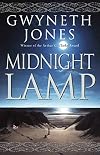
Ann Halam is also Gwyneth Jones, which is what prompted me to grab a brace of her books from the Children’s Library on Grand Parade (I have a small child with a library card which gives me license to plunder. Some of these teen books are good, and teenagers are far too silly to appreciate them. Also they are small and weak and easily pushed aside.) Anyway, Jones now has now acquired that coveted title of My New Favourite Writer, see review of Midnight Lamp in the nether regions below.
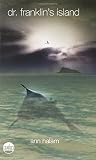
Dr show more Franklin’s Island was first and best, a sort of distaff Island of Dr Moreau, though it should be noted I’ve not read The Island of Dr Moreau, so we won’t mention that again, although the title’s evocation of Frankenstein is also worth noting. Three teenagers are stranded on a remote Pacific island after a terrible plane crash: Miranda, Semi and Arnie. Semi, shy and myopic is the narrator. Miranda is more outgoing, taking charge, finding solutions and refusing to give up hope. Arnie, the token boy character, is a prickly sod, but like the others quite vulnerable in his own way. It’s the friendship between the two girls that takes centre stage. At first they seem like polar opposites, but later we come to see they are mirror images.
The island is not as deserted as it first appears, however. Arnie disappears and the girls soon fall into the hands of the terrifying Dr Franklin who, basically, turns Semi into a fish and Miranda into a bird, using genetic engineering. It’s a painful process, but a weirdly liberating one. As transformed creatures with human intelligence the girls lose many of their physical and mental limitations, with the downside being that they are still prisoners of a man who likes to play games to test the psychological state of his subjects. Dr Franklin isn’t a sadistic villain, but a detached genius, a sociopath who cares more for his experiments than for human beings, even when the subjects of his experiments are human beings. To the girls he becomes something akin to a god.
After reading a bunch of thick hefty epics this was… liberating. Short, fast paced, with writing as smooth as ice with sympathetic, human characters all round. It has interesting, quite sophisticated things to say about science, the horrors of its misuse and the sometimes ambiguous consequences of even the most perverse abuses. The title traces a conscious literary line of scientific perversions, but the girls exult in their new forms despite their mistreatment.
I read Dr Franklin’s Island in a single day and it cut right through me. I’m still chewing over some of the issues raised, and still wondering about the lives of the characters and what happened after the final pages. show less
Dr show more Franklin’s Island was first and best, a sort of distaff Island of Dr Moreau, though it should be noted I’ve not read The Island of Dr Moreau, so we won’t mention that again, although the title’s evocation of Frankenstein is also worth noting. Three teenagers are stranded on a remote Pacific island after a terrible plane crash: Miranda, Semi and Arnie. Semi, shy and myopic is the narrator. Miranda is more outgoing, taking charge, finding solutions and refusing to give up hope. Arnie, the token boy character, is a prickly sod, but like the others quite vulnerable in his own way. It’s the friendship between the two girls that takes centre stage. At first they seem like polar opposites, but later we come to see they are mirror images.
The island is not as deserted as it first appears, however. Arnie disappears and the girls soon fall into the hands of the terrifying Dr Franklin who, basically, turns Semi into a fish and Miranda into a bird, using genetic engineering. It’s a painful process, but a weirdly liberating one. As transformed creatures with human intelligence the girls lose many of their physical and mental limitations, with the downside being that they are still prisoners of a man who likes to play games to test the psychological state of his subjects. Dr Franklin isn’t a sadistic villain, but a detached genius, a sociopath who cares more for his experiments than for human beings, even when the subjects of his experiments are human beings. To the girls he becomes something akin to a god.
After reading a bunch of thick hefty epics this was… liberating. Short, fast paced, with writing as smooth as ice with sympathetic, human characters all round. It has interesting, quite sophisticated things to say about science, the horrors of its misuse and the sometimes ambiguous consequences of even the most perverse abuses. The title traces a conscious literary line of scientific perversions, but the girls exult in their new forms despite their mistreatment.
I read Dr Franklin’s Island in a single day and it cut right through me. I’m still chewing over some of the issues raised, and still wondering about the lives of the characters and what happened after the final pages. show less
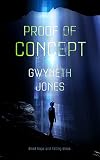
A young girl with an AI in her head is sequestered underground with a split team of dedicated scientists and reality-show wannabe astronauts to work on an experiment that may make faster than light travel. Except it won't even if successful - though it could make it possible in the far future. Their world doesn't have a future, though, as runaway climate change and expanding dead zones hems people into more crowded city enclaves. So what's the point of this whole effort? And why are so many show more of the senior scientists dying? And what is the machine in her head trying to tell her?
A sharp, cool, dense little story about the costs and realities of doing science too little too late. show less
A sharp, cool, dense little story about the costs and realities of doing science too little too late. show less
Lists
Female Author (1)
Null (1)
Awards


You May Also Like


Associated Authors
Statistics
- Works
- 97
- Also by
- 90
- Members
- 3,714
- Popularity
- #6,821
- Rating
- 3.7
- Reviews
- 133
- ISBNs
- 184
- Languages
- 7
- Favorited
- 1
