
Charles Stross
Author of The Atrocity Archives
About the Author
Born in Leeds, England, Charles Stross knew he wanted to be a science fiction writer from the age of six. Despite this, he went to university in London and qualified as a Pharmacist. He made his first writing sale to Interzone in 1986, and sold about a dozen stories elsewhere throughout the late show more 1980s and early 1990s. He now writes fiction full-time, has sold about 16 novels, has won one Hugo award and been nominated nearly a dozen times, and has been translated into about a dozen languages. He is the author of the Merchant Princes series. His latest book, The Revolution Business, is the fifth in this series. He lives in Edinburgh, Scotland, with his wife Feorag. (Bowker Author Biography) show less
Series
Works by Charles Stross
A Boy and His God 5 copies
Flowers from Alice 4 copies
Extracts from the Club Diary 3 copies
Toast A Con Report [short story] 3 copies
The Reavers and the Dead 2 copies
Japan 2007 2 copies
Remade 2 copies
Ancient of Days 2 copies
SEAQ and Destroy 2 copies
Examination Night 2 copies
Something Sweet 2 copies
Message in a Time Capsule 2 copies
Red, Hot and Dark 2 copies
Big Brother Iron 2 copies
The Midlist Bombers 2 copies
How I Got Here In the End 1 copy
Warcrime 1 copy
Year Zero 1 copy
Hladnije od pakla 1 copy
Escape 1 copy
Collected Short Stories 1 copy
Lambing Season 1 copy
The Laundry Files 1 copy
Collected Short Fiction 1 copy
The Jennifer Morgue - Part 2 1 copy
Toast, and Other Stories 1 copy
Different Flesh 1 copy
Black Sky 1 copy
Love Me 1 copy
Associated Works
The Year's Best Science Fiction: Twenty-First Annual Collection (2004) — Contributor — 575 copies, 6 reviews
The Year's Best Science Fiction: Nineteenth Annual Collection (2002) — Contributor — 559 copies, 6 reviews
The Year's Best Science Fiction: Twentieth Annual Collection (2003) — Contributor — 526 copies, 1 review
The Year's Best Science Fiction: Eighteenth Annual Collection (2001) — Contributor — 504 copies, 2 reviews
The Best of the Best: 20 Years of the Year's Best Science Fiction (2005) — Contributor — 438 copies, 20 reviews
The Mammoth Book of Extreme Science Fiction: New Generation Far-Future SF (2006) — Contributor — 351 copies, 7 reviews
The Very Best of the Best: 35 Years of The Year's Best Science Fiction (2019) — Contributor — 183 copies, 1 review
The Best Science Fiction and Fantasy of the Year, Volume 2 (2008) — Contributor — 177 copies, 4 reviews
Glorifying Terrorism, Manufacturing Contempt: An Anthology (2006) — Contributor — 69 copies, 3 reviews
More Human Than Human: Stories of Androids, Robots, and Manufactured Humanity (2017) — Contributor — 62 copies, 2 reviews
Asimov's Science Fiction Magazine: 30th Anniversary Anthology (2007) — Contributor — 61 copies, 1 review
Before They Were Giants: First Works from Science Fiction Greats (2010) — Contributor — 54 copies, 2 reviews
Best of the Rest 2: The Best Unknown Science Fiction and Fantasy of 1998 (1999) — Contributor — 4 copies
Tagged
Common Knowledge
- Legal name
- Stross, Charles David George
- Other names
- Davidson, Charles (pen name)
- Birthdate
- 1964-10-18
- Gender
- male
- Occupations
- pharmacist
journalist (freelance)
computer programmer - Organizations
- Science Fiction and Fantasy Writers of America
- Awards and honors
- Guest of Honour, Eastercon, UK (2008)
E.E. Smith Memorial Award for Imaginative Fiction (2008) - Agent
- Caitlin Blasdell
- Nationality
- UK
- Birthplace
- Leeds, Yorkshire, England, UK
- Places of residence
- Edinburgh, Midlothian, Scotland, UK
- Map Location
- England, UK
Members
Discussions
Found: Alt world series in Name that Book (September 2025)
Found: Woman that can transport to Alternate Earth Sci Fi Series? in Name that Book (August 2025)
The Laundry Files by Charles Stross in The Weird Tradition (April 2025)
THE DEEP ONES: "Overtime" by Charles Stross in The Weird Tradition (December 2017)
THE DEEP ONES: "A Colder War" by Charles Stross in The Weird Tradition (June 2015)
Charlie's Diary Blog: Cutting their own throats in Books in 2025: The Future of the Book World (December 2011)
Tried "The Atrocity Archives"? in Weird Fiction (July 2011)
Reviews
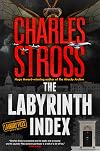
Stross returns to the roots of the Laundry Files here: the previous few books had moved away from the original espionage themes, but in this book they are back with a vengeance: insertion of clandestine agents into enemy territory with an active -- not merely information-gathering -- remit. However, this is no Longer the Bondian storytelling of The Jennifer Morgue where one could cheer for the Laundry in relatively good conscience. This is firmly in the shades of grey territory where the show more best thing that can be said for the narrator is that she serves a lesser evil: which isn't saying much when the greater evil in question is Cthulhu. As an installment of the Case Nightmare Green arc, this provides far more context to just how much trouble the world is in: the Black Chamber isn't the only threat on the horizon, and the Mandate's plans for the future aren't very pleasant, either.
Mhari is an effective narrator for this stage of the series arc. She's probably less self-deceiving than any of the previous narrators -- she has to deal with the implications of her current state in such a way that anything other than very short-tern self-deception is very, very difficult -- but also has less expertise than, say, Bob or Mo, so her perspective is more limited.
This is the third spec fic book in two months of which the author has indicated, in one way or the other, that it's a response to Trumpian America. (The others, for reference, are Steven Erikson's Rejoice, a Knife to the Heart and Miles Cameron's Cold Iron.) Stross manages to set up an America which is actually worse than the current reality, and a different kind of crisis, but he still highlights, thematically, the way in which the US has a quasi-monarchical focus on the Presidency, not merely in a constitutional sense, but in terms of the social and emotional response of Americans to the office.
As always, this is well-written, worth picking up for anyone reading the series, and a good example of how to blend black humour with an otherwise very dark story to make it readable and enjoyable. show less
Mhari is an effective narrator for this stage of the series arc. She's probably less self-deceiving than any of the previous narrators -- she has to deal with the implications of her current state in such a way that anything other than very short-tern self-deception is very, very difficult -- but also has less expertise than, say, Bob or Mo, so her perspective is more limited.
This is the third spec fic book in two months of which the author has indicated, in one way or the other, that it's a response to Trumpian America. (The others, for reference, are Steven Erikson's Rejoice, a Knife to the Heart and Miles Cameron's Cold Iron.) Stross manages to set up an America which is actually worse than the current reality, and a different kind of crisis, but he still highlights, thematically, the way in which the US has a quasi-monarchical focus on the Presidency, not merely in a constitutional sense, but in terms of the social and emotional response of Americans to the office.
As always, this is well-written, worth picking up for anyone reading the series, and a good example of how to blend black humour with an otherwise very dark story to make it readable and enjoyable. show less

"Memory is liberty" (226). Charles Stross has a way with abstract nouns. In this book, he'll remember it for you at medicare rates.
Glasshouse is a sequel of sorts to Accelerando, set in the same narrative future, but without any shared characters or locations. Unlike Accelerando, it is really a novel, and plotted like one, rather than a necklace of linked novellas. The plot is vividly phildickian, and emphasizes the ambivalence of prison/sanctuary, therapy/coercion, and similar concepts, show more along with conundrums of self-identification and possible paranoia. Stross uses the present-tense narration of Accelerando here, but the pacing and mood of Glasshouse are closer to Stross' Laundry series.
Stross might have called the story Decelerando, since it mostly takes place in an attempted simulation of the "dark ages," i.e. the terrestrial 20th/21st-century. Having his male narrating character enter that simulation as a housewife allows Stross to make a variety of observations about contemporary gender roles, reminding me somewhat of Sturgeon's Venus Plus X.
Ultimately, though, this book is an espionage thriller with the sort of psychological touches that only the post-Singularity science fictional setting could afford. It reads very quickly, with a fair share of drollery. show less
Glasshouse is a sequel of sorts to Accelerando, set in the same narrative future, but without any shared characters or locations. Unlike Accelerando, it is really a novel, and plotted like one, rather than a necklace of linked novellas. The plot is vividly phildickian, and emphasizes the ambivalence of prison/sanctuary, therapy/coercion, and similar concepts, show more along with conundrums of self-identification and possible paranoia. Stross uses the present-tense narration of Accelerando here, but the pacing and mood of Glasshouse are closer to Stross' Laundry series.
Stross might have called the story Decelerando, since it mostly takes place in an attempted simulation of the "dark ages," i.e. the terrestrial 20th/21st-century. Having his male narrating character enter that simulation as a housewife allows Stross to make a variety of observations about contemporary gender roles, reminding me somewhat of Sturgeon's Venus Plus X.
Ultimately, though, this book is an espionage thriller with the sort of psychological touches that only the post-Singularity science fictional setting could afford. It reads very quickly, with a fair share of drollery. show less
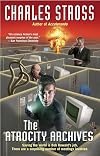
In The Atrocity Archives, Charles Stross perfectly blends Lovecraftian horror into a spy thriller. But don't think James Bond, though they have their own special gadgets, think bureaucrats mired in office politics and meetings who must battle bean counters as often as monsters.
Stross' protagonist, Bob Howard, is a Gen X hacker who gets drafted into the Laundry, the code name for the UK government agency which protects England from nasty beasties from beyond. It turns out all that complex show more math that fried my brain in college (like second order, linear, non-homogeneous differential equations) can be used to open portals to other dimensions where cerebellum sucking slugs are just itching for an invitation to our world. Bob starts out in tech support but his skills earn him his first field assignment. While it's clear he's not suited for dealing either with the harpies from accounting or the things that should not be, Stross has fun playing the anti-hero card with Bob, letting his wit and resourcefulness survive the cards he's dealt.
The book contains the short novel, The Atrocity Archives, and the Hugo Award winning novella, The Concrete Jungle. The former serves as an introduction to this twisted universe Stross has hatched. Bob is forced to deal with rival spies, terrorists and the twisted remnants of the Nazi occult fetish. In the latter, office politics come to a head while someone figures out how to weaponize a gorgon's stare. You remember gorgons, right? Medusa is the most well known of this crowd. The Concrete Jungle may have won the Hugo, but I liked The Atrocity Archives a lot more. I felt that it flowed better and the drama was more intense.
I really enjoyed this book and look forward to reading the others in this series. show less
Stross' protagonist, Bob Howard, is a Gen X hacker who gets drafted into the Laundry, the code name for the UK government agency which protects England from nasty beasties from beyond. It turns out all that complex show more math that fried my brain in college (like second order, linear, non-homogeneous differential equations) can be used to open portals to other dimensions where cerebellum sucking slugs are just itching for an invitation to our world. Bob starts out in tech support but his skills earn him his first field assignment. While it's clear he's not suited for dealing either with the harpies from accounting or the things that should not be, Stross has fun playing the anti-hero card with Bob, letting his wit and resourcefulness survive the cards he's dealt.
The book contains the short novel, The Atrocity Archives, and the Hugo Award winning novella, The Concrete Jungle. The former serves as an introduction to this twisted universe Stross has hatched. Bob is forced to deal with rival spies, terrorists and the twisted remnants of the Nazi occult fetish. In the latter, office politics come to a head while someone figures out how to weaponize a gorgon's stare. You remember gorgons, right? Medusa is the most well known of this crowd. The Concrete Jungle may have won the Hugo, but I liked The Atrocity Archives a lot more. I felt that it flowed better and the drama was more intense.
I really enjoyed this book and look forward to reading the others in this series. show less
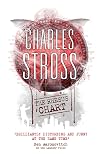
The Laundry series has always been good, put a little uneven as it bounces it between absurdist comedy and cosmic horror. In book 5, Stross stops running and straps on some kind of literary rocket-skates, with a tightly plotted thriller about Laundry-verse vampires, which of course everybody knows don't exist. Bob is growing into a mature protagonist and potential Deeply Scary Sorcerer, against a background of dreary British bureaucracy and the unholy genetic mashup of finance and tech show more culture. Great book, even if I miss Pinky and Brains a little. show less
Lists
Books Read in 2026 (16)
Solar System (1)
Best Cyberpunk (1)
io9 Book Club (1)
Read in 2007 (1)
Princess Tales (1)
Books Read in 2022 (13)
Best Spy Fiction (3)
Singularity (6)
Reading Queue (1)
Our digital age (1)
2021 (1)
Awards


You May Also Like


Associated Authors
Statistics
- Works
- 119
- Also by
- 72
- Members
- 45,508
- Popularity
- #356
- Rating
- 3.7
- Reviews
- 1,643
- ISBNs
- 489
- Languages
- 9
- Favorited
- 224


