
Greg Egan
Author of Permutation City
About the Author
Series
Works by Greg Egan
Asimov's Science Fiction: Vol. 45, No. 9 & 10 [September/October 2021] (2021) — Contributor — 7 copies
Bifrost N 113 - L'intelligence artificielle sous les feux de la science-fiction: la revue des mondes imaginaires (2024) (2024) 6 copies
Asimov's Science Fiction: Vol. 48, No. 1 & 2 [January/February 2024] — Contributor — 6 copies
Only Connect 3 copies
Asimov's Science Fiction: Vol. 49, No. 11 & 12 [November/December 2025] — Contributor — 3 copies
Artifact 3 copies
Orphanogenesis 2 copies
Tangled Up 2 copies
In Numbers [novelette] 2 copies
Asimov's Science Fiction: Vol. 50, No. 5 & 6 [May/June 2026] — Contributor — 1 copy
Alpha Gal 1 copy
Spare Parts for the Mind 1 copy
HLa Iscala di Schild 1 copy
Interi oscuri 1 copy
Night Running 1 copy
DISTESS 1 copy
Artifacts - 20 Stories 1 copy
Short Fiction Complete 1 copy
Didicosm 1 copy
Death And The Gorgon 1 copy
Light Up The Clouds 1 copy
3-Adica 1 copy
Bit Players [short story] 1 copy
The Eternal Flame Excerpt 1 copy
Zero for Conduct (Novelette) 1 copy
Associated Works
The Year's Best Science Fiction: Seventeenth Annual Collection (2000) — Contributor — 557 copies, 2 reviews
The Year's Best Science Fiction: Twentieth Annual Collection (2003) — Contributor — 527 copies, 2 reviews
The Year's Best Science Fiction: Sixteenth Annual Collection (1999) — Contributor — 518 copies, 1 review
The Year's Best Science Fiction: Twenty-Fifth Annual Collection (2008) — Contributor — 512 copies, 3 reviews
The Year's Best Science Fiction: Eighteenth Annual Collection (2001) — Contributor — 505 copies, 2 reviews
The Year's Best Science Fiction: Tenth Annual Collection (1993) — Contributor — 479 copies, 5 reviews
The Year's Best Science Fiction: Eleventh Annual Collection (1994) — Contributor — 470 copies, 2 reviews
The Year's Best Science Fiction: Fifteenth Annual Collection (1998) — Contributor — 468 copies, 2 reviews
The Year's Best Science Fiction: Twenty-Fourth Annual Collection (2007) — Contributor — 457 copies, 6 reviews
The Year's Best Science Fiction: Ninth Annual Collection (1992) — Contributor — 456 copies, 4 reviews
The Year's Best Science Fiction: Thirteenth Annual Collection (1996) — Contributor — 454 copies, 4 reviews
The Best of the Best: 20 Years of the Year's Best Science Fiction (2005) — Contributor — 442 copies, 20 reviews
The Year's Best Science Fiction: Twenty-Sixth Annual Collection (2009) — Contributor — 424 copies, 2 reviews
The Year's Best Science Fiction: Eighth Annual Collection (1991) — Contributor — 417 copies, 6 reviews
The Mammoth Book of Extreme Science Fiction: New Generation Far-Future SF (2006) — Contributor — 351 copies, 7 reviews
The Locus Awards: Thirty Years of the Best in Science Fiction and Fantasy (2004) — Contributor — 290 copies, 11 reviews
The Best of the Best, Volume 2: 20 Years of the Best Short Science Fiction Novels (2007) — Contributor — 235 copies, 10 reviews
The Year's Best Fantasy and Horror: Second Annual Collection (1987) — Contributor — 208 copies, 1 review
The Year's Best Science Fiction: Thirty-Second Annual Collection (2015) — Contributor — 208 copies, 8 reviews
The Year's Best Science Fiction: Thirty-First Annual Collection (2014) — Contributor — 204 copies, 3 reviews
The Very Best of the Best: 35 Years of The Year's Best Science Fiction (2019) — Contributor — 184 copies, 1 review
The Best Science Fiction and Fantasy of the Year, Volume 2 (2008) — Contributor — 177 copies, 4 reviews
Some of the Best from Tor.com: 2019 Edition: A Tor.com Original (2020) — Contributor — 157 copies, 3 reviews
The Year's Best Science Fiction: Thirty-Fifth Annual Collection (2018) — Contributor — 154 copies, 3 reviews
The Best Science Fiction and Fantasy of the Year, Volume 3 (2009) — Contributor — 150 copies, 2 reviews
The Year's Best Science Fiction Vol. 1: The Saga Anthology of Science Fiction 2020 (2020) — Contributor — 110 copies, 7 reviews
The Best Science Fiction and Fantasy of the Year, Volume 9 (2015) — Contributor — 74 copies, 3 reviews
The Final Frontier: Stories of Exploring Space, Colonizing the Universe, and First Contact (2018) — Contributor — 73 copies, 4 reviews
The Long List Anthology Volume 5: More Stories from the Hugo Award Nomination List (The Long List Anthology Series) (2019) — Contributor — 53 copies
The Best Science Fiction and Fantasy of the Year, Volume 12 (2018) — Contributor — 47 copies, 2 reviews
Asimov's Science Fiction: Vol. 41, No. 11 & 12 [November/December 2017] (2017) — Contributor — 22 copies, 3 reviews
Isaac Asimov's Science Fiction Magazine: Vol. 16, No. 8 [July 1992] (1992) — Contributor — 14 copies
Asimov's Science Fiction: Vol. 39, No. 12 [December 2015] (2015) — Contributor — 10 copies, 1 review
Terra Nova vol. 2. Antología de ciencia ficción contemporánea (Terra Nova, #2) (2013) — Contributor — 7 copies, 2 reviews
Asimov's Science Fiction: Vol. 42, No. 9 & 10 [September/October 2018] (2018) — Contributor — 7 copies
Subterranean Magazine Winter 2014 — Contributor — 6 copies
Millemondi Inverno 1996 — Contributor — 2 copies
The Year’s Top Ten Tales of Science Fiction 6 — Contributor — 1 copy
ロボット・オペラ — Contributor — 1 copy
Tagged
Common Knowledge
- Other names
- Egan, Gregory Mark
- Birthdate
- 1961-08-20
- Gender
- male
- Education
- University of Western Australia (B.S., Mathematics)
- Occupations
- science fiction author
fantasy writer - Awards and honors
- Hugo Award winner (shortlist)
John W. Campbell Memorial Award for Best Novel - Agent
- Russell Galen (Scovil Galen Ghosh Literary)
- Nationality
- Australia
- Birthplace
- Perth, Western Australia, Australia
- Places of residence
- Perth, Western Australia, Australia
- Associated Place (for map)
- Perth, Western Australia, Australia
Members
Discussions
Sci-fi short story about a medical ring and aid workers making medical technologies available to 3rd in Name that Book (August 2012)
Reviews
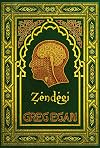
Quizás ’Zendegi’ sea el libro más asequible dentro de la bibliografía de Greg Egan, el famoso autor de ciencia ficción hard. Y digo asequible, que no simple, ya que aunque el peso de terminología científica es mucho menor en esta obra, las ideas que maneja son de gran calado. Egan deja esta vez las grandes ideas especulativas para centrarse en una historia más de ámbito social y ético, donde priman las experiencias y relaciones de los protagonistas. Parece que esta vez la show more ciencia ficción es una herramienta que utiliza Egan como trasfondo de lo que realmente nos quiere contar, que no es otra cosa que lo que estaría dispuesto a hacer un padre por amor a su hijo.
Egan sitúa ’Zendegi’ (palabra que significa vida en persa) en Irán, en un futuro cercano. La primera parte de la novela es una carta de presentación de los personajes y de sus vidas, donde se nos dan a conocer los dos hilos narrativos de la trama, así como los dos personajes que los sustentan: Martin Seymour, un periodista australiano destinado a cubrir las elecciones iraníes, y que se ve inmerso en medio de los acontecimientos posteriores; y Nasim Golestani, una exiliada iraní en Estados Unidos, dedicada a trabajar en un proyecto que intenta mapear el cerebro humano. Ya en la segunda parte, es donde empieza la historia en sí, y donde entra en juego Zendegi, un espacio de realidad virtual.
La novela de Greg Egan no es de acción, todo lo contrario, tiene un transcurrir pausado y tranquilo, donde sabemos de las vidas de los personajes, así como de sus logros y fracasos, que junto a los avances tecnológicos, sirven de reflexión sobre la familia, la mortalidad, los cambios sociales, etc. Se plantea también el enfrentamiento, el debate moral y ético, entre las posibilidades que nos ofrece la ciencia para emular duplicados de cerebros, de personas, y los derechos que éstos deberían tener, que me ha parecido los más interesante de la novela.
’Zendegi’ no es que me haya disgustado, pero tampoco me ha entusiasmado en exceso. Resulta una buena reflexión de un futuro cercano, pero está lejos de las ideas y especulaciones científicas a que nos tiene habituados Greg Egan en otras obras suyas, como ‘Axiomático’, ‘Cuarentena’ o ‘Diáspora’. Realmente, espero otro tipo de historias por parte de Greg Egan. show less
Egan sitúa ’Zendegi’ (palabra que significa vida en persa) en Irán, en un futuro cercano. La primera parte de la novela es una carta de presentación de los personajes y de sus vidas, donde se nos dan a conocer los dos hilos narrativos de la trama, así como los dos personajes que los sustentan: Martin Seymour, un periodista australiano destinado a cubrir las elecciones iraníes, y que se ve inmerso en medio de los acontecimientos posteriores; y Nasim Golestani, una exiliada iraní en Estados Unidos, dedicada a trabajar en un proyecto que intenta mapear el cerebro humano. Ya en la segunda parte, es donde empieza la historia en sí, y donde entra en juego Zendegi, un espacio de realidad virtual.
La novela de Greg Egan no es de acción, todo lo contrario, tiene un transcurrir pausado y tranquilo, donde sabemos de las vidas de los personajes, así como de sus logros y fracasos, que junto a los avances tecnológicos, sirven de reflexión sobre la familia, la mortalidad, los cambios sociales, etc. Se plantea también el enfrentamiento, el debate moral y ético, entre las posibilidades que nos ofrece la ciencia para emular duplicados de cerebros, de personas, y los derechos que éstos deberían tener, que me ha parecido los más interesante de la novela.
’Zendegi’ no es que me haya disgustado, pero tampoco me ha entusiasmado en exceso. Resulta una buena reflexión de un futuro cercano, pero está lejos de las ideas y especulaciones científicas a que nos tiene habituados Greg Egan en otras obras suyas, como ‘Axiomático’, ‘Cuarentena’ o ‘Diáspora’. Realmente, espero otro tipo de historias por parte de Greg Egan. show less
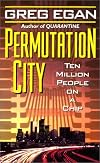
What starts and ends as a basic search for immortality as data, as in uploading perfect copies of yourself to cheat death indefinitely, makes this 1994 novel a rather focused utopian novel. Not that things are all rosy, of course, but that it's the search for utopia, or heaven on earth, that drives the characters here.
Distinctions get very hazy between real and real. When the universe is math and math is the universe, a perfect copy as data will have no real difference with everything we show more have. Change some basic laws, add new elements, ramp up your perceptions or slow them way down. It doesn't really matter. Create a universe that is self-evolving, have it compete with itself and all the parts within it, run a simulation of Life, and turn Darwinism and Game Theory upon data elements.
It's smart. It's evolution in data. And when you can live thousands of years working out all the kinks in your programming in a few eyeblinks in that boring other reality, why not go all the way and live forever for real, speeding up and slowing down within the actual universe, give yourself robot waldos, meet new neighbors... or aliens... and generally play god?
We're already the running software platform in our own universe, after all. Matter doesn't really exist anyway. We're running on an encoded holographic universe. This novel just flips the concept in a mirror and spells out what we might need to do to survive.
Sure, we've seen this concept done many times now, but look at the date here. It's ALSO been done before, but few have gone as far or all out as Greg Egan. The denizens of Permutation City seem to be doing it right.
Yes, there's a good story and good characters, too, but in its heart, this is definitely a utopian novel. :)
I really miss those. show less
Distinctions get very hazy between real and real. When the universe is math and math is the universe, a perfect copy as data will have no real difference with everything we show more have. Change some basic laws, add new elements, ramp up your perceptions or slow them way down. It doesn't really matter. Create a universe that is self-evolving, have it compete with itself and all the parts within it, run a simulation of Life, and turn Darwinism and Game Theory upon data elements.
It's smart. It's evolution in data. And when you can live thousands of years working out all the kinks in your programming in a few eyeblinks in that boring other reality, why not go all the way and live forever for real, speeding up and slowing down within the actual universe, give yourself robot waldos, meet new neighbors... or aliens... and generally play god?
We're already the running software platform in our own universe, after all. Matter doesn't really exist anyway. We're running on an encoded holographic universe. This novel just flips the concept in a mirror and spells out what we might need to do to survive.
Sure, we've seen this concept done many times now, but look at the date here. It's ALSO been done before, but few have gone as far or all out as Greg Egan. The denizens of Permutation City seem to be doing it right.
Yes, there's a good story and good characters, too, but in its heart, this is definitely a utopian novel. :)
I really miss those. show less

A personal high water mark for hard SF. In Permutation City, the rich can afford to download their consciousness into a version of virtual reality. Having attained this form of immortality, they can edit their own soul to match their preferences for life. Copies run at a much slower tick rate than our reality, in part due to the limits of computing, which means that to properly communicate with a copy, people must essentially go into a coma so their brain speed matches with their copy. show more Unsurprisingly, there's a messy relationship between AI copies and their 'real world' counterparts that Egan explores both technological and philosophically. How much can we change ourselves before we become someone else entirely? What truly exists or counts as conscious life? Is anything real except the mind (Solipsism)?
Parallel to these advances, there's a version of reality called the Autoverse, where life is simulated as one-to-one as possible. One of the main characters, Maria, discovers that biota in the Autoverse can evolve similarly to the real world, which means that a whole separate universe could exist separately from our reality with the processes of a computer, though the computing power to run this universe would be beyond current computing limits. Despite that, Maria is contracted to build a theoretical model for this Autoverse universe by a man named Paul Durham, who is creating a private 'Garden of Eden' settlement in VR for the copies of his of corporate elite clients that will allegedly be immune to commodity market that processing power exists on. I know for a fact that I'm horribly butchering this summary, but that's partially due to just how ambitious Egan is in Permutation City. This work really has to be read to have a grasp on all that it tries to do.
I connected to this work intensely, even though a lot of the 'dust theory' went over my head. It's dense, ideas heavy, but with super digestible prose that reminds me of Egan's contemporary, Robert Charles Wilson, if he spent less time on characters and more time on quantum mechanics. Perhaps that's (at least partially) why I enjoyed it. I enjoy feeling challenged, like I'm only scratching the surface of what there is discover about a work. I will admit, though, that I debated whether the difficulty that I had with some of Egan's concepts derived from their inherent complexity, or if he simply poorly communicates them. I can see both sides of this argument, and wouldn't begrudge someone at all for disagreeing with me. Even though it's not a long novel, it feels as though it is; Egan's density takes time to contend with.
As much as this is a novel of ideas over characters, there's also some very gripping plot points that kept me engaged with the story too. There's a scene in a shower that's very reminiscent to a similar scene in Greg Bear's Blood Music, and shocked me nearly as much. I always appreciate when the scope of a novel continues to grow until its humble beginnings are barely recognizable to the concluding drama.
Coincidentally, I heard a news story just before reading Permutation City about the CEO of Zoom talking about how he's looking forward to the imminent use of AI to attend meetings in your stead while using a mask of your face and copy of your personality/knowledge base. This is of course a hyper specific example, and I don't personally put much stock into prescience when it comes to SF, but I couldn't help but shiver at Egan's perceptiveness when it came to most facets of AI. show less
Parallel to these advances, there's a version of reality called the Autoverse, where life is simulated as one-to-one as possible. One of the main characters, Maria, discovers that biota in the Autoverse can evolve similarly to the real world, which means that a whole separate universe could exist separately from our reality with the processes of a computer, though the computing power to run this universe would be beyond current computing limits. Despite that, Maria is contracted to build a theoretical model for this Autoverse universe by a man named Paul Durham, who is creating a private 'Garden of Eden' settlement in VR for the copies of his of corporate elite clients that will allegedly be immune to commodity market that processing power exists on. I know for a fact that I'm horribly butchering this summary, but that's partially due to just how ambitious Egan is in Permutation City. This work really has to be read to have a grasp on all that it tries to do.
I connected to this work intensely, even though a lot of the 'dust theory' went over my head. It's dense, ideas heavy, but with super digestible prose that reminds me of Egan's contemporary, Robert Charles Wilson, if he spent less time on characters and more time on quantum mechanics. Perhaps that's (at least partially) why I enjoyed it. I enjoy feeling challenged, like I'm only scratching the surface of what there is discover about a work. I will admit, though, that I debated whether the difficulty that I had with some of Egan's concepts derived from their inherent complexity, or if he simply poorly communicates them. I can see both sides of this argument, and wouldn't begrudge someone at all for disagreeing with me. Even though it's not a long novel, it feels as though it is; Egan's density takes time to contend with.
As much as this is a novel of ideas over characters, there's also some very gripping plot points that kept me engaged with the story too. There's a scene in a shower that's very reminiscent to a similar scene in Greg Bear's Blood Music, and shocked me nearly as much. I always appreciate when the scope of a novel continues to grow until its humble beginnings are barely recognizable to the concluding drama.
Coincidentally, I heard a news story just before reading Permutation City about the CEO of Zoom talking about how he's looking forward to the imminent use of AI to attend meetings in your stead while using a mask of your face and copy of your personality/knowledge base. This is of course a hyper specific example, and I don't personally put much stock into prescience when it comes to SF, but I couldn't help but shiver at Egan's perceptiveness when it came to most facets of AI. show less
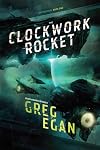
Egan's love for exploring weird science undoes him here, IMO. Not only are the characters very different biologically from humans, but the fundamental physics of the universe is very different as well. Both aspects are introduced almost immediately. In terms of biology, the inhabitants of this world can reform their bodies at will, budding and reabsorbing hands as needed. They have rear-facing eyes. In terms of physics, when they see the motion of stars, it's a spectral trail of colors -- show more the speed of light depends on its frequency. Those aren't the weirdest part. Choosing to be single and not give birth is a major point of social conflict, but it's several chapters before we learn that birth involves the death of the mother as she fissions to form four new children. The speed of light is a side-effect of time being a dimension that can be moved through, just like the other dimensions of space. The universe is toroidal, like some early videogames where traveling off one edge means entry on the opposite edge.
So why did all this sabotage the book for me -- enough to make me not interested in the rest of the trilogy? First is the time Egan spends on explaining all this. Every few chapters, the story stops dead while pages and pages of diagrams and science lectures are spent trying to explain how light and time and energy work in this universe. Second is that for all the weirdness of biology and physics, everything otherwise seems very familiar. It's hard to visualize the characters and what they do as any other than blobby people with the same conflicts and goals as all of us. They may have converted a mountain of rock that can be made to burn into a rocket, controlled by mechanical devices, but it doesn't feel all that different. Egan went too far with the physics and not far enough with the social and personal.
While this didn't work for me, too much work and thought went into it to dismiss it. If you're a fan of Egan, check it out. show less
So why did all this sabotage the book for me -- enough to make me not interested in the rest of the trilogy? First is the time Egan spends on explaining all this. Every few chapters, the story stops dead while pages and pages of diagrams and science lectures are spent trying to explain how light and time and energy work in this universe. Second is that for all the weirdness of biology and physics, everything otherwise seems very familiar. It's hard to visualize the characters and what they do as any other than blobby people with the same conflicts and goals as all of us. They may have converted a mountain of rock that can be made to burn into a rocket, controlled by mechanical devices, but it doesn't feel all that different. Egan went too far with the physics and not far enough with the social and personal.
While this didn't work for me, too much work and thought went into it to dismiss it. If you're a fan of Egan, check it out. show less
Lists
Singularity (1)
SFF Down Under (1)
SF Masterworks (1)
Summer Books (1)
Geek Books (1)
Wishlist (4)
Best Cyberpunk (2)
Finished in 2020 (2)
Wishlist (1)
Five star books (1)
Finished in 2021 (1)
METAfiction (1)
Ocean Setting (1)
Awards


You May Also Like


Associated Authors
Statistics
- Works
- 129
- Also by
- 124
- Members
- 13,952
- Popularity
- #1,648
- Rating
- 3.8
- Reviews
- 439
- ISBNs
- 287
- Languages
- 12
- Favorited
- 92