
Gardner Dozois (1947–2018)
Author of Rogues
About the Author
Gardner Dozois was born in Salem, Massachusetts on July 23, 1947. After working as an Army journalist, he became a science fiction and fantasy editor and author. He was the founding editor of The Year's Best Science Fiction anthologies and editor of Asimov's from 1984 until 2004. His work as an show more editor received more than 40 Hugo Awards, 40 Nebula Awards, and 30 Locus Awards. He received the Hugo Award for Best Professional Editor 15 times between 1988 and his retirement from Asimov's in 2004. He wrote books including Strangers and short stories including The Peacemaker and Morning Child, which won the Nebula Award for Short Story in 1983 and 1984, respectively. He also collaborated with George R. R. Martin on a series of themed anthologies including Songs of the Dying Earth, Old Mars, Dangerous Women, and Rogues. In 2011, Dozois was inducted into the Science Fiction Hall of Fame. He died on May 27, 2018 at the age of 70. (Bowker Author Biography) show less
Disambiguation Notice:
Dozois' popular series The Year's Best Science Fiction has been reprinted as Best New SF and The Mammoth Book of Best New SF in the UK with different numbers than the US series. Some of the US volumes have never been reprinted in the UK. Some volumes have been reprinted in Australia under the names The Giant Book of Fantastic SF and The Giant Book of Modern SF (and possibly others).
Dozois' Best Science Fiction Stories of the Year is an unrelated series.
Series
Works by Gardner Dozois
Songs of Love and Death: All Original Tales of Star Crossed Love (2010) — Editor — 809 copies, 37 reviews
The Year's Best Science Fiction: Twenty-Second Annual Collection (2005) — Editor — 578 copies, 11 reviews
The Year's Best Science Fiction: Twenty-First Annual Collection (2004) — Editor — 573 copies, 6 reviews
The Year's Best Science Fiction: Twenty-Third Annual Collection (2006) — Editor — 568 copies, 5 reviews
The Year's Best Science Fiction: Nineteenth Annual Collection (2002) — Editor — 559 copies, 6 reviews
The Year's Best Science Fiction: Seventeenth Annual Collection (2000) — Editor — 557 copies, 2 reviews
The Year's Best Science Fiction: Twenty-Fifth Annual Collection (2008) — Editor — 512 copies, 3 reviews
The Year's Best Science Fiction: Eighteenth Annual Collection (2001) — Editor — 504 copies, 2 reviews
The Dragon Book: Magical Tales from the Masters of Modern Fantasy (2009) — Editor — 487 copies, 14 reviews
The Year's Best Science Fiction: Fifteenth Annual Collection (1998) — Editor — 469 copies, 2 reviews
The Year's Best Science Fiction: Twenty-Fourth Annual Collection (2007) — Editor — 457 copies, 6 reviews
The Year's Best Science Fiction: Thirteenth Annual Collection (1996) — Editor — 455 copies, 4 reviews
The Year's Best Science Fiction: Fourteenth Annual Collection (1997) — Editor — 447 copies, 2 reviews
The Best of the Best: 20 Years of the Year's Best Science Fiction (2005) — Editor — 436 copies, 20 reviews
The Year's Best Science Fiction: Twenty-Sixth Annual Collection (2009) — Editor — 424 copies, 2 reviews
The Year's Best Science Fiction: Twenty-Eighth Annual Collection (2011) — Editor — 328 copies, 3 reviews
The Year's Best Science Fiction: Twenty-Seventh Annual Collection (2010) — Editor — 321 copies, 6 reviews
The Year's Best Science Fiction: Twenty-Ninth Annual Collection (2012) — Editor — 276 copies, 5 reviews
The Year's Best Science Fiction: Thirtieth Annual Collection (2013) — Editor — 255 copies, 3 reviews
The Best of the Best, Volume 2: 20 Years of the Best Short Science Fiction Novels (2007) — Editor — 234 copies, 10 reviews
The Year's Best Science Fiction: Thirty-Second Annual Collection (2015) — Editor — 206 copies, 8 reviews
The Year's Best Science Fiction: Thirty-First Annual Collection (2014) — Editor — 202 copies, 3 reviews
The Year's Best Science Fiction: Thirty-Third Annual Collection (2016) — Editor — 190 copies, 2 reviews
The Very Best of the Best: 35 Years of The Year's Best Science Fiction (2019) — Editor — 183 copies, 1 review
The Year's Best Science Fiction: Thirty-Fifth Annual Collection (2018) — Editor — 153 copies, 3 reviews
The Year's Best Science Fiction: Thirty-Fourth Annual Collection (2017) — Editor — 147 copies, 4 reviews
Best Science Fiction Stories of the Year Eighth Annual Collection (1979) — Editor — 66 copies, 2 reviews
The Good Stuff: Adventure SF in the Grand Tradition: The Good Old Stuff, The Good New Stuff (1999) 62 copies
The Year's Best Science Fiction 4 34 copies
Isaac Asimov's Science Fiction Magazine: Vol. 12, No. 7 [July 1988] (1988) — Editor — 20 copies, 1 review
Isaac Asimov's Science Fiction Magazine: Vol. 11, No. 9 [September 1987] (1987) — Editor — 19 copies
Isaac Asimov's Science Fiction Magazine: Vol. 15, No. 4 & 5 [April 1991] (1991) — Editor — 18 copies, 1 review
Isaac Asimov's Science Fiction Magazine: Vol. 14, No. 11 & 12 [November 1990] (1990) — Editor — 16 copies
Isaac Asimov's Science Fiction Magazine: Vol. 13, No. 9 [September 1989] (1989) — Editor — 15 copies
Isaac Asimov's Science Fiction Magazine: Vol. 12, No. 11 [November 1988] (1988) — Editor — 15 copies
Isaac Asimov's Science Fiction Magazine: Vol. 11, No. 13 [Mid-December 1987] (1987) — Editor — 15 copies
Isaac Asimov's Science Fiction Magazine: Vol. 15, No. 7 [June 1991] (1991) — Editor — 15 copies, 1 review
Isaac Asimov's Science Fiction Magazine: Vol. 10, No. 9 [September 1986] (1986) — Editor — 14 copies
Isaac Asimov's Science Fiction Magazine: Vol. 13, No. 12 [December 1989] (1989) — Editor — 14 copies
Isaac Asimov's Science Fiction Magazine: Vol. 10, No. 12 [December 1986] (1986) — Editor — 14 copies
Asimov's Science Fiction: Vol. 23, No. 10 & 11 [October/November 1999] (1999) — Editor; Contributor — 14 copies
Isaac Asimov's Science Fiction Magazine: Vol. 14, No. 14 [Mid-December 1990] (1990) — Editor — 14 copies
Isaac Asimov's Science Fiction Magazine: Vol. 15, No. 10 [September 1991] (1991) — Editor — 14 copies
Isaac Asimov's Science Fiction Magazine: Vol. 14, No. 9 [September 1990] (1990) — Editor — 13 copies
Isaac Asimov's Science Fiction Magazine: Vol. 16, No. 10 [September 1992] (1992) — Editor — 13 copies
Isaac Asimov's Science Fiction Magazine: Vol. 12, No. 9 [September 1988] (1988) — Editor — 13 copies
Isaac Asimov's Science Fiction Magazine: Vol. 11, No. 11 [November 1987] (1987) — Editor — 12 copies
Isaac Asimov's Science Fiction Magazine: Vol. 15, No. 15 [Mid-December 1991] (1991) — Editor — 12 copies
Isaac Asimov's Science Fiction Magazine: Vol. 14, No. 13 [December 1990] (1990) — Editor — 12 copies
Isaac Asimov's Science Fiction Magazine: Vol. 16, No. 4 & 5 [April 1992] (1992) — Editor — 12 copies
Isaac Asimov's Science Fiction Magazine: Vol. 11, No. 12 [December 1987] (1987) — Editor — 12 copies
Isaac Asimov's Science Fiction Magazine: Vol. 15, No. 14 [December 1991] (1991) — Editor — 11 copies
Isaac Asimov's Science Fiction Magazine: Vol. 12, No. 13 [Mid-December 1988] (1988) — Editor — 11 copies
Isaac Asimov's Science Fiction Magazine: Vol. 10, No. 13 [Mid-December 1986] (1986) — Editor — 11 copies
Isaac Asimov's Science Fiction Magazine: Vol. 15, No. 8 [July 1991] (1991) — Editor — 11 copies, 1 review
Asimov's Science Fiction: Vol. 21, No. 10 & 11 [October/November 1997] — Editor — 11 copies, 1 review
Isaac Asimov's Science Fiction Magazine: Vol. 13, No. 11 [November 1989] (1989) — Editor — 11 copies
Isaac Asimov's Science Fiction Magazine: Vol. 10, No. 11 [November 1986] (1986) — Editor — 11 copies
Isaac Asimov's Science Fiction Magazine: Vol. 12, No. 12 [December 1988] (1988) — Editor — 10 copies
Asimov's Science Fiction: Vol. 24, No. 10 & 11 [October/November 2000] (2000) — Editor — 10 copies, 1 review
Isaac Asimov's Science Fiction Magazine: Vol. 13, No. 13 [Mid-December 1989] (1989) — Editor — 9 copies
The Magazine of Fantasy and Science Fiction 69. Nacht in den Ruinen. Eine Auswahl der besten Erzählungen. (1984) — Contributor — 9 copies
Isaac Asimov's Science Fiction Magazine: Vol. 15, No. 12 & 13 [November 1991] (1991) — Editor — 9 copies
Asimov's Science Fiction: Vol. 26, No. 4 [April 2002] — Editor — 8 copies
Subterranean Magazine Spring 2009 — Editor — 7 copies
The Year's Best Science Fiction 2 5 copies
The Sacrifice 4 copies
The Last Day Of July 3 copies
The Storm 3 copies
Il meglio della SF 3 copies
Community 3 copies
The Man Who Waved Hello 3 copies
The Year's Best Science Fiction 1 2 copies
The Stray 2 copies
Recidivist 2 copies
Millemondi Inverno 1996 — Editor — 2 copies
Snow Job 2 copies
Isaac Asimov Su Marte 2 copies
Infiniti universi; parte 1 2 copies
Mondi senza fine - parte 1 2 copies
Strangers [novella] 2 copies
Where No Sun Shines 2 copies
The Mayan Variation 2 copies
The Sound of Muzak 2 copies
Send No Money 1 copy
King Harvest 1 copy
Inverno Horror 1992: Vampiri 1 copy
In a Crooked Year 1 copy
A Change in the Weather 1 copy
The Smoke of Gold is Glory 1 copy
Time Bride 1 copy
The Year's Best Science Fiction (RO #7) — Editor — 1 copy
Conditioned Reflex 1 copy
Travel Diary 1 copy
Expiation 1 copy
Wires 1 copy
War 1 copy
A legjobbak legjobbjai 1. 1 copy
Mondi senza fine - parte 3 1 copy
Slow Dancing with Jesus 1 copy
The Clowns 1 copy
Asimov su Marte 1 copy
Rock'n'roll Altitude 1 copy
Astronavi & mondi lontani 1 copy
Razboinicii I 1 copy
The Empty Man 1 copy
Razboinicii II 1 copy
Associated Works
The Vampire Archives: The Most Complete Volume of Vampire Tales Ever Published (2007) — Contributor — 217 copies, 5 reviews
Gateways: A Feast of Great New Science Fiction Honoring Grand Master Frederik Pohl (2010) — Contributor — 111 copies, 2 reviews
More Wandering Stars: Outstanding Stories of Jewish Fantasy and Science Fiction (1981) — Contributor — 105 copies
Asimov's Science Fiction: Hugo & Nebula Award Winning Stories (1995) — Contributor — 103 copies, 2 reviews
Nebula Awards Showcase 2002: The Year's Best SF and Fantasy (2002) — Contributor — 95 copies, 1 review
Field of Fantasies: Baseball Stories of the Strange and Supernatural (2014) — Contributor — 46 copies
Light Years and Dark: Science Fiction and Fantasy of and for Our Time (1984) — Contributor — 38 copies
The Magazine of Fantasy and Science Fiction October/November 1994, Vol. 87, No. 4 & 5 (1994) — Author — 34 copies, 1 review
Science Fiction Writers: Critical Studies of the Major Authors From the Early Nineteenth Century to the Present Day (1982) — Contributor — 33 copies
A Cross of Centuries: Twenty-five Imaginative Tales About the Christ (2007) — Contributor — 32 copies, 2 reviews
Traveler of Worlds: Conversations with Robert Silverberg (2016) — Introduction — 28 copies, 4 reviews
Nebula Awards 20: SFWA's Choices for the Best Science Fiction and Fantasy 1984 (1985) — Contributor — 28 copies
Analog Science Fiction/Science Fact: Vol. XCV, No. 12 (December 1975) (1975) — Contributor — 24 copies
The Magazine of Fantasy and Science Fiction September/October 2019, Vol. 137, Nos. 3 & 4 (1991) — Contributor — 18 copies
Isaac Asimov's Science Fiction Magazine: Vol. 9, No. 10 [October 1985] (1985) — Contributor — 15 copies
The Magazine of Fantasy and Science Fiction May/June 2018, Vol. 134, Nos. 5 & 6 (2018) — Contributor — 14 copies, 1 review
The Magazine of Fantasy and Science Fiction April 2002, Vol. 102, No. 4 (2002) — Contributor — 10 copies
Locus, July 2011 (606) — Contributor — 1 copy
Tagged
Common Knowledge
- Legal name
- Dozois, Gardner Raymond
- Birthdate
- 1947-07-23
- Date of death
- 2018-05-27
- Gender
- male
- Education
- Salem High School
- Occupations
- editor
writer
science fiction author - Organizations
- Asimov's Science Fiction
- Awards and honors
- Jack Williamson Lectureship (2009)
SF Hall Of Fame (2011)
Locus Award Finalist (Editor, 2017)
Locus Award (Editor, 2019)
Hugo (Best Editor - Short Form, 2019) - Agent
- Virginia Kidd
- Cause of death
- multiple system failure
- Nationality
- USA
- Birthplace
- Salem, Massachusetts, USA
- Places of residence
- Salem, Massachusetts, Amerika
New York, New York, Amerika
Philadelphia, Pennsylvania, Amerika - Place of death
- Philadelphia, Pennsylvania, USA
- Map Location
- Massachusetts, USA
- Disambiguation notice
- Dozois' popular series The Year's Best Science Fiction has been reprinted as Best New SF and The Mammoth Book of Best New SF in the UK with different numbers than the US series. Some of the US volumes have never been reprinted in the UK. Some volumes have been reprinted in Australia under the names The Giant Book of Fantastic SF and The Giant Book of Modern SF (and possibly others).
Dozois' Best Science Fiction Stories of the Year is an unrelated series.
Members
Reviews

Exciting, visceral, thought-provoking science fiction at its best. This novel, begun in the late 1970s by authors Martin and Dozois, languished in a desk drawer for nearly two decades than was handed over to Abraham to update and conclude. It's amazing how it doesn't feel like a multi-author work. Ramon Espejo is a mining prospector working on the distant planet Sao Paulo. Ramon's got a temper that easily goes out-of-control, and after a violent incident in a bar leaves a man dead, Ramon show more needs to escape into the planet's wilderness for some "away time". Unfortunately, the discovery he makes in the remote mountains starts him on a desperate race back to civilization with an alien threat close on his heels. What, on the surface, is ostensibly an action-packed scifi adventure has a lot more going for it. Ramon is an intensely unlikeable character, who grows on the reader as the story progresses. The settings are gritty and believable. The aliens introduced in the story are fantastic. And the issues raised -- what it means to be human, how to control one's baser instincts, how to empathize with the inhuman -- will keep you thinking long after you've finished the book.
Originally reviewed for my local library's website: http://www.lincolnlibraries.org/depts/bookguide/srec/staffrec10-01.htm show less
Originally reviewed for my local library's website: http://www.lincolnlibraries.org/depts/bookguide/srec/staffrec10-01.htm show less
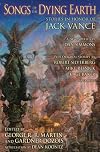
ORIGINALLY POSTED AT Fantasy Literature.
Songs of the Dying Earth: Stories in Honor of Jack Vance is the best anthology I’ve ever read. These stories will be enjoyed by any SFF reader, but they’ll be ten times more fun if you’ve read Jack Vance’s The Dying Earth, because they are all written in honor of that fantastic work. Each tale is written in the style of Vance, which is quite amusing in itself, and each takes place on the Dying Earth, that far-future wasteland in which natural show more selection means survival of the cleverest, nastiest, sneakiest, and most self-serving.
Songs of the Dying Earth was written by “many high-echelon, top-drawer writers” (as Mr. Vance says in the preface): Robert Silverberg, Matthew Hughes, Terry Dowling, Liz Williams, Mike Resnick, Walter Jon Williams, Paula Volsky, Jeff Vandermeer, Kage Baker, Phyllis Eisenstein, Elizabeth Moon, Lucius Shepard, Tad Williams, John C. Wright, Glen Cook, Elizabeth Hand, Byron Tetrick, Tanith Lee, Dan Simmons, Howard Waldrop, George R.R. Martin, and Neil Gaiman. And there’s an introductory “appreciation” by Dean Koontz.
It was pure pleasure to listen to these authors emulate Jack Vance’s writing style and to fill their stories with Vance’s beloved (if I can call them that) characters such as Rhialto the Marvellous, Cugel the clever, Derwe Coreme, Guyal, Turjan, T’sais, Ioucounu the Laughing Magician, Lith, Chun the Unavoidable and, of course, plenty of Deodands, sandestins, pelgranes, and Twk-men. They used some of Vance’s neologisms and hilariously named magic spells (e.g., The Spell of Forlorn Encystment, The Excellent Prismatic Spray, The Spell of the Macroid Toe) and plenty of those other strange things we find in Vance novels: colors that don’t exist, baroque architecture and fashion, slimy creatures that squirm and pulsate, eyeball jelly, blue concentrate, miniaturized enemies, nostrils used as doorways, pulp, ichor, fungi, and empty eye sockets… as Kage Baker said in her afterword, the Dying Earth is like a Hieronymus Bosch painting.
These stories were so well done that much of the time I forgot that I wasn’t actually reading Jack Vance. Many of the tales give us supplementary history about some of Vance’s well-known characters and they fit into the canon so smoothly that I’m afraid I’ll forever be remembering them as original Vance! Every story in this anthology is a lot of fun (except for Elizabeth Moon’s because I have a phobia of cockroaches), and they are all highly recommended reading, but my favorites were those that best affect Vance’s florid style, magniloquent dialogue, distinctive character names, black humor, and sense of irony — not so easily done. Those that accomplish this best are:
* Tad Williams, whose story about a low-order traveling magician who gets stuck to a Deodand was the funniest
* Terry Dowling, who made me late to work because I was sitting in the parking lot and laughing at his magicians’ contest
* Kage Baker, who had won me over even before she has Cugel say to himself “What, though, Cugel! Have you not an unfailing way with the female sex? If you cannot ingratiate yourself with the old witch, you are not your father’s child.”
* Tanith Lee, whose style is spot-on in every respect and gets extra points for creating a spell “extrapolated from Phandaal’s empurpled theorem of Locative Selfulsion”
* Walter Jon Williams, who creates a delightfully clever hero, puts a disagreeable wife in a bottle, and makes up some nice new words
* Mike Resnick, who explains the origin of Chun the Unavoidable and why he sews eyeballs onto his cloak
* Matthew Hughes, whose unlucky protagonist inhabits flying insects who keep getting squashed
* Neil Gaiman, whose charming last story answers the ultimate question: what happens when the sputtering sun finally goes out?
Something that makes the Songs of the Dying Earth very special (especially to me, a rabid but newer Vance fan) were the authors’ afterwords in which they explain what Jack Vance’s work means to them. I was amazed at how similar their stories were: almost invariably they were between 13 and 15 years old, looking for something to do, found a Vance novel on their brother’s bookshelf or one of his stories in a pulp magazine, became completely enthralled, scoured the bookstores and newsstands for more, and eventually read all of his work. They consider Vance a major influence in their own writing, and (almost all of them say this) he’s one of the few authors they still feel the same way about today as they did when they were teenagers. I found this fascinating. And kind of sad, for I have never experienced the joy of needing to hunt for, and therefore eventually finding, a treasured book that I didn’t know existed. I’ve never seen an Ace Double at a newsstand. This was all before my time and I feel like I’ve missed out.
The afterwords were beautifully nostalgic, but in reality I’m thankful to Subterranean Press and Brilliance Audio, that scrounging around on used bookstore floors is a thing of the past for Vance fans. Both of these houses have lately been supplying us with Vance in print and audio, and both have published Songs of the Dying Earth: Stories in Honor of Jack Vance. Sub Press’s print version has terrific illustrations by Tom Kidd. Arthur Morey does the narration for the audio version and, because he also narrated The Dying Earth stories and uses the same voices for the characters in this anthology, it helps give the impression that these are actually Vance tales. Mr. Morey “gets” Jack Vance — he has the wry tone just right. He really had me laughing at the bad-poetry-quoting barbarians in Robert Silverberg’s story.
Songs of the Dying Earth is a must-read for Vance fans. If you haven’t read The Dying Earth, I highly suggest that you read it first (may I recommend Brilliance Audio’s versions?). Mr. Martin and Mr. Dozois, please give us more Songs of the Dying Earth! show less
Songs of the Dying Earth: Stories in Honor of Jack Vance is the best anthology I’ve ever read. These stories will be enjoyed by any SFF reader, but they’ll be ten times more fun if you’ve read Jack Vance’s The Dying Earth, because they are all written in honor of that fantastic work. Each tale is written in the style of Vance, which is quite amusing in itself, and each takes place on the Dying Earth, that far-future wasteland in which natural show more selection means survival of the cleverest, nastiest, sneakiest, and most self-serving.
Songs of the Dying Earth was written by “many high-echelon, top-drawer writers” (as Mr. Vance says in the preface): Robert Silverberg, Matthew Hughes, Terry Dowling, Liz Williams, Mike Resnick, Walter Jon Williams, Paula Volsky, Jeff Vandermeer, Kage Baker, Phyllis Eisenstein, Elizabeth Moon, Lucius Shepard, Tad Williams, John C. Wright, Glen Cook, Elizabeth Hand, Byron Tetrick, Tanith Lee, Dan Simmons, Howard Waldrop, George R.R. Martin, and Neil Gaiman. And there’s an introductory “appreciation” by Dean Koontz.
It was pure pleasure to listen to these authors emulate Jack Vance’s writing style and to fill their stories with Vance’s beloved (if I can call them that) characters such as Rhialto the Marvellous, Cugel the clever, Derwe Coreme, Guyal, Turjan, T’sais, Ioucounu the Laughing Magician, Lith, Chun the Unavoidable and, of course, plenty of Deodands, sandestins, pelgranes, and Twk-men. They used some of Vance’s neologisms and hilariously named magic spells (e.g., The Spell of Forlorn Encystment, The Excellent Prismatic Spray, The Spell of the Macroid Toe) and plenty of those other strange things we find in Vance novels: colors that don’t exist, baroque architecture and fashion, slimy creatures that squirm and pulsate, eyeball jelly, blue concentrate, miniaturized enemies, nostrils used as doorways, pulp, ichor, fungi, and empty eye sockets… as Kage Baker said in her afterword, the Dying Earth is like a Hieronymus Bosch painting.
These stories were so well done that much of the time I forgot that I wasn’t actually reading Jack Vance. Many of the tales give us supplementary history about some of Vance’s well-known characters and they fit into the canon so smoothly that I’m afraid I’ll forever be remembering them as original Vance! Every story in this anthology is a lot of fun (except for Elizabeth Moon’s because I have a phobia of cockroaches), and they are all highly recommended reading, but my favorites were those that best affect Vance’s florid style, magniloquent dialogue, distinctive character names, black humor, and sense of irony — not so easily done. Those that accomplish this best are:
* Tad Williams, whose story about a low-order traveling magician who gets stuck to a Deodand was the funniest
* Terry Dowling, who made me late to work because I was sitting in the parking lot and laughing at his magicians’ contest
* Kage Baker, who had won me over even before she has Cugel say to himself “What, though, Cugel! Have you not an unfailing way with the female sex? If you cannot ingratiate yourself with the old witch, you are not your father’s child.”
* Tanith Lee, whose style is spot-on in every respect and gets extra points for creating a spell “extrapolated from Phandaal’s empurpled theorem of Locative Selfulsion”
* Walter Jon Williams, who creates a delightfully clever hero, puts a disagreeable wife in a bottle, and makes up some nice new words
* Mike Resnick, who explains the origin of Chun the Unavoidable and why he sews eyeballs onto his cloak
* Matthew Hughes, whose unlucky protagonist inhabits flying insects who keep getting squashed
* Neil Gaiman, whose charming last story answers the ultimate question: what happens when the sputtering sun finally goes out?
Something that makes the Songs of the Dying Earth very special (especially to me, a rabid but newer Vance fan) were the authors’ afterwords in which they explain what Jack Vance’s work means to them. I was amazed at how similar their stories were: almost invariably they were between 13 and 15 years old, looking for something to do, found a Vance novel on their brother’s bookshelf or one of his stories in a pulp magazine, became completely enthralled, scoured the bookstores and newsstands for more, and eventually read all of his work. They consider Vance a major influence in their own writing, and (almost all of them say this) he’s one of the few authors they still feel the same way about today as they did when they were teenagers. I found this fascinating. And kind of sad, for I have never experienced the joy of needing to hunt for, and therefore eventually finding, a treasured book that I didn’t know existed. I’ve never seen an Ace Double at a newsstand. This was all before my time and I feel like I’ve missed out.
The afterwords were beautifully nostalgic, but in reality I’m thankful to Subterranean Press and Brilliance Audio, that scrounging around on used bookstore floors is a thing of the past for Vance fans. Both of these houses have lately been supplying us with Vance in print and audio, and both have published Songs of the Dying Earth: Stories in Honor of Jack Vance. Sub Press’s print version has terrific illustrations by Tom Kidd. Arthur Morey does the narration for the audio version and, because he also narrated The Dying Earth stories and uses the same voices for the characters in this anthology, it helps give the impression that these are actually Vance tales. Mr. Morey “gets” Jack Vance — he has the wry tone just right. He really had me laughing at the bad-poetry-quoting barbarians in Robert Silverberg’s story.
Songs of the Dying Earth is a must-read for Vance fans. If you haven’t read The Dying Earth, I highly suggest that you read it first (may I recommend Brilliance Audio’s versions?). Mr. Martin and Mr. Dozois, please give us more Songs of the Dying Earth! show less

I am always delighted to see Festschrifts expand beyond the realm of Academia, and within the domain of literature there are few so deserving of the honour as Jack Vance. Though the stories are excellent, often I find myself most looking forward to the afterword of each tale - where each contributor describes what Jack Vance meant to them, how his works spurred their imagination from their youth to the present day, influenced their writing, or how they thought and interpreted the world show more around them.
This anthology is particularly striking in regards to the high degree of quality each tale attains. Usually most collections of short stories contain at least a few stinkers, but thankfully that is not the case here - there is not one work which I regret reading, and the top half dozen or so would likely be the best in the book had they been contained in a different anthology.
Standouts for me were Walter Jon Williams' Abrizonde (adventure of an architect-wizard), Terry Dowling's The Copsy Door (more legitimate laugh-out-loud moments than any other), and Dan Simmons The Guiding Nose of Ulfänt Banderōz (The tale the felt perhaps the most Vancian in terms of overall structure). Some tales were a bit disappointing to my own personal preferences, but not to the extent of making me feel as if the time spent reading them was not worthwhile. Howard Waldrop's Frogskin Cap felt as if half the story was missing, Liz Williams' Caulk the Witch-chaser is really only spoiled if you are familiar with the predilections inherent to her own writing, and Lucius Shephard's Sylgarmo’s Proclamation seemed to be written solely to redeem the honour of a certain minor character ignominiously discarded by Cugel. Speaking of Cugel, while he does appear often, there's really only a single story in the volume that properly counts as a Cugel tale - Kage Baker's The Geen Bird. Fortunately there are a few others that also delve into the character in different ways - there's also a secret Cugel tale, a tale of Cugel's son, of a would-be adventurer following in Cugel's footsteps, and one about seeking revenge against Cugel.
Any ranking of stories is going to involve a certain degree of approximation - for example, while I rated Robert Silverberg's The True Vintage of Erzuine Thale fifth, in many ways I felt as if it was the best written, and certain ideas stick with me more strongly than any other. Regardless, if you hold any degree of affection towards Jack Vance, or his Dying Earth setting, these Songs of the Dying Earth are well worth your time.
Ranking the Tales in descending order of preference:
1. Abrizonde, by Walter Jon Williams
2. The Copsy Door, by Terry Dowling
3. The Guiding Nose of Ulfänt Banderōz, by Dan Simmons
4. The Last Golden Thread, by Phyllis Eisenstein
5. The True Vintage of Erzuine Thale, by Robert Silverberg
6. A Night at Tarn House, by George R. R. Martin
7. Evillo the Uncunning, by Tanith Lee
8. Inescapable, by Mike Resnick
9. The Collegeum of Mauge, by Byron Tetrick
10. The Good Magician, by Glen Cook
11. Guyal the Curator, by John C. Wright
12. The Lamentably Comical Tragedy (or the Laughably Tragic Comedy) of Lixial Laqavee, By Tad Williams
13. The Green Bird, by Kage Baker
14. The Traditions of Karzh, by Paula Volsky
15. Grolion of Almery, by Matthew Hughes
16. An Incident in Uskvosk, by Elizabeth Moon
17. Caulk the Witch-chaser, by Liz Williams
18. The Final Quest of the Wizard Sarnod, by Jeff Vandermeer
19. The Return of the Fire Witch, by Elizabeth Hand
20. An Invocation of Incuriosity, by Neil Gaiman
21. Frogskin Cap, by Howard Waldrop
22. Sylgarmo’s Proclamation, by Lucius Shephard show less
This anthology is particularly striking in regards to the high degree of quality each tale attains. Usually most collections of short stories contain at least a few stinkers, but thankfully that is not the case here - there is not one work which I regret reading, and the top half dozen or so would likely be the best in the book had they been contained in a different anthology.
Standouts for me were Walter Jon Williams' Abrizonde (adventure of an architect-wizard), Terry Dowling's The Copsy Door (more legitimate laugh-out-loud moments than any other), and Dan Simmons The Guiding Nose of Ulfänt Banderōz (The tale the felt perhaps the most Vancian in terms of overall structure). Some tales were a bit disappointing to my own personal preferences, but not to the extent of making me feel as if the time spent reading them was not worthwhile. Howard Waldrop's Frogskin Cap felt as if half the story was missing, Liz Williams' Caulk the Witch-chaser is really only spoiled if you are familiar with the predilections inherent to her own writing, and Lucius Shephard's Sylgarmo’s Proclamation seemed to be written solely to redeem the honour of a certain minor character ignominiously discarded by Cugel. Speaking of Cugel, while he does appear often, there's really only a single story in the volume that properly counts as a Cugel tale - Kage Baker's The Geen Bird. Fortunately there are a few others that also delve into the character in different ways - there's also a secret Cugel tale, a tale of Cugel's son, of a would-be adventurer following in Cugel's footsteps, and one about seeking revenge against Cugel.
Any ranking of stories is going to involve a certain degree of approximation - for example, while I rated Robert Silverberg's The True Vintage of Erzuine Thale fifth, in many ways I felt as if it was the best written, and certain ideas stick with me more strongly than any other. Regardless, if you hold any degree of affection towards Jack Vance, or his Dying Earth setting, these Songs of the Dying Earth are well worth your time.
Ranking the Tales in descending order of preference:
1. Abrizonde, by Walter Jon Williams
2. The Copsy Door, by Terry Dowling
3. The Guiding Nose of Ulfänt Banderōz, by Dan Simmons
4. The Last Golden Thread, by Phyllis Eisenstein
5. The True Vintage of Erzuine Thale, by Robert Silverberg
6. A Night at Tarn House, by George R. R. Martin
7. Evillo the Uncunning, by Tanith Lee
8. Inescapable, by Mike Resnick
9. The Collegeum of Mauge, by Byron Tetrick
10. The Good Magician, by Glen Cook
11. Guyal the Curator, by John C. Wright
12. The Lamentably Comical Tragedy (or the Laughably Tragic Comedy) of Lixial Laqavee, By Tad Williams
13. The Green Bird, by Kage Baker
14. The Traditions of Karzh, by Paula Volsky
15. Grolion of Almery, by Matthew Hughes
16. An Incident in Uskvosk, by Elizabeth Moon
17. Caulk the Witch-chaser, by Liz Williams
18. The Final Quest of the Wizard Sarnod, by Jeff Vandermeer
19. The Return of the Fire Witch, by Elizabeth Hand
20. An Invocation of Incuriosity, by Neil Gaiman
21. Frogskin Cap, by Howard Waldrop
22. Sylgarmo’s Proclamation, by Lucius Shephard show less
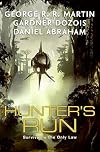
Thought-provoking story. Some spoilers follow in comments.
This story does an effective job of painting a mostly unsympathetic protagonist, and his subtle transition into a place of having scruples, ethics, and working towards a higher purpose than just his own self-interest. This is put into stark relief when the (cloned) character has to interact with his original, who is still a mean-spirited murderous low-life. The interactions the clone has had, and his reactions which awaken him to a show more sense of conscience, are so delicately interwoven that it is impossible to pin down the moment when this shift in character happens. This metamorphosis is very delicately handled by the authors, who use interactions with aliens and the colonization of a new world to explore the issues of how one lives one's experience and what one gets out of it. It also does a great job of evoking truly alien cultures and thought processes.
There are many layers of meaning tucked away in this story - I find it mildly haunting, in the way a good book is that provokes one to think long after you've put the book down. Highly recommended. show less
This story does an effective job of painting a mostly unsympathetic protagonist, and his subtle transition into a place of having scruples, ethics, and working towards a higher purpose than just his own self-interest. This is put into stark relief when the (cloned) character has to interact with his original, who is still a mean-spirited murderous low-life. The interactions the clone has had, and his reactions which awaken him to a show more sense of conscience, are so delicately interwoven that it is impossible to pin down the moment when this shift in character happens. This metamorphosis is very delicately handled by the authors, who use interactions with aliens and the colonization of a new world to explore the issues of how one lives one's experience and what one gets out of it. It also does a great job of evoking truly alien cultures and thought processes.
There are many layers of meaning tucked away in this story - I find it mildly haunting, in the way a good book is that provokes one to think long after you've put the book down. Highly recommended. show less
Lists
Forced Exposure (1)
Female Author (1)
Awards


Isaac Asimov's Science Fiction Magazine: Vol. 13, No. 9 [September 1989] (Nominee – Cover Illustration: Magazine – 1990)
Isaac Asimov's Science Fiction Magazine: Vol. 10, No. 13 [Mid-December 1986] (Winner – Interior Illustration – 1987)
Asimov's Science Fiction: Vol. 18, No. 9 [August 1994] (Winner – Cover Illustration: Magazine – 1995)
Asimov's Science Fiction: Vol. 20, No. 2 [February 1996] (Nominee – Cover Illustration: Magazine – 1997)
Asimov's Science Fiction: Vol. 26, No. 2 [February 2002] (Nominee – Cover Illustration: Magazine – 2003)
Isaac Asimov's Science Fiction Magazine: Vol. 11, No. 1 [January 1987] (Winner – Cover Illustration: Magazine – 1987)
Asimov's Science Fiction: Vol. 22, No. 4 [April 1998] (Nominee – Cover Illustration: Magazine – 1999)
Isaac Asimov's Science Fiction Magazine: Vol. 12, No. 10 [October 1988] (Nominee – Interior Illustration – 1989)
Isaac Asimov's Science Fiction Magazine: Vol. 14, No. 11 & 12 [November 1990] (Nominee – Interior Illustration – 1991)
Isaac Asimov's Science Fiction Magazine: Vol. 12, No. 6 [June 1988] (Nominee – Cover Illustration: Magazine – 1989)
Isaac Asimov's Science Fiction Magazine: Vol. 12, No. 2 [February 1988] (Nominee – Cover Illustration: Magazine – 1989)
Asimov's Science Fiction: Vol. 16, No. 12 & 13 [November 1992] (Winner – Cover Illustration: Magazine – 1993)
Asimov's Science Fiction: Vol. 17, No. 14 [December 1993] (Winner – Cover Illustration: Magazine – 1994)


You May Also Like


Associated Authors
Statistics
- Works
- 526
- Also by
- 86
- Members
- 35,394
- Popularity
- #532
- Rating
- 3.7
- Reviews
- 626
- ISBNs
- 624
- Languages
- 14
- Favorited
- 7

