Jonathan Strahan
Author of The New Space Opera
About the Author
Jonathan Strahan was born in 1964 in Belfast, Northern Ireland. He is an editor and publisher of science fiction. His family moved to Perth, Western Australia in 1968, and he graduated from the University of Western Australia with a Bachelor of Arts in 1986. In 1990 he co-founded Eidolon: The show more Journal of Australian Science Fiction and Fantasy, and worked on it as co-editor and co-publisher until 1999. He was also co-publisher of Eidolon Books which published Robin Pen's The Secret Life of Rubber-Suit Monsters, Howard Waldrop's Going Home Again, Storm Constantine's The Thorn Boy, and Terry Dowling's Blackwater Days. In 2015 he was nominated in the editor and anthology categories for the Locus Awards with the title Reach for Infinity. In 2018, he won the 2017 Aurealis Awards for the best Australian anthology for his book, Infinity Wars. (Bowker Author Biography) show less
Image credit: Photo by Cat Sparx.
Series
Works by Jonathan Strahan
The Locus Awards: Thirty Years of the Best in Science Fiction and Fantasy (2004) — Editor — 290 copies, 11 reviews
The Best Science Fiction and Fantasy of the Year, Volume 8 (2014) — Editor; Introduction — 116 copies, 6 reviews
The Year's Best Science Fiction Vol. 1: The Saga Anthology of Science Fiction 2020 (2020) — Editor — 109 copies, 7 reviews
The Year's Best Science Fiction Vol. 2: The Saga Anthology of Science Fiction 2021 (2021) — Editor — 57 copies
Communications Breakdown: SF Stories about the Future of Connection (2023) — Editor — 28 copies, 1 review
Subterranean Magazine Winter 2014 — Editor — 6 copies
Jonathan Strahan 1 copy
Eidolon 20 Summer 1996 1 copy
Associated Works
Locus Nr.492 2002.01 — Contributor — 1 copy
Red Mother [novelette] — Editor — 1 copy
Tagged
Common Knowledge
- Legal name
- Strahan, Jonathan
- Birthdate
- 1964
- Gender
- male
- Education
- University of Western Australia
- Occupations
- editor
publisher - Organizations
- Eidolon
Locus - Awards and honors
- Locus Award Finalist (Editor, 2017)
Hugo Nominee (Best editor - short form, 2022)
Locus Award Finalist (Editor, 2026) - Agent
- Howard Morhaim
- Nationality
- Australia
- Birthplace
- Belfast, Northern Ireland, UK
- Places of residence
- Perth, Western Australia, Australia
- Associated Place (for map)
- Australia
Members
Reviews
The Best Science Fiction & Fantasy of the Year, Volume Eight by Jonathan Strahan is an excellent SF anthology.
In his introduction, Mr. Strahan briefly summarizes the history of SF short story anthologies and argues that one of their essential roles is to help shape the genre. Throughout this history, there have been editors who curated their story selections specifically to encourage SF to develop in desired directions.
Mr. Strahan proudly claims membership in this tradition. The stories he show more chose for the eighth installment in his annual Best of series suggest that SF is embarking on a very exciting new era.
What strikes me most powerfully about this collection is the diversity of the work, especially compared to the anthologies I grew up with in 1980s. Mr. Strahan clearly set out to find stories from all over the globe (although all these stories were written originally in English). The authors here represent a healthy cross-section of the world. The anthology is populated by characters with a wide variety of ethnic backgrounds, and the stories are informed by an array of cultural traditions that have only recently found their way into the SF genre.
In many ways, SF is the ideal genre to incorporate incredible diversity. These authors bring voices to the SF table that haven't been heard widely enough to date. Their ideas and storytelling aesthetic are vibrant. I'm happy to see SF transcend its American roots and flourish in the wider world. Collections such as this make me eager to see how the genre will grow.
Moreover, BSFFY #8 is an anthology of very literate SF. The seeds sown by Harlan Ellison and tended by the literary SF writers of the late '60s and '70s are in good hands and bearing strong fruit.
All of the short stories in this anthology are well-crafted but my personal favorites are:
"The Herons of Mer de l'Ouest" by M. Bennardo
"Cherry Blossoms on the River of Souls" by Richard Parks
"The Sun and I" by K J Parker
"In Metal, In Bone" by An Owomoyela
"The Irish Astronaut" by Val Nolan
If I have a quibble with this book, it's the cover art. The title of the work is The Best Science Fiction & Fantasy of the Year but the cover art implies a hard science fiction focus. Once you get into it, though, it's clear that this is not a hard science fiction anthology.
This is also the second anthology I've read to feature the story, "Some Desperado," by Joe Abercrombie. It's a fantastic story by the standards of any genre, but I rather wish that it hadn't been included here. It fit well in Dangerous Women (edited by George R.R. Martin and Gardner Dozois), but I was confused as to why this was being presented to me as SF in Mr. Strahan's book. It's clearly a Western—there are no SF elements in it at all.
I've since learned that this story is part of Mr. Abercrombie's fantasy series, The First Law, set in the same world and featuring a known character. However, having never read anything else in this series, and given that it bears no explicit SF characteristics, "Some Desperado" feels strikingly out of place among the other stories in BSFFY #8.
That this is the only strange note struck by this collection (and even this strange note is very good) is testament to the high quality of the work on hand. I highly recommend this anthology to anyone interested in the variety of voices and styles encompassed by the SF umbrella. show less
In his introduction, Mr. Strahan briefly summarizes the history of SF short story anthologies and argues that one of their essential roles is to help shape the genre. Throughout this history, there have been editors who curated their story selections specifically to encourage SF to develop in desired directions.
Mr. Strahan proudly claims membership in this tradition. The stories he show more chose for the eighth installment in his annual Best of series suggest that SF is embarking on a very exciting new era.
What strikes me most powerfully about this collection is the diversity of the work, especially compared to the anthologies I grew up with in 1980s. Mr. Strahan clearly set out to find stories from all over the globe (although all these stories were written originally in English). The authors here represent a healthy cross-section of the world. The anthology is populated by characters with a wide variety of ethnic backgrounds, and the stories are informed by an array of cultural traditions that have only recently found their way into the SF genre.
In many ways, SF is the ideal genre to incorporate incredible diversity. These authors bring voices to the SF table that haven't been heard widely enough to date. Their ideas and storytelling aesthetic are vibrant. I'm happy to see SF transcend its American roots and flourish in the wider world. Collections such as this make me eager to see how the genre will grow.
Moreover, BSFFY #8 is an anthology of very literate SF. The seeds sown by Harlan Ellison and tended by the literary SF writers of the late '60s and '70s are in good hands and bearing strong fruit.
All of the short stories in this anthology are well-crafted but my personal favorites are:
"The Herons of Mer de l'Ouest" by M. Bennardo
"Cherry Blossoms on the River of Souls" by Richard Parks
"The Sun and I" by K J Parker
"In Metal, In Bone" by An Owomoyela
"The Irish Astronaut" by Val Nolan
If I have a quibble with this book, it's the cover art. The title of the work is The Best Science Fiction & Fantasy of the Year but the cover art implies a hard science fiction focus. Once you get into it, though, it's clear that this is not a hard science fiction anthology.
This is also the second anthology I've read to feature the story, "Some Desperado," by Joe Abercrombie. It's a fantastic story by the standards of any genre, but I rather wish that it hadn't been included here. It fit well in Dangerous Women (edited by George R.R. Martin and Gardner Dozois), but I was confused as to why this was being presented to me as SF in Mr. Strahan's book. It's clearly a Western—there are no SF elements in it at all.
I've since learned that this story is part of Mr. Abercrombie's fantasy series, The First Law, set in the same world and featuring a known character. However, having never read anything else in this series, and given that it bears no explicit SF characteristics, "Some Desperado" feels strikingly out of place among the other stories in BSFFY #8.
That this is the only strange note struck by this collection (and even this strange note is very good) is testament to the high quality of the work on hand. I highly recommend this anthology to anyone interested in the variety of voices and styles encompassed by the SF umbrella. show less
Strahan's 'best-of' anthologies are, in my opinion, the best of their type in the genre, and have been for a while now. The stories here range from good to excellent, and give a great overview of the range of material that been published in the past year, featuring both new and long-established authors.
Introduction, Jonathan Strahan
A very timely-feeling, if somewhat brief introduction.
*****Slipping, Lauren Beukes
Last year, Beukes' 'Broken Monsters' impressed me... and this story continues to show more impress. The technology here is beyond today's capabilities - but the behavior of the humans here is all too believable; the situation not just credible but likely.
With most countries banning 'enhanced' sports, the Games has found a home in Pakistan, where bionic athletes compete not solely for an audience, but for corporate and military observers. The hope? For the surgeon to showcase their wares, resulting in a payoff.
Why would anyone opt for these extreme and experimental surgical procedures? And what is the human cost? Beukes answers these questions with this horrific and emotionally wracking portrait of one young South African competitor.
*****Moriabe's Children, Paolo Bacigalupi
Previously read in 'Monstrous Affections,' re-read because it's more than worth a second read.
A dark and tragic fairytale of an evil stepfather, set on the shores and kraken-infested seas of a northern clime... This is a bit of a departure in style from Bacigalupi's previous work - but I love it just as much if not more, than anything else I've read by him. Powerful, timeless, and relevant.
****The Vaporization Enthalpy of a Peculiar Pakistani Family, Usman T. Malik
This is an excellent, powerful story... but I'm not sure I'd call it science-fiction. Yes, there's a bizarre element, and a 'scientific' framework - but both feel largely symbolic.
The story is dedicated to the victims of a terrorist attack in Pakistan, and effectively discusses terrorism and the hopeless circle of hate and revenge that leads to such violence.
****The Lady and the Fox, Kelly Link
Kelly Link's version of a heartwarming Christmas story.
It's a classic-feeling tale of Faerie, but Link's contemporary and sometimes bizarrely-random details give the story a strange immediacy and verisimilitude. Tam Lin meets The Snow Queen, at the mansion of a wealthy celebrity family.
****Ten Rules for Being an Intergalactic Smuggler (The Successful Kind), Holly Black
Previously read in the 'Monstrous Affections' anthology.
'A young girl stows away on her uncle's spaceship. But with his latest smuggling commission, he bites off more than he can chew... Space pirates and violent aliens come together in a cute but also exciting tale that's also about growing up, learning to shake off others' preconceptions, and choosing ones own path in life.'
****The Long Haul from the Annals of Transportation, The Pacific Monthly, May 2009, Ken Liu
This alternate-history piece gives us a timeline where, due to trade tariffs, great airships become a popular way to transport cargo.
Written in the style of a magazine piece (imagine the 'Atlantic Monthly'), a journalist catches a ride with a husband-wife team who sail their own privately-owned cargo airship.
Although the technical and historical details are fascinating, the piece ends up becoming more about the practice of arranged mail-order brides, and the dynamics of such a relationship.
****Tough Times All Over, Joe Abercrombie
A hilarious and non-stop 'Thieves' World-style' fantasy that plays out like a relay race. A really violent, backstabbing, dangerous relay race. It plays with all kinds of fantasy tropes, tongue firmly in cheek - but also showcases Abercrombie's talent for economically drawing vivid and compelling characters who quickly come to life in the reader's imagination.
***The Insects of Love, Genevieve Valentine
An entomologist seeks her missing sister, who disappeared in the midst of a top-secret government mission. There seems to be some kind of time-slippage happening... or possibly alternate realities.
This is beautifully written, and I loved how it was developing... but it ended abruptly, and felt unsatisfying.
****Cold Wind, Nicola Griffith
Previously read on tor.com
'When I'm promised 'urban fantasy,' now THIS is what I want to be served!!
An unnamed observer enters a women's bar on a holiday evening. Conviviality is all around her, but she is watching and waiting... for who? or what? Gradually, small clues are dropped that this isn't going to be your usual bar pick-up or one-night-stand.
Rather, it's a tale of predators and prey...
Beautiful, vivid writing, as can always be expected from Nicola Griffith.'
***Interstate Love Song (Murder Ballad No.8), Caitlin R Kiernan
Incest twins on a psychopathic, serial-killing road trip.
If you liked 'Natural Born Killers,' you'll probably like this.
***Shadow Flock, Greg Egan
A drone-technology expert is blackmailed into using her skills to help a group of criminals pull off a financial heist. Felt much more like the opening of a novel than a short story.
****I Met a Man Who Wasn't There, K. J. Parker
I really have to get around to reading K.J. Parker's novels; I've loved every single short story from this author that I've read. For that matter, I should probably check out Tom Holt's work too, although from the blurbs it wouldn't seem to be nearly as suited to my tastes...
This one though... right up my alley.
A dark but wryly ironic tale... The curtain opens on an individual who is agreeing to pay a man a large sum to teach certain magical skills - including the ability to walk through walls and kill a man by looking at him. He's not at all sure that magic actually exists, however.
****Grand Jeté (The Great Leap), Rachel Swirsky
Well, this sure was better than that Dinosaur prose-poem. Sorry.
Sci-fi takes on the golem story and automatons harking back to Coppélia are far from uncommon in the genre, but this story puts a fresh spin on both. I wavered over thinking that the whole dying-child aspect was a little much - but I think it worked.
A Jewish father has already lost his wife; and now his daughter is dying of cancer. Distraught, he acquires restricted, experimental technology to create a duplicate of his daughter - a duplicate right down to her memories and brain function. Understandably, the daughter does not embrace her father's 'gift' with the enthusiasm he hoped.
The way the story progresses effectively explores themes of love, grief, and identity.
****Mothers, Lock Up Your Daughters Because They are Terrifying, Alice Sola Kim
Previously read in 'Monstrous Affections.'
'Hmm. No, the 'daughters' aren't what's terrifying here; at least not at first. A tight-knit group of girls, all Korean-American adoptees, decide to dabble in dark magic. At first, their late-night ritual doesn't seem to have any effect - but eventually, the fallout from that one night will tear them apart, in more ways than one. A scary story that works on more than one level, with complex insights into the feelings of adopted children - and teenage girls in general. Very, very good.'
****Shay Corsham Worsted, Garth Nix
Previously read in 'Fearful Symmetries.'
'Garth Nix is always excellent; and this tale is no exception. A retired secret service agent has been watching a certain house for thirty years. But when the threat that's been feared for all these decades erupts, the weapon has been forgotten, and bureaucracy gets in the way.'
**** Kheldyu, Karl Schroeder
There's a very James Bond-movie feel to this one. Gennady Malianov, arms inspector, has agreed to do a job for a wealthy scion that doesn't seem to involve arms at all. A carbon-sequestration plant needs to be started up, but the remote area is infected with a hazardous fungus.
The entertaining story plays out with plenty of action.
***Calligo Lane, Ellen Klages
"The secret of ori-kami is that a single sheet of paper can be folded in a nearly infinite variety of patterns, each resulting in a different transformation of the available space. Given any two points, it is possible to fold a line that connects them."
Franny, a woman of San Francisco, does magic using 'ori-kami.' Nice, but mood overshadows plot in this piece.
***The Devil in America, Kai Ashante Wilson
This piece effectively conjures the horrific evils of American slavery - horrors which even old African magic cannot mitigate, in this tale of a family up against the overwhelming odds of racism.
However, I felt that the fractured and meta-fictional elements of the story detracted from its power.
***Tawny Petticoats, Michael Swanwick
A humorous heist tale set in an alternate, paranormal New Orleans. A couple of con artists hire the third they need for their plan. The third is enthusiastically eager for the chance to pull off the 'black money scam' (http://en.wikipedia.org/wiki/Black_money_scam). But of course, not everything goes quite as expected.
****The Fifth Dragon, Ian McDonald
A beautiful take on the 'terraforming' theme. Two women are pioneers in the colonization of the moon. Each has their personal reasons to have left Earth, and each deals with the rigors of lunar survival in her own way. Although frequently apart, they become best friends. But, due to the low gravity, moon life comes with built-in restrictions: after a certain amount of time, a person cannot physically survive the return to Earth gravity. A decision to stay is irreversible. How will each woman choose?
*** The Truth About Owls, Amal El-Mohtar
Beautifully written, and exquisitely captures the complex feelings of a young immigrant from an unstable region. However, I disagreed with the final implication that there is something intrinsically 'healthier' in being interested in your 'own' heritage and folklore - I strongly feel that all of human heritage belongs to everyone equally.
***Four Days of Christmas, Tim Maughan
An odd little piece, inspired by a visit to the Chinese factory city from whence all our Christmas decorations come. We follow a specific future Christmas tchotchke on its journeys around the world, from factory floor to garbage dump.
****Covenant, Elizabeth Bear
One of the most original takes on the serial killer theme that I've seen. In the future, technology has come up with new ways to 'cure' psychopathy [methods that put those described in 'A Clockwork Orange' in the dust.] Here we meet one such rehabilitated criminal.
****Cimmeria: From the Journal of Imaginary Anthropology, Theodora Goss
Well, this takes worldbuilding to a whole new level - literally. A small group of academics engage in a thought experiment; imagining a modern Cimmeria (it's not made clear whether this is a kingdom descended from ancient Crimea, the homeland of Howard's Conan, or Italo Calvino's country - it could be all, or something different.) When what they've imagined comes into being, of course they have to go study it in person.
I always love Goss' stories, and this is no exception. Recommended for fans of China Miéville's 'The City & the City.'
****Collateral, Peter Watts
A re-read. Previously read in 'Upgraded'; I liked it enough to read it again. 'Fans of 'Ender's Game' may very well like this one. A soldier with enhanced reaction times, wired in to her weapons systems, must face the ethical questions brought up when innocents are killed. Caught between the media, the military, her own training and her sense of right and wrong, things play out in an unexpected - but utterly logical - fashion.'
****The Scrivener, Eleanor Arnason
I'm so happy to see Eleanor Arnason in the spotlight and getting some long-deferred attention. This is a hilariously subversive fairytale. A father has three daughters; his dream is for one of them to become the successful author that he never was. Unfortunately, their dreams and talents lie elsewhere. A famous critic suggests that the girls go on a quest to find the Baba-Yaga-esque witch in the woods to consult with her - but what each young woman finds on her journey is not precisely what their father hoped.
*** Someday, James Patrick Kelly
Aims to be a commentary of cultural anthropology, but ends up like it's pushing boundaries just for the sake of pushing boundaries, rather than in service to the story.
A young woman named Daya, inhabitant of a small village, has come to an important day in her life - the day when she picks the fathers of her child.
*** Amicae Aeternum, Ellen Klages
Hmm, it's a little unfair for one author to get two stories in a best-of anthology!
This is a nice closer, though. It has a bit of a golden-age feel... maybe Ray Bradbury meets Heinlein... but the protagonist here is a bit of an anti-Heinlein-protagonist, in every way.
However, it's still got both the nostalgia of Bradbury and the bold ventures of Heinlein.
My one thing was, I didn't understand the girl's resignation to her fate. Her 'list' of things she's going to miss out on, after leaving earth with her parents on a generation ship, convinced me that she truly didn't want to go. So... why not run away with the best friend? That was what I expected; and what I would've done, if I were her... [though, I'm not - at her age, I would've been raring to go! Only as an adult do I identify more with her regrets.]
Many thanks to Rebellion/Solaris and NetGalley for the opportunity to read this highly-recommended volume. As always, my opinions are solely my own. show less
Introduction, Jonathan Strahan
A very timely-feeling, if somewhat brief introduction.
*****Slipping, Lauren Beukes
Last year, Beukes' 'Broken Monsters' impressed me... and this story continues to show more impress. The technology here is beyond today's capabilities - but the behavior of the humans here is all too believable; the situation not just credible but likely.
With most countries banning 'enhanced' sports, the Games has found a home in Pakistan, where bionic athletes compete not solely for an audience, but for corporate and military observers. The hope? For the surgeon to showcase their wares, resulting in a payoff.
Why would anyone opt for these extreme and experimental surgical procedures? And what is the human cost? Beukes answers these questions with this horrific and emotionally wracking portrait of one young South African competitor.
*****Moriabe's Children, Paolo Bacigalupi
Previously read in 'Monstrous Affections,' re-read because it's more than worth a second read.
A dark and tragic fairytale of an evil stepfather, set on the shores and kraken-infested seas of a northern clime... This is a bit of a departure in style from Bacigalupi's previous work - but I love it just as much if not more, than anything else I've read by him. Powerful, timeless, and relevant.
****The Vaporization Enthalpy of a Peculiar Pakistani Family, Usman T. Malik
This is an excellent, powerful story... but I'm not sure I'd call it science-fiction. Yes, there's a bizarre element, and a 'scientific' framework - but both feel largely symbolic.
The story is dedicated to the victims of a terrorist attack in Pakistan, and effectively discusses terrorism and the hopeless circle of hate and revenge that leads to such violence.
****The Lady and the Fox, Kelly Link
Kelly Link's version of a heartwarming Christmas story.
It's a classic-feeling tale of Faerie, but Link's contemporary and sometimes bizarrely-random details give the story a strange immediacy and verisimilitude. Tam Lin meets The Snow Queen, at the mansion of a wealthy celebrity family.
****Ten Rules for Being an Intergalactic Smuggler (The Successful Kind), Holly Black
Previously read in the 'Monstrous Affections' anthology.
'A young girl stows away on her uncle's spaceship. But with his latest smuggling commission, he bites off more than he can chew... Space pirates and violent aliens come together in a cute but also exciting tale that's also about growing up, learning to shake off others' preconceptions, and choosing ones own path in life.'
****The Long Haul from the Annals of Transportation, The Pacific Monthly, May 2009, Ken Liu
This alternate-history piece gives us a timeline where, due to trade tariffs, great airships become a popular way to transport cargo.
Written in the style of a magazine piece (imagine the 'Atlantic Monthly'), a journalist catches a ride with a husband-wife team who sail their own privately-owned cargo airship.
Although the technical and historical details are fascinating, the piece ends up becoming more about the practice of arranged mail-order brides, and the dynamics of such a relationship.
****Tough Times All Over, Joe Abercrombie
A hilarious and non-stop 'Thieves' World-style' fantasy that plays out like a relay race. A really violent, backstabbing, dangerous relay race. It plays with all kinds of fantasy tropes, tongue firmly in cheek - but also showcases Abercrombie's talent for economically drawing vivid and compelling characters who quickly come to life in the reader's imagination.
***The Insects of Love, Genevieve Valentine
An entomologist seeks her missing sister, who disappeared in the midst of a top-secret government mission. There seems to be some kind of time-slippage happening... or possibly alternate realities.
This is beautifully written, and I loved how it was developing... but it ended abruptly, and felt unsatisfying.
****Cold Wind, Nicola Griffith
Previously read on tor.com
'When I'm promised 'urban fantasy,' now THIS is what I want to be served!!
An unnamed observer enters a women's bar on a holiday evening. Conviviality is all around her, but she is watching and waiting... for who? or what? Gradually, small clues are dropped that this isn't going to be your usual bar pick-up or one-night-stand.
Rather, it's a tale of predators and prey...
Beautiful, vivid writing, as can always be expected from Nicola Griffith.'
***Interstate Love Song (Murder Ballad No.8), Caitlin R Kiernan
Incest twins on a psychopathic, serial-killing road trip.
If you liked 'Natural Born Killers,' you'll probably like this.
***Shadow Flock, Greg Egan
A drone-technology expert is blackmailed into using her skills to help a group of criminals pull off a financial heist. Felt much more like the opening of a novel than a short story.
****I Met a Man Who Wasn't There, K. J. Parker
I really have to get around to reading K.J. Parker's novels; I've loved every single short story from this author that I've read. For that matter, I should probably check out Tom Holt's work too, although from the blurbs it wouldn't seem to be nearly as suited to my tastes...
This one though... right up my alley.
A dark but wryly ironic tale... The curtain opens on an individual who is agreeing to pay a man a large sum to teach certain magical skills - including the ability to walk through walls and kill a man by looking at him. He's not at all sure that magic actually exists, however.
****Grand Jeté (The Great Leap), Rachel Swirsky
Well, this sure was better than that Dinosaur prose-poem. Sorry.
Sci-fi takes on the golem story and automatons harking back to Coppélia are far from uncommon in the genre, but this story puts a fresh spin on both. I wavered over thinking that the whole dying-child aspect was a little much - but I think it worked.
A Jewish father has already lost his wife; and now his daughter is dying of cancer. Distraught, he acquires restricted, experimental technology to create a duplicate of his daughter - a duplicate right down to her memories and brain function. Understandably, the daughter does not embrace her father's 'gift' with the enthusiasm he hoped.
The way the story progresses effectively explores themes of love, grief, and identity.
****Mothers, Lock Up Your Daughters Because They are Terrifying, Alice Sola Kim
Previously read in 'Monstrous Affections.'
'Hmm. No, the 'daughters' aren't what's terrifying here; at least not at first. A tight-knit group of girls, all Korean-American adoptees, decide to dabble in dark magic. At first, their late-night ritual doesn't seem to have any effect - but eventually, the fallout from that one night will tear them apart, in more ways than one. A scary story that works on more than one level, with complex insights into the feelings of adopted children - and teenage girls in general. Very, very good.'
****Shay Corsham Worsted, Garth Nix
Previously read in 'Fearful Symmetries.'
'Garth Nix is always excellent; and this tale is no exception. A retired secret service agent has been watching a certain house for thirty years. But when the threat that's been feared for all these decades erupts, the weapon has been forgotten, and bureaucracy gets in the way.'
**** Kheldyu, Karl Schroeder
There's a very James Bond-movie feel to this one. Gennady Malianov, arms inspector, has agreed to do a job for a wealthy scion that doesn't seem to involve arms at all. A carbon-sequestration plant needs to be started up, but the remote area is infected with a hazardous fungus.
The entertaining story plays out with plenty of action.
***Calligo Lane, Ellen Klages
"The secret of ori-kami is that a single sheet of paper can be folded in a nearly infinite variety of patterns, each resulting in a different transformation of the available space. Given any two points, it is possible to fold a line that connects them."
Franny, a woman of San Francisco, does magic using 'ori-kami.' Nice, but mood overshadows plot in this piece.
***The Devil in America, Kai Ashante Wilson
This piece effectively conjures the horrific evils of American slavery - horrors which even old African magic cannot mitigate, in this tale of a family up against the overwhelming odds of racism.
However, I felt that the fractured and meta-fictional elements of the story detracted from its power.
***Tawny Petticoats, Michael Swanwick
A humorous heist tale set in an alternate, paranormal New Orleans. A couple of con artists hire the third they need for their plan. The third is enthusiastically eager for the chance to pull off the 'black money scam' (http://en.wikipedia.org/wiki/Black_money_scam). But of course, not everything goes quite as expected.
****The Fifth Dragon, Ian McDonald
A beautiful take on the 'terraforming' theme. Two women are pioneers in the colonization of the moon. Each has their personal reasons to have left Earth, and each deals with the rigors of lunar survival in her own way. Although frequently apart, they become best friends. But, due to the low gravity, moon life comes with built-in restrictions: after a certain amount of time, a person cannot physically survive the return to Earth gravity. A decision to stay is irreversible. How will each woman choose?
*** The Truth About Owls, Amal El-Mohtar
Beautifully written, and exquisitely captures the complex feelings of a young immigrant from an unstable region. However, I disagreed with the final implication that there is something intrinsically 'healthier' in being interested in your 'own' heritage and folklore - I strongly feel that all of human heritage belongs to everyone equally.
***Four Days of Christmas, Tim Maughan
An odd little piece, inspired by a visit to the Chinese factory city from whence all our Christmas decorations come. We follow a specific future Christmas tchotchke on its journeys around the world, from factory floor to garbage dump.
****Covenant, Elizabeth Bear
One of the most original takes on the serial killer theme that I've seen. In the future, technology has come up with new ways to 'cure' psychopathy [methods that put those described in 'A Clockwork Orange' in the dust.] Here we meet one such rehabilitated criminal.
****Cimmeria: From the Journal of Imaginary Anthropology, Theodora Goss
Well, this takes worldbuilding to a whole new level - literally. A small group of academics engage in a thought experiment; imagining a modern Cimmeria (it's not made clear whether this is a kingdom descended from ancient Crimea, the homeland of Howard's Conan, or Italo Calvino's country - it could be all, or something different.) When what they've imagined comes into being, of course they have to go study it in person.
I always love Goss' stories, and this is no exception. Recommended for fans of China Miéville's 'The City & the City.'
****Collateral, Peter Watts
A re-read. Previously read in 'Upgraded'; I liked it enough to read it again. 'Fans of 'Ender's Game' may very well like this one. A soldier with enhanced reaction times, wired in to her weapons systems, must face the ethical questions brought up when innocents are killed. Caught between the media, the military, her own training and her sense of right and wrong, things play out in an unexpected - but utterly logical - fashion.'
****The Scrivener, Eleanor Arnason
I'm so happy to see Eleanor Arnason in the spotlight and getting some long-deferred attention. This is a hilariously subversive fairytale. A father has three daughters; his dream is for one of them to become the successful author that he never was. Unfortunately, their dreams and talents lie elsewhere. A famous critic suggests that the girls go on a quest to find the Baba-Yaga-esque witch in the woods to consult with her - but what each young woman finds on her journey is not precisely what their father hoped.
*** Someday, James Patrick Kelly
Aims to be a commentary of cultural anthropology, but ends up like it's pushing boundaries just for the sake of pushing boundaries, rather than in service to the story.
A young woman named Daya, inhabitant of a small village, has come to an important day in her life - the day when she picks the fathers of her child.
*** Amicae Aeternum, Ellen Klages
Hmm, it's a little unfair for one author to get two stories in a best-of anthology!
This is a nice closer, though. It has a bit of a golden-age feel... maybe Ray Bradbury meets Heinlein... but the protagonist here is a bit of an anti-Heinlein-protagonist, in every way.
However, it's still got both the nostalgia of Bradbury and the bold ventures of Heinlein.
Many thanks to Rebellion/Solaris and NetGalley for the opportunity to read this highly-recommended volume. As always, my opinions are solely my own. show less
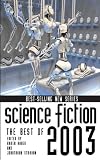
I keep picking up various old "best of" SF anthologies at library sales and such, so this is me trying to actually read at least one of them, rather than letting them all sit aging forever on my shelves. Although part of my mind instinctively balks at referring to a book from 2003 as "old," anyway. I mean, that was only a few years ago, right? Right?
Anyway. This is a moderately chunky paperback at about 440 pages, although for that length there might be fewer stories than you'd expect, as show more many of them are fairly long, with I think at least a couple at or approaching novella length. As is common for this sort of thing, the editors are not particularly precious or pedantic about genre distinctions, with a number of stories here that could be perhaps more properly categorized as horror or fantasy than science fiction. (I find the inclusion of Neil Gaiman's Sherlock Holmes/Lovecraft mashup, "A Study in Emerald," particularly amusing on this front, as I think you could argue that it ticks off almost every genre except science fiction. Not that that's a complaint! I'd read that one before, but it'd been a while and I'd honestly forgotten just how clever it was, so it was nice to encounter it again.)
As usual, of course, notions of what constitutes the "best" of anything can vary enormously, and for me the contents here ranged from very good indeed to stuff that just left me cold. (Unfortunately, one of the latter, Vernor Vinge's "The Cookie Monster," which had a decent idea but an execution I found dull and unconvincing, was by far the longest one in the collection.)
It is, by the way, always kind of interesting to look for themes in these sorts of anthologies, and this one absolutely does have one, as the vast majority of these stories deal with the idea of exploitation in some way, from Paolo Bacigalupi's impressively disturbing story of young girls whose bodies are altered in horrific ways to amuse the rich to Susan Mosser's very pointed piece of social commentary about corporations who force people into indentured servitude for not being able to afford air. All of which, rather depressingly, makes the volume feel not at all dated and still very, very relevant.
It's probably also worth noting that some of the stories here have typos or weird formatting issues that make me wonder if they were poorly scanned in or possibly printed directly from emails. Then again, maybe that's about what one should expect from a book whose back cover blurb touts its main selling point as being "affordable"? show less
Anyway. This is a moderately chunky paperback at about 440 pages, although for that length there might be fewer stories than you'd expect, as show more many of them are fairly long, with I think at least a couple at or approaching novella length. As is common for this sort of thing, the editors are not particularly precious or pedantic about genre distinctions, with a number of stories here that could be perhaps more properly categorized as horror or fantasy than science fiction. (I find the inclusion of Neil Gaiman's Sherlock Holmes/Lovecraft mashup, "A Study in Emerald," particularly amusing on this front, as I think you could argue that it ticks off almost every genre except science fiction. Not that that's a complaint! I'd read that one before, but it'd been a while and I'd honestly forgotten just how clever it was, so it was nice to encounter it again.)
As usual, of course, notions of what constitutes the "best" of anything can vary enormously, and for me the contents here ranged from very good indeed to stuff that just left me cold. (Unfortunately, one of the latter, Vernor Vinge's "The Cookie Monster," which had a decent idea but an execution I found dull and unconvincing, was by far the longest one in the collection.)
It is, by the way, always kind of interesting to look for themes in these sorts of anthologies, and this one absolutely does have one, as the vast majority of these stories deal with the idea of exploitation in some way, from Paolo Bacigalupi's impressively disturbing story of young girls whose bodies are altered in horrific ways to amuse the rich to Susan Mosser's very pointed piece of social commentary about corporations who force people into indentured servitude for not being able to afford air. All of which, rather depressingly, makes the volume feel not at all dated and still very, very relevant.
It's probably also worth noting that some of the stories here have typos or weird formatting issues that make me wonder if they were poorly scanned in or possibly printed directly from emails. Then again, maybe that's about what one should expect from a book whose back cover blurb touts its main selling point as being "affordable"? show less
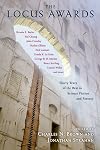
Since 1968, Locus has been the trade magazine of SFF publishing. It's the place to go for news of publishing deals, reviews of new fiction, and comprehensive lists of what's been published each month. In 1971, they began the Locus Awards, honoring the best fiction of each year. This anthology was published in 2004, and includes selected winners from the first 30 (ish) years of the award.
With so vague a theme, this collection does feel a little shapeless. There's no unifying authorial voice, show more no thematic similarities, not even a "here's what the genre looks like at this specific moment" snapshot. The only thing these stories share is excellence, and on that level, Brown and Strahan have assembled a terrific collection.
There are four stories here good enough to make my personal list of all-time classics: Harlan Ellison's "Jeffty Is Five," which starts as Bradbury-esqe nostalgia, then rips your heart out in the final paragrahps; John Varley's "The Persistence of Vision," about a man who stumbles into happiness at an unusual desert commune; Octavia E. Butler's "Bloodchild," about an alien race who establish a violently symbiotic relationship with humanity; and Ted Chiang's "Hell Is the Absence of God," in which despite angelic visitations and other visible signs of God's existence, one man simply cannot bring himself to accept or love God.
Chiang's is the best of the three stories on religious themes, but the others are also quite good. In "The Way of Cross and Dragon," George R. R. Martin sends a cleric, representing a future Inquisition, to a distant planet to wipe out a dangerous new heresy; Joanna Russ's "Souls" gives us a medieval abbey run by an extraordinary abbess.
And the rest of the authors here are like an all-star team of these three decades: Ursula K. Le Guin, Connie Willis, John Varley, James Tiptree Jr., Bruce Sterling, Greg Egan. There are a couple of stories that didn't do much for me, but both are by authers to whom I've never quite connected; Gene Wolfe and Lucius Shepard both write prose that's too ornate for my taste, though I certainly understand why so many do like them.
A strong, solid collection of late-20th century SF. If you enjoy the genre at all, there will be something here, and probably several somethings, that will delight you. show less
With so vague a theme, this collection does feel a little shapeless. There's no unifying authorial voice, show more no thematic similarities, not even a "here's what the genre looks like at this specific moment" snapshot. The only thing these stories share is excellence, and on that level, Brown and Strahan have assembled a terrific collection.
There are four stories here good enough to make my personal list of all-time classics: Harlan Ellison's "Jeffty Is Five," which starts as Bradbury-esqe nostalgia, then rips your heart out in the final paragrahps; John Varley's "The Persistence of Vision," about a man who stumbles into happiness at an unusual desert commune; Octavia E. Butler's "Bloodchild," about an alien race who establish a violently symbiotic relationship with humanity; and Ted Chiang's "Hell Is the Absence of God," in which despite angelic visitations and other visible signs of God's existence, one man simply cannot bring himself to accept or love God.
Chiang's is the best of the three stories on religious themes, but the others are also quite good. In "The Way of Cross and Dragon," George R. R. Martin sends a cleric, representing a future Inquisition, to a distant planet to wipe out a dangerous new heresy; Joanna Russ's "Souls" gives us a medieval abbey run by an extraordinary abbess.
And the rest of the authors here are like an all-star team of these three decades: Ursula K. Le Guin, Connie Willis, John Varley, James Tiptree Jr., Bruce Sterling, Greg Egan. There are a couple of stories that didn't do much for me, but both are by authers to whom I've never quite connected; Gene Wolfe and Lucius Shepard both write prose that's too ornate for my taste, though I certainly understand why so many do like them.
A strong, solid collection of late-20th century SF. If you enjoy the genre at all, there will be something here, and probably several somethings, that will delight you. show less
Lists
Awards
You May Also Like
Associated Authors
Statistics
- Works
- 71
- Also by
- 11
- Members
- 8,512
- Popularity
- #2,828
- Rating
- 3.7
- Reviews
- 261
- ISBNs
- 227
- Languages
- 7
- Favorited
- 3