
Rich Horton
Author of Science Fiction: The Best of the Year, 2007 Edition
About the Author
Series
Works by Rich Horton
The year's best: science fiction e fantasy — Editor — 1 copy
Associated Works
The Magazine of Fantasy and Science Fiction January/February 2020, Vol. 138, Nos. 1 & 2 (2020) — Columnist — 11 copies
Bull Spec #7 — Contributor — 1 copy
Locus, July 2011 (606) — Contributor — 1 copy
Tagged
Common Knowledge
- Birthdate
- 1959-10-05
- Gender
- male
- Education
- University of Illinois, Urbana-Champaign (BS|Physics|1981)
- Occupations
- software engineer
reviewer
editor - Nationality
- USA
- Birthplace
- Naperville, Illinois, USA
- Places of residence
- St. Louis, Missouri, USA
- Associated Place (for map)
- USA
Members
Reviews
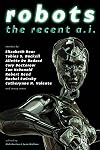
A surprisingly excellent collection about mechanical beings. Nearly all are thoughtful and inventive, and even the worst of the collection is merely unimpressive.
"Eros, Philia, Agape" by Rachel Swirsky. A robot loves his human family, but knows that he was programmed to love them. He ventures into the desert to find his own mind and emotions. This remains one of the best sf short stories I've ever read. The language is simple but descriptive, the people nuanced and fully realized even in a show more tiny space of pages, and the story itself thoughtful, philosophical, kind but not sentimental.
"Artifice and Intelligence" by Tim Pratt. Only one computer system has achieved sentience, and she is bored and lonely. She makes friends with a single game designer, and they team up to defeat the various evil intelligences (such as a marsh spirit or ghosts) that have infested other computers.I liked the end reveal that the AI created the evil she fights. It's not an entirely novel idea, but it wasn't delivered in a ham-handed manner--just subtle enough to be chilling.
"I, Robot" by Cory Doctorow. A futuristic policeman tracks his teenaged daughter's phone usage and stumbles upon an international plot.Doctorow seems to have intended the policeman and his daughter to escape a dystopia (that the policeman did not realize was a dystopia) for a free-thinking utopia (that the policeman is only just realizing is a utopia). Except there are all these weird little hiccups in the way the utopia works that I'm not sure Doctorow is aware are warning flags, like this exchange: "Do they have coppers in Eurasia?"
"Not really," Natalie said.
"It's all robots?
"No, there's not any crime."quote> That right there is the #1 sign that something is terribly wrong with their society. Aside from the problem with the world-building, my other issue is that the writing is pretty pedestrian.
"Alternate Girl's Expatriate Life" by Rochita Loenen-Ruiz. A machine city creates the perfect housewife. Pointless and meandering.
"The Rising Waters" by Benjamin Crowell. A soldier working on an AI program in the midst of a world war finally creates an AI that can escape her bounds. It changes everything. I absolutely loved the world-building here, and the characters come through bright and clear.
"Houses" by Mark Pantoja. All the humans vanish, leaving behind all the smart machines they created to care for them. The sentient house of one family goes on a search for meaning when it can't fulfill its programming to take care of its family. I liked the ways the robots sought to create communities and identities, sometimes mimicking human society and sometimes veering away from it dramatically.
"The Djinn's Wife" by Ian McDonald. Esha Rathore is a gifted dancer when an AI falls in love with her. He wants more and more intimacy with her, until at last Esha grows frightened and tries to return to loving human men. Set in future Delhi, I liked the surroundings better than the romance.
"Stalker" by Robert Reed. The stalker is an AI programmed to love and serve, and this particular one loves a serial killer. One day, the killer targets a victim who is a little too much for him. Will the AI save the man it is programmed to love, or the woman who seems to understand it? Chilling and fascinating!
"Droplet" by Benjamin Rosenbaum. The humans have all abandoned corporeal existence, leaving their toys behind. Shar and Narra were Quantegral Lovergirls, programmed to serve humanity, but now they drift from planet to planet, trying to love each other and fill their empty days. Narra contemplates leaving her sister/lover, who refuses to love because it feels too much like her old servitude. An attack clarifies their positions. Very, very good.
"Kiss Me Twice" by Mary Robinette Kowal. A young cop trusts the police force's AI, and that gives him an edge when the AI is hacked. Interesting at first, but the mystery isn't well crafted and it goes on too long.
"Algorithms for Love" by Ken Liu. Elena is a brilliant programmer--too brilliant. After her carefully crafted dolls begin to fool people into thinking they're human, she begins to fear that she herself is just a series of algorithms. Super creepy and wonderfully written.
"A Jar of Goodwill" by Tobias S Buckell. Humanity is thrilled when aliens contact Earth, but horrified when the Gheda demand payment for patents for things that they invented earlier than (but independently of) humans. Now every human--every form of life except the Gheda--is born into crushing debt. When a small band of mercenary explorers discover a new form of life, they have to choose between lobotomizing the aliens and keeping their discoveries, thus freeing themselves from debt and preventing the new aliens from becoming as downtrodden as humanity, or letting the Gheda do to the aliens what they've done to every other race. It's a great universe, and one I'd love to see more of.
"The Shipmaker" by Aliette De Bodard. Dac Kien is in the final stages of crafting the perfect ship for a Mind when something goes terribly wrong. It's terrible, but even worse for Dac Kien, because this is her one chance to become a shipmaker and rise above the shame of being a lesbian without children to carry on her name. The universe is interesting, the political situation scary but believable, and the interpersonal relationships feel natural.
"Tideline" by Elizabeth Bear. A futuristic tank has lost her platoon and spends her remaining days crafting mourning jewelry out of sea salvage. Her routine is interrupted by the discovery of a ragged child. Good, but it goes on too long and gets too sentimental.
"Under the Eaves" by Lavie Tidhar. A young woman questions whether AIs can love, while various other characters ruminate around her. Didn't hold my interest.
"The Nearest Thing" by Genevieve Valentine. A misanthropic programmer is confronted with his own creation, and must choose whether to free her. Really great characterization.
"Balancing Accounts" by James L Cambias. A sentient rocket accepts mysterious cargo, then has to decide whether to turn it over to the law or help it get to its destination. I didn't buy the AI voices and the plot felt threadbare and obvious.
"Silently and Very Fast" by Catherynne M Valente. A smart house merges with a girl's internal computer system while she dreams. This is the beginning of an AI named Elefsis, who learns through narratives and metaphors told and shown over centuries by the girl's descendents. Thoughtful and at times almost brilliant, but it gets a little bogged down in flowery language at times. show less
"Eros, Philia, Agape" by Rachel Swirsky. A robot loves his human family, but knows that he was programmed to love them. He ventures into the desert to find his own mind and emotions. This remains one of the best sf short stories I've ever read. The language is simple but descriptive, the people nuanced and fully realized even in a show more tiny space of pages, and the story itself thoughtful, philosophical, kind but not sentimental.
"Artifice and Intelligence" by Tim Pratt. Only one computer system has achieved sentience, and she is bored and lonely. She makes friends with a single game designer, and they team up to defeat the various evil intelligences (such as a marsh spirit or ghosts) that have infested other computers.
"I, Robot" by Cory Doctorow. A futuristic policeman tracks his teenaged daughter's phone usage and stumbles upon an international plot.
"Not really," Natalie said.
"It's all robots?
"No, there's not any crime."quote> That right there is the #1 sign that something is terribly wrong with their society.
"Alternate Girl's Expatriate Life" by Rochita Loenen-Ruiz. A machine city creates the perfect housewife. Pointless and meandering.
"The Rising Waters" by Benjamin Crowell. A soldier working on an AI program in the midst of a world war finally creates an AI that can escape her bounds. It changes everything. I absolutely loved the world-building here, and the characters come through bright and clear.
"Houses" by Mark Pantoja. All the humans vanish, leaving behind all the smart machines they created to care for them. The sentient house of one family goes on a search for meaning when it can't fulfill its programming to take care of its family. I liked the ways the robots sought to create communities and identities, sometimes mimicking human society and sometimes veering away from it dramatically.
"The Djinn's Wife" by Ian McDonald. Esha Rathore is a gifted dancer when an AI falls in love with her. He wants more and more intimacy with her, until at last Esha grows frightened and tries to return to loving human men. Set in future Delhi, I liked the surroundings better than the romance.
"Stalker" by Robert Reed. The stalker is an AI programmed to love and serve, and this particular one loves a serial killer. One day, the killer targets a victim who is a little too much for him. Will the AI save the man it is programmed to love, or the woman who seems to understand it? Chilling and fascinating!
"Droplet" by Benjamin Rosenbaum. The humans have all abandoned corporeal existence, leaving their toys behind. Shar and Narra were Quantegral Lovergirls, programmed to serve humanity, but now they drift from planet to planet, trying to love each other and fill their empty days. Narra contemplates leaving her sister/lover, who refuses to love because it feels too much like her old servitude. An attack clarifies their positions. Very, very good.
"Kiss Me Twice" by Mary Robinette Kowal. A young cop trusts the police force's AI, and that gives him an edge when the AI is hacked. Interesting at first, but the mystery isn't well crafted and it goes on too long.
"Algorithms for Love" by Ken Liu. Elena is a brilliant programmer--too brilliant. After her carefully crafted dolls begin to fool people into thinking they're human, she begins to fear that she herself is just a series of algorithms. Super creepy and wonderfully written.
"A Jar of Goodwill" by Tobias S Buckell. Humanity is thrilled when aliens contact Earth, but horrified when the Gheda demand payment for patents for things that they invented earlier than (but independently of) humans. Now every human--every form of life except the Gheda--is born into crushing debt. When a small band of mercenary explorers discover a new form of life, they have to choose between lobotomizing the aliens and keeping their discoveries, thus freeing themselves from debt and preventing the new aliens from becoming as downtrodden as humanity, or letting the Gheda do to the aliens what they've done to every other race. It's a great universe, and one I'd love to see more of.
"The Shipmaker" by Aliette De Bodard. Dac Kien is in the final stages of crafting the perfect ship for a Mind when something goes terribly wrong. It's terrible, but even worse for Dac Kien, because this is her one chance to become a shipmaker and rise above the shame of being a lesbian without children to carry on her name. The universe is interesting, the political situation scary but believable, and the interpersonal relationships feel natural.
"Tideline" by Elizabeth Bear. A futuristic tank has lost her platoon and spends her remaining days crafting mourning jewelry out of sea salvage. Her routine is interrupted by the discovery of a ragged child. Good, but it goes on too long and gets too sentimental.
"Under the Eaves" by Lavie Tidhar. A young woman questions whether AIs can love, while various other characters ruminate around her. Didn't hold my interest.
"The Nearest Thing" by Genevieve Valentine. A misanthropic programmer is confronted with his own creation, and must choose whether to free her. Really great characterization.
"Balancing Accounts" by James L Cambias. A sentient rocket accepts mysterious cargo, then has to decide whether to turn it over to the law or help it get to its destination. I didn't buy the AI voices and the plot felt threadbare and obvious.
"Silently and Very Fast" by Catherynne M Valente. A smart house merges with a girl's internal computer system while she dreams. This is the beginning of an AI named Elefsis, who learns through narratives and metaphors told and shown over centuries by the girl's descendents. Thoughtful and at times almost brilliant, but it gets a little bogged down in flowery language at times. show less
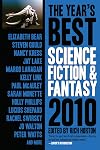
Was dithering on whether to rate this one a 3 or 4. Just over half of the 30 stories worked for me, though anthologies always have some you like, some you don't. of those I was a bit iffy on several, because I really detest both plot errors and Deus ex machina, but it seems modern writers and editors don't mind such things, so I'm trying to detract less for such.
Since I'm such a voracious reader, I have to throw some weight to value as well, so the fact that it's about 600 pages for 6 bucks show more helps. show less
Since I'm such a voracious reader, I have to throw some weight to value as well, so the fact that it's about 600 pages for 6 bucks show more helps. show less
The Year's Best Science Fiction & Fantasy 2014 Edition (Year's Best Science Fiction and Fantasy) by Rich Horton
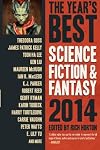
This year's science fiction and fantasy anthology offers some big names—Geoff Ryman’s “Rosary and Goldenstar,” which gives us an alternative history of the Renaissance, and the source for Rosencrantz and Guildenstern; Ken Liu (again), in “A Brief History of the Trans-Pacific Tunnel,” with a techno-turn for 20th century history; Maureen McHugh’s weird and scary “The Memory Book” (which is actually moving into the realm of dark fantasy); and Harry Turtledove’s kinda funny show more dystopian future, “It’s the End of the World as We Know It, and We Feel Fine.”
High points for this reader came from some of the many—and this is very nice—international stories: Israeli writer Lavie Tidhar’s “The Oracle,” in which a woman ponders whether to “ascend” to join computer consciousness; “The Bees Her Heart, The Hive Her Belly,” Thai writer Benjamin Sriduangkaew’s take on the development of new forms of life in an off-world future; and Chinese writer Tang Fei’s “Call Girl,” in which an outcast schoolgirl finds a way to make money by making older, wealthy mens’ dreams come true.
The main lesson from these anthologies is that so-called “genre” fiction is really all over the map these days; even the bug-eyed monsters and technological futures are nuanced, complicated by character and literary style, and ripe for contemporary readers.
Reviewed on Lit/Rant: www.litrant.tumblr.com show less
High points for this reader came from some of the many—and this is very nice—international stories: Israeli writer Lavie Tidhar’s “The Oracle,” in which a woman ponders whether to “ascend” to join computer consciousness; “The Bees Her Heart, The Hive Her Belly,” Thai writer Benjamin Sriduangkaew’s take on the development of new forms of life in an off-world future; and Chinese writer Tang Fei’s “Call Girl,” in which an outcast schoolgirl finds a way to make money by making older, wealthy mens’ dreams come true.
The main lesson from these anthologies is that so-called “genre” fiction is really all over the map these days; even the bug-eyed monsters and technological futures are nuanced, complicated by character and literary style, and ripe for contemporary readers.
Reviewed on Lit/Rant: www.litrant.tumblr.com show less
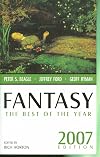
I was far more impressed by this than I thought I'd be. There were a few generic fantasy stories, but also a few that were amazing.
'Pol Pot's Beautiful Daughter' by Geoff Ryman really got under my skin, in an entirely unassuming manner. 'The Lineaments of Gratified Desire', by Ysabeau Wilce, reminded me of Jeff Noon's books, but was utterly delicious in its own way - the language in it curls and unfurls like sugar confections, a wonderful treat. And 'Moon Viewing at Shijo Bridge', by Richard show more Parks, has stuck with me as well, although I'm not sure why. show less
'Pol Pot's Beautiful Daughter' by Geoff Ryman really got under my skin, in an entirely unassuming manner. 'The Lineaments of Gratified Desire', by Ysabeau Wilce, reminded me of Jeff Noon's books, but was utterly delicious in its own way - the language in it curls and unfurls like sugar confections, a wonderful treat. And 'Moon Viewing at Shijo Bridge', by Richard show more Parks, has stuck with me as well, although I'm not sure why. show less
Lists
Awards


You May Also Like


Associated Authors
Statistics
- Works
- 27
- Also by
- 5
- Members
- 1,622
- Popularity
- #15,868
- Rating
- 3.5
- Reviews
- 33
- ISBNs
- 54
- Favorited
- 1