
Thomas M. Disch (1940–2008)
Author of Camp Concentration: A Novel
About the Author
Thomas Disch was a popular & prolific poet, playwright, essayist, & novelist. He is the author of many works of science fiction & the poetry collections "Dark verses & Light" & "Yes, Let's: New & Selected Poems". (Publisher Provided) Thomas M. Disch was born in Des Moines, Iowa on February 2, 1940. show more He dropped out of the architecture program at Cooper Union, and then left New York University after he sold a short story entitled The Double Timer. His first novel, The Genocides, was published in 1965. His other novels include The House That Fear Built, 334, The M.D., The Priest, The Word of God: Or, Holy Writ Rewritten, and Clara Reeve written under the pseudonym Leonie Hargreave. He won several awards including the 1969 Ditmar Award for Camp Concentration, the O. Henry Award in 1975 for Getting into Death and in 1977 for Xmas, the 1980 John W. Campbell, Jr. Memorial Award for On Wings of Song, and the 1981 British Science Fiction Award for The Brave Little Toaster: A Bedtime Story for Small Appliances. He was also wrote poetry, opera librettos, plays, and criticism of theater, films and art. His collections of poetry include Here I Am, There You Are, Where Are We; The Dark Old House; Yes, Let's: New and Selected Poetry; and Dark Verses and Light. He won the 1999 biennial Michael Braude Award for Light Poetry for A Child's Garden of Grammar, the Locus and Hugo Awards for 1999 for The Dreams Our Stuff is Made Of: How Science Fiction Conquered the World, and the Puschcart Prize for The First Annual Performance Art Festival at Slaughter Rock Battlefield. His criticism appeared in several publications including The Nation, The New York Daily News, and The New York Sun. In 1987, he wrote a script for the television series Miami Vice. He shot himself on July 4, 2008 at the age of 68. (Bowker Author Biography) show less
Image credit: photo by Bernard Gotfryd, 1986 or 1988
Series
Works by Thomas M. Disch
The Dreams Our Stuff Is Made Of: How Science Fiction Conquered the World (1998) 515 copies, 13 reviews
The Castle of Perseverance: Job Opportunities in Contemporary Poetry (Poets on Poetry) (2002) 10 copies
The Magazine of Fantasy and Science Fiction 69. Nacht in den Ruinen. Eine Auswahl der besten Erzählungen. (1984) — Contributor — 9 copies
Fun With Your New Head [short story] 9 copies
Thomas l'incredulo 5 copies
La stanza vuota 5 copies
The Asian Shore {novelette} 4 copies
Things Lost 3 copies
Total Amnesia: The Complete Text and Programming Notes of the World's Most Famous Lost Computer Game (2021) 2 copies
Highway Sandwiches 2 copies
Short Science Fiction Collection 056 2 copies
Narcissus 2 copies
The Birds [short fiction] 2 copies
TRIPLICITY by THOMAS M DISCH Nelson Doubleday 1965 1966 1967 BCE HC [Hardcover] Thomas M Disch 2 copies
Minnesota Gothic 2 copies
The Shadow 2 copies
The Grown-Up [short fiction] 2 copies
Downtown [Kurzgeschichte] 1 copy
Utopia? Never! 1 copy
The Puppets of Terra 1 copy
198…199 1 copy
Torturing Mr. Amberwell 1 copy
The Flâneurs of Mars 1 copy
Josie and the Elevator 1 copy
The First Annual Performance Art Festival at the Slaughter Rock Battlefield {short story} 1 copy, 1 review
Mutability 1 copy
Prayer to Pleasure {poem} 1 copy
The Vengeance of Hera 1 copy
Come To Venus Melancholy 1 copy
Nights in the Gardens of the Kerhonkson Prison for the Aged and Infirm {short story} 1 copy, 1 review
Nada 1 copy
In Praise of New York {poem} 1 copy
Terra all'infinito 1 copy
Logor koncentracije 1 copy
1972 1 copy
Concepts [novelette] 1 copy
Storie del bene e del male 1 copy
Et in Arcadia ego 1 copy
The Revelation [short story] 1 copy
The Hawk & the Metaphor 1 copy
Associated Works
The Collected Stories of Philip K. Dick Volume 5: We Can Remember It For You Wholesale (1987) — Introduction, some editions — 738 copies, 10 reviews
The Year's Best Fantasy and Horror: Seventh Annual Collection (1994) — Contributor — 284 copies, 3 reviews
The Year's Best Fantasy and Horror: Sixteenth Annual Collection (2003) — Contributor — 240 copies, 2 reviews
The Vintage Book of Amnesia: An Anthology of Writing on the Subject of Memory Loss (2000) — Contributor — 228 copies, 2 reviews
The Arbor House Treasury of Horror and the Supernatural (1981) — Contributor — 220 copies, 3 reviews
The Year's Best Fantasy and Horror: Second Annual Collection (1987) — Contributor — 207 copies, 1 review
The Heat Death of the Universe and Other Stories (1988) — Introduction, some editions — 100 copies, 4 reviews
The Magazine of Fantasy & Science Fiction: A 30-Year Retrospective (1980) — Contributor — 94 copies, 1 review
The Best Fantasy Stories from the Magazine of Fantasy & Science Fiction (1985) — Contributor — 77 copies, 2 reviews
Best Science Fiction Stories of the Year Eighth Annual Collection (1979) — Contributor — 66 copies, 2 reviews
The American Shore: Meditations on a Tale of Science Fiction by Thomas M. Disch--"Angouleme" (1978) 44 copies
Light Years and Dark: Science Fiction and Fantasy of and for Our Time (1984) — Contributor — 38 copies
Holding your eight hands; an anthology of science fiction verse (1970) — Contributor — 25 copies, 1 review
The Magazine of Fantasy and Science Fiction May 1983, Vol. 64, No. 5 (1983) — Contributor — 12 copies
Isaac Asimov's Science Fiction Magazine: Vol. 16, No. 4 & 5 [April 1992] (1992) — Contributor — 12 copies
Isaac Asimov's Science Fiction Magazine: Vol. 15, No. 15 [Mid-December 1991] (1991) — Contributor — 12 copies
The Magazine of Fantasy and Science Fiction October 1989, Vol. 77, No. 4 (1989) — Contributor — 11 copies
The Magazine of Fantasy and Science Fiction 65. Cyrion in Bronze. (1985) — Contributor, some editions — 11 copies
The Magazine of Fantasy and Science Fiction November 1988, Vol. 75, No. 5 (1988) — Author — 10 copies
The Magazine of Fantasy and Science Fiction April 2002, Vol. 102, No. 4 (2002) — Contributor — 10 copies
The Little Magazine, v. 11, #1, Spring 1977 — Contributor — 1 copy
The Little Magazine, v. 10, #1-2, Spring Summer 1976 — Contributor — 1 copy
季刊NW-SF 1972年 01月 第5号 — Contributor — 1 copy
S-Fマガジン 2009年 05月号 [雑誌] — Contributor — 1 copy
Tagged
Common Knowledge
- Canonical name
- Disch, Thomas M.
- Legal name
- Disch, Thomas Michael
- Other names
- Demijohn, Thom
Hargrave, Leonie (pseudonym)
Knye, Cassandra (pseudonym together with John Sladek)
Tharp, Beebe (pseudonym)
Disch, Tom - Birthdate
- 1940-02-02
- Date of death
- 2008-07-04
- Gender
- male
- Education
- Cooper Union
New York University - Occupations
- theater critic
author
poet
playwright
essayist
novelist - Organizations
- The Nation
New York Daily News
PEN
National Book Critics Circle
Writers Guild of America East - Awards and honors
- Guest of Honour, Eastercon, UK (1981)
Michael Braude Award for Light Verse (1999)
Pushcart Prize (1998)
Hayakawa's SF Magazine Reader's Award (1989) - Agent
- Karpfinger Agency
- Relationships
- Naylor, Charles (partner)
- Cause of death
- suicide
- Nationality
- USA
- Birthplace
- Des Moines, Iowa, USA
- Places of residence
- Roseville, Minnesota, USA
New York, New York, USA - Place of death
- New York, New York, USA
- Burial location
- Saint Johns Episcopal Church Columbarium, Dubuque, Iowa, USA
- Associated Place (for map)
- USA
Members
Discussions
Living in your mind rent-free in Good Show Sir! — bad science fiction and fantasy covers (June 2025)
Earth invaded, conquered & terraformed in Name that Book (August 2012)
Short sci fi story - endless stairs in Name that Book (December 2009)
Reviews

I was saving Tom Disch for the DeSantis administration, as I expect his books will match the mood then. But this book came to the top of a pile and, well...
One of his three "Supernatural Minnesota" novels, this 1984 title, while not Disch's best, rewards a read.
Giselle Glandier has problems - mainly, that she's dead, strangled by her husband Bob, the businessman of the title. Rather than going on to the afterlife, her spirit is confined, first to the cemetery, then to Bob's vicinity. She'd show more rather not haunt him, but seems to have no choice. There's also the matter of her spectral pregnancy with Bob's offspring, a demon baby who has a bad attitude toward everyone else, alive or dead.
Bob, the most relentlessly banal evil person you could imagine, is pleased to have gotten away with the murder (but the guy he bribed to supply an alibi is getting ideas). Bob is kind to Giselle's mother Joyce, in hopes of inheriting Joyce's house - hopes that are threatened when Giselle's brother Bing (who is gay, therefore of course estranged from the family) turns up.
Joyce dies early on (natural causes), and learns that heaven (or its lower levels anyway) is a lot like a shopping mall. Higher levels of the afterlife are reached by escalators; all very middle-class Midwestern USA.
Tom Disch (1940-2008) grew up gay in Minnesota and plainly had a great time settling some scores here. The (ghost of the) poet John Berryman is a major character, continually bleeding from the wounds from his suicide jump off a bridge and portrayed quite unsympathetically. Greedy, violent, stupid, trivial, obtuse - every character without exception is unsympathetic, a Disch specialty. The AIDS crisis would have been on the author's mind, but isn't mentioned. The bodies pile up quickly as the demon baby works to protect its father.
This novel lacks the razor-edged, bleak intelligence of Disch's best 1960s and 1970s books, but is worth picking up if you're feeling too much faith in your fellow humans. show less
One of his three "Supernatural Minnesota" novels, this 1984 title, while not Disch's best, rewards a read.
Giselle Glandier has problems - mainly, that she's dead, strangled by her husband Bob, the businessman of the title. Rather than going on to the afterlife, her spirit is confined, first to the cemetery, then to Bob's vicinity. She'd show more rather not haunt him, but seems to have no choice. There's also the matter of her spectral pregnancy with Bob's offspring, a demon baby who has a bad attitude toward everyone else, alive or dead.
Bob, the most relentlessly banal evil person you could imagine, is pleased to have gotten away with the murder (but the guy he bribed to supply an alibi is getting ideas). Bob is kind to Giselle's mother Joyce, in hopes of inheriting Joyce's house - hopes that are threatened when Giselle's brother Bing (who is gay, therefore of course estranged from the family) turns up.
Joyce dies early on (natural causes), and learns that heaven (or its lower levels anyway) is a lot like a shopping mall. Higher levels of the afterlife are reached by escalators; all very middle-class Midwestern USA.
Tom Disch (1940-2008) grew up gay in Minnesota and plainly had a great time settling some scores here. The (ghost of the) poet John Berryman is a major character, continually bleeding from the wounds from his suicide jump off a bridge and portrayed quite unsympathetically. Greedy, violent, stupid, trivial, obtuse - every character without exception is unsympathetic, a Disch specialty. The AIDS crisis would have been on the author's mind, but isn't mentioned. The bodies pile up quickly as the demon baby works to protect its father.
This novel lacks the razor-edged, bleak intelligence of Disch's best 1960s and 1970s books, but is worth picking up if you're feeling too much faith in your fellow humans. show less

This wasn't as good as I'd remembered it from previously reading it in 1990 - it was better! As a fan of the show, bringing my own associations to the text, my 5 ⭐ rating is undoubtedly objectively suspect, but that itself is in keeping with the book's themes of what we can and cannot trust, and the conditionality of reality.
Disch captured the smart, jousting dialogue just right, and created the layers of suspicion, second-guessing, cautious trust and resigned betrayals of the TV show more series.
His story is littered with the Shakespearean and classical references of the original, and the Bard's "Measure for Measure" forms both a plot element and a subversive meta-narrative on the role of the characters with the book, and of the writer and reader of the book. Whether the follow-up novels by two different authors will measure up to Disch's high standards remains for me to see.
Oh, and did Disch conceptualise motion-capture CGI in this 1969 novel? I think he did! show less
Disch captured the smart, jousting dialogue just right, and created the layers of suspicion, second-guessing, cautious trust and resigned betrayals of the TV show more series.
His story is littered with the Shakespearean and classical references of the original, and the Bard's "Measure for Measure" forms both a plot element and a subversive meta-narrative on the role of the characters with the book, and of the writer and reader of the book. Whether the follow-up novels by two different authors will measure up to Disch's high standards remains for me to see.
Oh, and did Disch conceptualise motion-capture CGI in this 1969 novel? I think he did! show less
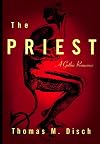
The Supernatural Minnesota books are just so damned good. The MD will remain one of the greatest literary horror novels of all time, but the other three are in no way to be sneezed at.
The Priest seems like an appropriate read at the moment. When it came out the various scandals that were rocking the Catholic Church were pretty bad, but few could have imagined the deluge to come. Well, Disch did, in a kind of murderous, tragic, apocalyptic way. Now there's a new pope and the taint of scandal show more has been irrevocably ingrained into the substance of the Church, and Disch's gothic vision of conservative Catholic values run amok in the modern world is pretty much a spot-on piece of savagely satirical entertainment.
In The Priest, a paedophile priest - an ephebophile, really - is blackmailed into, amongst other things, getting an enormous tattoo of Satan on his torso. Passing out while under the needle, he wakes up in the time and body of a medieval bishop in the throes of the orgy of torture and slaughter that was the Albigensian Crusade. Worse still, the medieval bishop wakes up in the priest's time and body. Hi-jinks ensue.
Oh, what a tangled, nasty tale. Disch's trenchant anti-catholcism is in full flight. With anyone else that might have led to something rather unsatisfying, but Disch's focus on the documented evils, while taking a side-swipe at a thinly disguised cult founded by a science fiction writer that's half Hubbard, half Streiber, and his merciless dissection of human vanity, means that even with the supernatural body and time jumping elements, this is a meditation on all-too-human and all-too-banal acts of evil. It's also a gut-wrenching exercise in mounting suspense, and the moment when the bishop is loosed on the pregnant girls trapped in the cells under the cathedral is agonising.
In the ongoing series of where-was-I-when-I-first-read-this, I borrowed The Priest from Cork City Library and read it on breaks and during lunches while working in Dunnes Stores in Douglas sometime in the mid-nineties. Hell of a book. show less
The Priest seems like an appropriate read at the moment. When it came out the various scandals that were rocking the Catholic Church were pretty bad, but few could have imagined the deluge to come. Well, Disch did, in a kind of murderous, tragic, apocalyptic way. Now there's a new pope and the taint of scandal show more has been irrevocably ingrained into the substance of the Church, and Disch's gothic vision of conservative Catholic values run amok in the modern world is pretty much a spot-on piece of savagely satirical entertainment.
In The Priest, a paedophile priest - an ephebophile, really - is blackmailed into, amongst other things, getting an enormous tattoo of Satan on his torso. Passing out while under the needle, he wakes up in the time and body of a medieval bishop in the throes of the orgy of torture and slaughter that was the Albigensian Crusade. Worse still, the medieval bishop wakes up in the priest's time and body. Hi-jinks ensue.
Oh, what a tangled, nasty tale. Disch's trenchant anti-catholcism is in full flight. With anyone else that might have led to something rather unsatisfying, but Disch's focus on the documented evils, while taking a side-swipe at a thinly disguised cult founded by a science fiction writer that's half Hubbard, half Streiber, and his merciless dissection of human vanity, means that even with the supernatural body and time jumping elements, this is a meditation on all-too-human and all-too-banal acts of evil. It's also a gut-wrenching exercise in mounting suspense, and the moment when the bishop is loosed on the pregnant girls trapped in the cells under the cathedral is agonising.
In the ongoing series of where-was-I-when-I-first-read-this, I borrowed The Priest from Cork City Library and read it on breaks and during lunches while working in Dunnes Stores in Douglas sometime in the mid-nineties. Hell of a book. show less
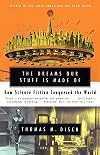
I started reading this book as research for the sci-fi class I am teaching this semester, but I kept reading it because Tom Disch's writing is delightful. Erudite and opinionated, Disch had me laughing and nodding at some of the oddest things -- his perspective on Scientology is sharp and brilliant, for example, and his attitude towards Star Wars is something I can relate to. I did not agree with everything he had to say -- he harshes on some classics and some favorites -- but even when I show more found myself disagreeing, I thought his points were fair. Some were even enlightening. For anyone interested not only in science fiction, but in the impact of SF on the rest of the world, this is worth your time. show less
Lists
Awards


You May Also Like


Associated Authors
Statistics
- Works
- 165
- Also by
- 152
- Members
- 8,122
- Popularity
- #2,979
- Rating
- 3.6
- Reviews
- 200
- ISBNs
- 221
- Languages
- 8
- Favorited
- 28

