
Philip K. Dick (1928–1982)
Author of Do Androids Dream of Electric Sheep?
About the Author
Phillip Kindred Dick was an American science fiction writer best known for his psychological portrayals of characters trapped in illusory environments. Born in Chicago, Illinois, on December 16, 1928, Dick worked in radio and studied briefly at the University of California at Berkeley before show more embarking on his writing career. His first novel, Solar Lottery, was published in 1955. In 1963, Dick won the Hugo Award for his novel, The Man in the High Castle. He also wrote a series of futuristic tales about artificial creatures on the loose; notable of these was Do Androids Dream of Electric Sheep?, which was later adapted into film as Blade Runner. Dick also published several collections of short stories. He died of a stroke in Santa Ana, California, in 1982. (Bowker Author Biography) show less
Disambiguation Notice:
The collected short stories have been published with many different titles, so, when combining, please take care to combine the correct volumes.
Series
Works by Philip K. Dick
The Collected Stories of Philip K. Dick Volume 1: Beyond Lies the Wub (1947) 2,012 copies, 26 reviews
The Shifting Realities of Philip K. Dick: Selected Literary and Philosophical Writings (1995) 739 copies, 5 reviews
The Collected Stories of Philip K. Dick Volume 5: We Can Remember It For You Wholesale (1987) — Author — 737 copies, 10 reviews
Five Great Novels: "Do Androids Dream of Electric Sleep", "Martian Time Slip", "Ubik", "The Three Stigmata of Palmer Eldritch", "A Scanner Darkly" (GollanczF.) (2004) 338 copies, 1 review
What If Our World Is Their Heaven? The Final Conversations of Philip K. Dick (2001) 277 copies, 4 reviews
Counterfeit Unrealities (contains Ubik, A Scanner Darkly, Do Androids Dream of Electric Sheep [aka Blade Runner], The Three Stigmata of Palmer Eldritch) (2002) 206 copies, 2 reviews
The Third Science Fiction Megapack: 26 Modern and Classic Science Fiction Tales (2012) 65 copies, 1 review
Philip K. Dick: The Last Interview: and Other Conversations (The Last Interview Series) (2015) 61 copies, 2 reviews
The Early Work of Philip K. Dick, Volume 2: Breakfast at Twilight and Other Stories (2008) 39 copies
Robots, Androids, and Mechanical Oddities: The Science Fiction of Philip K. Dick (Alternatives) (1984) — Author — 32 copies, 1 review
The Early Science Fiction of Philip K. Dick (Dover Books on Literature & Drama) (2013) 31 copies, 3 reviews
Faith of Our Fathers (short story) 17 copies
The Philip K. Dick Anthology: 18 Classic Science Fiction Stories (Bybliotech Fiction) (2013) 12 copies, 1 review
Planeta, která neexistovala : sbírka sedmadvaceti antiutopicky a hororově laděných sci-fi povídek, vydaných časopisecky v letech 1952-1955 (2006) 10 copies
A Máquina Preservadora 1 9 copies
Souvenir [Short Story] 8 copies
O Mistério de Valis 1 8 copies
A Máquina Preservadora 2 8 copies
Bibliothek der besten SF- Stories. Die fünfziger Jahre I. ( 1950 - 1954 ). (SF- Spezial). (1981) — Contributor — 8 copies
O Mistério de Valis 2 8 copies
Rapport minoritaire/Minority Report - Souvenirs à vendre/We Can Remember It for You Wholesale (2009) 8 copies
Satan's Pets 5 copies
Galaxy 11 - Eine Auswahl der besten Stories aus dem Schience Fiction Magazine GALAXY (1968) — Contributor — 5 copies
Novelty Act 4 copies
The Hood Maker 4 copies
Time Traveler Tales: Sci-Fi Time Travel Classics: The Skull, The Variable Man & Meddler (2018) 4 copies
Fair Game 4 copies
Millemondinverno 1975 4 copies
The Eye of the Sibyl {story} 4 copies
Blade Runner - Do Androids Dream of Electric Sheep? / The Game-Players of Titan / A Maze of Death HARDCOVER BOOK IN RUSSIAN CONTAINS ILLUSTRATIONS (1993) 3 copies, 1 review
Best Science Fiction Stories Collection of Philip K. Dick (Adjustment Team, The Skull, The Defenders, Second Variety, and many more) (2011) 3 copies
Warning: We Are Your Police 3 copies
Waterspider 3 copies
The World She Wanted 3 copies
Minority report (II) 3 copies
The Short Stories Of Phillip K. Dick - Volume 1: "Reality is whatever refuses to go away when I stop believing in it." (2014) 3 copies
To Serve The Master [short story] 2 copies
Un mundo de talento 2 copies
Five Stories by Philip K. Dick 2 copies
Short Science Fiction Collection 056 2 copies
Short Science Fiction Collection 051 2 copies
Null-O 2 copies
Short Science Fiction Collection 053 2 copies
Short Science Fiction Collection 057 2 copies
Short Science Fiction Collection 075 2 copies
Short Science Fiction Collection 059 2 copies
The Chromium Fence 2 copies
Naziism and the High Castle 2 copies
Beyond the Door and Other Works by Philip K. Dick (Unexpurgated Edition) (Halcyon Classics) (2009) 2 copies
Dry My White Noise Tears: A Philip K. Dick Collection (Six Philip K. Dick stories in one volume!) (2010) 2 copies
Survey Team 2 copies
Ubik - Japan 2 copies
Eine Handvoll Dunkelheit. Acht Visionen einer dunklen Zukunft - erahnt und erzählt von Philip K. Dick (1963) 2 copies
Ubik - UK 2 copies
Philip K. Dick Super Pack: With linked Table of Contents (Positronic Super Pack Series Book 7) (2015) 2 copies
Különös éden 2 copies
Time Pawn 2 copies
Human Is [short story] 2 copies
Project: Earth 2 copies
Le guérisseur de cathédrales, suivi de Nick et le Glimmung [Galactic Pot-Healer / Nick and the Glimmung] (2017) 2 copies
A Scanner Darkly [short story] 2 copies
Galaktik çömlek tamircisi 1 copy
Az utolsó tréfa 1 copy
Le detourneur 1 copy
Message de Frolic 8 1 copy
Ölüm Labirenti 1 copy
Война на реалности 1 copy
The World That Jones Made 1 copy
Sokaktan Gelen Sesler 1 copy
I nostri amici da Frolix 8 1 copy
The Eye in the Sky 1 copy
Ubik - Romania 1 copy
Bir Palavracinin Itiraflari 1 copy
Philip K. Dick Omnibus 1 copy
フィリップ・K・ディックのすべて―ノンフィクション集成 1 copy
A city without a map - paperback collection of short stories fantasy Hayakawa Dick NV 122 (1976) 1 copy
Philip K. Dick Omnibus 1 copy
Philip K. Dick Omnibus 1 copy
Philip K. Dick Omnibus 1 copy
A Lincoln Androide 1 copy
Вспомнить все: рассказы 1 copy
Collected Stories Volume 2 1 copy
Filmske priče 1 copy
Glas trećega 1 copy
Collected Stories Volume 1 1 copy
Električni snovi 1 copy
Το ηλεκτρικό πρόβατο 1 copy
Os Agentes do Destino 1 copy
Confession of a Crap Artist 1 copy
Le retour des explorateurs 1 copy
The Short Stories Of Phillip K. Dick - Volume 2: "It is sometimes an appropriate response to reality to go insane." (2014) 1 copy
Philip K. Dick Omnibus 1 copy
Paycheck (Short Story) 1 copy
Cla 1 copy
A Harag Istene 1 copy
Le Détourneur 1 copy
Unknown Book 6531601 1 copy
Urania 0320 - Vulcano 3 1 copy
Space Jockey (Science Fiction Short Stories) (Futura - Science Fiction Short Stories) (2013) 1 copy, 1 review
12 Science Fiction Short Story Collection : [Hugo Award winning writers] [illustrated] (2014) 1 copy
I migliori romanzi 1 copy
The Story To End All Stories 1 copy
Strange New World 1 copy
FORCED EXPOSURE #13 1 copy
A Surface Raid 1 copy
The Trouble With Bubbles 1 copy
Misadjustment 1 copy
Service Call 1 copy
Stand-by 1 copy
A Terran Odyssey 1 copy
Tutti i racconti 1 copy
Omnibus 1 copy
Il meglio di Philip Dick 1 copy
Le père truqué 1 copy
Trilogia di Valis 1 copy
By Philip K. Dick Lies, Inc. 1 copy
Вторая модель 1 copy
Убик 1 copy
Science Fiction Double feature: The Gun & The Eyes have it: Classic Science Fiction Graphic Novel 1 copy, 1 review
Comprehensive works including Minority report, Do Androids Dream of Electric Sheep? and Blade Runner 1 copy
少数派报告 1 copy
2009 1 copy
Contatto col nemico 1 copy
Ricordi di domani 1 copy
פוסטר, אתה מת וסיפורים אחרים 1 copy
The Slave Race 1 copy
What the Dead Man Said 1 copy
Associated Works
Spells of Enchantment: The Wondrous Fairy Tales of Western Culture (1991) — Contributor — 605 copies, 5 reviews
The Big Book of Science Fiction: The Ultimate Collection (2016) — Contributor — 520 copies, 8 reviews
The Norton Book of Science Fiction: North American Science Fiction, 1960-1990 (1993) — Contributor — 345 copies, 6 reviews
The Vintage Book of Amnesia: An Anthology of Writing on the Subject of Memory Loss (2000) — Contributor — 228 copies, 2 reviews
Isaac Asimov's Magical Worlds of Fantasy, Volume 12: Faeries (1991) — Contributor — 216 copies, 4 reviews
The Very Best of Fantasy & Science Fiction: Sixtieth Anniversary Anthology (2009) — Contributor — 148 copies, 6 reviews
Adaptations: From Short Story to Big Screen: 35 Great Stories That Have Inspired Great Films (2005) — Contributor — 136 copies, 1 review
Isaac Asimov's Wonderful Worlds of Science Fiction, Volume 9: Robots (1989) — Contributor — 121 copies, 2 reviews
Science Fiction Showcase: Eleven Extraordinary Stories by Eleven Masters of Science-Fiction and Fantasy (1959) — Contributor — 111 copies, 3 reviews
The Prentice Hall Anthology of Science Fiction and Fantasy (2000) — Contributor — 99 copies, 2 reviews
Rivals of Weird Tales: 30 Great Fantasy & Horror Stories from the Weird Fiction Pulps (1990) — Contributor — 97 copies, 1 review
The Magazine of Fantasy & Science Fiction: A 30-Year Retrospective (1980) — Contributor — 94 copies, 1 review
The Science Fiction Megapack: 25 Classic Science Fiction Stories by Masters (2011) — Author — 65 copies, 3 reviews
A Century of Science Fiction 1950-1959 : The Greatest Stories of the Decade (1996) — Contributor — 63 copies, 2 reviews
Fourth Planet from the Sun: Tales of Mars from the Magazine of Fantasy and Science Fiction (2005) — Contributor — 44 copies, 4 reviews
Grave Predictions: Tales of Mankind’s Post-Apocalyptic, Dystopian and Disastrous Destiny (2016) 35 copies, 7 reviews
Nature's Warnings: Classic Stories of Eco-Science Fiction (British Library Science Fiction Classics) (2020) — Contributor — 34 copies
The Wild Years 1946-1955 (Amazing Science Fiction Anthology Series) (1987) — Contributor — 27 copies
The Magazine of Fantasy and Science Fiction October 1981, Vol. 61, No. 4 (1981) — Contributor — 19 copies
The Magazine of Fantasy and Science Fiction January 1954, Vol. 6, No. 1 (1954) — Contributor — 11 copies
The Magazine of Fantasy and Science Fiction July 1964, Vol. 27, No. 1 (1964) — Contributor — 11 copies
The Magazine of Fantasy and Science Fiction July 1953, Vol. 5, No. 1 (1953) — Contributor — 10 copies
The Magazine of Fantasy and Science Fiction June 1953, Vol. 4, No. 6 (1953) — Contributor — 10 copies
The Magazine of Fantasy and Science Fiction November 1952, Vol. 3, No. 7 (1952) — Contributor — 8 copies
Robotics Through Science Fiction: Artificial Intelligence Explained Through Six Classic Robot Short Stories (2018) — Contributor — 8 copies
Cosmos Science Fiction and Fantasy Magazine Vol. 1 No. 1: September 1953 (1953) — Contributor — 7 copies
The Magazine of Fantasy and Science Fiction February 1953, Vol. 4, No. 2 (1953) — Contributor — 7 copies
Faseskift : science fiction noveller : et udvalg (1984) — Author, some editions — 5 copies, 1 review
Questa notte attenti agli UFO — Contributor — 3 copies
Orbit Science Fiction No. 4, September-October 1954 — Contributor — 3 copies
Den elektriske myre og andre science fiction-fortællinger (1984) — Author, some editions — 2 copies, 1 review
Short Science Fiction Collection 047 — Contributor — 2 copies
Short Science Fiction Collection 072 — Contributor — 2 copies
Fantasy Fiction Magazine, June 1953 (Vol. 1, No. 2) — Contributor — 2 copies
Fantastic Universe October 1954 — Contributor — 2 copies
Science Fiction Stories 1953 — Contributor — 2 copies
Fantastic Universe July 1955 — Contributor — 2 copies
Mostri del cielo e della terra — Contributor — 2 copies
Millemondi Primavera 2001: Nuove avventure nell'ignoto — Contributor — 2 copies
BBC Proms 2025 : Berlioz’s 'Symphonie fantastique' : Tuesday 22 July 2025 {programme} (2025) — Contributor [Simpson} — 1 copy
Misunderstanding Cad First Contact SF Masterpiece Selection — Contributor — 1 copy
季刊NW-SF 7号 — Contributor — 1 copy
ロボット・オペラ — Contributor — 1 copy
季刊NW-SF 1976年 08月 第12号 — Contributor — 1 copy
新潮 1990年 09月号 現代SFの冒険 — Contributor — 1 copy
Tagged
Common Knowledge
- Legal name
- Dick, Philip Kindred
- Other names
- Philips, Richard
Dowland, Jack - Birthdate
- 1928-12-16
- Date of death
- 1982-03-02
- Gender
- male
- Education
- University of California, Berkeley (MLS|1975)
- Occupations
- short story writer
novelist
science fiction writer - Organizations
- Science Fiction and Fantasy Writers of America
- Awards and honors
- Science Fiction Hall of Fame ( [2005])
- Agent
- Russell Galen (Scovil-Chichak-Galen Literary Agency)
- Relationships
- Dick, Tessa B. (former spouse)
Dick, Anne R.(former spouse)
Powers, Tim (friend)
Blaylock, James P. (friend)
Jeter, K. W. (friend) - Short biography
- Philip K. Dick was born in Chicago in 1928 and lived most of his life in California. He briefly attended the University of California, but dropped out before completing any classes. In 1952, he began writing professionally and proceeded to write numerous novels and short-story collections. Philip K. Dick died on March 2, 1982, in Santa Ana, California, of heart failure following a stroke.
- Cause of death
- stroke
- Nationality
- USA
- Birthplace
- Chicago, Illinois, USA
- Places of residence
- Chicago, Illinois, USA
Berkeley, California, USA
San Rafael, California, USA
Fullerton, California, USA
Santa Ana, California, USA
Point Reyes Station, California, USA - Place of death
- Santa Ana, California, USA
- Burial location
- Riverside Cemetery, Fort Morgan, Colorado, USA (section K, block 1, lot 56)
- Map Location
- Illinois, USA
- Disambiguation notice
- The collected short stories have been published with many different titles, so, when combining, please take care to combine the correct volumes.
Members
Discussions
If I had a hammer in Good Show Sir! — bad science fiction and fantasy covers (March 2025)
Philip K. Dick, Do androids dream of electric sheep? in Science Fiction Fans (November 2024)
Original price of Philip K Dick Set? in Centipede Press (December 2022)
Found: Futuristic undercover cop in Name that Book (September 2021)
SciFi novella - Detecting Alien Attack Patterns in Name that Book (August 2019)
The Man in the High Castle in Folio Society Devotees (April 2015)
Do Androids Dream of Electric Sheep? by Philip K. Dick in Science Fiction Fans (May 2014)
Do androids dream of electric sheep? in The Green Dragon (January 2014)
Philip K. Dick Chronological Order? in Librarything Series (December 2013)
1001 Group Read: May, 2012 - Do Androids Dream of Electric Sheep? in 1001 Books to read before you die (May 2013)
Philip K. Dick Bibliography in Science Fiction Fans (May 2012)
I need some Dick in Science Fiction Fans (April 2012)
PKDs Man in the High Castle coming to TV soon in Science Fiction Fans (March 2011)
P. K. Dick's Eye in the Sky, rev. jimroberts in Reviews reviewed (September 2009)
Two More SF Shorts in Name that Book (August 2008)
Reviews
Four Novels of the 1960s: The Man in the High Castle / The Three Stigmata of Palmer Eldritch / Do Androids Dream of Electric Sheep? / Ubik by Philip K. Dick

Dick is an author I'm not as familiar with as I'd like; basically, prior to reading this, I'd only read three things by him, all ones that got turned into movies! (Do Androids Dream of Electric Sheep?, A Scanner Darkly, and "The Minority Report") Though I guess the first of these got turned into a tv show, albeit one I never saw. (My dad was a fan.) Anyway, for many years now I've owned a Library of America box set of fourteen of his novels, and I was happy to finally dip in.
The Man in the show more High Castle
Since reading this but before writing up this review, I've gone on to read five more Philip K. Dick novels, and by the standards of many of his later ones, The Man in the High Castle is positively subdued. About a world where the Axis won World War II, and set mostly in Japanese-occupied California, there's not much in the way of a sfnal elements beyond that. I can see why it captured the Hugo electorate (it was one of only two of his many novels to be a Hugo finalist, and the only won to win): it's a triumph of worldbuilding. We get a real solid sense of what this new world is like and how it functions, on the most local of levels: people in highway diners, people in factory jobs, people eating dinner together. From this, we can infer and understand the big political stuff that underlies the story and drives it in the background. The whole idea of the Japanese being obsessed with American pop culture, and Americans supplying obsessive collectors with counterfeit American artifacts was quite fascinating.
Dick also demonstrates a real solidity of character; these are ordinary people, both admirable and despicable in their ordinariness, which drives them to do things they often don't understand. I particularly liked Juliana Frink.
The novel is also quite well put together thematically: it's all about people placing value in things based on the extent to which they perceive them to be true, even when they are not actually true. Things mean only what we believe them to mean. When a pair of counterfeiters try to make their own jewelry, no one likes it because it doesn't carry the aura of authenticity, even though it is much more authentic than the fakes they have been making. Does the counterfeit become real if we believe in it enough? This all reaches a thematic climax at the end: many of the characters have been reading a novel about an alternate timeline where the Axis lost World War II, and they have been inspired by it. What the ending makes clear is that this novel-within-a-novel is not "real," as it does not depict our world, the real world where the Axis lost; its author imagines a completely different, and wrong, alternative history. So the book that has been inspiring resistance is utterly fake! But everything else the novel has told is would indicate this doesn't matter, because everyone in the novel believes it is real.
Library of America editor Jonatham Lethem does a good job on notes throughout the whole volume, but in particular the end notes for this novel are very useful in explaining what German figures were real historical persons, and what their real roles were.
The Three Stigmata of Palmer Eldritch / Do Androids Dream of Electric Sheep? / Ubik
None of the other three are really like The Man in the High Castle, except in that they largely focus on "ordinary" people. These people all live in extraordinary worlds, and sometimes even do things that would be extraordinary to us, but in every case, they are people just doing jobs, working in offices, dealing with petty bullshit, even when their job is to hunt down killer androids or achieve corporate superiority through telepathic espionage. Dick is extraordinarily good at capturing a feeling of alienation from modern life: these books were written in the 1960s, and set in the future, but they feel every bit as relevant to the 2020s. These books are filled with people desperately seeking connections and meanings, and finding that the whole world is oriented against letting this happen.
In each case, Dick is also really good at what you might call "slippage," slowly easing you into an utterly weird thing that happens with total matter-of-factness, causing you to question the reality of what you are reading: the visions of the future in Three Stigmata, the entire alternate police force in Do Androids Dream, the advancing decay in Ubik. I liked all three a lot, but I especially liked Ubik; each chapter was a such a beautiful surreal poem, almost, as the world began to decay around our protagonists, and they desperately tried to hold it back with whatever "Ubik" happened to be at that moment. (And I loved the Ubik advertisements; as I've noted before in this reading journey, 1950s/60s sf was very much interested in the power of commercial advertising.)
The only disappointment was that in the end of each case, Dick seemed to feel compelled to tie everything up and explain it in the process. Do Androids Dream probably does this the least, but both Three Stigmata and Ubik get less weird near the end, as they explain why all the weirdness was happening, and this makes them a bit unsatisfying. I feel like it would be better to not entirely know or understand what was going on in these books. In being incomplete, I think they would feel more cohesive, ironically.
One last note: it's funny to compare Do Androids Dream to Blade Runner. I do like Blade Runner, but what is sort of subtext and an ending twist in Blade Runner—maybe Decker is the real replicant!—is just text in Do Androids Dream. You spend the whole book questioning who is real and who is not, because Decker himself is always doing this. I feel like Ridley Scott fanboys expect your mind to be blown by this, but where Scott ends is where Dick begins even though Dick came first, and I find that much more interesting, and that gives you much more to think about. show less
The Man in the show more High Castle
Since reading this but before writing up this review, I've gone on to read five more Philip K. Dick novels, and by the standards of many of his later ones, The Man in the High Castle is positively subdued. About a world where the Axis won World War II, and set mostly in Japanese-occupied California, there's not much in the way of a sfnal elements beyond that. I can see why it captured the Hugo electorate (it was one of only two of his many novels to be a Hugo finalist, and the only won to win): it's a triumph of worldbuilding. We get a real solid sense of what this new world is like and how it functions, on the most local of levels: people in highway diners, people in factory jobs, people eating dinner together. From this, we can infer and understand the big political stuff that underlies the story and drives it in the background. The whole idea of the Japanese being obsessed with American pop culture, and Americans supplying obsessive collectors with counterfeit American artifacts was quite fascinating.
Dick also demonstrates a real solidity of character; these are ordinary people, both admirable and despicable in their ordinariness, which drives them to do things they often don't understand. I particularly liked Juliana Frink.
The novel is also quite well put together thematically: it's all about people placing value in things based on the extent to which they perceive them to be true, even when they are not actually true. Things mean only what we believe them to mean. When a pair of counterfeiters try to make their own jewelry, no one likes it because it doesn't carry the aura of authenticity, even though it is much more authentic than the fakes they have been making. Does the counterfeit become real if we believe in it enough? This all reaches a thematic climax at the end: many of the characters have been reading a novel about an alternate timeline where the Axis lost World War II, and they have been inspired by it. What the ending makes clear is that this novel-within-a-novel is not "real," as it does not depict our world, the real world where the Axis lost; its author imagines a completely different, and wrong, alternative history. So the book that has been inspiring resistance is utterly fake! But everything else the novel has told is would indicate this doesn't matter, because everyone in the novel believes it is real.
Library of America editor Jonatham Lethem does a good job on notes throughout the whole volume, but in particular the end notes for this novel are very useful in explaining what German figures were real historical persons, and what their real roles were.
The Three Stigmata of Palmer Eldritch / Do Androids Dream of Electric Sheep? / Ubik
None of the other three are really like The Man in the High Castle, except in that they largely focus on "ordinary" people. These people all live in extraordinary worlds, and sometimes even do things that would be extraordinary to us, but in every case, they are people just doing jobs, working in offices, dealing with petty bullshit, even when their job is to hunt down killer androids or achieve corporate superiority through telepathic espionage. Dick is extraordinarily good at capturing a feeling of alienation from modern life: these books were written in the 1960s, and set in the future, but they feel every bit as relevant to the 2020s. These books are filled with people desperately seeking connections and meanings, and finding that the whole world is oriented against letting this happen.
In each case, Dick is also really good at what you might call "slippage," slowly easing you into an utterly weird thing that happens with total matter-of-factness, causing you to question the reality of what you are reading: the visions of the future in Three Stigmata, the entire alternate police force in Do Androids Dream, the advancing decay in Ubik. I liked all three a lot, but I especially liked Ubik; each chapter was a such a beautiful surreal poem, almost, as the world began to decay around our protagonists, and they desperately tried to hold it back with whatever "Ubik" happened to be at that moment. (And I loved the Ubik advertisements; as I've noted before in this reading journey, 1950s/60s sf was very much interested in the power of commercial advertising.)
The only disappointment was that in the end of each case, Dick seemed to feel compelled to tie everything up and explain it in the process. Do Androids Dream probably does this the least, but both Three Stigmata and Ubik get less weird near the end, as they explain why all the weirdness was happening, and this makes them a bit unsatisfying. I feel like it would be better to not entirely know or understand what was going on in these books. In being incomplete, I think they would feel more cohesive, ironically.
One last note: it's funny to compare Do Androids Dream to Blade Runner. I do like Blade Runner, but what is sort of subtext and an ending twist in Blade Runner—maybe Decker is the real replicant!—is just text in Do Androids Dream. You spend the whole book questioning who is real and who is not, because Decker himself is always doing this. I feel like Ridley Scott fanboys expect your mind to be blown by this, but where Scott ends is where Dick begins even though Dick came first, and I find that much more interesting, and that gives you much more to think about. show less
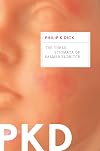
Very few Science Fiction authors manage to create memorable works that easily retain their relevance in the near and/or distant future. Phillip K. Dick is one of those talented few, and The 3 Stigmata of Palmer Eldritch.
Dick's not-so-distant dystopian future is one where global warming is an adaptable but growing dillema, with the bulk of humanity virtually sealed away in air-conditioned office buildings and apartment complexes. The solution, space migration to nearby planets, is such a show more bleak and arduous task that 'settlers' need to be drafted. These off-world settlers often resort to drug-induced shared hallucination involving miniature recreations of life back on earth. Within this structure we find corporations employing psychics to predict future sales trends, upper class elitists physically evolving themselves into 'superior beings', naturally created drugs that allow users to connect on different plains of reality and traverse freely throughout space-time, to name a few. In the center of it all is the titular Palmer Eldritch, a powerful and mysterious businessman who has spent decades communing with alien races, and has returned with what he claims to be mankind's mental and spiritual salvation.
What would normally be a one-trick-pony for other authors becomes a multi-layered examination of everything from religion and philosophy to physical/mental evolution and individual freedom versus responsibility. Dick doesn't bother with simple 'Good Vs. Evil' conflict, but instead shows us that both possibilities are sides of the same coin, and simply asks us to call it in the air. Highly recommended for those who like to think about a book long after reading it. show less
Dick's not-so-distant dystopian future is one where global warming is an adaptable but growing dillema, with the bulk of humanity virtually sealed away in air-conditioned office buildings and apartment complexes. The solution, space migration to nearby planets, is such a show more bleak and arduous task that 'settlers' need to be drafted. These off-world settlers often resort to drug-induced shared hallucination involving miniature recreations of life back on earth. Within this structure we find corporations employing psychics to predict future sales trends, upper class elitists physically evolving themselves into 'superior beings', naturally created drugs that allow users to connect on different plains of reality and traverse freely throughout space-time, to name a few. In the center of it all is the titular Palmer Eldritch, a powerful and mysterious businessman who has spent decades communing with alien races, and has returned with what he claims to be mankind's mental and spiritual salvation.
What would normally be a one-trick-pony for other authors becomes a multi-layered examination of everything from religion and philosophy to physical/mental evolution and individual freedom versus responsibility. Dick doesn't bother with simple 'Good Vs. Evil' conflict, but instead shows us that both possibilities are sides of the same coin, and simply asks us to call it in the air. Highly recommended for those who like to think about a book long after reading it. show less
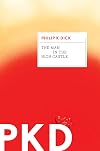
Much like the other Philip K. Dick novels that I've read, "The Man in the High Castle" is both a product of the author's blazingly original analytic mind and his not-exactly-elegant prose style. Closer to what's called "speculative fiction" these days than any traditional science fiction, the book imagines an America that lost the Second World War. Divided by the victorious Axis powers, Americans survive as a humiliated, colonized, subaltern class. Of course, the idea that America is a show more successful nation both at war and at peace is so central to twentieth century American identity that I imagine that a good deal of the attraction that this novel's first readers felt to it had to do with the fact that it dared to think the unthinkable. Having said that, Dick does a good job of considering what "American identity" might look like if it were considered this country's past instead of its future. I was particularly taken by the interior monologues of Robert Childan, a San Francisco antiques dealer whose interactions with his Japanese clients have caused him to take up the I Ching and even to modify his own thought patterns to match his clients' imperfect English.
Dick's take on the Nazis is trickier, and not just because the novel views them at something of a distance. He doesn't minimize their evil: the alternate history he provides of a Nazi-dominated world is pretty chilling. Still, I feel that there's a kinship between a few of Dick's literary creations and the National Socialist mindset. To Dick, the Nazis represent he psychoses and psychological contradictions that he described in "A Scanner Darkly" operating on massive scale: a purposefully inhuman induced schizophrenia. In "The Man in the High Castle," Dick contrasts this with the gnomic, contemplative verses of the I Ching. It's an odd juxtaposition, one which readers with a limited amount of patience for Dick's religious or astral interests may dislike. Still, even as the totalitarianisms of the twentieth century recede into memory, the social analysis that Dick provides here is probably more illuminating than many popular analyses of the America that actually exists. show less
Dick's take on the Nazis is trickier, and not just because the novel views them at something of a distance. He doesn't minimize their evil: the alternate history he provides of a Nazi-dominated world is pretty chilling. Still, I feel that there's a kinship between a few of Dick's literary creations and the National Socialist mindset. To Dick, the Nazis represent he psychoses and psychological contradictions that he described in "A Scanner Darkly" operating on massive scale: a purposefully inhuman induced schizophrenia. In "The Man in the High Castle," Dick contrasts this with the gnomic, contemplative verses of the I Ching. It's an odd juxtaposition, one which readers with a limited amount of patience for Dick's religious or astral interests may dislike. Still, even as the totalitarianisms of the twentieth century recede into memory, the social analysis that Dick provides here is probably more illuminating than many popular analyses of the America that actually exists. show less
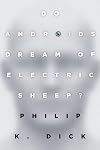
i've read this book a few times since the first go-round in high school, and it never fails to alarm me the different things i see in it every time, and the way in which i grow progressively more and more jaded. the first time i read this i was nearly destroyed by a plot point that seems fitting and inevitable now. of course it would happen that way. of course fucked up things like that happen. duh. but that first time i was babysitting, alone in the near-dark, and i couldn't stop shaking, show more and thinking that such things happen but they shouldn't and i will do everything in my power to be the kind of person who attempts to make sure they don't.
its important to have this reminder of that ideal, which i still hold dearly to me. no matter how jaded and bitter i think i may be. show less
its important to have this reminder of that ideal, which i still hold dearly to me. no matter how jaded and bitter i think i may be. show less
Lists
Books Read in 2023 (22)
current (1)
1950s (1)
SF Masterworks (1)
science fiction (1)
2023 (1)
Classic Sci-Fi (1)
A Novel Cure (1)
Classics (1)
2021 (1)
Read (1)
Page Turners (1)
Five star books (1)
Books (1)
Franklit (1)
Folio Society (1)
Cooper (1)
Yet another list (1)
Florida (1)
SF Masterworks (14)
Best Dystopias (3)
Read These Too (2)
1960s (2)
Forced Exposure (10)
Favourite Books (4)
Unread books (4)
My TBR (4)
SF - To Read (2)
1970 Club (2)
ORCID Book list (1)
Best Cyberpunk (1)
Wishlist (1)
1970s (1)
Futurism Works (2)
Science Fiction (2)
Overdue Podcast (2)
One Day (1)
um actually (1)
Awards


You May Also Like


Associated Authors
Statistics
- Works
- 671
- Also by
- 257
- Members
- 147,028
- Popularity
- #42
- Rating
- 3.8
- Reviews
- 2,766
- ISBNs
- 3,206
- Languages
- 33
- Favorited
- 883
