
About the Author
Hillary Rettig, founder of Boston-based coaching company Infinite Art
Works by Hillary Rettig
Associated Works
Isaac Asimov's Science Fiction Magazine: Vol. 12, No. 7 [July 1988] (1988) — Contributor — 20 copies, 1 review
Tagged
Common Knowledge
- Gender
- female
Members
Reviews
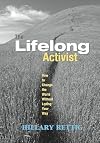
Combat burnout and flex your activist muscles
(Full disclosure: I received a free copy of this book for review at the publisher's invitation.)
As a fellow activist, author Hillary Rettig knows how grinding and stressful activism can be; those who devote their time and energy (indeed, much of their lives) to correcting the many injustices in the world are subject to stress, exhaustion, and even burnout. Luckily, Ms. Rettig - who is or has been active in a number of progressive issues, including show more feminism, labor, animal rights, and vegetarianism - is also a business coach. In THE LIFELONG ACTIVIST, she shares some of her insight with fellow activists and do-gooders.
Ms. Rettig aims to help the you, the reader, maximize your effectiveness in your advocacy endeavors (whether in a volunteer or work capacity) by tackling five life areas: your mission, your time, your fears, your relationship with yourself, and your relationship with others. The author takes the approach that you can have a fun, successful, and lengthy activist career - but only if you live a balanced life. While your activism can (indeed, should!) be one aspect of your life that defines you, by no means should it dominate your life. In order to avoid burnout, you must also nurture yourself and your relationships.
In order to help readers strike the appropriate balance - which, it should be noted, differs from person to person - Ms. Rettig leads you through a series of activities to help you clarify and delineate your goals, priorities, and missions. Oftentimes, sacrifices and compromises must be made between these; for example, many activists are torn between material wants and needs and their advocacy work. Ms. Rettig assures us that occasionally choosing to meet one's own wants and needs over those of "the movement" doesn't make us bad activists; rather, by nurturing ourselves, we're also nurturing our creativity, our motivation, and our capacity to effect change - all of which will serve our activism well in the long run. Ms. Rettig also emphasizes the need to focus on one specific cause or area of activism, so that we can develop our talents and actually see the outcomes of our hard work.
Additionally, it's important to recognize and embrace our unique talents. By fostering that which we delight in and excel at, activism becomes less of a chore and more of a joy. For instance, if you loathe public speaking, then representing your organization at a local conference is not the job for you - no matter how much your colleagues press you. Offer instead to help cater the event (if you love cooking) or design the campaign materials (if you're the artsy type). Forcing yourself to take on jobs that you hate will only lead to burnout, especially if it's a constant occurrence.
Of course, this is only a small sampling of the advice offered up in THE LIFELONG ACTIVIST. Among other things, you'll also learn how to: budget your time and money; combat perfectionism, negativism, and hypersensitivity; mentor and be mentored; self-actualize; deal with guilt and anxiety; delegate; and set boundaries. If you're feeling stressed out or anxious in your role as an activist, advocate, or agitator, there's plenty of helpful information to be had in THE LIFELONG ACTIVIST.
http://www.easyvegan.info/2006/12/14/book-review-the-lifelong-activist-by-hillar... show less
(Full disclosure: I received a free copy of this book for review at the publisher's invitation.)
As a fellow activist, author Hillary Rettig knows how grinding and stressful activism can be; those who devote their time and energy (indeed, much of their lives) to correcting the many injustices in the world are subject to stress, exhaustion, and even burnout. Luckily, Ms. Rettig - who is or has been active in a number of progressive issues, including show more feminism, labor, animal rights, and vegetarianism - is also a business coach. In THE LIFELONG ACTIVIST, she shares some of her insight with fellow activists and do-gooders.
Ms. Rettig aims to help the you, the reader, maximize your effectiveness in your advocacy endeavors (whether in a volunteer or work capacity) by tackling five life areas: your mission, your time, your fears, your relationship with yourself, and your relationship with others. The author takes the approach that you can have a fun, successful, and lengthy activist career - but only if you live a balanced life. While your activism can (indeed, should!) be one aspect of your life that defines you, by no means should it dominate your life. In order to avoid burnout, you must also nurture yourself and your relationships.
In order to help readers strike the appropriate balance - which, it should be noted, differs from person to person - Ms. Rettig leads you through a series of activities to help you clarify and delineate your goals, priorities, and missions. Oftentimes, sacrifices and compromises must be made between these; for example, many activists are torn between material wants and needs and their advocacy work. Ms. Rettig assures us that occasionally choosing to meet one's own wants and needs over those of "the movement" doesn't make us bad activists; rather, by nurturing ourselves, we're also nurturing our creativity, our motivation, and our capacity to effect change - all of which will serve our activism well in the long run. Ms. Rettig also emphasizes the need to focus on one specific cause or area of activism, so that we can develop our talents and actually see the outcomes of our hard work.
Additionally, it's important to recognize and embrace our unique talents. By fostering that which we delight in and excel at, activism becomes less of a chore and more of a joy. For instance, if you loathe public speaking, then representing your organization at a local conference is not the job for you - no matter how much your colleagues press you. Offer instead to help cater the event (if you love cooking) or design the campaign materials (if you're the artsy type). Forcing yourself to take on jobs that you hate will only lead to burnout, especially if it's a constant occurrence.
Of course, this is only a small sampling of the advice offered up in THE LIFELONG ACTIVIST. Among other things, you'll also learn how to: budget your time and money; combat perfectionism, negativism, and hypersensitivity; mentor and be mentored; self-actualize; deal with guilt and anxiety; delegate; and set boundaries. If you're feeling stressed out or anxious in your role as an activist, advocate, or agitator, there's plenty of helpful information to be had in THE LIFELONG ACTIVIST.
http://www.easyvegan.info/2006/12/14/book-review-the-lifelong-activist-by-hillar... show less
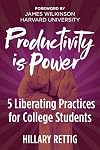
As advertised, this book gives five strategies to help college students become more productive. In this day and age where we are bombarded with distractions, this book was a lifesaver for me! We all struggle to stay on track when we first enter college and are hit with deadlines. This book provides students with relatable anecdotes as well as the five strategies that I feel really make the book relatable. This was a relatively quick read that was much easier to follow than most self-help show more books I've read. show less
I love this book. It changed my life. The book is divided into 5 parts along the theme of "managing" an aspect of your life: your mission; your time; your fears; your relationship with self; your relationship with others. Each part is significant and instructive. Rettig includes many examples and tables to help you organize your own life and activism.
One of the main points of this book is this: you will not do good activism if you are burned out. For many, this may mean doing only part-time show more activism. But some is better than none. This book will teach you how to find that balance and increase your productivity in activism. show less
One of the main points of this book is this: you will not do good activism if you are burned out. For many, this may mean doing only part-time show more activism. But some is better than none. This book will teach you how to find that balance and increase your productivity in activism. show less
The 7 Secrets of the Prolific: The Definitive Guide to Overcoming Procrastination, Perfectionism, and Writer's Block by Hillary Rettig
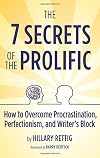
I was disappointed in this book. I think I picked it up last summer, when I saw the author's workshop offered at Grub Street. I couldn't do the workshop, so I thought this would be a way of getting some of the same benefits, but as I skimmed through the middle sections of the book, I found myself wishing I hadn't even paid the $4 for the ebook.
It turns out I'm not much of a procrastinator or a perfectionist, by Rettig's definitions, and I've never really believed in writer's block. Her show more suggestions to delegate lower-value tasks to others, or hire people to do them, are pretty useless unless you have a few thousand dollars to throw around (and probably more useful to people without small children). I came away with no really useable ways to increase my work time or productivity, though I did highlight a few passages here and there, and will go back over those in case there's something important.
As someone who has self-published two ebooks, I felt like her $12,000 budget for self-publishing this book (detailed in one of the closing sections) was ridiculously high.
I think that this book is probably most useful to people in graduate school, and it made me so, so glad that I never went for a Ph. D. or an MFA., and may also be useful to some beginning fiction writers.
The upshot of the book is basically this: Cut yourself some slack. show less
It turns out I'm not much of a procrastinator or a perfectionist, by Rettig's definitions, and I've never really believed in writer's block. Her show more suggestions to delegate lower-value tasks to others, or hire people to do them, are pretty useless unless you have a few thousand dollars to throw around (and probably more useful to people without small children). I came away with no really useable ways to increase my work time or productivity, though I did highlight a few passages here and there, and will go back over those in case there's something important.
As someone who has self-published two ebooks, I felt like her $12,000 budget for self-publishing this book (detailed in one of the closing sections) was ridiculously high.
I think that this book is probably most useful to people in graduate school, and it made me so, so glad that I never went for a Ph. D. or an MFA., and may also be useful to some beginning fiction writers.
The upshot of the book is basically this: Cut yourself some slack. show less
You May Also Like


Associated Authors
Statistics
- Works
- 6
- Also by
- 1
- Members
- 175
- Popularity
- #122,546
- Rating
- 4.0
- Reviews
- 6
- ISBNs
- 5
- Languages
- 1
