
Peter A. Singer
Author of Animal Liberation
About the Author
Image credit: Veterans Today
Works by Peter A. Singer
The Most Good You Can Do: How Effective Altruism Is Changing Ideas About Living Ethically (2015) 361 copies, 6 reviews
Ethics in the Real World: 90 Essays on Things That Matter – A Fully Updated and Expanded Edition (2023) 65 copies
The Buddhist and the Ethicist: Conversations on Effective Altruism, Engaged Buddhism, and How to Build a Better World (2023) 33 copies, 1 review
How ethical is Australia? : an examination of Australia's record as a global citizen (2004) 27 copies
Test-tube babies : a guide to moral questions, present techniques, and future possibilities (1982) 13 copies
Tratat de etica 1 copy
The best place to die 1 copy
The Globalization of Animal Welfare: More Food Does Not Require More Suffering [journal article] 1 copy
Peter Albert David Singer 1 copy
Associated Works
The Great Philosophers: An Introduction to Western Philosophy (1987) — Contributor — 476 copies, 2 reviews
The Moral Life: An Introductory Reader in Ethics and Literature (1999) — Contributor — 202 copies, 2 reviews
Nothing Makes You Free: Writings by Descendants of Jewish Holocaust Survivors (2002) — Contributor — 72 copies, 1 review
Tagged
Common Knowledge
- Legal name
- Singer, Peter Albert David
- Birthdate
- 1946-07-06
- Gender
- male
- Education
- University of Melbourne (BA Hons)
University of Melbourne (MA)
University of Oxford (BPhil) - Occupations
- academic
bioethicist - Organizations
- Princeton University
Monash University
International Association of Bioethics - Awards and honors
- Order of Australia (Companion, 2012)
- Short biography
- Peter Singer was educated at the University of Melbourne and the University of Oxford. In 1977, he was appointed to a chair of philosophy at Monash University in Melbourne and subsequently was the founding director of that university's Centre for Human Bioethics. Peter Singer was the founding president of the International Association of Bioethics, and with Helga Kuhse, founding co-editor of the journal Bioethics. His works have appeared in twenty languages. He is the author of the major article on ethics in the current edition of the Encyclopaedia Britannica. [adapted from Primates and Philosophers (2006)]
- Nationality
- Australia (birth)
UK - Birthplace
- Melbourne, Victoria, Australia
- Places of residence
- Melbourne, Victoria, Australia
- Map Location
- Australia
Members
Reviews

I chose to read Singer's book because I've often wanted to do more for the world's poor, but I wanted to do so in an informed way and see to it that my money was going to be used in a meaningful way that did not have politically or religiously motivated strings attached. I've tried to research charities before, but quickly became frustrated with the lack of information out there and the lack of solid evidence as to their efficacy that even the most well-known charities couldn't provide. So I show more was already sold on the idea of giving to those in Third World countries, but didn't really know how to do so and I hoped Singer's book would offer me some practical advice as to which organizations to give to and some information regarding the difference these organizations are making.
The first part of the book is dedicated to making the philosophical case for our responsibility as a wealthy, industrialized nation to give to help end worldwide poverty. This part of the book I would give more of a 3 star rating, namely because this was a part of the book that I didn't really need. I was already convinced; I just wanted to know how. However, there are some interesting tidbits that explain our psychological and social aversion to giving which do help explain why so many of us can turn a blind eye to the world's poor. For example, if we're on our way to work and a small child is drowning in a nearby lake, almost all of us would rush out to save the child. We wouldn't worry about being late to work or about risking our own life; we would simply act because we know a child's life is in danger. And yet 1 in 5 children living in Third World countries die before the age of 5. We know that, but statistics don't move us to act in the same way witnessing one particular child whose face we can see and whose voice we can hear can.
An argument that I found compelling in this part of the book is his case against the "give close to home" idea. While Singer is not advocating do nothing for those in your community (indeed, he does argue that we need to be more involved in our communities and give more of our time and resources to volunteering), he does argue that there is a difference between what poor in America looks like and what poor in Ethiopia, Nepal, or the Congo looks like. Whereas 1 in 5 children die before the age of 5 in impoverished countries, 1 in 100 of children die of poverty in the U.S. (and, yes, that is definitely too much, but it does show where our money can do the most good). The American poor still have access to education, health care, and social services. 3/4 of their households have a car, air conditioning, and a VCR or DVD player. 97% of them own a color TV. There's American poverty has its own set of challenges and setbacks, but, as Singer points out, it's not necessarily the kind of poverty that kills as viciously and indiscriminately as it does in the Third World.
The last part of the book is the part that I found most effective for my purposes and, for those of you who are like me and just want some practical advice on how and to whom to give, you might want to skip ahead to this part of the book or you may just want to visit GiveWell.org, a website that reviews the effectiveness of various charities and advises as to which ones are efficiently making a true, quantifiable difference in the lives of the poor. I've already chosen two charities that I'll be giving to in 2011: The Fistula Foundation and The Small Enterprise Foundation.
What I found interesting about many of the negative reviews is that the number one reason cited for disliking the book was "it made me feel guilty about not doing more." Well, no shit, Sherlock. And, frankly, you should. I should. We all should. 1.4 billion people live on less than $1.25 a day--the Starbucks coffee I drank while reading this is approximately someone's salary for 4 days of work. If I have to skip the occasional Caramel Macchiato or bottled water or pair of shoes to help save a life, it's hardly a sacrifice on my part considering what's at stake. show less
The first part of the book is dedicated to making the philosophical case for our responsibility as a wealthy, industrialized nation to give to help end worldwide poverty. This part of the book I would give more of a 3 star rating, namely because this was a part of the book that I didn't really need. I was already convinced; I just wanted to know how. However, there are some interesting tidbits that explain our psychological and social aversion to giving which do help explain why so many of us can turn a blind eye to the world's poor. For example, if we're on our way to work and a small child is drowning in a nearby lake, almost all of us would rush out to save the child. We wouldn't worry about being late to work or about risking our own life; we would simply act because we know a child's life is in danger. And yet 1 in 5 children living in Third World countries die before the age of 5. We know that, but statistics don't move us to act in the same way witnessing one particular child whose face we can see and whose voice we can hear can.
An argument that I found compelling in this part of the book is his case against the "give close to home" idea. While Singer is not advocating do nothing for those in your community (indeed, he does argue that we need to be more involved in our communities and give more of our time and resources to volunteering), he does argue that there is a difference between what poor in America looks like and what poor in Ethiopia, Nepal, or the Congo looks like. Whereas 1 in 5 children die before the age of 5 in impoverished countries, 1 in 100 of children die of poverty in the U.S. (and, yes, that is definitely too much, but it does show where our money can do the most good). The American poor still have access to education, health care, and social services. 3/4 of their households have a car, air conditioning, and a VCR or DVD player. 97% of them own a color TV. There's American poverty has its own set of challenges and setbacks, but, as Singer points out, it's not necessarily the kind of poverty that kills as viciously and indiscriminately as it does in the Third World.
The last part of the book is the part that I found most effective for my purposes and, for those of you who are like me and just want some practical advice on how and to whom to give, you might want to skip ahead to this part of the book or you may just want to visit GiveWell.org, a website that reviews the effectiveness of various charities and advises as to which ones are efficiently making a true, quantifiable difference in the lives of the poor. I've already chosen two charities that I'll be giving to in 2011: The Fistula Foundation and The Small Enterprise Foundation.
What I found interesting about many of the negative reviews is that the number one reason cited for disliking the book was "it made me feel guilty about not doing more." Well, no shit, Sherlock. And, frankly, you should. I should. We all should. 1.4 billion people live on less than $1.25 a day--the Starbucks coffee I drank while reading this is approximately someone's salary for 4 days of work. If I have to skip the occasional Caramel Macchiato or bottled water or pair of shoes to help save a life, it's hardly a sacrifice on my part considering what's at stake. show less
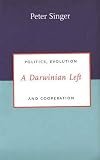
The application of "Darwinian principles" to society, rather than to biological evolution, has generally been the province of the political right, with the crackpot ideas of Herbert Spencer and his followers -- the philosophical school later called Social Darwinism -- being used by the Robber Barons and their ilk as a good excuse to ignore the inordinate amount of sheer human misery their activities caused: all the poverty, starvation and suffering, all the destroyed lives, were worth it show more because that was the price that had to be paid for species advancement. My, you could almost look upon the Social Darwinists as saints and saviours. And, of course, we cannot forget the Objectivists, the disciples of the even more crackpot Ayn Rand.
What Singer attempts to do in the pages of this extremely slender volume is to lay out a few ground rules for what he doesn't call a Social Darwinism of the left, a political philosophy that relies less upon the "nature red in tooth and claw" aspects of Darwinism (that phrase anyway predated the announcement of the Darwin/Wallace theory) and more upon those aspects that recognize the value of characteristics like cooperation, aspects that the Spencerians simply ignored in their orgy of pseudoscientific cherrypicking. Since it had never struck me before that Singer's point was one that actually had to be made, that it wasn't wholly evident to anyone possessed of reason, I'm not sure I was actually the audience he was aiming at; at the same time, the book's very nattily written and sparkling with pertinent observations so I regret not one second of the time I spent reading it. Here's one item that had me punching the air in admiration:
[T:]o leave a group of people so far outside the social commonwealth that they have nothing to contribute to it, is to alienate them from social practices and institutions in a manner that almost ensures that they will become adversaries who pose a danger to those institutions. [. . .:] Social Darwinists saw the fact that those who are less fit will fall by the wayside as nature's way of weeding out the unfit, and an inevitable result of the struggle for existence. To try to overcome it or even ameliorate it was futile, if not positively harmful. A Darwinian left, understanding the prerequisites for mutual cooperation as well as its benefits, would strive to avoid economic conditions that create outcasts. [. . .:] When the free operation of competitive market forces makes it hazardous to walk the streets at night, governments do well to interfere with those market forces to promote employment. (p53)
Singer was writing before the recent exponential increase in the gap between rich and poor in many of the developed nations. It is depressing how much more poignant his observation has become than it was a mere decade ago. show less
What Singer attempts to do in the pages of this extremely slender volume is to lay out a few ground rules for what he doesn't call a Social Darwinism of the left, a political philosophy that relies less upon the "nature red in tooth and claw" aspects of Darwinism (that phrase anyway predated the announcement of the Darwin/Wallace theory) and more upon those aspects that recognize the value of characteristics like cooperation, aspects that the Spencerians simply ignored in their orgy of pseudoscientific cherrypicking. Since it had never struck me before that Singer's point was one that actually had to be made, that it wasn't wholly evident to anyone possessed of reason, I'm not sure I was actually the audience he was aiming at; at the same time, the book's very nattily written and sparkling with pertinent observations so I regret not one second of the time I spent reading it. Here's one item that had me punching the air in admiration:
[T:]o leave a group of people so far outside the social commonwealth that they have nothing to contribute to it, is to alienate them from social practices and institutions in a manner that almost ensures that they will become adversaries who pose a danger to those institutions. [. . .:] Social Darwinists saw the fact that those who are less fit will fall by the wayside as nature's way of weeding out the unfit, and an inevitable result of the struggle for existence. To try to overcome it or even ameliorate it was futile, if not positively harmful. A Darwinian left, understanding the prerequisites for mutual cooperation as well as its benefits, would strive to avoid economic conditions that create outcasts. [. . .:] When the free operation of competitive market forces makes it hazardous to walk the streets at night, governments do well to interfere with those market forces to promote employment. (p53)
Singer was writing before the recent exponential increase in the gap between rich and poor in many of the developed nations. It is depressing how much more poignant his observation has become than it was a mere decade ago. show less
The Most Good You Can Do: How Effective Altruism Is Changing Ideas About Living Ethically by Peter Singer
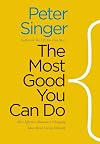
As an admirer of much of Singer's work, the most charitable view I can offer is that effective altruism has not aged well since 2015.
Singer mentions "class" several times in his examples, but in all but one case he means it in the sense of an academic lecture, rather than socio-economic strata. It's quite a telling gap he avoids but there's a constant theme in Singer's examples of virtuous altruists:
•they're are all from relatively privileged backgrounds. Access to generational wealth and show more connections makes the decision to live on only median national salary less harrowing.
• the concept of establishing a career in the financial sector to then pursue altruism is blind to how the industry itself immiserates the poor and needy the altruist will eventually help.
• the complete bypass of public methods of redistribution and collective action--TAXES! Singer constructs an ethical obligation without a requisite policy obligation throughout. The idea of charities redistributing altruism rather than accountable public institutions (i.e. government) is just such a bizarre neoliberalism oversight to cap it off.
In a sense, Singer is proposing effective altruism as a way to put the current structure of society towards a more ethical distribution. He invests a lot of time praising people who believe they don't need to exploit the structure anymore but issue comparatively little pressure towards an ethical obligation for a change to the exploitation underlying it. Effectively, the altruism Singer is heralding is at best a secular prosperity gospel. show less
Singer mentions "class" several times in his examples, but in all but one case he means it in the sense of an academic lecture, rather than socio-economic strata. It's quite a telling gap he avoids but there's a constant theme in Singer's examples of virtuous altruists:
•they're are all from relatively privileged backgrounds. Access to generational wealth and show more connections makes the decision to live on only median national salary less harrowing.
• the concept of establishing a career in the financial sector to then pursue altruism is blind to how the industry itself immiserates the poor and needy the altruist will eventually help.
• the complete bypass of public methods of redistribution and collective action--TAXES! Singer constructs an ethical obligation without a requisite policy obligation throughout. The idea of charities redistributing altruism rather than accountable public institutions (i.e. government) is just such a bizarre neoliberalism oversight to cap it off.
In a sense, Singer is proposing effective altruism as a way to put the current structure of society towards a more ethical distribution. He invests a lot of time praising people who believe they don't need to exploit the structure anymore but issue comparatively little pressure towards an ethical obligation for a change to the exploitation underlying it. Effectively, the altruism Singer is heralding is at best a secular prosperity gospel. show less
The Buddhist and the Ethicist: Conversations on Effective Altruism, Engaged Buddhism, and How to Build a Better World by Peter Singer
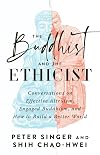
Further evidence for how religion poisons debate in ethics
You might not think a utilitarian philosopher from the United States and a Buddhist nun from Asia would hit it off, finding common ground on issues ranging from animal liberation to effective altruism. But that’s apparently exactly what happened, and is the origin of this book.
The book itself consists of a series of dialogues between utilitarian philosopher Peter Singer and Buddhist nun Shih Chao-Hwei, as they discuss weighty moral show more issues such as gender equality, sexuality, abortion, animal rights, euthanasia, suicide, the death penalty, and more.
What’s surprising, right off the bat, is how Buddhism—which is constantly touted as being the most “rational” or “secular” religion—turns out, based on Chao-Hwei’s commentary, to be saddled with some of the same problems as the monotheistic religions. Buddhists, apparently, have to deal with rampant sexism that is codified in the earliest Buddhist texts, where female monks have a lower status than their male counterparts and are typically forced to walk behind them.
Buddhism also has its fair share of wild metaphysical claims; for example, Chao-Hwei struggles to explain “karma” to Singer without mentioning “future lives,” as if this is somehow self-evident if only one meditates long enough. It turns out that belief in reincarnation is required to believe in karma, and belief in karma is a core aspect of traditional Buddhism.
We also learn that Chao-Hwei’s praiseworthy and progressive views—including support for same-sex marriage and gender equality—do NOT represent orthodox views within the Buddhist community (at least according to Chao-Hwei and her self-reported negative pushback she received from other Buddhists). Unfortunately, you get the sense that Buddhism is also hampered by outdated moral systems and misogynistic thinking, as is every other religion that relies on “sacred texts.” Also, as with other religions, Chao-Hwei is shown to be morally upstanding precisely to the degree to which she goes against the orthodox views of the religion.
But one of the biggest problems with Buddhism is found within the chapter on sexuality. Singer rightfully challenges Chao-Hwei on the idea of being “liberated from sex,” as if sex is some kind of evil that needs to be banished. As Singer wrote:
“If you become like the man who, as you said, is not aroused by the woman flirting with him, then you will not suffer from sexual desire anymore, but you will also lose out on the pleasure and excitement of fulfilling sexual desire….So once again, the question is whether when we eliminate suffering, we are not eliminating sources of joy and happiness as well.”
Buddhists are intent on eliminating all suffering, but since suffering is defined as any type of craving, Buddhists are forced to try to eliminate all cravings. But if you eliminate all cravings, then yes, while you avoid suffering—and may even attain complete tranquility—you achieve this at the expense of positive enjoyment and fulfillment. This is a price that is probably not worth paying; I, for one, will take the ups-and-downs of life over the boredom of passionless meditation any day.
Additionally, as Singer points out, if two consenting adults want to have sex, then there’s probably no harm in it; but with Buddhism, since sexual anticipation counts as a craving, sex has to be viewed, like with every other religion, as a “sin” to be extinguished. No thank you.
But it gets even worse, especially when you get to the chapter on abortion.
Now, I should first say that I won’t pretend that the abortion debate is simple, and that there are not difficult issues, gray areas, and subtle distinctions. But here’s what I do know; the idea that the aborted embryo could possibly be a reincarnated buddha should NOT be one of the reasons to forgo an abortion, which Chao-Hwei spends a good amount of time defending. And her more powerful point—that aborting the embryo deprives it of future experiences—gets lost in the lunacy of reincarnation and karma. Again, religion clouds the debate and shifts the focus to factors that are almost certainly false and irrelevant to actual human happiness, possibly leading to disastrous results, all in the name of “faith.”
In fact, Chao-Hwei explicitly says that faith trumps science, as when she wrote, in the context of the debate on abortion:
“It may now seem to you that there is a difference between a scientific understanding of the world and the Buddhist scriptures, and I am choosing to embrace the latter.”
This is not to say that utilitarianism doesn’t have its problems; without being tempered by some version of the Golden Rule, you can use utilitarianism to justify horrendous acts, like killing an innocent human being at random to save many others. But at least with utilitarianism you can debate moral issues directly—based on costs and benefits and factoring in real human suffering and happiness—without having to deal with false and outdated ideas concerning reality and human nature from ancient texts, which seeks to only muddy the waters in terms of making reasonable decisions.
So, what is the ultimate purpose of this book? To show that, if you try hard enough, and ignore enough of the details, Buddhist ethics looks a lot like utilitarianism and is ultimately good for the world? To me, after reading the book—and despite Chao-Hwei’s very likable and agreeable character—it shows the opposite; namely, that Buddhism is straddled with questionable claims and, like every other religion, uses those claims to suggest things that are either inconsistent with human nature or that act to repress natural urges and decrease human happiness.
After all, you could fairly ask any Buddhist the following question: If the desire to go good in the world and engage in altruistic acts is just another “craving” that could ultimately lead to suffering, then shouldn’t this be avoided? If Nirvana is achieved through individual meditation, and Nirvana is the highest good, then isn’t engagement with the world, including altruistic acts, simply distractions from this ultimate purpose?
Buddhism, taken in its purest form, seems to suggest a life of solitary meditation, not engagement with the world. Isn’t this, after all, the reason why the Buddha abandoned his family and his position to seek “enlightenment?” These are questions that Singer repeatedly asks and, at least to my mind, that Chao-Hwei fails to adequately address. But it’s not her fault; there are no satisfactory answers because Buddhism, like every other dogma, will, in some sense, inevitably contradict itself.
And while utilitarianism is not perfect, it at least allows one to address moral concerns from a rational perspective, which makes it more likely that decisions will be made that enhance well-being and happiness rather than the opposite, which is the inevitable result of being constrained by dogma or universal rules that admit of no exceptions.
I will admit that Buddhism appears to be the least problematic of the world religions, as it’s less of stretch to support, for example, same-sex marriage as a Buddhist than it would be for a Christian. But apparently there is still a formidable barrier to progressive thinking within Buddhism, as demonstrated by the criticism Chao-Hwei has received for something as innocuous as suggesting that female monks shouldn’t have to stand behind the men in a lunch line.
And if acting ethically requires that you stray from the traditional teachings of the religion, doesn’t that suggest that maybe you ought to abandon that religion, or take only the good parts from it, or, at the very least, admit that morality comes from outside the religion, not from within it. Otherwise, how can you defend deviating from its traditional, core teachings?
So the ultimate lesson we can learn from the book is probably one that was not intended—that Buddhism is a religion, and that religious thought, based inevitably on outdated texts and rigid thinking, poisons otherwise rational discourse from otherwise decent and intelligent people. And unless you’re sympathetic to religion in some way, I don’t anticipate that you’ll find these discussions very appealing, or enlightening. show less
You might not think a utilitarian philosopher from the United States and a Buddhist nun from Asia would hit it off, finding common ground on issues ranging from animal liberation to effective altruism. But that’s apparently exactly what happened, and is the origin of this book.
The book itself consists of a series of dialogues between utilitarian philosopher Peter Singer and Buddhist nun Shih Chao-Hwei, as they discuss weighty moral show more issues such as gender equality, sexuality, abortion, animal rights, euthanasia, suicide, the death penalty, and more.
What’s surprising, right off the bat, is how Buddhism—which is constantly touted as being the most “rational” or “secular” religion—turns out, based on Chao-Hwei’s commentary, to be saddled with some of the same problems as the monotheistic religions. Buddhists, apparently, have to deal with rampant sexism that is codified in the earliest Buddhist texts, where female monks have a lower status than their male counterparts and are typically forced to walk behind them.
Buddhism also has its fair share of wild metaphysical claims; for example, Chao-Hwei struggles to explain “karma” to Singer without mentioning “future lives,” as if this is somehow self-evident if only one meditates long enough. It turns out that belief in reincarnation is required to believe in karma, and belief in karma is a core aspect of traditional Buddhism.
We also learn that Chao-Hwei’s praiseworthy and progressive views—including support for same-sex marriage and gender equality—do NOT represent orthodox views within the Buddhist community (at least according to Chao-Hwei and her self-reported negative pushback she received from other Buddhists). Unfortunately, you get the sense that Buddhism is also hampered by outdated moral systems and misogynistic thinking, as is every other religion that relies on “sacred texts.” Also, as with other religions, Chao-Hwei is shown to be morally upstanding precisely to the degree to which she goes against the orthodox views of the religion.
But one of the biggest problems with Buddhism is found within the chapter on sexuality. Singer rightfully challenges Chao-Hwei on the idea of being “liberated from sex,” as if sex is some kind of evil that needs to be banished. As Singer wrote:
“If you become like the man who, as you said, is not aroused by the woman flirting with him, then you will not suffer from sexual desire anymore, but you will also lose out on the pleasure and excitement of fulfilling sexual desire….So once again, the question is whether when we eliminate suffering, we are not eliminating sources of joy and happiness as well.”
Buddhists are intent on eliminating all suffering, but since suffering is defined as any type of craving, Buddhists are forced to try to eliminate all cravings. But if you eliminate all cravings, then yes, while you avoid suffering—and may even attain complete tranquility—you achieve this at the expense of positive enjoyment and fulfillment. This is a price that is probably not worth paying; I, for one, will take the ups-and-downs of life over the boredom of passionless meditation any day.
Additionally, as Singer points out, if two consenting adults want to have sex, then there’s probably no harm in it; but with Buddhism, since sexual anticipation counts as a craving, sex has to be viewed, like with every other religion, as a “sin” to be extinguished. No thank you.
But it gets even worse, especially when you get to the chapter on abortion.
Now, I should first say that I won’t pretend that the abortion debate is simple, and that there are not difficult issues, gray areas, and subtle distinctions. But here’s what I do know; the idea that the aborted embryo could possibly be a reincarnated buddha should NOT be one of the reasons to forgo an abortion, which Chao-Hwei spends a good amount of time defending. And her more powerful point—that aborting the embryo deprives it of future experiences—gets lost in the lunacy of reincarnation and karma. Again, religion clouds the debate and shifts the focus to factors that are almost certainly false and irrelevant to actual human happiness, possibly leading to disastrous results, all in the name of “faith.”
In fact, Chao-Hwei explicitly says that faith trumps science, as when she wrote, in the context of the debate on abortion:
“It may now seem to you that there is a difference between a scientific understanding of the world and the Buddhist scriptures, and I am choosing to embrace the latter.”
This is not to say that utilitarianism doesn’t have its problems; without being tempered by some version of the Golden Rule, you can use utilitarianism to justify horrendous acts, like killing an innocent human being at random to save many others. But at least with utilitarianism you can debate moral issues directly—based on costs and benefits and factoring in real human suffering and happiness—without having to deal with false and outdated ideas concerning reality and human nature from ancient texts, which seeks to only muddy the waters in terms of making reasonable decisions.
So, what is the ultimate purpose of this book? To show that, if you try hard enough, and ignore enough of the details, Buddhist ethics looks a lot like utilitarianism and is ultimately good for the world? To me, after reading the book—and despite Chao-Hwei’s very likable and agreeable character—it shows the opposite; namely, that Buddhism is straddled with questionable claims and, like every other religion, uses those claims to suggest things that are either inconsistent with human nature or that act to repress natural urges and decrease human happiness.
After all, you could fairly ask any Buddhist the following question: If the desire to go good in the world and engage in altruistic acts is just another “craving” that could ultimately lead to suffering, then shouldn’t this be avoided? If Nirvana is achieved through individual meditation, and Nirvana is the highest good, then isn’t engagement with the world, including altruistic acts, simply distractions from this ultimate purpose?
Buddhism, taken in its purest form, seems to suggest a life of solitary meditation, not engagement with the world. Isn’t this, after all, the reason why the Buddha abandoned his family and his position to seek “enlightenment?” These are questions that Singer repeatedly asks and, at least to my mind, that Chao-Hwei fails to adequately address. But it’s not her fault; there are no satisfactory answers because Buddhism, like every other dogma, will, in some sense, inevitably contradict itself.
And while utilitarianism is not perfect, it at least allows one to address moral concerns from a rational perspective, which makes it more likely that decisions will be made that enhance well-being and happiness rather than the opposite, which is the inevitable result of being constrained by dogma or universal rules that admit of no exceptions.
I will admit that Buddhism appears to be the least problematic of the world religions, as it’s less of stretch to support, for example, same-sex marriage as a Buddhist than it would be for a Christian. But apparently there is still a formidable barrier to progressive thinking within Buddhism, as demonstrated by the criticism Chao-Hwei has received for something as innocuous as suggesting that female monks shouldn’t have to stand behind the men in a lunch line.
And if acting ethically requires that you stray from the traditional teachings of the religion, doesn’t that suggest that maybe you ought to abandon that religion, or take only the good parts from it, or, at the very least, admit that morality comes from outside the religion, not from within it. Otherwise, how can you defend deviating from its traditional, core teachings?
So the ultimate lesson we can learn from the book is probably one that was not intended—that Buddhism is a religion, and that religious thought, based inevitably on outdated texts and rigid thinking, poisons otherwise rational discourse from otherwise decent and intelligent people. And unless you’re sympathetic to religion in some way, I don’t anticipate that you’ll find these discussions very appealing, or enlightening. show less
Lists
Reading LIst (1)
Check Library (1)
Read These Too (1)
Read in 2011 (2)
Library Wishlist (1)
Read in 2014 (1)
Wisdom (1)
Secular Ethics (1)
Awards


You May Also Like


Associated Authors
Statistics
- Works
- 57
- Also by
- 18
- Members
- 11,755
- Popularity
- #1,998
- Rating
- 3.9
- Reviews
- 128
- ISBNs
- 442
- Languages
- 18