

Derek Parfit (1942–2017)
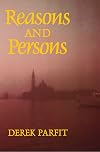
Author of Reasons and Persons
About the Author
Derek Antony Parfit was born in Chengdu, China on December 11, 1942 to parents who were doctors teaching preventive medicine at Christian missions. He received a degree in modern history in 1964 from Balliol College, Oxford. While on a Harkness Fellowship at Harvard University and Columbia show more University after graduation, he began attending lectures on philosophy and changed course. He was elected to a prize fellowship at All Souls College, Oxford, and had become a senior research fellow by 1984. He wrote several books during his lifetime including Reasons and Persons and On What Matters. In 2014, he was awarded the Rolf Schock Prize by the Royal Swedish Academy. He died on January 2, 2017 at the age of 74. (Bowker Author Biography) show less
Image credit: Derek Parfit at Harvard (2015) - photo by Anna Riedl
Series
Works by Derek Parfit
Why Anything? Why This? 2 copies
Moral & rationalitet 1 copy
Associated Works
Tagged
Common Knowledge
- Canonical name
- Parfit, Derek
- Legal name
- Parfit, Derek Antony
- Birthdate
- 1942-12-11
- Date of death
- 2017-01-01
- Gender
- male
- Education
- Balliol College, Oxford University (BA|1964)
Harvard University (Harkness Fellow)
Eton College
Dragon School - Occupations
- professor (philosophy)
philosopher - Organizations
- All Souls College, Oxford University (Fellow)
- Awards and honors
- Rolf Schock Prize (2014)
Fellow, British Academy (1986)
T. H. Green Prize (1977) - Relationships
- Richards, Janet Radcliffe (wife)
- Nationality
- UK
- Birthplace
- Chengdu, Sichuan, China
- Places of residence
- Oxford, Oxfordshire, England, UK
London, England, UK - Place of death
- Lodnon, England, UK
- Associated Place (for map)
- England, UK
Members
Reviews
Intriguing, but ultimately disappointing.
One of the problems with philosophers is that they style themselves as clear and cogent reasoners, but they manifestly are not. Kant-inspired obsurantism aside, a comparison with the approach to reasoning in argumentation in other fields, particularly mathematics and law, shows philosophy to be plainly deficient. Philosophers state their premises vaguely, do not provide a clearly-outlined chained of reasoning, and set up numerous straw men in the name show more of anticipating opposition to their poorly-formed ideas. This despite purportedly having been trained in both rhetoric and first-order logic.
Derek Parfit is no exception to this coarse characterization. As one works through this massively redundant 500-page treatise, it is tempting to grab a red pen and mark up the undergraduate's poor efforts. What exactly is it you are trying to prove? How does this current point fit into the plan of the overall argument?
The author's lack of knowledge in other fields adds further weakness to the work. A notable example is the discussion of cases of a severed sorpus callosum, which Parfit somehow extrapolates into the notion of the brain dividing itself like an amoeba into two complete individuals, rather than the brain losing its executive function that coordinates a bewildering collection of subsystems. Sure, Parfit claims he may have things technically wrong and that really this is only an illustration, but still he dashes forward based on this sole evidence that brain-cloning is possible.
Or how about mathematics? Parfit's argument in Part IV is largely based on applying, or mis-applying, mathematical induction. He doesn't seem to know this, however, and instead rediscovers the concept of mathematical induction, only incompletely, and then proceeds to rediscover it every time he must refer to the concept. Just using the phrase "by mathemtical induction" would shave 100 pages off the work.
On the topic of redundancy, there's a lot of it. The book is not well-organized, judging by empirical evidence: Parfit constantly reiterates previous material, instead of saying something like "see section 3.6". It's like he just sat down and wrote until he was tired of writing, instead of laying out an argument and proceeding to flesh it out with examples, deductions, and counter-argument. Further evidence that this one skipped the editing stage is provided by the appendices, many of which (G and I in particular) could have been inserted in-place, with no loss of clarity and with no distraction from the course of the argument (which, as mentioned, is indirect and meandering). One is left with the impression that Parfit was so pleased with what he wrote that he refused to change any of it, relegating all supplementary thoughts and revisions to the end notes and appendices.
Now, much of the above can be accounted for by the single fact that Parfit has no argument. At the very end, he throws up his hands and says, "I can't solve it." So, what we're left with here is a diary, or a journal if sounding grown-up is important, of Parfit's thoughts on the subject of ethics. Some good ideas and good thinking in here, though in just about every interesting case, Parfit does not go far enough. Tragedy of the common and knock-on effects, the determination of whether the fact of existence constitutes a benefit or not (which should draw in the ontological argument, but here does not), and the surprisingly modern view, in terms of what we know about how consciousness arises from the brain, of what constitutes personal identity over time. Talk about missed opportunities - never once was there a sentiment like "I have nothing but contempt for the wretched ignoramus that is past-me. But, future-me, that bastard, he has everything and won't share it!" show less
One of the problems with philosophers is that they style themselves as clear and cogent reasoners, but they manifestly are not. Kant-inspired obsurantism aside, a comparison with the approach to reasoning in argumentation in other fields, particularly mathematics and law, shows philosophy to be plainly deficient. Philosophers state their premises vaguely, do not provide a clearly-outlined chained of reasoning, and set up numerous straw men in the name show more of anticipating opposition to their poorly-formed ideas. This despite purportedly having been trained in both rhetoric and first-order logic.
Derek Parfit is no exception to this coarse characterization. As one works through this massively redundant 500-page treatise, it is tempting to grab a red pen and mark up the undergraduate's poor efforts. What exactly is it you are trying to prove? How does this current point fit into the plan of the overall argument?
The author's lack of knowledge in other fields adds further weakness to the work. A notable example is the discussion of cases of a severed sorpus callosum, which Parfit somehow extrapolates into the notion of the brain dividing itself like an amoeba into two complete individuals, rather than the brain losing its executive function that coordinates a bewildering collection of subsystems. Sure, Parfit claims he may have things technically wrong and that really this is only an illustration, but still he dashes forward based on this sole evidence that brain-cloning is possible.
Or how about mathematics? Parfit's argument in Part IV is largely based on applying, or mis-applying, mathematical induction. He doesn't seem to know this, however, and instead rediscovers the concept of mathematical induction, only incompletely, and then proceeds to rediscover it every time he must refer to the concept. Just using the phrase "by mathemtical induction" would shave 100 pages off the work.
On the topic of redundancy, there's a lot of it. The book is not well-organized, judging by empirical evidence: Parfit constantly reiterates previous material, instead of saying something like "see section 3.6". It's like he just sat down and wrote until he was tired of writing, instead of laying out an argument and proceeding to flesh it out with examples, deductions, and counter-argument. Further evidence that this one skipped the editing stage is provided by the appendices, many of which (G and I in particular) could have been inserted in-place, with no loss of clarity and with no distraction from the course of the argument (which, as mentioned, is indirect and meandering). One is left with the impression that Parfit was so pleased with what he wrote that he refused to change any of it, relegating all supplementary thoughts and revisions to the end notes and appendices.
Now, much of the above can be accounted for by the single fact that Parfit has no argument. At the very end, he throws up his hands and says, "I can't solve it." So, what we're left with here is a diary, or a journal if sounding grown-up is important, of Parfit's thoughts on the subject of ethics. Some good ideas and good thinking in here, though in just about every interesting case, Parfit does not go far enough. Tragedy of the common and knock-on effects, the determination of whether the fact of existence constitutes a benefit or not (which should draw in the ontological argument, but here does not), and the surprisingly modern view, in terms of what we know about how consciousness arises from the brain, of what constitutes personal identity over time. Talk about missed opportunities - never once was there a sentiment like "I have nothing but contempt for the wretched ignoramus that is past-me. But, future-me, that bastard, he has everything and won't share it!" show less

Reviewing (and even more so, star rating) Reasons and Persons is difficult. Having some basic understanding of utilitarianism, I felt that I could follow Parfit's arguments reasonably well, but this is by no means an easy read. There are four parts to the book, each building on the former. The first one, on self-defeating theories, is a technical and complicated review of theories of rationality and morality. This is my least favorite part of the book, and I would even say that for the show more "casual" reader, this part could be skipped without very much affecting the enjoyment of the following parts. What I found most interesting about Reasons and Persons is when Parfit starts laying out his arguments for a Reductionist view of personal identity (implying, among other things, that personal identity can be indeterminate, i.e. not all-or-nothing). Thinking about these questions is fairly mind warping and I enjoyed it quite a lot. Building on the Reductionist view, Parfit makes arguments about how we should think about ourselves and others, as well as future generations and our future selves. Most of Parfit's arguments later in the book are based on the Reductionist assumption, which by then is considered "true". As it is a counter-intuitive view, however, some conclusions are difficult to accept. Parfit mentions Nagel's claim that "even if the Reductionist View is true, it is psychologically impossible for us to believe this" (Section 94). Parfit also acknowledges that many may find his conclusions disturbing, while in the case of himself he has found them liberating. All in all, an excellent and thought-provoking, if at times very dense and technical, read. show less
This was a pretty hard to read book (at least for me) but it was mostly worth it. There really are three parts. The first ~200 pages are mostly about prisoners dilemmas which mostly bore me so I was almost always reading something else for 2 years in the middle of reading this, but then the parts about the nature of personhood, and about the so-called repugnant conclusion I read through without cheating on the book.
I think the biggest problem of the book is that Parfit seems to forget the show more more interesting conclusions of the middle part when introducing the repugnant conclusion. In the end I didn't learn anything new here because of that, but I feel like just through osmosis my ability to argue got better by reading this, and there are a few new arguements I picked up for beliefs I already held which was a very interesting experience. I almost felt like I want to read more academic philosophy books after this, but the few quotes from other books in here convinced me otherwise.
Bonus points for mentioning Buddha was right and having an appendix only consisting of Buddhist quotes :D show less
I think the biggest problem of the book is that Parfit seems to forget the show more more interesting conclusions of the middle part when introducing the repugnant conclusion. In the end I didn't learn anything new here because of that, but I feel like just through osmosis my ability to argue got better by reading this, and there are a few new arguements I picked up for beliefs I already held which was a very interesting experience. I almost felt like I want to read more academic philosophy books after this, but the few quotes from other books in here convinced me otherwise.
Bonus points for mentioning Buddha was right and having an appendix only consisting of Buddhist quotes :D show less

We can deserve many things, such as gratitude, praise, and the kind of blame that is merely moral dispraise. But no one could ever deserve to suffer.
Best work on moral philosophy from this century that I have read. Can't recommend highly enough.
Best work on moral philosophy from this century that I have read. Can't recommend highly enough.
Lists
Awards


You May Also Like


Associated Authors
Statistics
- Works
- 11
- Also by
- 6
- Members
- 1,376
- Popularity
- #18,684
- Rating
- 4.1
- Reviews
- 9
- ISBNs
- 35
- Languages
- 4
- Favorited
- 1