
Some nice bullshit about vibrations and everything being one. The book has some nice elaboration on Alan Watts' analogy of life and music though, but other than this part, it's not worth reading:
"Music shows us how to maintain pleasure and ecstasy. Normally we tend to think of a moment of euphoric realization as unbearable and impossible to continue. It slips away and then we pursue it again. It does so because we are unwilling to let it go, we are unwilling to conceive of being away from it. But if we take the example of music, letting go of one note to hear the next, then our pleasure can be constant though the vibrations change."
"Music shows us how to maintain pleasure and ecstasy. Normally we tend to think of a moment of euphoric realization as unbearable and impossible to continue. It slips away and then we pursue it again. It does so because we are unwilling to let it go, we are unwilling to conceive of being away from it. But if we take the example of music, letting go of one note to hear the next, then our pleasure can be constant though the vibrations change."

Inkoherens és csapongó könyv, állandóan ugyanazt a két példát kapjuk az Y generációból, Gerzsont és Orsit, de róluk csak általánosságokat hallunk, azt viszont sokat. Nagyon hiányoztak ebből a könyvből a konkrét történetek, bár a végén van egy egész érdekes, Csernus autószerelője, de ott meg fura, hogy vele is úgy beszél picit mintha elbaszna mindent, miközben egy börtönből kijött magát újra összerakott ember, aki nincs is elszállva magától.
Elvileg az Isteni Színjáték szerkezetét követi a könyv, de ez csak azt jelenti, hogy néha megszakad a csapongó gondolatmenet és a következő fejezet címéből indul újra.
Csernus alapvető üzenete mindig az őszinteség és felelősségvállalás, de ebben semmi újat nem mond itt, és más könyveiben jobban mondja el ugyanezt. Bár lehet, hogy a cím miatt sokat vártam a könyvtől :)
Elvileg az Isteni Színjáték szerkezetét követi a könyv, de ez csak azt jelenti, hogy néha megszakad a csapongó gondolatmenet és a következő fejezet címéből indul újra.
Csernus alapvető üzenete mindig az őszinteség és felelősségvállalás, de ebben semmi újat nem mond itt, és más könyveiben jobban mondja el ugyanezt. Bár lehet, hogy a cím miatt sokat vártam a könyvtől :)
I was amazed at how this beloved book is so full of bullshit. There are no deep thoughts at all, everything just sounds nice at first glance.
I started straight up hating it when it set up a false dichotomy beetween the importance of numbers and other qualities that cannot be expressed in numbers. Mathemathics is not just useful, it can be beautiful too. Too many people, especially children already dislike math, it needs no further negative light on it.
I started straight up hating it when it set up a false dichotomy beetween the importance of numbers and other qualities that cannot be expressed in numbers. Mathemathics is not just useful, it can be beautiful too. Too many people, especially children already dislike math, it needs no further negative light on it.
Well, this book does nothing but glorifies military and tells you how awesome it is when only veterans can vote.
I read it because I really liked the movie when I was a kid, and now even rewatched the movie and I understand the changes they wanted to make. The robotic suits don't really add anything to the book anyway, so taking them away is totally fine.
The biggest difference (not plot or universe-wise, but... how much it matters-wise) might be that in the book when someone dies, it's not a big deal at all. It feels like something the narrator already expected. You're just told they "bought it". In the movie deaths are shown visually and the reactions are shown too, so it's more than just a name in a list. I don't think the narrator is supposed to be indifferent, it's just that the sole purpose of the book is glorifying its society so the author just doesn't know how to fit individual tragedy into that. Which is a shame because it's actually not a bad read and I like spaceships and battles and stuff. I'm looking forward to reading Joe Haldeman's Forever War, that is said to be a response to this.
edit: I read Forever War and it's awesome, thousand times more interesting and deep than this one. Go read that instead :)
I read it because I really liked the movie when I was a kid, and now even rewatched the movie and I understand the changes they wanted to make. The robotic suits don't really add anything to the book anyway, so taking them away is totally fine.
The biggest difference (not plot or universe-wise, but... how much it matters-wise) might be that in the book when someone dies, it's not a big deal at all. It feels like something the narrator already expected. You're just told they "bought it". In the movie deaths are shown visually and the reactions are shown too, so it's more than just a name in a list. I don't think the narrator is supposed to be indifferent, it's just that the sole purpose of the book is glorifying its society so the author just doesn't know how to fit individual tragedy into that. Which is a shame because it's actually not a bad read and I like spaceships and battles and stuff. I'm looking forward to reading Joe Haldeman's Forever War, that is said to be a response to this.
edit: I read Forever War and it's awesome, thousand times more interesting and deep than this one. Go read that instead :)
I read this because Wikipedia said it's a response to Starship Troopers. And what a response it is! The best use of relativity theory in sci-fi I read so far. This book has so much more thought and feeling in it than Starship Troopers. Heinlein should have wrote a 10 page novella, he had so little to say. But this book takes its premise and does go places with it, and has places to go. Both society and war are far more interesting here. I thought I'd be bored by battle scenes but in the best possible sci-fi fashion they are new and interesting each the time.
I would give it five stars except I know this isn't of those books I will re-read 10 times. This book doesn't have conversations and details like my favorite books and won't change the way I look at things. But it's a great experience to read once, maybe twice when I forget most of it. And I can't wait to read the sequels :)
I would give it five stars except I know this isn't of those books I will re-read 10 times. This book doesn't have conversations and details like my favorite books and won't change the way I look at things. But it's a great experience to read once, maybe twice when I forget most of it. And I can't wait to read the sequels :)
I started reading this knowing the first and last lines and agreeing with it, and I was curious about what's in between. But the language and convoluted sentences made this near unreadable for me. On top of that, there is little of what I would call philosophy here. No arguments, no logic, mostly just revealing stuff about archetypes and shit. Is all continental philosophy like this? This is just bad literature. Two stars because I know it's partly my fault that it's too hard to read for me and I know I actually like some of the ideas buried in here.
I liked the movie better. Still a pretty good book but the movie is shorter, more condensed and the actors are insanely good and that took me closer to the characters while the book is constantly from the viewpoint of Jack and it's a bit detached for me, and we constantly get detail after detail, that works better visually too.
Great characters, fast and simple story, interesting world.
I complained to a friend the other day about continuity porn, but there is a moment in here that connects this hard to my favorite book and it brought tears into my eyes. It still does, thinking about it. So this probably is a must read for fans of the hainish cycle is what I'm saying.
I complained to a friend the other day about continuity porn, but there is a moment in here that connects this hard to my favorite book and it brought tears into my eyes. It still does, thinking about it. So this probably is a must read for fans of the hainish cycle is what I'm saying.
I'm basically reading the whole Hainish Cycle (in random order), and that's what made me re-read this book, and I'm so glad I did. All I remembered is that they suffer in the snow, but that's only a small part of the book. Le Guin is at her best making up very interesting civilizations, and we get two societies and two religions in this book. I really liked how the core plot is interspersed with "folk tales". For me this is not a heavy hitter like some of the short stories and Dispossessed but it's certainly a great book. Right now the Hainish Cycle gives me a really weird feeling, because I'm familiar with wanting to spend more time in a fictional universe (like binge-watching 450 episodes of Start Trek even though most of the episode are not even good) but with the Hainish Cycle it's not escapism at all because it's always touching on real world problems, and it's not even really just one fictional universe. I don't think the world is ready for the Hainish Cinematic Universe, but I certainly am. I would imagine it as disconnected original stories by different directors, definitely not the existing books made into movies.
This is a very short and very readable book and I feel like it bites off just as much as it can chew. Plenty of data to prove and great stories to make you understand what it's talking about, and it's basically talking about human nature. But it's not going into a full picture or final answer about human nature, it just talks about a few aspects of it. I've read some criticisms of the book for example for treating native americans as uniform civilizations but to me it seems more that those things are just a price to pay for the book to be very short, and while certainly valid criticisms, they don't take away from the core message of the book... which is interesting because the only reason I would hesitate to say everyone should read it is I think the book is pretty vulnerable to the confirmation bias of the reader, for example I can easily imagine a conservative reader saying about the book "See, war does make boys into men!". Similarly for me this book is a powerful argument against capitalism, but it's not a straightforward one at least, so I guess I hope that at least my confirmation bias is not that strong.

Most of the short stories in here are pretty bad, some mediocre, two are fine and one is brilliant. It might be that my standards got way higher since the last time I read tons of sci-fi shorts, but this was a really bad anthology. It seem that big name international authors' older stories were mixed in with Hungarian writers' newer stuff. You could anticipate a stark contrast in quality between international classics and newer stuff by local writers... but that's not the biggest problem. Not even the stuff written by the bigger names is that good, sadly, but the Hungarian shorts are even worse. There is even one that's just the first few pages of a full length novel. Promotion is one thing but come on. I think that killed all the goodwill I had for this book.
The only ones I actually enjoyed are Sergio Gaut Vel Hartmann's The Contaminated and Orson Scott Card's Geriatric Ward. Neither of these really have a story, but both transport you deep into a really fucked up world.
And the reason I bought the book is because Ursula Le Guin's amazing The Day Before The Revolution is in here in my native language, and I wanted to have it not just in English. I regret this impulse now, but this short story is still amazing, and it's the thing Le Guin wrote that is most connected to my absolute favorite book, the Dispossessed.
The only ones I actually enjoyed are Sergio Gaut Vel Hartmann's The Contaminated and Orson Scott Card's Geriatric Ward. Neither of these really have a story, but both transport you deep into a really fucked up world.
And the reason I bought the book is because Ursula Le Guin's amazing The Day Before The Revolution is in here in my native language, and I wanted to have it not just in English. I regret this impulse now, but this short story is still amazing, and it's the thing Le Guin wrote that is most connected to my absolute favorite book, the Dispossessed.
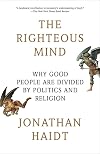
Even though I disagree with some minor stuff in the book, like only defining what you're talking about 300 pages in, it's findings are essential for understanding people and politics. It really did change how I think about things.
edit three years later: I brought it down from five stars to two. There are some interesting results in this book but the author pushes a conclusion based on them that's ridiculous and in light of stuff he did elsewhere, clearly motivated. The book could still be valuable if you want to understand conservatives and get a better way to talk to them, you should just keep in mind that having more moral values doesn't mean they are more moral, it just means they have more ways of rationalization to flip-flop between to rationalize whatever they feel like at the moment.
edit three years later: I brought it down from five stars to two. There are some interesting results in this book but the author pushes a conclusion based on them that's ridiculous and in light of stuff he did elsewhere, clearly motivated. The book could still be valuable if you want to understand conservatives and get a better way to talk to them, you should just keep in mind that having more moral values doesn't mean they are more moral, it just means they have more ways of rationalization to flip-flop between to rationalize whatever they feel like at the moment.
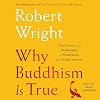
The title is honest, although there isn't that much Buddhism here, it's mostly about evolutionary psychology and then connecting it to the most important ideas of Buddhism. And that's great because this way this book works for both people just getting to know Buddhism and it also gives a new perspective for those already familiar with it. And what a perspective! I've been reading all kinds of stuff about Buddhism for about 10 years now, and nowadays it's really rare for me to encounter anything new. While there isn't any new ideas or concepts here, the clarity and depth that the book goes into combined with the focus on evolutionary psychology is truly unparalleled.
For example one bias the book talks about, is that we tend to think that people who we don't like do bad things because it's in their character, but people we like are just a victim of their circumstances. This is explained and is connected to other ideas so well, that I keep noticing myself doing it.
There are a few minor things I missed which in no way drag this down from being a 5/5 book. There is IIRC only one sentence about metta meditation, which deserves a bit more than that I think, it's all about vipassana which is understandable, but it would have been interesting to hear about others kinds of meditation too. For some reason I thought the book will cite a lot of studies, explain a lot of experiments but there isn't much of that, which isn't really a problem in hindsight, the arguments are still solid show more and it's more about appealing to your common sense than presenting scientific evidence which is useful I think. show less
For example one bias the book talks about, is that we tend to think that people who we don't like do bad things because it's in their character, but people we like are just a victim of their circumstances. This is explained and is connected to other ideas so well, that I keep noticing myself doing it.
There are a few minor things I missed which in no way drag this down from being a 5/5 book. There is IIRC only one sentence about metta meditation, which deserves a bit more than that I think, it's all about vipassana which is understandable, but it would have been interesting to hear about others kinds of meditation too. For some reason I thought the book will cite a lot of studies, explain a lot of experiments but there isn't much of that, which isn't really a problem in hindsight, the arguments are still solid show more and it's more about appealing to your common sense than presenting scientific evidence which is useful I think. show less

After the first 20 pages I realized this is less of a sci-fi and more of a surreal thing, and once I accepted that, it flowed better. Eventually I liked that in this book you just don't get how this universe is working. But that's a problem too, because you're not sure about the weight/consequence of things that happen. I didn't really feel the pain of the characters, but sometimes I felt their disgust.
[minor spoilers from here on about what kind of ending the book has, but not about what it is]
I really liked the ending, it was a great visionary scene with a non-traditional ending, but the last two pages were superfluous, they explained something I didn't want explained, and it had no bearing on characters or story. The book should end at that minor fourth wall break at the end. It would be a perfect way to end it.
It was a very enjoyable read with a great (then botched) ending, but it's missing something for me to be really great. Maybe if the book had more of that ending scene (it has some in the middle), and less of characters just running around getting stuff and random people helping them because why not. Maybe the universe of the book is already so surreal it couldn't really top it in the drug scenes. But then again, it's kind of the point I guess.
[minor spoilers from here on about what kind of ending the book has, but not about what it is]
I really liked the ending, it was a great visionary scene with a non-traditional ending, but the last two pages were superfluous, they explained something I didn't want explained, and it had no bearing on characters or story. The book should end at that minor fourth wall break at the end. It would be a perfect way to end it.
It was a very enjoyable read with a great (then botched) ending, but it's missing something for me to be really great. Maybe if the book had more of that ending scene (it has some in the middle), and less of characters just running around getting stuff and random people helping them because why not. Maybe the universe of the book is already so surreal it couldn't really top it in the drug scenes. But then again, it's kind of the point I guess.
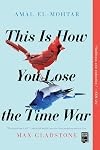
This is the most irritating writing style I ever encountered. Despite being written by two authors, both characters and the narrator sound and feel like the same person. The book throws up a lot of big ideas but doesn't really deliver on them, and every time I felt like there is something interesting starting up it was immediately ruined it by some truly cringe-worthy sentences. The characters act like stupid teens while being immortal superscifi demigods, and the romance did not work for me at all, they go from I will defeat you to I will die for you in basically a few pages. Thankfully a friend spoiled everything for me so I could drop it at about halfway through.
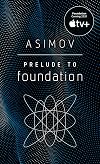
Rereading one of the most influential book series on young me after 20 years:
The book is a bit too long, a bit too dry, the romance is horrible and it's way too obsessed with grand reveals, especially for a prequel book, but there is something special about the grand scale of ideas and how it's presented here, because unlike other space operas which focus on a special hero, some backstabbing court intrigue or spaceships shooting each other it's all seen through the lens of science here. I'm not saying there's nothing like this out there, I'm sure there is, but this is what ultimately makes it work for me.
I originally read the series starting with this book and for me it added something to the original trilogy to see Seldon put things together before I read them. Later I read all the robot and empire stuff too and it made things feel even more epic that it was all connected, even if it's a bit sloppy, and I still feel that way too. In fact it might be better to read it in the in-universe chronological order, because reading it in the publication order might make it feel more like fanservice. Which it absolutely is. But what can I say, I am a fan, I've been for a long time now.
The book is a bit too long, a bit too dry, the romance is horrible and it's way too obsessed with grand reveals, especially for a prequel book, but there is something special about the grand scale of ideas and how it's presented here, because unlike other space operas which focus on a special hero, some backstabbing court intrigue or spaceships shooting each other it's all seen through the lens of science here. I'm not saying there's nothing like this out there, I'm sure there is, but this is what ultimately makes it work for me.
I originally read the series starting with this book and for me it added something to the original trilogy to see Seldon put things together before I read them. Later I read all the robot and empire stuff too and it made things feel even more epic that it was all connected, even if it's a bit sloppy, and I still feel that way too. In fact it might be better to read it in the in-universe chronological order, because reading it in the publication order might make it feel more like fanservice. Which it absolutely is. But what can I say, I am a fan, I've been for a long time now.
This was tedious. Some of my favorite books have similar really really bad situations in them, but those hit harder because those books have other things happen in them too. The book is written in a strange style, which I mostly liked, but the narrator was annoying and even after reading some analysis I can't see any angle that makes it better. For example there's a whole page where the book just stops its already tedious plot so it can basically just proclaim that bitches be crazy. I think that's where I really just lost trust in this book and its author, but jarring narration like that was commonplace by that point. Another huge problem is that the book ends right when it could have shown some interesting stuff. It's not one star only because there sure as hell are some impactful and tense scenes but ultimately I simply got nothing out of this book.
edit: I had to come back and change the rating to a one. This book destroyed my love of reading for a while and I'm just now getting it back and I keep remembering how bad this was and that comparison just really cements this book as a truly bad one for me.
edit: I had to come back and change the rating to a one. This book destroyed my love of reading for a while and I'm just now getting it back and I keep remembering how bad this was and that comparison just really cements this book as a truly bad one for me.
First audiobook I ever listened to all the way through. Read by the author which was a big plus.
This book was on my list for a while, but listening to a very long spoiler-filled summary is what convinced me I want to listen to it all they way and I specifically want to listen and not read. While the major events in the book were all spoiled for me, I love books and movies where that doesn't matter, or rereading/rewatching/rewhatever makes it even better because you notice more details. I think it doesn't matter here because this book is all about those small details, and the self-reflection while you're going through multiple hells. The book is filled with insightful, dark, funny and darkly funny details written with style, which means that while it's dealing with pretty heavy topics, it is still a very fun read/listen at the same time.
This book was on my list for a while, but listening to a very long spoiler-filled summary is what convinced me I want to listen to it all they way and I specifically want to listen and not read. While the major events in the book were all spoiled for me, I love books and movies where that doesn't matter, or rereading/rewatching/rewhatever makes it even better because you notice more details. I think it doesn't matter here because this book is all about those small details, and the self-reflection while you're going through multiple hells. The book is filled with insightful, dark, funny and darkly funny details written with style, which means that while it's dealing with pretty heavy topics, it is still a very fun read/listen at the same time.
Love After the End: An Anthology of Two-Spirit and Indigiqueer Speculative Fiction by Joshua Whitehead
I only read three of the short stories based on friends saying those are the best ones, and I found even those lacking so I dropped the book. Didn't dislike it though, and if I had less other stuff to read I might have read the whole book, so this rating is meant to be neutral.
History Of The New World: At first this resembled various sci-fi movies to me but then there's an interesting moment of a child making a decision which was a compelling moment, but we really needed to spend more time with the characters for that to really work. Or fleshing out one of the worldbuilding ideas could have worked too, I just needed more of something.
How To Survive The Apocalypse For Native Girls: Very standard bigots being bigots story, felt like something I've read before.
Eloise: Similarly to History Of The New World, this one felt like other things, namely Black Mirror plus Eternal Sunshine of the Spotless Mind. It did something a little bit new compared to Black Mirror but didn't really get into the details and implications of it, which would have been okay, but the big problem is that it entirely misses the kind of character stuff that makes Eternal Sunshine work.
History Of The New World: At first this resembled various sci-fi movies to me but then there's an interesting moment of a child making a decision which was a compelling moment, but we really needed to spend more time with the characters for that to really work. Or fleshing out one of the worldbuilding ideas could have worked too, I just needed more of something.
How To Survive The Apocalypse For Native Girls: Very standard bigots being bigots story, felt like something I've read before.
Eloise: Similarly to History Of The New World, this one felt like other things, namely Black Mirror plus Eternal Sunshine of the Spotless Mind. It did something a little bit new compared to Black Mirror but didn't really get into the details and implications of it, which would have been okay, but the big problem is that it entirely misses the kind of character stuff that makes Eternal Sunshine work.
Rereading one of the most influential book series on young me after 20 years:
The first half is more of the first book and the second half subverts some of the basic assumptions of the series, which is great because it keeps it from becoming stale. I'm still having a lot of fun reading the original books. In comparison the prequel books aren't as good, so I'm a bit wary about the sequel books now.
The first half is more of the first book and the second half subverts some of the basic assumptions of the series, which is great because it keeps it from becoming stale. I'm still having a lot of fun reading the original books. In comparison the prequel books aren't as good, so I'm a bit wary about the sequel books now.
Rereading one of the most influential book series on young me after 20 years:
This feels like a very organic continuation of Second Foundation to me, despite the real life time gap between the books. This book expands on mental powers and the inner workings of the second Foundation and we get more of Asimov's focus on great reveals, with essentially the whole book building up to a single scene. The idea of Gaia is really cool, but it's barely shown which is especially a letdown while we get pretty cool and detailed descriptions of psychic powers otherwise. I still enjoyed this book a lot, I think just spending more time with the characters helped a lot even if they are not the best written, I kind of just grew fond of them over time. At this point in my rereading journey I feel like a lot hangs on Foundation and Earth, and whether it can stick the landing for the whole series or not.
This feels like a very organic continuation of Second Foundation to me, despite the real life time gap between the books. This book expands on mental powers and the inner workings of the second Foundation and we get more of Asimov's focus on great reveals, with essentially the whole book building up to a single scene. The idea of Gaia is really cool, but it's barely shown which is especially a letdown while we get pretty cool and detailed descriptions of psychic powers otherwise. I still enjoyed this book a lot, I think just spending more time with the characters helped a lot even if they are not the best written, I kind of just grew fond of them over time. At this point in my rereading journey I feel like a lot hangs on Foundation and Earth, and whether it can stick the landing for the whole series or not.
Rereading one of the most influential book series on young me after 20 years:
The book is basically what I remembered it to be. Men - always men, except for that one time when it's a wife complaining, geez - in rooms talking. I also remembered having fun with it, but I was surprised how much fun it was to read. Just calmly revealing that out of economic necessity (which is part of a thousand year long plan) you've already won is somehow more cool than any action scene I've read.
There is also an interesting tension in the book. It's all supposed to be inevitable and not hinging on individuals, on those "great men of history" and yet we follow these great men throughout the book, and not everything they do seem inevitable. I guess you just have to have some plot and suspense. I resolved this tension by basically saying that statistically history will provide an opportunity and statistically someone capable of taking it will be around, but I don't think this is something that's in the book. Ultimately I think it's a good thing I never really took the way this books views history very seriously, but it does provide an interesting perspective maybe. And at the end of the day it's just a really fun read for me.
The book is basically what I remembered it to be. Men - always men, except for that one time when it's a wife complaining, geez - in rooms talking. I also remembered having fun with it, but I was surprised how much fun it was to read. Just calmly revealing that out of economic necessity (which is part of a thousand year long plan) you've already won is somehow more cool than any action scene I've read.
There is also an interesting tension in the book. It's all supposed to be inevitable and not hinging on individuals, on those "great men of history" and yet we follow these great men throughout the book, and not everything they do seem inevitable. I guess you just have to have some plot and suspense. I resolved this tension by basically saying that statistically history will provide an opportunity and statistically someone capable of taking it will be around, but I don't think this is something that's in the book. Ultimately I think it's a good thing I never really took the way this books views history very seriously, but it does provide an interesting perspective maybe. And at the end of the day it's just a really fun read for me.
Rereading one of the most influential book series on young me after 20 years:
This is basically more of what Prelude was, except with a bigger scope and more focus on politics and psychohistory, so it's getting into what the Foundation is mostly about - preserving the status quo before the status quo collapses for millenia, and then rebuilding the status quo... but they do that with epic science so I can't help but like it. Dors is still just a badly written character, and the way the second foundation is introduced is just lame, but other than these the greater scope means that even though the book is longer than the previous one in the series, it feels shorter because it has more momentum and when it would get bogged down it just skips ten years ahead.
This is basically more of what Prelude was, except with a bigger scope and more focus on politics and psychohistory, so it's getting into what the Foundation is mostly about - preserving the status quo before the status quo collapses for millenia, and then rebuilding the status quo... but they do that with epic science so I can't help but like it. Dors is still just a badly written character, and the way the second foundation is introduced is just lame, but other than these the greater scope means that even though the book is longer than the previous one in the series, it feels shorter because it has more momentum and when it would get bogged down it just skips ten years ahead.
Rereading one of the most influential book series on young me after 20 years:
I wish I could say that this just more of what Foundation and Foundation and Empire was, but I feel like Asimov's obsession with reveals really takes over here. I don't think this aspect works on a first read either because dramatic irony can be much cooler and there are a lot of things that would be much more interesting to be shown in detail but it certainly doesn't work when you remember where the Second Foundation is. One of the characters even admits it's not very well hidden. Still a pretty cool book continuing to expand on the ideas of the previous books and has some cool moments though.
The strange contradiction of this book is that while it's all about going back to the status quo, it's also the first book to talk about how all this is not just about restarting the same empire, it's about making a better society. It's just a few sentences but I really appreciated that.
I wish I could say that this just more of what Foundation and Foundation and Empire was, but I feel like Asimov's obsession with reveals really takes over here. I don't think this aspect works on a first read either because dramatic irony can be much cooler and there are a lot of things that would be much more interesting to be shown in detail but it certainly doesn't work when you remember where the Second Foundation is. One of the characters even admits it's not very well hidden. Still a pretty cool book continuing to expand on the ideas of the previous books and has some cool moments though.
The strange contradiction of this book is that while it's all about going back to the status quo, it's also the first book to talk about how all this is not just about restarting the same empire, it's about making a better society. It's just a few sentences but I really appreciated that.
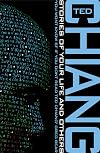
Hell is the Absence of God is probably my favorite short story - along with Ursula K. Le Guin's Those Who Walk Away From Omelas - and the rest of the stories are great too. All of them are filled with ideas and those ideas just keep coming, twists, new perspectives or building on previous ideas. When most writers would stop, Chiang just keep going, which means, reading this feels like expanding your mind even when ultimately the short story didn't connect with me that much. Or even when you already read the short story.
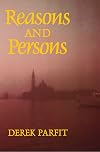
This was a pretty hard to read book (at least for me) but it was mostly worth it. There really are three parts. The first ~200 pages are mostly about prisoners dilemmas which mostly bore me so I was almost always reading something else for 2 years in the middle of reading this, but then the parts about the nature of personhood, and about the so-called repugnant conclusion I read through without cheating on the book.
I think the biggest problem of the book is that Parfit seems to forget the more interesting conclusions of the middle part when introducing the repugnant conclusion. In the end I didn't learn anything new here because of that, but I feel like just through osmosis my ability to argue got better by reading this, and there are a few new arguements I picked up for beliefs I already held which was a very interesting experience. I almost felt like I want to read more academic philosophy books after this, but the few quotes from other books in here convinced me otherwise.
Bonus points for mentioning Buddha was right and having an appendix only consisting of Buddhist quotes :D
I think the biggest problem of the book is that Parfit seems to forget the more interesting conclusions of the middle part when introducing the repugnant conclusion. In the end I didn't learn anything new here because of that, but I feel like just through osmosis my ability to argue got better by reading this, and there are a few new arguements I picked up for beliefs I already held which was a very interesting experience. I almost felt like I want to read more academic philosophy books after this, but the few quotes from other books in here convinced me otherwise.
Bonus points for mentioning Buddha was right and having an appendix only consisting of Buddhist quotes :D
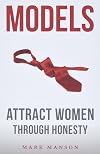
I'm not sure how I found Mark Manson in the first place but he has pretty no-bullshit self-help articles, and I liked reading them from time to time. In a recent article of his he mentioned his own book and I felt like I could use some more no-bullshit advice, not because it would be new information but because it might be useful to hear it again. I was mostly right, about two thirds of this book is about basics of self-improvement, and it does have a just do the basics spirit, which was again, not new information to me, but it feels helpful to me right now to reaffirm it. But on the other hand it's incredibly conformist. For example there is one way to dress, except there is one sentence about how if you're into rock or hip-hop then dress like it. But the writer mentioned earlier that this book applies to about 90% of the population, so I guess that's okay.
The bigger problems come where he gets into actual dating. It's really hard for me to separate "no bullshit basics" from straight up manipulation there.
In the end if you are into PUA stuff, this book is probably a good next step, because it's really good at pointing out how that won't make you happy. But I think that although the step is in the right direction, it's not a step big enough. At least for me. Might be what's good for most of the population though.
The bigger problems come where he gets into actual dating. It's really hard for me to separate "no bullshit basics" from straight up manipulation there.
In the end if you are into PUA stuff, this book is probably a good next step, because it's really good at pointing out how that won't make you happy. But I think that although the step is in the right direction, it's not a step big enough. At least for me. Might be what's good for most of the population though.
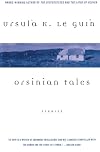
Not a bad book, but ultimately a disappointment from one of my favorite authors. It was just boring and by the end it felt a little bit like a chore to read. While it had some nice moments I couldn't help but feel that most of these would have worked better as a Hainish cycle short story, set in an alien society, they would have packed more punch. On the other hand I never really understood what was the point of making up a country. The book references real historical events already, so being set in real places, closer to real history could have also given it some weight. I suspect maybe this weightlessness was the point, the book is mostly trying to communicate impressions but a lot of these didn't feel new or interesting to me, mostly because they were familiar from either my own country's history or Le Guin's other writing.
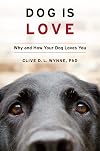
About half of this book is descriptions of experiments, with just enough of anecdotes and such in between that it doesn't become dry. It was nice and informative but nothing earth-shattering. I met someone recently and he asked what I'm reading and the only thing I could tell him about the book was that actually dogs are just
wolves with Williams Syndrome.
There is also a really great experiment where they don't try to tell the breed of shelter dogs to people. There's some condemnation of the practices of breeders, I mean I always thought this whole purebred thing is pretty absurd, but now I think that even more. There's also an alternative theory of how dogs evolved, but that's about what I can recall now. It was nice that the book ends with a chapter about how dogs deserve better. The rest wasn't that interesting for someone who has spent 15 years of his life with a dog. The anecdotes about the writer's dogs are actually painfully boring after talking to other dog owners for years. I realized reading the book that I am way more interested in the details of the actual practice of how to train your dog, and there's very little about that here. I ran through the reviews here on goodreads and I mostly agree with the lukewarm to negative ones. It feels like this book could have been a good first half of the definitive book about dogs, but it's just not there yet. It's still not bad at all, I just find it lacking some punch somehow.
There is also a really great experiment where they don't try to tell the breed of shelter dogs to people. There's some condemnation of the practices of breeders, I mean I always thought this whole purebred thing is pretty absurd, but now I think that even more. There's also an alternative theory of how dogs evolved, but that's about what I can recall now. It was nice that the book ends with a chapter about how dogs deserve better. The rest wasn't that interesting for someone who has spent 15 years of his life with a dog. The anecdotes about the writer's dogs are actually painfully boring after talking to other dog owners for years. I realized reading the book that I am way more interested in the details of the actual practice of how to train your dog, and there's very little about that here. I ran through the reviews here on goodreads and I mostly agree with the lukewarm to negative ones. It feels like this book could have been a good first half of the definitive book about dogs, but it's just not there yet. It's still not bad at all, I just find it lacking some punch somehow.
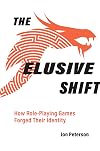
Bit of a dry book, but a great read for those interested in the history of RPGs. I think my two main takeaways were:
Gygax did not invent RPGs at all. In fact he even pushed back against both the term and the playstyle. He only embraced it later when he realized it was profitable. But even more importantly there are at least five other games before D&D which could easily be called a roleplaying game, and at least one of those games had direct influence on D&D too. I will eternally be greatful to this book for giving me more support against anyone who thinks Gygax was anything but trash.
I was simultanously frustrated and amused by reading about the kind of disagreements geeks had back in the 70s. But at the end of the book there's some great thoughts on how all that bs ultimately inspired people to create better and more interesting games and I really feel that.
Gygax did not invent RPGs at all. In fact he even pushed back against both the term and the playstyle. He only embraced it later when he realized it was profitable. But even more importantly there are at least five other games before D&D which could easily be called a roleplaying game, and at least one of those games had direct influence on D&D too. I will eternally be greatful to this book for giving me more support against anyone who thinks Gygax was anything but trash.
I was simultanously frustrated and amused by reading about the kind of disagreements geeks had back in the 70s. But at the end of the book there's some great thoughts on how all that bs ultimately inspired people to create better and more interesting games and I really feel that.