
Bernard Arthur Owen Williams (1929–2003)
Author of Ethics and the Limits of Philosophy
About the Author
Image credit: By Source, Fair use, https://en.wikipedia.org/w/index.php?curid=1213712
Works by Bernard Arthur Owen Williams
Toleration: An Impossible Virtue? 2 copies
Rationalism 1 copy
Associated Works
The Great Philosophers: An Introduction to Western Philosophy (1987) — Contributor — 476 copies, 2 reviews
Concepts and Categories: Philosophical Essays (1978) — Introduction, some editions — 239 copies, 4 reviews
The Moral Life: An Introductory Reader in Ethics and Literature (1999) — Contributor — 202 copies, 2 reviews
Reading Rorty: Critical Responses to Philosophy and the Mirror of Nature and Beyond (1990) — Contributor — 64 copies
Plato's Republic: Critical Essays (Critical Essays on the Classics Series) (1997) — Contributor — 43 copies
World, Mind, and Ethics: Essays on the Ethical Philosophy of Bernard Williams (1995) — Contributor — 19 copies
Language and Logos: Studies in Ancient Greek Philosophy Presented to G. E. L. Owen (1982) — Contributor — 12 copies
Ethics, value, and reality: Selected papers of Aurel Kolnai (1977) — Introduction, some editions — 12 copies
Exegesis and Argument: Studies in Greek Philosophy Presented to Gregory Vlastos — Contributor — 1 copy
Tagged
Common Knowledge
- Birthdate
- 1929-09-21
- Date of death
- 2003-06-10
- Gender
- male
- Nationality
- England
UK - Birthplace
- Westcliff-on-Sea, Essex, England
- Place of death
- Rome, Italy
- Associated Place (for map)
- Westcliff-on-Sea, Essex, England
Members
Reviews

That only an examined life is worth living was a matter of Socratic faith. The activity of examining one's life reflectively ought accordingly to be an inseparable aspect of living it in an ethically respectable way. And since philosophy seemed to Socrates to be the reflective discipline par excellence, the thought was irresistible that philosophy must become an instrument for the conduct of life--not a special discipline practiced by experts, but something each of us must master to the show more degree that we seek an ethically redeemed existence.
Philosophy, however, and most particularly that branch of it one might suppose applicable to these commendable ends, namely ethical inquiry as such, has been almost spectacularly disappointing to these ancient expectations. It has been able to apply itself to life only at the price of distorting our conception of life by reducing it to one dimension of itself. Kant, for example, on the plausible assumption that only rational beings are capable of moral conduct, proceeded to develop an ethics suited to beings who were merely rational, as if the good life consisted in reasoning alone. But Kant's was but an extreme case of a remote abstractness all across the discipline for which Socrates held such vivid and immediate hopes. And the question cannot be avoided whether these hopes were inappropriate, the business of philosophy lying elsewhere, or if philosophy is deeply flawed by its failure to satisfy them.
Bernard Williams' book, a strenuously critical discussion of ethical theory from the Socratic perspective, seems divided between these two views. On the one hand, he means to raise the question of "How far any philosophy could help us re-create ethical life." So perhaps it is not to philosophy's final discredit that it should have proved so helpful: "How could it be that a subject--something studied in universities--could deliver what one might recognize as an answer to the basic questions of life?" On the other hand, he does not think that in moral philosophy today, things "are as they should be," and part of his complaint is that it does seem internally disconnected from any concern with living of lives in any robust human fullness.
The body of his book is a sequence of astute critiques of dominating strains in recent and contemporary ethical theory, with the recurring motif that none of them takes the Socratic question of how life ought to be lived quite seriously enough. "Its prevailing fault, in all styles, is to impose on ethical life some immensely simple model." Socrates' question, by contrast, "Still does press a demand for reflection on one's life as a whole , from every aspect and all the way down." Williams returns, over and over, and with an almost prophetic insistence, to the thought that "The only serious enterprise is living." But while it is clear that we can think about our ethical problems, "philosophy can do little to determine how we should do so." Such skepticism not withstanding, it is evident that his ambition is redirective: to find some extension of ancient ethical theory which might, better than contemporary moral philosophy can, meet the realities of modern life.
Inevitably, the ratio of destructive criticism to positive ethical recommendation is high. This is not simply because it is easier to carp than create. It is, rather, that the level of critical ingenuity is so sustained that Williams could not in consistency be less exacting with anything he might wish to propose. The positive recommendations are accordingly merely sketched in just over five pages as a postscript. There he expresses a hopeful belief in three things: in truth, in truthfulness and in the meaning of the individual life. Necessarily schematic and compressed, these poles of an as yet unwritten system of ethics draw a certain substance from the extended critical discussions to which the book is mainly given over. The belief in truth, for example, connects with his repudiations of extreme conventionalisms and relativisms in regard to science. The belief in truthfulness rests on a qualified confidence in our capacity for reflection and a kind of nuanced objectivity in the acceptance of moral criticism. The belief in the meaning of the individual life stands in dramatic contrast to the radical reductionisms moral philosophy finds it cannot resist, and which utopian political systems often impose so brutally. Interspersed among these deep critiques are shrewd examinations of most points of philosophical contest in the theater of current ethical analysis. show less
Philosophy, however, and most particularly that branch of it one might suppose applicable to these commendable ends, namely ethical inquiry as such, has been almost spectacularly disappointing to these ancient expectations. It has been able to apply itself to life only at the price of distorting our conception of life by reducing it to one dimension of itself. Kant, for example, on the plausible assumption that only rational beings are capable of moral conduct, proceeded to develop an ethics suited to beings who were merely rational, as if the good life consisted in reasoning alone. But Kant's was but an extreme case of a remote abstractness all across the discipline for which Socrates held such vivid and immediate hopes. And the question cannot be avoided whether these hopes were inappropriate, the business of philosophy lying elsewhere, or if philosophy is deeply flawed by its failure to satisfy them.
Bernard Williams' book, a strenuously critical discussion of ethical theory from the Socratic perspective, seems divided between these two views. On the one hand, he means to raise the question of "How far any philosophy could help us re-create ethical life." So perhaps it is not to philosophy's final discredit that it should have proved so helpful: "How could it be that a subject--something studied in universities--could deliver what one might recognize as an answer to the basic questions of life?" On the other hand, he does not think that in moral philosophy today, things "are as they should be," and part of his complaint is that it does seem internally disconnected from any concern with living of lives in any robust human fullness.
The body of his book is a sequence of astute critiques of dominating strains in recent and contemporary ethical theory, with the recurring motif that none of them takes the Socratic question of how life ought to be lived quite seriously enough. "Its prevailing fault, in all styles, is to impose on ethical life some immensely simple model." Socrates' question, by contrast, "Still does press a demand for reflection on one's life as a whole , from every aspect and all the way down." Williams returns, over and over, and with an almost prophetic insistence, to the thought that "The only serious enterprise is living." But while it is clear that we can think about our ethical problems, "philosophy can do little to determine how we should do so." Such skepticism not withstanding, it is evident that his ambition is redirective: to find some extension of ancient ethical theory which might, better than contemporary moral philosophy can, meet the realities of modern life.
Inevitably, the ratio of destructive criticism to positive ethical recommendation is high. This is not simply because it is easier to carp than create. It is, rather, that the level of critical ingenuity is so sustained that Williams could not in consistency be less exacting with anything he might wish to propose. The positive recommendations are accordingly merely sketched in just over five pages as a postscript. There he expresses a hopeful belief in three things: in truth, in truthfulness and in the meaning of the individual life. Necessarily schematic and compressed, these poles of an as yet unwritten system of ethics draw a certain substance from the extended critical discussions to which the book is mainly given over. The belief in truth, for example, connects with his repudiations of extreme conventionalisms and relativisms in regard to science. The belief in truthfulness rests on a qualified confidence in our capacity for reflection and a kind of nuanced objectivity in the acceptance of moral criticism. The belief in the meaning of the individual life stands in dramatic contrast to the radical reductionisms moral philosophy finds it cannot resist, and which utopian political systems often impose so brutally. Interspersed among these deep critiques are shrewd examinations of most points of philosophical contest in the theater of current ethical analysis. show less

The Platonic introjection, seeing the satisfactions of studying what is timeless and impersonal as being themselves timeless and impersonal, may be a deep illusion, but it is certainly an illusion.
As usual, Williams is clever and thought-provoking even when being tedious or unconvincing. This collection of essays, mostly covering issues of personal identity and ethics, has some true classics, including "The Self and the Future" and "The Makropulos Case," as well as a few sleepers. While some show more of these essays are closing in on seventy years old, most haven't lost their relevance or power to stimulate careful consideration—though I wouldn't go so far as to say that they're ultimately persuasive. His argument that personal identity amounts to bodily identity is almost certainly wrong. show less
As usual, Williams is clever and thought-provoking even when being tedious or unconvincing. This collection of essays, mostly covering issues of personal identity and ethics, has some true classics, including "The Self and the Future" and "The Makropulos Case," as well as a few sleepers. While some show more of these essays are closing in on seventy years old, most haven't lost their relevance or power to stimulate careful consideration—though I wouldn't go so far as to say that they're ultimately persuasive. His argument that personal identity amounts to bodily identity is almost certainly wrong. show less
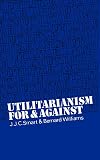
This slim book was assigned reading in a philosophy course on ethics I took in college. It consists of two essays. J. J. Smart's "An Outline of a System of Utilitarian Ethics" and Bernard William's "A Critique of Utilitarianism." I remember when I was first introduced in school to the subject of ethics, I was basically presented with two alternatives--Kant's Categorical Imperative and Utilitarianism. The case that sticks in my mind was the hypothetical, what if you could save a million lives show more by torturing to death one innocent? (Or to put it differently, would you allow a million lives to be lost rather than torture one human being.) Crudely put, a utilitarian would say, bring on the torture--the greatest good for the greatest number is what matters! While someone following Kant would say consequences do not matter--they are independent of right and wrong and we have to do right and damn the consequences. I found parts of each view appealing--and unappealing. I care about individual rights--and I care about consequences.
Eventually I'd find other ways of grounding ethics more congenial, but my point is Utilitarianism is one of the basic ethical options presented to people and is enormously influential--it shouldn't be ignored, however one might feel about it. And it deserves a more nuanced consideration than say, the caricature of it in Dicken's Hard Times, where it's presented as rigid and emotionally arid. Smart's defense presents many of the questions and problems with the philosophy: "Act-Utilitarianism and Rule-Utilitarianism" and "Average Happiness versus Total Happiness" among others. Still, Smart's arguments remind me why I find so much of Utilitarianism repugnant:
If it were known to be true, as a question of fact, that measures which caused misery and death to tens of millions today would result in saving from greater misery and death hundreds of millions in the future, and if this were the only way in which it could be done, then it would be right to cause these necessary atrocities.
Or as Lenin put it, "If you want to make an omelet, you must be willing to break a few eggs." Ah, so many millions of "eggs" broken by justifications of the sort above--and no tasty omelets.
So, in case you cannot guess, I do find Williams' arguments against Utilitarianism much more convincing and in that regard particularly the chapter "Integrity" that I think gets to the heart of a lot of my problems with Utilitarianism. show less
Eventually I'd find other ways of grounding ethics more congenial, but my point is Utilitarianism is one of the basic ethical options presented to people and is enormously influential--it shouldn't be ignored, however one might feel about it. And it deserves a more nuanced consideration than say, the caricature of it in Dicken's Hard Times, where it's presented as rigid and emotionally arid. Smart's defense presents many of the questions and problems with the philosophy: "Act-Utilitarianism and Rule-Utilitarianism" and "Average Happiness versus Total Happiness" among others. Still, Smart's arguments remind me why I find so much of Utilitarianism repugnant:
If it were known to be true, as a question of fact, that measures which caused misery and death to tens of millions today would result in saving from greater misery and death hundreds of millions in the future, and if this were the only way in which it could be done, then it would be right to cause these necessary atrocities.
Or as Lenin put it, "If you want to make an omelet, you must be willing to break a few eggs." Ah, so many millions of "eggs" broken by justifications of the sort above--and no tasty omelets.
So, in case you cannot guess, I do find Williams' arguments against Utilitarianism much more convincing and in that regard particularly the chapter "Integrity" that I think gets to the heart of a lot of my problems with Utilitarianism. show less
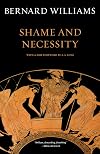
This is the best book I've read in some time. My only complaints are that 1) I wish it were longer, since I didn't want it to end; and 2) it diminishes some of the impetus I have for getting my Ph.D., since this is basically the book I've been wanting to write for a long time, except better than I could have done.
Williams' central claim is that our understanding of ancient Greek tragedy, moral philosophy and indeed their "world view" at large is distorted by certain modern misconceptions show more concerning the nature of morality, human action, and the will. Once we see at least the contingency of modern views about the relation between free will and action, between abstract, characterless universal reason and ethics--and indeed, Williams argues that the former in each of the previous dyad is not only the result of a contingent cultural formation but basically just a mistake--we will be both more inclined to see the Greeks as closer to us, as less exotic, and we will be better able to understand them at all.
If you are a diehard Kantian, or are loathe to consider that our ideas about free will might be just a bit confused, you will probably find this book disappointing, and feel like it just glosses over a lot of philosophical issues. It does. But its purpose is not strictly speaking philosophical in this sense. I think it is fair to say it is an application of more properly "philosophical" arguments Williams has made elsewhere concerning the will, morality, etc. to Greek tragedy and philosophy (see, for example, Ethics and the Limits of Philosophy). If you read it as such, and approach it with at least some skepticism about Williams' critical targets, I think you will find it an immensely enjoyable and intellectually stimulating read. show less
Williams' central claim is that our understanding of ancient Greek tragedy, moral philosophy and indeed their "world view" at large is distorted by certain modern misconceptions show more concerning the nature of morality, human action, and the will. Once we see at least the contingency of modern views about the relation between free will and action, between abstract, characterless universal reason and ethics--and indeed, Williams argues that the former in each of the previous dyad is not only the result of a contingent cultural formation but basically just a mistake--we will be both more inclined to see the Greeks as closer to us, as less exotic, and we will be better able to understand them at all.
If you are a diehard Kantian, or are loathe to consider that our ideas about free will might be just a bit confused, you will probably find this book disappointing, and feel like it just glosses over a lot of philosophical issues. It does. But its purpose is not strictly speaking philosophical in this sense. I think it is fair to say it is an application of more properly "philosophical" arguments Williams has made elsewhere concerning the will, morality, etc. to Greek tragedy and philosophy (see, for example, Ethics and the Limits of Philosophy). If you read it as such, and approach it with at least some skepticism about Williams' critical targets, I think you will find it an immensely enjoyable and intellectually stimulating read. show less
Lists
Awards


You May Also Like


Associated Authors
Statistics
- Works
- 26
- Also by
- 27
- Members
- 3,234
- Popularity
- #7,909
- Rating
- 3.6
- Reviews
- 18
- ISBNs
- 159
- Languages
- 10