
Hilary Putnam (1926–2016)
Author of Reason, Truth and History
About the Author
According to John Passmore, Hilary Putnam's work is a "history of recent philosophy in outline" (Recent Philosophers). He adds that writing "about "Putnam's philosophy' is like trying to capture the wind with a fishing-net." Born in Chicago and educated at the University of Pennsylvania and the show more University of California at Los Angeles, Putnam taught at Northwestern University, Princeton University, and the Massachusetts Institute of Technology before moving to Harvard University in 1965. In his early years at Harvard, he was an outspoken opponent of the war in Vietnam. Although he writes in the idiom of analytic philosophy, Putnam addresses major themes relating science to ethics and epistemology. If these themes are reminiscent of David Hume---as, for that matter, is much of analytic philosophy---his treatment of them is not. Putnam's work is far more profoundly shaped by recent work in logic, foundations of mathematics, and science than would have been possible for Hume; Putnam has contributed to each. He differs from Hume and stands more in the tradition of Willard Quine and American pragmatism in his treatment of the crucial distinctions between analytic and synthetic statements and between facts and values. Both distinctions, sharply made by Hume, are claimed by Putnam not to be absolute. He attempts to show, for example, that basic concepts of philosophy, science, and mathematics all are interrelated, so that mathematics bears more similarity to empirical reasoning than is customarily acknowledged. (Bowker Author Biography) show less
Image credit: Photo released by Hilary Putnam, as copyright holder. See Wikipedia
Series
Works by Hilary Putnam
Brains in a Vat 3 copies
Two Philosophical Perspectives 2 copies
La vida mental de algunas máquinas 2 copies
It Ain't Necessarily So 1 copy
A Problem About Reference 1 copy
Mente, Linguaggio E Realta 1 copy
Otras mentes 1 copy
Cerebro y conducta 1 copy
Renovar a Filosofia Livro 1 1 copy
Verdade Reabilitada 1 copy
Causalidade Mental 1 copy
Information and the Mental 1 copy
¿Es posible la semántica? 1 copy
Ben-Menahem (ed) 1 copy
Associated Works
Understanding the Sick and the Healthy: A View of World, Man, and God, With a New Introduction by Hilary Putnam (1987) — Introduction, some editions — 83 copies
Modern thinkers and ancient thinkers : the Stanley Victor Keeling Memorial Lectures at University College, London (1993) — Contributor — 2 copies
Tagged
Common Knowledge
- Canonical name
- Putnam, Hilary
- Legal name
- Putnam, Hilary Whitehall
- Birthdate
- 1926-07-31
- Date of death
- 2016-03-13
- Gender
- male
- Education
- University of California, Los Angeles (Ph.D. ∙ Philosophy)
Central High School, Philadelphia, Pennsylvania, USA
Harvard University
University of Pennsylvania - Occupations
- professor (philosophy)
philosopher
mathematician
computer scientist - Organizations
- American Philosophical Association (President ∙ Eastern Division)
Harvard University - Awards and honors
- Prometheus Prize (2010)
Fellow, American Academy of Arts and Sciences (1965) - Relationships
- Putnam, Samuel (parent)
Steinitz, Rebecca (daughter-in-law) - Cause of death
- mesothelioma
- Nationality
- USA
- Birthplace
- Chicago, Illinois, USA
- Places of residence
- Philadelphia, Pennsylvania, USA
France - Place of death
- Arlington, Massachusetts, USA
- Associated Place (for map)
- USA
Members
Reviews
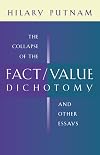
The first essay establishes that the fact/value distinction (a later incarnation of Hume's "you cannot derive an "is" from an "ought" thesis) rests on a dubious positivist definition of "fact" that derives from sense impression. In the second, Putnam explains that the values that science assumes aren't necessarily moral or ethical ones, but epistemic ones. Epistemic values like "coherence" and "simplicity" are assumed in the scientific pursuit, yet science continues to be thought of as show more wholly objective. John Mackie argued that words like "cruel" and "just" were simply words that described "natural facts," instead of realizing that they cannot be used intelligibly without employing some kind of evaluative judgment.
The third essay transposes this debate into the world of classical economic theory. This same debate found itself transposed into the field of economics ensconced within the framework of a Benthamist moral calculus, but were removed by the empiricist is/ought distinction (later, the work of the positivists.) Amartya Sen's project is to reintroduce ethical concepts and norms (once so lauded by Adam Smith, but since having been forgotten) back into the discourse on classical economics without losing any of its original rigor. Sen realizes that people are motivated by non-self-interested motives, as well. In its place, Sen posits a capabilities approach which emphasizes a plurality of human rights, freedoms, and goals, instead of the poverty of utilitarian ethical monism.
Throughout the three lectures, Putnam carefully picks apart one of the most enduring shibboleths of modern philosophy. Like Rorty, with whom he shares many intellectual affinities, he has an explicit, self-conscious relationship with the analytic tradition. Unlike Rorty, however, he has not wholly eschewed that tradition. While he disagrees with many of its conclusions, he is able to use some of its assumptions and to break outside of the box of morally bankrupt positivism.
The last part of the book contains five essays of in tangential relation to the three main lectures. "On the Rationality of Preferences," one of the essays included in the collection, but not one of the three original lectures, is Putnam's answer to an interlocutor who made a curious criticism of the paper that he presented. Putnam's presentation considered a person who had two choices before them, A and B, neither of which the chooser preferred. Would it matter, he asks, if, instead of the chooser making the decision simply tosses a coin or gets a random person to make the decision for him? After all, they don't have a preference, right? Most classically trained economists would assert that it didn't matter who made the decision. In fact, that's what the interlocutor pointed out. However, this essay, Putnam's response, is a brilliant response defending the idea that, even though one might not prefer A to B, the ability to choose one's own option engenders a kind of "dignity of the self" which economists have heretofore ignored. show less
The third essay transposes this debate into the world of classical economic theory. This same debate found itself transposed into the field of economics ensconced within the framework of a Benthamist moral calculus, but were removed by the empiricist is/ought distinction (later, the work of the positivists.) Amartya Sen's project is to reintroduce ethical concepts and norms (once so lauded by Adam Smith, but since having been forgotten) back into the discourse on classical economics without losing any of its original rigor. Sen realizes that people are motivated by non-self-interested motives, as well. In its place, Sen posits a capabilities approach which emphasizes a plurality of human rights, freedoms, and goals, instead of the poverty of utilitarian ethical monism.
Throughout the three lectures, Putnam carefully picks apart one of the most enduring shibboleths of modern philosophy. Like Rorty, with whom he shares many intellectual affinities, he has an explicit, self-conscious relationship with the analytic tradition. Unlike Rorty, however, he has not wholly eschewed that tradition. While he disagrees with many of its conclusions, he is able to use some of its assumptions and to break outside of the box of morally bankrupt positivism.
The last part of the book contains five essays of in tangential relation to the three main lectures. "On the Rationality of Preferences," one of the essays included in the collection, but not one of the three original lectures, is Putnam's answer to an interlocutor who made a curious criticism of the paper that he presented. Putnam's presentation considered a person who had two choices before them, A and B, neither of which the chooser preferred. Would it matter, he asks, if, instead of the chooser making the decision simply tosses a coin or gets a random person to make the decision for him? After all, they don't have a preference, right? Most classically trained economists would assert that it didn't matter who made the decision. In fact, that's what the interlocutor pointed out. However, this essay, Putnam's response, is a brilliant response defending the idea that, even though one might not prefer A to B, the ability to choose one's own option engenders a kind of "dignity of the self" which economists have heretofore ignored. show less
Did not expect to enjoy this as much as I did. First 'read' it for a philosophy class in undergrad. Felt like I was being punished. Little wiser now and a little more edjumucated in things like logic and metaphysics. Enjoyed the holy hell out of it. Really makes a lot of good connections to interesting philosophical issues.

Lists
Awards

You May Also Like


Associated Authors
Statistics
- Works
- 59
- Also by
- 20
- Members
- 2,436
- Popularity
- #10,538
- Rating
- 3.9
- Reviews
- 4
- ISBNs
- 151
- Languages
- 10
- Favorited
- 4