
Thomas Nagel
Author of What Does It All Mean?: A Very Short Introduction to Philosophy
About the Author
Thomas Nagel is University Professor at New York University.
Image credit: Thomas Nagel teaching an undergraduate course in ethics at New York University.
Series
Works by Thomas Nagel
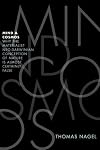
Mind & Cosmos: Why the Materialist Neo-Darwinian Conception of Nature is Almost Certainly False (2012) 570 copies, 10 reviews
Qu'est-ce que ça fait d'être une chauve-souris ?: Et autres questions sur la subjectivité dans la nature (2025) 1 copy
Fisicalismo 1 copy
What is rude? 1 copy
Thomas Nagel 1 copy
'Legal violations' in TLS 5329, 20 May 2005 [review of MacKinnon's 'Women's lives, men's laws'] 1 copy
'The view from here and now' in LRB 28/9, 11 May 2006 [review of various books of Bernard Williams] 1 copy
O Fiscalismo 1 copy
Associated Works
The Mind's I: Fantasies and Reflections on Self and Soul (1981) — Contributor — 3,016 copies, 24 reviews
The Moral Life: An Introductory Reader in Ethics and Literature (1999) — Contributor — 202 copies, 2 reviews
Tagged
Common Knowledge
- Birthdate
- 1937-07-04
- Gender
- male
- Occupations
- philosopher
- Awards and honors
- Rolf Schock Prize (Logic and Philosophy, 2008)
- Relationships
- Hollander, Anne (wife)
Zuboff, Arnold (student) - Nationality
- USA
- Associated Place (for map)
- USA
Members
Discussions
Nagel's Mind and Cosmos in Philosophy and Theory (May 2016)
Why the Materialist Neo-Darwinian Conception of Nature Is Almost Certainly False in Let's Talk Religion (November 2013)
Plantinga's defence of religion in Let's Talk Religion (September 2012)
Reviews
Mind & Cosmos: Why the Materialist Neo-Darwinian Conception of Nature is Almost Certainly False by Thomas Nagel
This book was clearly intended by Thomas Nagel to be provocative, and it works. He has received a lot of passionate criticism for it. I think it is a daring and imaginative book. Whether it is right or not is a different question.
Here's how I understand Nagel's main argument.
I think the basic insight goes back to Nagel's "What Is It Like to be a Bat" paper. The point is that there IS something that it is like to be a bat, a subjective experience. That's not so different from saying that each show more one of us lives our life in the first person, that we each have a subjective experience of the world. And that subjective experience, magnified in the case of the bat because bats possess a distinctively different primary sensory mode (radar) than we do, is inaccessible to objective accounts of the world.
Here, Nagel reformulates that point. The objectivist account of the world, that of the physical sciences, is incomplete -- it cannot account for conscious lives (something like first person experiences of the world).
It's not incomplete in the way that physics is internally incomplete. It's not just that it is lacking further experiments, observations, or data -- it's incomplete in principle. No objectivist account of reality will ever account for conscious lives. This is a step that Nagel doesn't state explicitly, but that I believe has to be part of his argument. Otherwise, the objectivist account might only be temporarily or conditionally incomplete, not incomplete in principle.
The subjectivist, idealist, or theist account of the world is also incomplete. I'm not quite so sure why Nagel believes that this account is necessarily incomplete, other than that it lacks sufficient provision for why things happen as they do, something that objectivist accounts are quite good at, at least as they concern events in the physical world.
If we are to have a complete account of reality, then it must be neither objectivist nor subjectivist.
What's interesting though is that what is incomplete in the objectivist account might be thought to be supplied by the subjectivist account -- i.e., intention or purpose. Reasons, intentions, or purposes supply a way in which things proceed in subjective experience that is analogous to causes in the objective world. Then let's try a third account, one that promises to combine the role of intention or purpose in the subjectivist account with the role of mechanisms in the objectivist account. That gives you some sort of teleological science.
So far, this version of Nagel's argument doesn't depend on what I have to agree with some other reviewers are odd or maybe simplistic claims regarding the adequacy of neo-Darwinian accounts of evolution to explain how creatures like us got here.
But, for Nagel, part (at least) of the motivation for incorporating purpose into our account of nature is in fact that the explanatory arsenal of the physical sciences doesn't give an adequate account of how conscious creatures came to be. He believes that neo-Darwinian accounts fail to provide that account, but that purpose, in the guise of genetic variation bias, solves that problem.
The idea isn't unprecedented. There are some interpretations of Nietzsche that go that way. Or, there are the anthropic cosmological principle theorists from about 20 years ago, who argued that the fit between the physical constants and amenability to life and the evolution of creatures like us indicated that the universe is actually designed for (or somehow favors) the development of an awareness of itself.
But, if my sketch of what I take to be Nagel's stronger argument is correct, that the real problem with the theory of biological evolution is that it just isn't the kind of theory (physicalist, objectivist) that can, in principle, produce an account of the kind of thing that consciousness is (subjective, first person experiential), then I think Nagel's attempt to produce a "third" alternative faces a very difficult challenge.
Adding "natural teleology" doesn't look like it's going to help, any more than adding anything else objectivist and physicalist is going to help. In fact, Nagel's remarks on what would count as a "reductivist" account of consciousness seems to say as much, that consciousness would have to be constituted of the kinds of things, unlike physicalist atoms, that can constitute the kind of thing that consciousness is.
The gulf between the objective and subjective, or the physical and the mental, is just too wide to cross once you've opened it.
Some objectivist accounts of consciousness ignore a distinction that I think is critical here -- a distinction between the ability of an organism to have a conscious life and the content of that conscious life itself, i.e., the first person experience of life. The former seems more amenable to scientific explanation, via some sort of organic complexity, than the latter -- the latter calls into play the kinds of difficulties in reducing our mental lives to physical lives that Nagel seems to be calling upon in the "Bat" paper. Saying that the complex structures of my brain gives me the ability to dream or do the other things that mark our conscious lives is one thing; saying that the content of those dreams can either be reduced to or identified (in what used to be called "type-type" as opposed to "token-token" correlations) with happenings in those complex structures is another.
Again, though, Nagel's proposal to incorporate teleology into our account of evolutionary biology seems to help only with the account of how we might have come to have the ability to have a conscious life, not with the explanation of the content of those conscious lives. Doing so provides a kind of acceleration of the course of evolution toward creatures with conscious ability, where Nagel seems to think that there hasn't been sufficient time for such evolution to take place on the neo-Darwinian account.
All of this to the side, the part of Nagel's argument that might bother me the most is the claim that we actually need a single, complete account of reality. He calls himself a "neutral monist", so I suppose the reasoning is that if there is a single way the world is, we should have a single way of accounting for it. But why? The one doesn't seem to follow from the other, unless you suppose also that we have sure access to the single way the world is, rather than, say, repeated attempts that capture aspects of that single way, but never the whole. show less
Here's how I understand Nagel's main argument.
I think the basic insight goes back to Nagel's "What Is It Like to be a Bat" paper. The point is that there IS something that it is like to be a bat, a subjective experience. That's not so different from saying that each show more one of us lives our life in the first person, that we each have a subjective experience of the world. And that subjective experience, magnified in the case of the bat because bats possess a distinctively different primary sensory mode (radar) than we do, is inaccessible to objective accounts of the world.
Here, Nagel reformulates that point. The objectivist account of the world, that of the physical sciences, is incomplete -- it cannot account for conscious lives (something like first person experiences of the world).
It's not incomplete in the way that physics is internally incomplete. It's not just that it is lacking further experiments, observations, or data -- it's incomplete in principle. No objectivist account of reality will ever account for conscious lives. This is a step that Nagel doesn't state explicitly, but that I believe has to be part of his argument. Otherwise, the objectivist account might only be temporarily or conditionally incomplete, not incomplete in principle.
The subjectivist, idealist, or theist account of the world is also incomplete. I'm not quite so sure why Nagel believes that this account is necessarily incomplete, other than that it lacks sufficient provision for why things happen as they do, something that objectivist accounts are quite good at, at least as they concern events in the physical world.
If we are to have a complete account of reality, then it must be neither objectivist nor subjectivist.
What's interesting though is that what is incomplete in the objectivist account might be thought to be supplied by the subjectivist account -- i.e., intention or purpose. Reasons, intentions, or purposes supply a way in which things proceed in subjective experience that is analogous to causes in the objective world. Then let's try a third account, one that promises to combine the role of intention or purpose in the subjectivist account with the role of mechanisms in the objectivist account. That gives you some sort of teleological science.
So far, this version of Nagel's argument doesn't depend on what I have to agree with some other reviewers are odd or maybe simplistic claims regarding the adequacy of neo-Darwinian accounts of evolution to explain how creatures like us got here.
But, for Nagel, part (at least) of the motivation for incorporating purpose into our account of nature is in fact that the explanatory arsenal of the physical sciences doesn't give an adequate account of how conscious creatures came to be. He believes that neo-Darwinian accounts fail to provide that account, but that purpose, in the guise of genetic variation bias, solves that problem.
The idea isn't unprecedented. There are some interpretations of Nietzsche that go that way. Or, there are the anthropic cosmological principle theorists from about 20 years ago, who argued that the fit between the physical constants and amenability to life and the evolution of creatures like us indicated that the universe is actually designed for (or somehow favors) the development of an awareness of itself.
But, if my sketch of what I take to be Nagel's stronger argument is correct, that the real problem with the theory of biological evolution is that it just isn't the kind of theory (physicalist, objectivist) that can, in principle, produce an account of the kind of thing that consciousness is (subjective, first person experiential), then I think Nagel's attempt to produce a "third" alternative faces a very difficult challenge.
Adding "natural teleology" doesn't look like it's going to help, any more than adding anything else objectivist and physicalist is going to help. In fact, Nagel's remarks on what would count as a "reductivist" account of consciousness seems to say as much, that consciousness would have to be constituted of the kinds of things, unlike physicalist atoms, that can constitute the kind of thing that consciousness is.
The gulf between the objective and subjective, or the physical and the mental, is just too wide to cross once you've opened it.
Some objectivist accounts of consciousness ignore a distinction that I think is critical here -- a distinction between the ability of an organism to have a conscious life and the content of that conscious life itself, i.e., the first person experience of life. The former seems more amenable to scientific explanation, via some sort of organic complexity, than the latter -- the latter calls into play the kinds of difficulties in reducing our mental lives to physical lives that Nagel seems to be calling upon in the "Bat" paper. Saying that the complex structures of my brain gives me the ability to dream or do the other things that mark our conscious lives is one thing; saying that the content of those dreams can either be reduced to or identified (in what used to be called "type-type" as opposed to "token-token" correlations) with happenings in those complex structures is another.
Again, though, Nagel's proposal to incorporate teleology into our account of evolutionary biology seems to help only with the account of how we might have come to have the ability to have a conscious life, not with the explanation of the content of those conscious lives. Doing so provides a kind of acceleration of the course of evolution toward creatures with conscious ability, where Nagel seems to think that there hasn't been sufficient time for such evolution to take place on the neo-Darwinian account.
All of this to the side, the part of Nagel's argument that might bother me the most is the claim that we actually need a single, complete account of reality. He calls himself a "neutral monist", so I suppose the reasoning is that if there is a single way the world is, we should have a single way of accounting for it. But why? The one doesn't seem to follow from the other, unless you suppose also that we have sure access to the single way the world is, rather than, say, repeated attempts that capture aspects of that single way, but never the whole. show less
Mind and Cosmos: Why the Materialist Neo-Darwinian Conception of Nature Is Almost Certainly False by Thomas Nagel
Modern science assumes the causal closure of physics or what is referred to as the completeness of physics. If the forces physics describes are the only forces in the world, then everything can be explained in terms of those forces without remainder. And so, when Neo-Darwinian informed science explains the evolution of humankind and our behavior, it assumes the causal closure of physics. This is referred to as naturalism or the naturalistic stance.
The author, a philosophy professor at New show more York University since 1980 does not believe in the causal closure of physics. Why doesn’t he believe in the causal closure of physics? It’s because he doesn’t believe the Neo-Darwinian theory of evolution can explain the origin of consciousness, meaning, value and morality. What are his reasons?
1) The probability of it happening by chance is too low.
2) There hasn’t been enough time for consciousness to evolve.
What evidence does he provide? It’s just a gut instinct based on his common sense intuitions. However, his common sense intuitions haven’t been honed by a scientific education. In a shocking admission in the beginning of the book, Mr. Nagel admits that his only scientific knowledge is from reading popular science books. When reading the book, it is clear that he is not even widely read in popular science. It is also clear that many of his ideas come from reading popular pseudo-scientific books written by creationist and intelligent design advocates.
Since he believes physics is not casually closed or complete, Mr. Nagel has to invent another force acting in the world to complete it. This force is mind. It is a position known as panpsychism:. All matter has a mental aspect, or, alternatively, all objects have a unified center of experience or point of view. How this mysterious something extra is supposed to explain consciousness or its evolution is never explained. It reminds me of Moliere. Why does opium make us sleepy? It makes us sleepy due to its dormative properties. This smacks of ad hocism.
His whole argument is the argument from incredulity: P is too incredible (or: I cannot imagine how P could possibly be true); therefore, P must be false. Since he can’t understand how science can explain consciousness, it is therefore unexplainable in terms of existing science. His limitations are the scientific community’s limitations. This is the height of narcissism and evinces contempt for the scientific communities ability to discover the nature of reality.
One of his unstated assumptions is that a justificationist perspective informs science, which if true, makes it vulnerable to Münchhausen’s trilemma. All attempts at justifying a position end in one of three states:
1) Circular reasoning,
2) Infinite regress
3) Axiomatic or fideism.
Mr. Nagel accuses naturalistic Neo-Darwinian science of falling prey to all three. Naturalist epistemology can’t justify itself without begging the question, reason couldn’t have evolved because it would involve an infinite regress, and thirdly, naturalism is an ideology. Accusing science of being an ideology is a rhetorical ploy used by creationists and ID proponents. Since they cannot refute evolutionary science, they claim it is an ideology. Once asserted to be an ideology, they employ the tu quoque argument and claim that everyone has to adopt foundational assumptions that cannot be proven.
However, since Popper, a falsificationist perspective informs science. Although this is at the cost of certainty, the benefit is explaining why science is a never-ending open-ended endeavor. Given science’s progress thus far, it is excessively premature to give up and seek other explanations for the evolution of consciousness, meaning, value and morality.
Mr. Nagel does not hold his beliefs subject to the implications of science, but instead, holds beliefs and then states that science is therefore wrong. For example, Nagel states, “Street holds that a Darwinian account is strongly supported by contemporary science, so she concludes that moral realism is false. I follow the same inference in the opposite direction: since moral realism is true, a Darwinian account of the motives underlying moral judgment must be false, in spite of the scientific consensus in its favor.”
Mr. Nagel never says why moral realism is true, he just states that it is. His beliefs are based on his innate sense of how things just have to be. He’s an atheist for the same reason. He says he just doesn’t have a sense that god exists, therefore he doesn’t.
Elsewhere he says. “However, in my case the scientific credentials of Darwinism, and these other examples, are not enough to dislodge the immediate conviction that objectivity is not an illusion with respect to basic judgments of value.”
Mr. Kant believed that the world was Euclidean and that this was a necessary truth of reason. It later turned out he was wrong. He is also believed Newtonian mechanics accurately described the world. We later found is doesn’t. Mr. Nagel believes that the law of the excluded middle is a truth of logic. However, if the Copenhagen interpretation of quantum mechanics is correct, this is not the case. Basing our beliefs on our intuitions is a poor way to proceed. All modern science is based on its rejection.
Because of his self-professed scientific illiteracy, he is completely unaware of how game theory can explain the logic of behavior or how biosemiotics is beginning to explain how meaning and value can arise in a completely mindless material universe..
The problem with Nagel’s book is that it is ultimately anthropocentric. All prior life forms were precursors to the ultimate expression of the universe: humans. He has no concept that we might be mere way stations along the road to some future that doesn’t include humans or consciousness. Whatever the future brings, it will certainly include a post-human humanity with entirely different needs, morals, and values.
Like all pre-Darwinian thinkers, he lives in a world of stasis. He believes in a platonic world that contains eternal truths. However, he provides no method for ascertaining what those truths are or when we’ve discerned them. According to Mr. Nagel, some mysterious teleological process has guided evolution that resulted in consciousness and value. He cannot accept that we are negentropic energy sinks that have effloresced out of a mindless material universe and will one day disappear without leaving a trace.
Claiming that the material world contains mind and is guided by a teleological process adds nothing to the scientific description of the world. There’s no way to test for it. The beauty of this, however, is that fideists can add all the non-testable, non-refutable beliefs they need to a theory to get back to their religion. But this is not science.
The subtitle of the book is: Why the Materialist Neo-Darwinian Conception of Nature Is Almost Certainly False. Mr. Nagel comes no where close to doing this. Instead the book is a embarrassing collection of non sequiturs. show less
The author, a philosophy professor at New show more York University since 1980 does not believe in the causal closure of physics. Why doesn’t he believe in the causal closure of physics? It’s because he doesn’t believe the Neo-Darwinian theory of evolution can explain the origin of consciousness, meaning, value and morality. What are his reasons?
1) The probability of it happening by chance is too low.
2) There hasn’t been enough time for consciousness to evolve.
What evidence does he provide? It’s just a gut instinct based on his common sense intuitions. However, his common sense intuitions haven’t been honed by a scientific education. In a shocking admission in the beginning of the book, Mr. Nagel admits that his only scientific knowledge is from reading popular science books. When reading the book, it is clear that he is not even widely read in popular science. It is also clear that many of his ideas come from reading popular pseudo-scientific books written by creationist and intelligent design advocates.
Since he believes physics is not casually closed or complete, Mr. Nagel has to invent another force acting in the world to complete it. This force is mind. It is a position known as panpsychism:. All matter has a mental aspect, or, alternatively, all objects have a unified center of experience or point of view. How this mysterious something extra is supposed to explain consciousness or its evolution is never explained. It reminds me of Moliere. Why does opium make us sleepy? It makes us sleepy due to its dormative properties. This smacks of ad hocism.
His whole argument is the argument from incredulity: P is too incredible (or: I cannot imagine how P could possibly be true); therefore, P must be false. Since he can’t understand how science can explain consciousness, it is therefore unexplainable in terms of existing science. His limitations are the scientific community’s limitations. This is the height of narcissism and evinces contempt for the scientific communities ability to discover the nature of reality.
One of his unstated assumptions is that a justificationist perspective informs science, which if true, makes it vulnerable to Münchhausen’s trilemma. All attempts at justifying a position end in one of three states:
1) Circular reasoning,
2) Infinite regress
3) Axiomatic or fideism.
Mr. Nagel accuses naturalistic Neo-Darwinian science of falling prey to all three. Naturalist epistemology can’t justify itself without begging the question, reason couldn’t have evolved because it would involve an infinite regress, and thirdly, naturalism is an ideology. Accusing science of being an ideology is a rhetorical ploy used by creationists and ID proponents. Since they cannot refute evolutionary science, they claim it is an ideology. Once asserted to be an ideology, they employ the tu quoque argument and claim that everyone has to adopt foundational assumptions that cannot be proven.
However, since Popper, a falsificationist perspective informs science. Although this is at the cost of certainty, the benefit is explaining why science is a never-ending open-ended endeavor. Given science’s progress thus far, it is excessively premature to give up and seek other explanations for the evolution of consciousness, meaning, value and morality.
Mr. Nagel does not hold his beliefs subject to the implications of science, but instead, holds beliefs and then states that science is therefore wrong. For example, Nagel states, “Street holds that a Darwinian account is strongly supported by contemporary science, so she concludes that moral realism is false. I follow the same inference in the opposite direction: since moral realism is true, a Darwinian account of the motives underlying moral judgment must be false, in spite of the scientific consensus in its favor.”
Mr. Nagel never says why moral realism is true, he just states that it is. His beliefs are based on his innate sense of how things just have to be. He’s an atheist for the same reason. He says he just doesn’t have a sense that god exists, therefore he doesn’t.
Elsewhere he says. “However, in my case the scientific credentials of Darwinism, and these other examples, are not enough to dislodge the immediate conviction that objectivity is not an illusion with respect to basic judgments of value.”
Mr. Kant believed that the world was Euclidean and that this was a necessary truth of reason. It later turned out he was wrong. He is also believed Newtonian mechanics accurately described the world. We later found is doesn’t. Mr. Nagel believes that the law of the excluded middle is a truth of logic. However, if the Copenhagen interpretation of quantum mechanics is correct, this is not the case. Basing our beliefs on our intuitions is a poor way to proceed. All modern science is based on its rejection.
Because of his self-professed scientific illiteracy, he is completely unaware of how game theory can explain the logic of behavior or how biosemiotics is beginning to explain how meaning and value can arise in a completely mindless material universe..
The problem with Nagel’s book is that it is ultimately anthropocentric. All prior life forms were precursors to the ultimate expression of the universe: humans. He has no concept that we might be mere way stations along the road to some future that doesn’t include humans or consciousness. Whatever the future brings, it will certainly include a post-human humanity with entirely different needs, morals, and values.
Like all pre-Darwinian thinkers, he lives in a world of stasis. He believes in a platonic world that contains eternal truths. However, he provides no method for ascertaining what those truths are or when we’ve discerned them. According to Mr. Nagel, some mysterious teleological process has guided evolution that resulted in consciousness and value. He cannot accept that we are negentropic energy sinks that have effloresced out of a mindless material universe and will one day disappear without leaving a trace.
Claiming that the material world contains mind and is guided by a teleological process adds nothing to the scientific description of the world. There’s no way to test for it. The beauty of this, however, is that fideists can add all the non-testable, non-refutable beliefs they need to a theory to get back to their religion. But this is not science.
The subtitle of the book is: Why the Materialist Neo-Darwinian Conception of Nature Is Almost Certainly False. Mr. Nagel comes no where close to doing this. Instead the book is a embarrassing collection of non sequiturs. show less

Human beings have the unique ability to view the world in a detached way: We can think about the world in terms that transcend our own experience or interest, and consider the world from a vantage point that is, in Nagel's words, "nowhere in particular." At the same time, each of us is a particular person in a particular place, each with his own "personal" view of the world, a view that we can recognize as just one aspect of the whole. How do we reconcile these two show more standpoints--intellectually, morally, and practically? To what extent are they irreconcilable and to what extent can they be integrated? Thomas Nagel's ambitious and lively book tackles this fundamental issue, arguing that our divided nature is the root of a whole range of philosophical problems, touching, as it does, every aspect of human life. He deals with its manifestations in such fields of philosophy as: the mind-body problem, personal identity, knowledge and skepticism, thought and reality, free will, ethics, the relation between moral and other values, the meaning of life, and death. Excessive objectification has been a malady of recent analytic philosophy, claims Nagel, it has led to implausible forms of reductionism in the philosophy of mind and elsewhere. The solution is not to inhibit the objectifying impulse, but to insist that it learn to live alongside the internal perspectives that cannot be either discarded or objectified. Reconciliation between the two standpoints, in the end, is not always possible. show less
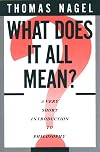
You want I should tell you what it all means, now that I finished the book? So, if I did, you could then say, "That's it? Why should I care?" Or "What does it mean that that's what it all means?" In other words, a meaning found in a book is just a meaning found in a book. That's not a fault of the book, though. Nagel gives this very argument.
I'll admit I went into this less naive than the intended audience. It was written for people who never asked these questions in the first place. I show more couldn't tell you whether one of those people would find this book a wake-up call to the examined life. The fact that they picked it up in the first place would mean they were already primed for it. This, by the way, is the core of what I call the Goodread's Paradox: the distortion in ratings caused by the fact that readers aren't reviewing at random but are evaluating just those books toward which they are already disposed to find interesting. Someone picking up Nagel and expecting a romantic comedy would give it only 1 star.
And, indeed, my only real complaint about the book is that Nagel doesn't sufficiently question what he is reading into to his observations. Yes, he treats the topics of solipsism and materialism but he doesn't ask whether those topics themselves reflect a bias that could, if not be escaped, at least be seen as an inescapable bias for him (though perhaps not for someone else with different inescapable biases) and whether the self is just that, a bias, which keeps one from a "view from nowhere" (a book of his I promise to return to.) show less
I'll admit I went into this less naive than the intended audience. It was written for people who never asked these questions in the first place. I show more couldn't tell you whether one of those people would find this book a wake-up call to the examined life. The fact that they picked it up in the first place would mean they were already primed for it. This, by the way, is the core of what I call the Goodread's Paradox: the distortion in ratings caused by the fact that readers aren't reviewing at random but are evaluating just those books toward which they are already disposed to find interesting. Someone picking up Nagel and expecting a romantic comedy would give it only 1 star.
And, indeed, my only real complaint about the book is that Nagel doesn't sufficiently question what he is reading into to his observations. Yes, he treats the topics of solipsism and materialism but he doesn't ask whether those topics themselves reflect a bias that could, if not be escaped, at least be seen as an inescapable bias for him (though perhaps not for someone else with different inescapable biases) and whether the self is just that, a bias, which keeps one from a "view from nowhere" (a book of his I promise to return to.) show less
Lists
Awards


You May Also Like


Associated Authors
Statistics
- Works
- 43
- Also by
- 14
- Members
- 4,024
- Popularity
- #6,264
- Rating
- 3.8
- Reviews
- 45
- ISBNs
- 201
- Languages
- 20
- Favorited
- 3