
Cal Newport
Author of Deep Work: Rules for Focused Success in a Distracted World
About the Author
Cal Newport is the author of How to Win at College and How to Become a Straight-A Student. He graduated from Dartmouth College and earned a Ph.D. from MIT. His writing has appeared in national publications, and he is the founder of Study Hacks, the Web's most popular student advice blog.
Image credit: CalNewport.com
Works by Cal Newport
How to Become a Straight-A Student: The Unconventional Strategies Real College Students Use to Score High While Studying Less (2006) 651 copies, 14 reviews
A World Without Email: Reimagining Work in an Age of Communication Overload (2020) 445 copies, 8 reviews
How to Win at College: Surprising Secrets for Success from the Country's Top Students (2005) 276 copies, 6 reviews
How to Be a High School Superstar: A Revolutionary Plan to Get into College by Standing Out (Without Burning Out) (2010) 163 copies, 3 reviews
'Simply a Particular Contemporary': Interviews, 1970-79: Essays and Interviews, Volume 5 (The French List) (2015) 140 copies, 2 reviews
So Good They Can't Ignore You • Deep Work: Rules for Focused Success in a Distracted World (2019) 8 copies
Enfocáte 2 copies
Bom demais para ser ignorado. Por que as habilidades superam a paixao na busca pelo trabalho que voce adora (Em Portugues do Brasil) (2019) 2 copies
Summary: Deep Work: Rules For Focused Success In A Distracted World by Cal Newport: Understand Main Takeaways and Analysis (2017) — Author — 1 copy
Görmezden Gelemeyecekleri Kadar İyi Ol: Sevdiğin İşi Bulmada Beceriler Neden Tutkudan Önce Gelir? 1 copy
Minimalism digital 1 copy
Praca głęboka 1 copy
ดิจิทัลมินิมัลลิสม์ 1 copy
PUNA E THELLË 1 copy
Associated Works
Surrounded by Idiots, It's Not Always Depression, Eat That Frog, Deep Work 4 Books Collection Set (2019) — Contributor — 1 copy
Tagged
Common Knowledge
- Legal name
- Newport, Calvin C.
- Birthdate
- 1982-06-23
- Gender
- male
- Education
- Dartmouth College (BA)
Massachusetts Institute of Technology (PhD|Computer Science) - Occupations
- professor
- Agent
- Abkemeier, Laurie (DeFiore and Company)
- Short biography
- Cal Newport is a tenured professor of Computer Science at Georgetown University. In addition to his academic work, Newport writes about the intersection of these technologies with our personal and professional lives. Newport's ideas have been published in top print publications, including the New York Times, the Wall Street Journal, and the Financial Times, but as a dedicate digital minimalist, Newport has never had a social media account.
- Nationality
- USA
- Places of residence
- Takoma Park, Maryland, USA
- Associated Place (for map)
- Maryland, USA
Members
Reviews
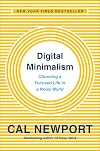
Kind of mind-blowing.
This book is part philosophy, part how-to, and it is a strong wake-up call for the way we use technology. I mean, most of us would vaguely say, "Yeah, I think I spend too much time on my phone." But this book helps to clarify why we spend too much time on our phones. It lifts the veil on an astoundingly obvious truth that had never crossed my mind: We tell ourselves that we use "tools" like social media for the potential benefits that they offer-- but we should first show more define what those benefits are and then extract them. And we don't. And since they are designed to be irresistible, therefore the amount of time we invest in such tools leads to a diminishingly small return of benefit.
It was a pretty inspiring read, leaving me only with the question, "Can I do the stuff in the book? Actually?" It's a tricky proposition when your job requires a certain amount of social media interaction. But if there's anything I've realized from this read, it's that you can navigate the balance as long as you do it deliberately, and be ruthless with the things that you need to be.
I like that this author is not anti-technology, and he is not even anti-social media. He recognizes the value that's possible in both. But he lays bare the fact that to GET that value, you're going to have to plunge into a sort of David vs. Goliath fight to use technology only in the ways that make your life a lot better, which goes against the way they are often designed.
I'm making some of these changes right away. show less
This book is part philosophy, part how-to, and it is a strong wake-up call for the way we use technology. I mean, most of us would vaguely say, "Yeah, I think I spend too much time on my phone." But this book helps to clarify why we spend too much time on our phones. It lifts the veil on an astoundingly obvious truth that had never crossed my mind: We tell ourselves that we use "tools" like social media for the potential benefits that they offer-- but we should first show more define what those benefits are and then extract them. And we don't. And since they are designed to be irresistible, therefore the amount of time we invest in such tools leads to a diminishingly small return of benefit.
It was a pretty inspiring read, leaving me only with the question, "Can I do the stuff in the book? Actually?" It's a tricky proposition when your job requires a certain amount of social media interaction. But if there's anything I've realized from this read, it's that you can navigate the balance as long as you do it deliberately, and be ruthless with the things that you need to be.
I like that this author is not anti-technology, and he is not even anti-social media. He recognizes the value that's possible in both. But he lays bare the fact that to GET that value, you're going to have to plunge into a sort of David vs. Goliath fight to use technology only in the ways that make your life a lot better, which goes against the way they are often designed.
I'm making some of these changes right away. show less
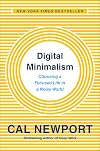
Разговарях с една приятелка относно социалните медии и постоянното гледане в телефона и й предложих поне да изключи звука на месинджър, за да не му обръща внимание постоянно. Тя ми отговори изумено: "Ама всеки път като звънне месинджъра ми става едно такова хубаво - като show more мини оргазъм. Някой мисли за мен!".
И не са само социалните медии - отвсякъде всеки ни бомбардира и се състезава за вниманието ни. Не само за да гледаме реклами, ами просто да гледаме. Какви ли не алгоритми не измислят сайтовете, за да ни караме да скролваме безкрайно, какви ли не шокиращи, дразнещи и лъжливи заглавия слагат, какви ли не вълнуващи тайни и създаваща напрежение музика не ползват даже документалните "научно"-популярни филми за да те залепят за екрана.
Отдавна съм забелязал това и се старая всячески да го избягвам, затова тази книга не е някакво прозрение за мен, но може и да бъде за много хора. Едно "дигитално почистване" определено е от полза на всеки, вкл. изключване на всякакви звуци, които телефонът и различните приложения издават, освен когато някой всъщност ти звъни, изключване на нотификациите на всичко, освен на най-важните неща, осъзнаване по колко време прекарваш в социалните мрежи и преценка искаш ли всъщност да прекарваш толкова време там или не...
Освен това и новините, особено политическите - повечето медии, тв и интернет се опитват с шокиращи заглавия и представяне да те накарат да се ядосаш, защото това повишава т.н. engagement - вероятността да коментираш или споделиш статията.
Всичко това не остава без последици - в последното десетилетие диагнозите на "тревожностно психическо разстройство" при младите хора започват да надвишават тия на депресията, която е безспорен първенец при психическите заболявания от зората на психологията насам. Капацитетът за съсредоточено внимание на всички ни отдавна е увреден до степен да не можем да изгледаме цял филм на лаптопа без да го прекъсваме 2-3 пъти, за да правим нещо друго. Да не отварям дума пък за масите по заведенията с насядали заедно хора, които до един са забили глави в телефоните, вместо да си говорят.
Ако смяташ, че тия неща имат значение, виж Digital Minimalism: Choosing a Focused Life in a Noisy World.
Книгата не отваря дума за рекламите и въпиющата нужда от адблокъри, но е добре човек да помисли дали му е приятно очите му постоянно да бъдат атакувани от крещящо оцветени, шаващи из екрана, навиращи се сами под мишката и издаващи неочаквани звуци, които ти изкарват акъла банери и аутоплей клипчета. show less
И не са само социалните медии - отвсякъде всеки ни бомбардира и се състезава за вниманието ни. Не само за да гледаме реклами, ами просто да гледаме. Какви ли не алгоритми не измислят сайтовете, за да ни караме да скролваме безкрайно, какви ли не шокиращи, дразнещи и лъжливи заглавия слагат, какви ли не вълнуващи тайни и създаваща напрежение музика не ползват даже документалните "научно"-популярни филми за да те залепят за екрана.
Отдавна съм забелязал това и се старая всячески да го избягвам, затова тази книга не е някакво прозрение за мен, но може и да бъде за много хора. Едно "дигитално почистване" определено е от полза на всеки, вкл. изключване на всякакви звуци, които телефонът и различните приложения издават, освен когато някой всъщност ти звъни, изключване на нотификациите на всичко, освен на най-важните неща, осъзнаване по колко време прекарваш в социалните мрежи и преценка искаш ли всъщност да прекарваш толкова време там или не...
Освен това и новините, особено политическите - повечето медии, тв и интернет се опитват с шокиращи заглавия и представяне да те накарат да се ядосаш, защото това повишава т.н. engagement - вероятността да коментираш или споделиш статията.
Всичко това не остава без последици - в последното десетилетие диагнозите на "тревожностно психическо разстройство" при младите хора започват да надвишават тия на депресията, която е безспорен първенец при психическите заболявания от зората на психологията насам. Капацитетът за съсредоточено внимание на всички ни отдавна е увреден до степен да не можем да изгледаме цял филм на лаптопа без да го прекъсваме 2-3 пъти, за да правим нещо друго. Да не отварям дума пък за масите по заведенията с насядали заедно хора, които до един са забили глави в телефоните, вместо да си говорят.
Ако смяташ, че тия неща имат значение, виж Digital Minimalism: Choosing a Focused Life in a Noisy World.
Книгата не отваря дума за рекламите и въпиющата нужда от адблокъри, но е добре човек да помисли дали му е приятно очите му постоянно да бъдат атакувани от крещящо оцветени, шаващи из екрана, навиращи се сами под мишката и издаващи неочаквани звуци, които ти изкарват акъла банери и аутоплей клипчета. show less
A student said to Master Ichu, “Please write for me something of great wisdom.” Master Ichu picked up his brush and wrote one word: “Attention.” The student said, “Is that all?” The master wrote, “Attention. Attention.” The student became irritable. “That doesn’t seem profound or subtle to me.” In response, Master Ichu wrote simply, “Attention. Attention. Attention.” Frustrated, the student demanded, “What does the word ‘attention’ mean?” Master Ichu show more replied, “Attention means attention.”
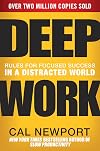
But no one will publish your book with only the word "Attention" in it, hence we have this one instead. To be fair, this book has to prove its thesis. We don't just accept what the master says without studies using fMRI and references to the brain these days. Am I suggesting we should? Our culture is a skeptical one in which ideas need to be marketed and someone claiming authority is assumed to be operating out of self interest. This book is steeped in the values of western capitalism, its masters having credentials from elite institutions or being CEOs of corporations. Though, in theory, we could attempt to replicate the results of experiments, in practice, we follow today's masters. We envy them and wish to join their ranks or even to replace them. This book is telling us (and selling us) the magic trick that it claims can enable us to do so.
Its thesis is you, the reader, have a chance. Great things are produced by the right kind of work, not by the specially endowed. That kind of work is called "deep" and research shows that those we thought specially endowed actually do a lot of deep work. What's more, most people (i.e. readers of this book, and especially those people who aren't readers like us) do practically none. Instead our attention is scattered for various reasons, some cultural (e.g. Facebook) and some due to lack of discipline. Though deep work is ultimately deeply satisfying, few of us ever get to taste that satisfaction.
The rest of the book suggests those "weird tricks" that can help us engage in deep work. Examples are getting off social media, engaging in habit-forming rituals supporting deep work, investing lavishly in tools for the work as an expression of commitment, emulating others who choose the life of depth. Some of these tricks are phrased as rules, one of which (rule#1 in chapter 4)is to "focus on the wildly important."
I would like to suggest a reversal of cause and effect here. To me, those whom the author calls deep focus on "wildly important goals" do so because they find them wildly important. They pay attention to what they find interesting out of interest, not out of following a rule. Even singling out goals doesn't really happen for these people. The goals call out to them and they respond. Mr. Newport's example of Bill Gates's "preternatural deep work ability" is a case in point. It wasn't an ability but an inability to do otherwise. If you've never experienced that kind of obsession, you don't realize that this isn't the kind of mind state that you cultivate just for the results. It's more like the kind of mind state that were it not having positive effects, would get you diagnosed with a mental illness.
Often, while reading this book, I felt like I was experiencing an infomercial. What makes this especially ironic is that advertising is a major source of distraction in our culture and our willingness to subject ourselves to it is symptomatic of our undervaluing our attention. I don't want to say that cultivating more focus and less distraction can't improve one's life, but that there's something shallow about turning depth into a growth tool. show less
But no one will publish your book with only the word "Attention" in it, hence we have this one instead. To be fair, this book has to prove its thesis. We don't just accept what the master says without studies using fMRI and references to the brain these days. Am I suggesting we should? Our culture is a skeptical one in which ideas need to be marketed and someone claiming authority is assumed to be operating out of self interest. This book is steeped in the values of western capitalism, its masters having credentials from elite institutions or being CEOs of corporations. Though, in theory, we could attempt to replicate the results of experiments, in practice, we follow today's masters. We envy them and wish to join their ranks or even to replace them. This book is telling us (and selling us) the magic trick that it claims can enable us to do so.
Its thesis is you, the reader, have a chance. Great things are produced by the right kind of work, not by the specially endowed. That kind of work is called "deep" and research shows that those we thought specially endowed actually do a lot of deep work. What's more, most people (i.e. readers of this book, and especially those people who aren't readers like us) do practically none. Instead our attention is scattered for various reasons, some cultural (e.g. Facebook) and some due to lack of discipline. Though deep work is ultimately deeply satisfying, few of us ever get to taste that satisfaction.
The rest of the book suggests those "weird tricks" that can help us engage in deep work. Examples are getting off social media, engaging in habit-forming rituals supporting deep work, investing lavishly in tools for the work as an expression of commitment, emulating others who choose the life of depth. Some of these tricks are phrased as rules, one of which (rule#1 in chapter 4)is to "focus on the wildly important."
I would like to suggest a reversal of cause and effect here. To me, those whom the author calls deep focus on "wildly important goals" do so because they find them wildly important. They pay attention to what they find interesting out of interest, not out of following a rule. Even singling out goals doesn't really happen for these people. The goals call out to them and they respond. Mr. Newport's example of Bill Gates's "preternatural deep work ability" is a case in point. It wasn't an ability but an inability to do otherwise. If you've never experienced that kind of obsession, you don't realize that this isn't the kind of mind state that you cultivate just for the results. It's more like the kind of mind state that were it not having positive effects, would get you diagnosed with a mental illness.
Often, while reading this book, I felt like I was experiencing an infomercial. What makes this especially ironic is that advertising is a major source of distraction in our culture and our willingness to subject ourselves to it is symptomatic of our undervaluing our attention. I don't want to say that cultivating more focus and less distraction can't improve one's life, but that there's something shallow about turning depth into a growth tool. show less
A World Without Email: Find Focus and Transform the Way You Work Forever (from the NYT bestselling productivity expert) by Cal Newport
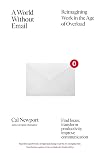
I am always amused by books that never mention the word capitalism and have no intention of critiquing it, yet do just that. 'A World Without Email' is the latest example I've come across. Newport sets out to explain the problems caused by email's domination of the knowledge economy and suggest solutions. He grounds his analysis in a hilariously (to me) neoliberal combination of theories: predominantly technological determinism and evolutionary psychology, with a dash of utilitarianism. The show more iniquitous tragedy of the commons also gets an airing. In his view, the stress of constantly full inboxes is due to how email was invented and fundamental human social dynamics. What he struggles to explain using these theories is why nearly all businesses, indeed employers, oblige their non-manual workers to respond constantly to emails. In his view, this is inefficient as knowledge workers can create more value by focusing on their actual area of expertise, rather than the more general task of sending endless messages.
So why is email ubiquitous? Could it be because capitalism is not actually a system that pursues efficiency or use value, but one that exploits labour and natural resources to exhaustion in pursuit of shareholder returns? Newport wonders why the adoption of email resulted in administrators being downsized and admin tasks piled onto knowledge workers. I think Marx can assist here: capitalism tends towards reducing labour-intensity of production and increasing capital-intensity, both of goods and services. In the 21st century, this manifests as adopting new technology so employees have to work more hours for the same pay, rather than hiring more people. Email overload looks to me like a recent symptom of the same old disease.
Despite not acknowledging that capitalism might be the problem here, Newport does offer interesting insights. The hyperactive hive mind of constant text-based communication is a useful conceptualisation of the weirdness of 21st century knowledge work. This presumption of constant availability and immediate response to communication is very strange, as it actually slows work down and by its nature impedes considered thought. The book suggests avoiding the use of email as much as possible, restricting how often it is checked, and creating more tailored processes and protocols instead. I believe this is also known as 'bureaucracy' and I found Newport's carefully argued support for it fascinating. How I miss [a:David Graeber|29101|David Graeber|https://images.gr-assets.com/authors/1479657149p2/29101.jpg], RIP, whose perspective on this I would love to read. In [b:The Utopia of Rules: On Technology, Stupidity, and the Secret Joys of Bureaucracy|22245334|The Utopia of Rules On Technology, Stupidity, and the Secret Joys of Bureaucracy|David Graeber|https://i.gr-assets.com/images/S/compressed.photo.goodreads.com/books/1417415465l/22245334._SY75_.jpg|41620170], Graeber described bureaucracy as a means of avoiding emotional labour by automating responses without considering individual circumstances. That is indeed what Newport thinks should happen, as the time and attention required to craft individual responses to email is burning employees out. He is proposing to extend the automation principles already predominating in industrial and ill-paid service jobs to better paid knowledge employment.
You really can't win under capitalist employment: either you have so much alleged autonomy that you're overwhelmed by competing demands, or you have virtually none at all. The compromise this book seeks for knowledge workers is setting up rules and processes for predictable repeated tasks, streamlining communication, and maximising time that can be spent concentrating on so-called deep work. I don't disagree with these aims, however I think they're very hard to achieve in most actual workplaces. Project management methods, including those explained in case studies here, have attempted these things for decades while communication has only grown more frenetic. In his conclusion, Newport frames the need to escape the hyperactive hive mind in terms of productivity gains. I think that is just part of what needs to be critiqued, as constant responsiveness must be linked to surveillance capitalism (the best term for our current economic system I've come across so far, thank you [a:Shoshana Zuboff|710768|Shoshana Zuboff|https://images.gr-assets.com/authors/1563298665p2/710768.jpg]).
As the preceding paragraphs might suggest, my reason for reading 'A World Without Email' wasn't actually that I'm struggling with a deluge of email myself. It was mostly my appreciation of Newport's [b:Digital Minimalism: Choosing a Focused Life in a Noisy World|40672036|Digital Minimalism Choosing a Focused Life in a Noisy World|Cal Newport|https://i.gr-assets.com/images/S/compressed.photo.goodreads.com/books/1549433350l/40672036._SY75_.jpg|63988240] and interest in seeing how the principles articulated there would be extended to the world of work. Just as while reading [b:Digital Minimalism: Choosing a Focused Life in a Noisy World|40672036|Digital Minimalism Choosing a Focused Life in a Noisy World|Cal Newport|https://i.gr-assets.com/images/S/compressed.photo.goodreads.com/books/1549433350l/40672036._SY75_.jpg|63988240], I found that I'm already doing several things that Newport suggests out of instinctive antipathy for constant communication. The closest I got to being overwhelmed by emails was in academia, when multitudes of students would send me queries. This was still better than them actually turning up in my office, though, as in most cases my response was, "The information you need is at this link". Even in that job, I didn't feel the obligation of instant response that Newport treats as inherent to the human psyche. Then and now, unless an email specifically states that an urgent response is required I'll get to it when I'm ready, after some thought/procrastination/coffee. Also, I believe in asking closed questions in emails. None of this, "When are you free?" or "Tell me what you think". Instead: "Are you available at 3pm or 4pm on Tuesday?" or "Here is my understanding of the issue. Do you have any changes to suggest?"
Now let me tell you my ultimate lifehack for avoiding excessive quantities of work emails: start a new and specialised job remotely during a pandemic. In video meetings, ensure that you are unmemorable. When none of your colleagues have met you and most don't know who you are, they won't email you. Microsoft Teams messages and emails aren't intrusive if they're only from a few immediate colleagues regarding specific tasks for specific projects. If I may brag for a moment, some mornings I boot up my laptop to find no new emails at all and can go directly to my actual work. I just took a week of holiday and came back to only thirty new messages! As a result I can spend hours on end in what Newport calls 'deep work', hyperfocused on statistics without interruption. It's lovely; so much more intellectually satisfying than admin-plagued academia ever was. I'm not looking forward to the return of office work, which is bound to spoil this peace and quiet.
As a counterpoint to all this, neither of my parents have ever used email in a professional context, so consider it purely as a fun form of personal communication. 'A World Without Email' is aimed at generation X and millennials with degrees working in the Western knowledge economy. It raises some interesting questions about how communications technology has reshaped our experience of work, but only covers a small corner of a much bigger set of interrelated issues. Thus I'd recommend reading it with [b:Digital Minimalism: Choosing a Focused Life in a Noisy World|40672036|Digital Minimalism Choosing a Focused Life in a Noisy World|Cal Newport|https://i.gr-assets.com/images/S/compressed.photo.goodreads.com/books/1549433350l/40672036._SY75_.jpg|63988240], [b:The Age of Surveillance Capitalism: The Fight for a Human Future at the New Frontier of Power|26195941|The Age of Surveillance Capitalism The Fight for a Human Future at the New Frontier of Power|Shoshana Zuboff|https://i.gr-assets.com/images/S/compressed.photo.goodreads.com/books/1521733914l/26195941._SY75_.jpg|46170685], and [b:Capitalism Without Capital: The Rise of the Intangible Economy|34928269|Capitalism Without Capital The Rise of the Intangible Economy|Jonathan Haskel|https://i.gr-assets.com/images/S/compressed.photo.goodreads.com/books/1493303382l/34928269._SY75_.jpg|56192358]. The practical advice for reducing distraction is pontentially useful, depending on your willingness to turn off notifications and not reply immediately to everything. show less
So why is email ubiquitous? Could it be because capitalism is not actually a system that pursues efficiency or use value, but one that exploits labour and natural resources to exhaustion in pursuit of shareholder returns? Newport wonders why the adoption of email resulted in administrators being downsized and admin tasks piled onto knowledge workers. I think Marx can assist here: capitalism tends towards reducing labour-intensity of production and increasing capital-intensity, both of goods and services. In the 21st century, this manifests as adopting new technology so employees have to work more hours for the same pay, rather than hiring more people. Email overload looks to me like a recent symptom of the same old disease.
Despite not acknowledging that capitalism might be the problem here, Newport does offer interesting insights. The hyperactive hive mind of constant text-based communication is a useful conceptualisation of the weirdness of 21st century knowledge work. This presumption of constant availability and immediate response to communication is very strange, as it actually slows work down and by its nature impedes considered thought. The book suggests avoiding the use of email as much as possible, restricting how often it is checked, and creating more tailored processes and protocols instead. I believe this is also known as 'bureaucracy' and I found Newport's carefully argued support for it fascinating. How I miss [a:David Graeber|29101|David Graeber|https://images.gr-assets.com/authors/1479657149p2/29101.jpg], RIP, whose perspective on this I would love to read. In [b:The Utopia of Rules: On Technology, Stupidity, and the Secret Joys of Bureaucracy|22245334|The Utopia of Rules On Technology, Stupidity, and the Secret Joys of Bureaucracy|David Graeber|https://i.gr-assets.com/images/S/compressed.photo.goodreads.com/books/1417415465l/22245334._SY75_.jpg|41620170], Graeber described bureaucracy as a means of avoiding emotional labour by automating responses without considering individual circumstances. That is indeed what Newport thinks should happen, as the time and attention required to craft individual responses to email is burning employees out. He is proposing to extend the automation principles already predominating in industrial and ill-paid service jobs to better paid knowledge employment.
You really can't win under capitalist employment: either you have so much alleged autonomy that you're overwhelmed by competing demands, or you have virtually none at all. The compromise this book seeks for knowledge workers is setting up rules and processes for predictable repeated tasks, streamlining communication, and maximising time that can be spent concentrating on so-called deep work. I don't disagree with these aims, however I think they're very hard to achieve in most actual workplaces. Project management methods, including those explained in case studies here, have attempted these things for decades while communication has only grown more frenetic. In his conclusion, Newport frames the need to escape the hyperactive hive mind in terms of productivity gains. I think that is just part of what needs to be critiqued, as constant responsiveness must be linked to surveillance capitalism (the best term for our current economic system I've come across so far, thank you [a:Shoshana Zuboff|710768|Shoshana Zuboff|https://images.gr-assets.com/authors/1563298665p2/710768.jpg]).
As the preceding paragraphs might suggest, my reason for reading 'A World Without Email' wasn't actually that I'm struggling with a deluge of email myself. It was mostly my appreciation of Newport's [b:Digital Minimalism: Choosing a Focused Life in a Noisy World|40672036|Digital Minimalism Choosing a Focused Life in a Noisy World|Cal Newport|https://i.gr-assets.com/images/S/compressed.photo.goodreads.com/books/1549433350l/40672036._SY75_.jpg|63988240] and interest in seeing how the principles articulated there would be extended to the world of work. Just as while reading [b:Digital Minimalism: Choosing a Focused Life in a Noisy World|40672036|Digital Minimalism Choosing a Focused Life in a Noisy World|Cal Newport|https://i.gr-assets.com/images/S/compressed.photo.goodreads.com/books/1549433350l/40672036._SY75_.jpg|63988240], I found that I'm already doing several things that Newport suggests out of instinctive antipathy for constant communication. The closest I got to being overwhelmed by emails was in academia, when multitudes of students would send me queries. This was still better than them actually turning up in my office, though, as in most cases my response was, "The information you need is at this link". Even in that job, I didn't feel the obligation of instant response that Newport treats as inherent to the human psyche. Then and now, unless an email specifically states that an urgent response is required I'll get to it when I'm ready, after some thought/procrastination/coffee. Also, I believe in asking closed questions in emails. None of this, "When are you free?" or "Tell me what you think". Instead: "Are you available at 3pm or 4pm on Tuesday?" or "Here is my understanding of the issue. Do you have any changes to suggest?"
Now let me tell you my ultimate lifehack for avoiding excessive quantities of work emails: start a new and specialised job remotely during a pandemic. In video meetings, ensure that you are unmemorable. When none of your colleagues have met you and most don't know who you are, they won't email you. Microsoft Teams messages and emails aren't intrusive if they're only from a few immediate colleagues regarding specific tasks for specific projects. If I may brag for a moment, some mornings I boot up my laptop to find no new emails at all and can go directly to my actual work. I just took a week of holiday and came back to only thirty new messages! As a result I can spend hours on end in what Newport calls 'deep work', hyperfocused on statistics without interruption. It's lovely; so much more intellectually satisfying than admin-plagued academia ever was. I'm not looking forward to the return of office work, which is bound to spoil this peace and quiet.
As a counterpoint to all this, neither of my parents have ever used email in a professional context, so consider it purely as a fun form of personal communication. 'A World Without Email' is aimed at generation X and millennials with degrees working in the Western knowledge economy. It raises some interesting questions about how communications technology has reshaped our experience of work, but only covers a small corner of a much bigger set of interrelated issues. Thus I'd recommend reading it with [b:Digital Minimalism: Choosing a Focused Life in a Noisy World|40672036|Digital Minimalism Choosing a Focused Life in a Noisy World|Cal Newport|https://i.gr-assets.com/images/S/compressed.photo.goodreads.com/books/1549433350l/40672036._SY75_.jpg|63988240], [b:The Age of Surveillance Capitalism: The Fight for a Human Future at the New Frontier of Power|26195941|The Age of Surveillance Capitalism The Fight for a Human Future at the New Frontier of Power|Shoshana Zuboff|https://i.gr-assets.com/images/S/compressed.photo.goodreads.com/books/1521733914l/26195941._SY75_.jpg|46170685], and [b:Capitalism Without Capital: The Rise of the Intangible Economy|34928269|Capitalism Without Capital The Rise of the Intangible Economy|Jonathan Haskel|https://i.gr-assets.com/images/S/compressed.photo.goodreads.com/books/1493303382l/34928269._SY75_.jpg|56192358]. The practical advice for reducing distraction is pontentially useful, depending on your willingness to turn off notifications and not reply immediately to everything. show less
Lists
Education (1)
Awards


You May Also Like


Associated Authors
Statistics
- Works
- 29
- Also by
- 2
- Members
- 10,322
- Popularity
- #2,301
- Rating
- 3.9
- Reviews
- 234
- ISBNs
- 155
- Languages
- 18
- Favorited
- 8