
Greg Mckeown
Author of Essentialism: The Disciplined Pursuit of Less
About the Author
Image credit: By Bibbines77 at English Wikipedia, CC BY 3.0, https://commons.wikimedia.org/w/index.php?curid=32452765
Works by Greg Mckeown
Dritto al sodo (De Agostini): Come scegliere ciò che conta e vivere felice (2020) 3 copies, 1 review
Tagged
Common Knowledge
Members
Reviews
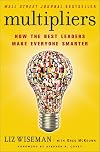
I'm allergic to business books. One reason is that, in telling us how to succeed in business, I worry that they stray into telling us how to live, what kind of character to develop. The latter, I think, is the domain of ethics. Business books, like anything else, can make a claim to discuss ethics, but I think they should be above-board in doing so, and confront objections from dimensions of life other than business. And I think we should resist cultural tendencies to conflate success in show more business with success as a person, or being a "good" person.
All that said, the reason I was drawn to this book was that it sounded like it appealed to my own ethical choices. I want to be a "multiplier". I want to be the kind of person who respects and enables the autonomous creativity of others. If I'm ever the smartest person in the room, I want someone else to get smarter, real quick.
What this book does is break down that idea of a "multiplier" into five different virtues or "disciplines" -- talent magnet, liberator, challenger, debate maker, and investor. Not everyone is going to be good or great at each one -- in fact, the authors' research indicates that more effective multipliers excel at up to three of those disciplines, not all five. They tell stories of hero multipliers to illustrate each, and they abstract out guidance on how to develop yourself in each of the five areas.
Overall, I think it's a good practical book, not just on leadership, but on self-development.
One odd thought -- books like this are written to help "leaders" develop their "leadership" skills. Not everybody is a leader, in a hierarchical sense. And the hierarchy is bigger at the bottom. But everyone should be a "multiplier", shouldn't they? How would this be written differently, if written from that perspective? How does a good team member make the team smarter? I think, in much the same ways as "leaders" do. But I guess the book market is made up for aspiring "leaders", not aspiring "teammates". show less
All that said, the reason I was drawn to this book was that it sounded like it appealed to my own ethical choices. I want to be a "multiplier". I want to be the kind of person who respects and enables the autonomous creativity of others. If I'm ever the smartest person in the room, I want someone else to get smarter, real quick.
What this book does is break down that idea of a "multiplier" into five different virtues or "disciplines" -- talent magnet, liberator, challenger, debate maker, and investor. Not everyone is going to be good or great at each one -- in fact, the authors' research indicates that more effective multipliers excel at up to three of those disciplines, not all five. They tell stories of hero multipliers to illustrate each, and they abstract out guidance on how to develop yourself in each of the five areas.
Overall, I think it's a good practical book, not just on leadership, but on self-development.
One odd thought -- books like this are written to help "leaders" develop their "leadership" skills. Not everybody is a leader, in a hierarchical sense. And the hierarchy is bigger at the bottom. But everyone should be a "multiplier", shouldn't they? How would this be written differently, if written from that perspective? How does a good team member make the team smarter? I think, in much the same ways as "leaders" do. But I guess the book market is made up for aspiring "leaders", not aspiring "teammates". show less
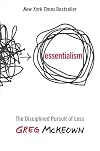
tl;dr the rubber truly fails to meet the road in this book. I learned more about Essentialism from John Muir than I have from this guy. Give it a pass.
I'm going to just give up on even trying to read anything "motivational." Thank goodness I got this from the library, and didn't waste any money on it.
It's ironic that there's a chapter of this bloated tome called "Edit: The Invisible Art," wherein our author goes on, and on, and on, about film editing. Too bad the author does not have equal show more respect for book editors, because he really could have used one to "make it hard not to see what's important because she eliminates everything but the elements that absolutely need to be there." (complete with gendered pronoun, I just can't even.) The (bad, innacurate) descriptions of what an editor does go on for *pages*. Hello, thanks for illustrating the total opposite of what you were meant to be saying there. I bet whomever edited this thing sobbed quietly into a hankie and vented to their colleagues over vast quantities of alcoholic beverages.
This is just another one of those cobbled-together books of endless namedropping about the habits of highly privileged white people. You want to talk about focus, about essentialism? How about you talk to a single mother. You want to talk about people who know how to cut to the bone over and over? Talk to a person of color in America. You want to talk about people who have figured out how to be tenacious about the elements of success? Talk to women. But for love of all things glittery, STOP with the endless brownnosing of the rich and famous, who have literally no skin in the essentialist game. Are you serious here about telling me how noble Bill Gates is for taking two weeks off every year to just think? How many people would get their asses fired for that? Sing it with me, p-r-i-v-i-l-e-g-e.
And I swear, I have not yet read one of these books that wasn't neck-deep in capitalist drivel. News flash; if you, dear author, truly "read something from classic literature (not a blog, or the newspaper, or the latest beach novel) for the first twenty minutes of the day. Not only does this squash my previous tendency to check my e-mail [sic, with the hyphen already] as soon as I wake up, it centers my day...My preference is for inspirational literature, though such a choice is a personal one. But for the interested, here are some to consider:" (and then he fills in with a really half-assed list of religious texts.) ... maybe, just maybe, you should have figured out that capitalist acquisition of wealth is maybe just maybe not the highest of aspirations for your Essentialist life? Maybe? It's wholly depressing that this guy has spent the first 20 minutes of his day for who knows how long reading the great stories of humanity, and has yet somehow utterly failed to take away anything from it but a thinly-modified prosperity gospel. show less
I'm going to just give up on even trying to read anything "motivational." Thank goodness I got this from the library, and didn't waste any money on it.
It's ironic that there's a chapter of this bloated tome called "Edit: The Invisible Art," wherein our author goes on, and on, and on, about film editing. Too bad the author does not have equal show more respect for book editors, because he really could have used one to "make it hard not to see what's important because she eliminates everything but the elements that absolutely need to be there." (complete with gendered pronoun, I just can't even.) The (bad, innacurate) descriptions of what an editor does go on for *pages*. Hello, thanks for illustrating the total opposite of what you were meant to be saying there. I bet whomever edited this thing sobbed quietly into a hankie and vented to their colleagues over vast quantities of alcoholic beverages.
This is just another one of those cobbled-together books of endless namedropping about the habits of highly privileged white people. You want to talk about focus, about essentialism? How about you talk to a single mother. You want to talk about people who know how to cut to the bone over and over? Talk to a person of color in America. You want to talk about people who have figured out how to be tenacious about the elements of success? Talk to women. But for love of all things glittery, STOP with the endless brownnosing of the rich and famous, who have literally no skin in the essentialist game. Are you serious here about telling me how noble Bill Gates is for taking two weeks off every year to just think? How many people would get their asses fired for that? Sing it with me, p-r-i-v-i-l-e-g-e.
And I swear, I have not yet read one of these books that wasn't neck-deep in capitalist drivel. News flash; if you, dear author, truly "read something from classic literature (not a blog, or the newspaper, or the latest beach novel) for the first twenty minutes of the day. Not only does this squash my previous tendency to check my e-mail [sic, with the hyphen already] as soon as I wake up, it centers my day...My preference is for inspirational literature, though such a choice is a personal one. But for the interested, here are some to consider:" (and then he fills in with a really half-assed list of religious texts.) ... maybe, just maybe, you should have figured out that capitalist acquisition of wealth is maybe just maybe not the highest of aspirations for your Essentialist life? Maybe? It's wholly depressing that this guy has spent the first 20 minutes of his day for who knows how long reading the great stories of humanity, and has yet somehow utterly failed to take away anything from it but a thinly-modified prosperity gospel. show less
Essentialism: The Disciplined Pursuit of Less by Greg McKeown offers encouragement and guidance to approach life from a direction that focuses on what is essential instead of trying to do/be everything. I had been looking forward to reading this book so much I almost started it when it arrived even though I was reading 4 or 5 other books at the time... Yes, I needed a lesson in essentialism. McKeown writes in an easy to understand format and presents some ideas that are quite relatable, yet show more I couldn't help but feel like this book is written from a place of privilege and therefore isn't as universal as it seems. When McKeown offers the example of a CEO whose doctor suggested he take a year off to address his health issues, I guffawed. Seriously? Who can actually do that? I can't even imagine a doctor making that suggestion. This is only one example of the privilege bleeding off the pages in the anecdotes he shares to make his points. I kept wondering who picks up the slack for the person who decides something isn't essential but that thing still has to get done. Maybe this is because that's my experience in life. I have often been the one left to clean up the messes of people who have decided something isn't important enough for them to do even though it has to get done. The idea presented in the book seemed to be that if it isn't essential to your goals, it isn't essential, but that's just not always reality. What's essential to one person might not be to another, and what isn't essential to one person might be absolutely essential to another. Granted he also often talks about the benefits of determining what's essential to a team's goal(s) in a job setting. Essentialism also offered some insights into the pitfalls of looking busy, feeling busy, and creating busy-ness because of an inability to focus on what is essential. He presents the idea of questioning doing things that don't contribute to one's overall goals in life in way that makes it feel like common sense. As a general concept, I like the idea of essentialism and I even like this book for the most part, but I think much of it is more aspirational than realistic. So, to be honest, my reaction to Essentialism is really mixed. I really wanted to love Essentialism, but I didn't quite make it there. I definitely didn't hate it either. I like Essentialism enough that I would recommend it but with the caveat that it doesn't apply to everyone equally. All that said, I am excited about applying some of concepts to scheduling my work and my life, and I recognize that my ability to do that means I have a certain amount of privilege in my life that some people don't have. show less
"Do Less. Only Better."
I've had Essentialism on my list of books to read for quite a while. Still, it wasn't until I received it as a welcome gift from my Mastermind facilitator that I finally put reading it at the top of my priority list. In addition, I've been listening to Greg McKeown's podcast for the past few months. While I was familiar with his approach to simplifying and prioritizing, I appreciated the book's in-depth examination of taking the concepts and integrating them show more practically into my own life.
One message that really stuck with me was being invited to answer this question: "If you could be excellent at just one thing, what would it be?" As someone who often flitters from one interest to another, one hobby to another, one business to another, being asked this question was both confronting and challenging. And yet, it also brought a measure of relief. Understanding that I didn't have to do everything - or be excellent at everything - forced me to name the essential areas of my life. Then I could acknowledge that most things I currently spend my time on frankly don't matter.
This kind of single-minded pursuit of the essential will be an ongoing process, but one that's so worth it in the long run. show less
I've had Essentialism on my list of books to read for quite a while. Still, it wasn't until I received it as a welcome gift from my Mastermind facilitator that I finally put reading it at the top of my priority list. In addition, I've been listening to Greg McKeown's podcast for the past few months. While I was familiar with his approach to simplifying and prioritizing, I appreciated the book's in-depth examination of taking the concepts and integrating them show more practically into my own life.
One message that really stuck with me was being invited to answer this question: "If you could be excellent at just one thing, what would it be?" As someone who often flitters from one interest to another, one hobby to another, one business to another, being asked this question was both confronting and challenging. And yet, it also brought a measure of relief. Understanding that I didn't have to do everything - or be excellent at everything - forced me to name the essential areas of my life. Then I could acknowledge that most things I currently spend my time on frankly don't matter.
This kind of single-minded pursuit of the essential will be an ongoing process, but one that's so worth it in the long run. show less
Lists
Awards


You May Also Like


Statistics
- Works
- 8
- Members
- 4,037
- Popularity
- #6,231
- Rating
- 3.7
- Reviews
- 83
- ISBNs
- 91
- Languages
- 15
- Favorited
- 1