
Ryan Holiday
Author of The Daily Stoic: 366 Meditations on Wisdom, Perseverance, and the Art of Living
About the Author
Ryan Holiday dropped out of college at the age of 19 to apprentice under author Robert Greene. He went on to advise many bestselling authors and multiplatinum musicians, and served as director of marketing at American Apparel. He is the author of several books including Trust Me I'm Lying, Ego Is show more the Enemy, The Daily Stoic: 366 Meditations on Wisdom, Perseverance, and the Art of Living (co-written with Stephan Hanselman), and Perennial Seller: The Art of Making and Marketing Work That Lasts. (Bowker Author Biography) show less
Series
Works by Ryan Holiday
The Daily Stoic: 366 Meditations on Wisdom, Perseverance, and the Art of Living (2016) 2,263 copies, 17 reviews
The Obstacle Is the Way: The Timeless Art of Turning Trials into Triumph (2014) 2,180 copies, 44 reviews
Courage Is Calling: Fortune Favors the Brave (The Stoic Virtues Series) (2019) 440 copies, 9 reviews
Conspiracy: Peter Thiel, Hulk Hogan, Gawker, and the Anatomy of Intrigue (2002) 324 copies, 10 reviews
The Daily Stoic Journal: 366 Days of Writing and Reflection on the Art of Living (2017) 262 copies, 2 reviews
Right Thing, Right Now: Good Values. Good Character. Good Deeds. (The Stoic Virtues Series) (2024) 238 copies, 4 reviews
Growth Hacker Marketing: A Primer on the Future of PR, Marketing, and Advertising (2013) 235 copies, 3 reviews
The Daily Dad: 366 Meditations on Parenting, Love, and Raising Great Kids (2023) 123 copies, 1 review
The Way, the Enemy, and the Key: A Boxed Set of The Obstacle is the Way, Ego is the Enemy & Stillness is the Key (2020) 38 copies
Diário estoico: 366 lições sobre sabedoria, perseverança e a arte de viver (Portuguese Edition) 3 copies, 1 review
EGOJA ËSHTË ARMIKU 2 copies
Ryan Holiday Collection 3 Books Set (The Daily Stoic, The Daily Stoic Journal [Hardcover], The Obstacle is the Way) (2019) 2 copies
Rodzicielstwo na każdy dzień roku. 366 medytacji na temat miłości i wychowywania wspaniałych dzieci 1 copy
Disciplina je temelj 1 copy
El obstáculo es el camino 1 copy
O Tim e o Tesouro 1 copy
L'OBSTACLE EST LE CHEMIN. 1 copy
GUXIMI ESHTE THIRRJA 1 copy
Ryan Holiday Collection 4 Books Set (The Obstacle is the Way, Ego is the Enemy, The Daily Stoic, Perennial Seller) (2020) 1 copy
Ryan Holiday 3 Books Collection Set (Ego Is The Enemy, The Obstacle Is The Way, Stillness Is The Key Hardcover) (2020) 1 copy
Agenda de Diario para estoicos (Ed. limitada 2024): 366 días de escritura y reflexión sobre el arte de vivir (SIN COLECCION) (2023) 1 copy
O pai estoico. Uma reflexao por dia sobre paternidade amor e como criar filhos incriveis (Em Portugues do Brasil) (2019) 1 copy
Disciplina é destino [Discipline Is Destiny]: O poder do autocontrole [The Power of Self-Control] 1 copy
QETËSIA ËSHTË ÇELËSI 1 copy
Tagged
Common Knowledge
- Birthdate
- 1987-06-16
- Gender
- male
- Education
- University of California, Riverside (dropped out)
- Occupations
- marketer
author
entrepreneur
newspaper columnist - Nationality
- USA
- Birthplace
- Sacramento, California, USA
- Places of residence
- Austin, Texas, USA
- Map Location
- California, USA
Members
Reviews
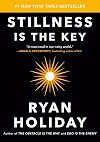
This is my first book by Ryan Holiday, and I must say, I'm not overly impressed. The book wavers back and forth between insightful and inane. There is some useful advice, to be sure, including the benefits of being fully present, limiting inputs to prevent information overload, cultivating silence, turning off your cell-phone, and embracing the Stoic virtues of optimism, honesty, courage, justice, toleration, gratitude, and wisdom. This is all good advice, if not necessarily original or show more better covered by other Stoic philosophers.
But it is into the second part of the book where it all starts to fall apart, leading up to the cliche-fest that is the chapter titled “Accepting a Higher Power.” I get the unfortunate impression that Holiday doesn’t understand the difference between religion and philosophy. For someone supposedly well-versed in the practice of Stoicism, talk of “surrendering to a higher power” is entirely antithetical to the philosophy. Stoicism teaches us that the greatest goods are reason and virtue, and that the cultivation of virtue is entirely independent of anything external to ourselves and the people around us.
Holiday writes, “There is no stillness to the mind that thinks of nothing but itself.” This is supposed to imply that some sort of religious faith in a higher power is necessary for a meaningful life, as if a sense of awe cannot be achieved by, for example, looking through the Hubble Space Telescope, or that actually helping other people isn’t a better way to be selfless than praying. I’ll admit that I’m growing tired of reading authors projecting their own psychology into the text and assuming that those lacking religious faith are selfish and miserable. Science and humanism are enough for me, and for many other Stoics, humanists, atheists, and agnostics, thank you.
Holiday also betrays his lack of training as a professional philosopher when he insists, more than once, that if many different people believed something in the past, it must be true. This “appeal to the bandwagon” fallacy is constantly repeated, with the implication that because belief in a deity was widespread in the past that it must be true. As Holiday writes, “That was the story with Lincoln. Like many smart young people, he was an atheist early in life, but the trials of adulthood, especially the loss of his son and the horrors of the Civil War, turned him into a believer.” It’s interesting to note that Holiday doesn’t mention David Hume, Bertrand Russell, Jeremey Bentham, John Stuart Mill, Denis Diderot, John Dewey, and most contemporary philosophers and scientists that were or are atheists. (Diderot and Russell didn’t have easy lives, both being imprisoned for their beliefs. But neither “smart young person” recanted their atheism later in life.)
And here’s some condescension for you: Holiday writes, in the chapter on accepting a higher power, “Perhaps you’re not ready to do that, to let anything into your heart. That’s okay. There’s no rush. Just know that this step is open to you. It’s waiting. And it will help restore you to sanity when you’re ready.”
If you enjoy being talked down to like this, you’ll love the book!
The structure of the book is also somewhat redundant. It’s broken up into three parts: mind, spirit, and body. However, the chapters titled “Say No” and “Seek Solitude” in the body section are largely a repeat of the chapters titled “Limit Your Inputs” and “Cultivate Silence” in the mind section. There is, in fact, a lot of redundancy found throughout the book, along with a large dose of empty phrases with little substance.
There are, to be fair, some redeeming qualities. The numerous biographical details are interesting, and, again, there is some genuinely good advice, particularly when Holiday sticks closest to Stoicism. However, this is not something I could recommend. I think you’d be better off reading the classics of Stoicism or contemporary philosophers specializing in Stoicism like Massimo Pigliucci. show less
But it is into the second part of the book where it all starts to fall apart, leading up to the cliche-fest that is the chapter titled “Accepting a Higher Power.” I get the unfortunate impression that Holiday doesn’t understand the difference between religion and philosophy. For someone supposedly well-versed in the practice of Stoicism, talk of “surrendering to a higher power” is entirely antithetical to the philosophy. Stoicism teaches us that the greatest goods are reason and virtue, and that the cultivation of virtue is entirely independent of anything external to ourselves and the people around us.
Holiday writes, “There is no stillness to the mind that thinks of nothing but itself.” This is supposed to imply that some sort of religious faith in a higher power is necessary for a meaningful life, as if a sense of awe cannot be achieved by, for example, looking through the Hubble Space Telescope, or that actually helping other people isn’t a better way to be selfless than praying. I’ll admit that I’m growing tired of reading authors projecting their own psychology into the text and assuming that those lacking religious faith are selfish and miserable. Science and humanism are enough for me, and for many other Stoics, humanists, atheists, and agnostics, thank you.
Holiday also betrays his lack of training as a professional philosopher when he insists, more than once, that if many different people believed something in the past, it must be true. This “appeal to the bandwagon” fallacy is constantly repeated, with the implication that because belief in a deity was widespread in the past that it must be true. As Holiday writes, “That was the story with Lincoln. Like many smart young people, he was an atheist early in life, but the trials of adulthood, especially the loss of his son and the horrors of the Civil War, turned him into a believer.” It’s interesting to note that Holiday doesn’t mention David Hume, Bertrand Russell, Jeremey Bentham, John Stuart Mill, Denis Diderot, John Dewey, and most contemporary philosophers and scientists that were or are atheists. (Diderot and Russell didn’t have easy lives, both being imprisoned for their beliefs. But neither “smart young person” recanted their atheism later in life.)
And here’s some condescension for you: Holiday writes, in the chapter on accepting a higher power, “Perhaps you’re not ready to do that, to let anything into your heart. That’s okay. There’s no rush. Just know that this step is open to you. It’s waiting. And it will help restore you to sanity when you’re ready.”
If you enjoy being talked down to like this, you’ll love the book!
The structure of the book is also somewhat redundant. It’s broken up into three parts: mind, spirit, and body. However, the chapters titled “Say No” and “Seek Solitude” in the body section are largely a repeat of the chapters titled “Limit Your Inputs” and “Cultivate Silence” in the mind section. There is, in fact, a lot of redundancy found throughout the book, along with a large dose of empty phrases with little substance.
There are, to be fair, some redeeming qualities. The numerous biographical details are interesting, and, again, there is some genuinely good advice, particularly when Holiday sticks closest to Stoicism. However, this is not something I could recommend. I think you’d be better off reading the classics of Stoicism or contemporary philosophers specializing in Stoicism like Massimo Pigliucci. show less

In the introduction to this book, Holiday makes this statement: "[I attempted] to make something more than just some work of contemporary long-form journalism or some chronological retelling of events by a disinterested observer (which I am not)." And then a few pages later, makes this contradictory statement: "In the meantime and for the record, I simply present what happened." I should have known what I was in for.
This book is very much a lionization of Peter Thiel. Holiday repeatedly show more avoids making judgments on what Thiel did, but simultaneously portrays Thiel as heroic. While at a private dinner party at Thiel's home after the trial, Holiday follows him on to the balcony and muses, "I stood a few paces behind and felt myself recalling the line from Hamlet: 'He was a man, take him for all in all, I shall not look upon his like again.'"
We are presented with a man who seeks revenge on someone who did him wrong, and ruminates, plots, and plans for 10 years, before finally slaying his nemesis; and yet we are expected to see him as someone who has seen a wrong in the world and righted it. Post hoc rationalizations and dehumanization of his opponent allow him to turn a personal grudge into a mission to make the world a better place. "'I came to believe that the nastiness of the internet was not a function of a technology or various things that have gone wrong, but the function of one particularly nasty media company led by a particularly sociopathic individual and that if I defeated Gawker, it would actually change the media landscape,' Thiel would say." To which my only response can be: How'd that work out, 5 years later? Is the media landscape a better place?
Holiday sees it this way: "what is indisputable is that he saw his actions as a kind of social good and there is something to be admired in that." How many evil acts in human history were committed by people who saw their actions as a kind of social good? Is there something to be admired in those as well?
I don't particularly care about Gawker, nor do I particularly care about Thiel. And I'm not even looking at the implications of a billionaire destroying a media outlet because he didn't like what they wrote about him. For this review, I'm just concerned about the book. It feels dishonest. As much as Holiday tries to act like he has no opinion of Thiel's actions, I think he's just maybe too timid to express his opinion directly. Instead, he writes things like this: "The line from the Obamas was 'When they go low, we go high.' It’s a dignified and impressive mantra, if only because for the most part, whether you liked them or not, it’s hard to deny that they followed it. But the now cliché remark should not be taken conclusively, for it makes one dangerous omission. It forgets that from time to time in life, we might have to take someone out behind the woodshed." show less
This book is very much a lionization of Peter Thiel. Holiday repeatedly show more avoids making judgments on what Thiel did, but simultaneously portrays Thiel as heroic. While at a private dinner party at Thiel's home after the trial, Holiday follows him on to the balcony and muses, "I stood a few paces behind and felt myself recalling the line from Hamlet: 'He was a man, take him for all in all, I shall not look upon his like again.'"
We are presented with a man who seeks revenge on someone who did him wrong, and ruminates, plots, and plans for 10 years, before finally slaying his nemesis; and yet we are expected to see him as someone who has seen a wrong in the world and righted it. Post hoc rationalizations and dehumanization of his opponent allow him to turn a personal grudge into a mission to make the world a better place. "'I came to believe that the nastiness of the internet was not a function of a technology or various things that have gone wrong, but the function of one particularly nasty media company led by a particularly sociopathic individual and that if I defeated Gawker, it would actually change the media landscape,' Thiel would say." To which my only response can be: How'd that work out, 5 years later? Is the media landscape a better place?
Holiday sees it this way: "what is indisputable is that he saw his actions as a kind of social good and there is something to be admired in that." How many evil acts in human history were committed by people who saw their actions as a kind of social good? Is there something to be admired in those as well?
I don't particularly care about Gawker, nor do I particularly care about Thiel. And I'm not even looking at the implications of a billionaire destroying a media outlet because he didn't like what they wrote about him. For this review, I'm just concerned about the book. It feels dishonest. As much as Holiday tries to act like he has no opinion of Thiel's actions, I think he's just maybe too timid to express his opinion directly. Instead, he writes things like this: "The line from the Obamas was 'When they go low, we go high.' It’s a dignified and impressive mantra, if only because for the most part, whether you liked them or not, it’s hard to deny that they followed it. But the now cliché remark should not be taken conclusively, for it makes one dangerous omission. It forgets that from time to time in life, we might have to take someone out behind the woodshed." show less
Right Thing, Right Now: Good Values. Good Character. Good Deeds. (The Stoic Virtues Series) by Ryan Holiday
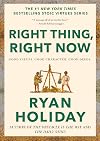
This one caught me by surprise in a good way! I’ve read Ryan Holiday’s blog for awhile now. We share loves of reading, lifelong learning, curiosity, and indie bookstores, but I knew our reading tastes and interests were and are very different.
I was aware much of his writing was centered on stoic teachings and either because of Ryan or coincidentally felt like I was seeing Marcus Aurelius’ Meditations everywhere recently. I’d never read it, decided to, and sorrynotsorry to say that show more it took me forever to get through it because I kept falling asleep re-reading the same passages.
So. When I saw this book in the new NF section of my library, I thought I’d give it a go. And…I wasn’t bored at all. I like history and the short anecdotes that illustrate his points on living justly were long enough to keep my interest. It wasn’t pretentious or preachy (and it could have been either or both) and it was accessibly challenging with the challenge stemming from acting on it, not on understanding the author’s point. It’s organized in three sections: me, we, all.
Me focuses on the self - making the ‘right’ personal choice even when it’s hard, nobody seems to be looking, few others are, and/or there’s a personal cost.
We focuses on how we treat others, elevating them over self and protect the weaker/vulnerable, etc.
All focuses on doing right/living justly as a legacy that both honors our collective past and leaves a legacy for those to come.
Of the themes in this series, justice/personal integrity happened to be the right one for me to pick up, too. As the author says, it’s the ‘cornerstone’ of the cardinal virtues and it’s the one I personally aspire to (and probably fall far short of) most.
Highly recommended - I took notes and bumped this to favorite status. Don’t know if I’ll read more in the series or of the author, but I’m very glad to have given this a try and invested the time.
Recommended if you’re a history buff, into stoic teachings and philosophy, or looking for an accessible, modern, and approachable ethics text. There’s a lot here and it’s definitely worth the reading time. show less
I was aware much of his writing was centered on stoic teachings and either because of Ryan or coincidentally felt like I was seeing Marcus Aurelius’ Meditations everywhere recently. I’d never read it, decided to, and sorrynotsorry to say that show more it took me forever to get through it because I kept falling asleep re-reading the same passages.
So. When I saw this book in the new NF section of my library, I thought I’d give it a go. And…I wasn’t bored at all. I like history and the short anecdotes that illustrate his points on living justly were long enough to keep my interest. It wasn’t pretentious or preachy (and it could have been either or both) and it was accessibly challenging with the challenge stemming from acting on it, not on understanding the author’s point. It’s organized in three sections: me, we, all.
Me focuses on the self - making the ‘right’ personal choice even when it’s hard, nobody seems to be looking, few others are, and/or there’s a personal cost.
We focuses on how we treat others, elevating them over self and protect the weaker/vulnerable, etc.
All focuses on doing right/living justly as a legacy that both honors our collective past and leaves a legacy for those to come.
Of the themes in this series, justice/personal integrity happened to be the right one for me to pick up, too. As the author says, it’s the ‘cornerstone’ of the cardinal virtues and it’s the one I personally aspire to (and probably fall far short of) most.
Highly recommended - I took notes and bumped this to favorite status. Don’t know if I’ll read more in the series or of the author, but I’m very glad to have given this a try and invested the time.
Recommended if you’re a history buff, into stoic teachings and philosophy, or looking for an accessible, modern, and approachable ethics text. There’s a lot here and it’s definitely worth the reading time. show less
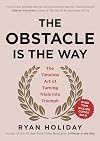
This is a trite, flippant book that does a great disservice to the deep philosophy of the stoics. Replete with references to tycoons and millionaires, it is largely self-help in perky, upbeat, you-can-do-it, rah-rah language. The essential premise of stoicism--that sometimes the only choice you have when you are faced with a dire situation is the attitude or philosophy of acceptance that you can bring to it--has been warped into "there is nothing either good or bad, but thinking makes it show more so." Just because Hamlet makes this statement, it doesn't mean that Shakespeare was a moral relativist, or that he was advocating that we should be. The hard things that happen in the world do not occur for our own personal growth and "journeys".
Ryan Holiday is apparently known for another popular work (which some have found a bit chilling) Trust Me, I'm Lying. I didn't trust Holiday for a minute here with his Tony Robbins-like exhortations and his superficial glossing over in chipper staccato prose of life's real hardships and injustices. One's attitude and perception do need to be wrestled with in times of great pain and hardship, but such events don't occur to make us better people.
I do not recommend this formulaic piece of self-help schlock. Avoid it! show less
Ryan Holiday is apparently known for another popular work (which some have found a bit chilling) Trust Me, I'm Lying. I didn't trust Holiday for a minute here with his Tony Robbins-like exhortations and his superficial glossing over in chipper staccato prose of life's real hardships and injustices. One's attitude and perception do need to be wrestled with in times of great pain and hardship, but such events don't occur to make us better people.
I do not recommend this formulaic piece of self-help schlock. Avoid it! show less
Lists
Awards


You May Also Like


Associated Authors
Statistics
- Works
- 70
- Members
- 10,824
- Popularity
- #2,193
- Rating
- 3.9
- Reviews
- 170
- ISBNs
- 252
- Languages
- 22
- Favorited
- 8