
Ray Dalio
Author of Principles: Life and Work
About the Author
Ray Dalio is an American investor, hedge fund manager, and philanthropist. He began investing at age 12, when he bought shares of Northeast Airlines for $300 and tripled his investment. Dalio received a bachelor's degree in finance from Long Island University and an MBA from Harvard Business show more School. In 1975, he founded the Westport, Connecticut based investment management firm, Bridgewater Associates which in 2012 became the largest hedge fund in the world, as it is today, with over $160 billion in assets under management, as of October 2014. show less
Image credit: 7 November 2018; Ray Dalio, Founder, Co-Chief Investment Officer & Co-Chairman, Bridgewater Associates on the Forum Stage during day two of Web Summit 2018 at the Altice Arena in Lisbon, Portugal. Photo by Harry Murphy/Web Summit via Sportsfile
Works by Ray Dalio
Principles for Dealing with the Changing World Order: Why Nations Succeed and Fail (2021) 718 copies, 10 reviews
Principles: Your Guided Journal (Create Your Own Principles to Get the Work and Life You Want) (2022) 34 copies
Paradigm Shifts 1 copy
Populism: The Phenomenon 1 copy
Tagged
Common Knowledge
- Canonical name
- Dalio, Ray
- Legal name
- Dalio, Raymond Thomas
- Birthdate
- 1949-08-08
- Gender
- male
- Education
- C. W. Post College (BS)
Harvard Business School (MBA) - Occupations
- hedge fund manager
- Nationality
- USA
- Birthplace
- New York, New York, USA
- Associated Place (for map)
- New York, USA
Members
Reviews
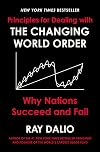
There have been numerous theories on historical cycles. One example is the Strauss and Howe generations theory - Boomers, Millennial, etc. Professional histories tend to discount them. Dalio presents his own theory based on history since the 600s AD. What sets Dalio apart he actually invests in the future and has become a billionaire. It's not a precise guide to investing, more of a hybrid cross discipline with heavy emphasis on macro economics as a driving factor that creates waves of show more prosperity and decline. One such wave was the rise and fall of the British Empire. China has seen many waves. Dalio believes the US is 70% of the way through a wave now entering the final decline period. It's interesting to see how the world's leading hedge fund sees the world, and builds systems to model and predict it. Due to the complexity I don't believe it's practical for an individual to do much with this information, other than maybe spreading investments more globally not all in USD-based assets. Guessing the future is perhaps the greatest game, Dalio has proven to be good at it, a super-predictor, based on data and trends. Even if you disagree with everything he says, you can still learn how to approach the game. show less
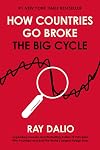
How long can a country continue to incur more debt just to service its existing debt? Very roughly 80 years, says investment expert Ray Dalio, and he reckons that the US's current such Big Debt Cycle began in 1945. A typical BDC is far more complex than my opening question suggests, and it progresses through various stages in which sound money gets replaced by fiat money, debt bubbles build up and finally burst, and so forth. The book describes the stages in great detail, making much use of show more multicolored charts and tables. In the last section, it suggests fiscal and monetary ways to stabilize the US's mammoth debt. It warns that, if this is not done and there's no eventual deleveraging that "beautifully" combines both inflationary and deflationary measures, the current BDC could end with horrific cataclysms such as war. The book sorely needs an index, which, for one thing, could help people try to resolve various confusions and ambiguities. Dalio gives casual readers plenty of permission to skip the sections that are aimed mostly at professionals. In fact, *all* the sections have a mixture of boldface text and plain text, and he is OK with many readers opting to read only the boldface parts. Still, the going is not easy. Perhaps "the dismal science" really is the right nickname for economics. show less
The first hundred pages I read very closely. I skimmed the rest.
Dalio is an obsessively competitive person and he carefully architects how he succeeds.
His mental discipline for success is extremely rigorous, I'll say impossible.
For all the billions of dollars he has earned I don't understand what tangible assets he's created.
This book may be the wrong source for what I seek.
Dalio compares himself to Steve Jobs. Jobs developed computer devices that expand and enrich the lives of millions show more of people. Dalio managed the most successful hedge fund making rich people richer. Both are wealthy and Jobs created thousands of jobs and enriched consumers lives, I don't know what Dalio invented, it's all advanced mathematics of hedge funds. A few thousand people work at Dalio's Bridgewater Capital. All the clients are American elites.
While Steve Jobs' iPhone is used by rural Chinese.
I think Dalio's goals are contribute to making excessive greed an admirable quality in the USA. His competitive nature makes for a life filled with success and no meaning.
If you are ultra competitive, greedy alpha perfectionist, this is the book for you.
I'm an artist who seeks beauty and meaning, so this book rates low on my scale. show less
Dalio is an obsessively competitive person and he carefully architects how he succeeds.
His mental discipline for success is extremely rigorous, I'll say impossible.
For all the billions of dollars he has earned I don't understand what tangible assets he's created.
This book may be the wrong source for what I seek.
Dalio compares himself to Steve Jobs. Jobs developed computer devices that expand and enrich the lives of millions show more of people. Dalio managed the most successful hedge fund making rich people richer. Both are wealthy and Jobs created thousands of jobs and enriched consumers lives, I don't know what Dalio invented, it's all advanced mathematics of hedge funds. A few thousand people work at Dalio's Bridgewater Capital. All the clients are American elites.
While Steve Jobs' iPhone is used by rural Chinese.
I think Dalio's goals are contribute to making excessive greed an admirable quality in the USA. His competitive nature makes for a life filled with success and no meaning.
If you are ultra competitive, greedy alpha perfectionist, this is the book for you.
I'm an artist who seeks beauty and meaning, so this book rates low on my scale. show less
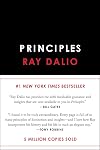
Ray Dalio became famous through founding and building his company Bridgewater Associates into an economic powerhouse over decades. Of course, many became interested in how he did it. This book narrates his personal story, but it does more. He ran his company through a series of principles as if it were a machine he and his associates built. This book also chronicles those principles at length to communicate Dalio's and Bridgewater's vision of how a good company operates.
The foundation for show more Dalio's principles lie in "meaningful work and meaningful relationships." Interestingly for an investment firm, money is merely an instrument towards those ends. Of course, he is realistic about the challenges of running a company, but he claims to be value-based and demonstrates that ethic through his philosophies.
To extrapolate from that foundation, he uses "radical truth and radical transparency" to build an "idea meritocracy." He pusshes good ideas to rise to the front, regardless of an employee's rank. He hopes to avoid an autocracy or democracy in the decision-making process. Instead of making only those in power feel good or having everyone vote about what feels good, he wants to place maximal pressure on producing profitable ideas that help people. Through the principles or company rules, he illustrates how he's not afraid of aggressively pursuing those ends even when it hurts or creates conflict.
This book offers a contrast to an ego-driven pursuit of power. It shows how to run an organization that makes maximal use of smart people's ideas. Not everyone wants to run a company, but most motivated folks want to use their hard-wrought talents towards noble ends. Managers and organizational leaders who want to help people - and help others help people - while earning a profit should pay attention. show less
The foundation for show more Dalio's principles lie in "meaningful work and meaningful relationships." Interestingly for an investment firm, money is merely an instrument towards those ends. Of course, he is realistic about the challenges of running a company, but he claims to be value-based and demonstrates that ethic through his philosophies.
To extrapolate from that foundation, he uses "radical truth and radical transparency" to build an "idea meritocracy." He pusshes good ideas to rise to the front, regardless of an employee's rank. He hopes to avoid an autocracy or democracy in the decision-making process. Instead of making only those in power feel good or having everyone vote about what feels good, he wants to place maximal pressure on producing profitable ideas that help people. Through the principles or company rules, he illustrates how he's not afraid of aggressively pursuing those ends even when it hurts or creates conflict.
This book offers a contrast to an ego-driven pursuit of power. It shows how to run an organization that makes maximal use of smart people's ideas. Not everyone wants to run a company, but most motivated folks want to use their hard-wrought talents towards noble ends. Managers and organizational leaders who want to help people - and help others help people - while earning a profit should pay attention. show less
Lists
Awards


You May Also Like


Statistics
- Works
- 24
- Members
- 3,324
- Popularity
- #7,696
- Rating
- 4.0
- Reviews
- 38
- ISBNs
- 85
- Languages
- 13
- Favorited
- 1