
Morgan Housel
Author of The Psychology of Money: Timeless Lessons on Wealth, Greed, and Happiness
About the Author
Morgan Housel is a patter at the Collaborative Fund. Previously he was a columnist at The Wall Street Journal and The Motley Fool. He is a two-time winner of the Best in Business Award from the Society of American Business Editors and Writers, the New York Times Sidney Award, and a two-time show more finalist for the Gerald Loeb Award for Distinguished Business Writing. show less
Works by Morgan Housel
The Psychology of Money: Timeless Lessons on Wealth, Greed, and Happiness (2020) 2,626 copies, 55 reviews
The Psychology of Money (Deluxe Limited Edition): Timeless lessons on wealth, greed, and happiness (2025) 16 copies, 2 reviews
Everyone Believes It; Most Will Be Wrong: Motley Thoughts on Investing and the Economy (2011) 12 copies
Lo que nunca cambia: 23 lecciones atemporales para nuestra vida personal y financiera (2024) 6 copies
Paying Attention 1 copy
Book 9788836014484 1 copy
What Makes You Happy 1 copy
Vicious Traps 1 copy
Compounding Optimism 1 copy
Expectations Debt 1 copy
Everything Is Cyclical 1 copy
Brazil at Silicon Valley 1 copy
Psihologia banilor 1 copy
Associated Works
Tagged
Common Knowledge
- Birthdate
- 1990-08-15
- Gender
- male
- Education
- University of Southern California (BA|Economics)
- Occupations
- columnist
analyst - Organizations
- Collaborative Fund
- Nationality
- USA
- Associated Place (for map)
- USA
Members
Reviews
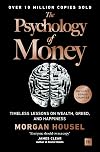
5/5 For this. This is a stunningly readable book about money that refuses to pretend money is mostly math. It is mostly emotion, identity, memory, and the stories you tell yourself when you are scared.
Morgan Housel builds the book out of short chapters and anecdotes, so you never feel trapped in a lecture. The premise is simple and true: financial outcomes are driven less by what you know than by how you behave, and behavior is shaped by your lived experience more than by spreadsheets. He show more keeps returning to the same human mess, from different angles, until it finally clicks.
The best thing here is how clearly he names the invisible forces. Ego. Social comparison. The desire to look rich instead of be secure. The temptation to chase what worked for someone else in a different era, with a different risk tolerance, a different safety net. He has a talent for taking ideas people half understand, like compounding or risk, and making them feel personal. Not inspirational. Personal. The chapters on luck and risk land because he does not turn success into a morality play, and he does not treat failure like proof of bad character. He makes space for randomness, which is the only honest way to talk about markets and life.
His recurring emphasis on “enough” is the spine of the book. The point is not to optimize every dollar. The point is to build a life where you can sleep at night, and where your financial choices serve your values instead of your image. The concept of room for error is especially persuasive, because it acknowledges that most people do not blow up from one dumb decision. They blow up because they left themselves no margin when the world got weird.
One word. Humane.
The downside is that if you want a tight system or step by step tactics, this will feel light. Some chapters read like expanded essays, and a few examples lean heavily American. Still, it delivers. When I was done, I looked at my own money stories with new suspicion, which is the whole point. show less
Morgan Housel builds the book out of short chapters and anecdotes, so you never feel trapped in a lecture. The premise is simple and true: financial outcomes are driven less by what you know than by how you behave, and behavior is shaped by your lived experience more than by spreadsheets. He show more keeps returning to the same human mess, from different angles, until it finally clicks.
The best thing here is how clearly he names the invisible forces. Ego. Social comparison. The desire to look rich instead of be secure. The temptation to chase what worked for someone else in a different era, with a different risk tolerance, a different safety net. He has a talent for taking ideas people half understand, like compounding or risk, and making them feel personal. Not inspirational. Personal. The chapters on luck and risk land because he does not turn success into a morality play, and he does not treat failure like proof of bad character. He makes space for randomness, which is the only honest way to talk about markets and life.
His recurring emphasis on “enough” is the spine of the book. The point is not to optimize every dollar. The point is to build a life where you can sleep at night, and where your financial choices serve your values instead of your image. The concept of room for error is especially persuasive, because it acknowledges that most people do not blow up from one dumb decision. They blow up because they left themselves no margin when the world got weird.
One word. Humane.
The downside is that if you want a tight system or step by step tactics, this will feel light. Some chapters read like expanded essays, and a few examples lean heavily American. Still, it delivers. When I was done, I looked at my own money stories with new suspicion, which is the whole point. show less
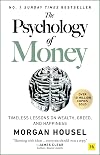
After finishing The Psychology of Money, what stayed with me wasn’t how to make more money—it was realizing that our relationship with money is really a conversation with ourselves.
Morgan Housel isn’t really writing about strategies. He’s writing about human behavior. All those ideas about saving, risk, and compounding ultimately come down to one question: why do we act against our own best judgment, even when we know better?
One line that really stuck with me: “Financial success is show more not a math problem, it’s a behavior problem.”
People often assume that being smarter leads to better financial outcomes. But in reality, those who do well over time are usually not the smartest—they’re the most consistent, and the most emotionally disciplined.
It also made me rethink what “wealth” actually means. It’s not just numbers in an account—it’s optionality. The ability to say no. To walk away from things you don’t want. To avoid making long-term regrets out of short-term pressure.
That said, I do have one tension with the book. It emphasizes patience and rationality, but not everyone has the privilege to wait. For some people, risk isn’t a choice—it’s survival. So maybe there isn’t a single “right” way to approach money.
If there’s one thing I took away, it’s not how to get rich—but how to stay grounded in an uncertain world.
In a way, money is just a projection of our sense of security.
And real freedom might come from not being completely controlled by that projection. show less
Morgan Housel isn’t really writing about strategies. He’s writing about human behavior. All those ideas about saving, risk, and compounding ultimately come down to one question: why do we act against our own best judgment, even when we know better?
One line that really stuck with me: “Financial success is show more not a math problem, it’s a behavior problem.”
People often assume that being smarter leads to better financial outcomes. But in reality, those who do well over time are usually not the smartest—they’re the most consistent, and the most emotionally disciplined.
It also made me rethink what “wealth” actually means. It’s not just numbers in an account—it’s optionality. The ability to say no. To walk away from things you don’t want. To avoid making long-term regrets out of short-term pressure.
That said, I do have one tension with the book. It emphasizes patience and rationality, but not everyone has the privilege to wait. For some people, risk isn’t a choice—it’s survival. So maybe there isn’t a single “right” way to approach money.
If there’s one thing I took away, it’s not how to get rich—but how to stay grounded in an uncertain world.
In a way, money is just a projection of our sense of security.
And real freedom might come from not being completely controlled by that projection. show less
Picked this up at an airport bookstore for travel reading. The Psychology of Money: Timeless Lessons on Wealth, Greed, and Happiness is self-explanatory regarding what this book is about. However, the "psychology" part does not mean that the author goes deeply into topics such as poverty mindsets. It's more about how we behave regarding savings, the stock market, and such. These behaivors are reflected in the many interesting examples in economic history (which mainly covers America in the show more past hundred years or so). It's not an how-to with spreadsheets for us to fill in our budgeting items. Overall, a thought-provoking book, and highly readable, that I would recommend. show less
I’ve long argued that every elementary and high school student in the U.S. should be required to take multiple courses in media literacy and financial literacy (with the emphasis on “multiple.”)
Housel has penned a highly readable, relatable and user-friendly guide that hits on about 20 important principles involving personal finance, acquiring wealth and better understanding our money mindsets. He establishes the book’s premise in the beginning pages: “Doing well with money has a show more little to do with how smart you are and a lot to do with how you behave. And behavior is hard to teach – even to really smart people.” He embraces an intriguing mantra: approach financial literacy not by trying to embrace mathematical principles, but rather trying to grasp psychological principles.
I loved two things about this book. It is organized in 20 self-contained chapters that could actually be read as individual essays – and perused in any order. I also enjoyed the author’s use of vivid anecdotes and analogies. For example, he compares the financial concept of compounding with the physical forces that created our ice ages. In other words, it’s stunning how huge something can grow from relatively tiny chances in conditions over long periods of time.
Given these observations, you may ask why I assigned a decent but not stellar 3.5 rating to this book. Put simply, there were very few “lightbulb moments” for me. That’s no fault of the author. It’s due to the fact that I’ve probably read 30 or so books on personal finance, minored in business (marketing) and spent several years as a business reporter at Buffalo’s daily newspaper. Hence, I’ve explored virtually every important concept that is outlined in this book. But as some savvy reviewers sometimes write, YMMV (your mileage may vary). Folks who haven’t had a ton of exposure to principles involving personal finance, asset management and wealth accumulation might assign a stellar 5-star rating to “The Psychology of Money.” What’s more, if I was a high school instructor who taught financial literary, this book would be a must-read. show less
Housel has penned a highly readable, relatable and user-friendly guide that hits on about 20 important principles involving personal finance, acquiring wealth and better understanding our money mindsets. He establishes the book’s premise in the beginning pages: “Doing well with money has a show more little to do with how smart you are and a lot to do with how you behave. And behavior is hard to teach – even to really smart people.” He embraces an intriguing mantra: approach financial literacy not by trying to embrace mathematical principles, but rather trying to grasp psychological principles.
I loved two things about this book. It is organized in 20 self-contained chapters that could actually be read as individual essays – and perused in any order. I also enjoyed the author’s use of vivid anecdotes and analogies. For example, he compares the financial concept of compounding with the physical forces that created our ice ages. In other words, it’s stunning how huge something can grow from relatively tiny chances in conditions over long periods of time.
Given these observations, you may ask why I assigned a decent but not stellar 3.5 rating to this book. Put simply, there were very few “lightbulb moments” for me. That’s no fault of the author. It’s due to the fact that I’ve probably read 30 or so books on personal finance, minored in business (marketing) and spent several years as a business reporter at Buffalo’s daily newspaper. Hence, I’ve explored virtually every important concept that is outlined in this book. But as some savvy reviewers sometimes write, YMMV (your mileage may vary). Folks who haven’t had a ton of exposure to principles involving personal finance, asset management and wealth accumulation might assign a stellar 5-star rating to “The Psychology of Money.” What’s more, if I was a high school instructor who taught financial literary, this book would be a must-read. show less
Lists
Awards


You May Also Like


Associated Authors
Statistics
- Works
- 26
- Also by
- 1
- Members
- 3,200
- Popularity
- #7,992
- Rating
- 4.1
- Reviews
- 69
- ISBNs
- 80
- Languages
- 19
- Favorited
- 1