Yellowface: A Chilling Novel of Racism and Cultural Appropriation from the author of Katabasis by R. F. Kuang
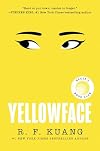
Sharp, messy, and addictive. June is awful, but I couldn’t look away from Kuang’s brutal publishing satire. ⭐⭐⭐⭐
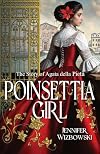
Poinsettia Girl by Jennifer Wizbowski is an emotional and reflective novel that explores themes of identity, family relationships, and personal growth. The story follows a young woman navigating complicated emotions tied to her past while trying to understand where she truly belongs. The overall plot unfolds in a heartfelt and believable way, balancing emotional depth with moments of hope and self discovery. I found the story engaging because the struggles and relationships felt realistic rather than overly dramatic.
The pacing fits the genre of contemporary fiction well. It moves steadily, focusing more on emotional development and character interactions than fast-moving action. The writing is easy to follow and draws readers naturally into the main character’s journey. The character development is especially strong, with the protagonist feeling layered and relatable as she works through difficult memories and changing relationships. Supporting characters also add warmth and realism to the story without overshadowing the main narrative.
I would recommend Poinsettia Girl to readers who enjoy thoughtful, character driven fiction with emotional themes. It is best suited for those who appreciate stories about healing, self discovery, and the complexities of family dynamics.
The pacing fits the genre of contemporary fiction well. It moves steadily, focusing more on emotional development and character interactions than fast-moving action. The writing is easy to follow and draws readers naturally into the main character’s journey. The character development is especially strong, with the protagonist feeling layered and relatable as she works through difficult memories and changing relationships. Supporting characters also add warmth and realism to the story without overshadowing the main narrative.
I would recommend Poinsettia Girl to readers who enjoy thoughtful, character driven fiction with emotional themes. It is best suited for those who appreciate stories about healing, self discovery, and the complexities of family dynamics.
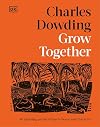
‘Sometimes nature gives hints for successful planting combinations’ – A must-read!
British author Charles Dowding is a celebrated expert on gardening and this book comes out at a particularly appropriate time as we daily observe the clouds of climate change, water shortages, heat and cold waves, and stronger storms that threaten our sustainability. His eleven books to date include ORGANIC GARDENING, and NO DIG (both books surveying his No Dig growing method that unlocks natural soil fertility by unleashing the full power of beneficial soil microbes, maintaining a well-aerated environment that facilitates deep absorption of rainwater and promotes healthy plant growth), GARDENING MYTHS, HOW TO GROW WINTER VEGETABLES, SALAD LEAVES FOR ALL SEASONS, HOW TO CREATE A VEGETABLE GARDEN, and this new book GROW TOGETHER - an excellent collection of color photographs and concise and precise tips on gardening. Dowding’s description for his ‘grow together’ concept - ‘In nature, seedlings rarely start life in bare ground with open spaces between them. Small seedlings benefit from the proximity of neighboring plants. Similarly, growing crops together takes advantage of how plants cooperate, rather than focusing on how they compete.’ His instructions are wise and easy to comprehend and each phase is accompanied by illustrative color photographs of the process described. This book belongs in the library of all home gardeners and would make a perfect gift for friends who need show more to be encouraged to participate in sound ecology! Highly recommended. show less
British author Charles Dowding is a celebrated expert on gardening and this book comes out at a particularly appropriate time as we daily observe the clouds of climate change, water shortages, heat and cold waves, and stronger storms that threaten our sustainability. His eleven books to date include ORGANIC GARDENING, and NO DIG (both books surveying his No Dig growing method that unlocks natural soil fertility by unleashing the full power of beneficial soil microbes, maintaining a well-aerated environment that facilitates deep absorption of rainwater and promotes healthy plant growth), GARDENING MYTHS, HOW TO GROW WINTER VEGETABLES, SALAD LEAVES FOR ALL SEASONS, HOW TO CREATE A VEGETABLE GARDEN, and this new book GROW TOGETHER - an excellent collection of color photographs and concise and precise tips on gardening. Dowding’s description for his ‘grow together’ concept - ‘In nature, seedlings rarely start life in bare ground with open spaces between them. Small seedlings benefit from the proximity of neighboring plants. Similarly, growing crops together takes advantage of how plants cooperate, rather than focusing on how they compete.’ His instructions are wise and easy to comprehend and each phase is accompanied by illustrative color photographs of the process described. This book belongs in the library of all home gardeners and would make a perfect gift for friends who need show more to be encouraged to participate in sound ecology! Highly recommended. show less
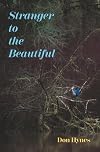
"Stranger to the Beautiful" by Don Hynes is a beautiful collection of poetic expressions that evokes a sense of calm. I explored poems that find beauty in simple things from nature. The poems explore different aspects of nature, including rain, birds, and trees. It also emphasizes the significance of quiet moments, making the reader feel peaceful and connected. Additionally, the book talks about real emotions like sadness, getting older, and feeling tired, but it slowly brings a sense of hope and comfort. Even when the poems feel a little heavy, they gently move toward peace and belonging.
The writing feels very personal and easy to relate to, and as a reader, I loved this. The language is simple with deeply embedded meaning. The poet conveys through his expression that hard times in life are natural, like winter, and that we can still find beauty and strength during them.
Overall, this is a soothing and meaningful read, especially for those who enjoy simple poetry about life and nature.
The writing feels very personal and easy to relate to, and as a reader, I loved this. The language is simple with deeply embedded meaning. The poet conveys through his expression that hard times in life are natural, like winter, and that we can still find beauty and strength during them.
Overall, this is a soothing and meaningful read, especially for those who enjoy simple poetry about life and nature.
Counsel, the Courtroom Is Open: Lessons from More Than a Half-Century in Law and Life by Mark C. Zauderer
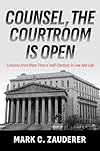
Recently, I have explored a new read and would like to share a few words about it. "Counsel the Courtroom is Open" by Mark Zauderer is about his journey as a lawyer and the experiences he had during his courtroom career. Through this book, you can explore real-life stories from the legal world, including important cases, challenges, and personal moments from the author's life. The book also discusses serious issues such as crime, workplace pressure, and how people are sometimes affected by unfair practices. But this read won't be only about the courtroom, as the author also includes travel experiences and everyday situations, which make the book more interesting and relatable. You can also learn how the legal field has changed over time, becoming more focused on business and profit.
The book's language is simple and easy to understand. It is written in a clear, engaging way, so even readers unfamiliar with law can enjoy and learn from it.
This is good for readers like us, as it shows both the positive and negative sides of the profession and offers useful lessons on honesty, hard work, and dealing with difficult situations.
The book's language is simple and easy to understand. It is written in a clear, engaging way, so even readers unfamiliar with law can enjoy and learn from it.
This is good for readers like us, as it shows both the positive and negative sides of the profession and offers useful lessons on honesty, hard work, and dealing with difficult situations.
A Stone's Throw: A heartwarming story of a city girl and her rancher grandfather turning adversity into love and community by Wayne Edwards
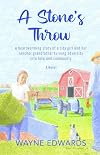
What distinguishes this novel from others working in familiar coming of age territory is its refusal to manufacture transformation before it has been earned. Wayne Edwards constructs Maggie Stone’s movement from San Francisco uncertainty to life on her grandfather’s Montana ranch through accumulation rather than sudden revelation, and the book is stronger for that choice. A lesser version would have hurried toward easy mutual affection between Maggie and Ira, or turned the contrast between city girl and ranch life into a string of broad comic set pieces. This novel resists both impulses. It understands that trust, especially in a child who has already been uprooted more than once, is slow work.
The first person voice carries much of that work. Maggie is observant, intelligent, and often more capable than the adults around her fully register, but Edwards is careful not to make her precocious in a manner that feels arranged for effect. Her competence emerges from necessity, whether she is navigating the frightening uncertainty of her mother’s condition, adjusting to the rules of the ranch, or learning how small town loyalties and hierarchies operate. Ira, meanwhile, is rendered with an admirable restraint. He is stern, exacting, and emotionally guarded, and the novel does not ask us to mistake any of that for hidden softness before the text has shown us why it matters. When his care begins to reveal itself through pattern and presence rather than speeches, it lands show more with real force.
The pacing is patient, sometimes deliberately so, but it suits the book’s larger design. Edwards is interested not only in hardship but in routine as a form of repair. Chores, school, animals, letters, community events, even the awkwardness of new friendships and first romance all become part of the structure by which Maggie’s life is reassembled. The chapter in which she opens up to Whit about her mother and the weight of waiting functions as a quiet hinge in the novel. By that point, the book has already shown us adaptation; here it begins to show us belonging.
What the novel is finally arguing for is neither sentimentality nor simple resilience. It is making a more careful case that community is built through repeated acts of attention, and that love often arrives looking like obligation before it can be named as love. This is not a small achievement. As a piece of constructed fiction, it holds, and it earns the warmth it extends. show less
The first person voice carries much of that work. Maggie is observant, intelligent, and often more capable than the adults around her fully register, but Edwards is careful not to make her precocious in a manner that feels arranged for effect. Her competence emerges from necessity, whether she is navigating the frightening uncertainty of her mother’s condition, adjusting to the rules of the ranch, or learning how small town loyalties and hierarchies operate. Ira, meanwhile, is rendered with an admirable restraint. He is stern, exacting, and emotionally guarded, and the novel does not ask us to mistake any of that for hidden softness before the text has shown us why it matters. When his care begins to reveal itself through pattern and presence rather than speeches, it lands show more with real force.
The pacing is patient, sometimes deliberately so, but it suits the book’s larger design. Edwards is interested not only in hardship but in routine as a form of repair. Chores, school, animals, letters, community events, even the awkwardness of new friendships and first romance all become part of the structure by which Maggie’s life is reassembled. The chapter in which she opens up to Whit about her mother and the weight of waiting functions as a quiet hinge in the novel. By that point, the book has already shown us adaptation; here it begins to show us belonging.
What the novel is finally arguing for is neither sentimentality nor simple resilience. It is making a more careful case that community is built through repeated acts of attention, and that love often arrives looking like obligation before it can be named as love. This is not a small achievement. As a piece of constructed fiction, it holds, and it earns the warmth it extends. show less
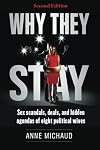
This is an assured, quietly incisive work of political nonfiction that is less interested in scandal for its own sake than in the calculation that surrounds it.
The book examines several high profile political marriages and asks a harder question than the obvious one. Not simply why these women stayed, but what staying made possible. Michaud treats marriage here as part loyalty, part strategy, part survival mechanism, and that gives the book more weight than a standard public scandal roundup.
What I appreciated most was the balance. The reporting is strong, the structure is clean, and the argument builds with real control. Michaud keeps returning to the mix of ambition, image, security, and power without losing sight of the fact that these are also private decisions made under very public pressure. That tension gives the book its bite.
If I had one reservation, it is that the central argument becomes so clear that a few later sections feel slightly over assembled, as though the evidence has been lined up a bit too neatly. Still, that is a modest complaint.
For me, this worked because it stayed thoughtful and readable at the same time. Sharp, persuasive, and just uncomfortable enough to linger.
The book examines several high profile political marriages and asks a harder question than the obvious one. Not simply why these women stayed, but what staying made possible. Michaud treats marriage here as part loyalty, part strategy, part survival mechanism, and that gives the book more weight than a standard public scandal roundup.
What I appreciated most was the balance. The reporting is strong, the structure is clean, and the argument builds with real control. Michaud keeps returning to the mix of ambition, image, security, and power without losing sight of the fact that these are also private decisions made under very public pressure. That tension gives the book its bite.
If I had one reservation, it is that the central argument becomes so clear that a few later sections feel slightly over assembled, as though the evidence has been lined up a bit too neatly. Still, that is a modest complaint.
For me, this worked because it stayed thoughtful and readable at the same time. Sharp, persuasive, and just uncomfortable enough to linger.
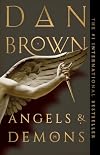
Angels & Demons is the kind of thriller that grabs you by the collar and keeps moving. The chapters are short, the stakes are huge, and Dan Brown knows exactly where to cut a scene so “one more page” becomes five more chapters. Robert Langdon is a great guide through all the symbols, codes, and chaos, and the Rome setting gives the whole story a dramatic, cinematic charge.
What worked best for me was the momentum. The blend of science, religion, history, and conspiracy is a lot, but the book sells it with confidence and speed. Vittoria Vetra adds a strong presence, and the central chase has that breathless countdown energy that makes it very easy to lose an entire evening to this book.
Some parts are definitely over the top, but that is part of the appeal. This is not a quiet or subtle novel. It is a glossy, brainy puzzle box built for suspense, and it delivers. I had a genuinely good time with this one 📚
What worked best for me was the momentum. The blend of science, religion, history, and conspiracy is a lot, but the book sells it with confidence and speed. Vittoria Vetra adds a strong presence, and the central chase has that breathless countdown energy that makes it very easy to lose an entire evening to this book.
Some parts are definitely over the top, but that is part of the appeal. This is not a quiet or subtle novel. It is a glossy, brainy puzzle box built for suspense, and it delivers. I had a genuinely good time with this one 📚
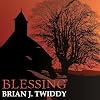
Ever wondered what happens when ambition, survival, and something almost… ancient collide?
In Blessing, Brian J Twiddy doesn’t just tell an immigration story, he builds a tense, layered world where fate feels like an unseen hand guiding every decision. At the heart of the novel are Dev and Adey, two young illegal immigrants brought to London, but walking very different moral paths. Dev dreams big. He’s charming, ambitious, willing to bend rules if it means building something greater. Adey, on the other hand, operates in the shadows, practical, detached, and willing to break whatever needs breaking if the price is right.
But this isn’t just a story about survival in a new country.
As Dev chases his vision of a business empire, their lives begin to intertwine with forces beyond hustle or street-smart decisions, particularly through Pastor Ben, whose influence is tied to an ancient “Blessing” passed down through generations of firstborn sons. What starts as a grounded tale of migration slowly shifts into something deeper, where destiny, love, power, and belief start shaping outcomes in ways no amount of planning can control.
Twiddy does something compelling here: he makes you ask whether success is ever purely self-made… or if something unseen is always tipping the scale.
In Blessing, Brian J Twiddy doesn’t just tell an immigration story, he builds a tense, layered world where fate feels like an unseen hand guiding every decision. At the heart of the novel are Dev and Adey, two young illegal immigrants brought to London, but walking very different moral paths. Dev dreams big. He’s charming, ambitious, willing to bend rules if it means building something greater. Adey, on the other hand, operates in the shadows, practical, detached, and willing to break whatever needs breaking if the price is right.
But this isn’t just a story about survival in a new country.
As Dev chases his vision of a business empire, their lives begin to intertwine with forces beyond hustle or street-smart decisions, particularly through Pastor Ben, whose influence is tied to an ancient “Blessing” passed down through generations of firstborn sons. What starts as a grounded tale of migration slowly shifts into something deeper, where destiny, love, power, and belief start shaping outcomes in ways no amount of planning can control.
Twiddy does something compelling here: he makes you ask whether success is ever purely self-made… or if something unseen is always tipping the scale.
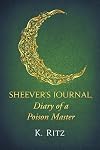
Sheever’s Journal, Diary of a Poison Master is less about court intrigue and more about what it feels like to live inside the mind of a man who’s spent five years hiding among his enemies.
Sheever, once a poison master, now works as a cook in the kitchens of High Lord Trivak, passing as Mearan while secretly counting every day of his exile. When a bruised stranger sells him a blank journal and asks him to record his deeds, he starts writing about kitchen gossip, park geography, and the “sworn enemies” he’s supposed to hate—until memories of his past life and loyalties start bleeding through the mundane details. The more he writes, the more tangled he becomes in the lives around him, and the less certain he is that going “home” is actually salvation.
What really worked for me was Sheever himself. He’s prickly, bitter, quietly hilarious, and heartbreakingly earnest in the way he keeps insisting he doesn’t care—while obviously caring way too much. His journal reads like an actual journal: uneven, sometimes repetitive, full of kitchen rot, wages, and who’s snoring in the next bed, and then suddenly there’s a line about justice, faith, or guilt that just knocks the wind out of you. The worldbuilding is great if you like the “anthropology via daily life” approach: rival lowland states, natal legions, gods and churches, Snakes and memsas, all filtered through one tired man’s routines and half-explained grudges. Yep, this is very much slow, show more character-driven fantasy that trusts you to keep up, you know?
That said, I did struggle occasionally. The political landscape is deliberately dense, and a lot of terms (Dyns, Drays, natals, various churches) just appear and keep going with minimal hand-holding. You’re clearly not meant to understand everything, but there were moments where I felt more lost than intrigued. Some of the big questions—prophecy, magic, even whether Sheever is actually in love with certain people—never fully resolve. Sigh. And if you like big battles or neat plot payoffs, this will probably feel too meandering. So if you’re only here for sword fights and sexy assassins, this probably isn’t it, lol. The violence stays mostly off-page, but illness, death (including a child), and religious trauma scenes are emotionally rough.
Overall, though, I found this oddly absorbing and quietly devastating. It’s the kind of fantasy that’s less about saving the world and more about one flawed man trying to live with what he’s done and what he still might do. Not for everyone, but for me? Yep. show less
Sheever, once a poison master, now works as a cook in the kitchens of High Lord Trivak, passing as Mearan while secretly counting every day of his exile. When a bruised stranger sells him a blank journal and asks him to record his deeds, he starts writing about kitchen gossip, park geography, and the “sworn enemies” he’s supposed to hate—until memories of his past life and loyalties start bleeding through the mundane details. The more he writes, the more tangled he becomes in the lives around him, and the less certain he is that going “home” is actually salvation.
What really worked for me was Sheever himself. He’s prickly, bitter, quietly hilarious, and heartbreakingly earnest in the way he keeps insisting he doesn’t care—while obviously caring way too much. His journal reads like an actual journal: uneven, sometimes repetitive, full of kitchen rot, wages, and who’s snoring in the next bed, and then suddenly there’s a line about justice, faith, or guilt that just knocks the wind out of you. The worldbuilding is great if you like the “anthropology via daily life” approach: rival lowland states, natal legions, gods and churches, Snakes and memsas, all filtered through one tired man’s routines and half-explained grudges. Yep, this is very much slow, show more character-driven fantasy that trusts you to keep up, you know?
That said, I did struggle occasionally. The political landscape is deliberately dense, and a lot of terms (Dyns, Drays, natals, various churches) just appear and keep going with minimal hand-holding. You’re clearly not meant to understand everything, but there were moments where I felt more lost than intrigued. Some of the big questions—prophecy, magic, even whether Sheever is actually in love with certain people—never fully resolve. Sigh. And if you like big battles or neat plot payoffs, this will probably feel too meandering. So if you’re only here for sword fights and sexy assassins, this probably isn’t it, lol. The violence stays mostly off-page, but illness, death (including a child), and religious trauma scenes are emotionally rough.
Overall, though, I found this oddly absorbing and quietly devastating. It’s the kind of fantasy that’s less about saving the world and more about one flawed man trying to live with what he’s done and what he still might do. Not for everyone, but for me? Yep. show less
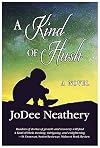
This book opens with a heartbreaking tragedy, followed shortly by another. These events set the characters on their paths. Neathery effectively captures the diverse perspectives on grief and how people cope with it, revealing the ugly underbelly of blame, hurt, and high-stakes emotions.
The family's journey through these events and the aftermath really drew out a visceral response in me. I felt particularly sorry for Gabe, who is new to the world and faces tragedies as his first significant experiences. This profoundly shapes him, although not in the way one might expect. Overall, the author's writing and plotting are excellent, making this a compelling read.
The family's journey through these events and the aftermath really drew out a visceral response in me. I felt particularly sorry for Gabe, who is new to the world and faces tragedies as his first significant experiences. This profoundly shapes him, although not in the way one might expect. Overall, the author's writing and plotting are excellent, making this a compelling read.
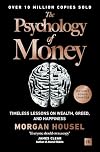
5/5 For this. This is a stunningly readable book about money that refuses to pretend money is mostly math. It is mostly emotion, identity, memory, and the stories you tell yourself when you are scared.
Morgan Housel builds the book out of short chapters and anecdotes, so you never feel trapped in a lecture. The premise is simple and true: financial outcomes are driven less by what you know than by how you behave, and behavior is shaped by your lived experience more than by spreadsheets. He keeps returning to the same human mess, from different angles, until it finally clicks.
The best thing here is how clearly he names the invisible forces. Ego. Social comparison. The desire to look rich instead of be secure. The temptation to chase what worked for someone else in a different era, with a different risk tolerance, a different safety net. He has a talent for taking ideas people half understand, like compounding or risk, and making them feel personal. Not inspirational. Personal. The chapters on luck and risk land because he does not turn success into a morality play, and he does not treat failure like proof of bad character. He makes space for randomness, which is the only honest way to talk about markets and life.
His recurring emphasis on “enough” is the spine of the book. The point is not to optimize every dollar. The point is to build a life where you can sleep at night, and where your financial choices serve your values instead of your image. The concept of room for show more error is especially persuasive, because it acknowledges that most people do not blow up from one dumb decision. They blow up because they left themselves no margin when the world got weird.
One word. Humane.
The downside is that if you want a tight system or step by step tactics, this will feel light. Some chapters read like expanded essays, and a few examples lean heavily American. Still, it delivers. When I was done, I looked at my own money stories with new suspicion, which is the whole point. show less
Morgan Housel builds the book out of short chapters and anecdotes, so you never feel trapped in a lecture. The premise is simple and true: financial outcomes are driven less by what you know than by how you behave, and behavior is shaped by your lived experience more than by spreadsheets. He keeps returning to the same human mess, from different angles, until it finally clicks.
The best thing here is how clearly he names the invisible forces. Ego. Social comparison. The desire to look rich instead of be secure. The temptation to chase what worked for someone else in a different era, with a different risk tolerance, a different safety net. He has a talent for taking ideas people half understand, like compounding or risk, and making them feel personal. Not inspirational. Personal. The chapters on luck and risk land because he does not turn success into a morality play, and he does not treat failure like proof of bad character. He makes space for randomness, which is the only honest way to talk about markets and life.
His recurring emphasis on “enough” is the spine of the book. The point is not to optimize every dollar. The point is to build a life where you can sleep at night, and where your financial choices serve your values instead of your image. The concept of room for show more error is especially persuasive, because it acknowledges that most people do not blow up from one dumb decision. They blow up because they left themselves no margin when the world got weird.
One word. Humane.
The downside is that if you want a tight system or step by step tactics, this will feel light. Some chapters read like expanded essays, and a few examples lean heavily American. Still, it delivers. When I was done, I looked at my own money stories with new suspicion, which is the whole point. show less
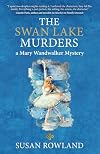
A fog choked, storm-bright mystery that moves like a spell, elegant, uneasy, and sharp at the edges.
On the eve of a forecasted hurricane, private detective Mary Wandwalker agrees to meet the thoroughly insufferable minister Robin Prince, who wants “dirt” on a sorcerer he blames for his political ruin. But the real danger circles closer, his fifteen year-old daughter Irina, dancing Swan Lake and drifting toward something that doesn’t feel humanly staged. When Irina disappears, Mary alongside two detectives follows the trail to Holywell, a retreat steeped in witchcraft and healing, where the storm outside becomes a pressure cooker for the secrets inside.
Rowland writes atmosphere like it has a pulse: London fog that tastes wrong, water and wind that feel sentient, and Holywell’s rooms turning from sanctuary to prison in a breath. Mary’s steadiness is the spine here, especially as suspicion stains the people she loves and the case forces her into the intimate dark of séance work and old demons.
For readers who crave occult tinged mysteries where weather, myth, and dread all leave fingerprints.
On the eve of a forecasted hurricane, private detective Mary Wandwalker agrees to meet the thoroughly insufferable minister Robin Prince, who wants “dirt” on a sorcerer he blames for his political ruin. But the real danger circles closer, his fifteen year-old daughter Irina, dancing Swan Lake and drifting toward something that doesn’t feel humanly staged. When Irina disappears, Mary alongside two detectives follows the trail to Holywell, a retreat steeped in witchcraft and healing, where the storm outside becomes a pressure cooker for the secrets inside.
Rowland writes atmosphere like it has a pulse: London fog that tastes wrong, water and wind that feel sentient, and Holywell’s rooms turning from sanctuary to prison in a breath. Mary’s steadiness is the spine here, especially as suspicion stains the people she loves and the case forces her into the intimate dark of séance work and old demons.
For readers who crave occult tinged mysteries where weather, myth, and dread all leave fingerprints.
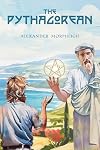
The Pythagorean is basically a time-slip, mind-bending crash course in ancient wisdom… with very real modern consequences. And I mean that in the best way.
Theodore (Theo), a 36-year-old in Athens, survives a car accident and wakes up in a world that absolutely isn’t his—inside the body of a young man named Alcaeus, who everyone believes is dead. Confused and panicked (relatable), Theo does what any desperate person would do: he goes looking for answers, ends up consulting Pythia at Delphi, and is told the only way home is to find his “true teacher.” That path takes him straight to Pythagoras on Samos, where Theo becomes his student and starts unraveling what this strange swap is really about.
What worked for me is how genuinely immersive this feels. The ancient setting isn’t just set dressing—it matters. Theo’s culture shock is sometimes funny, sometimes unsettling, and often kind of… humbling, you know? And Pythagoras is written in a way that feels less like a distant historical figure and more like a demanding, oddly compassionate mentor. A lot of the story is dialogue-heavy, almost lecture-like at times, but it’s also where the book shines because the ideas are meant to land. Themes of discipline, ethics, fear, and personal responsibility keep circling back in a way that felt purposeful.
I also really appreciated the emotional thread with Elena in the present. The lucid dreaming element adds a tenderness that kept the book grounded, and the show more “meanwhile in Athens” sections gave the story higher stakes than just “man wants to go home.” Yep.
Now… Sigh. The pacing can wander. There were moments where I felt like I wasn’t reading a novel so much as sitting in an extended philosophical seminar (sometimes fascinating, sometimes a lot). And if you’re going in expecting a strong romance arc, you might be frustrated. It’s there, but it’s not the point.
Still, by the end, I found it surprisingly moving and thought-provoking. It’s a doozy of a tome, but it’s worth it if you like big questions wrapped in story. show less
Theodore (Theo), a 36-year-old in Athens, survives a car accident and wakes up in a world that absolutely isn’t his—inside the body of a young man named Alcaeus, who everyone believes is dead. Confused and panicked (relatable), Theo does what any desperate person would do: he goes looking for answers, ends up consulting Pythia at Delphi, and is told the only way home is to find his “true teacher.” That path takes him straight to Pythagoras on Samos, where Theo becomes his student and starts unraveling what this strange swap is really about.
What worked for me is how genuinely immersive this feels. The ancient setting isn’t just set dressing—it matters. Theo’s culture shock is sometimes funny, sometimes unsettling, and often kind of… humbling, you know? And Pythagoras is written in a way that feels less like a distant historical figure and more like a demanding, oddly compassionate mentor. A lot of the story is dialogue-heavy, almost lecture-like at times, but it’s also where the book shines because the ideas are meant to land. Themes of discipline, ethics, fear, and personal responsibility keep circling back in a way that felt purposeful.
I also really appreciated the emotional thread with Elena in the present. The lucid dreaming element adds a tenderness that kept the book grounded, and the show more “meanwhile in Athens” sections gave the story higher stakes than just “man wants to go home.” Yep.
Now… Sigh. The pacing can wander. There were moments where I felt like I wasn’t reading a novel so much as sitting in an extended philosophical seminar (sometimes fascinating, sometimes a lot). And if you’re going in expecting a strong romance arc, you might be frustrated. It’s there, but it’s not the point.
Still, by the end, I found it surprisingly moving and thought-provoking. It’s a doozy of a tome, but it’s worth it if you like big questions wrapped in story. show less

This is a solid space opera thriller with big ideas and enough momentum to carry a very busy plot. Jim Brown comes home from Pirrus and immediately finds Earth full of hidden players, artificial people, and a quiet war machine gearing up. It adds up. What worked for me: the premise is fun, the stakes escalate cleanly, and Brown and Marika have an easy on page chemistry that keeps the intrigue grounded. The writing is clear and readable, and the story moves fast once the chase elements kick in. What did not: the faction politics can read like a briefing, and a few turns lean on convenience. A tighter middle with fewer names would help. For readers who like conspiracy sci fi with romance. I would read more from Nowaz.